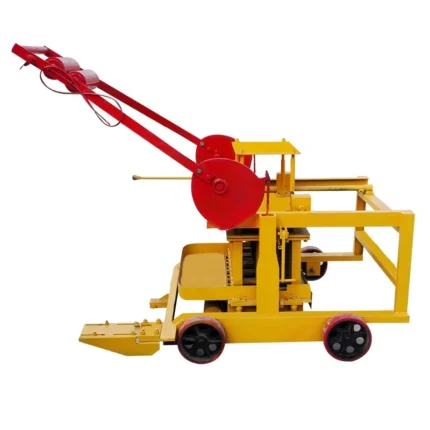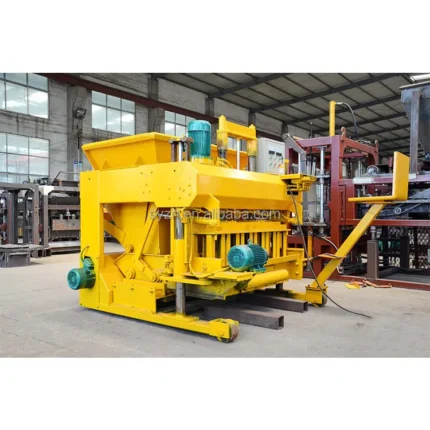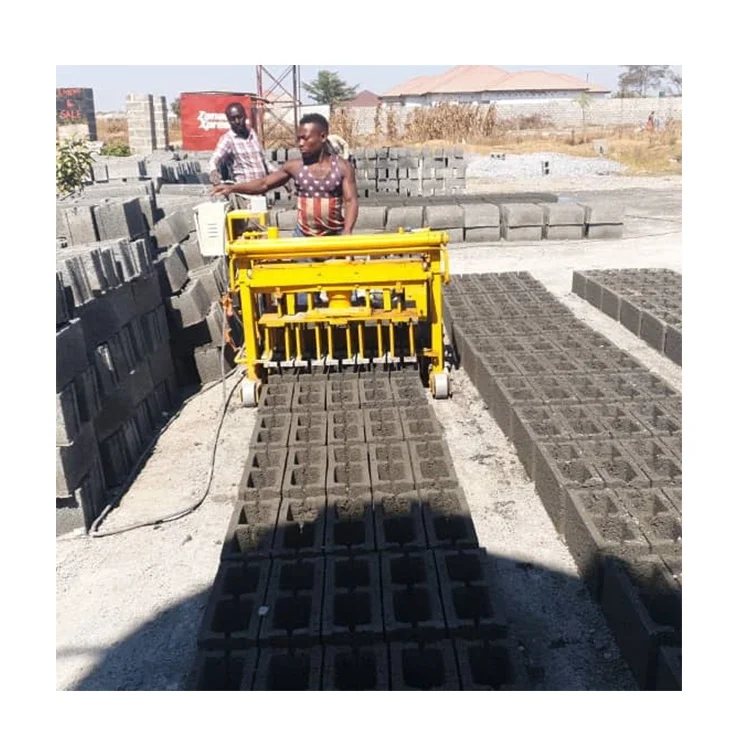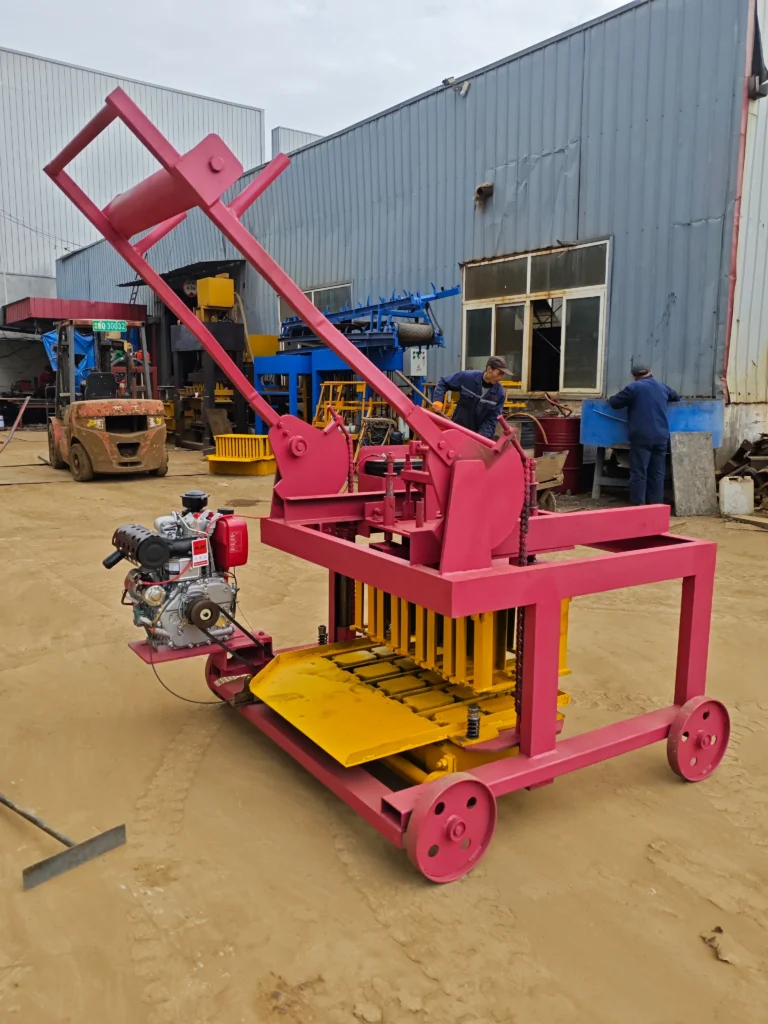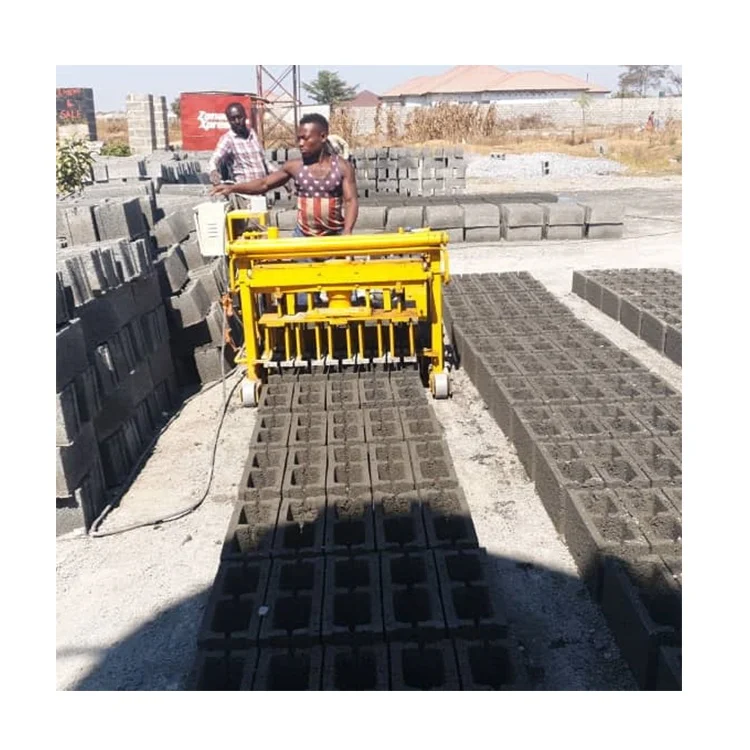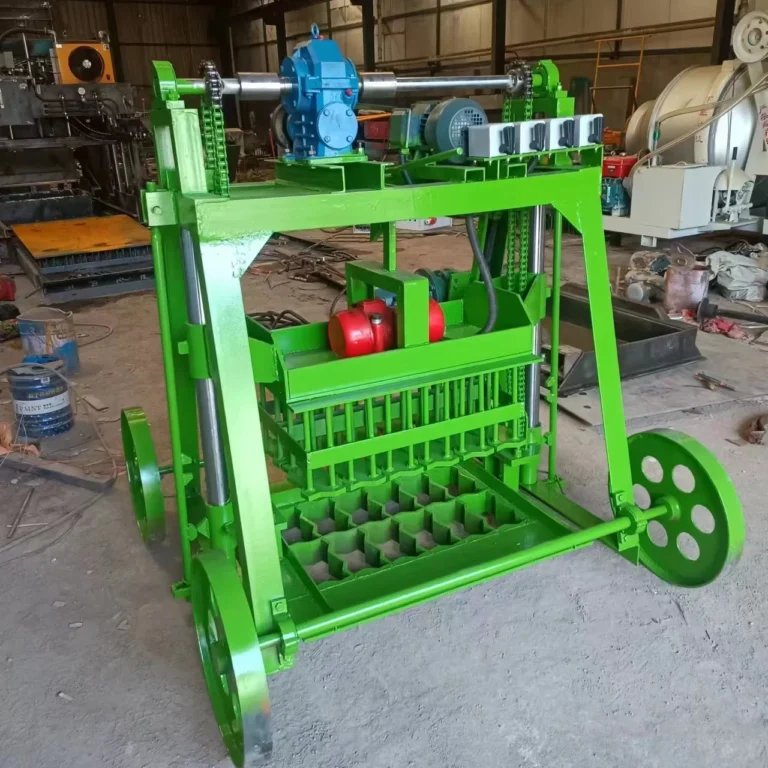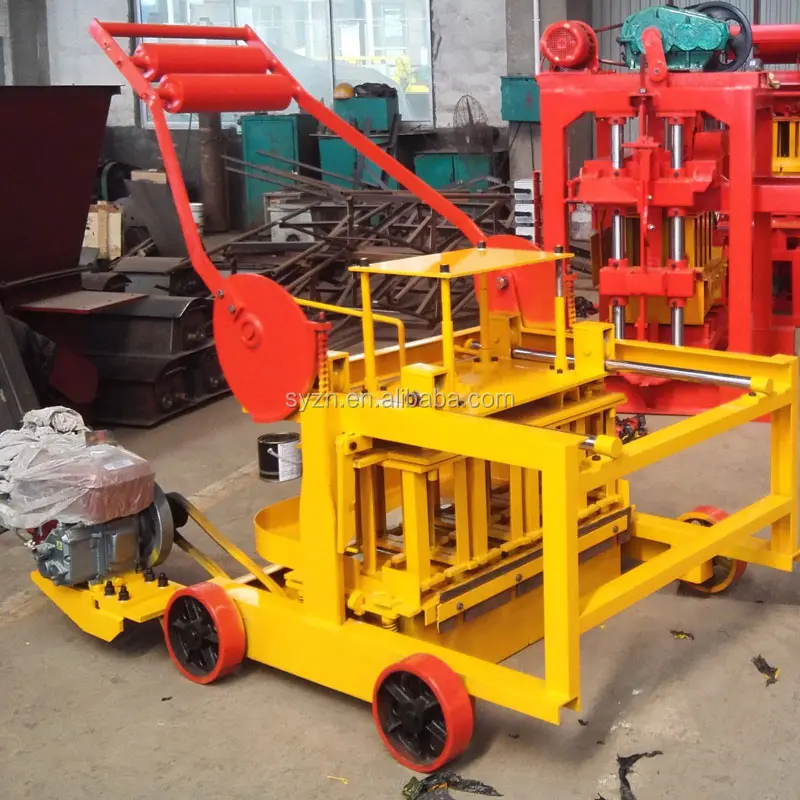


Description
Automation Upgrade Path — the QMR4-45 mobile block machine can be specified from basic manual cycle control through to PLC-regulated timing, so a first-time plant owner does not have to commit to full automation on day one yet retains a clear route to consistent, operator-independent output as volumes grow.
Technical Specifications
| Parameter | Value |
|---|---|
| Model | QMR4-45 |
| Product Type | Mobile Block Making Machine |
| Overall Dimensions (L×W×H) | 1100 × 950 × 2100 mm |
| Net Weight | 810 kg |
| Molding Cycle | 30–45 s per stroke |
| Power Source | Diesel / Petrol Engine / Electric (selectable) |
| Output Capacity | 2560 pcs/day (basis not stated in source — confirm block format, material and thickness before use) |
| Pallet Requirement | None (egg-laying / mobile type) |
| Mould Format | Paver brick, hollow block, concrete block, solid brick, fly ash brick |
| Automation Level | Semi-automatic with selectable control upgrade |
| Basic Equipment Included | JZC350 or JQ350 Diesel Concrete Mixer; trolley |
| Warranty | 1 Year |
Application Suitability
| Application | Material or Output |
|---|---|
| On-site block production without a fixed plant | Crushed stone, sand, cement and fly ash blends laid directly on a prepared concrete floor |
| Small-scale concrete block and paver manufacturing | Solid blocks and interlocking pavers for local building supply |
| Remote or off-grid construction sites | Diesel-powered operation where grid electricity is unstable or absent |
| Housing project block supply moved between locations | Hollow and solid blocks produced at each project phase as the site progresses |
What "2560 Pieces per Day" Actually Means on Site
The quoted output figure only becomes meaningful once the block format, wall thickness and mix design are locked in — without that context, two buyers running the same QMR4-45 can see daily totals differ by half.
Capacity is the number that sells an automatic mobile block making machine, yet it is also the number that disappoints the most after commissioning. A supplier quoting a single daily figure rarely states which block format that figure assumes. I have watched contractors in Guangdong arrive for the first production run expecting the number on the spec sheet, only to find that switching from a thin paver to a 200 mm hollow block stretched the cycle well beyond 45 seconds and cut the tally sharply. The PLC controlled mobile block machine resolves part of this by locking cycle timing, but the format assumption must still be confirmed in writing before the purchase order is signed [NEED_CITE: block format assumptions in capacity quotations].
Control Language and Display — the Overlooked Commissioning Blocker
The QMR4-45 ships with a configurable control interface, and the display language is a decision that belongs in the inquiry stage, not after the crate is opened. When a PLC controlled mobile block machine arrives with menus in a language the local operators cannot read, the first day of trial production is spent translating screens instead of pressing blocks. Specifying the display language alongside the voltage and frequency eliminates this stall.
From Manual Strokes to Regulated Cycle Consistency
At its base configuration the QMR4-45 is a semi-automatic egg-laying machine where the operator initiates each stroke and moves the unit forward manually. Adding a PLC control module introduces regulated cycle timing, meaning the vibration duration and pressure hold are set once and repeated identically across every block. This upgrade path is the core value proposition of an automatic mobile block making machine in this class — it removes cycle-to-cycle variation that depends entirely on operator discipline, giving batch-to-batch consistency even when staffing changes between shifts.
Reading the Specs That Matter Beyond the Brochure
Three parameters on this machine demand closer attention than the headline output number. The 30–45 second molding cycle is a range, not a fixed value; the actual position within that range depends on block height and the vibration settle time the mix requires. The dual power source option — diesel, petrol or electric — is not merely a convenience feature but a site viability decision; running a diesel engine in an enclosed yard changes ventilation requirements entirely. The absence of a pallet requirement defines the entire production layout: blocks are laid directly onto a cured concrete floor, which means floor flatness and surface preparation become part of the machine’s effective tolerance stack. The hydraulic pressure and vibration force ratings are not published in the standard spec sheet, yet together they determine whether the block density meets local structural codes — both values should be requested and matched against the buyer’s mix design before the order is finalised [NEED_CITE: hydraulic pressure and vibration force matching to aggregate].
The Cost of Skipping the Voltage and Language Confirmation
Missing the voltage, frequency and PLC language conversation before production begins is one of the most common reasons an automatic mobile block making machine sits idle on arrival. I have seen machines land in Southeast Asian job sites with a 380 V motor wired for a 220 V supply, tripping the breaker every time the vibration cycle started. The rework involves rewinding or replacing the motor, which adds a multi-week delay and shifts the commissioning schedule into the rainy season. Language mismatch on the control display is quieter but equally costly: operators who cannot read the fault codes default to manual overrides, bypassing the very consistency the PLC was specified to deliver [NEED_CITE: voltage and frequency standards by export market].
Why Buyers Source This Class of Machine Through a Line-Focused Supplier
Block machinery is the sole product focus here, which means the QMR4-45 is specified as part of a matched system — mixer, trolley and mould are selected together rather than assembled from disconnected catalogues. The configuration is set against the buyer’s actual mix design and local aggregate, not a generic default, reducing the risk of a machine tuned for material the site cannot source. Mould design covers the formats the buyer’s market actually sells, and custom mould drawings are supported when a project calls for a non-standard profile. The automation level is selectable at order and upgradable later, so a buyer can commission in semi-automatic mode and add PLC regulation when volume justifies it. Factory testing covers the specific block format and cycle timing the buyer has confirmed, not a generic benchmark run.
Documentation & Verification
- Machine specification sheet stating block format assumed for capacity calculation
- Mould drawing and format list covering each profile ordered
- Voltage, frequency and PLC display language confirmation in writing
- Hydraulic and electrical schematic matching the as-built configuration
- Operation and maintenance manual in the confirmed control language
- Packing photographs with crate and container loading record
Installation, Commissioning & Support
- Prepared concrete floor must be level within tolerance for 1100 × 950 mm machine footprint to ensure egg-laying block uniformity
- Dedicated electrical circuit rated for the selected power source and confirmed voltage before first start-up
- Diesel engine variant requires ventilation planning for enclosed yard operation
- PLC control module calibrated on site against the buyer’s confirmed block format and cycle timing
- Operator training covers mould change procedure and basic fault code reading in the confirmed display language
- Wear parts and mould inventory list supplied before shipment to cover first replacement cycle
What to Include in Your Inquiry
A useful inquiry specifies the exact block format and wall thickness the project requires, the local aggregate type available, and the daily output target tied to that format. Include the site voltage and frequency, the preferred PLC display language, and whether the machine will operate on grid power or diesel. Stating the curing floor area and any existing mixer equipment lets the line be configured around what is already on site.
Frequently Asked Questions
Q: How is the daily output of the QMR4-45 calculated, and which block format is assumed?
A: The 2560 pieces per day figure requires confirmation of block format, wall thickness and mix design before it can be treated as a planning number. Different formats change the molding cycle position within the 30–45 second range, which directly shifts the daily total. Request the capacity calculation stated per format from the supplier and match it against the block your market actually sells before comparing quotations.
Q: What automation and control options are available, and can I upgrade from semi-automatic later?
A: The QMR4-45 ships as a semi-automatic egg-laying machine with manual stroke initiation. A PLC control module can be specified at order to regulate cycle timing and vibration duration, or added later as production volume grows. The upgrade path is designed so that the base machine does not need replacement — only the control layer changes when the automation level is raised.
Q: Which voltage, frequency and PLC display language configurations are supported for my market?
A: Voltage and frequency must be confirmed in writing before production begins, as the motor and control wiring are wound to the stated supply. The PLC display language is set at the factory and should be specified in the inquiry to avoid commissioning delays. Request written confirmation of both parameters alongside the quotation.
Q: What is the actual mould change procedure and how much time does it take on site?
A: Mould change on the QMR4-45 involves releasing the clamping arrangement, lifting the current mould out, and seating the replacement — a procedure covered in the operation manual. The time required depends on whether the operator has done it before and whether lifting aids are available on site. Request the mould change procedure document with the machine to train operators before the first format switch is needed.
Q: Which wear parts and moulds should I order with the machine to avoid downtime at first replacement?
A: Wear parts availability should be confirmed with a written list before shipment, not after the first component shows wear. Request the supplier’s recommended spare parts list matched to the QMR4-45 configuration you have ordered, covering hydraulic wear items and any mould surfaces most exposed to aggregate abrasion, so replacements are on site before they are needed.