Description
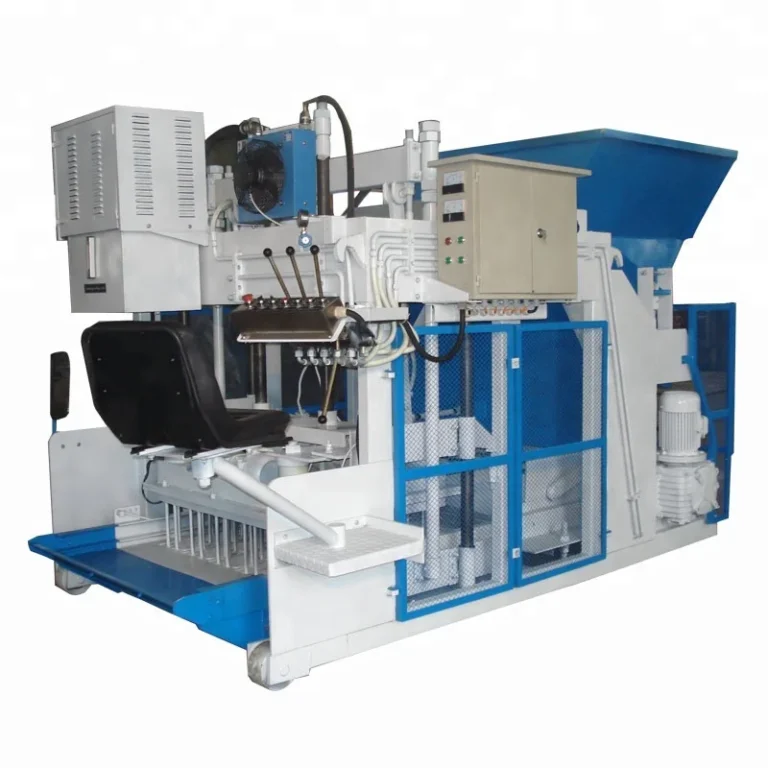
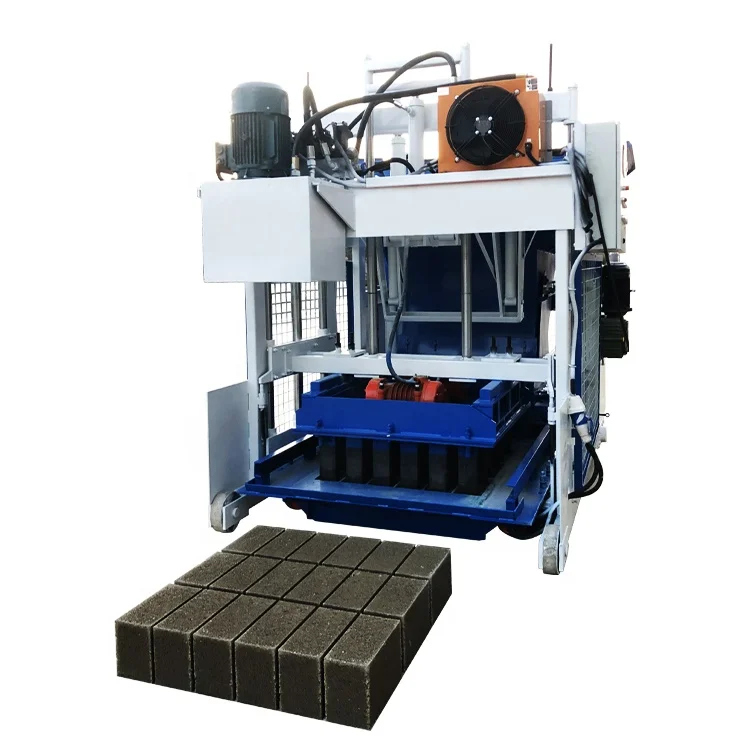
Automation-First Configuration — the QMY18-15 pairs PLC cycle control with a hydraulic pressure station so egg-laying block density stays consistent from the first drop to the last, regardless of operator experience.
Technical Specifications
| Parameter | Value |
|---|---|
| Model | QMY18-15 |
| Product Type | Mobile Egg Laying Hollow Concrete Block Making Machine |
| Working Method | Hydraulic pressure |
| Rated Power | 24 kW |
| Control System | PLC (language configurable before shipment) |
| Output Capacity | About 34,000 pcs per shift based on 400×200×200mm hollow block (basis to be confirmed for smaller formats) |
| Pallet Requirement | No pallets required — egg-laying / mobile type |
| Block Type Capability | Customizable to buyer requirement |
| Assembly State | Mobile unit |
| Voltage | Customized according to buyer’s local industrial voltage |
Application Suitability
| Application | Material or Output |
|---|---|
| On-site hollow block production | Crushed stone, sand, cement and water mix |
| Project-based masonry supply at remote build locations | Egg-laying directly on prepared ground surface |
| Entrepreneur first plant with minimal infrastructure | Semi-automatic hollow block output |
| Contractor self-supply for housing developments | Consistent density blocks via PLC-controlled cycles |
When PLC Control Is the Real Decision, Not the Price Tag
The QMY18-15 moves the consistency variable away from the operator and into the control logic.
Plant owners who have run manual egg-laying machines know the pattern: block weight drifts through the shift as the operator fatigues, vibration duration is judged by eye, and reject rates climb after lunch. A PLC controlled egg laying block machine replaces that guesswork with timed hydraulic sequences and repeatable vibration cycles. Voltage mismatch, however, can render the most advanced PLC useless before the first block is formed [NEED_CITE: voltage and frequency standards by export market]. The automatic mobile block machine must be wired to your site’s exact supply, or the control board fails within days.
What the PLC Actually Takes Over
On the QMY18-15, the PLC manages the hydraulic press cycle, vibration timing, and mould lowering sequence. The operator’s role narrows to feeding raw material into the hopper and steering the machine along the production floor. Every cycle the automatic mobile block machine completes follows the same timed parameters, so a block made at 7 a.m. carries the same density as one made at 4 p.m. This consistency is what the PLC controlled egg laying block machine is fundamentally designed to deliver.
Where Manual Input Still Matters
Material loading, ground-surface preparation, and machine positioning between cycles remain operator tasks. The PLC cannot compensate for a mix that is too dry or a floor that is uneven. Buyers sometimes assume full automation covers every station; on a mobile egg-laying unit, automation is concentrated where it has the greatest effect on block strength — the press and vibration sequence [NEED_CITE: CE machinery directive requirements for industrial equipment]. Understanding this boundary before purchase prevents disappointment on site.
Reading the Specs That Shape Block Quality
The 24 kW rated power drives both the hydraulic pump and the vibration motor simultaneously, meaning the system does not have to throttle one to feed the other. Hydraulic pressure and vibration force work together to compact the concrete mix: pressure squeezes air out while vibration settles aggregate into voids. If either value is too low for the buyer’s mix design, blocks emerge crumbly or under-dense. Voltage customization is not a footnote — industrial supplies in West Africa, South Asia, and South America vary widely, and a PLC board built for 380 V/50 Hz will not survive on a 220 V/60 Hz grid. Confirming frequency and voltage before production avoids a dead control cabinet on arrival.
The Hidden Cost of Skipping Control Language Confirmation
A PLC screen displaying cycle parameters in a language the operator cannot read defeats the purpose of automation. Operators revert to manual timing, ignoring the screen entirely, and the consistency advantage disappears [NEED_CITE: operator interface language requirements in industrial machinery standards]. This failure mode is entirely preventable: specifying the HMI language in writing before the machine enters production locks in usability from day one.
Why Source the QMY18-15 Through This Channel
Block machinery is the single product focus here, so the QMY18-15 is specified as a matched system — hydraulic station, PLC board, and mould are tested together, not assembled from separate suppliers. Configuration starts from the buyer’s actual mix design and local aggregate rather than a catalogue default. Automation level is selectable, allowing a buyer to begin with PLC-controlled semi-automatic operation and plan an upgrade path to higher automation later. Factory test records cover PLC cycle operation under load, not just dry-run bench tests. Spare wear parts for the hydraulic seals and vibration components ship with the machine so a blown O-ring does not halt production while waiting for international freight.
Documentation & Verification
- Factory test record showing PLC cycle timing under hydraulic load before dispatch
- Electrical schematic confirming buyer’s exact voltage and frequency
- Operation manual covering PLC parameter adjustment and hydraulic troubleshooting
- Mould drawing and format list matched to buyer’s target block dimensions
- Wear parts and hydraulic seal list with part numbers for local sourcing
- Packing photographs documenting machine condition at container loading
Installation, Commissioning & Support
- Level concrete strip or compacted ground required for the 24 kW mobile unit to track straight
- Dedicated electrical circuit matching confirmed voltage and frequency for PLC and hydraulic pump
- Machine arrives assembled; commissioning covers PLC parameter tuning on buyer’s actual mix
- Operator training on PLC screen navigation, cycle start/stop, and fault code reading
- Hydraulic seal kit and vibration motor brushes included as first-replacement spare parts
- Maintenance schedule tied to hydraulic oil change intervals and mould wear inspection
Before You Request a Quote
To size the QMY18-15 correctly, share the hollow block dimensions your market sells, your target daily output, and the aggregate materials available locally. Confirm your site’s industrial voltage and frequency so the PLC board and motor windings are built to match. State your preferred HMI display language and whether you plan to add pallet-based automation downstream.
Frequently Asked Questions
Q: What does the PLC control on the QMY18-15 actually automate versus what still requires manual input?
A: The PLC manages the hydraulic press cycle, vibration duration, and mould lowering sequence automatically. The operator still handles raw material feeding into the hopper, steers the machine along the production floor, and prepares the ground surface. This split concentrates automation where it most affects block density and consistency.
Q: Can the PLC display language be set to my local language before delivery?
A: Yes. The HMI language is confirmed in writing during the order stage and set before the machine leaves the factory. Specifying this early prevents operators from ignoring the screen and reverting to manual timing, which would erase the consistency benefit the PLC provides.
Q: How is voltage and frequency confirmed to match my site’s industrial power supply?
A: You provide your site’s exact voltage and frequency during the inquiry stage. The electrical schematic is then built and documented to that specification. The factory test verifies PLC and hydraulic motor operation at the confirmed supply before shipment.
Q: What is the upgrade path from this PLC-controlled mobile machine to a higher-automation line?
A: The QMY18-15 serves as a starting point. When production volume justifies it, you can move to a pallet-based stationary line with automatic stacking and cubing. The PLC control logic and block format knowledge carry over, so operator retraining is limited to the new handling stations.
Q: How does hydraulic pressure consistency affect block density across different mix designs?
A: Hydraulic pressure forces air from the mix while vibration settles aggregate. If pressure varies cycle to cycle, density varies with it. The QMY18-15’s hydraulic station delivers repeatable pressure each cycle, so blocks maintain target strength even when the operator changes or the shift runs long.