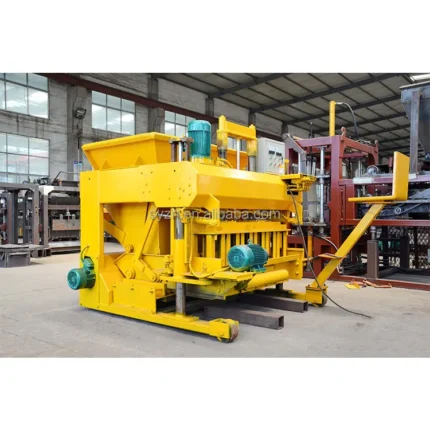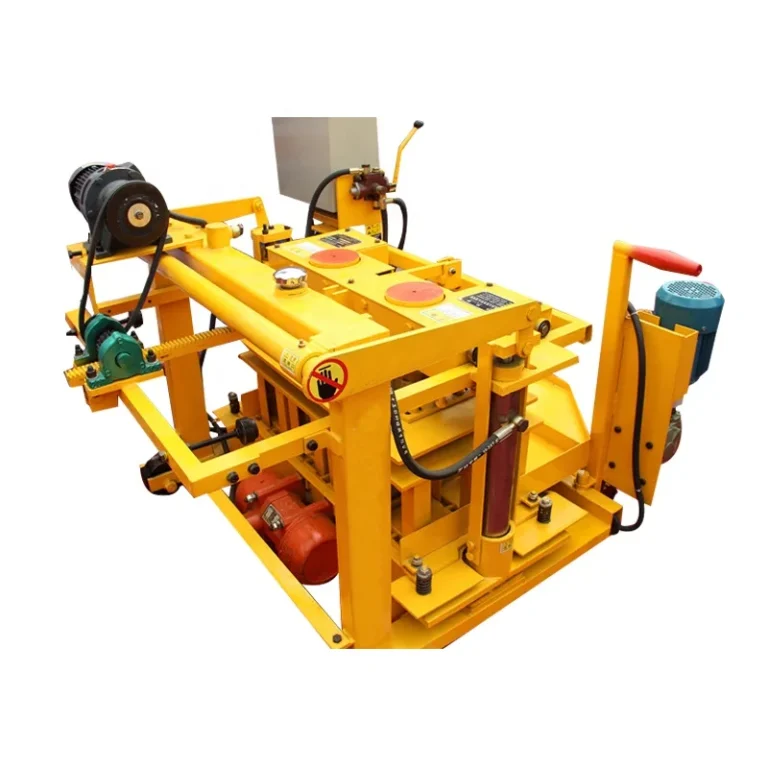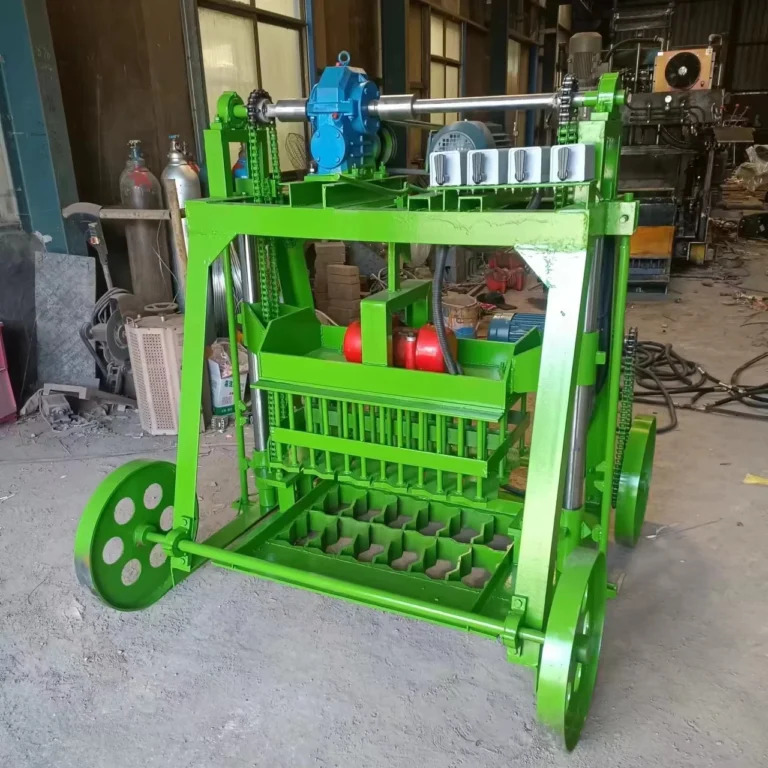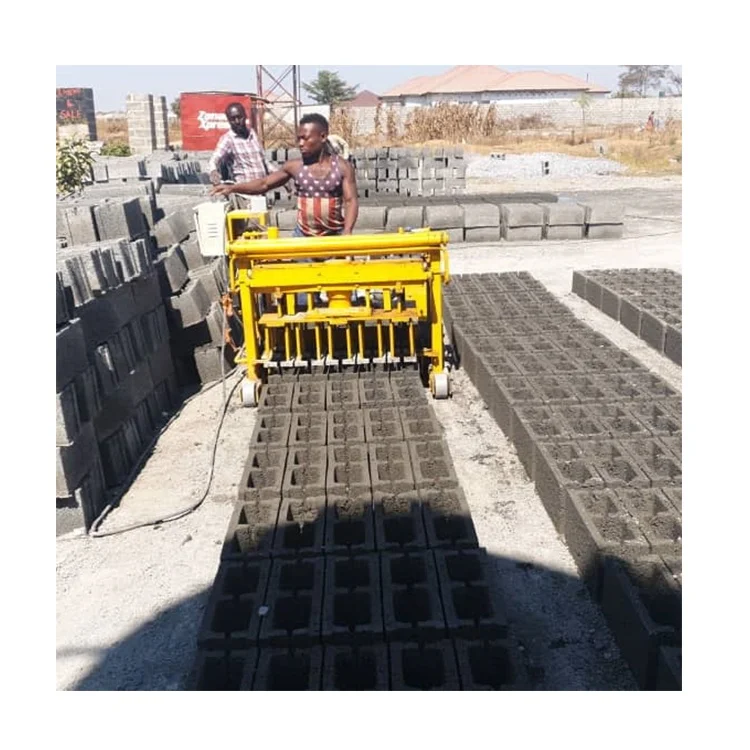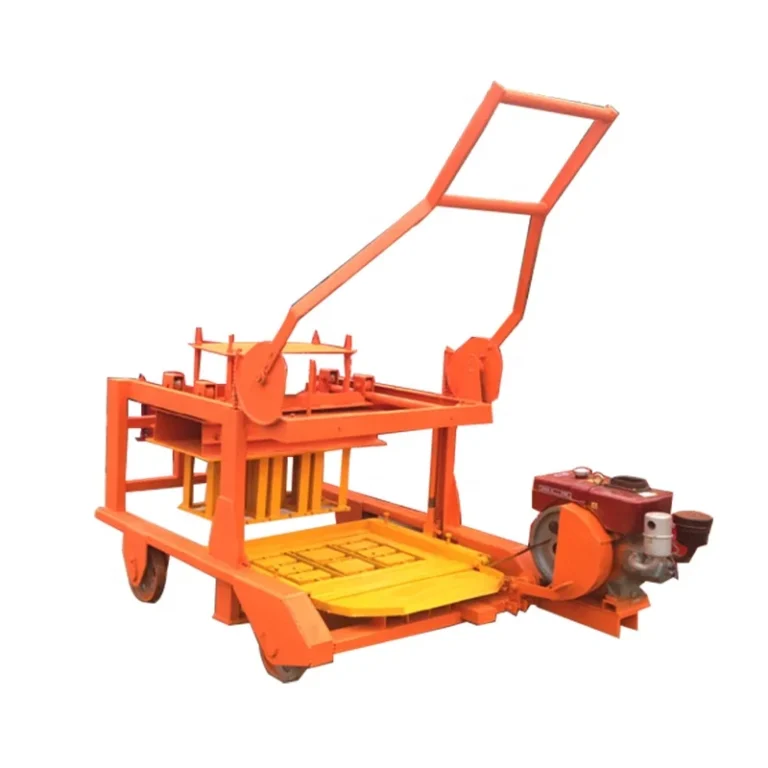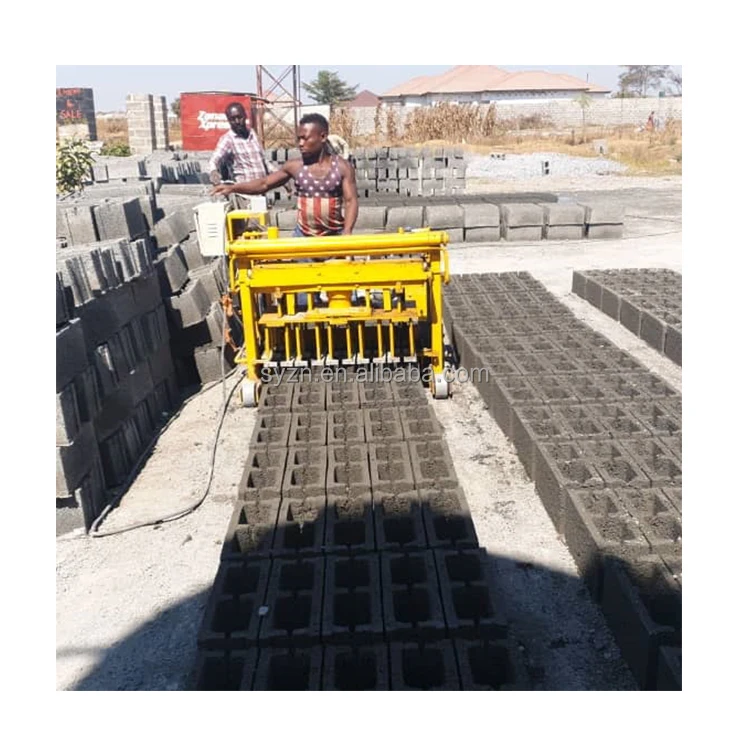
Description
Controlled Upgrades — the QMY4-30 mobile block machine is specified as a matched system with confirmed voltage, language and hydraulic settings before dispatch, removing the commissioning delays that stall remote project sites.
Technical Specifications
| Parameter | Value |
|---|---|
| Model | QMY4-30 |
| Product Type | Mobile Hydraulic Block Making Machine |
| Molding Method | Mould vibration |
| Demold Method | Hydraulic |
| Molding Cycle | 25-30s |
| Total Power | 5.95KW |
| Pallet Requirement | Pallet-free (mobile egg-laying type) |
| Automation Level | Semi-automatic / Manual operation |
| Output Capacity (400x200x200mm hollow block) | 4 pcs/mould, 480 pcs/hour, 3840 pcs/8hr |
| Output Capacity (400x150x200mm hollow block) | 5 pcs/mould, 600 pcs/hour, 4800 pcs/8hr |
| Output Capacity (400x100x200mm hollow block) | 7 pcs/mould, 840 pcs/hour, 6720 pcs/8hr |
| Voltage & Frequency | Configurable to site supply (basis to be confirmed) |
| Control System | Available with relay logic or PLC control upgrade (basis to be confirmed) |
| Hydraulic Pressure | Rating matched to block density requirement (basis to be confirmed) |
| Vibration Force | Rating matched to mix design (basis to be confirmed) |
| PLC Display Language | Configurable options (basis to be confirmed) |
Application Suitability
| Application | Material or Output |
|---|---|
| On-site hollow block production without fixed plant | Crushed stone, sand, cement and local aggregate |
| Remote housing or development project sites | Mobile egg-laying production on uneven or unprepared ground |
| Mountainous, hilly, desert and coastal terrain work | Self-propelled block laying without pallet infrastructure |
| Small-scale hollow block manufacturing | Low initial investment block production |
| Supplementary capacity for existing block producers | Format-specific mobile runs for contract deadlines |
Why Voltage and Language Must Be Locked Before the automatic mobile block machine Ships
A machine that arrives with the wrong voltage or unreadable PLC display sits idle while the project deadline passes.
I have stood on project sites where a mobile block maker sat under a tarp for weeks because the control cabinet was wired for a different frequency than the local generator, and the fault codes displayed in a language no operator could read. The QMY4-30 is a compact machine with a 5.95KW total power draw, which means it is often paired with portable diesel generators on remote sites — and those generators do not always match the factory default assumptions. Commissioning failures traced to unconfirmed electrical and control language specifications are among the most common avoidable delays in mobile block production [NEED_CITE: common commissioning failure causes in exported construction machinery].
How the PLC Control Upgrade Path Works on the QMY4-30
The QMY4-30 ships as a semi-automatic, pallet-free egg-laying machine where the operator controls the mould vibration cycle and hydraulic demolding sequence manually. For buyers who need batch-to-batch consistency across long production runs, a PLC controlled mobile block making machine configuration replaces relay logic with programmable cycle timing, so the vibration duration and hydraulic pressure hold remain identical from the first block to the last block of the shift. This upgrade path is designed to be specified at the inquiry stage, because retrofitting a PLC onto a relay-wired cabinet after arrival requires rewiring the entire control harness.
What the Operator Still Handles at Each Automation Tier
Even with PLC control added, the QMY4-30 remains a mobile egg-laying machine: the operator drives or pushes the unit along the production line, positions it for each cycle, and monitors block quality visually. What automation removes is the variability in cycle timing and pressure application — the two factors that most directly affect block density and strength consistency. Buyers moving from manual to PLC-controlled operation typically see the most noticeable improvement in dimensional tolerance across the day’s output, because the operator is no longer guessing when to release the hydraulic demold [NEED_CITE: PLC impact on block dimensional consistency in mobile production].
Reading the Specs That Actually Matter for Block Strength
The 25-30 second molding cycle governs how many blocks the QMY4-30 can lay per hour, but cycle speed alone does not determine whether those blocks meet the compressive strength your local building code requires. The vibration force rating and the hydraulic pressure rating must be matched to your specific mix design — the ratio of cement to local aggregate, the moisture content, and the gradation of crushed stone or sand available at your site. A mould vibration system that works well with a rich cement mix may produce weak, crumbly blocks with a lean local aggregate, which is why the hydraulic pressure and vibration force are specified as configurable rather than fixed catalogue values. The pallet-free egg-laying design means blocks cure directly on the ground, so the ground condition and ambient temperature also enter the strength equation in ways that pallet-based systems partially isolate.
The Hidden Cost of Skipping Electrical Confirmation
When a QMY4-30 arrives on site with a 380V control cabinet and the local supply is 440V/60Hz, the motor windings overheat within the first production run, the PLC may refuse to boot, and the hydraulic solenoid valves chatter without achieving full pressure. Two weeks of lost production while replacement contactors and a step-down transformer are sourced internationally is a realistic outcome, not a worst-case scenario. The 5.95KW total power draw is small enough that buyers sometimes treat electrical confirmation as a formality, but mobile machines on remote sites are precisely where generator supply is most likely to deviate from standard industrial voltage [NEED_CITE: voltage and frequency standards by export market].
Why Sourcing This Machine Here Reduces Commissioning Risk
Block machinery is the single production focus, which means the QMY4-30 is not assembled from generic components pulled from unrelated equipment lines. Every machine is configured against the buyer’s actual mix design and local aggregate before the quotation is finalised, so the vibration force and hydraulic pressure are set for the material you will actually use. Voltage, frequency and PLC display language are confirmed line-by-line against your site supply and operator requirements before production begins, not assumed from a default list. The documentation package includes a factory test record run on your specified block format, so you can verify output capacity claims before the machine leaves the workshop.
Documentation & Verification
- Line layout and capacity calculation stating the block format assumed for each output figure
- Machine specification sheet with hydraulic pressure and vibration force matched to your mix design
- Voltage, frequency and PLC display language confirmation sheet signed before production
- Factory test record on your specified hollow block format before dispatch
- Operation and maintenance manual with wear parts and mould list for first replacement planning
Installation, Commissioning & Support
- Pallet-free design requires level, compacted ground surface rather than a concrete factory floor
- 5.95KW total power draw requires dedicated circuit matched to confirmed voltage and frequency
- Machine ships as a single mobile unit with no pallet system to assemble on arrival
- Commissioning includes cycle timing calibration against your local aggregate and moisture content
- Operator training covers manual and PLC-controlled cycle sequences depending on configuration selected
- Wear parts list provided with mould and hydraulic component replacement intervals
What to Include in Your Inquiry
To configure the QMY4-30 for your site, provide the hollow block format you intend to produce, your local aggregate type and cement source, and the voltage and frequency available at your production point — whether that is grid supply or a portable generator. If you have existing block handling equipment or a curing area layout, share those details so the pallet-free production workflow can be planned around your site constraints. Specify your preferred PLC display language and whether you want relay logic or PLC control, so the upgrade path is clear from the start.
Frequently Asked Questions
Q: How is the stated hourly output verified, and which block format does each figure assume?
A: Each output figure on the QMY4-30 is tied to a specific block format: 480 pieces per hour assumes a 400×200×200mm hollow block, 600 pieces per hour assumes a 400×150×200mm hollow block, and 840 pieces per hour assumes a 400×100×200mm hollow block. These figures are based on a 25-30 second molding cycle and include no allowance for machine repositioning time between cycles on the production floor.
Q: What automation level does the QMY4-30 ship with, and what is the upgrade path to PLC control?
A: The QMY4-30 ships as a semi-automatic machine with manual cycle control by default. A PLC controlled mobile block making machine configuration is available as a specified option at the inquiry stage, replacing relay logic with programmable cycle timing for consistent vibration and demolding sequences. Retrofitting PLC after dispatch requires significant control cabinet rewiring.
Q: How do voltage, frequency and control language get confirmed before the machine leaves the factory?
A: Voltage, frequency and PLC display language are confirmed line-by-line against your site electrical supply and operator requirements during the quotation stage, not assumed from a default setting. A signed confirmation sheet is required before the QMY4-30 enters production, so the control cabinet is built to your exact site conditions from the outset.
Q: What does the operator still handle manually on a PLC-controlled QMY4-30?
A: The QMY4-30 remains a mobile egg-laying machine regardless of automation tier: the operator positions the machine along the production line, monitors block quality visually, and handles machine travel between cycles. PLC control automates the vibration duration and hydraulic demolding sequence within each cycle, removing timing variability that affects block density and dimensional consistency.