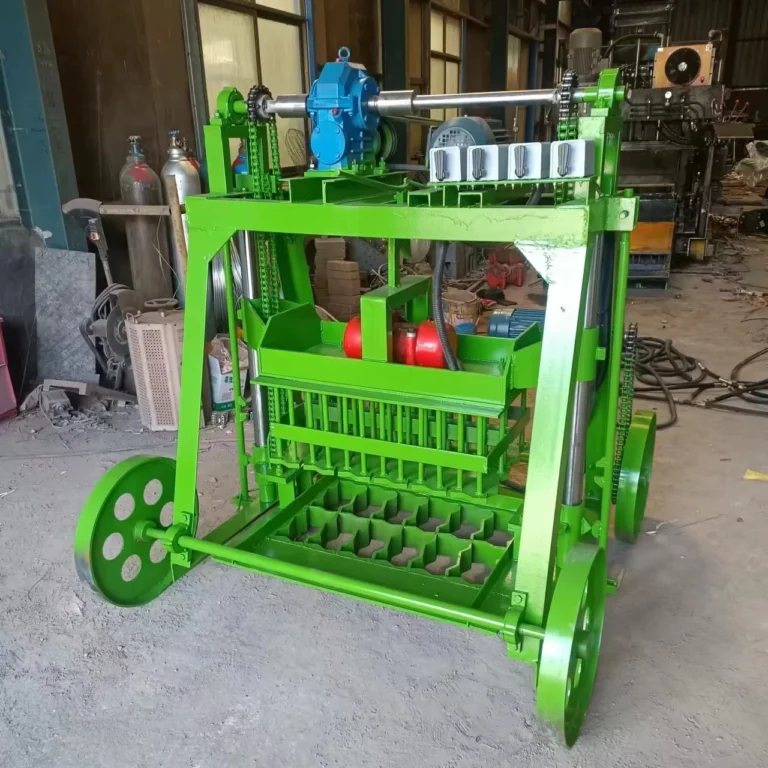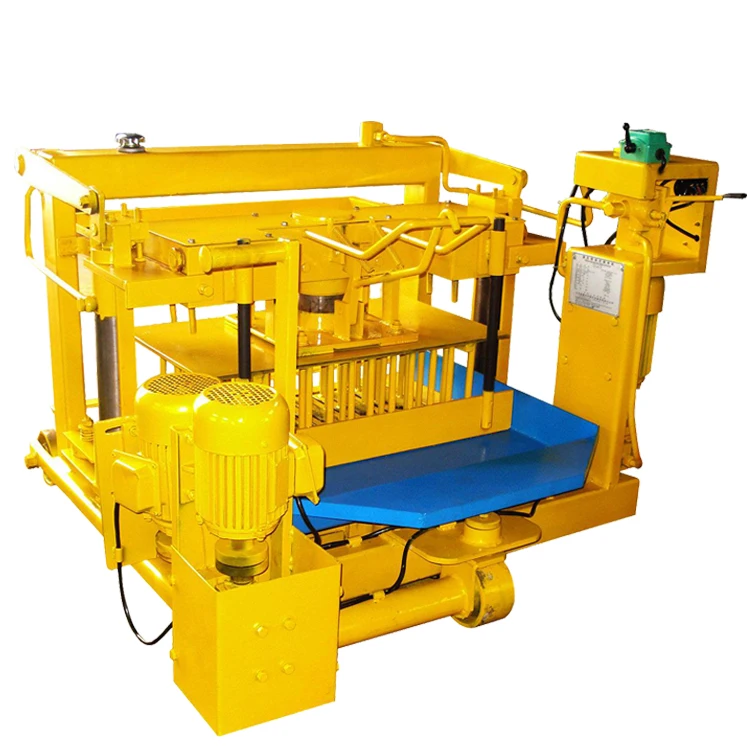
Description
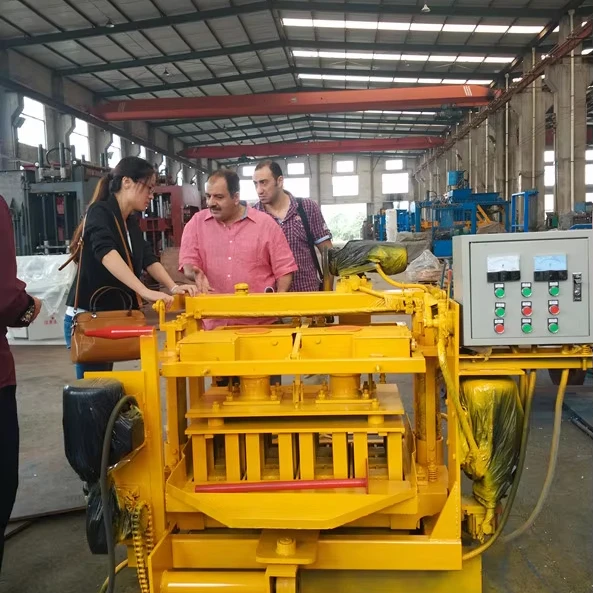
PLC Control Configured to Your Site — We lock in the display language, voltage, and frequency for the QMY4-30 before the control panel is wired, because automation only removes labour when the operator can actually read the screen in front of them.
Technical Specifications
| Parameter | Value |
|---|---|
| Model | QMY4-30 |
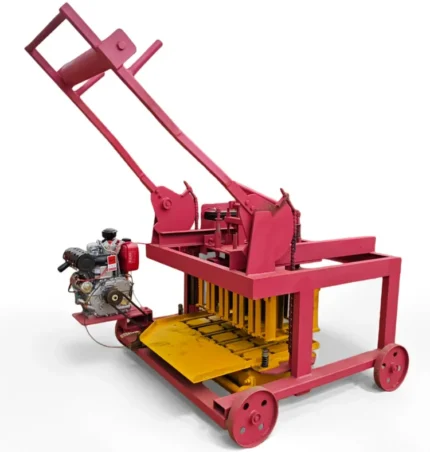
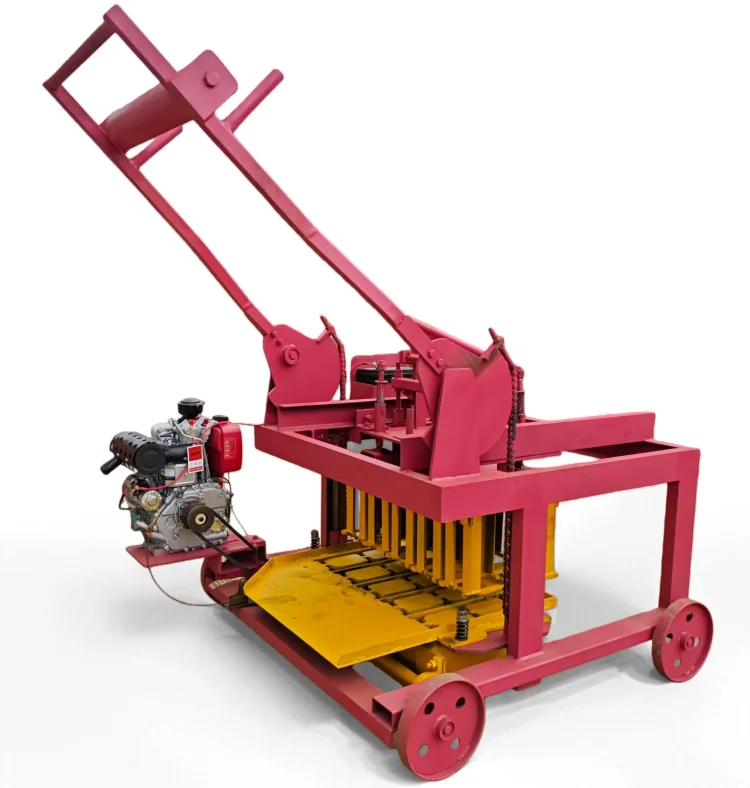
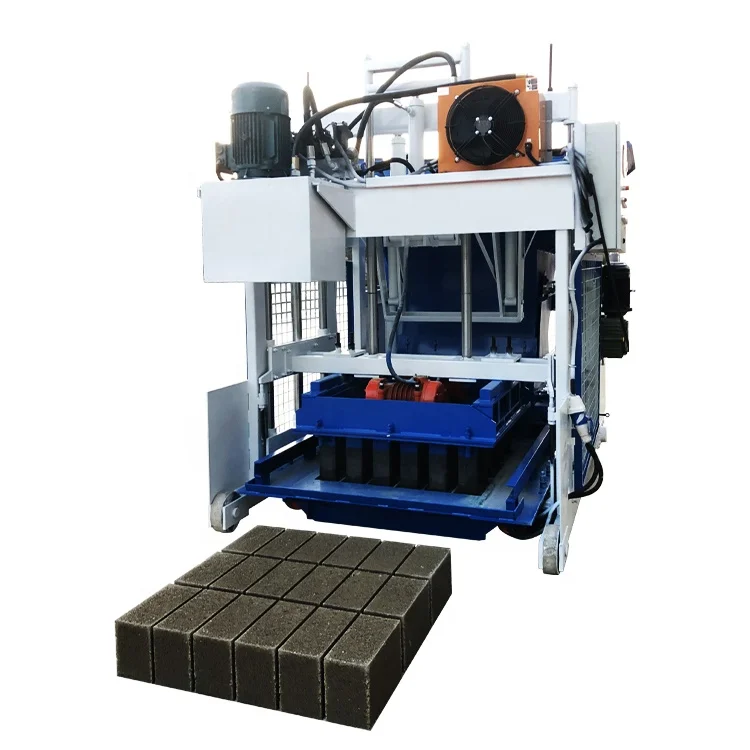
| Product Type | Mobile Cement Block Making Machine |
| Dimension of Host Machine | 1300 × 1500 × 1000 mm |
| Rated Pressure | 6–8 MPa |
| Main Vibration Form | Moulding Vibration |
| Vibration Frequency | 4500 r/min |
| Vibration Force | 28.6 kN |
| Molding Cycle | 15–25 s (basis not stated in source — confirm block format and material) |
| Overall Power | 5.95 kW |
| Host Machine Power | 5.95 kW |
| Demolding Method | Hydraulic |
| Pallet Size | No pallets required (egg-laying / mobile type) |
| Mixer Model | JQ350 |
| Molding Area | 400 × 800 mm |
| General Water Consumption | 4 T/day |
| Total Mass | 950–1000 kg |
| Applied Products | Concrete hollow blocks, solid blocks, pavers, interlocking blocks |
| Raw Materials | Crushed stone, sand, cement, fly ash, gravel, slag, dust |
| Automation Level | PLC-controlled cycle (verify automation scope against manufacturer catalog) |
| Standards | ISO 9001, CE, SGS |
| Warranty | 1 Year |
Application Suitability
| Application | Material or Output |
|---|---|
| On-site hollow block production for building walls | Crushed stone, sand, cement, fly ash |
| Solid block production for load-bearing structures | Gravel, sand, cement, slag |
| Interlocking block production for retaining walls and landscaping | Crushed stone, cement, dust |
| Paving block production for walkways and yards | Sand, cement, fine aggregate |
| Remote project site block manufacturing | Locally sourced aggregate with cement binder |
What "Automatic" Really Means When the Operator Cannot Read the Screen
An automatic mobile block making machine is only as automatic as the language on its PLC display.
I once shipped a mobile egg-laying unit to West Africa with the PLC panel locked in Chinese. The operator spent the entire first day of commissioning staring at characters he could not read, pressing buttons by guesswork. The machine was technically automatic; in practice, it was a very expensive manual press. That commissioning delay cost the contractor days of block output on a housing project with a fixed handover date [NEED_CITE: common PLC language mismatches in exported construction machinery]. The QMY4-30 is configured with the buyer’s site voltage, frequency, and PLC display language confirmed before the control panel leaves the factory, so the automatic cycle actually functions as intended on arrival.
How the PLC-Controlled Cycle Maintains Consistency Across Shifts
The PLC-controlled automatic mobile block making machine maintains a consistent moulding cycle regardless of which operator is running it. The vibration duration, hydraulic pressure hold time, and demolding sequence are stored in the program rather than left to manual timing. This removes the batch-to-batch variation that typically appears when a second-shift operator shortens the vibration cycle to chase a higher piece count.
Removing the Pallet Loop From the Project Site Budget
The egg-laying design means the QMY4-30 deposits blocks directly on the ground surface as it moves forward along the production path. There are no pallets to purchase, no pallet storage area to allocate, and no manual pallet recycling loop where workers carry spent pallets back to the machine feed end. For a contractor producing blocks at a remote housing development, this eliminates an entire category of site logistics and recurring material cost that stationary block plants require [NEED_CITE: pallet handling costs in stationary versus mobile block production].
Vibration Force and Hydraulic Pressure Working Together
The 4500 r/min vibration frequency and 28.6 kN vibration force compact the raw material inside the mould cavity, while the 6–8 MPa hydraulic pressure provides the pressing force from above. Both systems must be matched to the buyer’s specific mix design and local aggregate gradation. A mix with a high fly ash content responds differently to vibration than one built around coarse crushed stone, and the PLC cycle parameters should reflect that difference. The JQ350 mixer output must also keep pace with the 15–25 second moulding cycle so the press is not left idle waiting for the next batch of material. The 400 × 800 mm molding area determines the maximum block footprint per cycle, which in turn defines how many blocks of each format the machine can lay per pass.
What Happens When the Control Configuration Is an Afterthought
When voltage, frequency, and PLC language are not confirmed before production, the consequences arrive at commissioning. A 380V/50Hz machine plugged into a 440V/60Hz site supply will run the vibration motor at a different speed, altering the compaction force and producing blocks with inconsistent density. A PLC display in a language the operator cannot read forces the entire crew to rely on memory for cycle parameters, and any mid-cycle alarm becomes an untranslatable code on screen [NEED_CITE: electrical standard mismatches in exported industrial machinery]. These are not warranty issues — they are configuration oversights that delay the project schedule and erode the buyer’s confidence in the equipment before the first block is even sold.
Why the Configuration Conversation Matters Here
Block machinery is our single production focus, so the QMY4-30 is specified as a matched system — machine, mould, mixer, and PLC — rather than assembled from separate suppliers. The configuration is set against the buyer’s actual mix design, local aggregate, and target block format instead of a catalogue default. Mould design covers the formats the buyer’s market actually sells, with custom mould drawings available for non-standard sizes. The automation level is selectable, allowing a buyer to start with PLC-controlled semi-automatic operation and plan an upgrade path. Installation support includes on-site commissioning and operator training so the crew can run the machine independently from the first production day.
Documentation & Verification
- Factory test record confirming PLC cycle parameters on your specified block format before dispatch
- Voltage, frequency, and control language confirmation sheet signed before panel wiring
- Mould drawing and format list showing every block size the QMY4-30 can produce
- Hydraulic and electrical schematic matching your machine’s as-built configuration
- Operation and maintenance manual translated into the PLC display language you selected
- CE declaration and ISO 9001 documentation for customs clearance in your destination market
Installation, Commissioning & Support
- Flat concrete ground surface of approximately 500 m² required, with no fixed foundation needed for the mobile host machine
- Power supply matching confirmed voltage and frequency for the 5.95 kW overall system draw, with a dedicated circuit breaker
- Machine arrives assembled; mixer and water supply connected on-site before the first production run
- PLC parameters set to your block format and mix design during commissioning, with test blocks produced and measured
- Operator training covers mould change procedure, PLC cycle adjustment, and daily hydraulic system inspection
- Wear parts list and mould inventory provided so first replacements can be ordered before stock runs out
What We Need to Configure Your Machine Correctly
To move from a general quotation to a production-ready configuration, we need your target block format and dimensions, the daily output you expect for that specific format, and the local aggregate and cement types available at your project site. We also need your site voltage, frequency, and the PLC display language your operators will use. If you have an existing mixer or water supply on site, let us know so the JQ350 mixer can be confirmed as compatible or adjusted.
Frequently Asked Questions
Q: How is the daily output calculated and which block format does it assume?
A: The 15–25 second moulding cycle figure must be confirmed against a specific block format, wall thickness, and material mix before a daily output number is meaningful. We provide a capacity calculation sheet that states the pieces per shift for each block format you plan to produce, rather than a single generic output claim.
Q: What voltage, frequency, and PLC language options are available?
A: The QMY4-30 electrical system is configured to match your site supply before production. Voltage, frequency, and PLC display language are confirmed in writing so the control panel is wired correctly at the factory and the operator can read every screen prompt on the first day of commissioning.
Q: What block formats can the QMY4-30 produce and how long does a mould change take?
A: The machine produces hollow blocks, solid blocks, interlocking blocks, and paving blocks within the 400 × 800 mm molding area. We provide a mould format list with drawings for each available size, and custom mould design is available to buyer drawings. Mould change time depends on the format pair and is confirmed during operator training.
Q: What raw materials and mix design does the machine require?
A: The QMY4-30 runs on crushed stone, sand, cement, fly ash, gravel, slag, and similar locally available materials. The mix design is set against your specific aggregate gradation and cement type rather than a generic catalogue formula, and the JQ350 mixer is matched to the machine’s cycle rate.
Q: Is installation support, operator training, and spare parts supply included?
A: Engineers are available for on-site commissioning and operator training covering PLC operation, mould changes, and daily maintenance. A wear parts and mould list is provided at delivery so you can plan your first replacement order before production starts.