
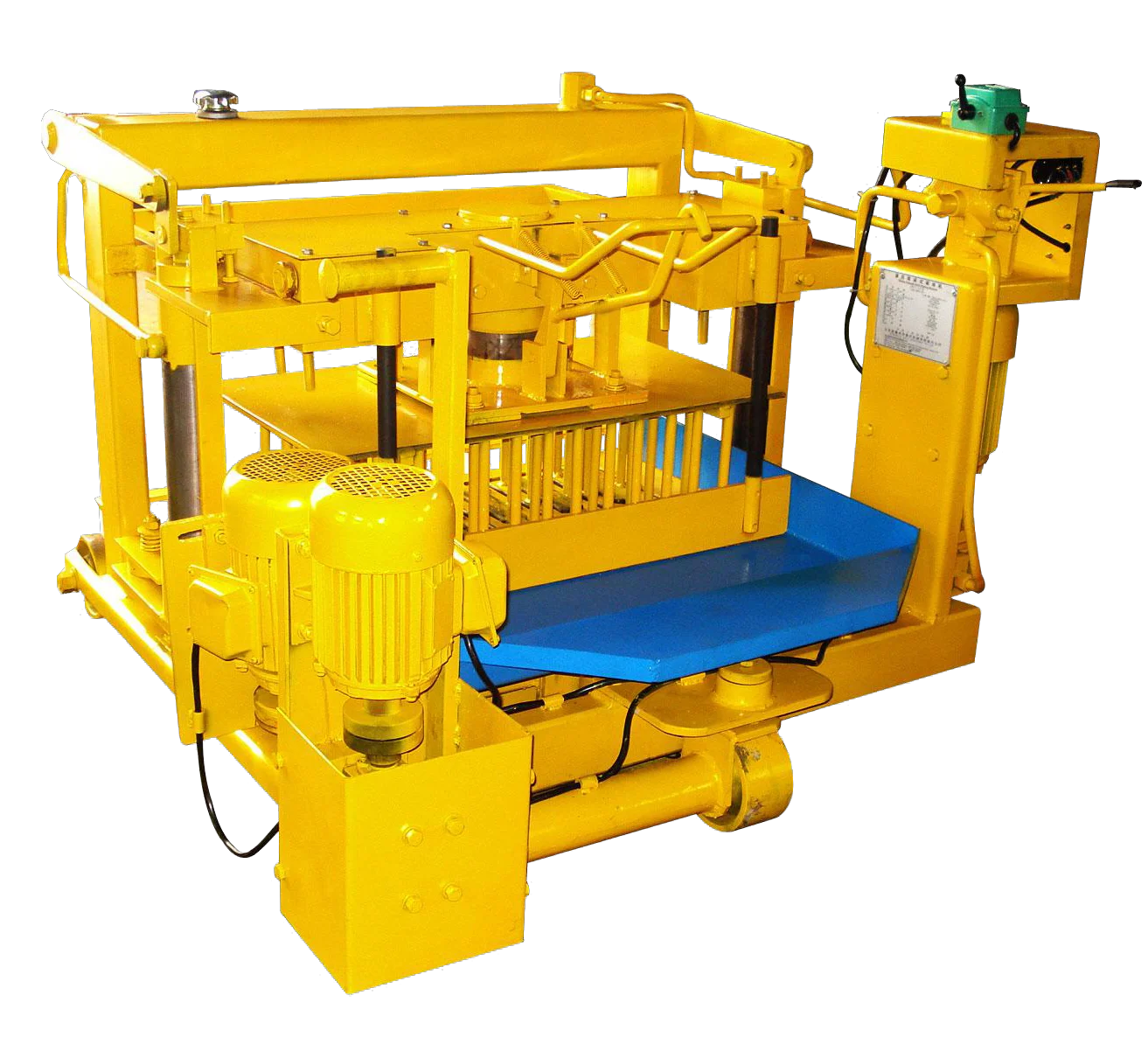
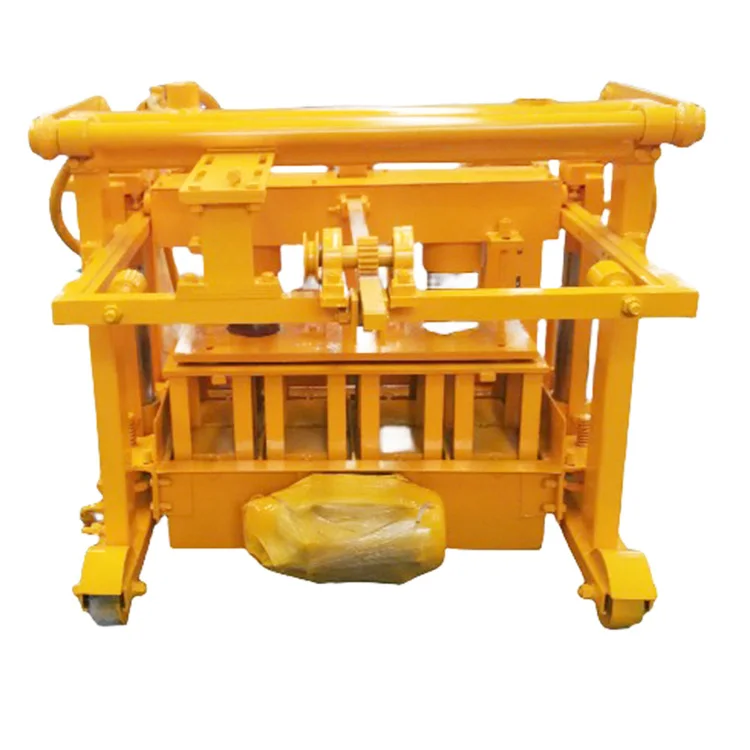
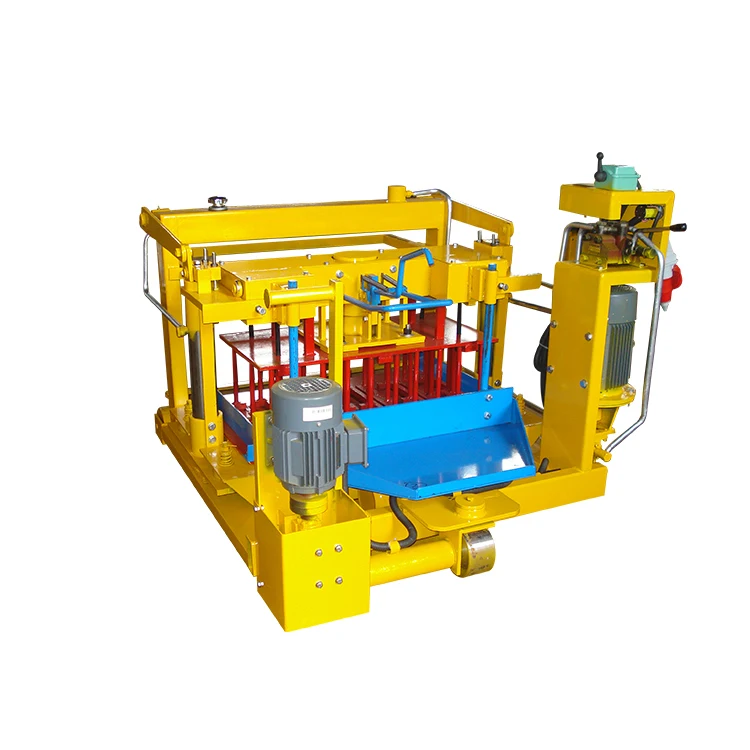
Description
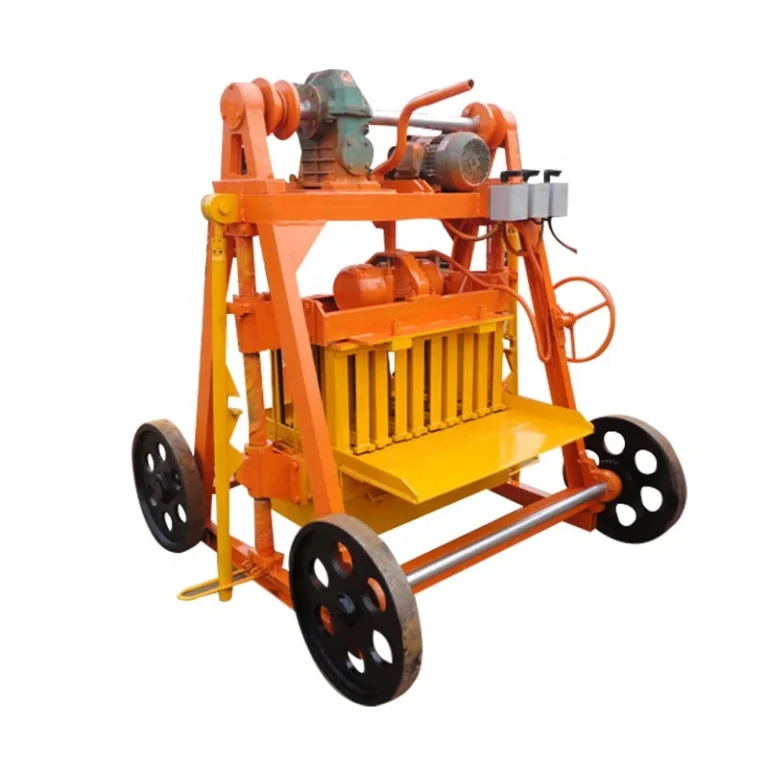
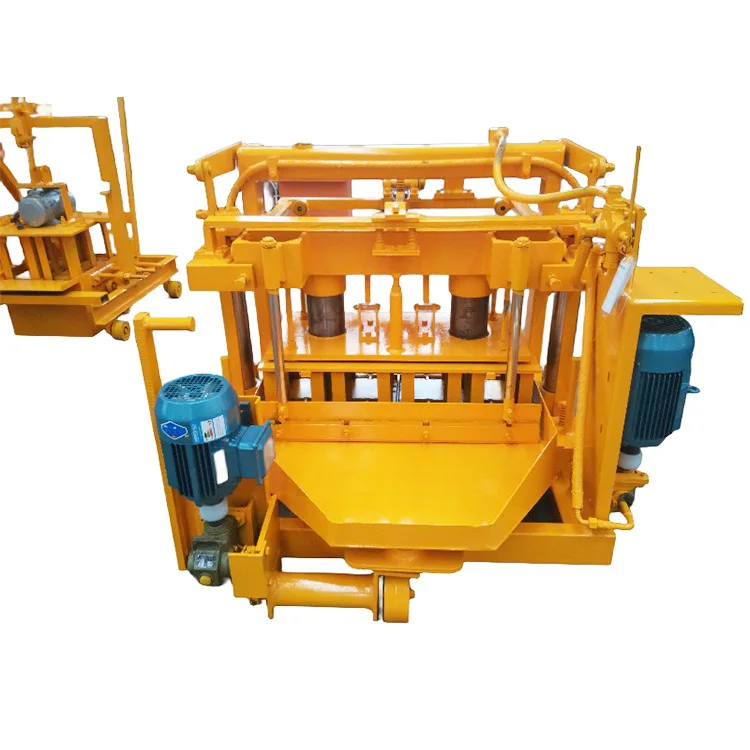
Configuration matched to your upgrade path — this QMY4-30 mobile block machine establishes the baseline cycle time and block format you will later scale onto a PLC-controlled stationary line, so your automation investment builds on proven output data rather than catalogue promises.
Technical Specifications
| Parameter | Value |
|---|---|
| Model | QMY4-30 |
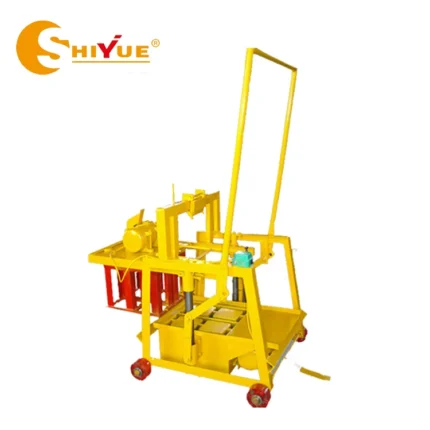
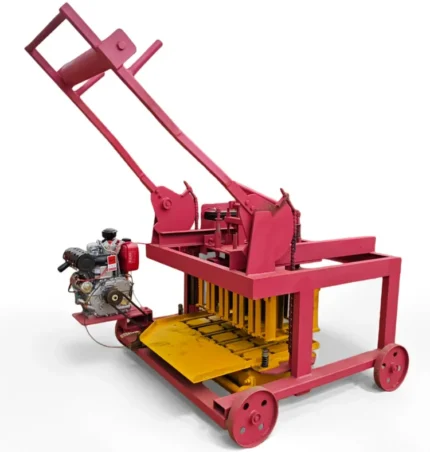
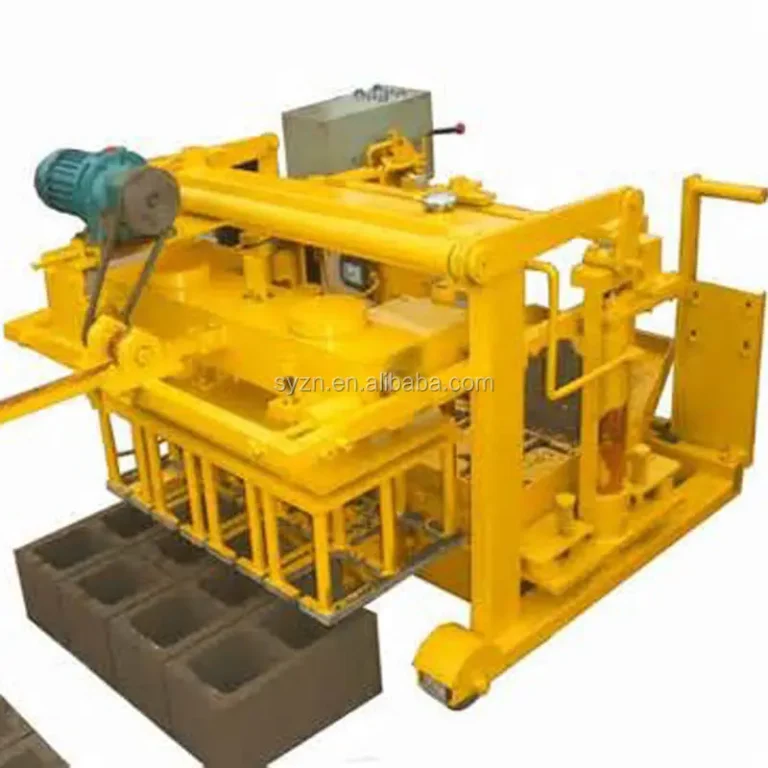
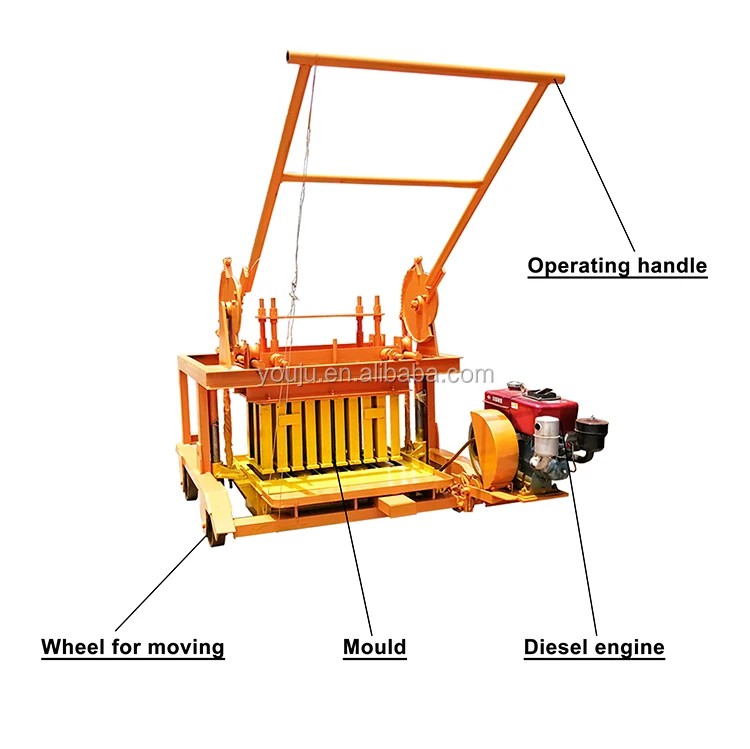
| Product Type | Mobile Egg-Laying Block Making Machine |
| Rated Power | 5 kW |
| Overall Dimensions (L×W×H) | 1200 × 1200 × 1100 mm |
| Net Weight | 950 kg |
| Mould Format | Changeable (hollow block / solid brick) |
| Cycle Time | 30 seconds (basis not stated in source — confirm block format and material) |
| Output — 400×200×200 mm hollow block | 4 pcs/mould, 480 pcs/h, 3840 pcs/8 h |
| Output — 400×150×200 mm hollow block | 5 pcs/mould, 600 pcs/h, 4800 pcs/8 h |
| Output — 400×100×200 mm hollow block | 7 pcs/mould, 840 pcs/h, 6720 pcs/8 h |
| Raw Materials | Cement, sand, crushed stones, slag |
| Automation Level | Manual / mobile egg-laying |
| Voltage & Frequency | Configurable to site supply (confirm before production) |
| Control System | Manual operation; PLC available on stationary upgrade line |
Application Suitability
| Application | Material or Output |
|---|---|
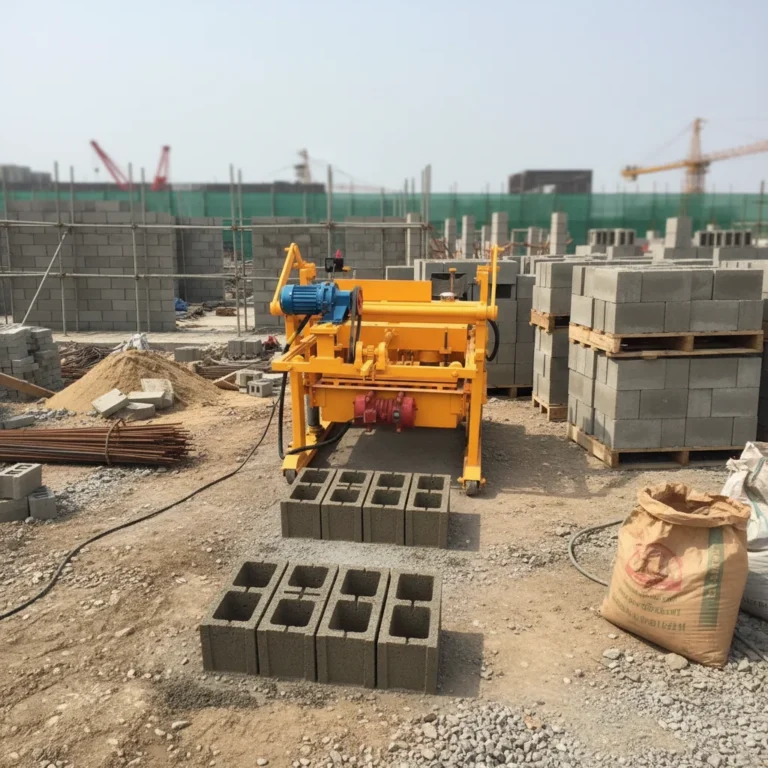
| On-site housing project block production | Hollow blocks from cement, sand and crushed stone laid directly on the ground |
| First block yard for an entrepreneur | Solid bricks and hollow blocks with minimal fixed-plant investment |
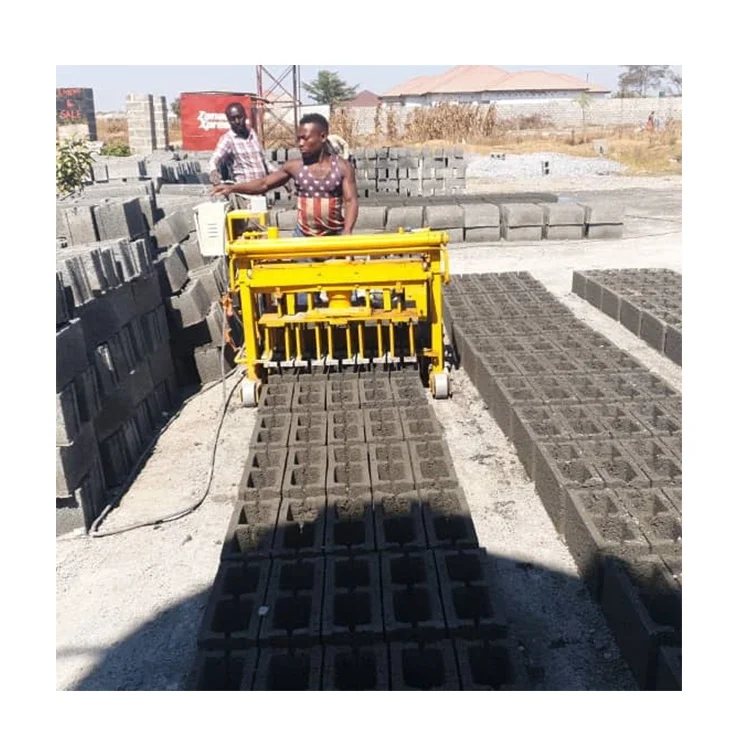
| Remote construction site supply | Mobile egg-laying production eliminating transport of purchased blocks |
| Existing plant adding on-site capacity | Supplementary hollow block output for distant job sites |
Why the Voltage Question Must Come Before the Machine Order
Confirming local voltage, frequency and phase at inquiry stage prevents a mobile block machine from sitting idle on arrival.
I spent three weeks in Zambia waiting for a transformer to be retrofitted because the local grid could not supply the voltage the machine was built for. An automatic mobile block machine is no different from any other powered equipment: if the electrical supply at your site does not match the motor and control circuit, production does not start until a solution is found. [NEED_CITE: voltage and frequency standards by export market]
The QMY4-30 draws only 5 kW, which keeps it within reach of smaller site generators, but the frequency — 50 Hz or 60 Hz — determines the vibration motor speed and therefore the compaction quality. A 50 Hz motor running on 60 Hz supply vibrates faster than designed, accelerating bearing wear. A 60 Hz motor on 50 Hz runs slower, reducing the vibration force below what the mix needs for proper consolidation. Neither scenario shows up until the first batch of blocks cracks during curing.
What Automation Removes and What It Adds
The QMY4-30 is a manually operated egg-laying machine. The operator controls the feed, vibration and travel. This keeps the initial investment low and lets an entrepreneur learn block production fundamentals before committing to a PLC-controlled egg-laying block machine on a stationary line. The format and cycle time you establish here become the reference data when you later specify automatic pallet feeding, stacking and cubing.
The value of starting with this machine is the production data it generates. You learn which block format your market actually buys, what daily output your crew can sustain, and how your local aggregate behaves in the mix. When the time comes to move to a PLC-controlled stationary line, the control system can be programmed around proven cycle times rather than theoretical catalogue figures.
Reading the Output Table Honestly
Every output figure in the specification table above is tied to a specific block dimension. The 30-second cycle time produces 480 hollow blocks per hour at 400×200×200 mm, but that same cycle produces 840 pieces per hour at 400×100×200 mm because the mould holds seven cavities instead of four. [NEED_CITE: block format demand variation across regional construction markets]
This matters because buyers often receive a single headline capacity number — cycles per hour — without the format assumption. If your market buys 200 mm wide hollow blocks and the quoted capacity was calculated on 100 mm blocks, your real daily output will be considerably lower than expected. The table on this page removes that ambiguity.
Interpreting the Key Parameters for Your Site
The 5 kW rated power means the QMY4-30 can run from a portable diesel generator, which is important for sites without grid connection. However, generator output must be stable: voltage fluctuation beyond acceptable tolerance damages the vibration motor winding over time, a failure that typically appears after several months rather than on the first day.
The 950 kg net weight gives the machine enough mass to stay stable during vibration without requiring a bolted-down foundation. The egg-laying principle means blocks are produced directly on the ground, so the site surface must be level and firm. A soft or uneven surface causes blocks to deform under their own weight before the cement sets.
The changeable mould system lets the same frame produce hollow blocks and solid bricks. Mould change time is not stated in the source data and must be confirmed with the supplier, because a lengthy changeover cancels the flexibility advantage if your operation requires frequent format switching within the same shift.
What Happens When the Control Language Is Overlooked
A machine that arrives with a PLC display in a language the operator cannot read effectively has no PLC at all. The operator bypasses the control screen and runs the machine from memory, which means batching accuracy, cycle timing and fault diagnostics are all lost. [NEED_CITE: PLC display language confirmation in machinery export contracts] This problem surfaces on stationary lines more than on the manually operated QMY4-30, but it is worth raising here because this machine is often the first step toward a PLC-controlled egg-laying block machine, and the language specification should be established from the very first unit in the yard.
Why Source the Complete Line From One Supplier
The QMY4-30 is specified as part of a matched system. The machine, mould, pallet and future handling equipment are designed together, so when you upgrade to a stationary line the block format and cycle data carry over without re-engineering.
Configuration is set against your actual mix design and local aggregate, not a catalogue default. If your sand is fine-graded and your crushed stone is angular, the vibration force and cycle time are adjusted to compact that specific mix properly.
Mould design covers the formats your local market sells, including custom drawings if your region demands a block size outside the standard range.
Automation level is selectable and progressive. You can start with the QMY4-30 and later add automatic pallet feeding, stacking and cubing on a stationary line without replacing the mould inventory you have already built.
Installation support includes operator training so your crew understands mix proportions, cycle timing and basic maintenance from the first production day.
Documentation & Verification
- Capacity calculation sheet stating the exact block format and cycle time assumed
- Mould drawing and format list matched to your local market requirements
- Voltage, frequency and phase confirmation document signed before production begins
- Factory test record run on your specified block format before dispatch
- Operation and maintenance manual in the operator’s working language
- Wear parts and mould replacement list with part numbers for first reorder
Installation, Commissioning & Support
- Site surface must be level and compacted to support the 950 kg machine weight during vibration
- Power supply must match confirmed voltage and frequency with a dedicated circuit rated above 5 kW
- Machine ships as a single unit in a plywood case, approximately 3 m³ volume, for straightforward unloading
- First-day commissioning includes vibration motor direction check and cycle timing verification on your mix
- Operator training covers mix proportioning, mould change procedure and daily lubrication points
- Wear parts list provided at delivery so first replacement order can be placed before stocks run out
What to Include With Your Inquiry
Tell us the block formats your market sells, including exact dimensions and whether hollow or solid. Specify the daily output you need per format, not just a total number. Share your site voltage, frequency and whether you run from grid or generator. [NEED_CITE: standard inquiry parameters for mobile block machine configuration]
Frequently Asked Questions
Q: How is the 30-second cycle time measured and for which block format?
A: The 30-second cycle time is stated without a specific block format or material basis in the source documentation. Before confirming capacity for your project, we test the cycle using your actual block dimensions, mix design and local aggregate, then provide a format-by-format output table tied to those conditions.
Q: What voltage, frequency and control language should be confirmed before shipping?
A: Your site supply voltage, phase and frequency must be confirmed in writing before production starts, because the vibration motor is wound to match those exact parameters. For any future PLC-controlled line, the display language should also be specified at order stage so the operator can read fault codes and batching data from day one.
Q: Can this mobile machine later be integrated into an automatic line with PLC and stacking?
A: The QMY4-30 itself operates as a standalone mobile unit. However, the block formats and cycle data you establish here transfer directly to a PLC-controlled stationary line later, where automatic pallet feeding, stacking and cubing can be added around the same mould inventory and output targets.
Q: Which block formats and moulds are available, and how long does a mould change take?
A: The machine supports hollow blocks and solid bricks through changeable moulds, with output verified at 400×200×200 mm, 400×150×200 mm and 400×100×200 mm. Custom moulds can be built to your local market dimensions. Mould change time must be confirmed with the supplier as it is not published in the current specification sheet.
Q: What raw-material mix and aggregate size are required to reach the stated output?
A: The machine processes cement, sand, crushed stones and slag. The specific mix ratio and maximum aggregate particle size affect both cycle time and block strength. We configure the vibration settings based on a sample of your local materials so the stated output is achievable with the mix you can actually source.