Description
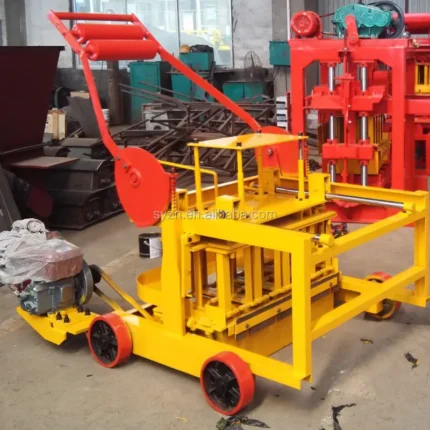
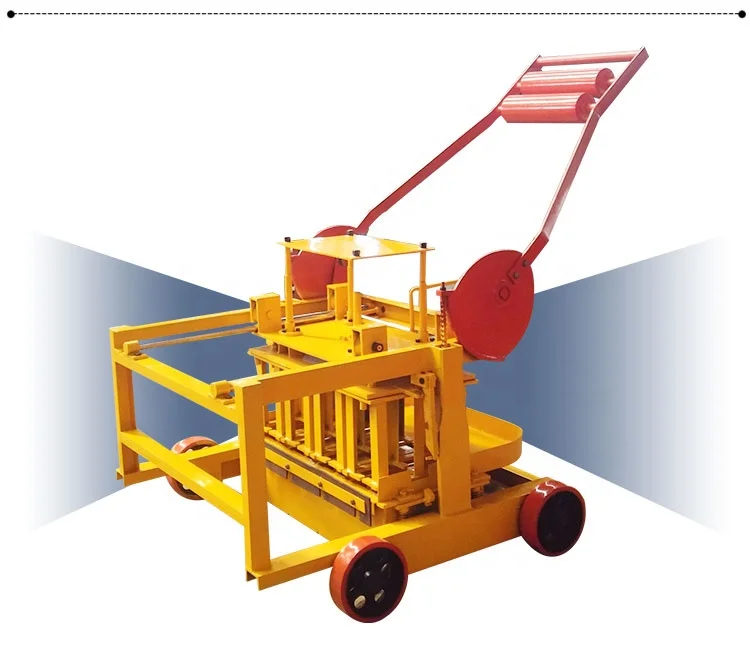
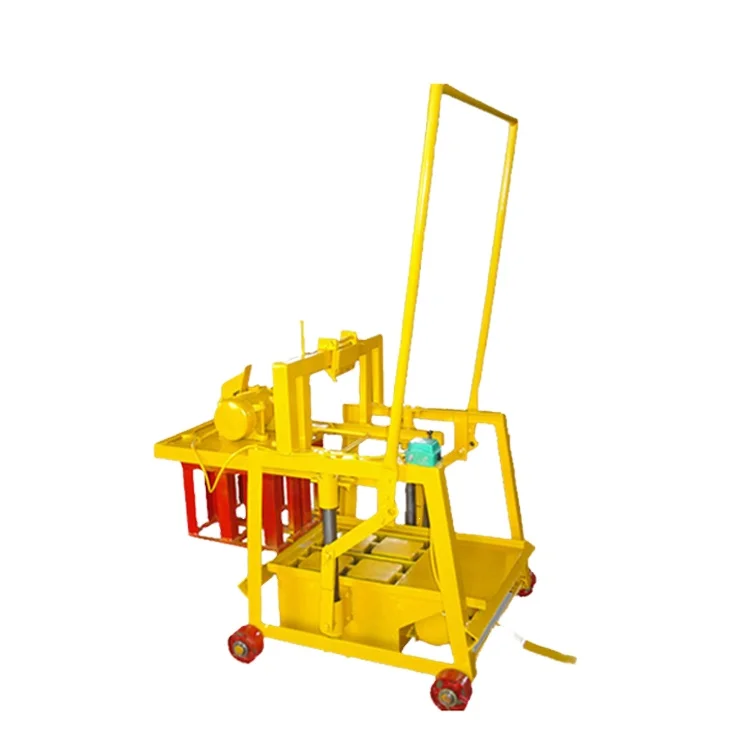
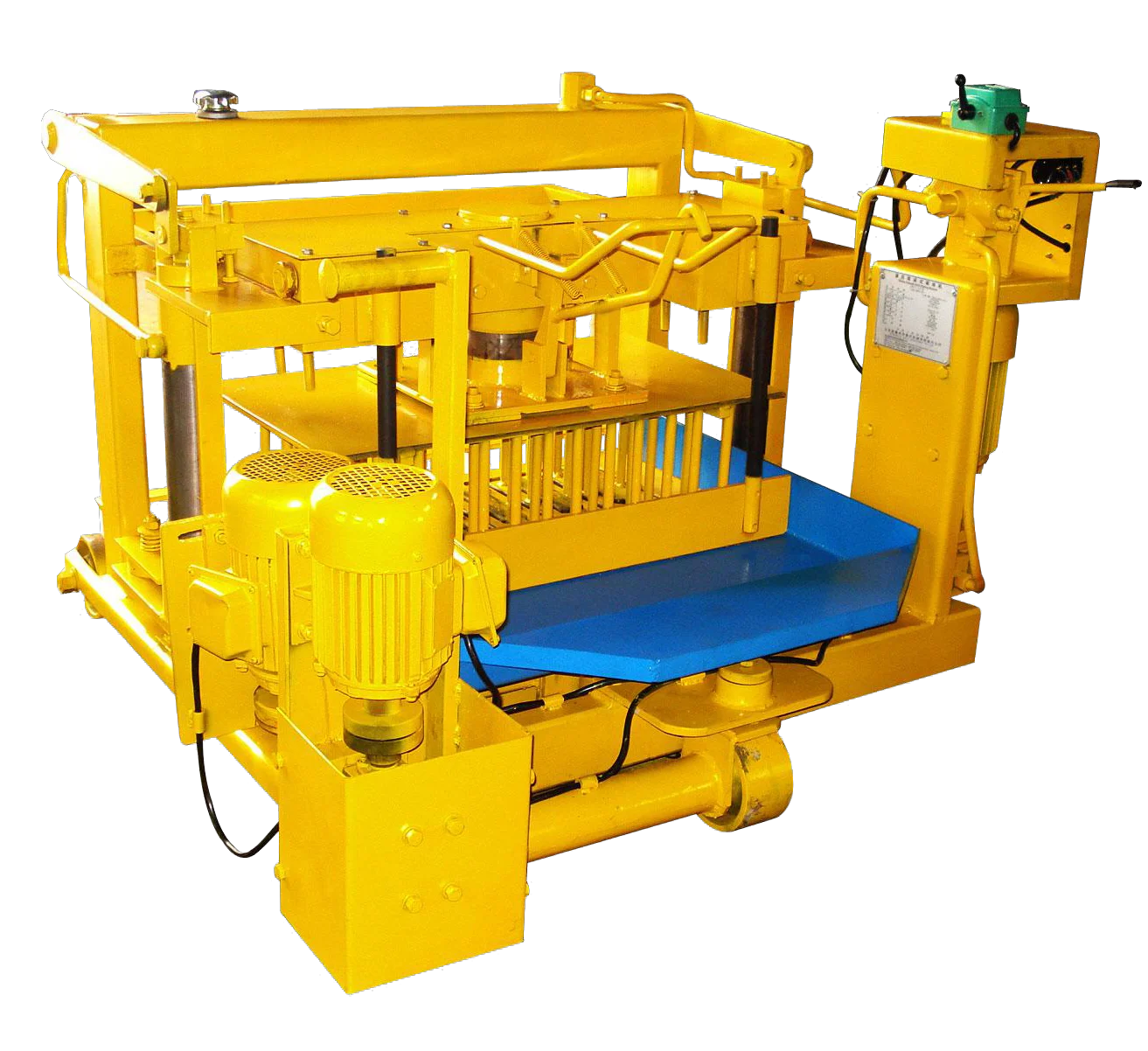
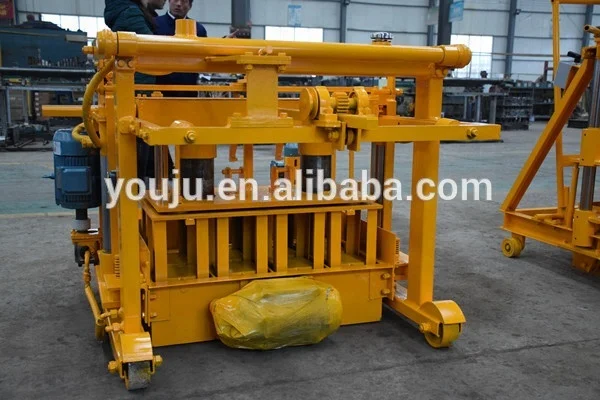
Cycle Logic Over Guesswork — the QMY4-30 mobile block machine locks each molding stroke into a fixed 30-second sequence so operators cannot drift off timing mid-shift, addressing the inconsistency that plagues purely manual egg-laying production.
Technical Specifications
| Parameter | Value |
|---|---|
| Model | QMY4-30 |
| Product Type | Mobile Hydraulic Concrete Block Making Machine |
| Rated Power | 5 kW |
| Molding Cycle | 30 seconds per stroke |
| Overall Dimensions (L×W×H) | 1200 × 1200 × 1100 mm |
| Net Weight | 950 kg |
| Output Capacity | 480 pcs/hour based on 400×200×200 mm hollow block, 4 pcs/mould |
| Output Capacity | 600 pcs/hour based on 400×150×200 mm hollow block, 5 pcs/mould |
| Output Capacity | 840 pcs/hour based on 400×100×200 mm hollow block, 7 pcs/mould |
| 8-Hour Shift Output | 3,840 pcs based on 400×200×200 mm hollow block |
| 8-Hour Shift Output | 4,800 pcs based on 400×150×200 mm hollow block |
| 8-Hour Shift Output | 6,720 pcs based on 400×100×200 mm hollow block |
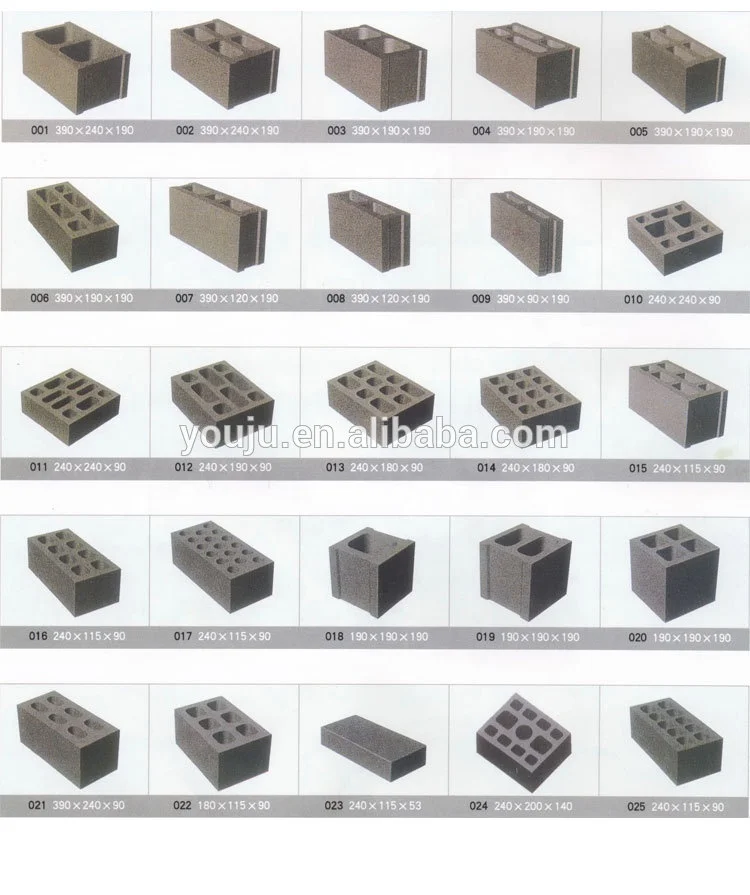
| Mould Format | Hollow block, solid brick |
| Automation Level | Manual / mobile egg-laying type |
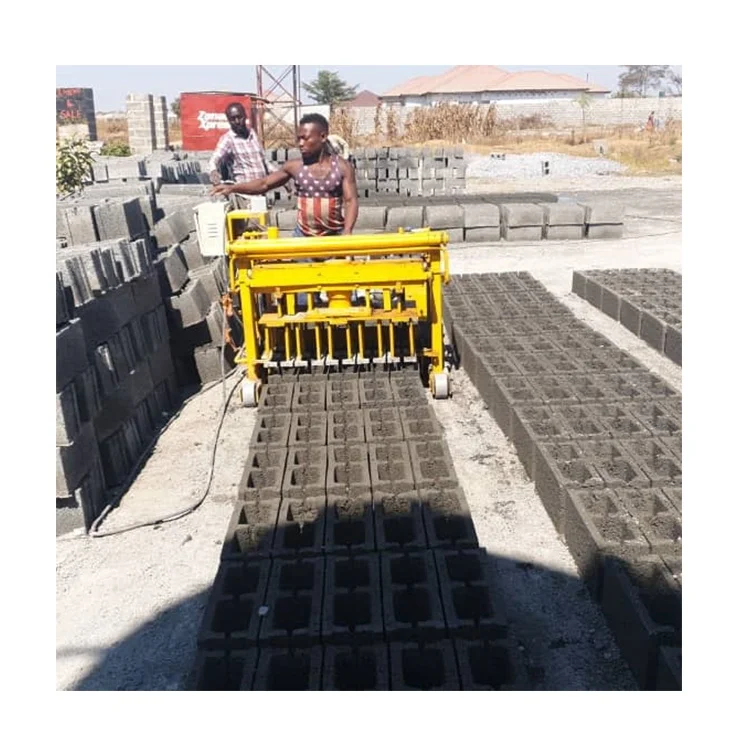
| Pallet Requirement | N/A — egg-laying type lays blocks directly on ground |
| Raw Materials | Cement, sand, crushed stones, slag |
| Voltage & Frequency | To be confirmed per destination market |
| Control System | To be confirmed (PLC logic configurable) |
| Hydraulic Pressure | To be confirmed (basis not stated in source) |
| Vibration Force | To be confirmed (basis not stated in source) |
| Mould Change Time | To be confirmed (basis not stated in source) |
| Warranty | One year |
Application Suitability
| Application | Material or Output |
|---|---|
| On-site residential block production | Hollow blocks from local sand and cement, no fixed plant needed |
| Contractor self-supply on remote project sites | Solid bricks from crushed stone and cement blends |
| Small-scale block entrepreneurship | Hollow blocks and solid bricks for local sale |
| Temporary production for housing developments | Standard hollow blocks laid directly on prepared ground |
Why "Cycles per Hour" Without a Block Format Is Meaningless
An automatic mobile block machine must quote capacity against the exact mould it runs, because four blocks per stroke and seven blocks per stroke are entirely different businesses.
When a supplier says their mobile egg-laying machine does a certain number of cycles per hour without stating which block format that figure assumes, the buyer ends up with daily output far short of what the project schedule demands. The QMY4-30 produces 480 pieces per hour only when running the 400×200×200 mm hollow block mould — switch to the narrower 100 mm wall mould and the figure changes to 840 per hour, not because the machine speeds up, but because each stroke yields more units. I have watched site managers plan entire pour sequences around a single capacity number that turned out to be the most optimistic format on the spec sheet. [NEED_CITE: capacity calculation methodology per block format in mobile block production]
What Fixed Cycle Timing Removes from the Operator
On a purely manual egg-laying machine, the operator decides when to lift the mould. Rush through a hot afternoon and the vibration cuts short; dawdle and the mix starts setting inside the cavity. The PLC controlled mobile block making machine logic in the QMY4-30 holds each molding stroke at 30 seconds regardless of operator fatigue, ambient temperature, or shift changeovers. This fixed cycle does not make the machine fully automatic — the operator still wheels it forward and loads the hopper — but it takes the single most variable human decision out of block density and dimensional accuracy.
The Upgrade Path That Matters for First-Time Producers
Most buyers who start with a mobile egg-laying machine do so because the project site has no infrastructure for a fixed press. The real question is what happens when that site ends and the next one begins. The QMY4-30 sits at the base of a configuration ladder: the same mould formats, the same block dimensions, and the same raw material logic carry forward when a buyer later moves to a semi-automatic line with pallet feeding and stacking. The blocks produced here are market-compatible with blocks from higher-tier machines, so the entrepreneur’s first customers do not need to be re-educated when production scales up. [NEED_CITE: block plant upgrade path from mobile to stationary configurations]
Reading the Numbers That Actually Affect Your Site
The 5 kW rated power means this machine runs comfortably on a standard site generator without demanding a dedicated transformer — a practical consideration on remote African and South Asian project sites where grid supply is unreliable. The 950 kg net weight keeps it within the range where two workers can reposition it across a slab without a forklift, which is exactly how mobile egg-laying production works in practice. The 30-second molding cycle, combined with the four-block-per-stroke mould for 200 mm hollow blocks, yields the 3,840-piece shift figure — but only if the operator maintains a steady feed rhythm and the mix arrives at the hopper without bottleneck. Hydraulic pressure and vibration force (to be confirmed with the manufacturer against your specific mix design) are what ultimately determine whether those 3,840 blocks hold together when demoulded or crumble at the edges.
When the Wrong Voltage Reaches the Site
I have seen machines sit in customs yards for weeks because the voltage and frequency were never confirmed before the container closed. The QMY4-30’s motor and control logic must match the destination market’s electrical standard — a 50 Hz machine shipped to a 60 Hz market runs at the wrong speed, and the 30-second cycle becomes something else entirely. This is not a paperwork issue; it is a commissioning delay that burns through project float and triggers liquidated damages. Every order needs voltage, frequency, and control display language locked in before production begins. [NEED_CITE: voltage and frequency standards by export market]
Why Procurement Here Differs from Catalogue Ordering
Block machinery as a single focus means the QMY4-30 is specified against the buyer’s actual mix design, local aggregate, and target block format rather than shipped as a catalogue default. Mould design covers the formats the buyer’s market actually sells, with custom drawings available when standard hollow and solid formats do not match local building codes. The automation level is selectable — a buyer starts with manual egg-laying and knows exactly what the next step looks like. Installation and commissioning support includes operator training on the specific mould change procedure and daily maintenance sequence for this machine class. Configuration is set against real site conditions, not assumed from a brochure.
Documentation & Verification
- Line layout showing QMY4-30 placement relative to curing area and raw material stockpile
- Capacity calculation sheet stating output per block format, not a single generic figure
- Mould drawing and format list matching the hollow and solid bricks specified for your market
- Voltage, frequency, and control language confirmation signed off before production
- Factory test record with molding cycle timing verified against the 30-second standard
- Operation manual with wear parts list specific to the hydraulic and vibration components on this unit
Installation, Commissioning & Support
- Prepared ground surface required — the 1200×1200 mm footprint needs a level concrete slab or compacted base for consistent block laying
- Power supply must match confirmed voltage and frequency; 5 kW draw requires a dedicated circuit or adequately rated generator
- Machine ships partially assembled; hydraulic system and vibration motor connect on site per electrical schematic
- First-day commissioning includes cycle timing verification and mould alignment check with your chosen block format
- Operator training covers hopper loading rhythm, mould change procedure, and daily hydraulic seal inspection
- Wear parts and hydraulic seal kit supplied against the specific component list for the QMY4-30
What to Include with Your Inquiry
Before a configuration proposal can be drafted, the buyer needs to specify the block formats required for the local market, the daily output target stated against those formats, the raw materials available on site with aggregate grading details, and the electrical standard at the destination. Control display language preference and any planned transition to a semi-automatic line should be flagged early so the machine and mould package are specified with that path in mind.
Frequently Asked Questions
Q: How does the 30-second cycle time translate to realistic daily output on site?
A: The 30-second cycle produces 480 pieces per hour with the 400×200×200 mm hollow block mould and 840 with the 100 mm wall mould. An 8-hour shift yields 3,840 or 6,720 respectively, but actual output depends on mix supply continuity, operator pace, and ground conditions. The PLC controlled mobile block making machine logic holds the cycle constant; everything around it is site-dependent.
Q: What electrical and control details must be confirmed before the QMY4-30 ships?
A: Voltage, frequency, and control display language need written confirmation before production begins. A machine wound for the wrong frequency will not maintain its rated cycle speed, and an interface in an unfamiliar language slows troubleshooting on site. These details are locked during the order stage, not at the port.
Q: Can a buyer move from this mobile machine to a semi-automatic line later?
A: Yes. The block formats, mould dimensions, and raw material logic used on the QMY4-30 carry forward to semi-automatic and automatic stationary lines. The transition adds pallet feeding, stacking, and curing rack handling, but the blocks themselves remain market-compatible with what the mobile machine produced.
Q: How is block consistency maintained when site conditions change throughout the day?
A: The fixed 30-second molding cycle removes timing variation from the operator. Consistency in block strength and dimension also depends on maintaining mix moisture and aggregate grading within the range the machine was configured for. When temperature or humidity shifts significantly, the mix recipe may need adjustment to keep demoulding quality stable.
Q: What support is available if the control system shows an error in the field?
A: The operation manual includes a fault code reference for the control logic installed on the QMY4-30. Remote troubleshooting support is available based on the specific PLC configuration confirmed at order. Having the wear parts list and hydraulic schematic on site allows local technicians to address common seal and vibration motor issues without waiting for shipped components.