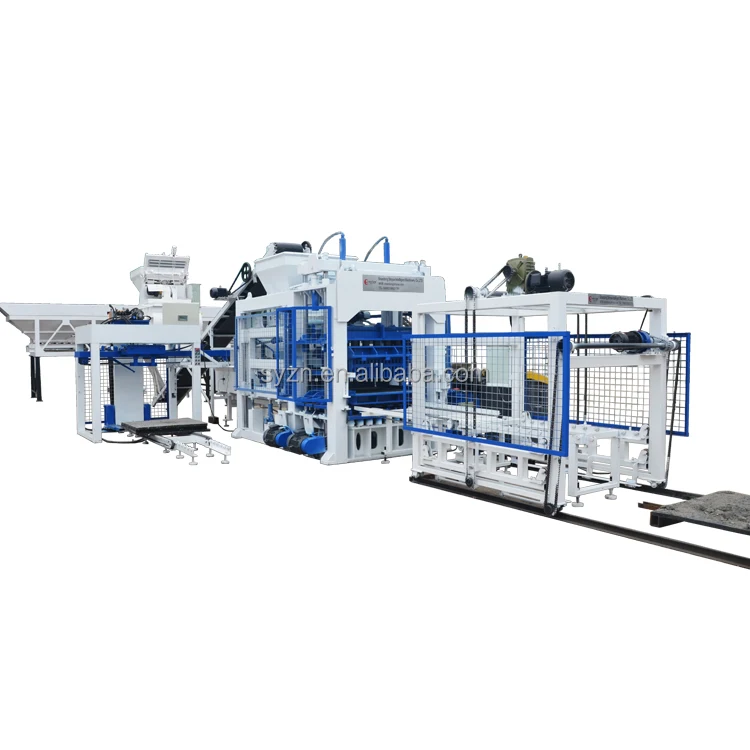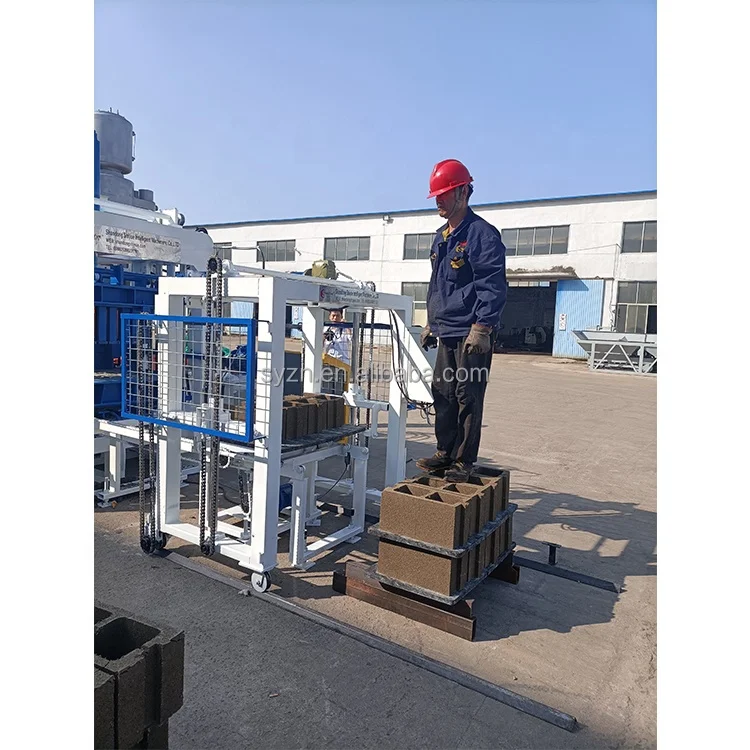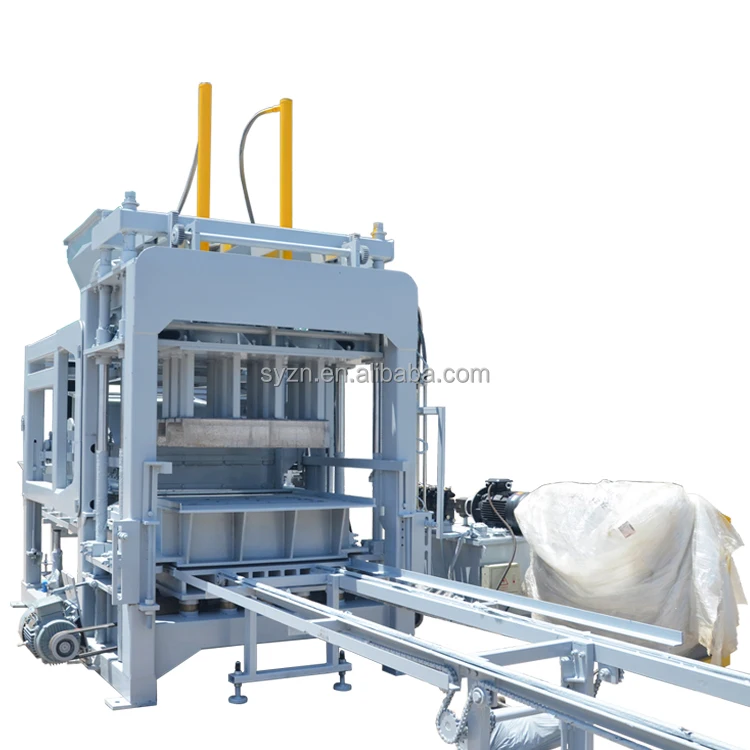
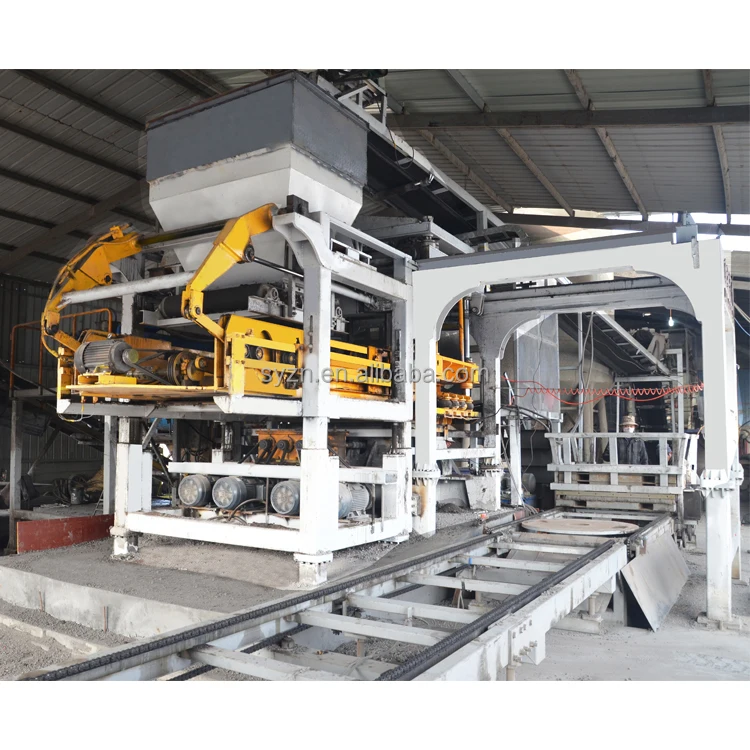



Description
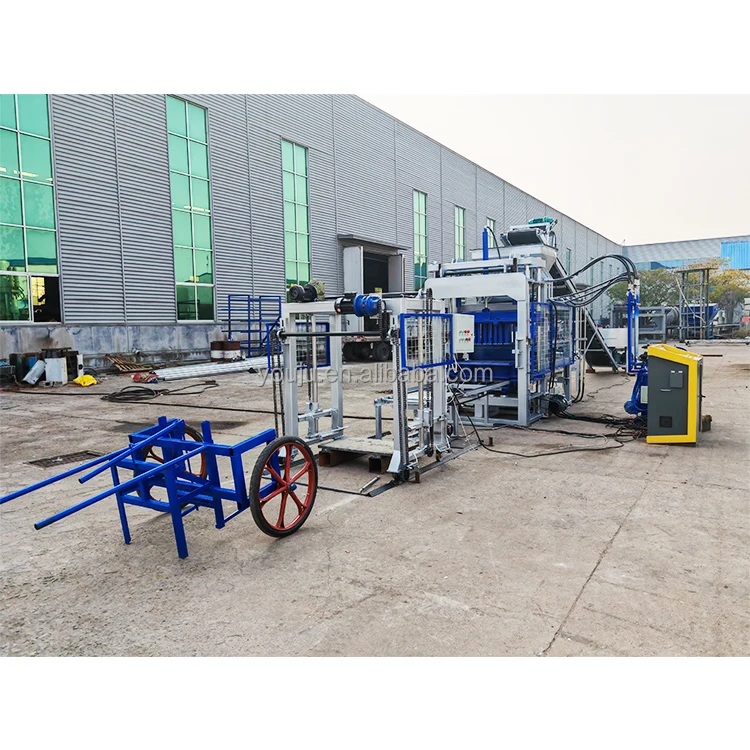
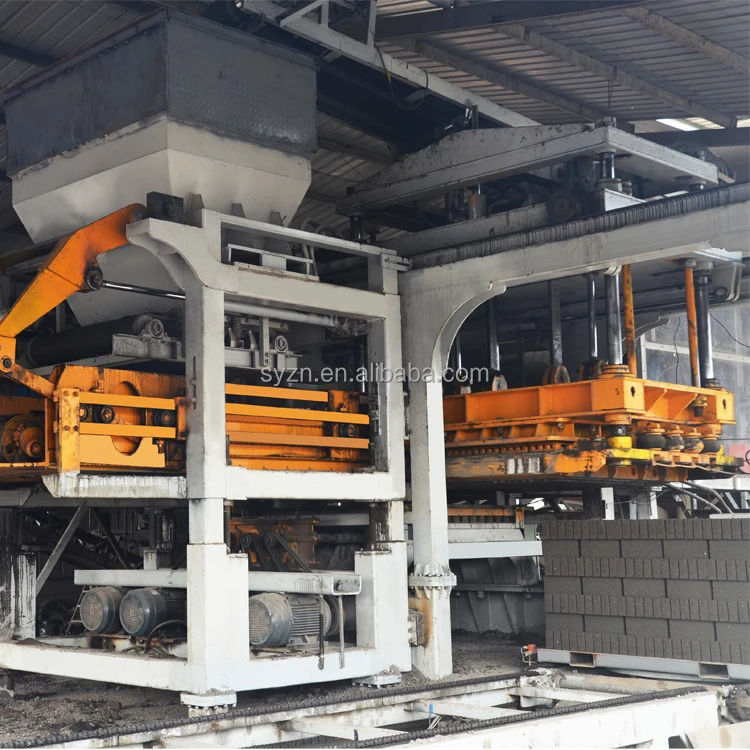
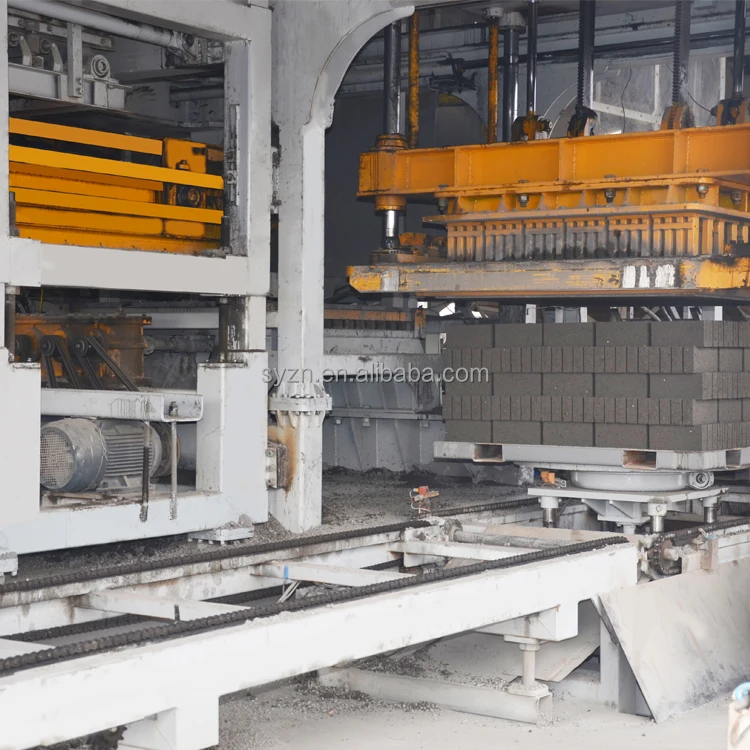
Fully Automated PLC Coordination — This automatic block making machine PLC controlled system manages batching, pallet feeding and stacking as one synchronized sequence rather than isolated station controls.
Technical Specifications
| Parameter | Value |
|---|---|
| Model | QT18-25 |
| Product Type | Fully Automatic Hydraulic Block Making Production Line |
| Main Vibration Form | Platform Vibration |
| Vibration Frequency | 2800–4500 r/min |
| Vibration Power | 60 kW |
| Hydraulic System Power | 59 kW |
| Total Installed Power | 119 kW |
| Brick Height Range | 50–300 mm |
| Stacking Height | 0–1200 mm |
| Pallet Size | 1350 × 1350 × 120 mm |
| Molding Cycle | 15–25 s (basis not stated in source — confirm block format and material) |
| Drive Method | Hydraulic |
| Demolding Method | Vibration and Hydraulic |
| Control System | PLC with person-machine interface and data input/output |
| Automation Level | Fully automatic |
| Stacking Method | Direct stacking after moulding |
| Applied Products | Hollow blocks, solid blocks, pavers, interlocking blocks, curbstone, colored pavers |
| Raw Materials | Crushed stone, sand, cement, fly ash, gravel, slag, dust |
| Factory Area Required | 2000 m² |
| Water Consumption | 8 T/day (basis not stated in source — confirm operating hours and mix) |
| Warranty | 1 year (excluding quick-wear parts) |
Application Suitability
| Application | Material or Output |
|---|---|
| High-volume hollow block plant | Crushed stone, sand, cement, fly ash blends |
| Paving block and interlocking brick production | Gravel, slag, colored aggregates |
| Curbstone and solid block manufacturing | Dense aggregate mixes with hydraulic-vibration forming |
| Contractor on-site block production for housing projects | Locally sourced sand and cement with adjustable mix ratios |
| Existing manufacturer adding new block formats | Quick mould change across hollow, solid, paver and kerbstone |
Why the Quoted Cycle Time Never Tells the Full Story
The automatic block making machine PLC controlled cycle count only matters when tied to the exact block format, wall thickness and aggregate density you will actually run.
A 15-second molding cycle on a thin paver does not translate to the same count on a 200 mm hollow block with a heavy mix. I have stood on sites in the Gulf where the brochure promised a shift output based on one format, and the real daily number on the buyer’s actual product fell noticeably short. That gap is rarely dishonesty — it is simply a cycle figure quoted without the format and material assumption attached. [NEED_CITE: block format and cycle time correlation in hydraulic vibration forming]
When you receive a capacity figure, ask which block size, wall thickness and raw material moisture content it assumes. Without those three anchors, the number is a reference point, not a production plan.
What the PLC Actually Takes Over From the Operator
In a manual or semi-automatic line, the operator decides when to feed material, when to trigger vibration, when to release the mould and how to stack. Each decision introduces variability between shifts and between workers. The automatic block making machine PLC controlled interface removes those judgment calls by executing a fixed sequence with data input and output for real-time monitoring.
Batching accuracy, pallet positioning, vibration duration and hydraulic pressure timing all run from stored recipes. The operator’s role shifts from making decisions to monitoring the person-machine interface for fault codes and material level warnings.
Consistency Across Shifts and Seasons
Temperature changes, aggregate moisture variation and different cement batches all affect block density. On a manual line, these variables demand constant operator adjustment. The PLC stores multiple mix recipes and forming parameters so that a Monday morning cold start follows the same sequence as a midday run in full heat. [NEED_CITE: PLC recipe management in concrete block production consistency]
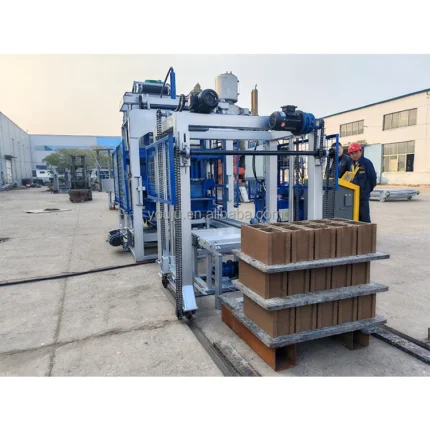
Direct stacking up to 1200 mm after moulding means blocks leave the press and move to the curing area without manual pallet transfer or hand stacking, reducing damage and labour at the most physically demanding stage of the shift.
Vibration Force and Hydraulic Pressure Working Together
The platform vibration system operating at 2800–4500 r/min compacts the mix from below, while the 59 kW hydraulic system applies downward pressure from above. These two forces must be matched to the specific mix design — a dry, low-cement blend needs more vibration energy to achieve the same density as a wetter mix with higher cement content. The 1350 × 1350 mm pallet size defines the forming area and must align with the curing racks and forklift capacity already on site. Molding cycles between 15 and 25 seconds cover the range from thin pavers to taller hollow blocks, but the actual cycle for your product must be confirmed during commissioning with your local aggregate.
The Cost of Skipping Voltage and Language Confirmation
I have watched a fully commissioned line sit idle for days because the PLC display arrived in a language the local operators could not read, and the motor contactors were rated for a frequency the site grid did not supply. These are not equipment failures — they are specification gaps that surface only after the crate is opened. [NEED_CITE: voltage and frequency mismatch in exported industrial machinery]
When the control language and electrical standard are confirmed in writing before production begins, the commissioning team arrives to set parameters, not to rewire cabinets or translate menus under project deadline pressure.
Why This Line Is Specified as a System
Block machinery is the single focus here, so the press, mould, pallet and stacking equipment are specified together rather than sourced from separate suppliers and forced to communicate on site.
Configuration starts from your actual mix design, local aggregate availability and target block format — not a catalogue default. Mould design covers the formats your market sells, with custom drawings available. The automation level is selectable, allowing a semi-automatic start with a defined upgrade path to full PLC coordination. Installation includes on-site commissioning with operator training so the team running the line daily understands the recipes, fault codes and maintenance intervals.
Documentation & Verification
- Line layout showing station cycle times matched so the press is never left waiting for material or pallets
- Capacity calculation document stating the block format and mix assumption behind each output figure
- PLC display language and voltage confirmation sheet signed before production release
- Factory test record run on your specified block format before dispatch
- Hydraulic and electrical schematic for local maintenance team reference
Installation, Commissioning & Support
- Factory area of approximately 2000 m² required with level concrete foundation for platform vibration isolation
- Dedicated power circuit sized for 119 kW total load with voltage and frequency confirmed before wiring
- On-site installation and operator training completed within approximately one week of arrival
- PLC recipes set during commissioning using your local aggregate sample and target block format
- Mould and hydraulic wear parts list provided with first-order spares recommendation
- Daily maintenance checklist covering vibration motor bearings, hydraulic fluid levels and pallet alignment sensors
What to Include With Your Inquiry
Share the specific block formats your market demands, including dimensions and wall thickness for hollow blocks. Provide a sample or lab report of your local aggregate and sand so the mix can be configured before the line ships. Confirm your site voltage, frequency and preferred PLC display language to avoid commissioning delays.
Frequently Asked Questions
Q: What tasks does the PLC remove from the operator on this automatic block making machine PLC controlled line?
A: The PLC manages batching ratios, pallet feeding timing, vibration duration, hydraulic pressure sequence, mould release and direct stacking. The operator monitors the person-machine interface for material levels and fault codes rather than making forming decisions shift by shift.
Q: How do I verify real daily output instead of relying on a single cycle time figure?
A: Request a capacity calculation that states which block format, wall thickness and aggregate type the cycle time assumes. The molding cycle of 15–25 seconds covers a range, and your specific product will sit at one point within that range depending on mix density and block height.
Q: Can the control language and electrical standard be confirmed before the machine ships?
A: Yes. PLC display language and voltage and frequency specifications are confirmed in writing before production begins. This prevents commissioning delays caused by menu translation or motor contactor replacement after the line arrives at your site.
Q: Is there an upgrade path from semi-automatic to fully automatic operation?
A: The automation level is selectable at order stage. A semi-automatic configuration can be specified with defined sensor and valve provisions so that future upgrades to full PLC-controlled stacking and pallet handling require component additions rather than a complete control system replacement.
Q: How are fault codes communicated to operators during production?
A: The person-machine interface displays fault codes with data input and output capability. When a sensor detects a pallet misalignment or a hydraulic pressure deviation, the interface identifies the station and the nature of the fault so the operator can respond without troubleshooting the entire line.