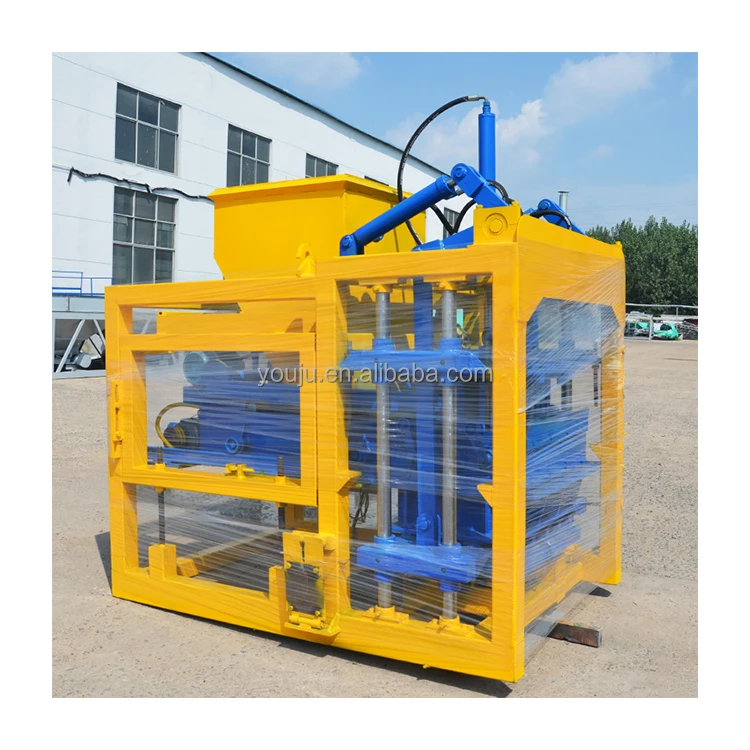
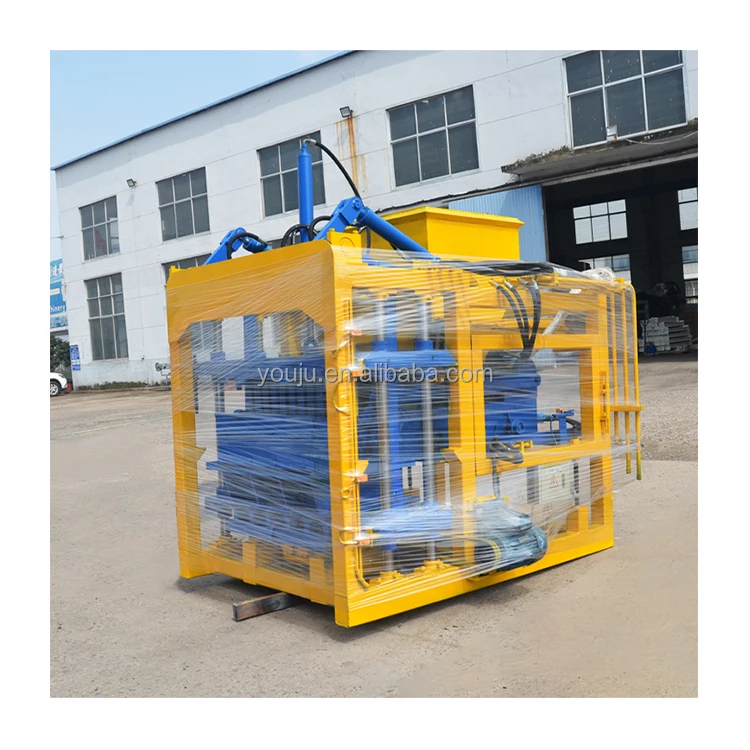


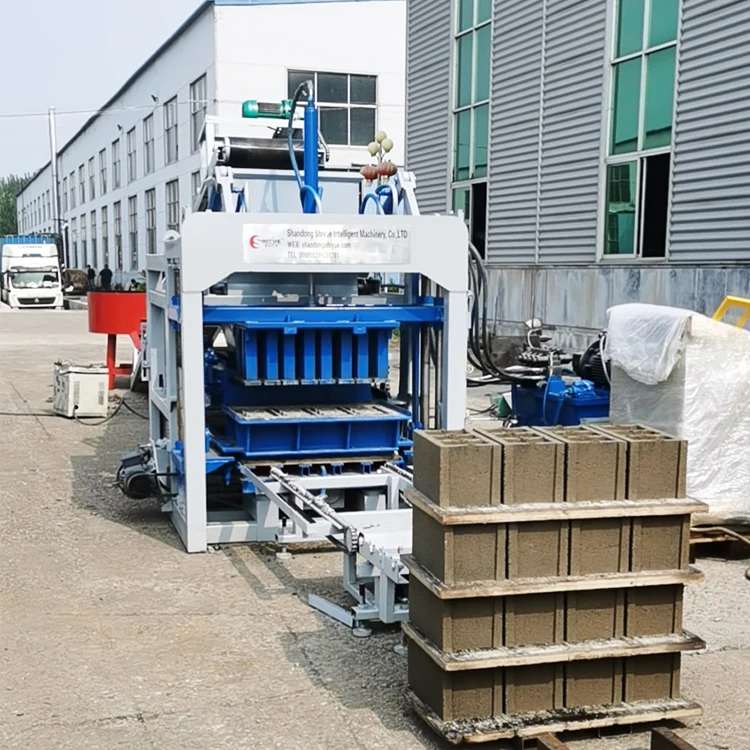
Description
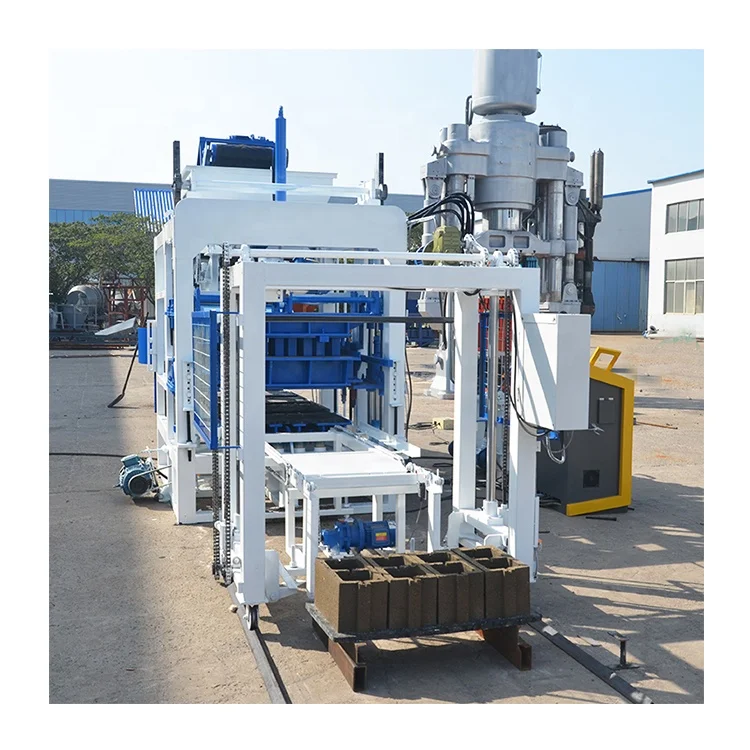
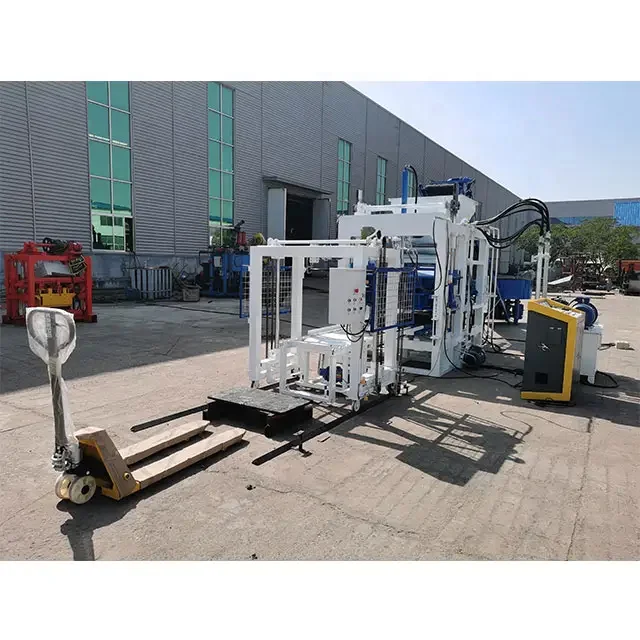
Integrated automation logic — the QT4-15A synchronises pallet feeding, demould and stacking through a single PLC cycle, so the operator supervises the press instead of lifting pallets by hand.
Technical Specifications
| Parameter | Value |
|---|---|
| Model | QT4-15A |
| Product Type | Automatic Concrete Block Making Machine |
| Overall Dimensions (L×W×H) | 7100 x 1600 x 2610 mm |
| Rated Pressure | 16 MPa |
| Vibration Form | Platform Vibration |
| Pallet Size | 1020 x 570 mm |
| Molding Cycle | 15–25 s (basis not stated in source — confirm block format / material / thickness) |
| Overall Power | 27.5 kW |
| Control System | PLC electronic console |
| Automation Level | Automatic (pallet feeder, block conveyor, demould process integrated) |
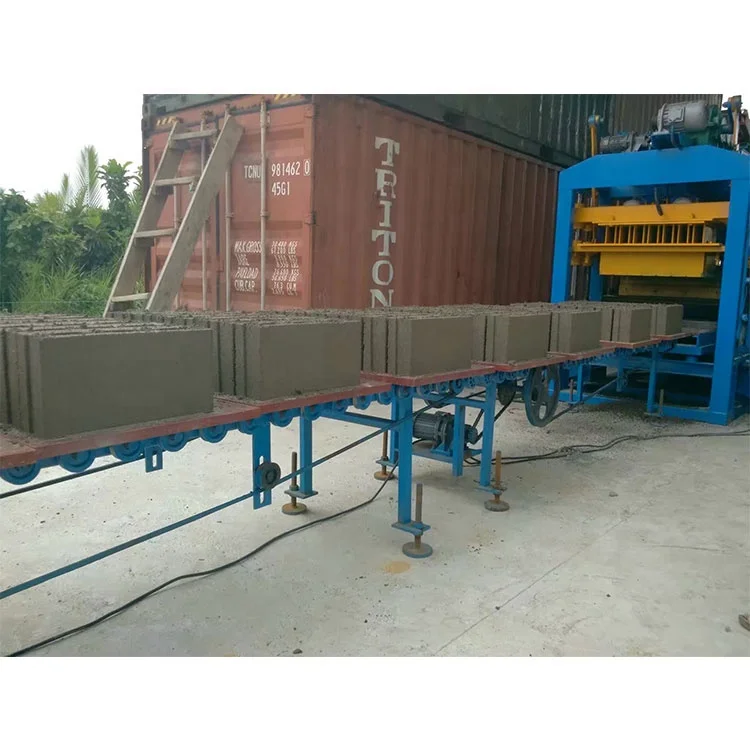
| Supporting Equipment | JQ500 pan mixer, 8 m belt conveyor, stacker, block clamper, trolley |
| Optional Equipment | Cement silo, batching plant |
| Mould Configuration | One free hollow mould included; extra moulds available and customizable |
| Voltage & Frequency | To be confirmed before order |
| PLC Display Language | To be confirmed before order |
Application Suitability
| Application | Material or Output |
|---|---|
| Hollow block production for wall construction | Crushed stone, river sand, cement |
| Solid block manufacturing | Fly ash, sand, gravel blends with cement binder |
| Paving block and kerbstone runs | Fine aggregate and cement with pigment additives |
| Small-to-medium fixed-plant block production | Locally sourced aggregate matching the buyer’s region |
Why "15–25 Seconds per Cycle" Needs a Format Attached
Cycle time only means something when you know which block is on the pallet.
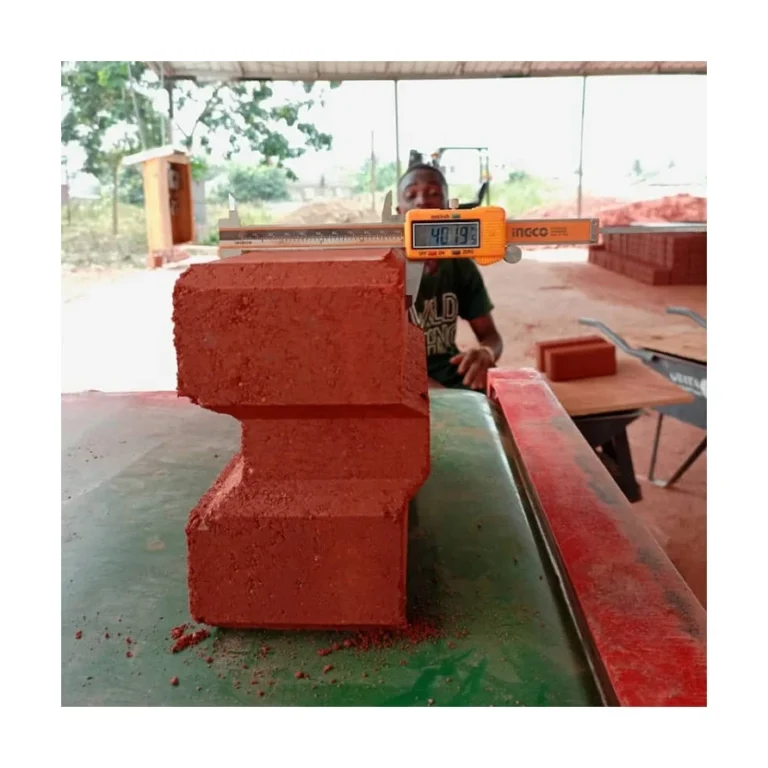
Buyers comparing block machines often see a single molding cycle figure and assume it applies across every format they plan to run. In practice, a hollow block with thick webs compacts differently from a thin paving block, and the automatic QT4-15 block machine PLC controlled cycle must be tuned for each. Without the format stated, a quoted cycle tells you almost nothing about daily throughput [NEED_CITE: block format impact on cycle time in hydraulic press operations].
That gap between catalogue numbers and real output is where most first-time plant owners lose money. I have watched buyers plan their curing yard and logistics around a cycle figure that only applied to the lightest block in the mould set, then discover on commissioning day that their main product runs noticeably slower. The fix is simple: ask for a capacity table that states the block format, dimensions, and material behind every number.
What the PLC Actually Removes from the Operator
The PLC electronic console on this machine governs the full molding sequence — from pallet indexing through vibration, press, demould and block discharge. Once the operator selects the cycle profile for the current mould, the controller holds timing and pressure consistent across every stroke. This is the core of what makes the automatic QT4-15 block machine PLC controlled a step up from manual lever operation: batch-to-batch variation drops because the machine repeats what it was told, not what the operator remembers.
Where Automation Stops and Planning Starts
Automatic pallet feeding and stacking remove the heaviest manual tasks from the press cycle, but they do not replace a well-organised curing area. The stacker layers blocks for transport, yet someone still needs to move those stacks to the yard and manage curing times. The line runs smoothly only when pallet size, stacker output rate, and forklift capacity are matched before the machine arrives [NEED_CITE: curing yard logistics and pallet handling in block plants].
Pressure, Vibration and the Density Equation
The 16 MPa rated hydraulic pressure works together with platform vibration to compact the concrete mix inside the mould cavity. Pressure alone would leave air pockets; vibration alone would not squeeze the mix tight enough for structural blocks. On the QT4-15A, these two forces are applied simultaneously during the press stroke, which is what gives the finished block its density and early demould strength. The 1020 x 570 mm pallet must sit flat and rigid under this force — a warped or undersized pallet will cause uneven compaction and cracked blocks. The 27.5 kW overall power rating covers the hydraulic pump, vibration motor, conveyor drives and PLC panel together, so the buyer’s electrical supply must sustain this load continuously through the shift.
The Cost of Skipping Voltage and Language Confirmation
A PLC-controlled machine that arrives with the wrong voltage rating or an unreadable display language sits idle until the issue is fixed — and the fix is rarely cheap. Rewinding a motor or replacing a control transformer on site delays commissioning and may void warranty terms. The QT4-15A ships with voltage and PLC display language set to the buyer’s specification, but only if those details are confirmed in writing before production starts [NEED_CITE: voltage and frequency standards by export market].
Why Buyers Source the QT4-15A Here
The machine, mould, pallet and handling equipment are specified as one matched system rather than assembled from unrelated suppliers. Configuration is set against the buyer’s actual mix design and local aggregate, not pulled from a catalogue default. Mould design covers the formats the buyer’s market actually sells, with custom drawings available when standard options do not fit. Automation level is selectable, so a buyer can start with the included stacker and add further automation as output grows. Installation support includes operator training on the PLC interface, and mould and wear parts remain available after the first replacement cycle.
Documentation & Verification
- Line layout showing QT4-15A footprint with pallet conveyor and stacker placement
- Capacity calculation table stating block format behind each cycle time
- Mould drawing and format list matched to the buyer’s product range
- Hydraulic and electrical schematic for the 27.5 kW system
- Voltage, frequency and PLC display language written confirmation
- Factory test record on the buyer’s specified block format before dispatch
Installation, Commissioning & Support
- Foundation pad sized for the 7100 x 1600 mm machine footprint with anchor bolt plan
- Dedicated electrical circuit rated for 27.5 kW continuous load at confirmed voltage
- Machine shipped in dismantled sections; reassembly and alignment done on site
- PLC parameter setup for each mould format during first commissioning run
- Operator training on cycle selection, mould change procedure and daily checks
- Wear parts list with reorder codes for hydraulic seals and vibration components
What to Prepare Before You Inquire
To configure the QT4-15A for your line, send the block formats you plan to produce with dimensions, your local aggregate type and source, and the daily output you need per format. Confirm your site voltage, frequency and preferred PLC display language. If you already have a curing yard and forklift, share the pallet dimensions they accommodate so the 1020 x 570 mm pallet can be verified or adjusted.
Frequently Asked Questions
Q: How do I verify the daily output the QT4-15A can actually deliver?
A: Request a capacity table that states the block format, dimensions and material behind each cycle time figure. A single "15–25 seconds" range without format context does not translate to a meaningful daily number. The table should show output per shift for each mould you plan to run.
Q: Can the PLC display language and voltage be set for my country?
A: Yes, both are confirmed in writing before production begins. The buyer specifies local voltage, frequency and preferred PLC language during the order process. This avoids costly on-site electrical modifications or unreadable menus after the machine arrives.
Q: What automation can I add later if I start with the base QT4-15A?
A: The included stacker and pallet conveyor handle the core press cycle. Additional automation such as automatic cubing, curing rack handling or a full batching plant can be specified later, provided the line layout reserves space and the PLC has available I/O channels.
Q: How long does a mould change take on this machine?
A: Mould change involves loosening clamps, lifting the current mould, seating the new one and updating the PLC cycle profile. The exact time depends on operator familiarity and mould weight. Ask for a documented procedure and expected time for your specific mould set.
Q: Does the 1020 x 570 mm pallet size work with my existing curing yard?
A: The pallet must match your curing rack spacing and forklift tine width. Share your current yard dimensions and handling equipment before order so the pallet size can be confirmed or a custom size arranged to avoid double-handling after production.