
Description
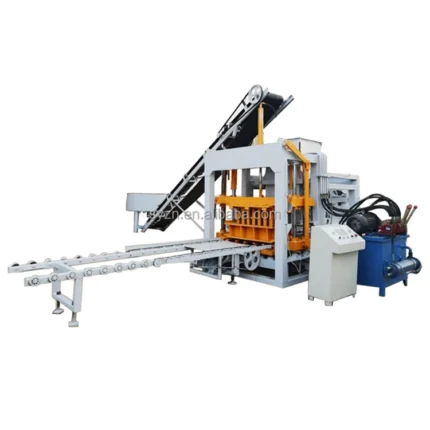
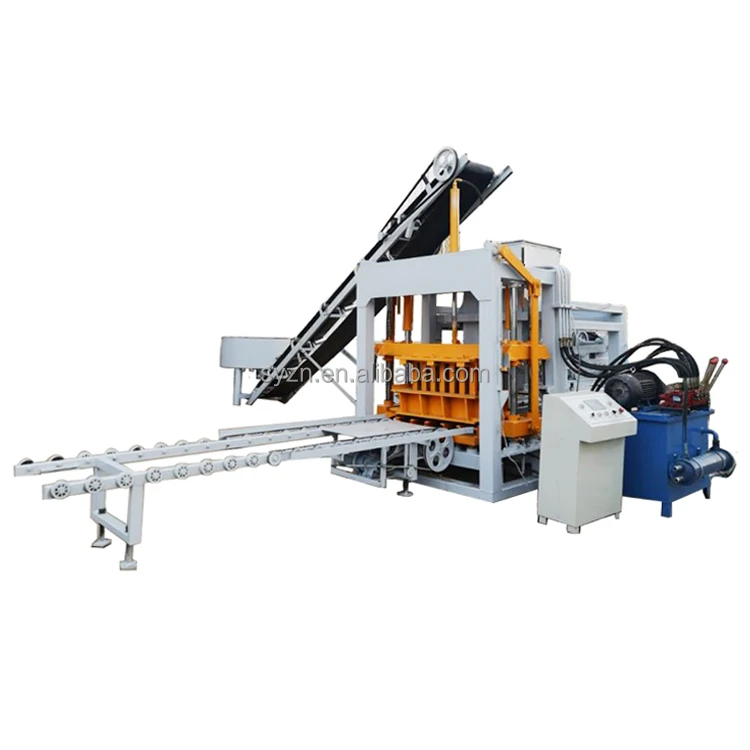
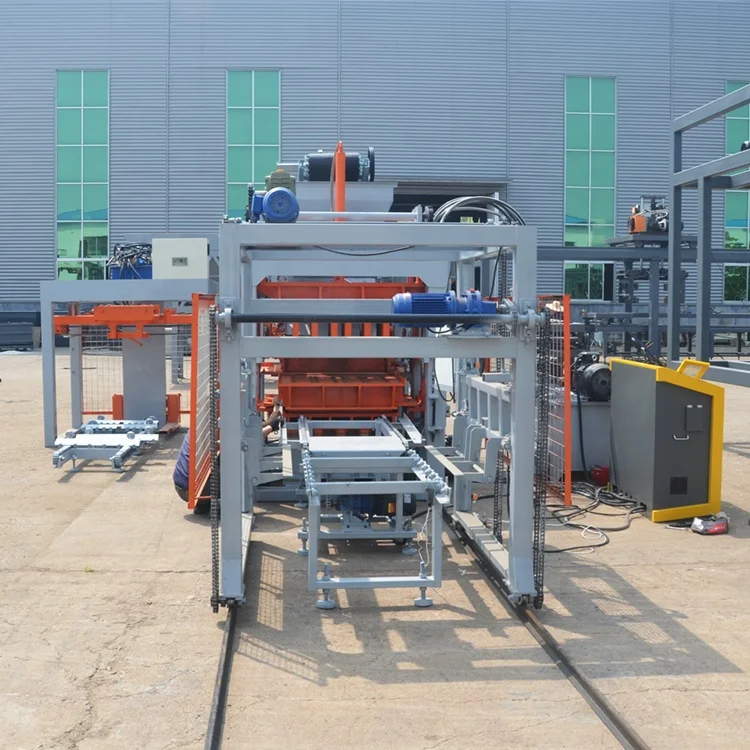
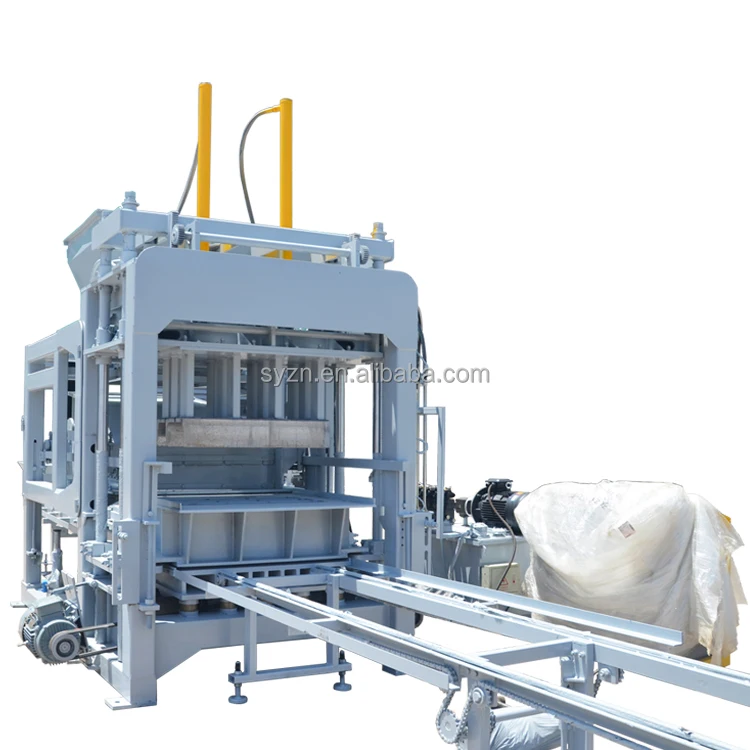
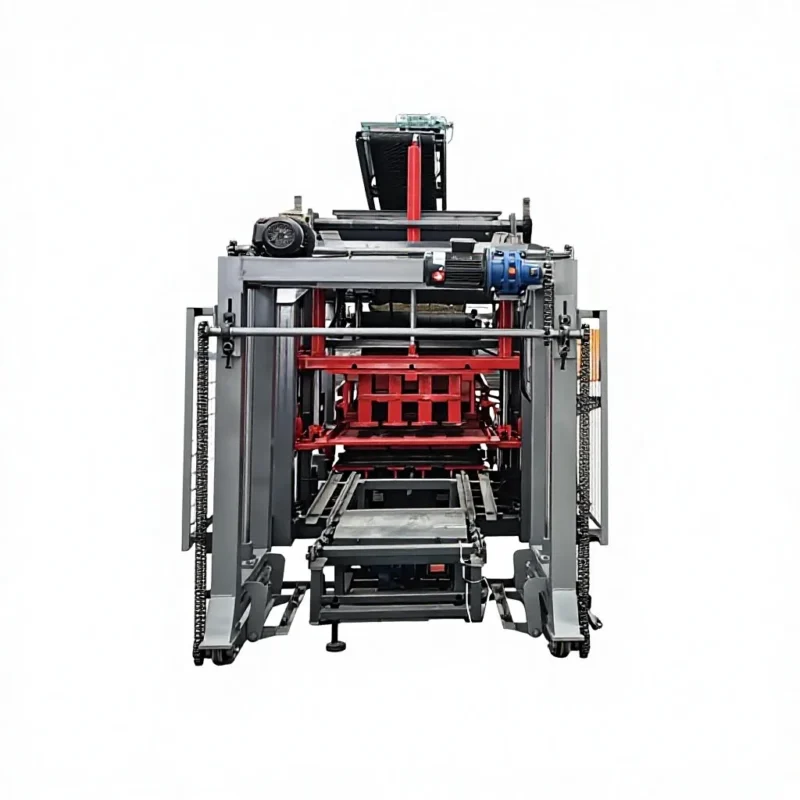
Matched Vibration and Pressure — The QT4-15A is configured against the buyer’s actual mix design and local aggregate before dispatch, so hydraulic pressure and vibration force produce consistent block density rather than relying on a catalogue default.
Technical Specifications
| Parameter | Value |
|---|---|
| Model | QT4-15A |
| Product Type | Fully Automatic Hydraulic Concrete Block Making Machine |
| Overall Dimensions (L×W×H) | 4100 × 1600 × 2600 mm |
| Total Mass | 4 T |
| Rated Hydraulic Pressure | 16–21 MPa |
| Main Vibration Form | Platform Vibration |
| Vibration Frequency | 4200 r/min |
| Vibration Force | 55 kN |
| Pallet Size | 880 × 550 mm |
| Molding Cycle | 25–30 s per pallet (basis not stated in source — confirm block format and material) |
| Overall Power | 18.45 kW (source value listed as W — verify against manufacturer catalog) |
| Demolding Method | Hydraulic |
| Control System | PLC |
| Assembly State | Fully automatic line |
| Factory Area Required | 300 m² |
| Raw Materials | Crushed stone, sand, cement, fly ash, gravel, slag, dust |
| Applied Products | Hollow blocks, solid blocks, pavers, interlocking blocks, curbstones, colored pavers |
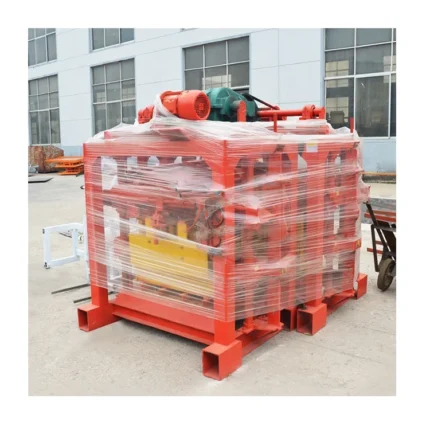
| Loading | 1 × 40HQ container (basic equipment) |
| Warranty | 1 year (whole machine, excluding spare parts) |
| Certification | CE (declared where applicable) |
Application Suitability
| Application | Material or Output |
|---|---|
| Hollow block production for load-bearing walls | Crushed stone, sand, cement, fly ash blends |
| Solid block manufacturing for partition and boundary walls | Gravel, cement, slag aggregates |
| Paving block production for driveways and walkways | Crushed stone, sand, cement with pigment for colored pavers |
| Interlocking block production for retaining structures | Sand, cement, gravel with hydraulic compaction |
| Curbstone manufacturing for road and pavement edging | Coarse aggregate, cement, high-pressure hydraulic forming |
What "25–30 Seconds per Pallet" Leaves Out When Sizing an automatic QT4-15 block making machine PLC controlled
A cycle time is only meaningful once the block format, wall thickness, and raw material are named alongside it.
I have watched plant owners celebrate a fast quoted cycle, then discover their primary selling format runs several seconds longer than the headline number. The automatic QT4-15 block making machine PLC controlled achieves its stated 25–30 s molding cycle under specific conditions that must be verified against your actual product mix before daily output projections are set. When a buyer assumes that figure applies equally to a 200 mm hollow block and a thin paver, the gap between expected and real throughput widens fast [NEED_CITE: block format impact on cycle time and daily output projections]. Confirming cycle time per format in writing before production starts prevents the most common capacity dispute in this equipment class.
How PLC Control Removes Operator-Driven Variation
Manual and semi-automatic block presses leave cycle rhythm, pallet positioning, and demoulding timing in the operator’s hands. Shift changes, fatigue, and inexperience introduce batch-to-batch inconsistency that no amount of supervision fully corrects. The automatic QT4-15 block making machine PLC controlled replaces those manual decisions with programmed sequences, so every pallet receives the same vibration duration, hydraulic pressure ramp, and demoulding speed regardless of who is watching the line. This matters most when a plant runs multiple formats across a single shift — the PLC recalls the stored programme for each mould without requiring the operator to retime the press by feel.
Where the Automatic Sequence Meets the Rest of the Line
An automatic press is only as consistent as the stations feeding it. Pallet delivery, raw material batching, and wet product stacking must each complete their step before the press begins the next cycle, or the press sits idle waiting. The QT4-15A is specified as part of a fully automatic line, meaning pallet feeding, vibration pressing, hydraulic demoulding, and wet block handling are sequenced through the same control architecture [NEED_CITE: PLC integration across block line stations for cycle synchronization]. When any station falls behind, the PLC pauses rather than forcing a half-formed block through the press — a behaviour that protects block quality at the cost of raw speed, which is the trade-off any plant owner should want.
Reading the Specs That Actually Determine Block Density
Hydraulic pressure and vibration force work together, not independently. The QT4-15A delivers 16–21 MPa of rated pressure against a platform vibrating at 4200 r/min with 55 kN of force. Higher vibration loosens the aggregate bed so the hydraulic ram can compress it into a denser matrix; insufficient vibration leaves the pressure fighting a stiff, uncompacted mix, producing blocks that crumble at the edges. The 880 × 550 mm pallet size defines the forming area and therefore how that force distributes across each block — a larger pallet would dilute the same force over more surface area, while a smaller one would concentrate it. Buyers sourcing aggregate with unusual particle shapes or high fines content should request a factory test using their own material sample to confirm the vibration-to-pressure ratio holds [NEED_CITE: vibration force and hydraulic pressure matching to local aggregate characteristics].
The Hidden Cost of Skipping Configuration Details
When voltage, frequency, and PLC display language go unconfirmed before the machine enters production, commissioning stalls at the buyer’s site while the correct components are sourced and shipped. A control panel displaying instructions in an unreadable language forces operators to rely on memory rather than real-time guidance, which is precisely when inconsistent blocks start leaving the line. Equally, when the pallet size is chosen without checking the curing rack dimensions and forklift capacity the buyer already owns, pallets either do not fit the existing racks or exceed what the forklift can safely carry — problems that surface only after the machine arrives. I have seen lines sit idle for weeks over a voltage mismatch that a single confirmation email would have prevented.
Why Procurement Decisions Land Here
Block machinery as a single focus means the QT4-15A press, mould, pallet, and handling equipment are specified as one matched system rather than assembled from separate suppliers. Configuration is set against the buyer’s actual mix design and target block format, not a catalogue default that assumes ideal materials. Mould design and supply cover the formats the buyer’s market sells, with custom drawings available when standard moulds do not match local demand. The automation level is selectable, so a buyer currently running semi-automatic operation can plan an upgrade path to this automatic configuration without replacing the entire line. Installation and commissioning support includes operator training, and a documented wear parts and mould list means the first replacement is planned rather than reactive.
Documentation & Verification
- Line layout and capacity calculation stating the block format assumed for the 25–30 s cycle
- Machine specification sheet with confirmed voltage, frequency, and PLC display language
- Mould drawing and format list covering all block types in the buyer’s product range
- Hydraulic and electrical schematic for on-site maintenance troubleshooting
- Factory test record run on the buyer’s specified raw material and block format before dispatch
Installation, Commissioning & Support
- Foundation pad level within tolerance across the 4100 × 1600 mm machine footprint to prevent frame twist
- Dedicated power circuit rated for the 18.45 kW overall load with confirmed voltage and frequency
- Machine shipped in 1 × 40HQ container and reassembled on-site with hydraulic and electrical connections verified
- PLC parameters loaded for the buyer’s confirmed block formats during initial commissioning
- Operator training on mould change procedure, cycle programme selection, and daily inspection routines
- Wear parts list supplied so hydraulic seals and vibration components are reordered before stockouts occur
What We Need from You to Move Forward
To size the line accurately, provide your primary block formats with dimensions, your target daily output per format, and a sample or description of your local aggregate and mix proportions. Confirm your site voltage, frequency, and preferred PLC display language so the control system is built correctly before shipment. If you have existing pallets, curing racks, or upstream batchers, share their specifications so the automatic handling stations are matched to what is already on the floor.
Frequently Asked Questions
Q: How is the 25–30 s molding cycle verified for my specific block format?
A: The quoted cycle assumes conditions that vary by block format, wall thickness, and raw material. Before production, we run a factory test using your specified mix and target block dimensions, then document the actual cycle time per format. The written test record ships with the machine, so your daily output projection is based on measured data rather than a catalogue figure.
Q: What PLC brand and display language options are available for my market?
A: The PLC brand and display language are confirmed in writing during the order stage, before the control panel is assembled. Buyers specify their preferred language at this point, and the confirmation is recorded in the documentation package. This prevents the most common commissioning delay we encounter on international installations.
Q: How do I upgrade from a semi-automatic line to this automatic configuration?
A: The QT4-15A automation level is selectable, and the system architecture supports phased upgrades. A buyer currently running manual pallet handling can add automatic pallet feeding, stacking, and cubing as separate stages without replacing the press itself. We specify the upgrade path during initial quotation so each phase connects cleanly to the existing equipment.
Q: How are vibration force and hydraulic pressure matched to my local aggregate?
A: The 55 kN vibration force and 16–21 MPa hydraulic pressure are calibrated against the buyer’s actual mix design and aggregate sample during factory testing. Unusual particle shapes or high fines content may require adjustment to the vibration-to-pressure ratio, which is documented in the test record before the machine ships.
Q: What remote diagnostics and batch consistency monitoring does the control system provide?
A: The PLC records cycle parameters for each production run, allowing the operator to review pressure and vibration data across batches. Remote diagnostics capability depends on the control system configuration selected at order stage — buyers planning remote monitoring should specify this requirement before the panel is built so the necessary communication modules are included.