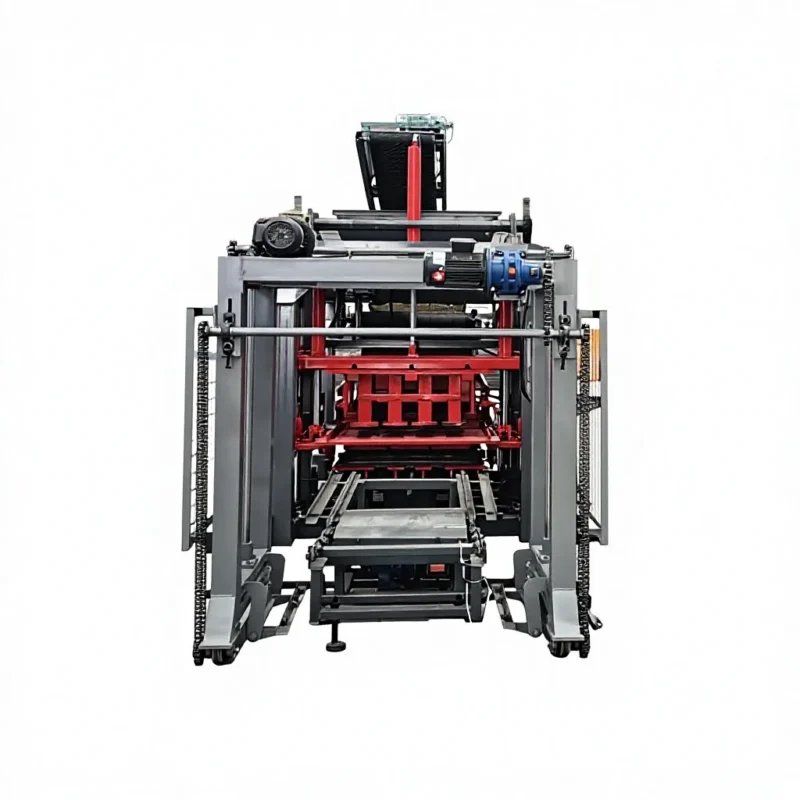

Description
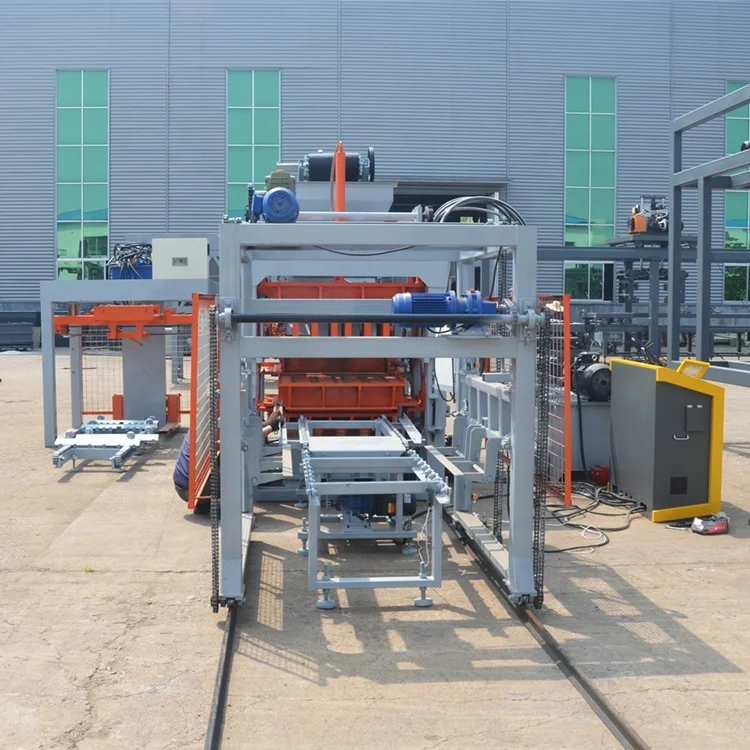
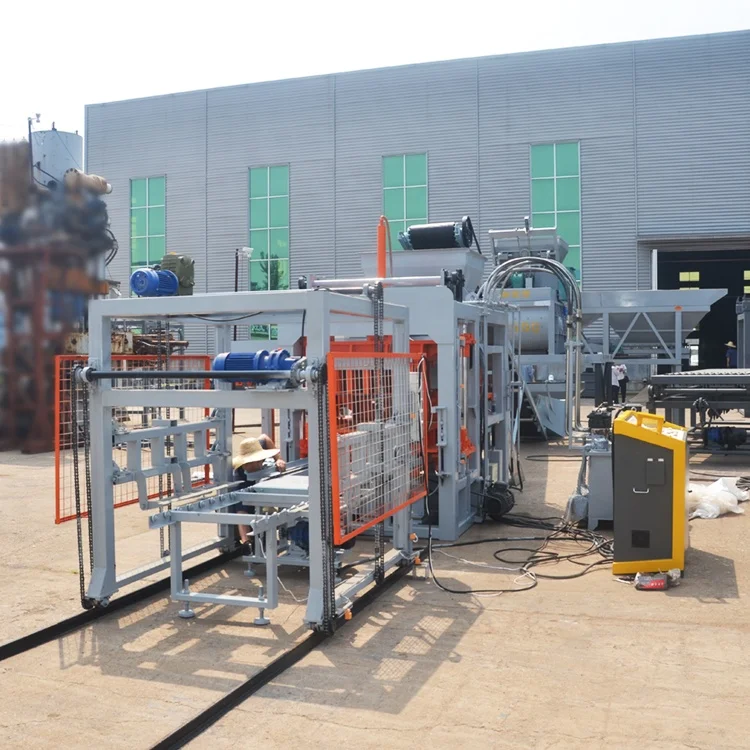
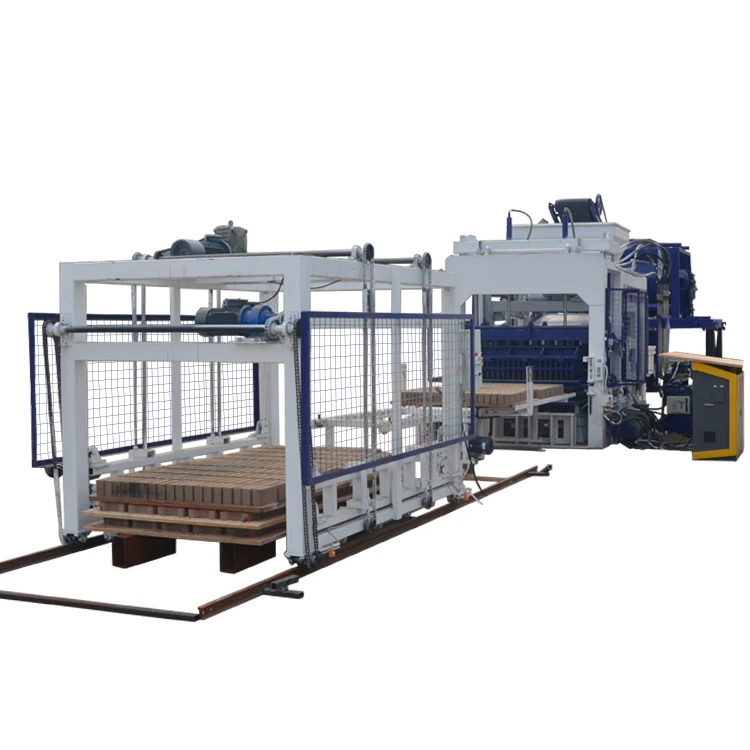
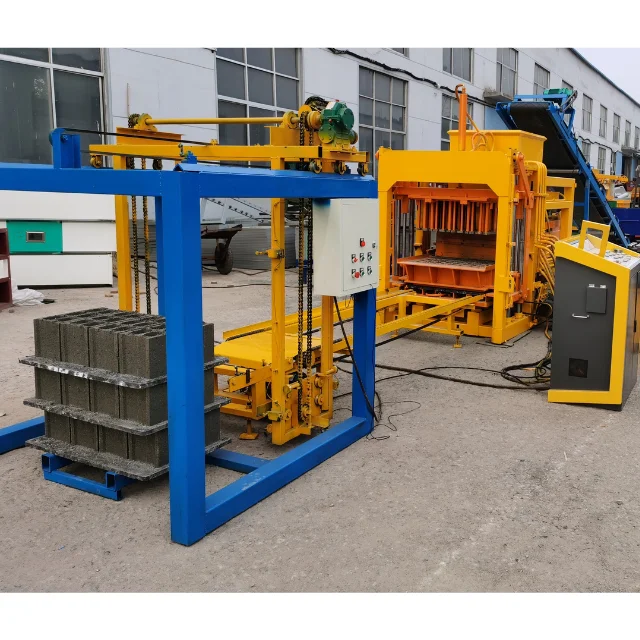
Matched automation logic — the QT4-15A PLC sequence is locked to your block format and local aggregate before it leaves our Shandong workshop, not left for on-site guessing.
Technical Specifications
| Parameter | Value |
|---|---|
| Model | QT4-15A |
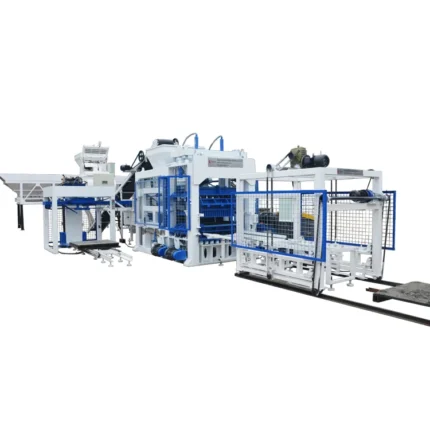
| Product Type | Fully Automatic Hydraulic Block Making Machine |
| Overall Dimensions (L×W×H) | 4100×1600×2600 mm |
| Total Mass | 4 T |
| Rated Pressure | 16–21 MPa |
| Main Vibration Form | Platform Vibration |
| Vibration Frequency | 4200 r/min |
| Vibration Force | 55 kN |
| Pallet Size | 880×550 mm |
| Molding Cycle | 25–30 s (basis not stated in source — confirm block format / material / thickness) |
| Overall Power | 18.45 kW |
| Demolding Method | Hydraulic |
| Factory Area Required | 300 m² |
| Control System | PLC (brand and display language to be confirmed before production) |
| Automation Level | Fully automatic |
| Voltage & Frequency | Configurable to destination market (to be confirmed in writing before shipment) |
| Warranty | 1 year (excluding spare parts) |
| Loading | 1×40HQ container (basic equipment) |
| Standards | CE (verify applicability to specific configuration) |
Application Suitability
| Application | Material or Output |
|---|---|
| Hollow block production | Crushed stone, sand, cement, fly ash |
| Solid block production | Gravel, sand, cement, slag |
| Paving block and colored paver production | Fine aggregate, cement, pigment |
| Interlocking block production | Crushed stone, sand, cement |
| Curbstone production | Coarse aggregate, cement, sand |
Why the PLC Language Question Beats the Price Question
An automatic QT4-15A block making machine PLC controlled in a language your operators cannot read is an expensive manual press. I have stood on commissioning floors in Shandong and overseas where a fully automatic line sat idle because the PLC touch screen defaulted to English or Chinese, and the local electrician could not navigate the fault menu. That first-day stall cascades into missed production targets and eroded confidence in the equipment. The automatic QT4-15A block making machine PLC controlled configuration must include display language, voltage, and frequency locked in writing before the control cabinet is wired [NEED_CITE: voltage and frequency standards by export market]. Skipping this step is the single most common reason fully automatic lines underperform during their first month on site.
Sequencing Every Press Cycle Without Operator Guesswork
The QT4-15A runs its full press cycle — pallet feed, vibration onset, hydraulic compression, dwell, and demolding — through programmable logic rather than manual push-button timing. This removes the variability that comes from different operators running the same machine on different shifts. When the automatic QT4-15A block making machine PLC controlled cycle is tuned to your target block format, the vibration duration and hydraulic pressure hold are stored as named recipes, so a mould change does not mean a full day of trial-and-error tuning.
From Semi-Automatic to Full Line Integration
Starting with the QT4-15A does not lock you into its current automation boundary. The platform supports future addition of automatic stacking and cubing stations once your daily volume justifies the investment. The PLC architecture is structured so that downstream stations communicate with the press controller through standard I/O, avoiding the need to rip out the original control cabinet when you expand [NEED_CITE: PLC I/O expansion practices in concrete product lines]. This upgrade path is relevant for plant owners moving from manual pallet handling to continuous output flow.
Pressure, Vibration, and the Density Equation
The rated pressure of 16–21 MPa and vibration force of 55 kN at 4200 r/min work together to compact the mix into the mould cavity. Vibration fluidizes the material so it fills corners and thin webs, while hydraulic pressure then squeezes out voids to build green strength. If either parameter is mismatched to your aggregate gradation or cement content, you get blocks that chip at the edges during demolding or fail compressive strength tests. The 880×550 mm pallet size also determines how many blocks per cycle and must match the curing rack spacing and forklift tine width you already have on site. The 25–30 s molding cycle figure applies only to the format and mix used during factory testing, so your actual cycle time may shift once your local material is introduced.
The Cost of Skipping Configuration Details
When a buyer accepts a catalogue-default machine without confirming pallet dimensions against their curing area, pallets end up stacked on the floor because the racks do not fit. When voltage and frequency are assumed rather than confirmed, motors burn out during first energization or the PLC refuses to boot on a 60 Hz supply. When moulds arrive without a matching recipe in the PLC, operators run test cycles for days, consuming raw material and burning through the first set of pallets before acceptable blocks come off the line [NEED_CITE: common commissioning failures in exported concrete block equipment]. Each of these issues traces back to a conversation that did not happen before production started.
Why Source the QT4-15A Through This Line
Block machinery is our single focus, so the QT4-15A press, mould, pallet, and handling equipment are specified as one matched system rather than assembled from unrelated suppliers. Every configuration is set against your actual mix design, local aggregate, and target block format instead of a catalogue default. Mould design and supply cover the formats your market actually sells, including custom drawings when standard moulds do not fit. The automation level is selectable — you can start semi-automatic on the QT4-15A platform and add stacking later. Installation, commissioning, and operator training are included so the machine does not arrive as a crate of parts your team must decode alone [NEED_CITE: on-site commissioning scope for exported block making equipment].
Documentation & Verification
- Line layout and capacity calculation stating the block format assumed for the QT4-15A cycle time
- PLC program recipe list matched to each mould in your order
- Voltage, frequency, and control display language confirmation sheet signed before wiring
- Factory test record with actual cycle times on your target mould and mix
- Hydraulic and electrical schematic with component part numbers
- Operation and maintenance manual in the confirmed display language
Installation, Commissioning & Support
- 300 m² factory area required; confirm floor load capacity for the 4 T machine mass before foundation pour
- Dedicated power circuit matching confirmed voltage and frequency for the 18.45 kW total load
- Machine arrives dismantled in one 40HQ; reassembly and level check on site before first cycle
- PLC parameters set against your local aggregate and target block format during commissioning
- Operator training covers recipe selection, mould change procedure, and fault menu navigation
- Wear parts and mould list supplied with quotation so first replacements are identified at delivery
What to Share With Your Inquiry
To size the QT4-15A correctly, tell us the block formats you sell today and the formats you plan to add, your daily output target per format, and the local raw materials available — especially aggregate type and maximum particle size. Confirm your site voltage, frequency, and the language your operators need on the PLC screen. Let us know whether pallet handling and stacking are currently manual or if you plan to automate those stations from day one.
Frequently Asked Questions
Q: How is the 25–30 s molding cycle verified for my specific block format and mix design?
A: During factory testing, we run the QT4-15A with your target mould and a mix representative of your local aggregate. Actual cycle times, including fill, vibration, compression, and demolding, are recorded in the test report. If your material behaves differently from the test mix, the PLC recipes are adjusted on site during commissioning to match real conditions.
Q: What PLC brand is used, and can the display language be set to my local language?
A: The PLC brand is confirmed during the proposal stage based on availability and service support in your region. Display language is specified in writing before the control cabinet is wired, so the touch screen menus, fault messages, and recipe names all appear in the language your operators read.
Q: Can I start with the QT4-15A semi-automatic and upgrade to full automatic stacking later?
A: Yes. The QT4-15A platform is built to accept automatic pallet feeding, stacking, and cubing stations as add-on modules. The PLC cabinet includes reserved I/O capacity so that downstream automation can be connected without replacing the original controller when your production volume grows.
Q: How are vibration force and hydraulic pressure matched to my local aggregate and block strength?
A: We review your aggregate gradation, cement content, and target compressive strength before finalizing the machine settings. The 55 kN vibration force and 16–21 MPa hydraulic pressure range are tuned within those bounds during factory testing, and the resulting parameters are saved as named recipes in the PLC for each mould.