
Description
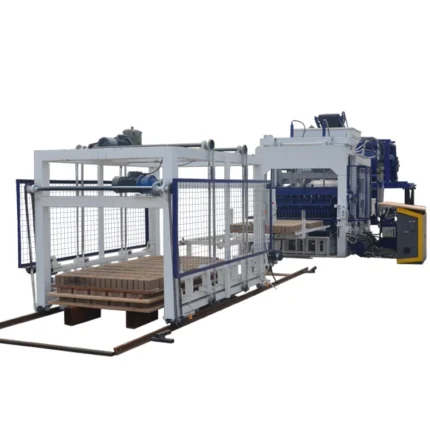
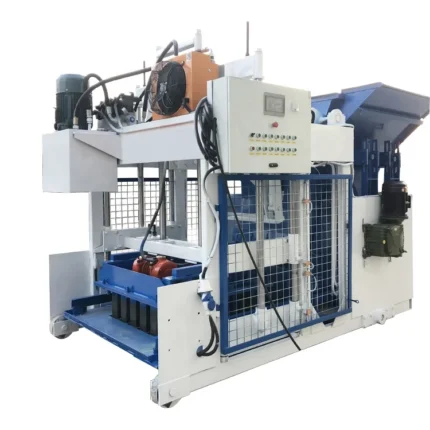
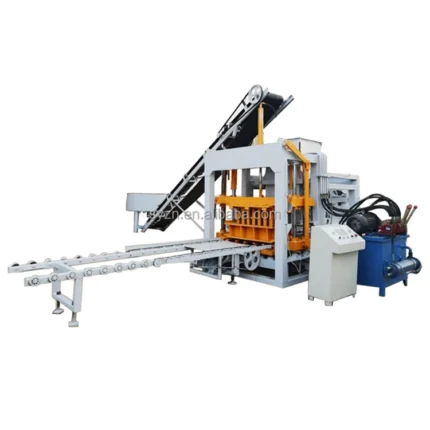
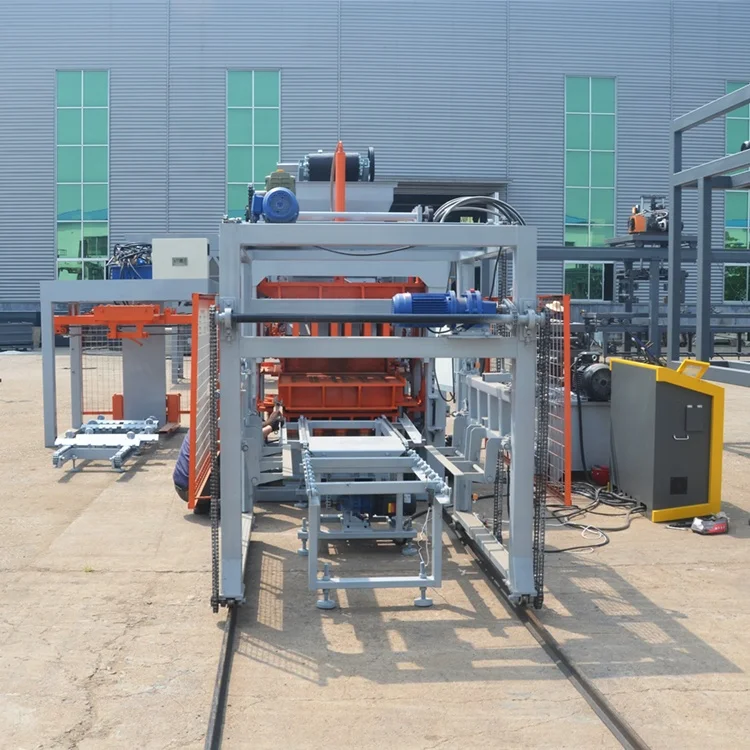
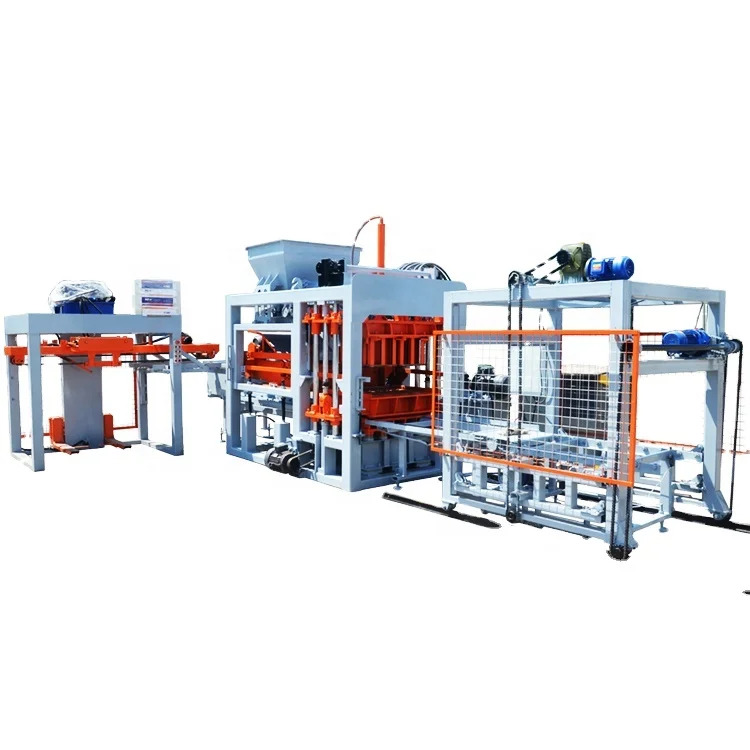
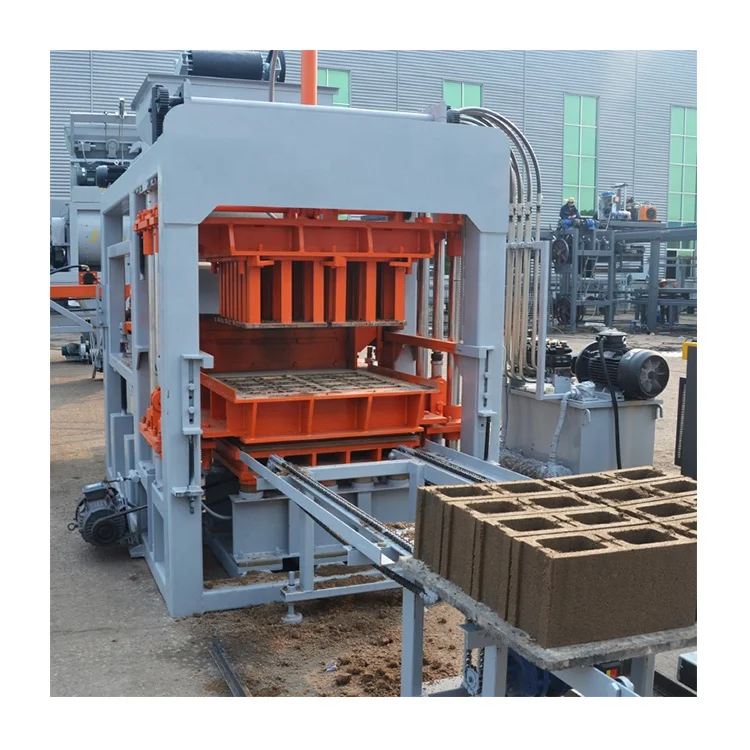
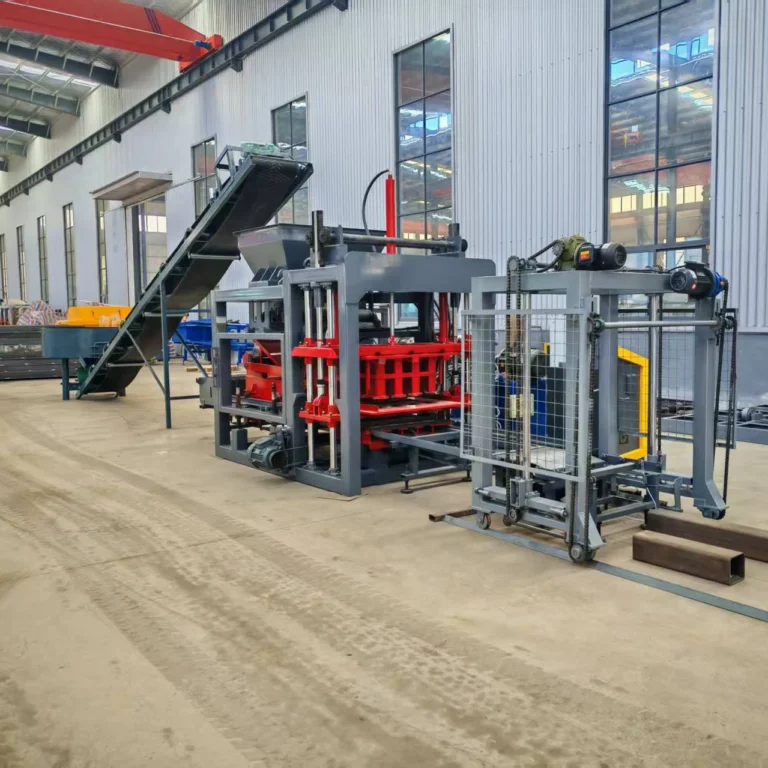
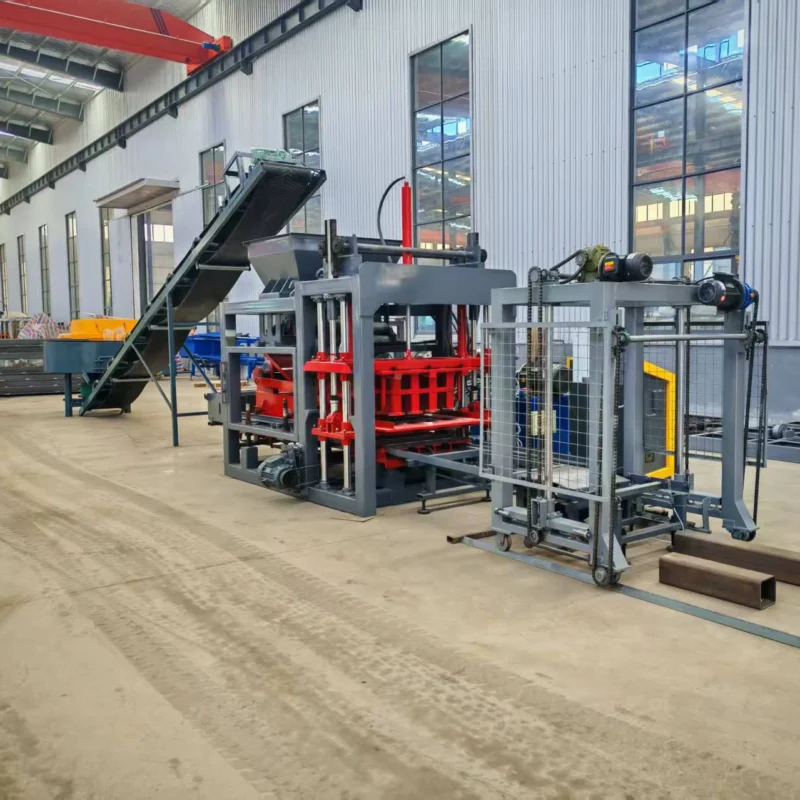
Configuration set against the buyer’s actual mix design — the QT4-15A locks vibration, pressure and cycle parameters per recipe through its PLC so every block leaves the press at the same density, regardless of who is running the shift.
Technical Specifications
| Parameter | Value |
|---|---|
| Model | QT4-15A |
| Product Type | Fully Automatic Concrete Block Making Machine |
| Overall Dimensions (L×W×H) | 4100×1600×2600 mm |
| Rated Pressure | 16–21 MPa |
| Main Vibration Form | Platform Vibration |
| Vibration Frequency | 4200 r/min |
| Vibration Force | 55 kN |
| Pallet Size | 880×550 mm |
| Molding Cycle | 25–30 s (basis not stated in source — confirm block format / material / thickness) |
| Overall Power | 18.45 kW |
| Total Mass | 4 T |
| Demolding Method | Hydraulic |
| Factory Area | 300 m² |
| Automation Level | Fully automatic |
| Warranty | 1 year |
Application Suitability
| Application | Material or Output |
|---|---|
| Hollow and solid block production for masonry walls | Crushed stone, sand, cement, fly ash, gravel, slag |
| Paving block and interlocking block manufacturing for driveways and walkways | Aggregate blends with color pigment additives |
| Curbstone and kerb production for road and landscaping projects | High-strength concrete mixes with coarse gravel |
| On-site block production for housing and development contractors | Locally sourced sand, dust and cement combinations |
| Building material distributor standardising output across sites | Consistent raw material feed with controlled moisture |
What "Fully Automatic" Actually Means for Your Shift
A fully automatic label on an automatic concrete block making machine PLC controlled system only matters if the PLC is locking the parameters you need — not just cycling the press. The QT4-15A stores per-recipe settings for vibration frequency, hydraulic pressure and feed timing, so the operator cannot drift away from the mix design that was validated at commissioning. [NEED_CITE: PLC recipe management standards in block making machinery]
I have walked onto sites where a semi-automatic press was producing decent hollow blocks until a new operator shortened the vibration window to chase output. Block strength dropped, the curing racks filled with breakage, and the owner blamed the machine. The real fault was a control system that let one person override the cycle without logging the change. An automatic concrete block making machine PLC controlled setup prevents this by requiring a supervisor code to alter stored recipes.
How the PLC Removes Operator Guesswork
The QT4-15A’s control panel manages the full pressing sequence: raw material feed duration, platform vibration at 4200 r/min, hydraulic pressure ramp to the 16–21 MPa range, and hydraulic demolding. The automatic concrete block making machine PLC controlled logic monitors each step and will not advance the cycle if a sensor reads outside tolerance. This is what separates a machine that runs automatically from one that simply moves pallets without manual pushing.
From Semi-Automatic to Consistent Output
Plant owners moving from a manual or semi-automatic press usually see their first quality jump not from speed but from repeatability. The QT4-15A’s platform vibration at 55 kN, applied uniformly across the 880×550 mm pallet, compacts the mix the same way every cycle. When the vibration force and hydraulic pressure are matched to the buyer’s actual aggregate and cement ratio, block density holds within a narrow band — and the curing yard stops sorting good batches from bad ones. [NEED_CITE: relationship between vibration force and block compressive strength in concrete masonry]
Reading the Specs That Actually Matter
The 16–21 MPa rated pressure range is not a single number because different block formats demand different compaction profiles. A thin paving block needs high vibration and moderate pressure to avoid crushing the surface aggregate, while a tall hollow block needs sustained pressure to hold the core walls together during demolding. The QT4-15A’s hydraulic system allows the PLC to modulate within this band based on the stored recipe.
The 880×550 mm pallet size determines how many blocks fit per cycle and must align with the curing rack dimensions and the forklift the plant already uses. Ordering a machine with a pallet size that does not match existing handling equipment creates a bottleneck that no amount of automation can fix. The 4 T total mass and 4100×1600×2600 mm footprint define the foundation slab and headroom requirements — a 300 m² factory area is the minimum working envelope including pallet return and block exit paths.
The 18.45 kW overall power draw dictates the dedicated circuit and transformer sizing at the site. Voltage and frequency must be confirmed in writing before production begins, because a motor wound for the wrong supply will overheat within the first shift. [NEED_CITE: industrial voltage and frequency standards across export markets for block machinery]
The Hidden Cost of Skipping Configuration
When an automatic concrete block making machine PLC controlled system ships without confirming the buyer’s local aggregate, the PLC recipes are built on a default mix that may not exist at the job site. The buyer then spends weeks adjusting feed ratios manually, defeating the purpose of recipe storage. Pallet material chosen without regard to the curing environment leads to warping in high humidity, which jams the pallet return and halts the line. [NEED_CITE: effects of aggregate gradation and moisture content on block press cycle consistency]
Why Procurement Here Reduces Commissioning Risk
Block machinery as a single focus means the QT4-15A press, mould, pallet and handling equipment are specified as one matched system rather than assembled from separate suppliers. Configuration is set against the buyer’s actual mix design and target block format, not a catalogue default. Mould design covers the formats the buyer’s market actually sells, with custom drawings available. The automation level is selectable, so a buyer currently running semi-automatic can plan a staged transition. Installation support includes operator training on the PLC interface and recipe management.
Documentation & Verification
- Factory test record showing cycle times and block dimensions for your chosen format
- Hydraulic and electrical schematic matched to confirmed voltage and frequency
- PLC display language confirmation documented before production starts
- Mould drawing and format list with per-format cycle time, not a single catalogue figure
- Wear parts and hydraulic component list with part numbers for first replacement order
Installation, Commissioning & Support
- Foundation slab engineered for the QT4-15A’s 4 T mass and 4100×1600 mm footprint with anchor bolt plan
- Dedicated circuit sized for the 18.45 kW overall power draw at confirmed voltage and frequency
- PLC interface configured in the buyer’s operator language before the control cabinet ships
- First production run supervised with vibration and pressure parameters tuned to local aggregate sample
- Mould change procedure trained on-site with target changeover time recorded for each format
- Hydraulic hose and seal kit supplied with part numbers matching the schematic for rapid reorder
What to Include in Your Inquiry
Send the block formats your market currently sells, the target daily output per format, and a sample of your local aggregate so the mix design can be tested before the machine is configured. Confirm your site voltage, frequency and preferred PLC display language. If you are replacing an existing press, share the pallet size and curing rack dimensions so the line can be matched to your current handling equipment.
Frequently Asked Questions
Q: How is cycle time verified per block format rather than quoted as a single figure?
A: The factory test record documents actual molding cycles for each mould installed on the QT4-15A, measured with your specified mix. A hollow block, a solid block and a paver each have different feed, vibration and pressing durations stored as separate PLC recipes, so the quoted 25–30 s range is confirmed per format before shipment.
Q: What PLC language options and voltage configurations are confirmed before shipment?
A: The PLC display language and the motor winding voltage and frequency are agreed in writing during the quotation stage. This prevents commissioning delays caused by an operator unable to read the control screen or a motor overheating on a mismatched power supply at the destination site.
Q: How does the automation level affect labour count and what is the upgrade path?
A: The QT4-15A in fully automatic configuration manages pallet feeding, pressing, demolding and block exit without manual intervention at the press. Buyers starting with semi-automatic operation can add automated pallet handling and stacking stations later, because the PLC architecture supports additional I/O modules without replacing the main controller.
Q: Which mould formats are supported and how long does a mould change take?
A: The QT4-15A accepts moulds for hollow blocks, solid blocks, pavers, interlocking blocks and curbstones sized to the 880×550 mm pallet. Mould change time depends on the format and the quick-release system fitted, and is recorded during the factory test for each mould supplied so the buyer knows the actual downtime per changeover.
Q: What parameter-locking features prevent operators from drifting off recipe?
A: The PLC stores vibration frequency, hydraulic pressure, feed duration and cycle timing per recipe and requires a supervisor access code to modify any stored value. This prevents an operator from shortening the vibration window or lowering the pressure to chase a faster cycle at the expense of block strength and consistency.