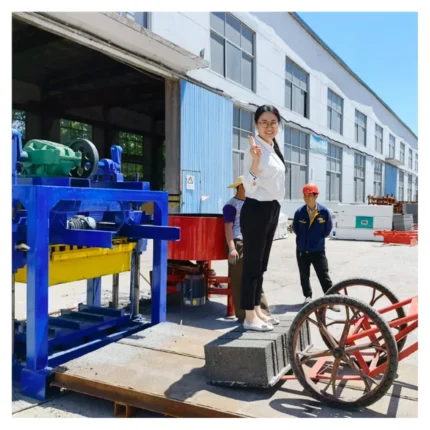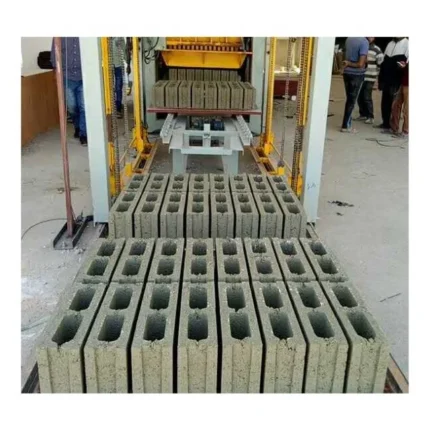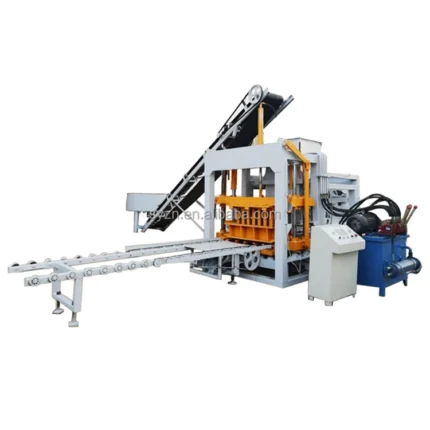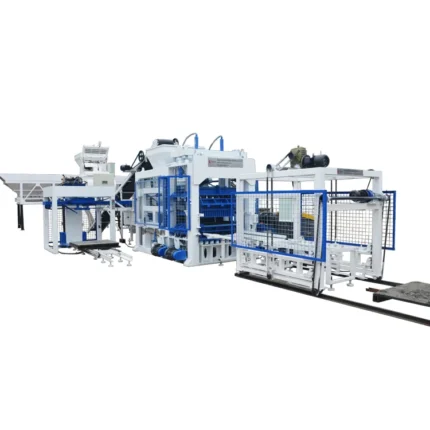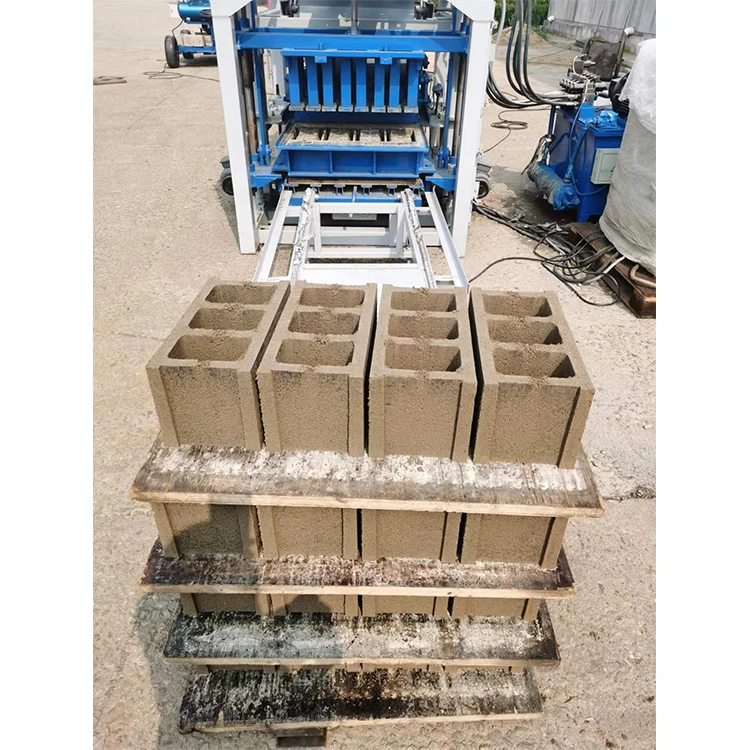
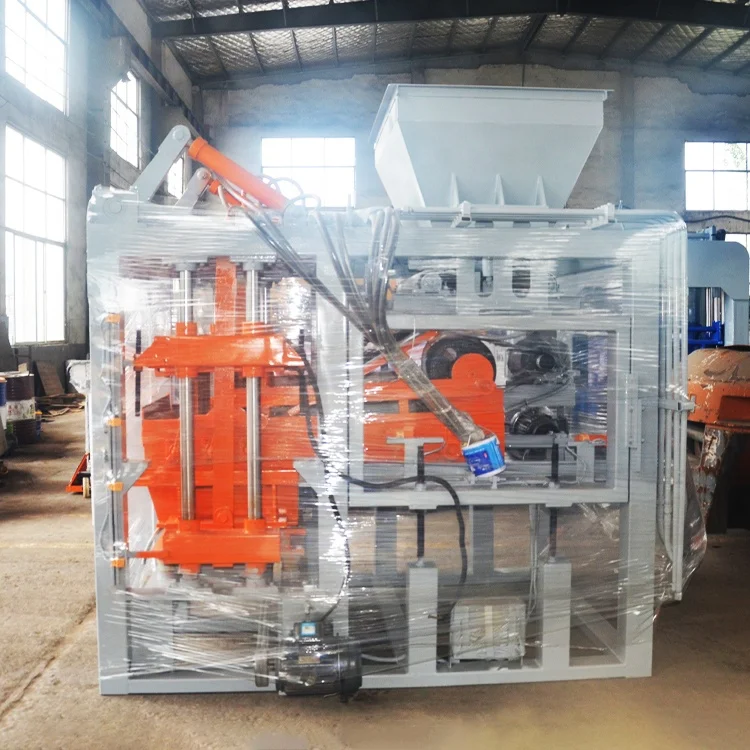


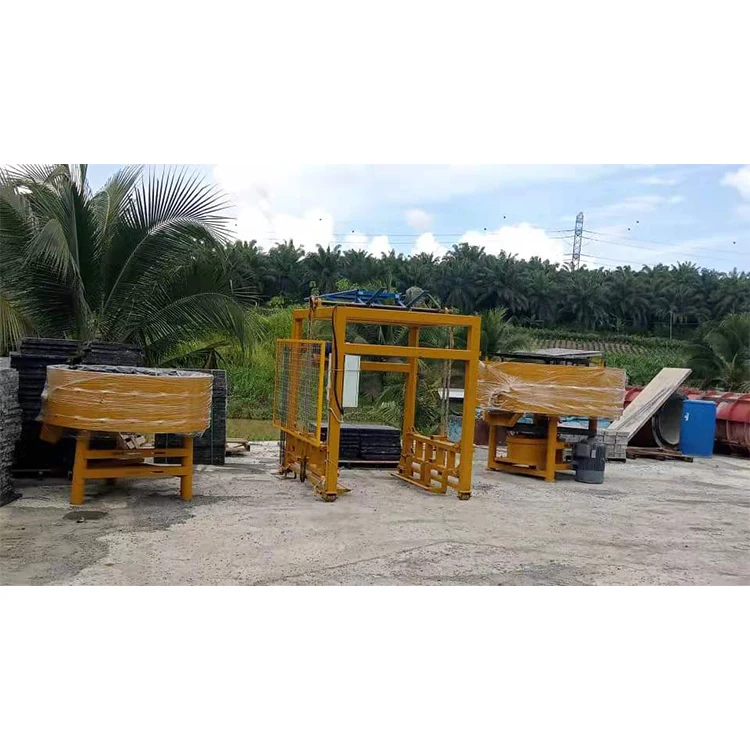
Description
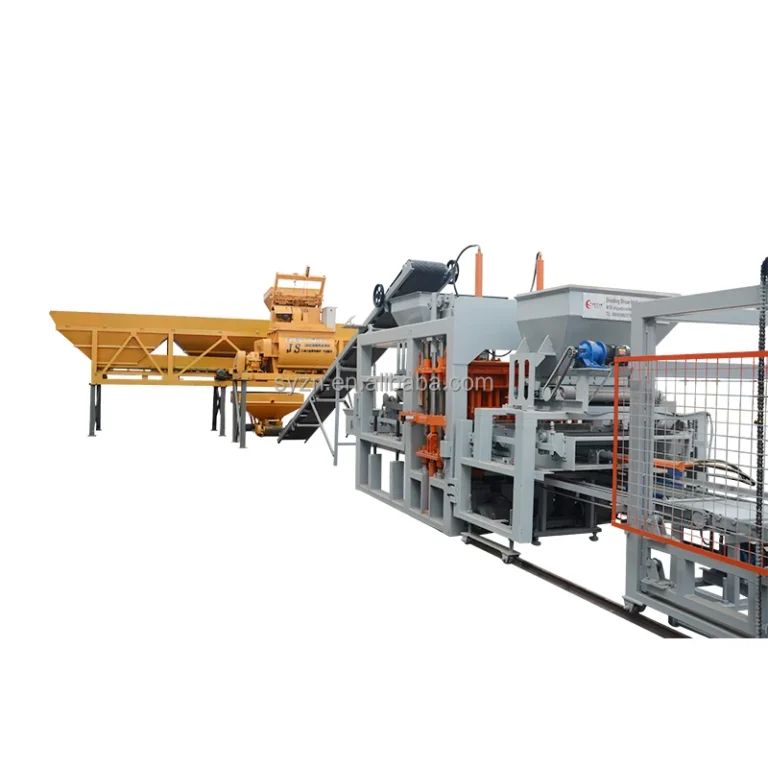
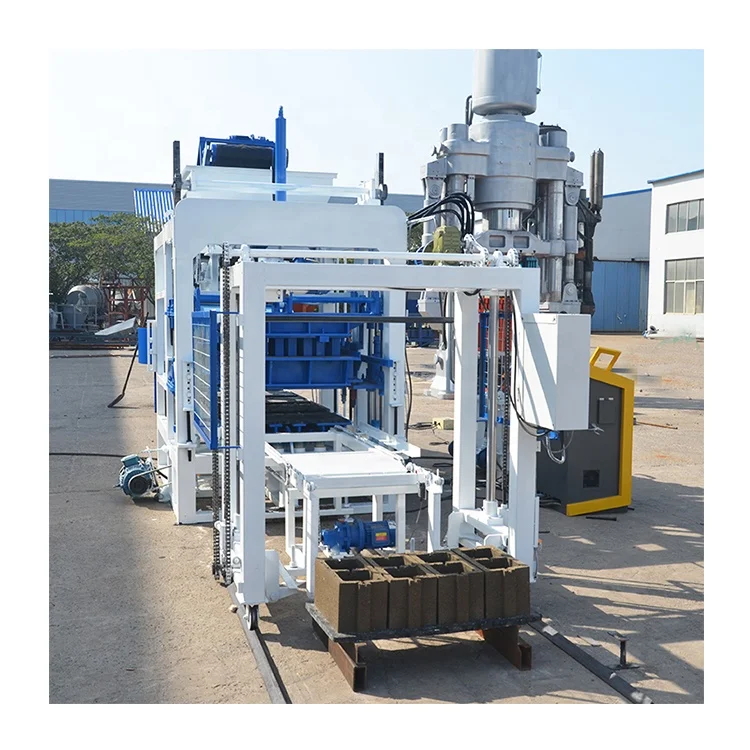
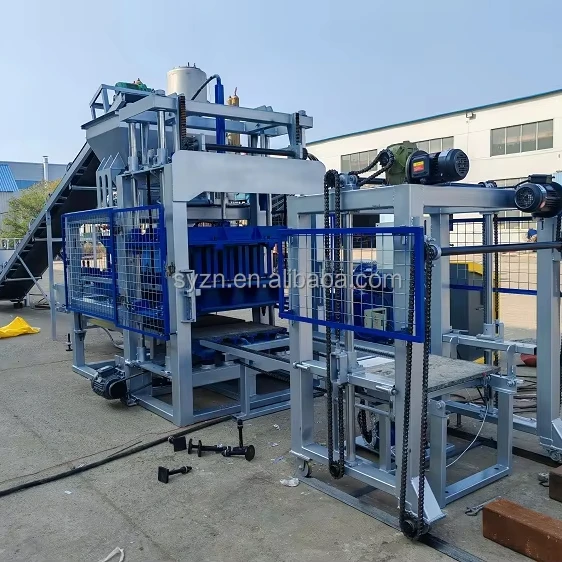
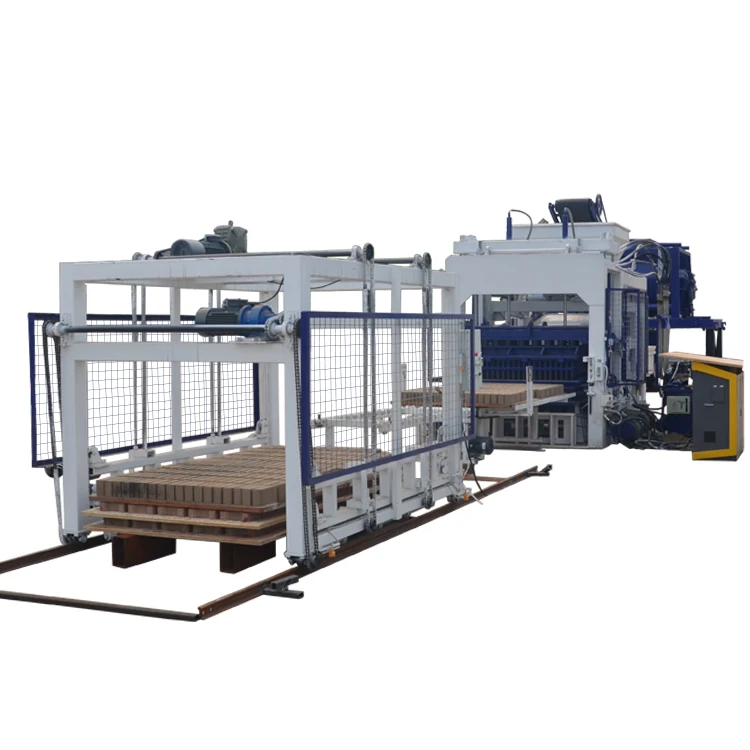
Matched System Integration — The QT4-15A pairs PLC-controlled press operation with automatic pallet feeding and block sweeping as one verified line, removing the gaps that typically fall between separate equipment suppliers.
Technical Specifications
| Parameter | Value |
|---|---|
| Model | QT4-15A |
| Product Type | Automatic Hydraulic Block Making Machine |
| Overall Dimensions (L×W×H) | 7100×1600×2610 mm |
| Total Weight | 3 T |
| Molding Cycle | 15–25 s |
| Vibration Frequency | 4600 r/min |
| Exciting Power (Vibration Force) | 40–50 kN |
| Total Power | 18.45 kW |
| Mixer Model | JQ350 |
| Pallet Size | 850×550×25 mm |
| Control System | PLC control system |
| Hydraulic Station | High-pressure hydraulic system included |
| Automation Level | Automatic (pallet feeder, brick conveyor, block sweeper) |
| Output Capacity | 408 pcs/hr (basis: 400×200×200 mm hollow block, 4 pcs/mould) |
| Output Capacity | 510 pcs/hr (basis: 400×150×200 mm hollow block, 5 pcs/mould) |
| Output Capacity | 2100 pcs/hr (basis: 240×115×53 mm solid brick, 18 pcs/mould) |
| Applied Products | Paver, solid block, hollow block, curbstone (via mould change) |
| Raw Materials | Crushed stone, sand, cement, dust, fly ash |
| Voltage & Frequency | Configurable to site requirement (basis to be confirmed) |
| PLC Display Language | Configurable (basis to be confirmed) |
| Standards | CE (verification required per documentation scope) |
Application Suitability
| Application | Material or Output |
|---|---|
| Hollow block production for building walls | Crushed stone, sand, cement, fly ash blends |
| Solid brick manufacturing for load-bearing structures | Cement and fine aggregate mixes |
| Paver production for walkways and yards | High-strength concrete with surface finishes |
| Kerbstone and curb production for road edges | Dense aggregate and cement combinations |
| On-site block production for housing projects | Locally sourced sand and stone materials |
What "Automatic" Really Means When Pallets Are Left Out of the Quote
An automatic PLC controlled block making machine only earns that label when material handling is included in the line, not left as manual labour in disguise.
I have seen quotations where the press itself runs automatically, but pallets are loaded by hand and wet blocks are stacked by workers with wheelbarrows. The buyer pays for automation and gets a semi-automatic press with extra conveyors. The daily output drops because the operator cannot keep pace with the molding cycle, and the consistency that PLC control promises is lost at the handling stage. [NEED_CITE: common gaps in block machine automation quotations]
PLC Control That Governs the Full Molding Sequence
The QT4-15A uses a PLC control system to manage the molding cycle, vibration timing, and hydraulic pressure in a single programmed sequence. Each parameter is locked once the correct settings for a given mix design are established, so the operator does not adjust pressure or vibration between batches. This removes the variation that occurs when different shifts interpret machine settings differently. The automatic PLC controlled block making machine maintains the same compaction force and cycle duration from the first pallet to the last.
Automation That Extends Beyond the Press
The pallet feeder loads pallets into position without manual handling, the brick conveyor moves finished blocks away from the press, and the block sweeper cleans the mould surface before the next cycle begins. These three stations are timed to the press cycle so the QT4-15A is never waiting for a pallet or blocked by a previous output. When a plant owner upgrades from manual or semi-automatic operation, the labour removed is not just at the press — it is across the entire handling sequence between moulding and curing. [NEED_CITE: labour allocation in semi-automatic versus automatic block plants]
Vibration Force and Hydraulic Pressure as a Matched Pair
The 40–50 kN vibration force operates alongside a high-pressure hydraulic station, and both must be matched to the buyer’s specific mix design. A fly ash-heavy blend requires different pressure and vibration timing than a crushed stone mix. During commissioning, the actual raw materials from the buyer’s site are tested, and the PLC parameters are set to those specific values before the machine is locked for production. This prevents the situation where blocks emerge with inconsistent density because the default settings were calibrated for a different aggregate.
Pallet Size and Curing Area Alignment
The 850×550×25 mm pallet size determines how blocks are spaced for curing and what forklift dimensions are needed to move pallet stacks. If the curing yard was planned around a different pallet dimension, the buyer faces a choice between rearranging the yard or ordering non-standard pallets at higher cost. Confirming pallet size against existing curing infrastructure before production avoids this mismatch. [NEED_CITE: pallet standardization in concrete block curing operations]
The Cost of Skipping Voltage and Language Confirmation
When voltage, frequency, and PLC display language are not confirmed in writing before production, the machine arrives with settings that do not match the local power grid or the operator’s language. Commissioning stalls while transformers are sourced or PLC interfaces are reprogrammed. For a buyer working to a project deadline, this delay pushes back production start and extends contractor idle time on site.
Why Buyers Source This Machine Here
Block machinery is the single focus of production, so the QT4-15A press, mould, pallet, and handling equipment are specified as one matched system rather than assembled from separate vendors. Configuration is set against the buyer’s actual mix design and local aggregate, not a catalogue default. Mould design covers the formats the buyer’s market actually sells, with custom drawings available. Automation level is selectable, allowing a buyer to start with the automatic press and add stacking or cubing modules later. Installation support includes operator training on the specific PLC parameters locked during factory testing.
Documentation & Verification
- Line layout showing pallet flow from feeder through press to conveyor exit
- Capacity calculation stating block format assumed for each output figure
- Hydraulic and electrical schematic for local maintenance team reference
- Mould drawing and format list with cycle time per block type
- Voltage and control language confirmation before production begins
- Factory test record on buyer’s specified mix and block format
Installation, Commissioning & Support
- Foundation plan based on 7100×1600 mm footprint and 3 T operating weight
- Dedicated power circuit for 18.45 kW total load with confirmed voltage and frequency
- PLC parameter lock after on-site testing with buyer’s actual raw materials
- Operator training on mould change procedure across hollow, solid, paver, and curbstone formats
- Wear parts list with hydraulic seal and vibration motor replacement intervals
- Mould maintenance schedule based on production volume and aggregate abrasiveness
Before You Request a Quote
Provide the specific block formats your market sells, your daily output target, and the raw materials available locally — including fly ash percentage if applicable. Confirm your site voltage, frequency, and the language your operators need on the PLC display. Share your curing area dimensions and existing forklift specifications so pallet size can be matched to your infrastructure.
Frequently Asked Questions
Q: How is the output capacity verified — which block format does each pcs/hr figure assume?
A: Each capacity figure is tied to a specific block format and mould cavity count. The 408 pcs/hr rate is based on 400×200×200 mm hollow blocks with 4 pieces per mould, the 510 pcs/hr rate on 400×150×200 mm hollow blocks with 5 pieces per mould, and the 2100 pcs/hr rate on 240×115×53 mm solid bricks with 18 pieces per mould. Your actual daily output depends on the format you run most.
Q: What PLC brand is used, and can the display language be set before shipment?
A: The PLC brand and display language are confirmed with the buyer before production begins. The interface language is set to match the operator’s requirement so the machine is readable from the first day of commissioning. This confirmation is documented in writing and verified during the factory test.
Q: What is the mould change procedure and how long does a format changeover take?
A: The QT4-15A supports hollow block, solid brick, paver, and curbstone formats through mould change. The exact changeover duration depends on the mould mounting system and operator familiarity. The mould drawing and changeover procedure are supplied with the machine, and operators are trained during commissioning on the specific formats included in the purchase.
Q: Is the automation level upgradable — can I add stacking or cubing later?
A: The automation level is selectable. A buyer can start with the automatic press, pallet feeder, conveyor, and sweeper, then add automatic stacking and cubing modules as production volume grows. The upgrade path is planned during the initial line layout so space and connection points are reserved from the beginning.
Q: How are voltage, frequency, and control settings confirmed to match my site?
A: Voltage and frequency are confirmed in writing before production begins, based on the buyer’s local power grid specification. The PLC control parameters are then programmed to match, and the complete electrical configuration is verified during the factory test. A confirmation document is provided before shipment.