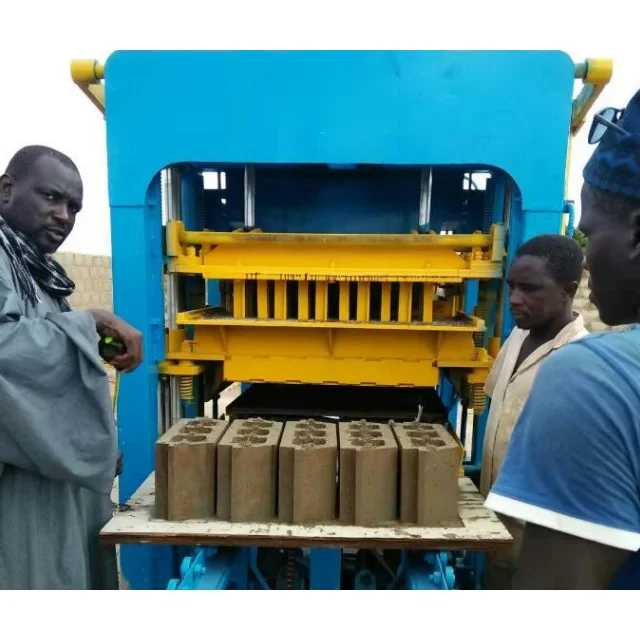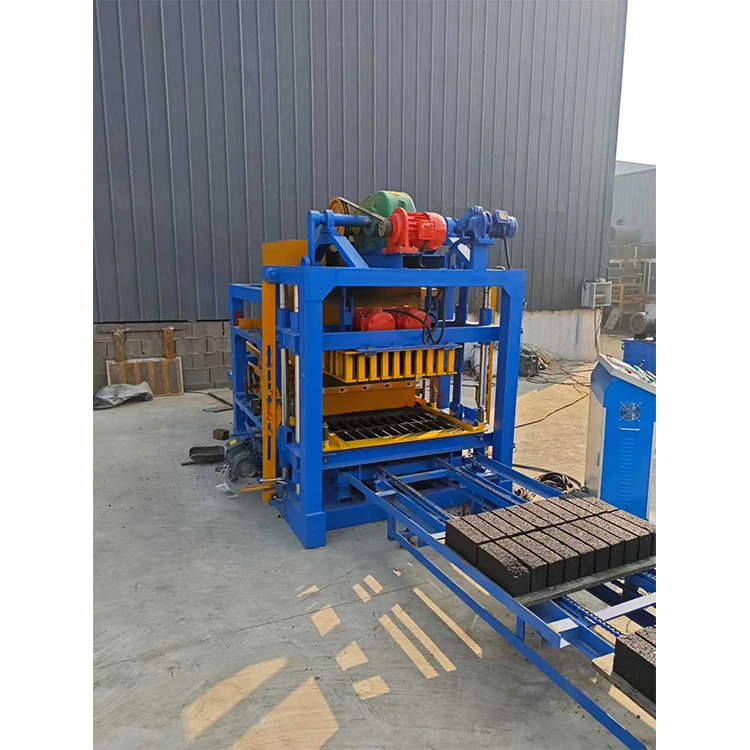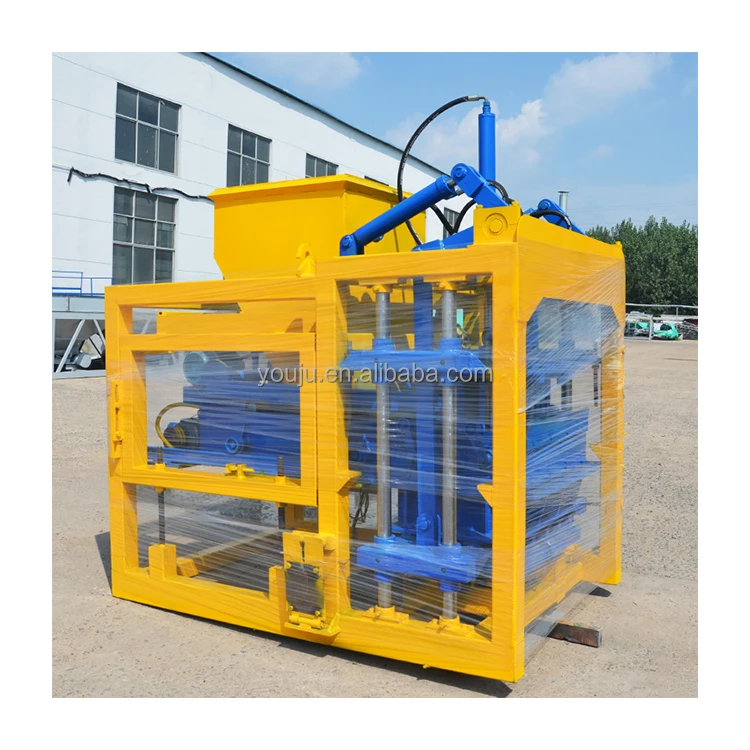
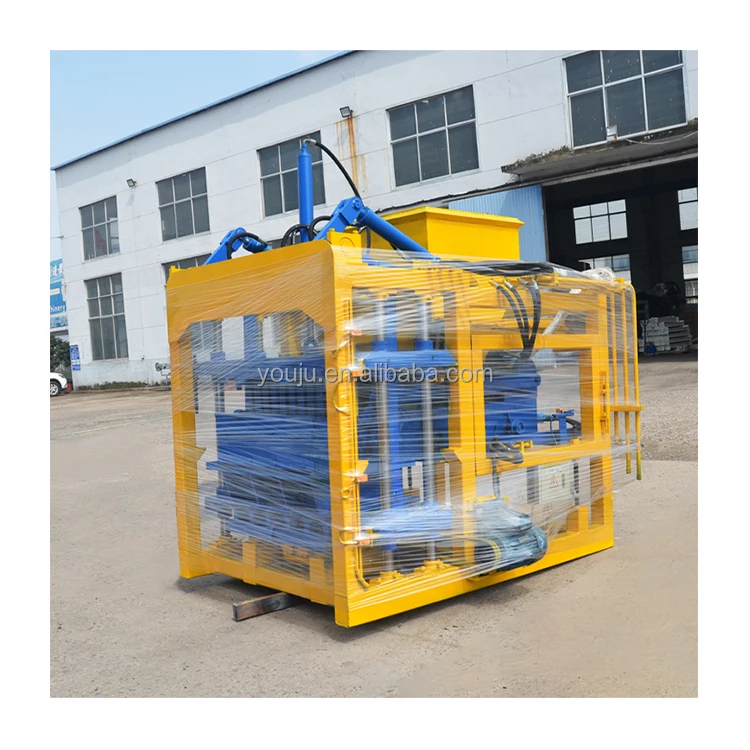


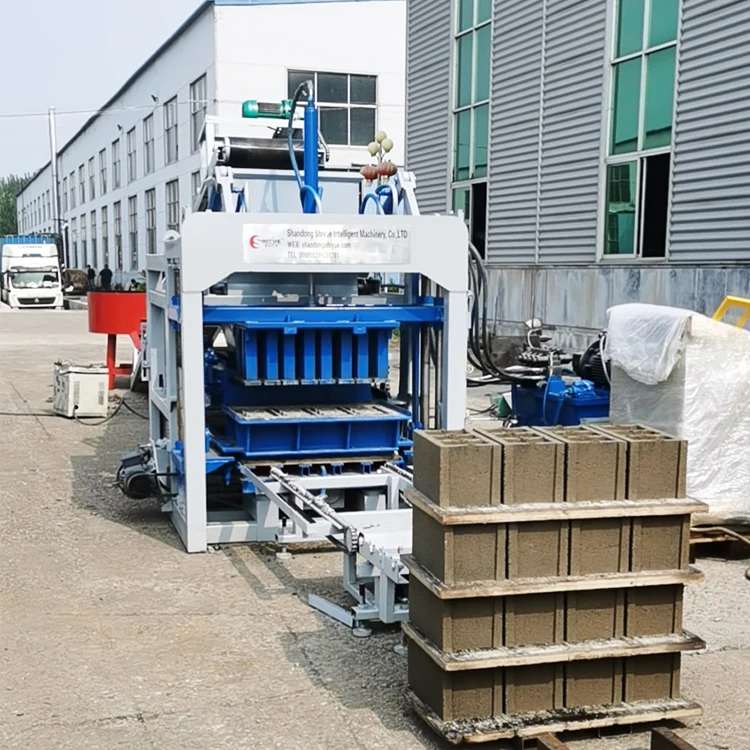
Description
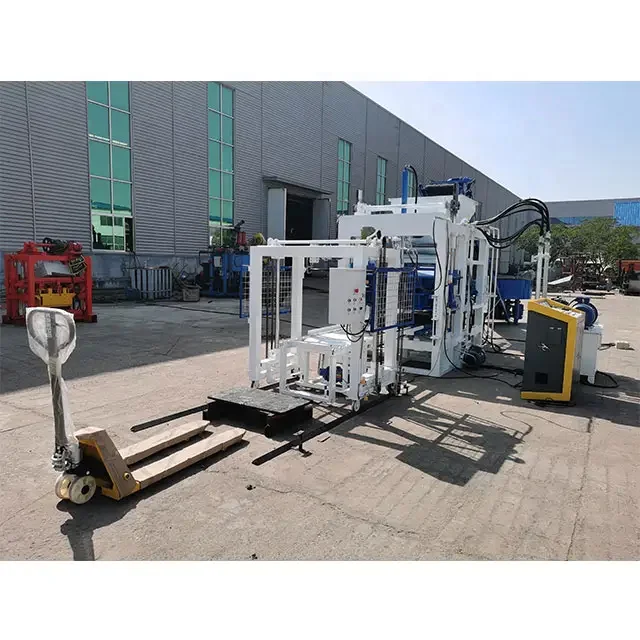
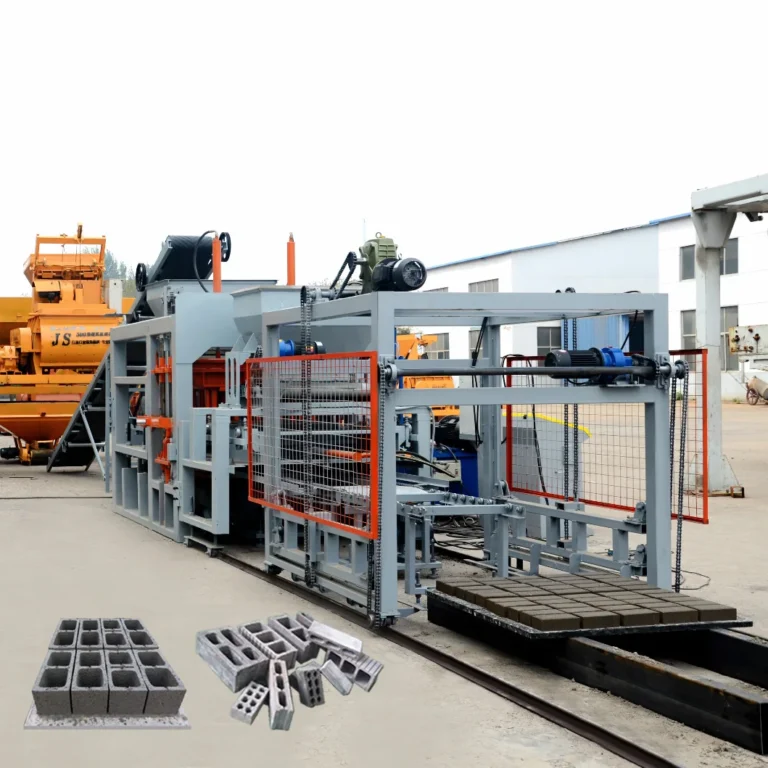
Integrated Automation System — the QT4-15A automatic block machine PLC controlled setup coordinates pallet feeding, pressing, and block conveying in a single cycle, eliminating manual pallet handling and reducing operator intervention at each station.
Technical Specifications
| Parameter | Value |
|---|---|
| Model | QT4-15A |
| Product Type | Automatic Concrete Block Making Machine |
| Overall Dimensions | 7100 x 1600 x 2610 mm |
| Rated Pressure | 16 MPa |
| Vibration Form | Platform Vibration |
| Pallet Size | 1020 x 570 mm |
| Molding Cycle | 15-25s (basis not stated in source — confirm block format / material / thickness) |
| Overall Power | 27.5 kW |
| Control System | PLC (electronic console) |
| Automation Level | Automatic (pallet feeder, block conveyor, hydraulic station integrated) |
| Pallet Feeding | Hydro-cylinder driven |
| Material Feeder System | Hopper, feeding box, feeding platform, conveyor system |
| Molding System | Frame, vibrating platform, moulds, synchronizing mechanism |
| Block Receiver | Frame, conveyor system, idler wheels, motor and reducer with triangle belt |
| Voltage & Frequency | Configurable (confirm before ordering) |
| PLC Display Language | Configurable (confirm before production) |
Application Suitability
| Application | Material or Output |
|---|---|
| Hollow block production | Crushed stone, cement, sand, aggregate blends |
| Solid block manufacturing | Concrete mixes with local river sand or crushed gravel |
| Paving block production | High-density concrete with fine aggregate and pigment |
| On-site contractor production | Concrete masonry units for housing and infrastructure projects |
What "15-25 Seconds" Actually Means for Your Shift Output
Cycle time only matters when tied to the block format you sell and the automation stations actually included in your line.
Most quotations list a single molding cycle without specifying which block size or mix design it applies to. A 15-second cycle on a small solid block does not translate to the same cycle on a tall hollow block with a different aggregate blend. When the pallet feeder, press, and block receiver are not synchronized, the press sits idle between cycles regardless of what the spec sheet claims [NEED_CITE: industrial cycle time verification standards for concrete block equipment]. With this automatic block machine PLC controlled configuration, the hydro-cylinder pallet feeder and block conveyor are timed to the press cycle so the machine is not left waiting for the next pallet or struggling to clear finished blocks.
PLC Coordination Across Pallet Feeding and Block Conveying
The electronic console on this automatic block machine PLC controlled system manages pallet insertion, mould actuation, and block removal as one continuous sequence. The hydro-cylinder driven pallet feeder pushes a fresh pallet onto the vibrating platform while simultaneously transferring the pressed block onto the receiver conveyor. This coordination means the operator monitors the cycle rather than manually handling pallets at each station, which is the primary labour reduction this automation level delivers.
From Semi-Automatic to Full Line Integration
The QT4-15A ships with pallet feeding and block conveying automated, but stacking, curing rack handling, and cubing remain optional additions. A plant owner starting with this configuration can add a stacker and block clamper later without replacing the press or rewriting the PLC program [NEED_CITE: block plant automation upgrade pathways]. The batching plant, JQ500 pan mixer, and belt conveyor integrate into the same control logic, so upgrading from manual material handling to automatic batching does not require a separate control cabinet.
Reading the Specs That Actually Affect Block Quality
The 16 MPa rated pressure works together with platform vibration to compact the concrete mix to the required density. Pressure alone does not determine block strength — the vibration force must match the aggregate size and moisture content of your specific mix design. The synchronizing mechanism in the moulding system ensures consistent compaction across the pallet surface, preventing density variation between blocks on the same pallet. The 1020 x 570 mm pallet size determines how many blocks are produced per cycle, and this dimension must match your existing curing racks and forklift capacity. A mismatch here means blocks are handled twice before they reach the curing area, negating the automation investment.
The Cost of Skipping Voltage and Language Confirmation
When voltage and PLC display language are not confirmed before production, the machine arrives at site and cannot be powered on until a transformer or control panel modification is completed. I have seen automatic block machine PLC controlled installations delayed by weeks because the local grid frequency did not match the motor specification, and the operator could not navigate the PLC menu in an unfamiliar language [NEED_CITE: electrical commissioning delays in exported industrial machinery]. The 27.5 kW overall power draw requires a dedicated circuit sized for startup surge, not just running load, and this must be verified against the site electrical infrastructure before the machine ships.
Why Source This Configuration Here
Block machinery is our single focus, so the QT4-15A press, mould, pallet, and handling equipment are specified as one matched system rather than assembled from separate suppliers. The control configuration is set against your actual voltage, frequency, and operator language before production begins, not assumed from a catalogue default. Mould design covers the formats your market sells, with custom drawings available when standard formats do not match local building codes. Supporting equipment like the JQ500 mixer, belt conveyor, and stacker are quoted with cycle times matched to the press so no station bottlenecks the line. Documentation includes hydraulic and electrical schematics, PLC language confirmation, and a factory test record run on your specified block format [NEED_CITE: factory acceptance testing protocols for block making equipment].
Documentation & Verification
- Line layout showing QT4-15A station positions and material flow direction
- Capacity calculation stating block format assumed for the 15-25s molding cycle
- PLC display language and voltage confirmation sheet signed before production
- Hydraulic and electrical schematic for the 27.5 kW system and 16 MPa circuit
- Factory test record run on your specified block format and pallet size
- Wear parts list with mould interchange drawings for your format selection
Installation, Commissioning & Support
- Foundation pad must accommodate 7100 x 1600 mm footprint with level tolerance for platform vibration
- Dedicated circuit required for 27.5 kW overall power with startup surge allowance
- Machine ships dismantled for container loading with reassembly guide included
- PLC language and voltage verified on-site against local grid during commissioning
- Operator training covers mould change procedure and pallet feeder adjustment
- Wear parts and mould list provided with first replacement schedule
- Belt conveyor and block receiver alignment checked against pallet size during setup
Before You Request a Quote
Provide the block format you intend to produce, your local aggregate type and moisture range, and the daily volume your market requires. Confirm your site voltage, frequency, and the language your operators need on the PLC display. Specify which supporting stations — mixer, stacker, batching plant — you want included and which you will source locally, so the quotation reflects a complete line or a standalone press without ambiguity.
Frequently Asked Questions
Q: How does the 15-25s molding cycle vary by block format and what is the realistic daily output?
A: The cycle depends on block height, mix design, and compaction requirement. A small solid block cycles faster than a tall hollow block because the vibration and pressure dwell time differ. Request a capacity calculation that states the specific block format assumed, so your daily output estimate reflects the product you actually sell rather than a generic figure.
Q: What automation level ships standard and what is the upgrade path to full stacking?
A: The QT4-15A includes PLC-coordinated pallet feeding and block conveying as standard. Stacking, cubing, and curing rack handling are optional additions that integrate into the existing PLC program. You can start with the base automation and add a stacker later without replacing the control console or reprogramming the press cycle.
Q: How are voltage, frequency, and PLC language confirmed before shipment?
A: These parameters are confirmed during the quotation stage and locked before production. A signed confirmation sheet specifies the exact voltage, frequency, and display language. The factory test is then run on that configuration so the machine arrives ready for connection to your local grid without transformer modification or language barrier.
Q: What supporting equipment must match the press cycle to avoid idle time?
A: The mixer output, belt conveyor speed, and pallet return system must all match the press cycle time. If the JQ500 pan mixer batch size is too small for consecutive cycles, the press waits for the next mix. Specify the complete line so each station is timed to the others and the automatic block machine PLC controlled system runs continuously.