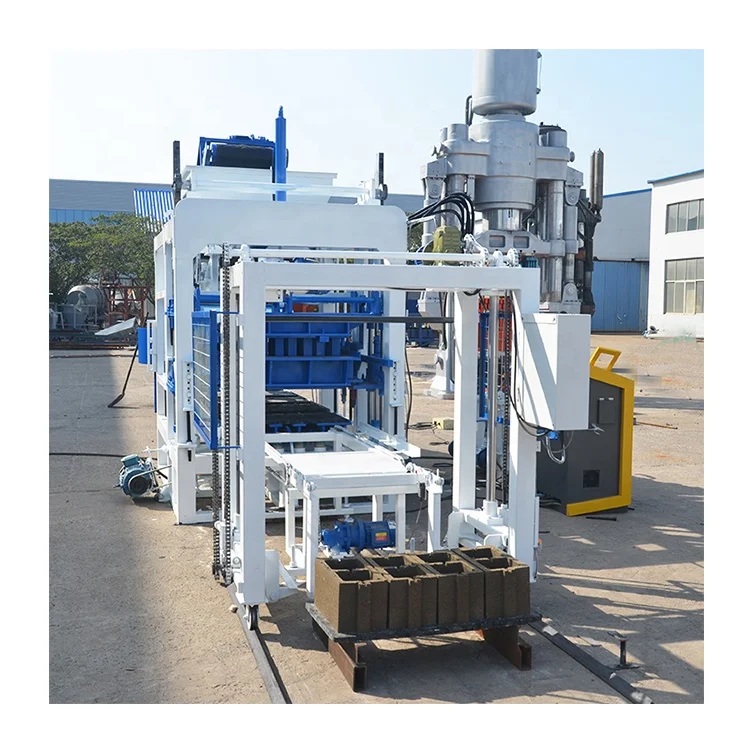
Description
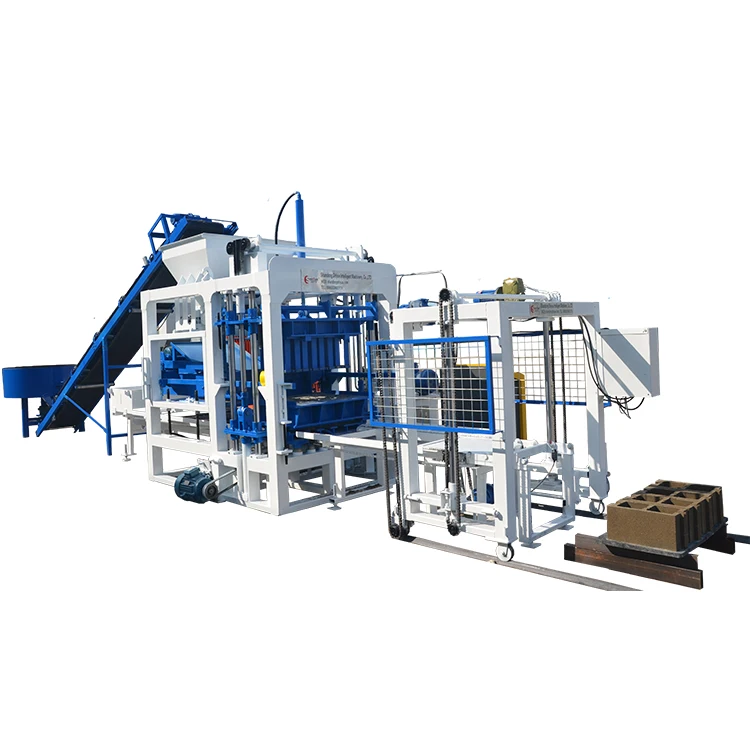
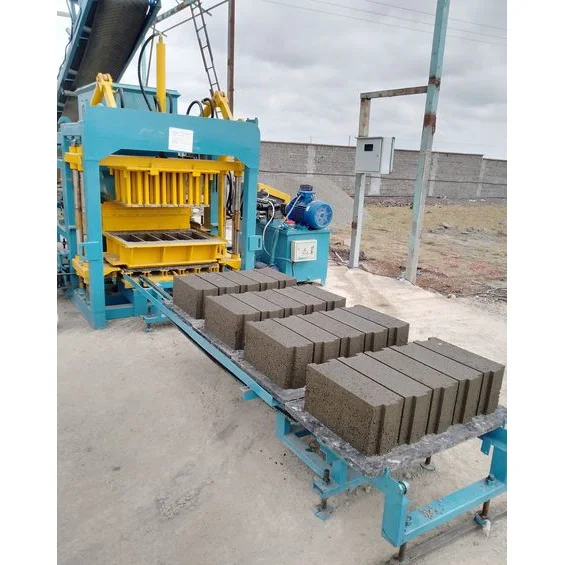
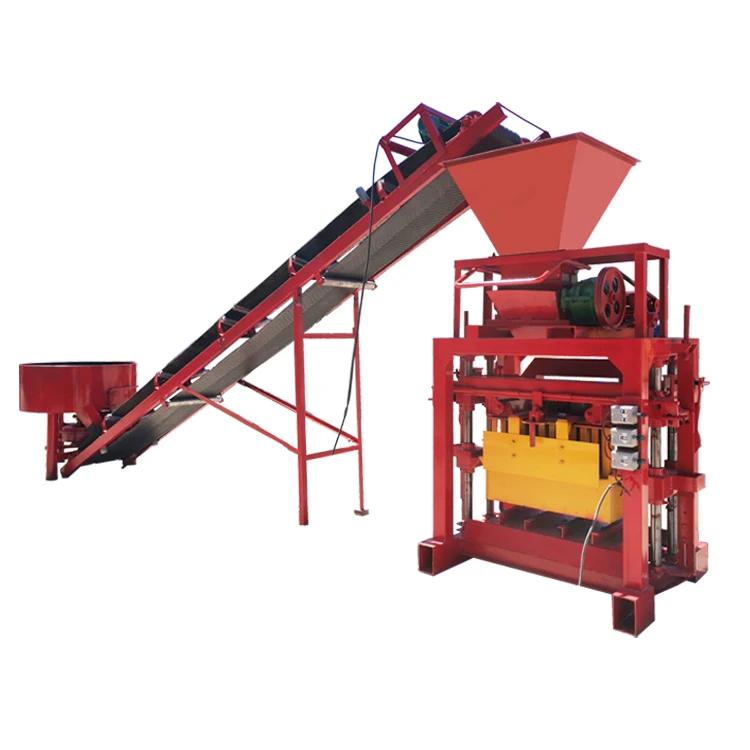
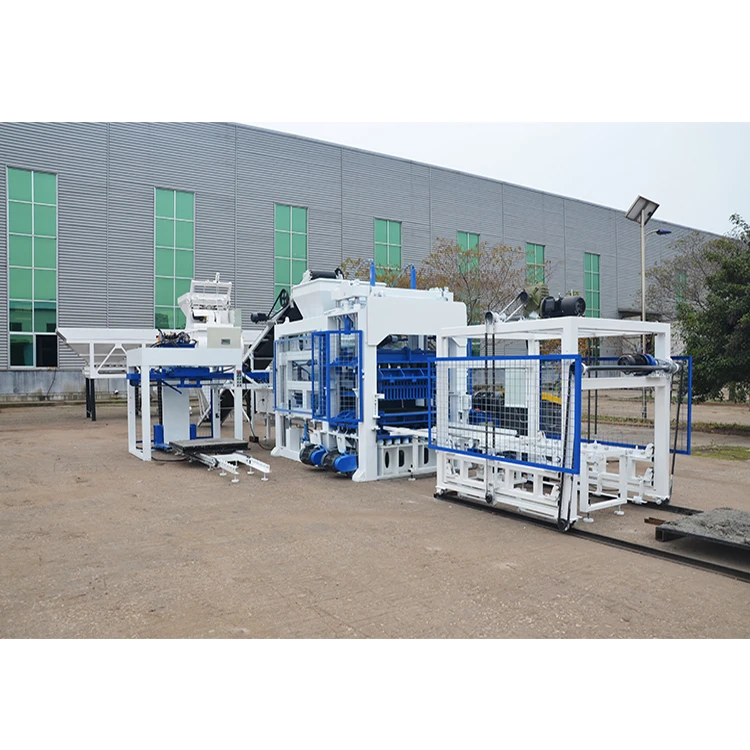
Intelligent Automation — The QT4-18 removes operator guesswork from block production, locking vibration timing, hydraulic pressure and pallet handling into a PLC program that repeats identically across every shift.
Technical Specifications
| Parameter | Value |
|---|---|
| Model | QT4-18 |
| Product Type | Fully Automatic Hydraulic Concrete Block Making Machine |
| Overall Dimensions (L×W×H) | 3900×1600×2300 mm |
| Total Weight | 3 T |
| Rated Power | 24 kW |
| Exciting Force (Vibration) | 40–50 kN |
| Molding Cycle | 15–25 s |
| Pallet Size | 850×550×25 mm |
| Mixer Model | JQ350 |
| Control System | PLC control system |
| Hydraulic Station | High-pressure hydraulic system (included) |
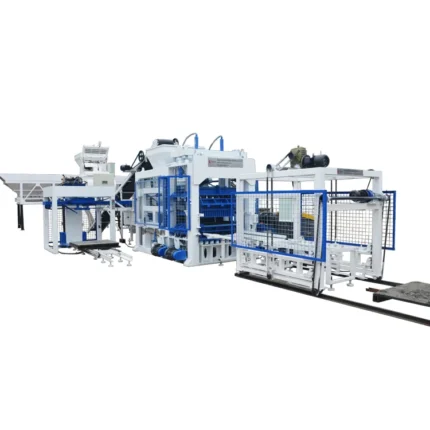
| Automation Level | Fully automatic with pallet feeder, brick conveyor, block sweeper |
| Mould Format Capability | Paver, solid block, hollow block, curbstone (mould change required) |
| Output Capacity | 1200–1680 pcs/h based on 400×200×200 mm hollow block, 15–20 s cycle |
| Output Capacity | 1800–2400 pcs/h based on 400×150×200 mm hollow block, 15–20 s cycle |
| Output Capacity | 3240 pcs/h based on 240×115×53 mm solid brick, 15–20 s cycle |
| Daily Output (8 hr) | 9600–13440 pcs based on 400×200×200 mm hollow block |
| Daily Output (8 hr) | 14400–19200 pcs based on 400×150×200 mm hollow block |
| Daily Output (8 hr) | 16200–19440 pcs based on 240×115×53 mm solid brick |
| Applied Raw Materials | Crushed stones, sand, cement, dust, fly ash |
| Included Auxiliary Equipment | Pallet feeder, brick conveyor, block sweeper, manual hydraulic trolley |
| Assembly State | Shipped nude-packed in 20GP container (with approx. 500 pallets) |
| Voltage & Frequency | Basis not stated in source — confirm with buyer’s local grid |
| PLC Display Language | Basis not stated in source — confirm target language |
| Standards | CE declaration where applicable |
Application Suitability
| Application | Material or Output |
|---|---|
| Hollow block production for residential and commercial walls | Crushed stone, sand, cement, fly ash blends |
| Solid brick manufacturing for load-bearing and infill masonry | Local aggregate with cement binder |
| Paving block production for driveways, walkways and yards | High-density crushed stone and cement mixes |
| Curbstone and kerb production for road and drainage projects | Coarse aggregate with hydraulic compression |
| On-site block production for housing and development contractors | Site-sourced sand and stone with portable mixing |
What "Consistent Cycle Times" Actually Requires from Your PLC
A locked program is only as reliable as the voltage feeding it and the language the operator can read.
I have watched QT4-18 class machines sit idle for days on African job sites because the PLC display was shipped in a language the local operator could not read, or the voltage dip at startup threw the hydraulic sequencing out of sync. The automatic QT4-18 block making machine PLC controlled system is meant to eliminate variation, but variation creeps right back in when foundational electrical and interface details are left unconfirmed before the crate is nailed shut [NEED_CITE: voltage and frequency standards by export market]. A repeatable cycle depends on more than software logic.
How PLC Control Removes Shift-to-Shift Drift
On a manual or semi-automatic press, the operator decides when to vibrate, how long to hold pressure, and when to eject. That introduces drift between morning and evening shifts, between experienced and new staff. The automatic QT4-18 block making machine PLC controlled architecture governs the full 15–25 second molding cycle, so every block on a given pallet receives identical vibration duration and hydraulic dwell regardless of who is running the panel.
Where Automation Ends and Where It Can Grow
The QT4-18 ships with a pallet feeder, brick conveyor and block sweeper as standard automation stations. What it does not include by default is automatic stacking and cubing downstream. That distinction matters for buyers budgeting labor on the wet side of the line. The platform is upgrade-ready, meaning a buyer can commission the press as a fully automatic loop and add robotic stacking or curing rack handling in a later phase without replacing the core machine [NEED_CITE: PLC integration standards for modular block lines].
Reading the Specs That Actually Govern Block Density
The 40–50 kN exciting force works together with the high-pressure hydraulic station to compact the mix into the mould cavity. Vibration alone settles aggregate; hydraulic pressure alone compresses fines. The combination determines whether a hollow block survives handling at the curing rack without corner spalling. The 850×550×25 mm pallet size sets the boundary for the largest mould you can run, and it must match the forklift tine spacing and curing rack slot width already in your yard. A pallet dimension mismatch is a problem you discover only after the machine arrives, not during the quotation stage. The JQ350 mixer feeds the press, and its batch volume must align with the 15–25 second cycle so the hopper never starves between charges.
The Hidden Cost of Unconfirmed Automation Boundaries
I have seen buyers pay for "fully automatic" and then discover that stacking, curing rack loading and pallet return were not in the quotation scope, leaving wet blocks stacked by hand at the end of the conveyor. With the QT4-18, the included stations are pallet feeding, conveying and sweeping — the manual hydraulic trolley handles pallet movement at the curing end. When automation boundaries are unclear at the ordering stage, the labor savings the buyer budgeted for simply relocate to a different point on the line [NEED_CITE: labor allocation errors in block plant commissioning reports].
Why Source This Configuration Through a Single-System Approach
Block machinery is our single focus, so the press, mould, pallet and handling stations are specified as one matched system rather than assembled from separate suppliers. The QT4-18 is configured against the buyer’s actual mix design and local aggregate, not a catalogue default, because a PLC program tuned for river sand will produce weak blocks with laterite. Mould design and supply cover the formats the buyer’s market actually sells, including custom drawings for non-standard pavers or interlocking profiles. Automation level is selectable at order, so a buyer starting with this tier can expand to stacking and cubing later on the same platform. Installation support includes on-site commissioning with operator training so the PLC program is verified against the buyer’s specific mix before full production begins.
Documentation & Verification
- Machine specification sheet listing confirmed pallet size, hydraulic pressure and vibration force ratings
- Mould drawing and format list for every block type included in your order
- Voltage and PLC display language confirmation document signed before production
- Factory test record showing actual cycle time and block dimensions per your target mould
- Hydraulic and electrical schematic for your maintenance team’s reference
- Packing photographs and customs documentation support for shipment
Installation, Commissioning & Support
- Foundation must support the 3 T machine weight across the 3900×1600 mm footprint with level tolerance
- Dedicated electrical circuit required for the 24 kW rated power draw, voltage confirmed pre-production
- Machine ships nude-packed in a 20GP container and requires on-site reassembly of pallet feeder and conveyor
- Commissioning includes PLC program verification against your specific mix design and target block format
- Operator training covers mould changeover sequences and daily hydraulic station inspection routines
- Wear parts list and mould maintenance schedule provided for your first replacement planning cycle
What to Prepare Before Requesting a Quotation
Provide your target block formats with dimensions, your daily output requirement, and the local raw materials you plan to use — including aggregate type and source. Confirm your site voltage, frequency, and the language you need on the PLC display. Share your existing curing rack dimensions and forklift specifications so the pallet size can be matched before production begins.
Frequently Asked Questions
Q: How does the PLC control system ensure batch-to-batch consistency in block density and dimensions?
A: The PLC governs the full molding cycle including vibration duration, hydraulic pressure dwell and ejection timing, locking these parameters into a repeatable program. Once set during commissioning against your specific mix design, the cycle runs identically across every shift, removing the operator judgment that causes density drift on manual presses.
Q: What automation stations are included versus optional, and what is the upgrade path?
A: The QT4-18 includes a pallet feeder, brick conveyor, block sweeper and manual hydraulic trolley. Automatic stacking, cubing and curing rack handling are not standard and must be specified separately. The control architecture supports adding these stations later without replacing the PLC or the press itself.
Q: How do I confirm voltage, frequency and PLC display language before production begins?
A: Provide your local grid specification and preferred HMI language during the inquiry stage. These details are locked in through a signed confirmation document before production starts, preventing commissioning delays caused by mismatched electrical configuration or unreadable operator interfaces on arrival.
Q: What is the realistic cycle time per block format, and how does the PLC handle mould changeover?
A: The molding cycle ranges from 15 to 25 seconds depending on the block format and mix characteristics. When you change moulds, the PLC program is switched to the corresponding preset, which adjusts vibration duration and hydraulic pressure for the new cavity geometry, maintaining consistency across format changes.
Q: How does this automatic line integrate with upstream batching and downstream curing rack handling?
A: Upstream, the JQ350 mixer batches material to the press hopper on a cycle matched to the press timing. Downstream, the brick conveyor carries wet blocks to the end of the line where the manual hydraulic trolley moves pallets to the curing area. Automatic stacking and rack handling can be added as downstream modules.