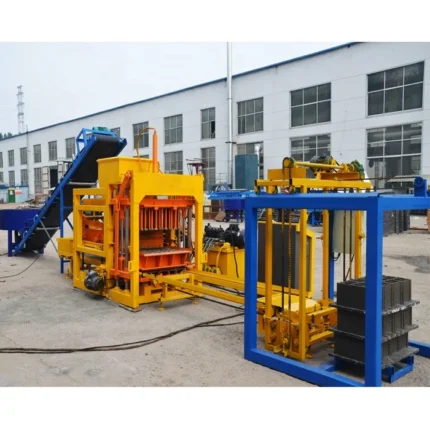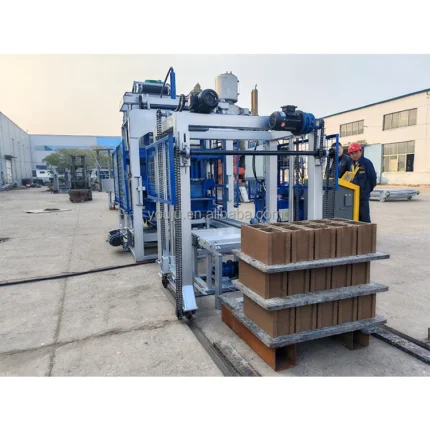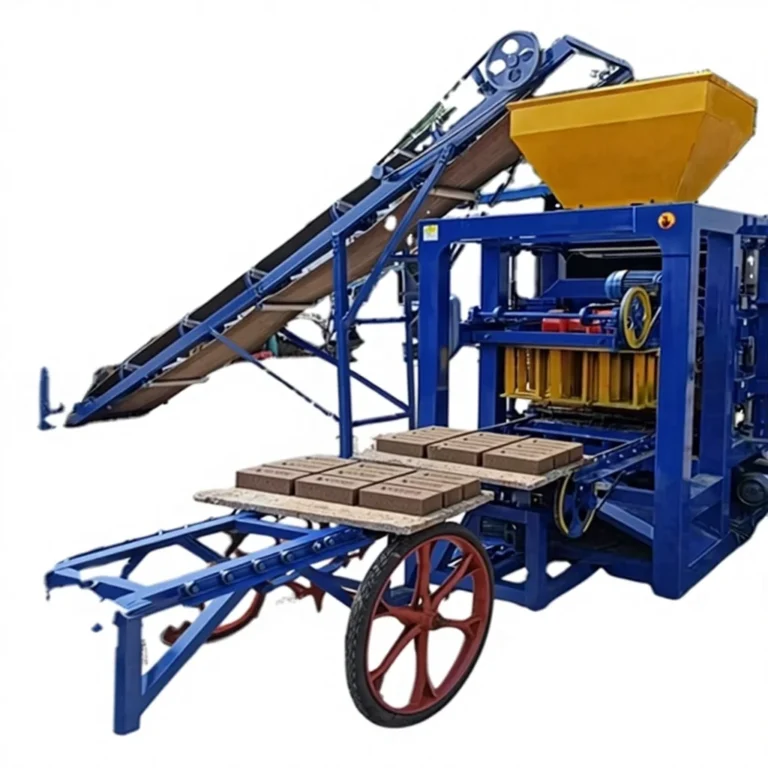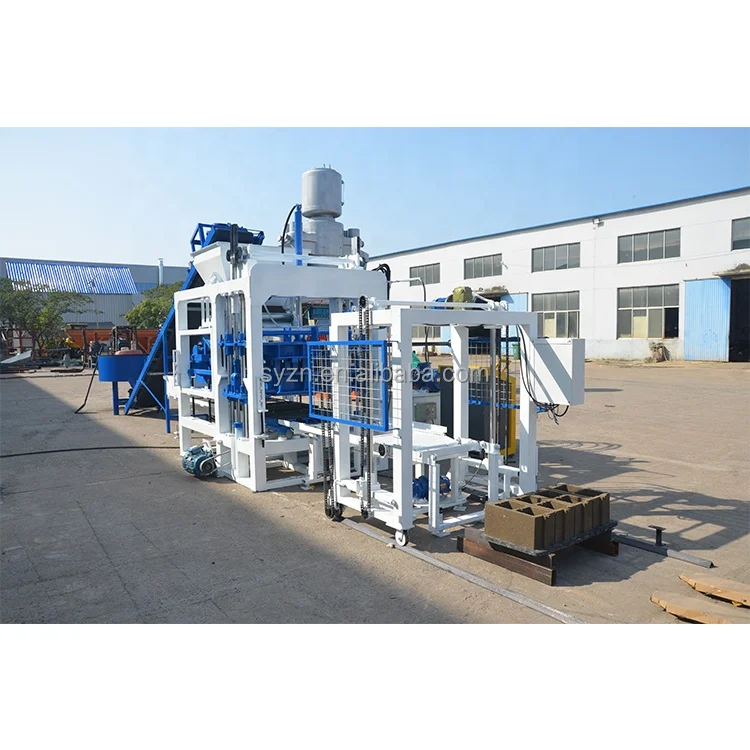
Description
PLC-Locked Cycle Logic — Every press stroke on the QT4-18 repeats identical pressure, vibration and timing parameters so block consistency no longer depends on operator judgment.
Technical Specifications
| Parameter | Value |
|---|---|
| Model | QT4-18 |
| Product Type | Hydraulic Automatic Hollow Block Making Machine |
| Vibration Form | Platform Vibration |
| Vibration Frequency | 0–60 Hz (adjustable) |
| Vibration Force | 45 kN |
| Pallet Size | 900 × 500 mm |
| Molding Cycle | 18–25 s |
| Demolding Method | Hydraulic |
| Control System | PLC (language configurable — confirm before production) |
| Output Capacity (400×200×200 mm hollow block) | 4 pcs/mould, 799 pcs/h, 6,399 pcs/8 hr (basis: 18 s cycle) |
| Output Capacity (400×150×200 mm hollow block) | 5 pcs/mould, 999 pcs/h, 7,999 pcs/8 hr (basis: 18 s cycle) |
| Output Capacity (240×115×52 mm solid brick) | 26 pcs/mould, 5,199 pcs/h, 41,599 pcs/8 hr (basis: 18 s cycle) |
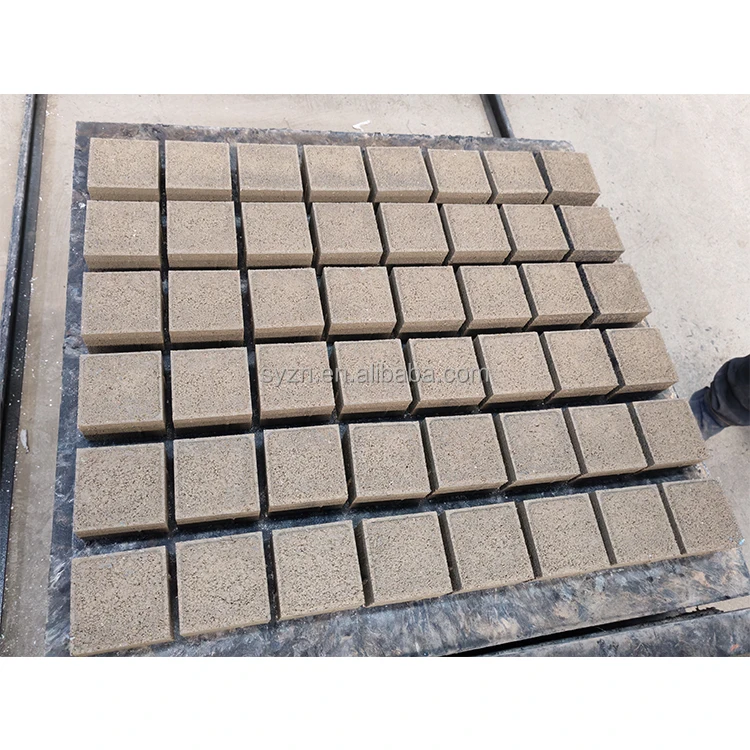
| Supported Formats | Hollow blocks, color face bricks, through-body environmental bricks, road curb rocks, hydraulic blocks, sod bricks |
| Warranty | 1 year for the whole machine (excluding spare parts) |
| Voltage & Frequency | To be confirmed before production |
Application Suitability
| Application | Material or Output |
|---|---|
| Hollow block production for masonry walls | Crushed stone, sand, cement, fly ash aggregates |
| Solid brick manufacturing | Local aggregate blends with cement binder |
| Paving and kerbstone production | High-density concrete mixes for load-bearing surfaces |
| Color face brick and sod brick runs | Pigmented face mix over standard body mix |
| On-site block production for housing projects | Locally sourced raw materials matched to mix design |
Why "Automatic" Means Nothing Until the PLC Language Matches Your Operator
The automatic QT4-18 block making machine PLC controlled interface only removes operator guesswork if the display language, voltage and frequency are confirmed before the machine ships.
I spent three weeks at a port in Guayaquil waiting for a transformer retrofit because someone assumed the local grid matched the standard cabinet configuration. The PLC panel powered up but the display showed fault codes the local crew could not read. That project was a QT4-18 class machine bound for a housing contractor who had already mobilized masons and curing racks. When the automation layer fails at first power-on, the entire commissioning schedule collapses and the daily output target becomes irrelevant [NEED_CITE: voltage and frequency standards by export market]. Confirming the PLC display language, electrical schematic and control voltage against the site supply is not paperwork — it is the difference between a machine that runs on day one and one that sits idle while you source adapters.
What the PLC Actually Controls on Every Stroke
The automatic QT4-18 block making machine PLC controlled system interlocks the mould descent, vibration onset, hydraulic pressure ramp and demoulding sequence into a single repeatable procedure. Once the parameters are set for a given block format, the operator initiates the cycle and the controller executes each step in fixed order. This means vibration force, pressure and timing stay locked regardless of shift changes or operator experience level.
Where Automation Replaces Operator Judgment
On semi-automatic lines, the operator decides when to stop vibration and when to trigger demoulding based on visual cues and experience. The QT4-18 removes that decision point entirely. The PLC holds the vibration frequency within the 0–60 Hz range matched to the mould format and mix design, then initiates hydraulic demoulding at the exact same point in every cycle. The result is batch-to-batch density consistency that manual timing simply cannot match across a full production shift [NEED_CITE: PLC cycle control in concrete block pressing].
Reading the Specs That Matter for Upgrading Plants
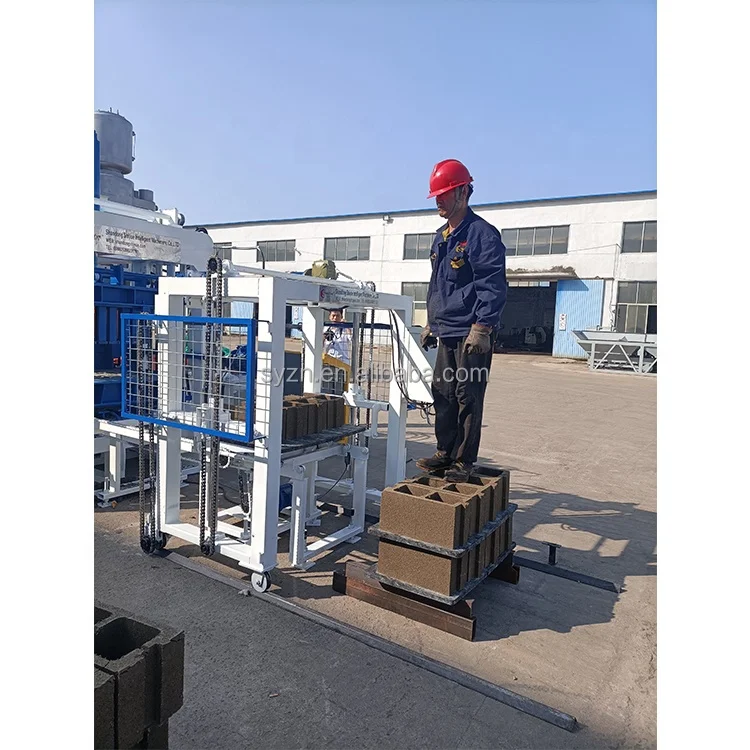
The 45 kN vibration force combined with hydraulic demoulding means the QT4-18 can compact stiffer mixes with lower water content, which directly affects block green strength at the curing rack. The 900 × 500 mm pallet size determines how many blocks are produced per cycle and must align with the curing area layout and the forklift the plant already operates. The 18–25 s moulding cycle range reflects the difference between a simple hollow block and a more complex interlocking or sod brick format. Choosing the wrong pallet size forces manual re-stacking; choosing the wrong cycle assumption inflates projected daily output on paper.
The Hidden Cost of Skipping the Electrical Confirmation
When voltage, frequency and PLC language are not locked in writing before production, the machine arrives and the site cannot power the cabinet. The crew improvises with temporary transformers, the PLC throws protection faults, and commissioning stretches from days into weeks. During that downtime the curing racks sit empty, the raw material stockpile ages, and the contractor misses delivery commitments to the project site [NEED_CITE: CE machinery directive requirements for industrial equipment]. All of this is preventable with a single pre-production checklist covering supply voltage, three-phase configuration and display language preference.
Why Sourcing This Machine Through a Line-Focused Supplier
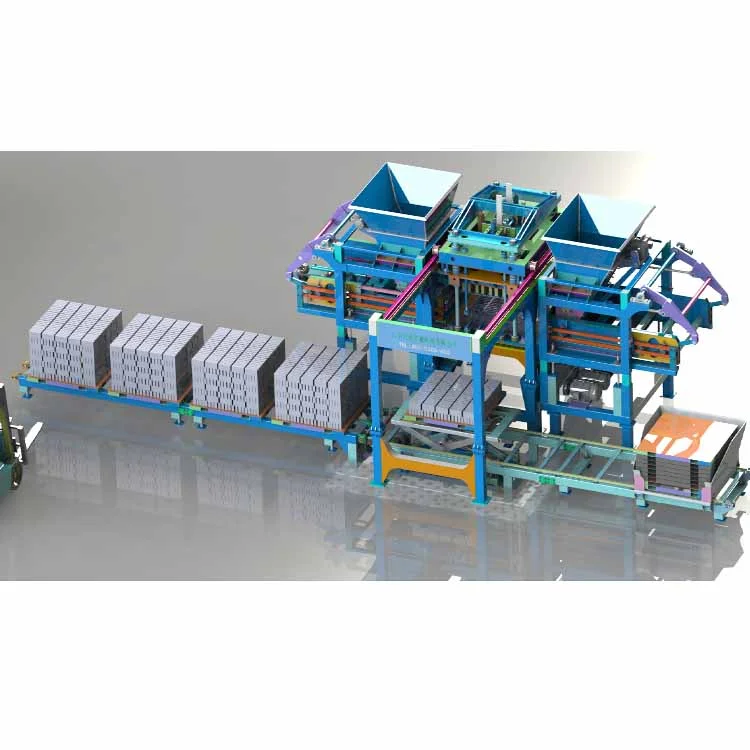
Shandong Shiyue Intelligent Machinery treats the QT4-18 as one station within a connected production line rather than a standalone press. The pallet size, feeding conveyor speed and stacking interval are specified together so the press is never left waiting for the next pallet. Configuration is set against the buyer’s actual mix design and local aggregate rather than a catalogue default, which protects block strength from the first run. Mould design covers the formats the buyer’s market actually sells, with custom drawings available for non-standard shapes. The automation level is selectable, so a plant can start with the QT4-18 in its current configuration and add automatic stacking or cubing modules later. Installation support includes on-site commissioning and operator training so the PLC parameters are tuned to the local material before handover.
Documentation & Verification
- Line layout showing QT4-18 position, pallet flow direction and upstream feeder spacing
- Capacity calculation sheet stating block format assumed for each output figure
- Hydraulic and electrical schematic with valve and sensor identification
- Voltage, frequency and PLC display language confirmation record before production
- Factory test record on buyer’s specified block format before dispatch
- Operation and maintenance manual with mould change procedure and wear parts list
Installation, Commissioning & Support
- Foundation must accommodate 900 × 500 mm pallet footprint with level tolerance for vibration isolation
- Dedicated three-phase circuit at confirmed voltage and frequency feeding the PLC cabinet
- Machine arrives fully assembled; pallet feeder and conveyor connect on site
- First-run commissioning includes PLC parameter tuning to local aggregate and mix design
- Operator training covers mould change procedure, cycle adjustment and fault code reading
- Wear parts list and mould maintenance schedule provided at handover
What to Include in Your Inquiry
To move from general interest to a firm configuration proposal, share the target block format and dimensions you intend to produce, the daily output you need per format, and the raw materials available at your site. Confirm your local supply voltage, phase configuration and frequency, and state the preferred PLC display language. If you are integrating the QT4-18 into an existing line, describe the current pallet handling and curing setup so the feeding and stacking intervals can be matched.
Frequently Asked Questions
Q: How do I verify the output capacity the QT4-18 can actually deliver?
A: Every capacity figure is calculated from a specific block format and an 18-second cycle. Request the capacity sheet that states which format each number assumes, then cross-reference with your target product. Real daily output depends on pallet circulation speed, raw material feed continuity and curing rack capacity, not just the press cycle alone.
Q: How are voltage, frequency and PLC language confirmed before the machine ships?
A: These three items are written into the production order before the cabinet is built. You supply your site voltage, phase and frequency data, and confirm the display language. The factory test is then run under those exact conditions so the machine powers on correctly at commissioning.
Q: Can the QT4-18 be upgraded to full automatic stacking and cubing later?
A: Yes. The automation level is selectable and the line is designed for staged upgrades. The PLC architecture supports adding automatic pallet feeding, stacking and cubing modules without replacing the core press. Your initial configuration can start at the current automation level and expand as production volume grows.
Q: How does the PLC maintain consistency when switching between block formats?
A: Each mould has its own stored parameter set covering vibration frequency, hydraulic pressure profile and cycle timing. When the operator selects the active format, the PLC applies those locked values so every stroke repeats identically. This prevents the density and strength variation that occurs when parameters are adjusted manually between runs.
Q: What remote diagnostics and support are available after the machine is installed?
A: The PLC system supports fault code display on the operator screen, and the electrical schematic provided at handover identifies every sensor and valve. For issues that cannot be resolved on site, the factory can review fault logs and guide troubleshooting through the documented diagnostic sequence [NEED_CITE: remote PLC diagnostics for concrete block machinery].