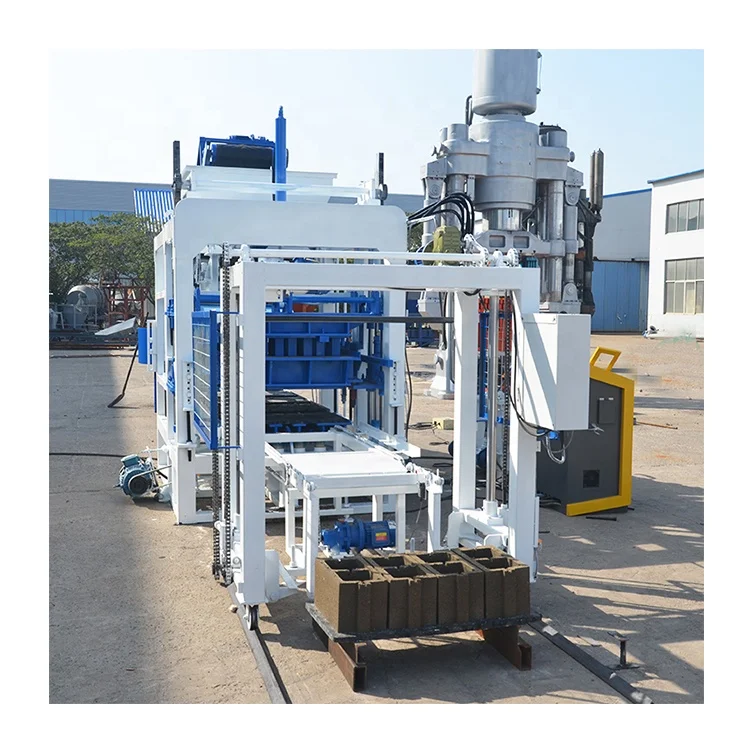


Description
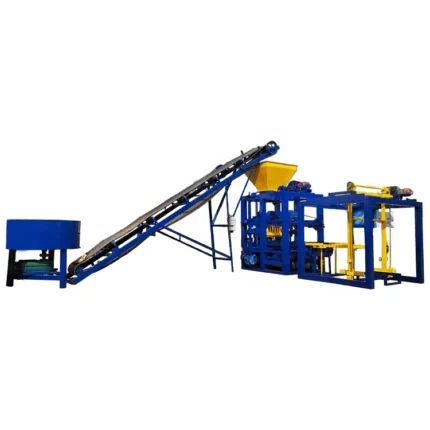
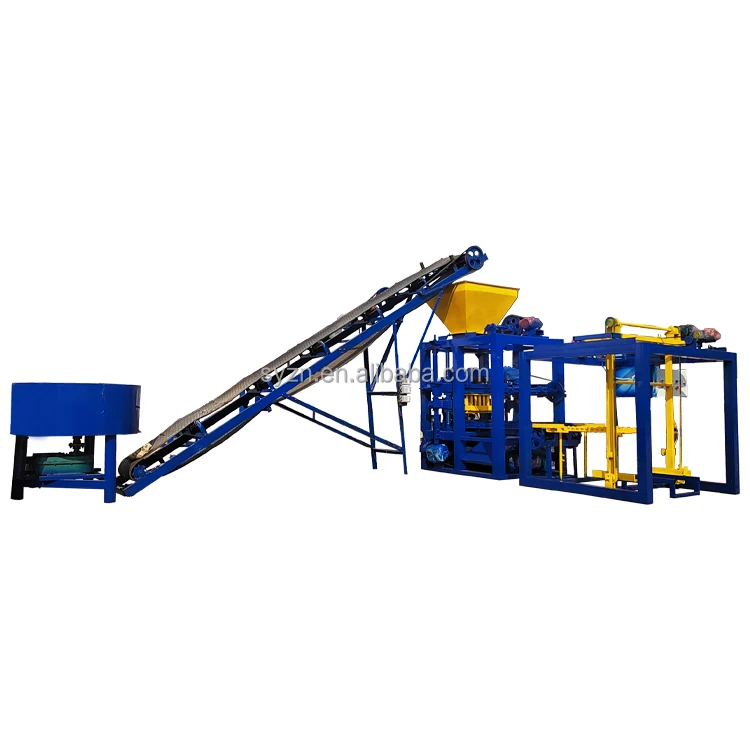
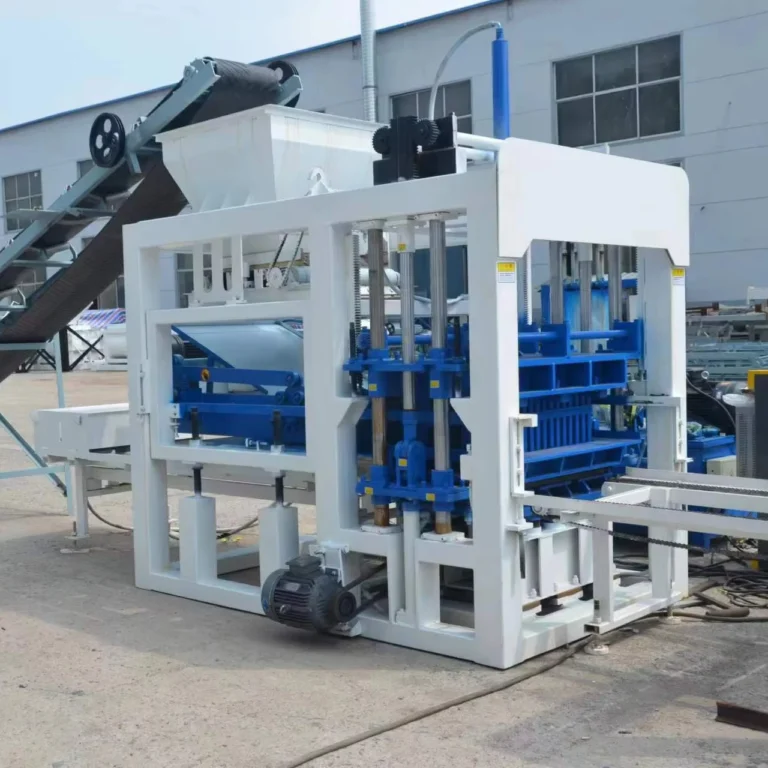
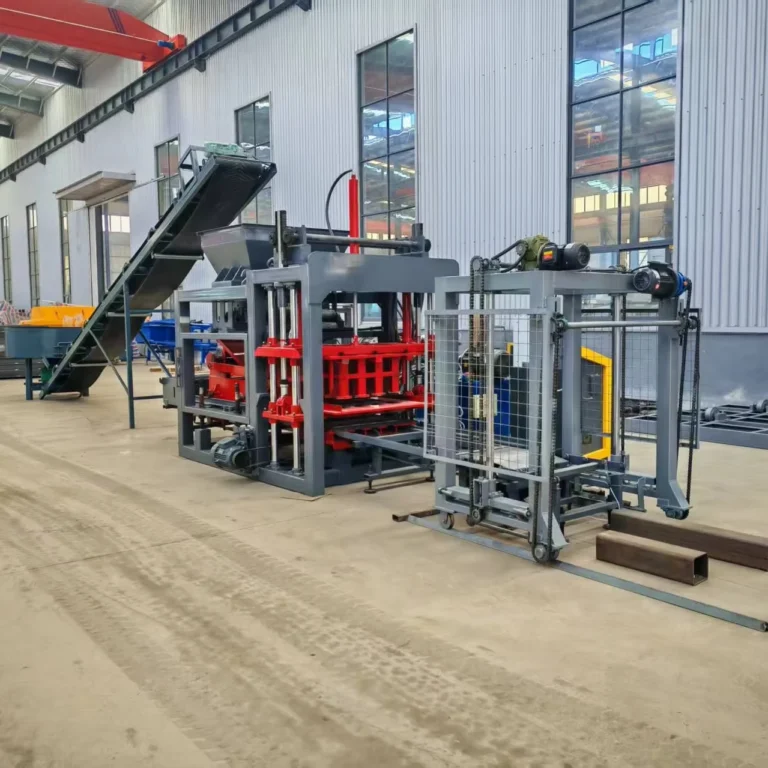
Hydraulic-First Configuration — Every QT4-18 block making system is set against the buyer’s local aggregate and target format before the machine is built, not pulled from a catalogue default.
Technical Specifications
| Parameter | Value |
|---|---|
| Model | QT4-18 |
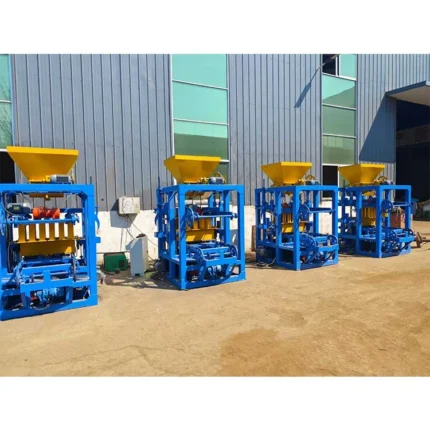
| Product Type | Hydraulic Block Making Machine |
| Overall Dimensions (L×W×H) | 3900×1600×2300 mm |
| Total Weight | 3T |
| Rated Power | 24KW |
| Vibration Force | 40-50KN |
| Cycle Time | 15-25s (basis to be confirmed per block format and mix) |
| Pallet Size | 850×550×25mm |
| Mixer Model | JQ350 |
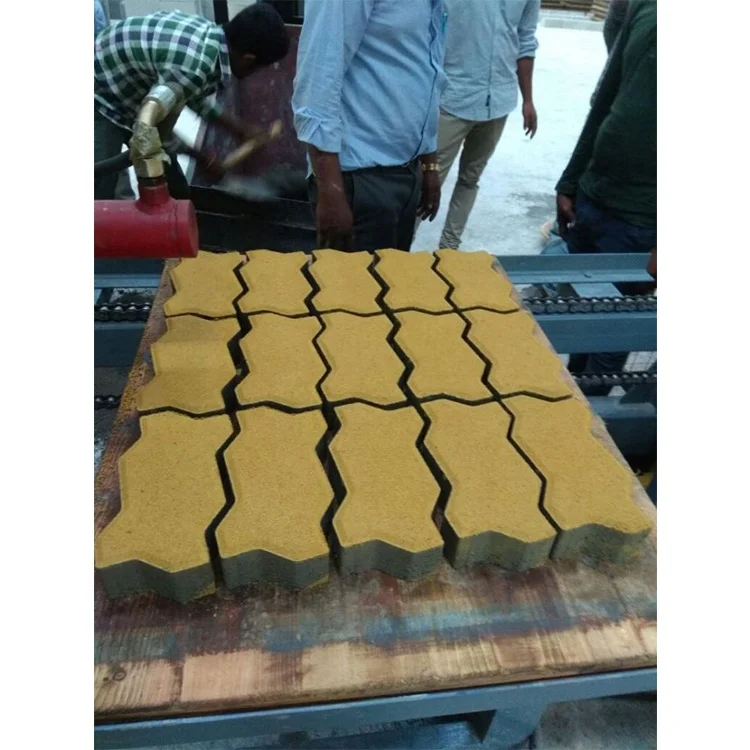
| Applied Products | Paver, solid block, hollow block, curbstone |
| Raw Materials | Crushed stones, sand, cement, dust, fly ash |
| Output Capacity (Hollow 400×200×200mm) | 1200-1680 pcs/hr, 9600-13440 pcs/8hr |
| Output Capacity (Hollow 400×150×200mm) | 1800-2400 pcs/hr, 14400-19200 pcs/8hr |
| Output Capacity (Solid 240×115×53mm) | 3240 pcs/hr, 16200-19440 pcs/8hr |
| Automation Level | Semi-automatic (basis not stated in source — confirm block format / material / thickness) |
| Hydraulic Station | Equipped |
| Voltage & Frequency | Configurable to buyer market (basis to be confirmed) |
| Control System | PLC or MCC control available (basis to be confirmed) |
Application Suitability
| Application | Material or Output |
|---|---|
| Hollow block production plants | Crushed stone, sand, cement, fly ash blends |
| Paver and curbstone manufacturing | Dense aggregate mixes for high-wear surfaces |
| On-site construction block production | Locally sourced river sand and stone dust |
| Concrete product manufacturers expanding formats | Multiple mould changes across solid and hollow ranges |
Why the Automation Question Must Come Before the Quotation
The automatic QT4-18 hydraulic block making machine is only as consistent as the control logic driving its hydraulic station and vibration sequence. A machine is semi-automatic or fully automatic depending on what surrounds the press, not the press itself.
Too many buyers I have worked with in West and East Africa signed off on a quotation that listed cycles per hour without confirming whether pallet feeding, stacking, and curing rack handling were included. The press arrived, ran well for two days, and then output piled up on the floor because no one had budgeted for the automatic stacker or the pallet return system. The daily tonnage never matched the sample sheet because the bottleneck shifted from the press to the handling crew [NEED_CITE: typical block plant bottleneck analysis for semi-automatic lines]. Getting the automation scope right at the inquiry stage is the single biggest factor in whether the line hits its stated rhythm.
What PLC Control Actually Removes from the Operator
On the QT4-18, the PLC governs the vibration duration, hydraulic pressure hold time, and feed box travel. In a manual setup the operator watches the mould fill and decides when to trigger the press head, which means every cycle varies by a second or two depending on attention and fatigue. Once the automatic QT4-18 hydraulic block making machine runs under PLC control, those decisions are locked into a timed sequence, and batch-to-batch density stays within a narrow band across a full shift.
Where Automation Ends and Manual Labour Begins
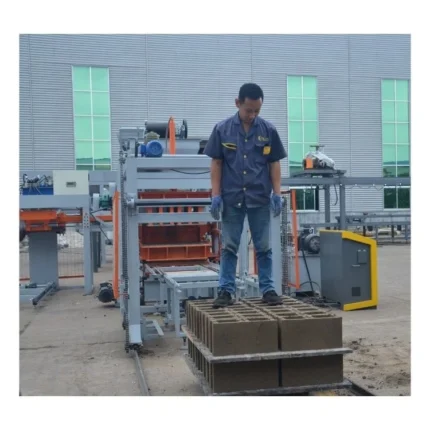
A common misunderstanding on semi-automatic block lines is that the press itself handles everything between the mixer and the curing yard. In reality the QT4-18 press forms the block and ejects it onto a pallet; from there the pallet must travel to a stacking station, and the stacked racks must move to the curing area. If the buyer’s quotation did not include a pallet return conveyor and an automatic stacker, those two stations still rely on wheelbarrows and hand labour [NEED_CITE: labour allocation in semi-automatic versus fully automatic block plants]. Specifying the boundary between machine and manual handling before production starts is where the real planning work happens.
Reading the Specs That Matter for Block Density
The 40-50KN vibration force and the equipped hydraulic station on the QT4-18 work together: vibration settles the aggregate into the mould cavity while hydraulic pressure from the upper mould head compresses the mix from above. If vibration is too high relative to hydraulic hold, the block surface fractures; if hydraulic pressure dominates, the block is dense but under-filled. The 850×550×25mm pallet size must match the curing rack spacing the buyer already has or plans to build, because a mismatched pallet forces a complete reconfiguration of the yard. The JQ350 mixer feeds the press at a rate that must align with the 15-25s cycle time; if the mixer cannot discharge fast enough, the press sits idle between cycles. The 24KW rated power covers the press and vibration motor but does not include the mixer, stacker, or conveyor drives, so total connected load must be calculated separately.
The Cost of Skipping the Pallet and Automation Audit
When the pallet size is confirmed after the machine ships rather than before, the buyer arrives at the port to find that the curing racks built on-site do not accept the pallets the machine produces. Blocks then cure on the ground, strength development is uneven, and the first batch fails the compressive test the local standard requires [NEED_CITE: curing rack and pallet alignment in block production]. This is not a machine fault; it is a specification gap that could have been closed during the layout stage. The same applies to automation: a line quoted without a pallet return system forces the buyer to hire additional handlers, and those handlers introduce pallet damage and block breakage that the press itself never caused.
Why Buyers Specify This Line Here
Block machinery is the single product focus, so the QT4-18 press, its moulds, pallets, and handling equipment are specified as one matched system rather than sourced from separate vendors. The configuration is set against the buyer’s actual mix design and local aggregate — I have seen machines shipped to sites where the specified sand was unavailable, and the first month was spent re-tuning parameters from scratch. Mould design covers the formats the buyer’s market actually sells, including custom drawings when a local standard calls for a non-catalogue dimension. Automation level is selectable, so a buyer can commission the QT4-18 in semi-automatic mode and add a stacker and pallet return later without replacing the press. Factory test records are generated with the buyer’s chosen block format before dispatch, not a generic demo block [NEED_CITE: factory acceptance testing standards for block making equipment]. Installation support includes operator training on the specific control language and voltage confirmed for the destination market.
Documentation & Verification
- Line layout stating capacity per block format, not a single headline number
- Hydraulic and electrical schematic matching the confirmed voltage and frequency
- Factory test record run on the buyer’s specified mould before crating
- Mould drawing and format list including custom dimensions where applicable
- Pallet specification sheet confirming dimensions against the buyer’s curing rack
- CE declaration and operation manual in the confirmed control language
Installation, Commissioning & Support
- Foundation must support 3T static weight plus dynamic vibration load from the 40-50KN force rating
- Dedicated electrical circuit required for 24KW rated power plus mixer and auxiliary drives
- Machine ships partially dismantled; reassembly on-site includes hydraulic station connection and PLC boot
- First-day commissioning covers vibration-hydraulic timing calibration for the buyer’s confirmed mix design
- Operator training on PLC interface in the language specified at order confirmation
- Wear parts list for hydraulic seals and vibration springs with recommended replacement intervals
What We Need to Size Your Line Correctly
To move from a general enquiry to a configuration that holds up on your production floor, share the block format you sell most, the daily volume you need to sustain, and a sample of the sand or aggregate available at your site. We also need the voltage and frequency at the destination, the PLC display language your operators read, and whether your existing curing yard uses a specific pallet dimension. With those points confirmed, the capacity calculation and automation boundary become a drawing, not an assumption.
Frequently Asked Questions
Q: How is realistic daily output calculated for different block formats?
A: Output depends on the mould installed. The QT4-18 is rated at 1200-1680 pieces per hour based on a 400×200×200mm hollow block and 14400-19200 pieces per 8-hour shift based on a 400×150×200mm hollow block. A capacity table listing every format the buyer plans to run is issued with the quotation so there is no single headline number to misinterpret.
Q: What additional equipment is needed to move from semi-automatic to fully automatic?
A: A pallet return conveyor, an automatic stacker, and a curing rack handling system close the loop between the press and the yard. The QT4-18 press itself does not change; the automation scope around it expands. Each station is added to the line layout and quoted as a matched set.
Q: How do voltage and control language get confirmed before shipment?
A: The buyer states the local supply standard and the preferred PLC display language during the quotation stage. The electrical schematic and control panel label layout are then issued for sign-off before the machine is wired. This step prevents rewiring delays after arrival at the destination port.
Q: How long does a mould change take on this machine?
A: Mould change time depends on the clamping system specified and the operator’s familiarity with the procedure. On the QT4-18, a trained operator with the correct tools can complete a swap within a single shift window. Training covers the sequence and the torque settings for each mould format included in the order.
Q: How are hydraulic pressure and vibration matched to local aggregate?
A: Before dispatch, the buyer sends a sample of the local sand or crushed stone. The factory runs test cycles on the QT4-18 with that material and records the vibration duration and hydraulic hold settings that produce the target density. Those parameters are loaded into the PLC so the machine arrives pre-tuned rather than requiring weeks of on-site trial.