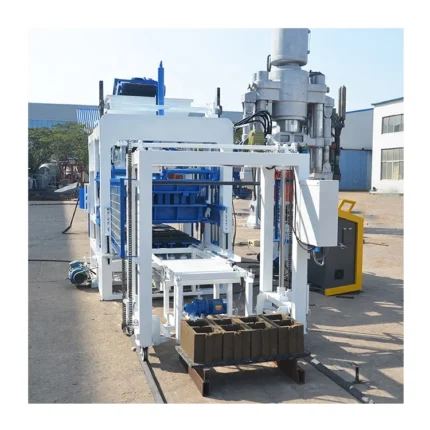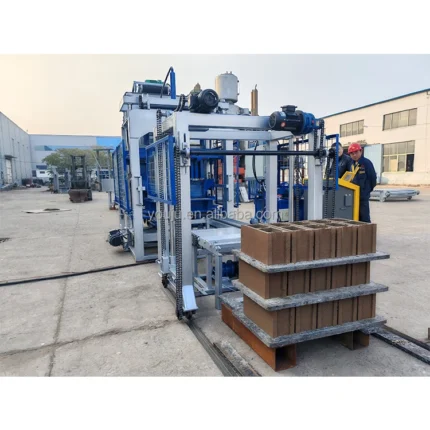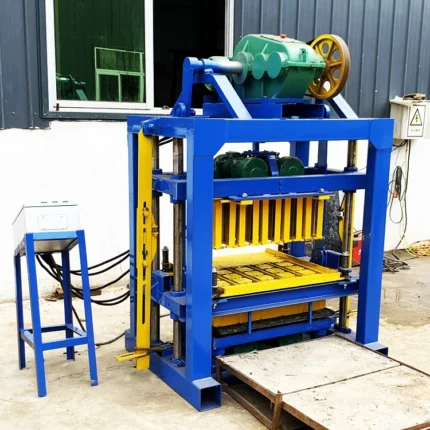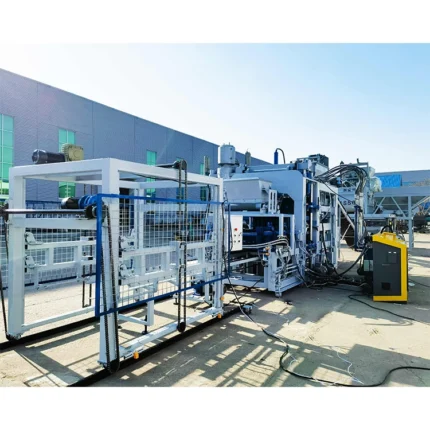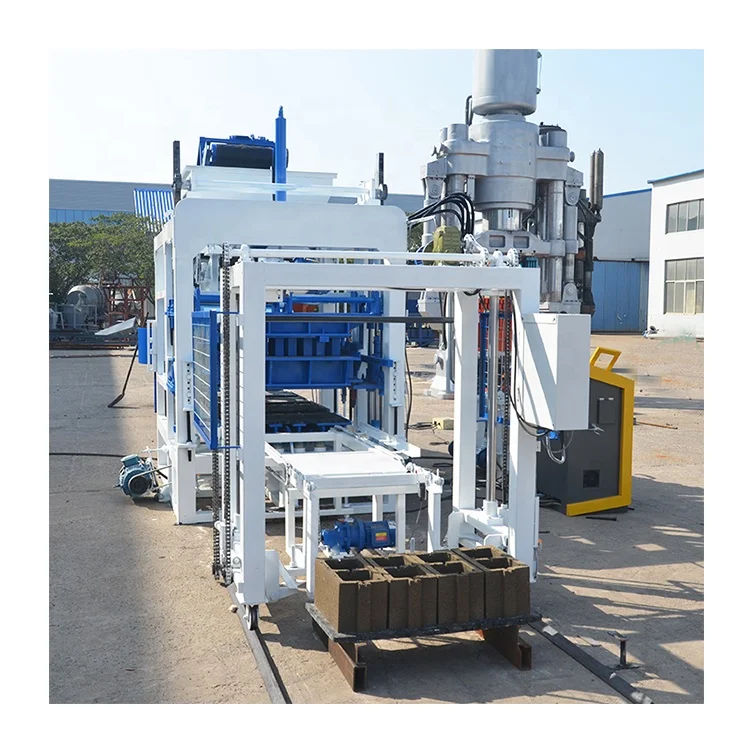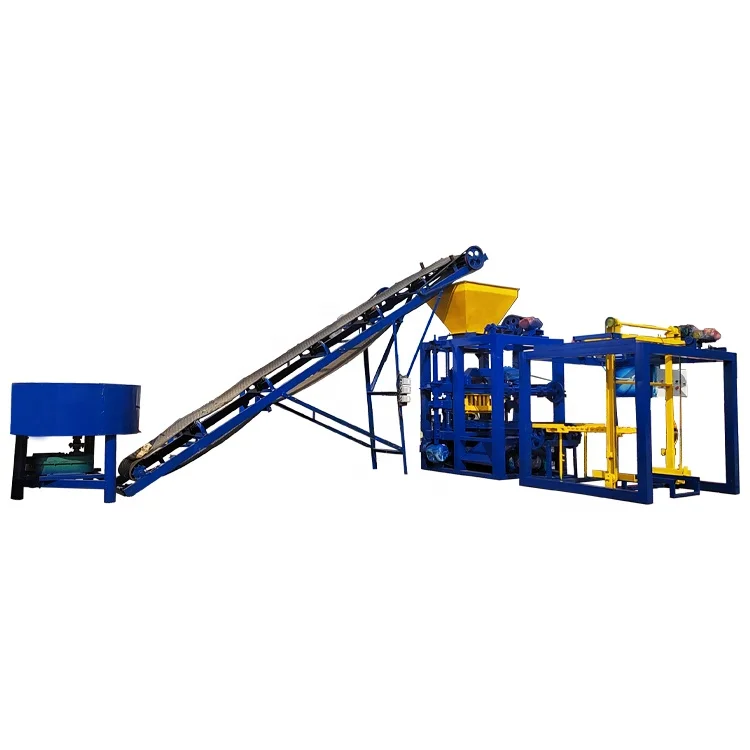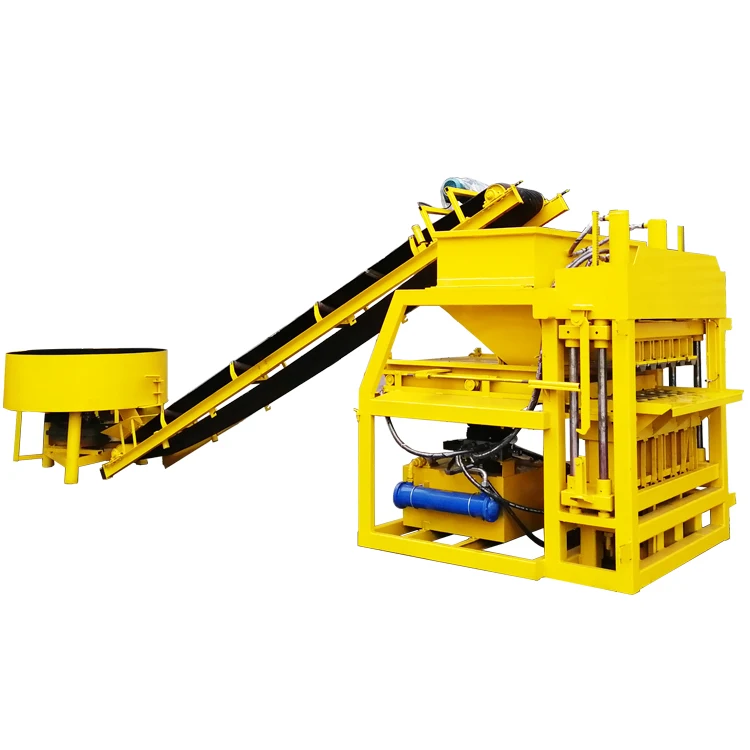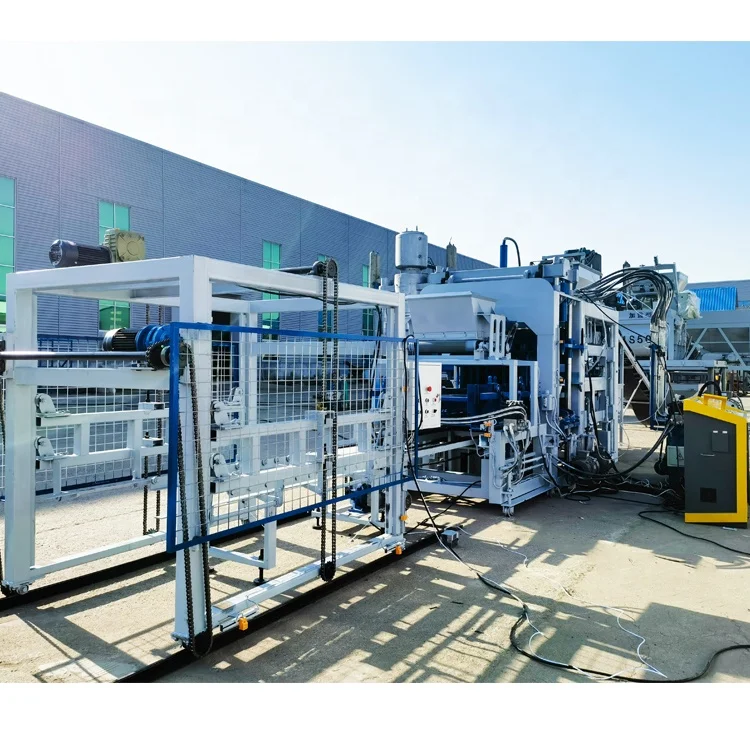
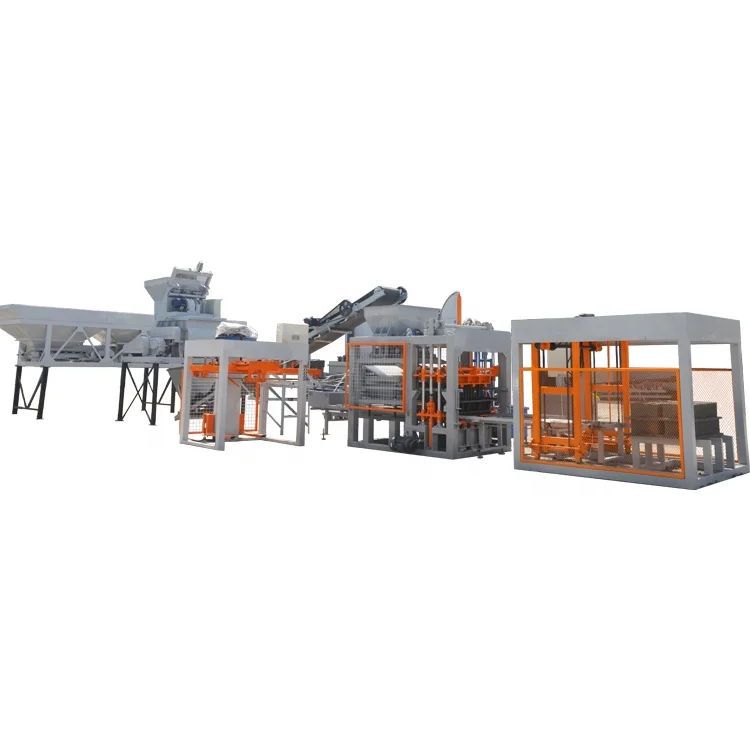
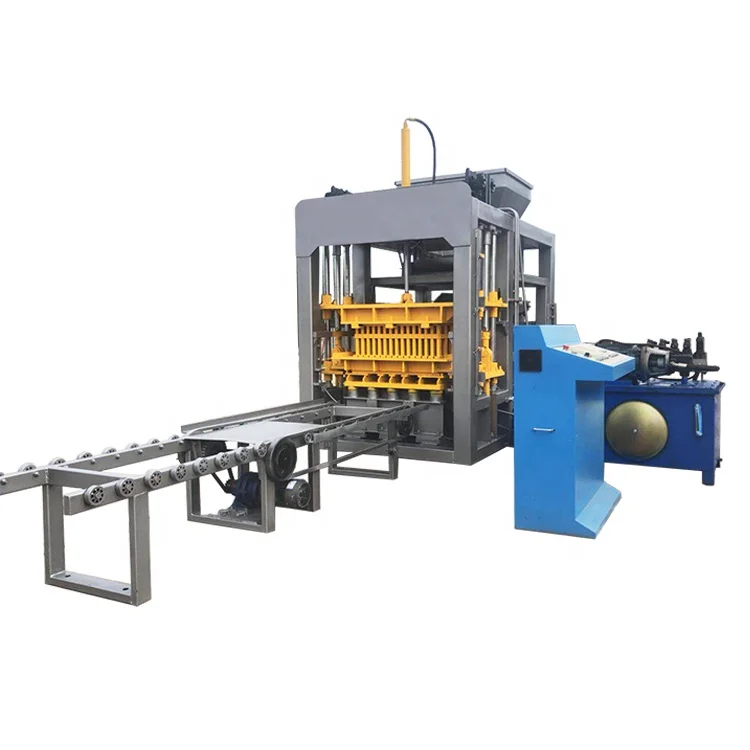
Description
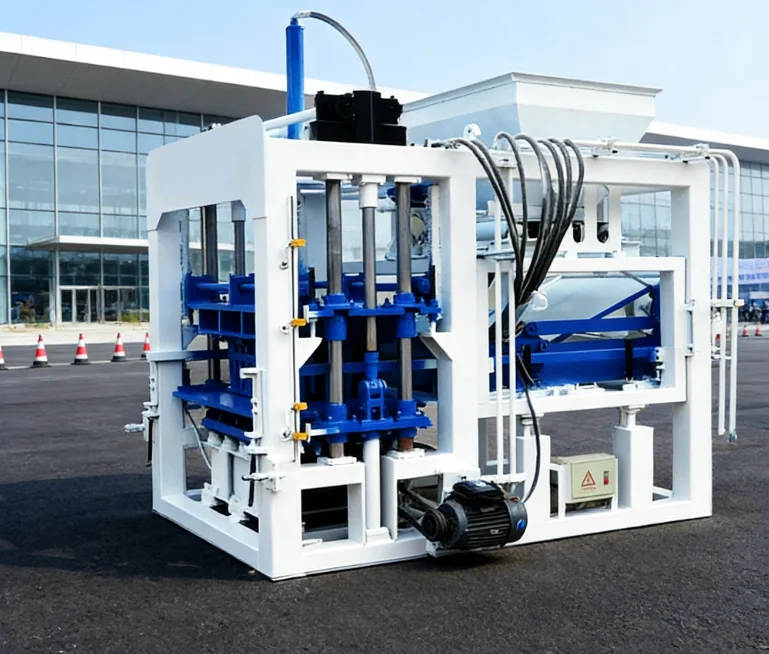
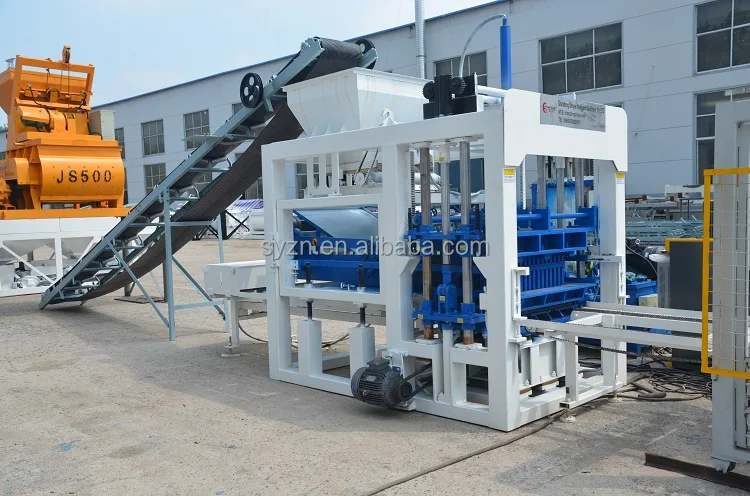
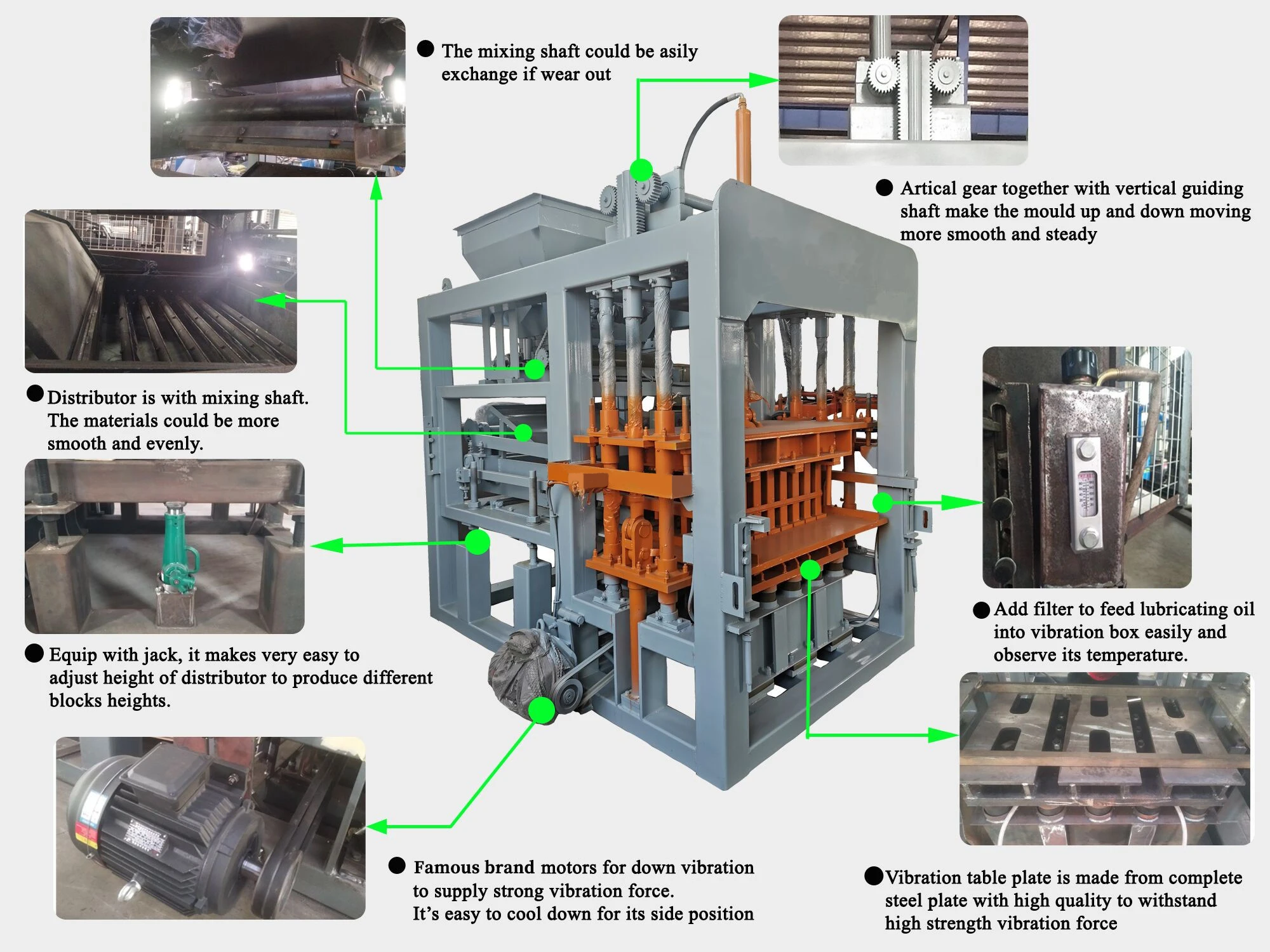
Intelligent Control Configuration — The QT5-15 automatic concrete block making machine PLC controlled system is calibrated to your specific voltage, frequency, and operator language before the control cabinet is sealed for shipment.
Technical Specifications
| Parameter | Value |
|---|---|
| Model | QT5-15 |
| Product Type | Automatic Concrete Block Making Machine |
| Overall Dimensions | 7400 × 1950 × 2800 mm |
| Rated Pressure | 21 MPa |
| Main Vibration Form | Platform Vibration |
| Vibration Frequency | 2800 – 4500 r/min |
| Pallet Size | 1100 × 550 mm |
| Molding Cycle | 15 – 25 s |
| Overall Power | 26.5 kW |
| Demolding Method | Hydraulic |
| Output Capacity (Hollow brick 400×200×200mm) | 5 pcs/mold, 1800 pcs/h |
| Output Capacity (Hollow block 400×150×200mm) | 6 pcs/mold, 1300 pcs/h |
| Output Capacity (S paver 225×112.5×60mm) | 16 pcs/mold, 3700 pcs/h |
| Control System | PLC (brand and language to be confirmed) |
| Voltage & Frequency | Configurable (basis to be confirmed per target market) |
Application Suitability
| Application | Material or Output |
|---|---|
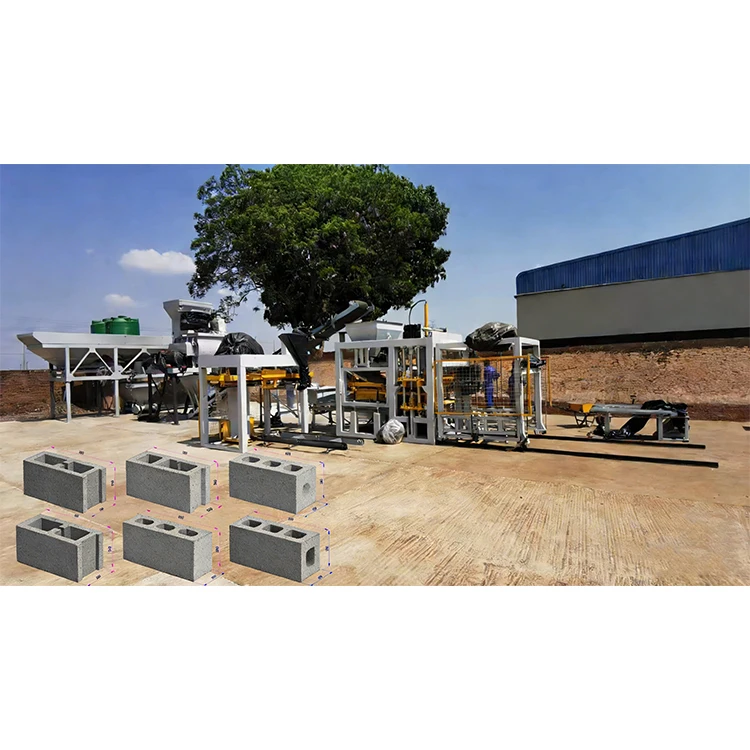
| Hollow block production | Crushed stone, sand, cement, fly ash, and gravel aggregates |
| Solid block manufacturing | Cement, dust, slag, and coarse sand mixes |
| Paving block and colored paver runs | Fine aggregate blends with pigment additives |
| Interlocking block and curbstone forming | Gravel, crushed stone, and cementitious binders |
Why the PLC Language Lock Must Precede the Purchase Order
An intelligent press is only as useful as the operator who can read its screen.
I have stood on a block plant floor in Colombia watching an entire shift stall because the PLC display was hard-coded to Chinese characters. The local operator could not acknowledge a single alarm, and the automatic concrete block making machine PLC controlled interface that was supposed to simplify his job became a barrier instead [NEED_CITE: language localization requirements for industrial HMI panels in export markets]. When you source equipment across borders, the control language, voltage standard, and frequency must be written into the contract before production begins, not discovered during commissioning.
Removing the Operator from the Cycle
The QT5-15 places cycle management, pallet indexing, and vibration timing under PLC supervision so that each molding sequence follows the same 15–25 second window regardless of who is at the panel. This repeatability is what separates a consistent block density from the variation that plagues manually timed presses. The automatic concrete block making machine PLC controlled architecture also logs fault events, giving maintenance crews a starting point when a cycle interrupts unexpectedly.
Building an Upgrade Path into the Line
A plant that begins with manual pallet handling can transition the QT5-15 to automatic pallet feeding, stacking, and cubing without replacing the press itself. The control cabinet is pre-wired for additional I/O modules, meaning the upgrade is a matter of adding sensors and actuators rather than ripping out the PLC [NEED_CITE: modular I/O expansion in industrial block presses]. This path lets a buyer match initial investment to current volume while preserving the option to scale automation as demand grows.
Reading the Numbers That Shape Daily Output
The 21 MPa rated pressure works in tandem with platform vibration at 2800–4500 r/min to compact the mix into the mold cavity; if either force is too low for a given aggregate, the resulting block will be under-dense and fail compressive strength tests. The 1100 × 550 mm pallet size must align with the curing rack spacing and forklift tine width already present at the plant, otherwise fresh blocks cannot move to the yard without manual re-stacking. Molding cycles of 15–25 seconds dictate realistic throughput, and the 26.5 kW overall power draw determines the transformer capacity and dedicated circuit the electrical contractor must provision before the machine arrives.
The Hidden Cost of Skipping Configuration Checks
When voltage and frequency are assumed rather than confirmed, a 380 V/50 Hz machine dropped into a 440 V/60 Hz grid will overheat motors and shorten contactor life within weeks. When the pallet size is chosen without walking the curing yard, a buyer ends up purchasing a second forklift or rebuilding rack bays to accommodate an incompatible dimension. When automation stops at the press and pallet stacking is left manual, the quoted cycle speed is never realized because workers cannot clear finished blocks fast enough to keep the machine running [NEED_CITE: throughput losses from manual pallet handling in block plants].
Why Buyers Source This Line Here
Block machinery is the single manufacturing focus, so the press, mold, pallet, and handling stations are specified as one matched system rather than assembled from unrelated suppliers. Each QT5-15 is configured against the buyer’s actual mix design and local aggregate, not a default catalog setting, which prevents the costly material substitutions that arise when a machine expects sand the plant cannot source. Molds are designed and produced in-house for the exact formats the buyer’s market sells, including custom drawings for interlocking profiles or non-standard curbstones. Automation level is selectable at order, allowing a semi-automatic start with a defined path to full stacking and cubing. Installation support includes on-site commissioning and operator training so the first production run happens with the supplier’s technician still present.
Documentation & Verification
- Line layout showing the block format assumed for each output figure
- PLC brand, HMI language, and voltage confirmation sheet
- Mould drawing and format list with changeover time estimates
- Factory test record measuring cycle time against the buyer’s mix design
- Hydraulic and electrical schematic matching the shipped configuration
Installation, Commissioning & Support
- Foundation plan accounts for the 7400 × 1950 mm footprint and vibration isolation pads
- Dedicated circuit sized for the 26.5 kW overall power with correct voltage and frequency
- Machine arrives in dismantled modules for container loading and on-site reassembly
- First-run cycle tuning matches vibration frequency to the buyer’s aggregate and mix moisture
- Operator training covers PLC alarm response, mold changeover, and daily greasing points
- Wear parts list identifies hydraulic seals and vibration springs with reorder part numbers
Starting the Inquiry
Provide the target block formats, the daily volume you plan to run, and the local aggregate available so the machine and mold package can be matched to your actual conditions. Confirm the site voltage, frequency, and the language your operators need on the HMI display before the control cabinet is built. Share your curing rack dimensions and forklift specifications so the pallet size can be locked to your existing yard layout.
Frequently Asked Questions
Q: How is the quoted capacity verified, and which block format is it based on?
A: Every capacity figure references a specific block size and molding cycle. For example, 1800 pieces per hour is measured on 400×200×200 mm hollow bricks at a 16–20 second cycle. If your primary format differs, we recalculate output for that exact mold and document the result in the proposal.
Q: What PLC brand is used, and can the HMI display language be set to our local language?
A: The PLC brand is confirmed during the proposal stage, and the HMI language is written into the contract. Before the cabinet ships, we send a screenshot of the display in the agreed language for written approval so no translation work is needed on site.
Q: How does the vibration and pressure configuration adapt to our local aggregate and mix design?
A: We request a sample of your aggregate and a target mix ratio. During the factory test, platform vibration frequency and 21 MPa hydraulic pressure are adjusted until the block reaches the required compressive strength, and those settings are recorded for your reference.
Q: What automation level is included — is pallet feeding, stacking, and cubing part of the quotation?
A: The base quotation specifies the automation level agreed upon. Pallet feeding, stacking, and cubing are listed as separate line items so you can see exactly which stations are included and which can be added later through the pre-wired I/O expansion path.
Q: What is the upgrade path if we start semi-automatic and want to add full automation later?
A: The control cabinet is pre-wired with spare I/O channels. Upgrading means installing the additional sensors, actuators, and stacking hardware, then loading the updated PLC program. The press itself does not need replacement or major modification.