


Description
Configuration Set Against the Buyer’s Actual Mix — The QT5-15 stores per-mould vibration frequency, cycle time and hydraulic sequence inside the PLC, so the exact process parameters travel with each format rather than relying on operator memory.
Technical Specifications
| Parameter | Value |
|---|---|
| Model | QT5-15 |
| Product Type | Hydraulic Interlocking Paving Block Making Machine |
| Overall Dimensions (L×W×H) | 7400 × 1950 × 2800 mm |
| Total Mass | 5000 kg |
| Overall Power | 32 kW |
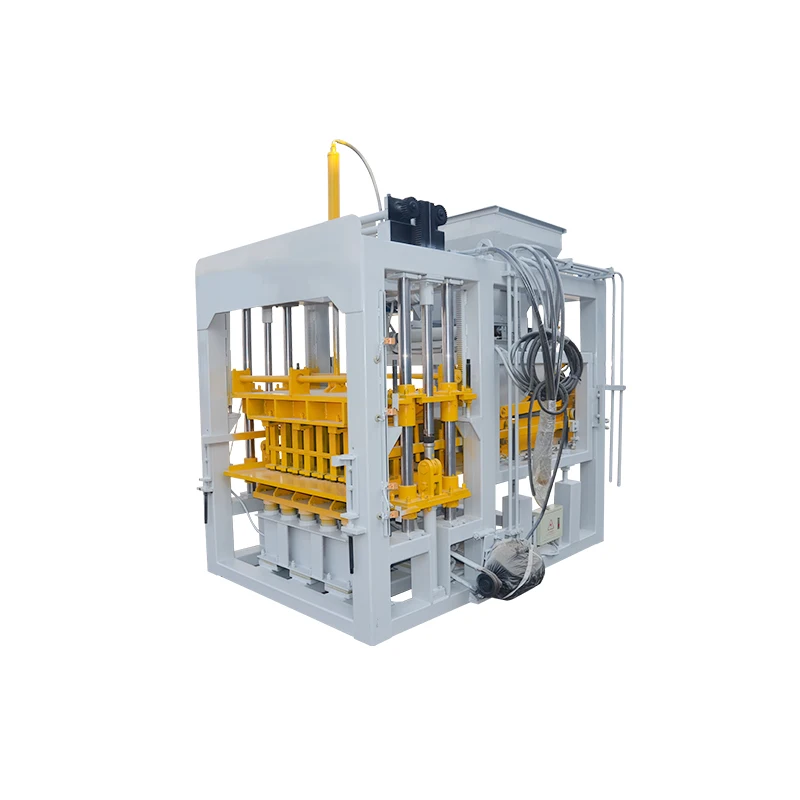
| Vibration Force | 80 kN |
| Vibration Frequency Range | 0–60 Hz |
| Vibration Form | Platform Vibration |
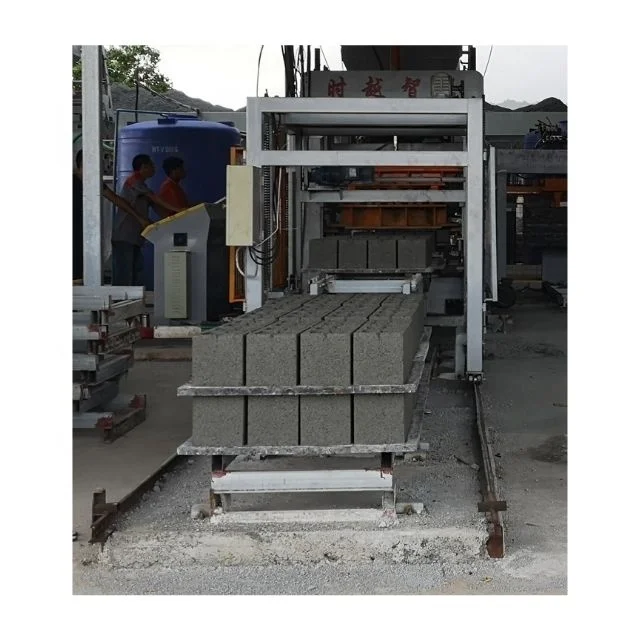
| Moulding Mode | Automatic loading, vibration moulding |
| Demolding Method | Hydraulic |
| Pallet Size | 1100 × 550 mm |
| Molding Cycle | 15–20 s (basis to be confirmed) |
| Control System | PLC with touch screen interface |
| Hydraulic System | Independent integrated hydraulic station |
| Automation Level | Automatic (pallet feeding, material feeding, vibrating, demoulding) |
| Output — Hollow Block 400×200×200 mm | 900–1200 pcs/h (5 pcs/mould, 15–20 s cycle) |
| Output — Hollow Block 400×150×200 mm | 1080–1440 pcs/h (6 pcs/mould, 15–20 s cycle) |
| Output — Solid Brick 240×115×53 mm | 5760–7680 pcs/h (32 pcs/mould, 15–20 s cycle) |
| Output — Rectangular Paver 200×100×60 mm | 3600–4500 pcs/h (25 pcs/mould, 20–25 s cycle) |
| Output — Zigzag Paver 225×112.5×60 mm | 2304–2880 pcs/h (16 pcs/mould, 20–25 s cycle) |
| Block Compressive Strength | >15 MPa |
| Raw Material Compatibility | Fly ash (up to 70%), slag, gangue, sand, crushed stone, cement, water |
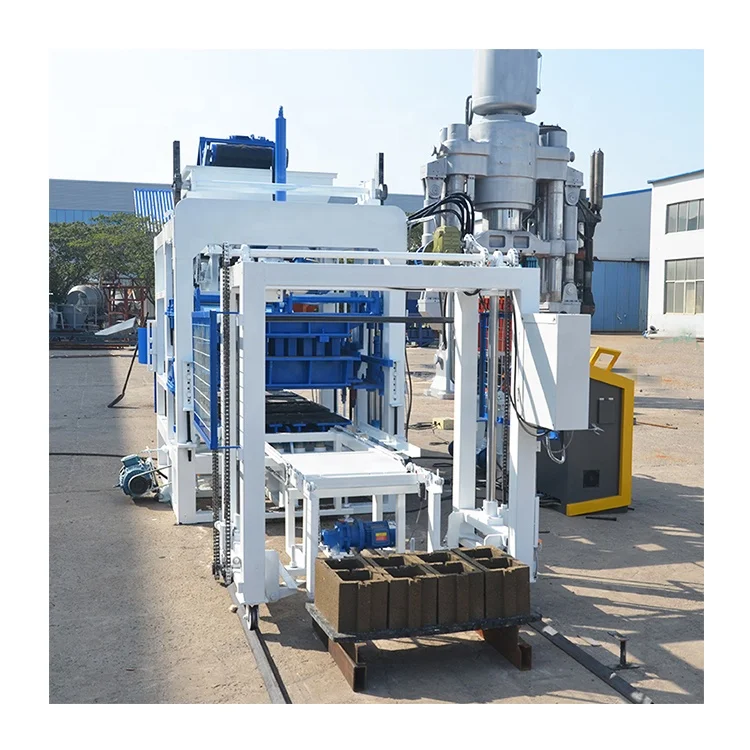
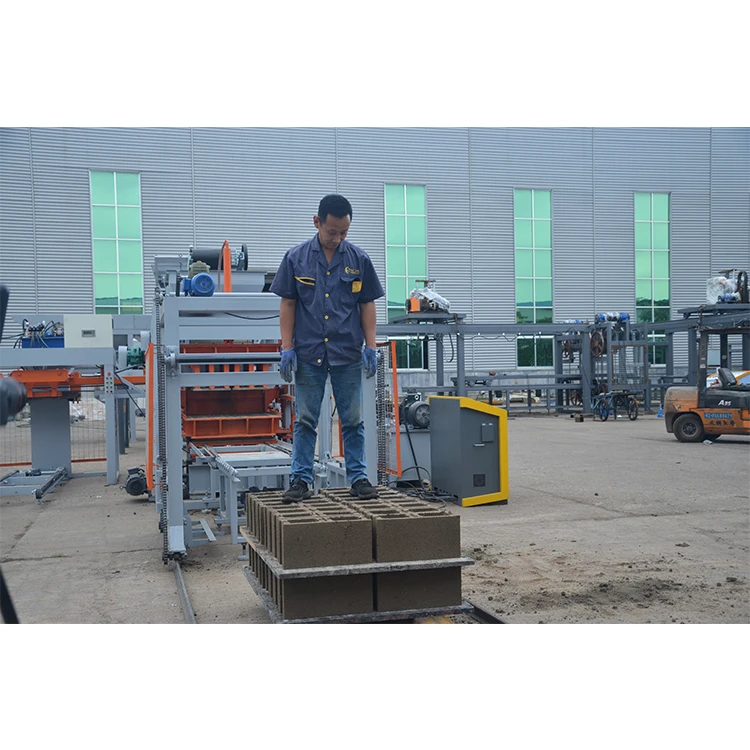
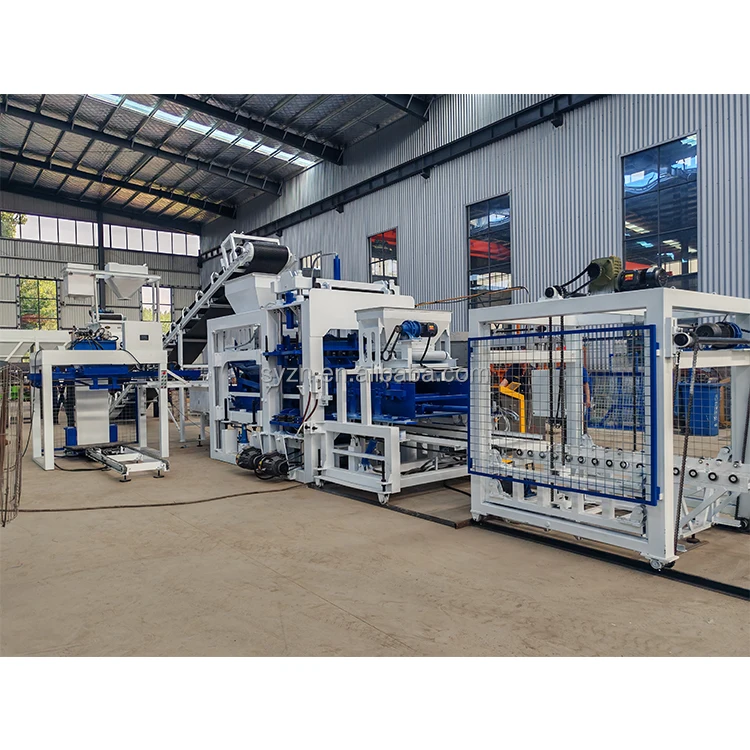
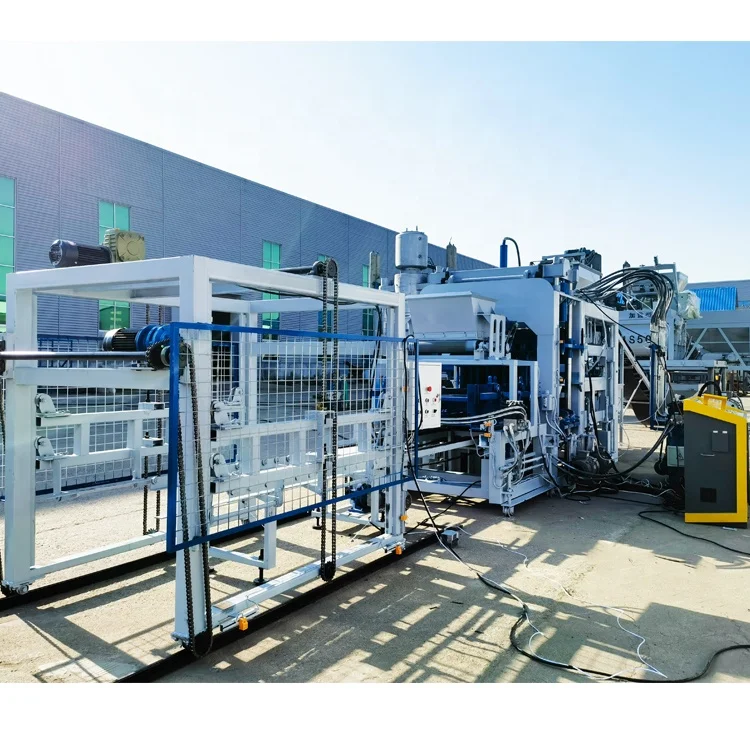
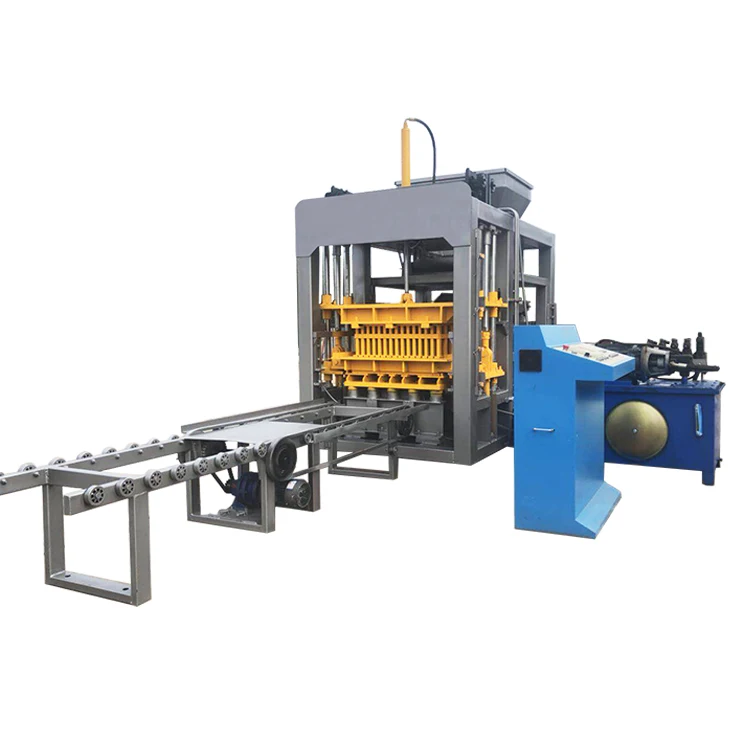
| Component List | Pallet feed machine, block making machine, storage hopper, conveyor, hydraulic unit, PLC control cabinet |
| Warranty | 1 year for whole machine (excluding spare parts) |
| Certification | CE |
Application Suitability
| Application | Material or Output |
|---|---|
| Hollow block production for load-bearing and partition walls | Crushed stone, sand, cement and fly ash blends up to 70% fly ash content |
| Solid brick manufacturing for masonry and infill | Sand and cement mixes, slag or gangue as partial aggregate replacement |
| Rectangular paving blocks for roads and parking areas | Fine aggregate and cement at controlled moisture for surface finish |
| Interlocking zigzag pavers for landscaping and walkways | Graded sand-cement mixes requiring precise dimensional consistency |
| On-site block production for housing and development projects | Locally sourced aggregates matched to available cement grade |
Why PLC Language Confirmation Must Happen Before Production
Every automatic block machine PLC controlled leaves the factory with a display language set — and if nobody checks, it may arrive unreadable.
I watched a crew stand around an interlocking paver machine in East Africa because the touch screen was locked in a language none of them could read. Three days of idle labour before a programmer arrived to reflash the interface. The QT5-15 runs on a PLC with a touch screen, which means the language file is burned into the configuration before the cabinet closes. Confirming that detail at the order stage costs nothing; fixing it on site costs days [NEED_CITE: voltage and frequency standards by export market].
What the PLC Actually Removes from the Operator
The touch screen on this automatic block machine PLC controlled system stores process parameters per mould, locking in vibration frequency, cycle duration and hydraulic pressure sequence for each block format. The operator selects the recipe rather than adjusting dials by feel. Batch-to-batch variation narrows because the machine repeats the same motion profile whether it is the first pallet of the morning or the five hundredth.
Where Automation Stops and Manual Work Begins
The QT5-15 automates pallet feeding, material feeding, vibration moulding and hydraulic demoulding. What sits outside that loop — stacking cured blocks onto racks, moving racks to the curing area, cubing finished product for dispatch — still requires labour unless additional handling stations are specified. Buyers who assume "automatic" covers everything downstream of the press often discover their bottleneck has simply shifted to the stacking yard [NEED_CITE: CE machinery directive requirements for industrial equipment]. Clarifying the automation boundary at quotation stage prevents that surprise.
Reading the Numbers Behind the Cycle Time
The 80 kN vibration force and 0–60 Hz adjustable frequency work together to compact the mix into the mould cavity. Higher frequency suits finer aggregates and thinner paver formats, while lower frequency with sustained force drives density in tall hollow blocks. The independent hydraulic station sits apart from the vibration table, so dust and shock do not degrade seal life or pressure stability over consecutive shifts. An 1100 × 550 mm pallet defines the mould footprint and must align with the curing rack dimensions and forklift capacity already in the plant. When pallet size is chosen without checking those downstream constraints, blocks pile up faster than they can be moved.
The Cost of Skipping the Voltage Conversation
A 32 kW machine draws significant current at start-up, and the hydraulic pump motor hits peak demand the moment the cycle begins. If the local grid supplies a different voltage or frequency than the motor was wound for, the contactor may trip repeatedly or the motor may overheat within weeks. Matching the electrical specification to the site’s actual supply — not the country’s nominal standard — avoids rewinding motors or replacing contactors after arrival [NEED_CITE: typical industrial power supply variance in developing markets].
Why Buyers Choose This Configuration
Block machinery is the sole focus of the production facility, so the press, mould, pallet and handling equipment are specified as one matched system rather than assembled from unrelated suppliers. The QT5-15 is configured against the buyer’s actual mix design and local aggregate, not pulled from a catalogue default. Mould design covers the formats the buyer’s market actually sells, including custom drawings when standard formats do not match local demand. Automation level is selectable — a buyer can begin with semi-automatic pallet handling and add stacking or cubing stations later as volume justifies the investment. Every machine ships with installation and commissioning support that includes operator training on the PLC interface.
Documentation & Verification
- Capacity calculation sheet stating block format and cycle time assumed for each output figure
- PLC programming language and touch screen display language confirmed in writing before cabinet assembly
- Hydraulic and electrical schematics listing component brands for local spare parts sourcing
- Factory test record run on the buyer’s specified block format before crate closure
- CE declaration package where applicable to the destination market
Installation, Commissioning & Support
- 1000 m² factory area requirement with level concrete slab to support the 5000 kg machine mass
- Dedicated 32 kW circuit with correct voltage and frequency verified before the electrical cabinet is energised
- PLC touch screen language and parameter menus checked during first power-on with operator present
- Mould mounting and hydraulic pressure calibration completed per block format before production handover
- Spare wear parts and mould maintenance schedule provided in the operation manual at commissioning
What to Include in Your Inquiry
Share the block formats your market sells, the daily volume you need per format, and the raw materials available locally including aggregate grading. State your site voltage, frequency and preferred PLC display language so the control cabinet is wired and programmed correctly before dispatch. If you already operate curing racks or forklifts, send their dimensions so pallet size and handling stations can be matched to your existing equipment.
Frequently Asked Questions
Q: How is the PLC configured for different block formats, and can parameters be locked?
A: Each mould recipe stores vibration frequency, cycle time and hydraulic sequence in the PLC memory. Once set during commissioning, the operator selects the recipe from the touch screen rather than adjusting parameters manually, which locks in consistency across shifts and prevents accidental changes to proven settings.
Q: What automation is included beyond the press itself?
A: The standard configuration covers automatic pallet feeding, material feeding, vibration moulding and hydraulic demoulding. Pallet stacking, curing rack handling and cubing are separate stations that can be added to the line. The quotation should clearly state which stations are included and which remain manual.
Q: What is the upgrade path if I start with semi-automatic pallet handling?
A: The PLC architecture supports adding automatic stacking and cubing stations later without replacing the control cabinet. Wiring points and programme logic blocks are reserved during initial programming, so the upgrade requires adding hardware and enabling pre-written routines rather than a full system rewrite.
Q: How does the PLC support remote fault diagnosis?
A: The touch screen displays fault codes and diagnostic messages tied to specific sensors and actuators. When connectivity is available at the site, the PLC can transmit alarm logs for remote review. The required network interface and data protocol should be confirmed during the electrical specification stage before production.
Q: How are voltage, frequency and control language confirmed before shipment?
A: These three items appear on the pre-production confirmation checklist that must be signed before the electrical cabinet is assembled. The buyer provides the exact site supply specification and preferred language, and the factory test record includes a photograph of the PLC screen showing the correct language and voltage settings.