Description
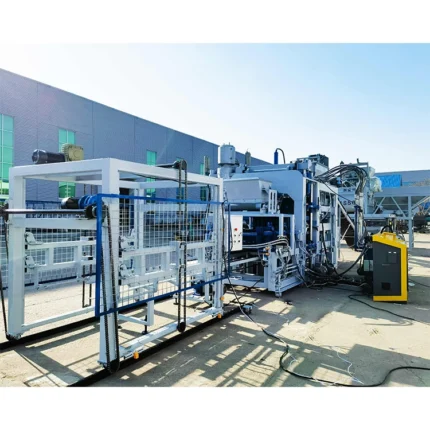
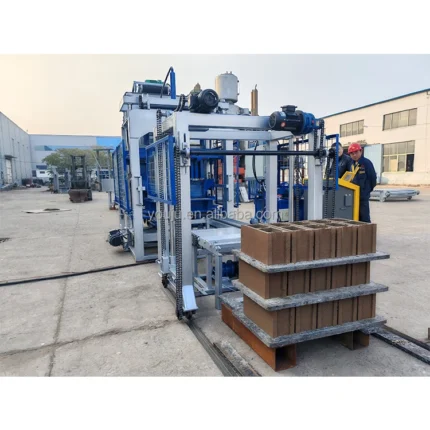
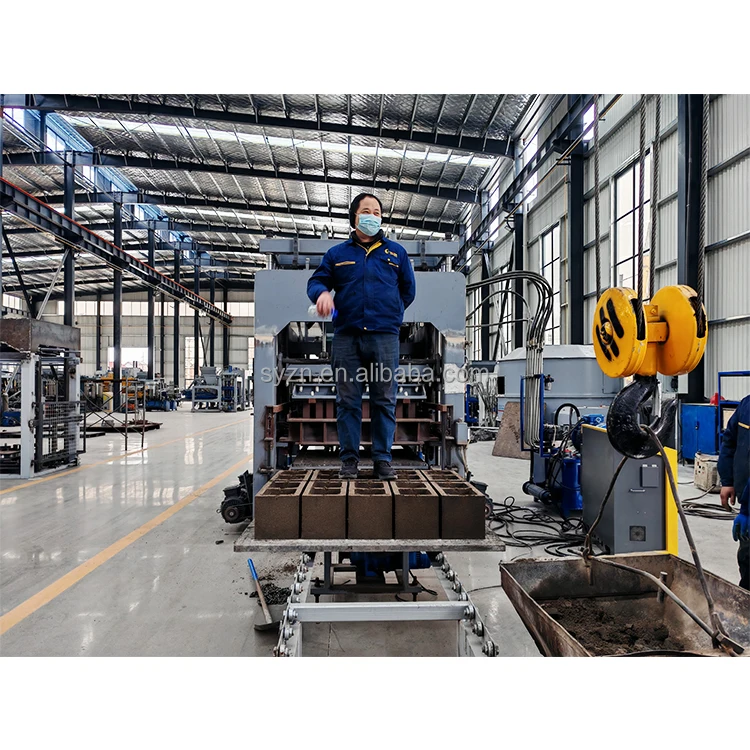
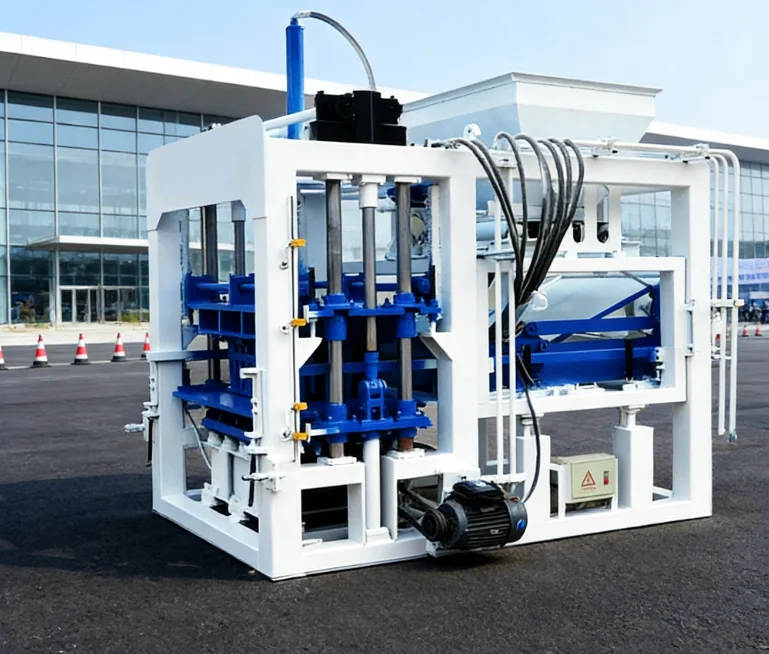
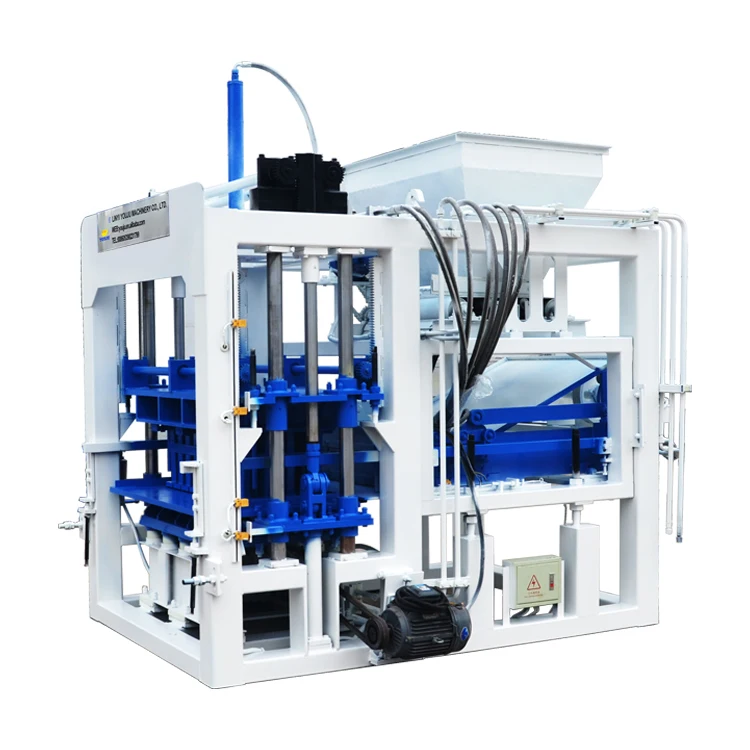
Fully Automatic Operation — The QT5-15 block making machine integrates PLC control with remote monitoring, removing manual press-cycle intervention and ensuring batch-to-batch density consistency across multiple block formats.
Technical Specifications
| Parameter | Value |
|---|---|
| Model | QT5-15 |
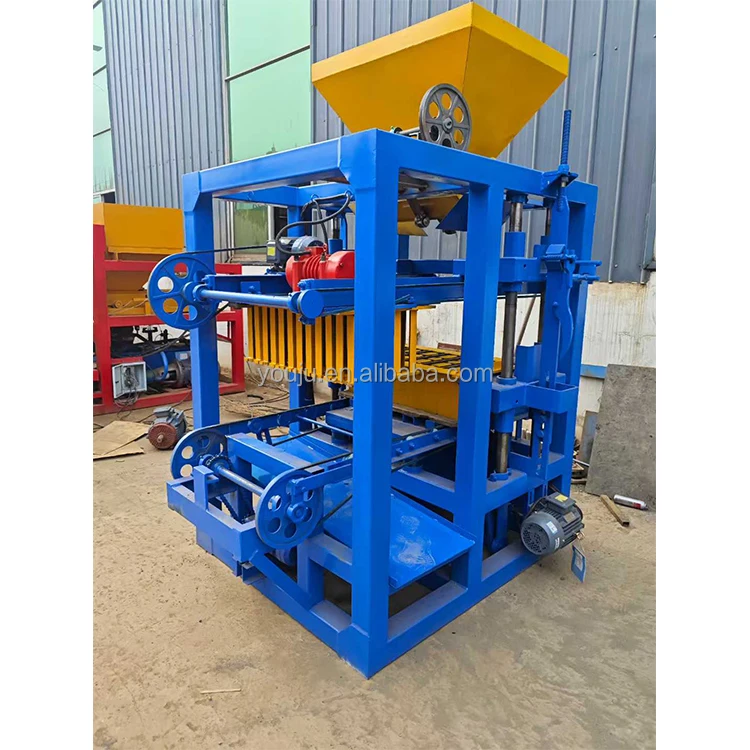
| Product Type | Automatic Hydraulic Concrete Block Making Machine |
| Overall Dimensions (L×W×H) | 7400 × 1950 × 2800 mm |
| Rated Pressure | 21 MPa |
| Main Vibration Form | Hydraulic platform vibration |
| Vibrating Frequency | 2800–4500 rolls/min |
| Motors Power | 26.5 kW |
| Pallet Size | 1100 × 550 mm |
| Net Weight | 6 T |
| Cycle Time | 15–20 seconds (basis to be confirmed per block format) |
| Control System | PLC with fault diagnosis and remote monitoring |
| Automation Level | Full automatic |
| Output (240×115×90 mm standard brick, 16 pcs/mould) | 23,040–28,800 pcs / 8 h |
| Output (400×115×53 mm brick, 32 pcs/mould) | 61,440–70,400 pcs / 8 h |
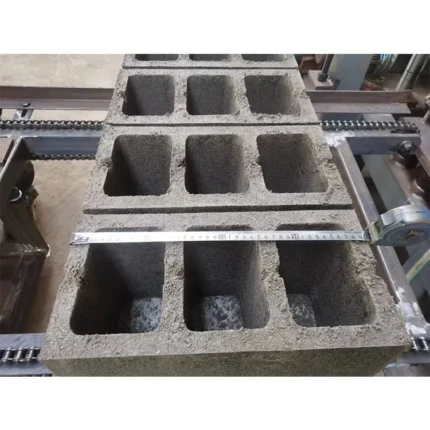
| Output (400×200×200 mm hollow block, 5 pcs/mould) | 7,200–9,600 pcs / 8 h |
| Voltage | Configurable to buyer’s site supply |
| CE Declaration | Available per unit |
Application Suitability
| Application | Material or Output |
|---|---|
| Hollow block production for load-bearing walls | Crushed stone, cement, sand aggregate mix |
| Solid brick production for partition walls | Concrete mix with local river sand |
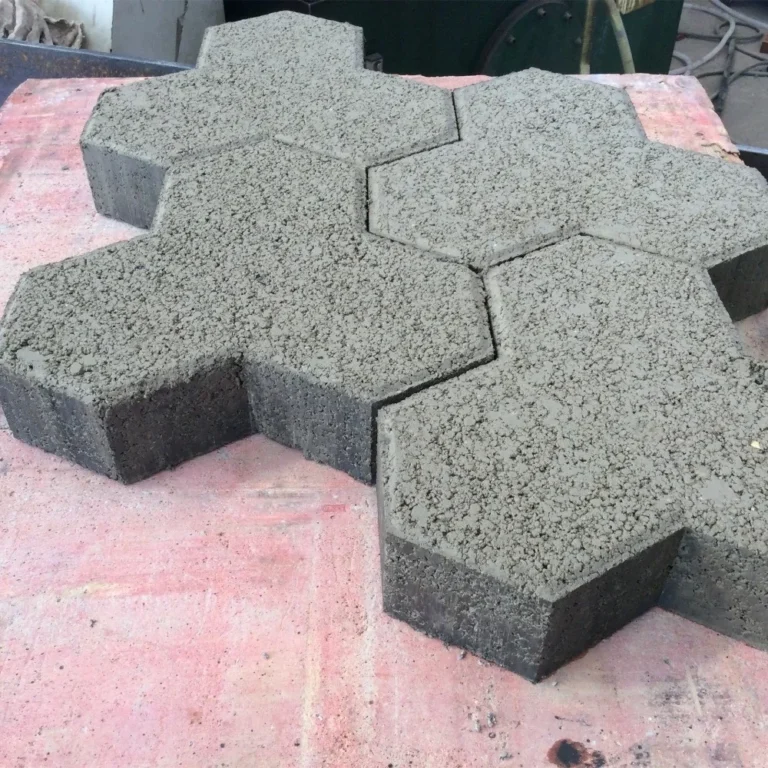
| Paving brick production for walkways and yards | High-density concrete with fine aggregate |
| Standard brick production for residential masonry | Cement, sand, and stone dust blend |
| Multi-cellular brick production for insulation blocks | Lightweight aggregate concrete mix |
Why "Cycles per Hour" Tells You Nothing About Real Output
Every capacity figure must be tied to a specific block format and pieces-per-mould count, or it is meaningless.
I have watched plant owners invest in an automatic PLC controlled concrete block making machine expecting a single headline output number, only to find that the quoted cycles-per-hour figure assumed a thin paver while their actual product was a deep hollow block requiring longer vibration and feed time. The gap between expectation and daily pallet count can be substantial. With the QT5-15, output is stated per format: 7,200–9,600 hollow blocks per eight-hour shift based on a 400×200×200 mm block with 5 pieces per mould, or 23,040–28,800 standard bricks based on 240×115×90 mm with 16 pieces per mould. Without that granularity, no buyer can plan curing rack space, pallet inventory, or truck loading schedules [NEED_CITE: capacity calculation methods for concrete block plants].
How PLC Logic Removes the Operator from the Press Cycle
The PLC on this automatic PLC controlled concrete block making machine governs feed timing, vibration duration, hydraulic pressure application, and demoulding in a single sequenced routine. Once the cycle parameters are set for a given block format, the operator’s role shifts from manual timing to monitoring the fault-diagnosis display. This is what full automation means at the press level: the controller executes each sub-step in the same order and duration, cycle after cycle, which is the only way to hold block density within a tight tolerance across a full shift.
Remote Monitoring When Your Technical Staff Is Off-Site
The remote monitoring capability allows plant managers or off-site engineers to observe cycle counts, fault codes, and machine status without being physically present at the press. For plants in regions where qualified maintenance technicians are shared across multiple sites, this means a fault can be assessed before anyone drives to the plant. The system logs operational data that also serves as a production record for quality tracking [NEED_CITE: remote monitoring standards for industrial PLC systems].
What the Specification Sheet Actually Means for Block Density
The 21 MPa rated pressure and the adjustable vibration frequency (2800–4500 rolls/min) work together to determine the final block density. Low-frequency vibration is applied during the feed stage to settle the concrete mix into the mould cavity, while high-frequency vibration compacts the material before the hydraulic head applies full pressure. If the vibration profile is not matched to the buyer’s specific aggregate gradation and cement ratio, the block can emerge with weak corners or inconsistent weight. The pallet size of 1100 × 550 mm must also align with the curing rack spacing and the forklift tine width already in use at the plant, otherwise fresh blocks are handled twice before curing even begins. A 26.5 kW total motor load means the electrical supply must be sized with adequate margin for starting current, not just running load.
The Cost of Skipping the Control Language Confirmation
I once stood on a site in East Africa watching a brand-new block line sit idle because the PLC display was in English and the local operators could not read it. Commissioning stalled for two weeks while a technician flew in to reload the language pack. When the display language is not confirmed before the machine enters production, the entire installation schedule shifts. Voltage and frequency matter just as much: a 50 Hz machine running on a 60 Hz supply will cycle faster than the hydraulic valves can respond, causing pressure spikes that damage seals within days [NEED_CITE: voltage and frequency standards by export market].
Why Procurement from a Single-System Supplier Changes the Line
Block machinery is the sole focus here, which means the press, moulds, pallets, and handling equipment are specified as one matched set rather than assembled from separate vendors. The QT5-15 configuration is set against the buyer’s actual mix design and target block format instead of a catalogue default. Custom mould design is available to buyer drawings, so the formats the local market actually purchases can be produced from day one. Automation level is selectable, allowing a buyer to begin with semi-automatic pallet handling and move to full automatic stacking later on the same platform. Installation includes operator training that covers the PLC fault-code reference, so the crew can respond to alarms without waiting for a remote call.
Documentation & Verification
- Line layout showing the QT5-15 press position, pallet flow path, and curing rack arrangement
- Capacity calculation document stating the exact block format and pieces-per-mould for each output tier
- PLC fault-code reference sheet and remote monitoring setup procedure
- Factory test record demonstrating cycle time and block weight on the buyer’s target format before dispatch
- Voltage, frequency, and control language confirmation form signed before production begins
Installation, Commissioning & Support
- Foundation must support 6 T static load across the 7400 × 1950 mm machine footprint with level tolerance
- Dedicated electrical circuit rated for 26.5 kW running load plus starting surge for hydraulic pump motors
- Machine shipped as a complete assembly; pallet feeder and stacker modules bolt on at site
- PLC parameters loaded and cycle-tested against the buyer’s target block format during commissioning
- Operator training covers fault-diagnosis display reading, mould change procedure, and daily lubrication points
- Wear parts list supplied with first-order hydraulic seal and vibration motor brush replacements
What to Prepare Before Requesting a Quotation
Provide the specific block formats you sell, including dimensions and target daily output per format. Confirm your site voltage, frequency, and phase, along with the preferred PLC display language for your operators. Share your current or planned curing area dimensions and the forklift model you use, so pallet size and handling equipment are matched correctly from the start.
Frequently Asked Questions
Q: How is output capacity verified and what does each figure assume?
A: Each output figure on the QT5-15 is tied to a named block format and a specific pieces-per-mould count. For example, 7,200–9,600 hollow blocks per eight-hour shift assumes a 400×200×200 mm block with 5 cavities per mould. We provide a capacity calculation document that lists every format you intend to produce so there is no ambiguity about realistic daily throughput.
Q: What PLC display languages can be loaded and how is this confirmed?
A: The PLC supports multiple display languages, and the required language is confirmed in writing before production starts. This step is part of the voltage and control confirmation form. If language is missed, on-site commissioning can be delayed by weeks while a technician travels to reload the programme, which is something we have seen happen and now prevent systematically.
Q: How does the fault diagnosis system work in practice?
A: When the PLC detects an abnormal condition — such as a sensor failure, hydraulic pressure drop, or vibration motor fault — it displays a specific fault code on the panel along with a plain-language description. The operator can cross-reference the code with the supplied manual to identify the component and take corrective action, reducing unplanned downtime without requiring a specialist visit.
Q: How do I match vibration frequency and hydraulic pressure to my aggregate?
A: The QT5-15 vibration frequency is adjustable between 2800 and 4500 rolls/min, and the hydraulic pressure is set at the valve block. During commissioning, we run test cycles using your actual mix design and local aggregate to find the frequency and pressure combination that produces the target block density and surface finish, then lock those parameters into the PLC.
Q: What is the upgrade path from semi-automatic to full automatic?
A: The QT5-15 platform allows automation modules such as automatic pallet feeding and stacking to be added after the initial installation. The PLC hardware remains the same; the upgrade involves adding sensors, actuators, and loading the expanded programme. This lets a buyer start with lower capital outlay and add automation as production volume justifies the investment.