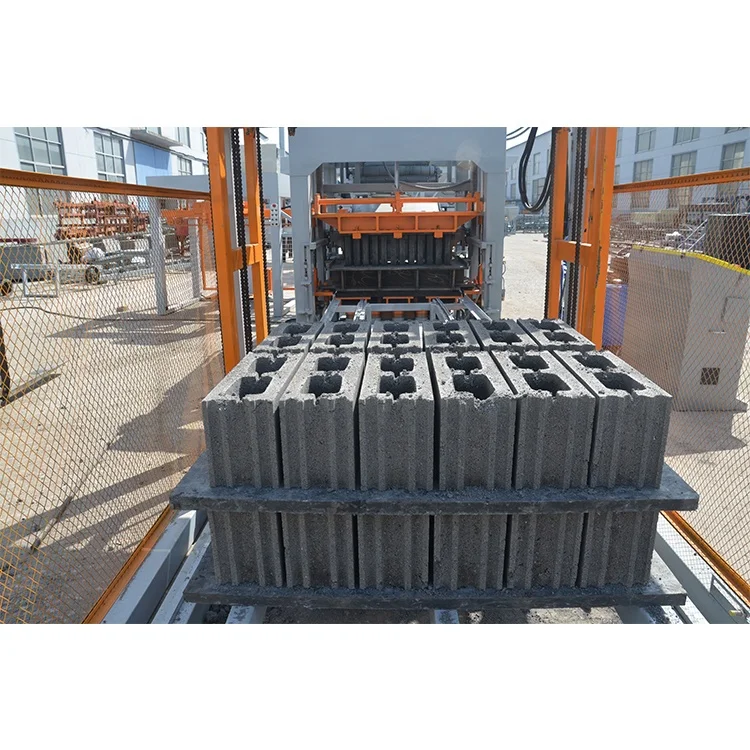
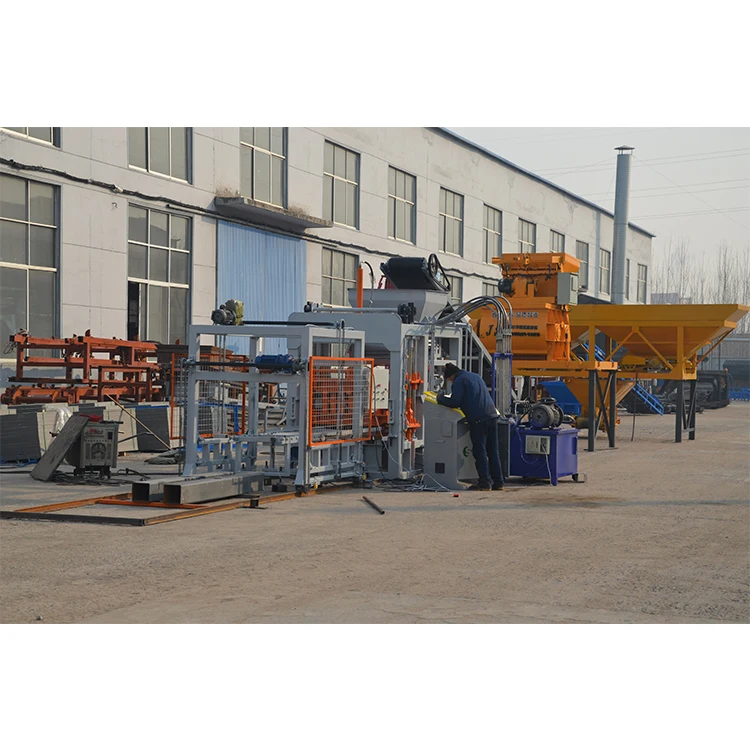
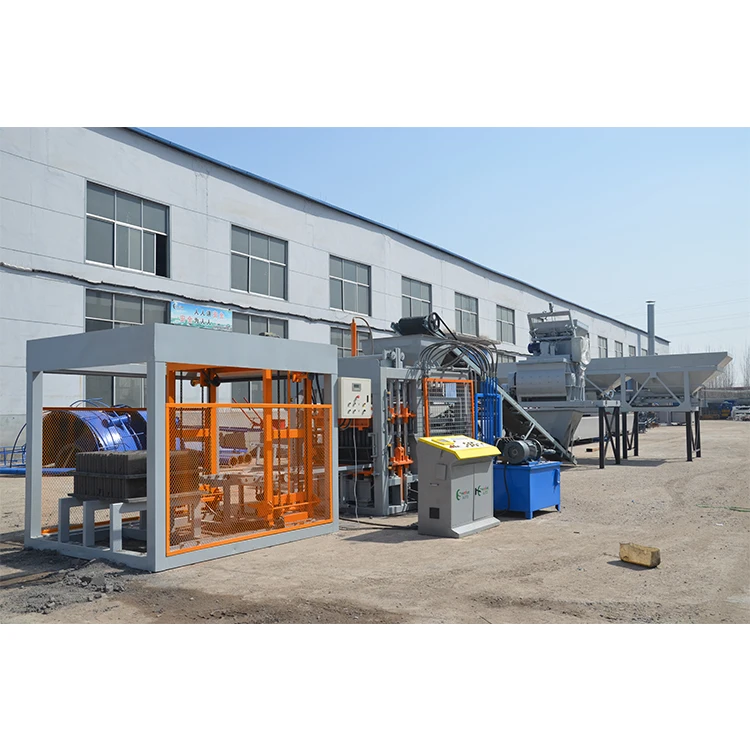
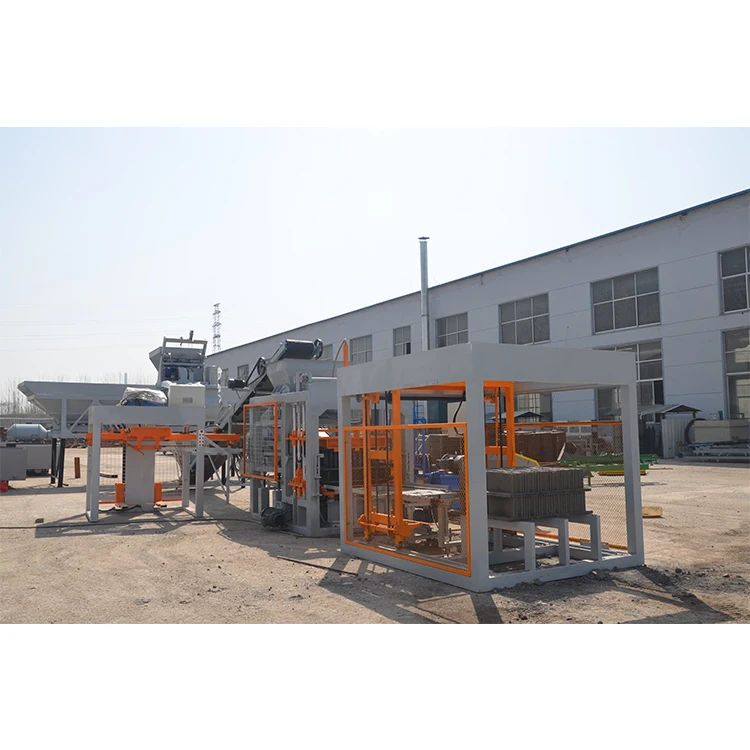
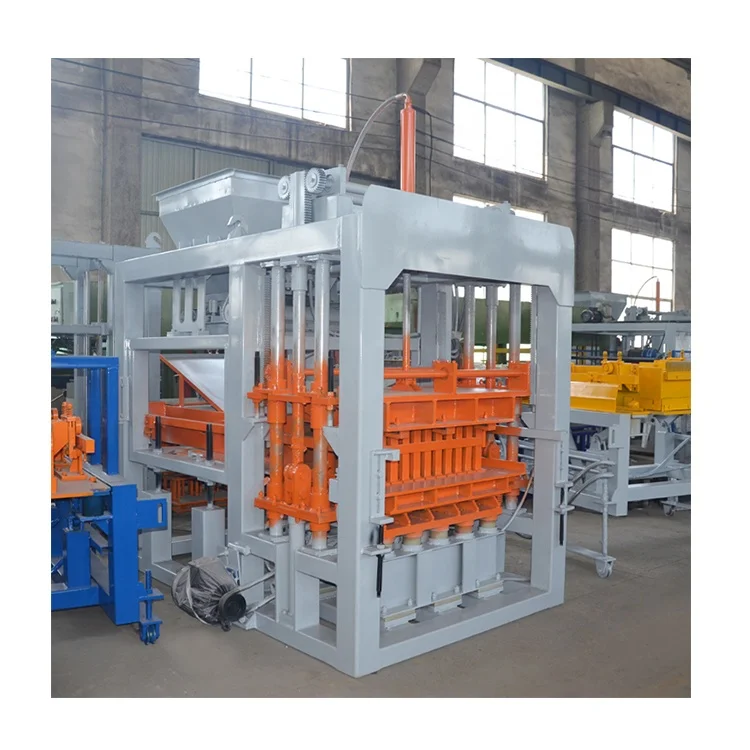
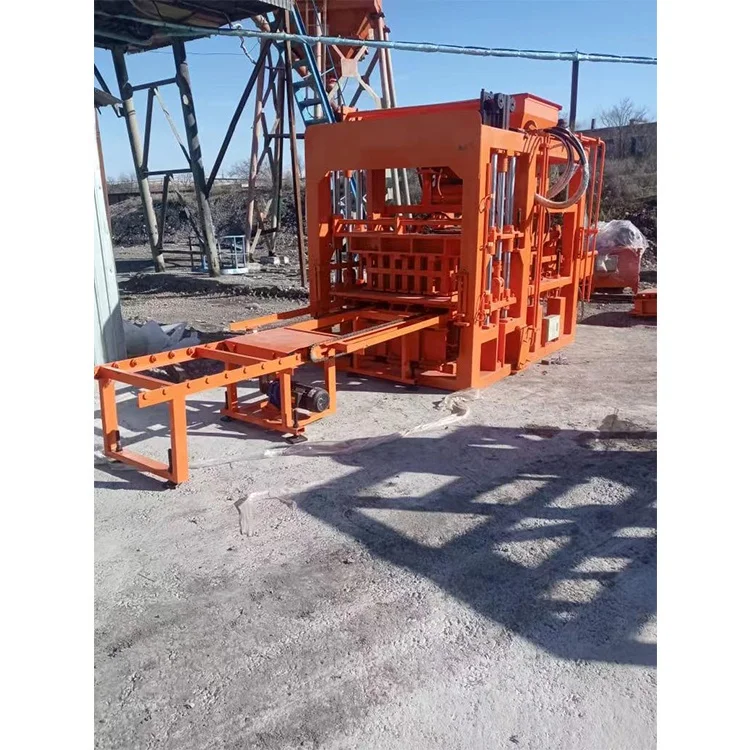
Description
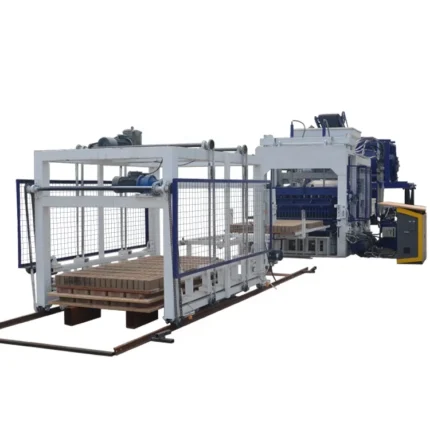
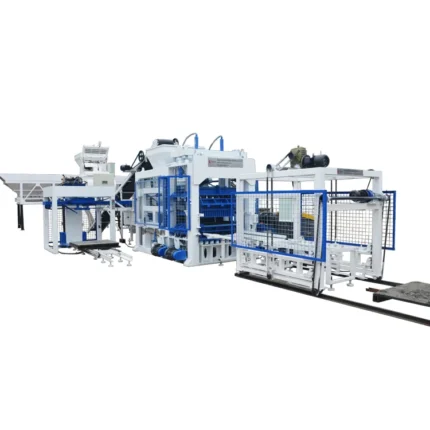
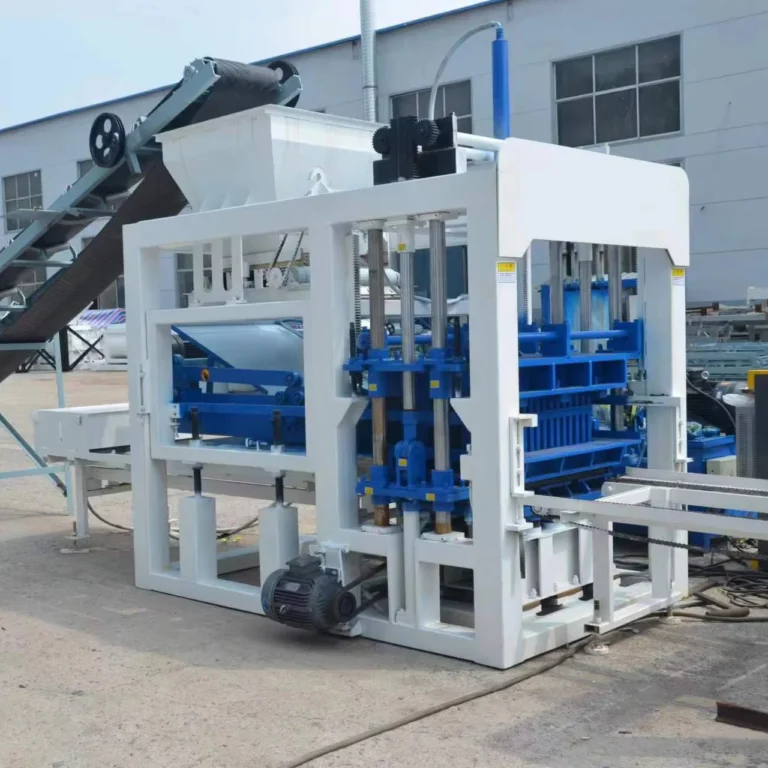
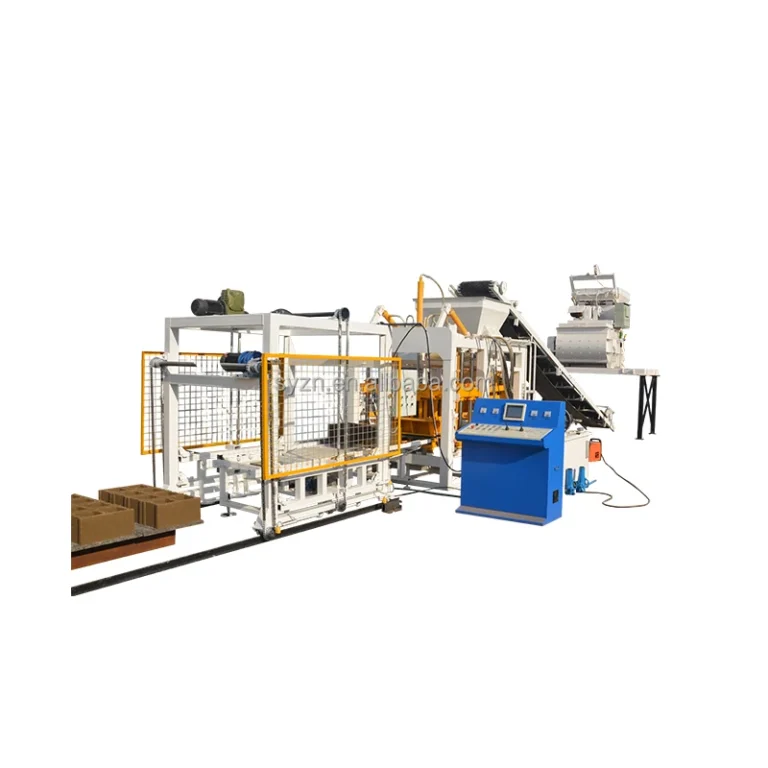
Integrated Automation Scope — The QT5-15 fully automatic block making machine is specified as a press line with pallet feeder, brick conveyor, block sweeper and PLC control matched to one system rather than sourced separately.
Technical Specifications
| Parameter | Value |
|---|---|
| Model | QT5-15 |
| Product Type | Fully Automatic Concrete Block Making Machine |
| Overall Dimensions (L×W×H) | 7100×1600×2610 mm |
| Vibration Frequency Range | 0–60 Hz |
| Exciting Power (Vibration Force) | 40 kN |
| Total Power | 33.5 kW |
| Mixer | JS500 |
| Pallet Size | 1100×550 mm |
| Total Weight | 5 T |
| Control System | PLC control system (display language to be confirmed) |
| Automation Level | Fully automatic with pallet feeder, brick conveyor, block sweeper |
| Hydraulic Station | Included (pressure rating to be confirmed) |
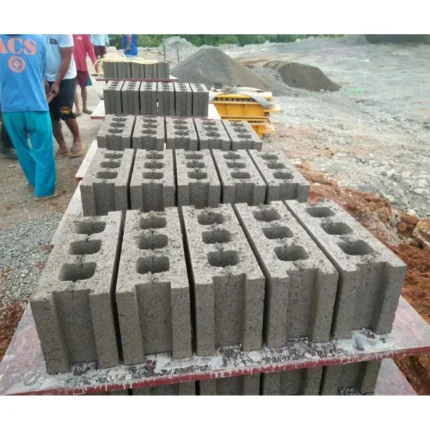
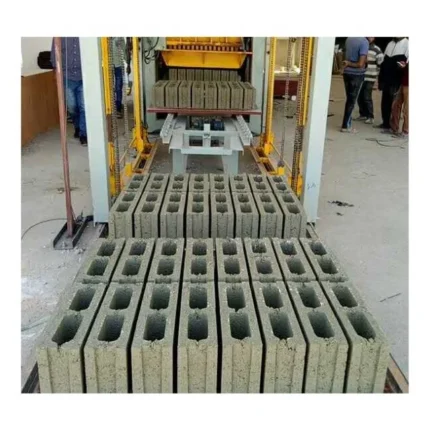
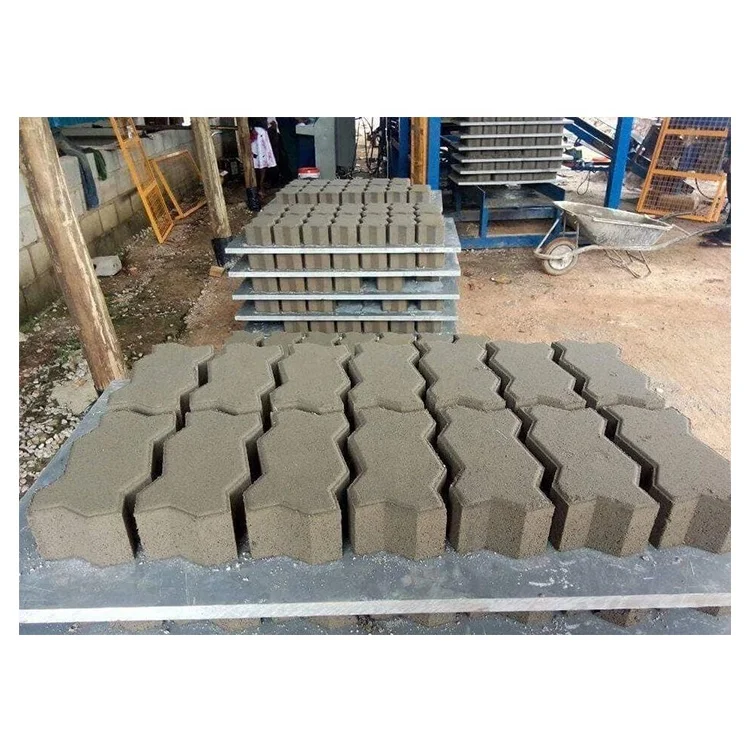
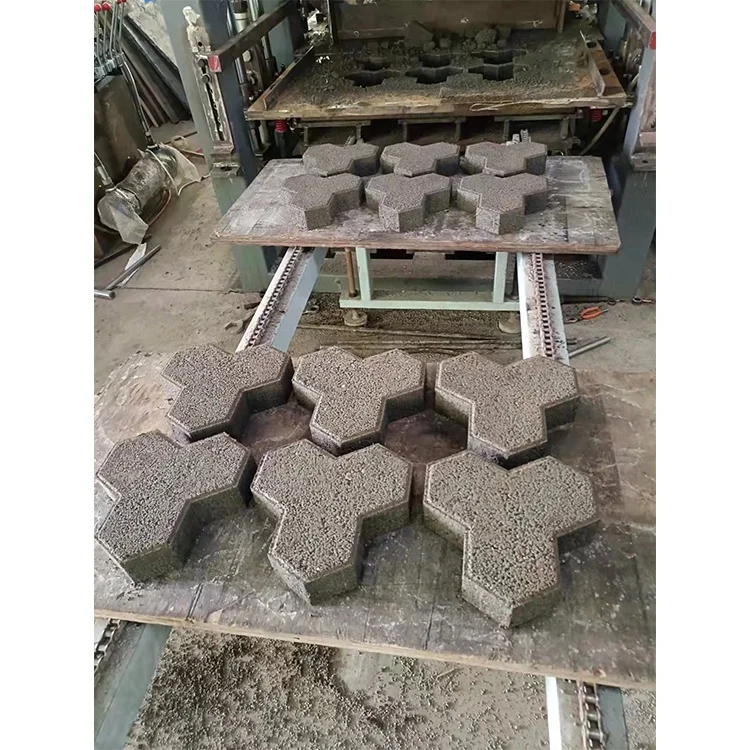
| Applied Products | Hollow block, solid block, paver, curbstone |
| Raw Materials | Crushed stones, sand, cement, dust, fly ash |
| Output Capacity (Hollow 400×200×200 mm) | 5 pcs/mould, 450 pcs/h, 3600 pcs/8 hr (basis not stated in source) |
| Output Capacity (Hollow 400×150×200 mm) | 6 pcs/mould, 540 pcs/h, 4320 pcs/8 hr (basis not stated in source) |
| Output Capacity (Solid 400×100×200 mm) | 8 pcs/mould, 720 pcs/h, 5760 pcs/8 hr (basis not stated in source) |
| Mould Change Time | To be confirmed |
| Stacking Method | To be confirmed |
| Voltage & Frequency | To be confirmed for target market |
Application Suitability
| Application | Material or Output |
|---|---|
| Hollow block production for building envelopes | Crushed stone, sand, cement and fly ash mixes |
| Solid block production for load-bearing walls | Dense aggregate blends with cement binder |
| Interlocking paver production for walkways and yards | Fine sand and cement with pigment layers |
| Curbstone production for road and drainage edges | Coarse aggregate with high cement content |
| On-site block production for housing projects | Locally sourced aggregate adjusted to site mix design |
What "15-Second Cycle Time" Actually Means for Your Shift Output
The cycle time stamped on a block machine plate assumes one specific block format, thickness and material — quoting it without the format is meaningless for daily planning.
I once stood next to a block press in East Africa where the buyer had been promised a 15-second cycle. The machine ran that pace on a thin paver during the factory test, but the buyer’s daily product was a 200 mm hollow block made with local volcanic scoria. The vibration had to be retuned, the hydraulic dwell extended, and the realistic cycle stretched well beyond the quoted number. The daily output fell accordingly, and the buyer spent two weeks recalibrating expectations. The automatic QT5-15 block making machine PLC controlled cycle must always be confirmed against your actual block format, mould cavity count and raw material before you compare it with another quotation. [NEED_CITE: block cycle time dependency on format and material]
What the PLC Removes from the Operator
The central programmable controller sequences the mould descent, hydraulic pressure application, vibration burst and pallet ejection into one repeatable loop. On the QT5-15, the operator’s role shifts from triggering each stage manually to monitoring the automatic QT5-15 block making machine PLC controlled interface for faults and adjusting recipe parameters when the mix changes. Stored recipes allow the same hollow block to be produced at the start and end of a shift with the same pressure profile, vibration duration and dwell time, which is where batch-to-batch strength consistency comes from.
Automatic Pallet Feeding and Block Clearing
Manual pallet placement is one of the most common bottlenecks on a semi-automatic line — the press sits idle while an operator positions the board. The pallet feeder on this system delivers a pallet into the mould zone on each cycle, keeping the press occupied. Downstream, the brick conveyor and block sweeper move finished product away from the mould area without the operator reaching into the press zone. This separation reduces contact with moving moulds and keeps the cycle rhythm intact across a full shift. [NEED_CITE: operator injury risk in manual block press handling]
Reading the Specification Sheet for Real Output
The vibration frequency range of 0–60 Hz and exciting power of 40 kN determine how densely the mix is compacted inside the mould. Higher frequency with shorter duration suits fine-sand paver mixes, while lower frequency with longer dwell works better for coarse aggregate hollow blocks. The pallet size of 1100×550 mm must be cross-checked against the curing racks and forklift tines already at your plant — a mismatch forces a second handling step. The JS500 mixer capacity should be matched to the press cycle so that fresh material arrives before the hopper runs empty, preventing the press from waiting between cycles.
The Cost of Skipping the Voltage and Language Confirmation
I have seen a fully automatic line sit unpowered for weeks after arrival because the motor windings were wound for 380 V / 50 Hz and the destination country ran 440 V / 60 Hz. The PLC display was in a language the local operators could not read, so every parameter change required a phone call and a photo. These delays are entirely avoidable. Confirming voltage, frequency and PLC display language before the machine enters production is a small step that prevents a large idle period. [NEED_CITE: voltage and frequency standards by export market]
Why Source the Press Line as One Package
When the press, pallet feeder, conveyor and PLC are sourced from different suppliers, cycle timing mismatches are almost guaranteed — one station runs faster than the next, and the press waits. Configuring the QT5-15 as a matched set means the pallet feeder delivers on the same signal the press expects, and the conveyor clears blocks at a pace that keeps the mould zone free. The mould design is built around the pallet size and vibration force the press delivers, so the block dimensions stay within tolerance from the first cycle. Installation support covers the full line, not just the press, so commissioning addresses the sequence between stations. Factory testing runs the complete cycle with the buyer’s target block format, producing a test record before shipment rather than discovering timing issues on site.
Documentation & Verification
- Machine specification sheet stating QT5-15 rated power, pallet size and vibration force
- Capacity calculation listing cycle time per block format with mould cavity count
- PLC I/O list and hydraulic schematic for the QT5-15 control system
- Voltage, frequency and display language confirmation record before production
- Factory test record on the buyer’s target block format before dispatch
Installation, Commissioning & Support
- Foundation must accommodate the 7100×1600 mm footprint and 5 T operating weight
- Dedicated power circuit sized for 33.5 kW total load at confirmed voltage and frequency
- PLC display language set and verified during factory test before crating
- First-run commissioning includes vibration and hydraulic tuning to the buyer’s aggregate
- Operator training covers recipe storage, mould change procedure and daily lubrication points
- Wear parts list provided with mould and hydraulic component replacement intervals
What to Prepare Before Requesting a Quotation
Send the exact block formats you produce today and the ones you plan to add, along with daily volume targets per format. Provide a sample or lab report of your local aggregate so the vibration and hydraulic settings can be matched before the machine is built. Confirm your plant’s available voltage, frequency and the language your operators need on the PLC display. If you already have curing racks and forklifts, share the pallet dimensions they accept so the feeder and pallet size are coordinated from the start.
Frequently Asked Questions
Q: What does the PLC control on the QT5-15 actually automate, and which steps still require an operator?
A: The PLC sequences mould movement, hydraulic pressure, vibration timing and pallet feeding into one automatic loop. The operator monitors the display for faults, loads raw material into the mixer hopper, and changes moulds when switching block formats. Stacking and curing rack handling fall outside the base scope and must be confirmed separately.
Q: Can the automation level be upgraded later, such as adding automatic stacking?
A: The base automatic line includes pallet feeding, brick conveying and block sweeping. Automatic stacking and cubing can be added as separate modules if the plant layout and curing area allow it. Planning the floor space and conveyor path during initial installation makes a later upgrade straightforward.
Q: How is voltage, frequency and PLC display language confirmed before shipment?
A: These three items are confirmed in writing before the machine enters production. The motor windings are matched to the buyer’s supply, and the PLC display is set to the requested language. A confirmation record is included in the documentation package so there is no mismatch on arrival.
Q: How do I match vibration and hydraulic settings to my local aggregate for consistent block strength?
A: Send a sample of your local aggregate and your target mix proportions before production. The vibration frequency within the 0–60 Hz range and hydraulic pressure are then tuned during the factory test. The resulting settings are recorded in the test report and loaded into the PLC as a stored recipe.
Q: What supporting equipment must be in place so the QT5-15 press is not left waiting between cycles?
A: The JS500 mixer must deliver batched material to the press hopper at a pace matching the cycle time. Pallets must be available at the feeder in sufficient quantity, and the curing area must accept cleared pallets at the same rate. Any delay upstream or downstream forces the press to idle.