Description
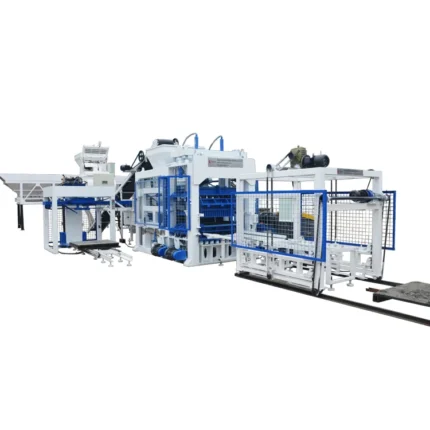
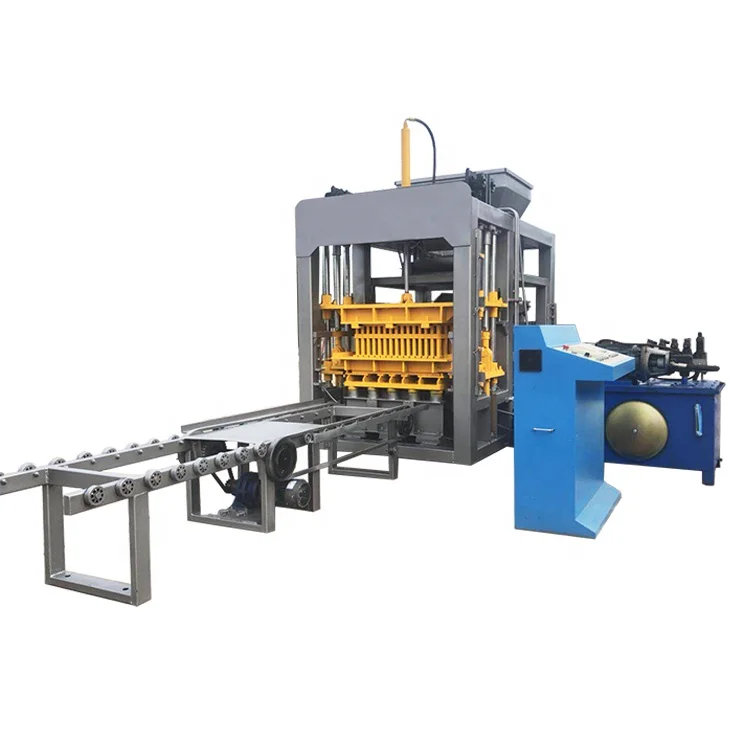
Synchronized Line Logic — every automation station from pallet feeding to stacking is timed against the press cycle so the automatic PLC controlled block making machine never waits on upstream or downstream equipment.
Technical Specifications
| Parameter | Value |
|---|---|
| Model | QT5-15 |
| Product Type | Fully Automatic Hydraulic Cement Brick Making Machine |
| Overall Dimensions | 7400 × 1950 × 2800 mm |
| Total Mass | 5000 kg |
| Overall Power | 32 kW |
| Vibration Frequency | 0–60 Hz |
| Vibration Force | 80 kN |
| Vibration Form | Platform Vibration |
| Moulding Mode | Automatic loading, vibration moulding |
| Demolding Method | Hydraulic |
| Pallet Size | 1100 × 550 mm |
| Molding Cycle | 15–20 s (basis not stated in source — confirm block format / material / thickness) |
| Control System | PLC with touch screen interface |
| Factory Area Required | 1000 m² |
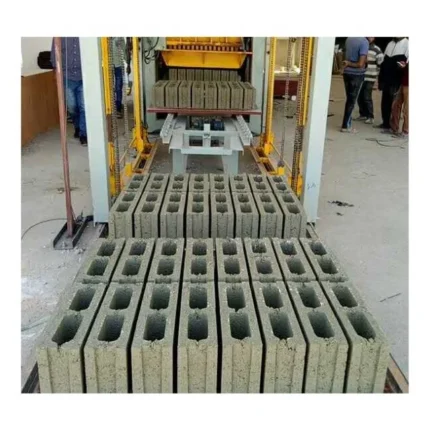
| Output – Hollow Block 400×200×200 mm | 5 pcs/mould, 900–1200 pcs/h, 7200–9600 pcs/8 hr |
| Output – Hollow Block 400×150×200 mm | 6 pcs/mould, 1080–1440 pcs/h, 8640–11520 pcs/8 hr |
| Output – Solid Brick 240×115×53 mm | 32 pcs/mould, 5760–7680 pcs/h, 46080–61440 pcs/8 hr |
| Output – Rectangular Paver 200×100×60 mm | 25 pcs/mould, 3600–4500 pcs/h, 28800–36000 pcs/8 hr (cycle 20–25 s) |
| Output – Zigzag Paver 225×112.5×60 mm | 16 pcs/mould, 2304–2880 pcs/h, 18432–23040 pcs/8 hr (cycle 20–25 s) |
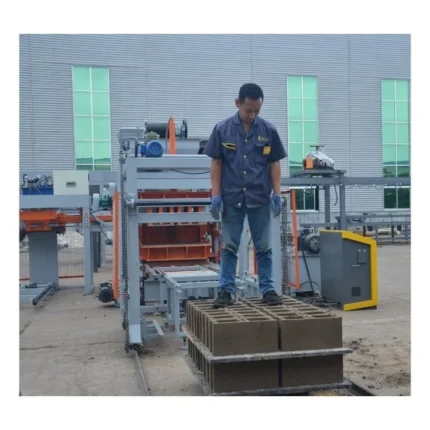
| Automation Level | Fully automatic (pallet feeding, material feeding, vibrating, demoulding) |
| Hydraulic System | Independent integrated hydraulic station |
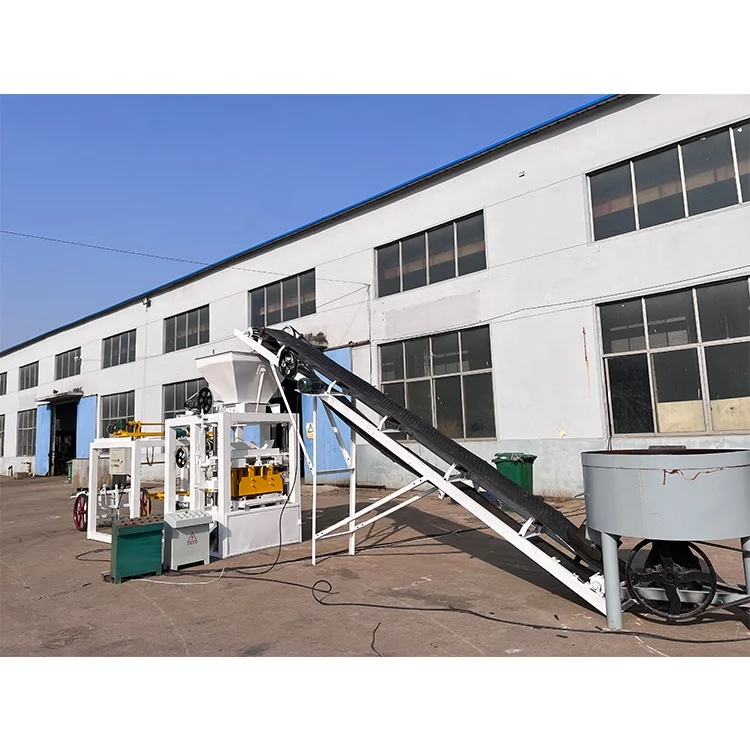
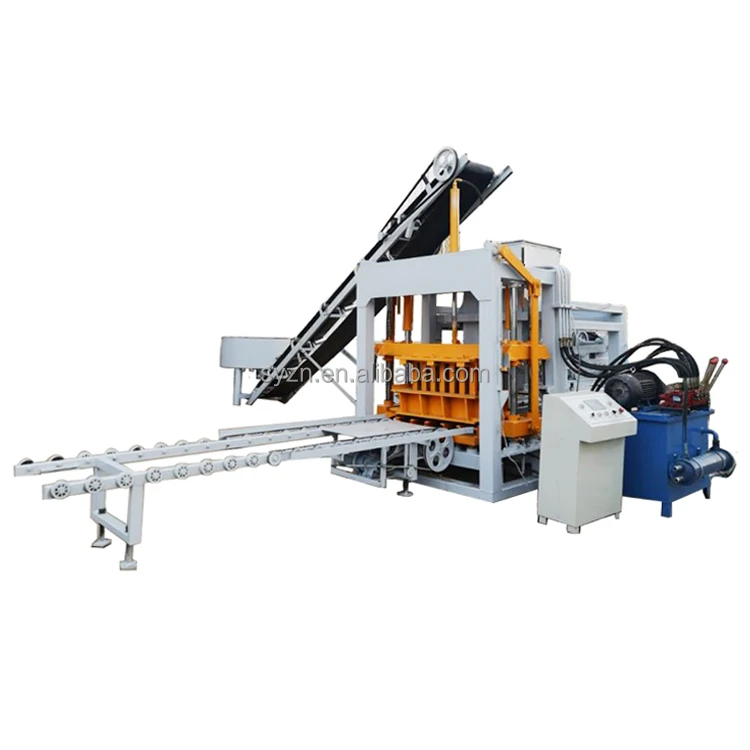
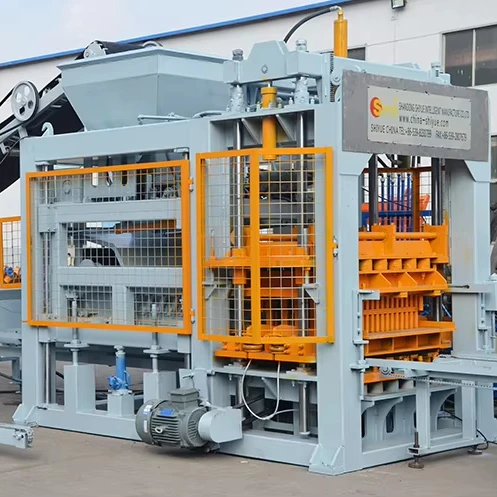
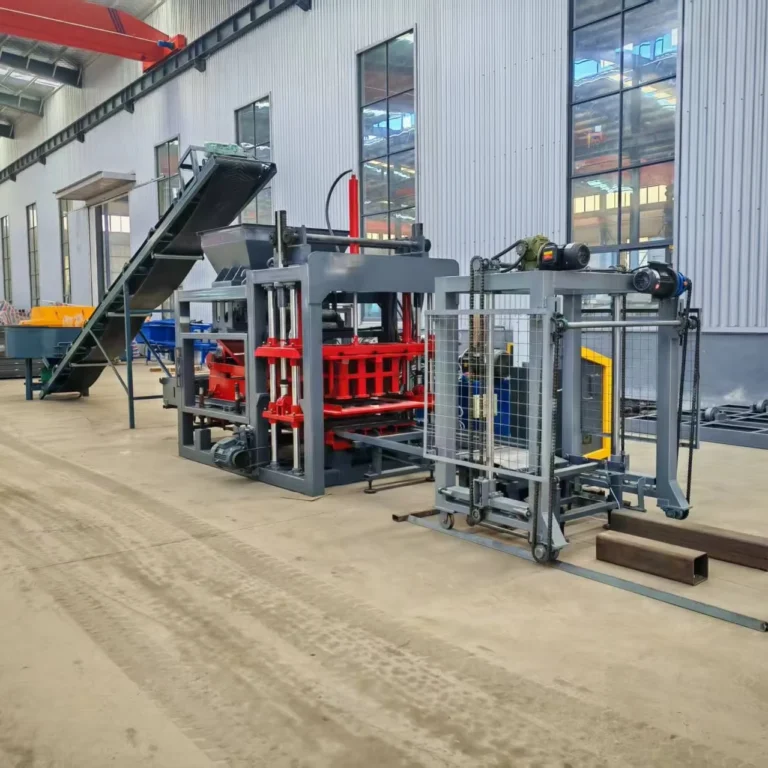
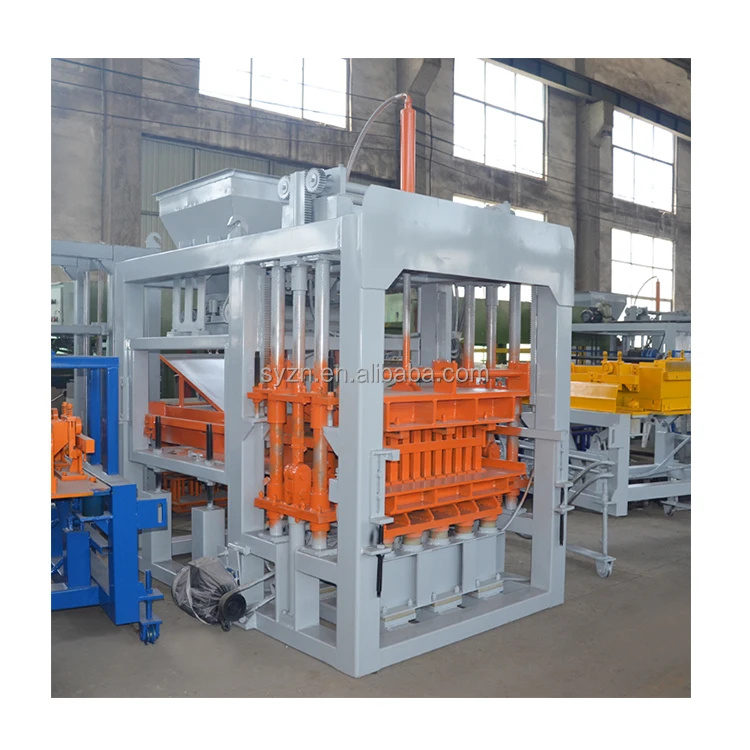
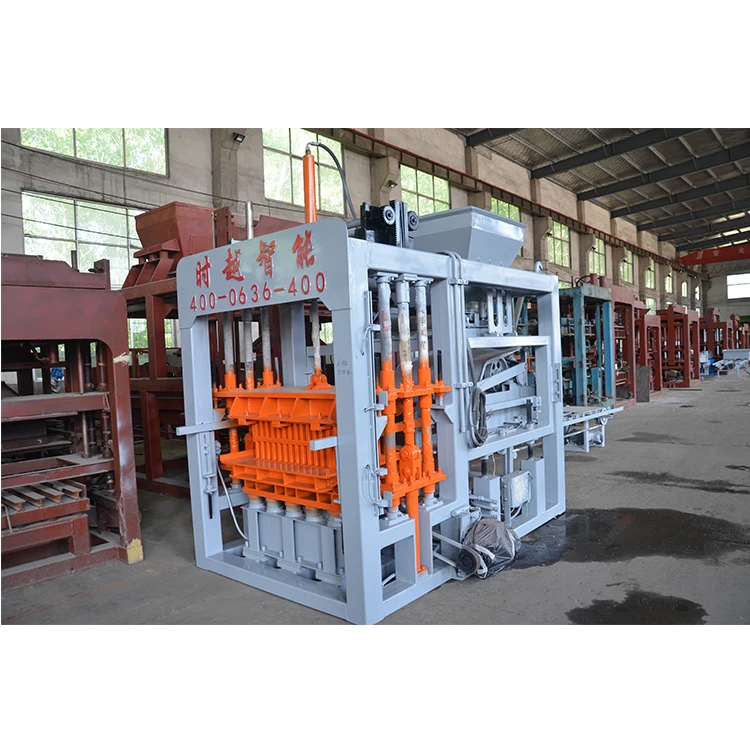
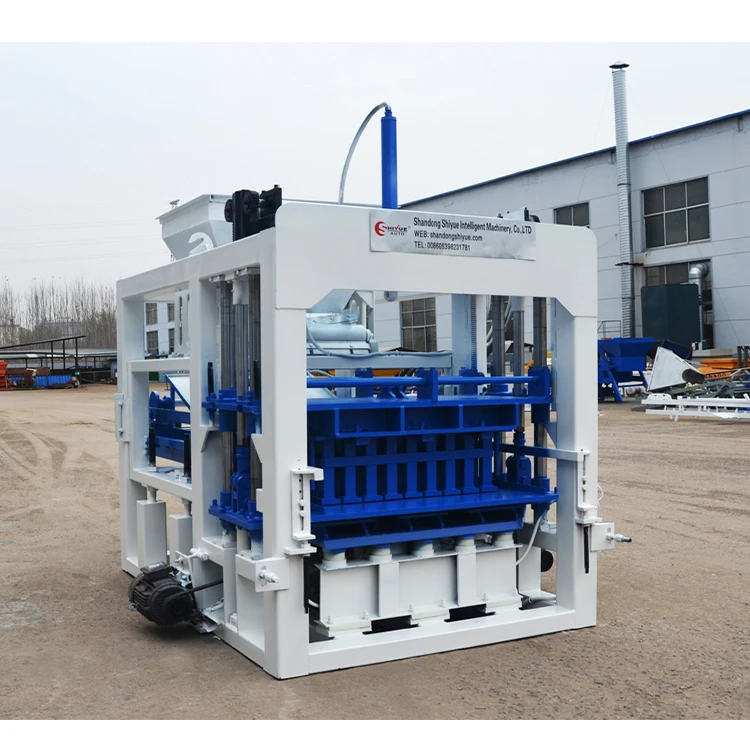
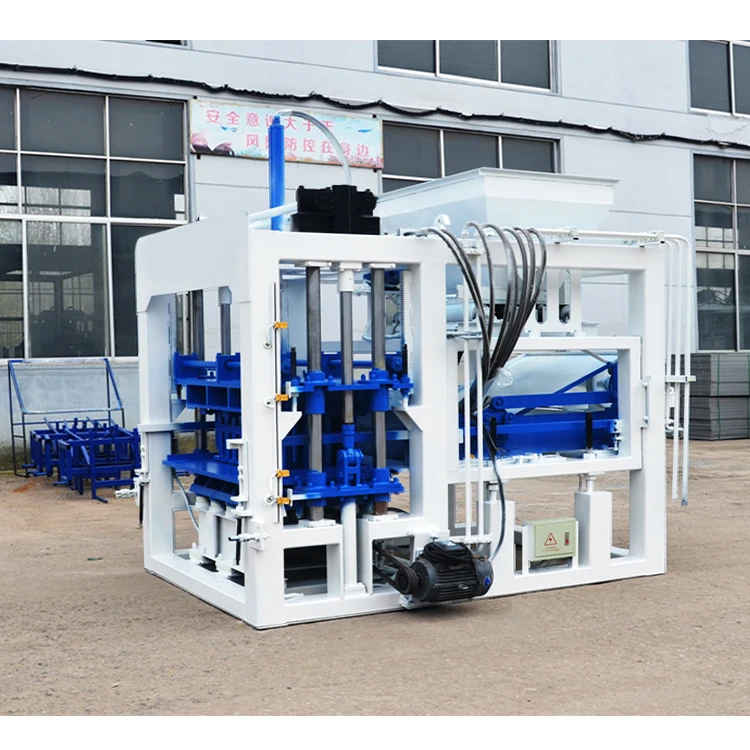
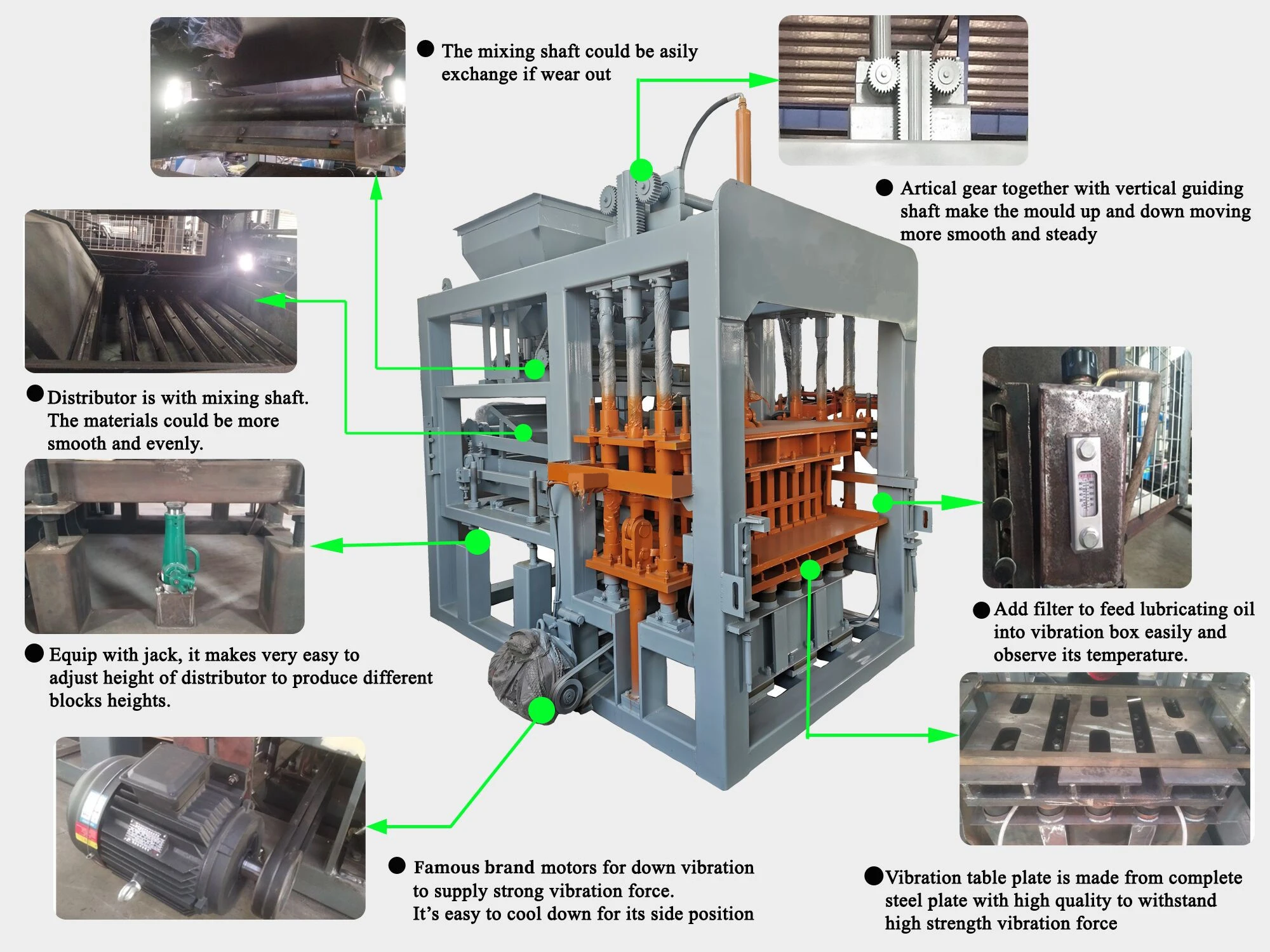
| Component Configuration | Pallet feed machine, block making machine, storage hopper, conveyor, hydraulic unit, PLC control cabinet |
| Block Compressive Strength | >15 MPa |
| Raw Material Compatibility | Fly ash (up to 70%), slag, gangue, sand, crushed stone, cement, water |
| Standards | CE declaration where applicable |
Application Suitability
| Application | Material or Output |
|---|---|
| Hollow block production | Crushed stone, sand, cement, fly ash blends |
| Solid brick production | Sand, cement, slag, gangue mixes |
| Rectangular paving block | High-density aggregate and cement for >15 MPa |
| Zigzag interlocking paver | Fine aggregate blends for surface finish |
| Kerbstone and special format | Custom mould with adjusted cycle time |
Why "Fully Automatic" Means Nothing Without the Rest of the Line
A press that runs 15-second cycles is useless if the pallet feeder delivers every 25 seconds.
When I commissioned an automatic PLC controlled block making machine in the Middle East last year, the press was rated for a solid cycle rhythm. The problem was the batching plant. Its discharge gate opened on a fixed timer that did not match the mixer’s actual fill weight, so the storage hopper ran dry every fourth cycle. The stacking station sat idle while the operator watched fault codes scroll across the touch screen. Five days on-site were spent rewriting the feed logic and adjusting vibration parameters until every station kept pace [NEED_CITE: PLC synchronization between batching, press, and stacking stations].
The PLC as the Line’s Central Nervous System
On the QT5-15, the PLC does more than sequence the press stroke. It manages the pallet feed timing, monitors hopper level sensors, and coordinates the hydraulic demoulding lift with the vibration cut-off. Every decision point that would otherwise fall to an operator is handled by the touch screen interface, where process data is stored and recalled per block format. This is what separates a genuine automatic PLC controlled block making machine from a manual press with a computer bolted on.
Where Automation Ends and Manual Labour Begins
Buyers often discover that "fully automatic" on the quotation covers only the press cycle — pallet feeding, material dosing, vibration, and demoulding. Stacking, cubing, and curing rack handling may still require workers pulling wet blocks off the line by hand. Before signing, confirm which downstream stations are included in the automation scope. A gap at any station creates a bottleneck that the PLC cannot solve because the physical handling simply is not there [NEED_CITE: automation scope definition in block making line contracts].
Reading the Specs That Actually Matter
The 80 kN vibration force working against the independent hydraulic station is the pairing that determines block density. Platform vibration at 0–60 Hz compacts the mix from below while hydraulic pressure holds the mould head down — if either value is too low for the aggregate gradation, blocks leave the press underweight. The 1100 × 550 mm pallet size must match the curing racks and forklifts already on your floor; a mismatch means buying new racking or running two pallet inventories. The 32 kW overall power draw dictates cable sizing and dedicated circuit requirements, not a figure to compare loosely against smaller machines.
The Cost of a Control System That Speaks the Wrong Language
I have stood in front of a PLC cabinet where every fault message appeared in characters the operator could not read. The machine stopped mid-cycle, the alarm history was logged but indecipherable, and the local electrician spent hours tracing wiring that was functioning perfectly. Display language, voltage, and frequency must be confirmed in writing before the control cabinet is assembled. A mismatch at this stage delays commissioning by weeks, not hours, and the cost of flying a technician across borders adds up fast [NEED_CITE: PLC display language and voltage confirmation before shipment].
Why Buyers Return for the Second Line
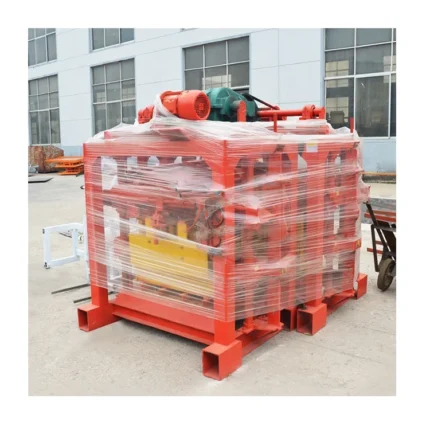
The QT5-15 is configured against the buyer’s actual mix design and target block format rather than shipped from a catalogue default. Mould design covers the formats the local market sells, with custom drawings available when a standard catalogue mould does not fit. The automation level is selectable — a buyer can start with semi-automatic pallet handling and add stacking or cubing modules as volume grows. The independent hydraulic station sits away from the vibration zone, which means seals and valves last longer between service intervals. Factory testing is run on the buyer’s specified block format before the machine is dismantled for container loading, so the first production run on-site is not the first time the line has actually produced that block.
Documentation & Verification
- Line layout with capacity calculation stating the block format and cycle time assumed
- PLC electrical schematic with I/O map for fault diagnosis and language setting
- Mould drawing and format list matching your local market requirements
- Factory test record run on your specified block format before dispatch
- Hydraulic circuit diagram identifying every valve and pressure setting
- Operation and maintenance manual in the confirmed display language
Installation, Commissioning & Support
- Foundation plan for the 7400 × 1950 mm footprint with anchor bolt positions
- Dedicated 32 kW circuit with confirmed voltage and frequency before wiring
- PLC parameter load and touch screen language set during first power-up
- Vibration frequency and hydraulic pressure tuned to your local aggregate blend
- Quick mould replacement procedure trained on your primary and secondary formats
- Wear parts list covering hydraulic seals, vibration springs, and mould liners
Before You Request a Quote
Tell us the block format you sell most — dimensions, target compressive strength, and daily volume. Share your local aggregate sources and any existing mixer or batching equipment so the feed logic can be matched. Confirm your site voltage, frequency, and preferred PLC display language. If you already run a curing yard with specific rack dimensions and forklift capacity, include those details so the pallet specification fits.
Frequently Asked Questions
Q: What does the fully automatic scope actually cover on this machine?
A: The QT5-15 automation covers pallet feeding, material dosing from the storage hopper, vibration moulding, and hydraulic demoulding. Stacking, cubing, and curing rack handling are separate modules. Confirm which downstream stations are included in your quotation so no manual gaps remain between the press and the curing yard.
Q: How do I make sure the PLC language and voltage are correct before shipment?
A: Voltage, frequency, and PLC display language are confirmed in writing during the order stage, before the control cabinet is assembled. The electrical schematic is shared for your review, and the factory test is conducted at the confirmed voltage. Any change after cabinet assembly requires rewiring and retesting.
Q: What is the realistic cycle time for the block format I want to produce?
A: The base molding cycle is 15–20 seconds, but actual cycle time depends on block dimensions, wall thickness, and material blend. Rectangular pavers at 200×100×60 mm typically run at 20–25 seconds. A capacity calculation specific to your format and mix design is provided with every quotation.
Q: Can I start semi-automatic and add full automation later?
A: Yes. The QT5-15 platform supports a staged automation path. You can begin with semi-automatic pallet handling and add automatic stacking or cubing modules as production volume grows. The PLC architecture accommodates these additions without replacing the main control cabinet.
Q: What happens when the PLC shows a fault code we cannot resolve locally?
A: The touch screen logs fault history with timestamps and I/O states. Remote diagnostics allow our technicians to review the error log and guide your electrician through the resolution. The electrical schematic provided at delivery maps every sensor and valve to its PLC address for fast troubleshooting.