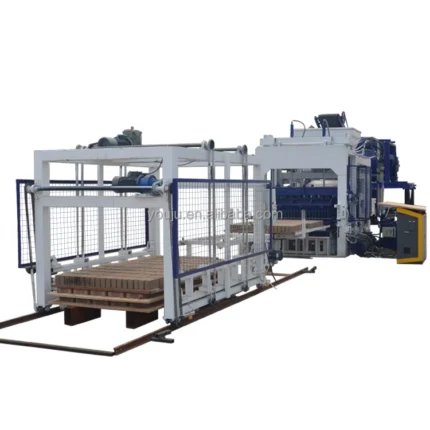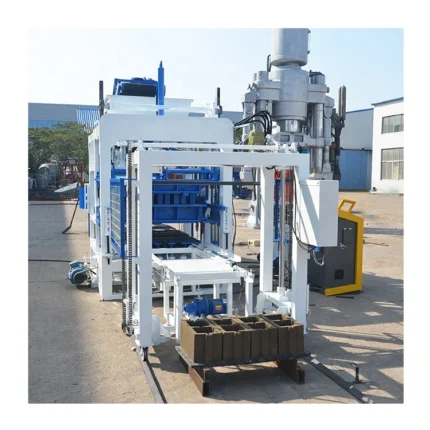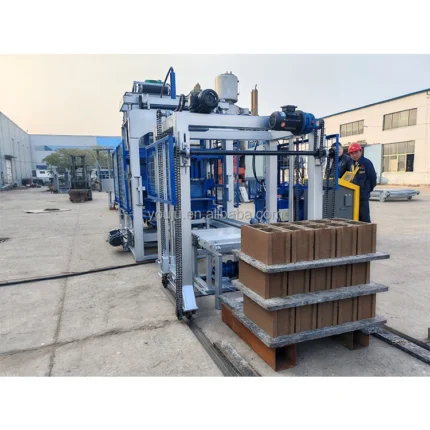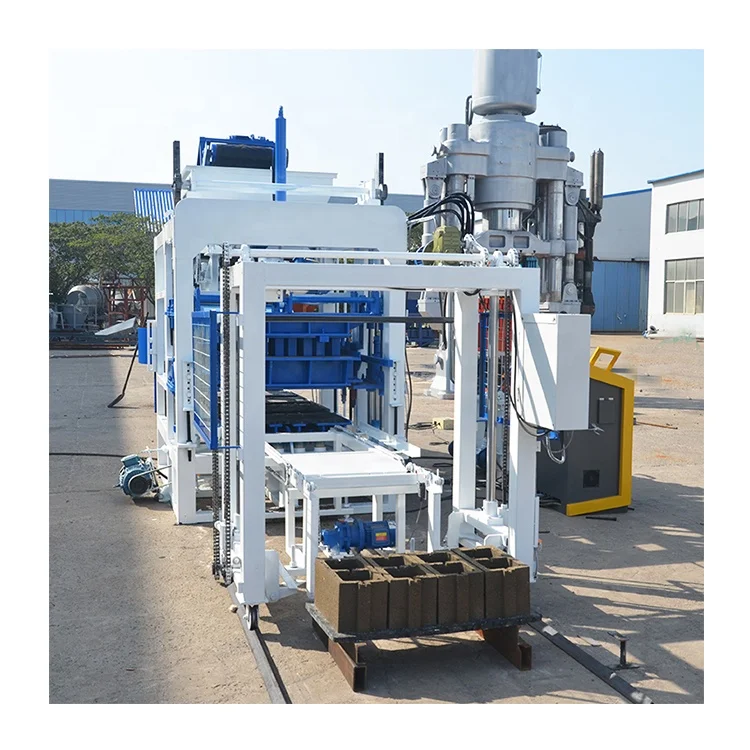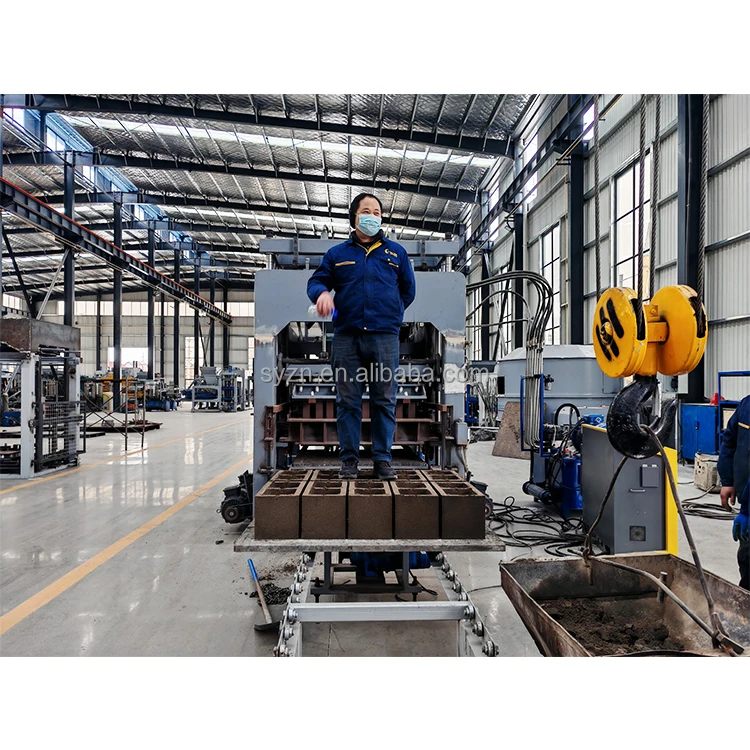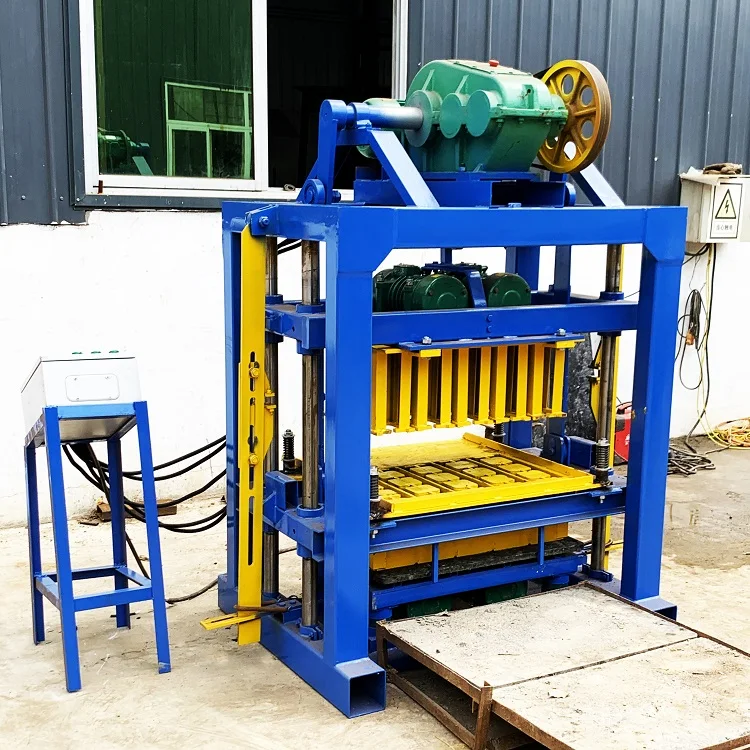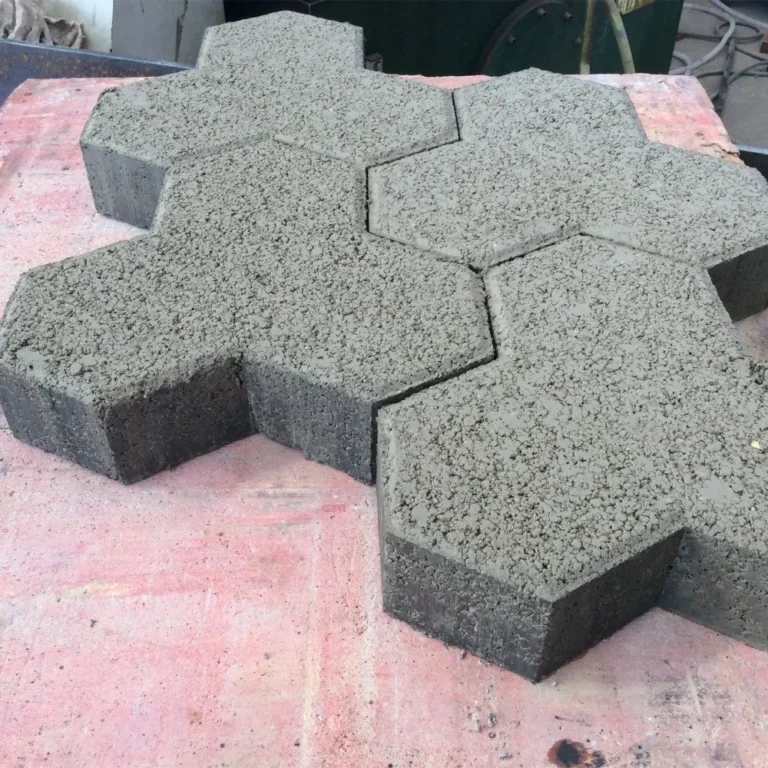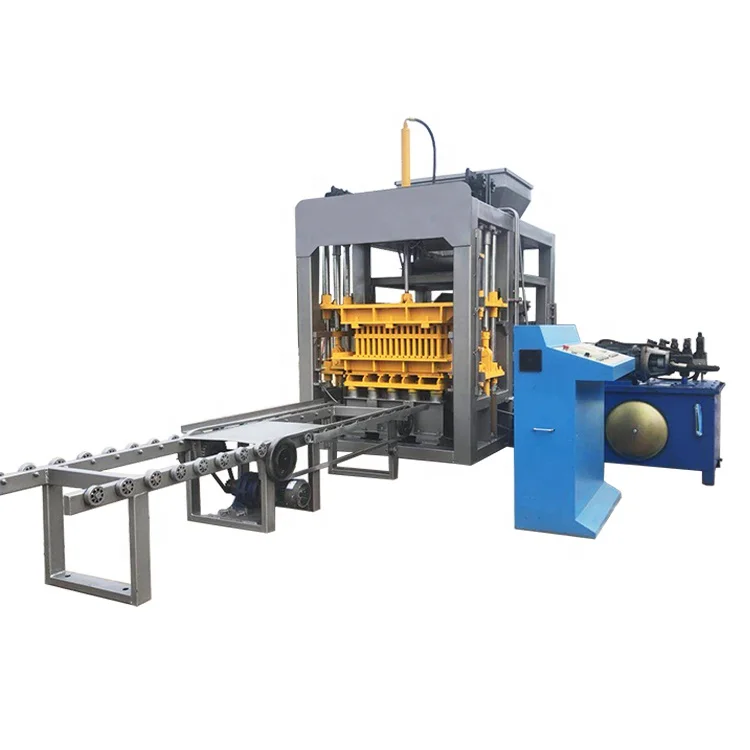
Description
Integrated System Match — Vibration, hydraulic pressure, pallet size and control language are specified together against the buyer’s actual block format and local aggregate, not pulled from a catalogue default.
Technical Specifications
| Parameter | Value |
|---|---|
| Model | QT5-15 |
| Product Type | Stationary Hydraulic Block Making Machine |
| Overall Dimensions (L×W×H) | 7400×1950×2800 mm |
| Rated Pressure | 21 MPa |
| Main Vibration Form | Platform Vibration |
| Vibration Frequency | 2800–4500 r/min |
| Pallet Size | 1100×550 mm |
| Molding Cycle | 15–25 s |
| Overall Power | 26.5 kW |
| Demolding Method | Hydraulic |
| Control System | PLC (language configurable) |
| Automation Level | Full Automatic (upgrade path from semi-automatic available) |
| Output Capacity (Hollow brick 400×200×200 mm) | 1800 pcs/h (basis: 5 pcs/mold, 16–20 s cycle) |
| Output Capacity (Hollow block 400×150×200 mm) | 1300 pcs/h (basis: 6 pcs/mold, 15–20 s cycle) |
| Output Capacity (S paver 225×112.5×60 mm) | 3700 pcs/h (basis: 16 pcs/mold, 15–17 s cycle) |
| Voltage & Frequency | Configurable to buyer’s grid (basis to be confirmed) |
| Applied Products | Hollow/solid blocks, pavers, interlocking blocks, curbstone |
| Raw Material | Crushed stone, sand, cement, fly ash, gravel, slag |
| Certification | CE (where applicable) |
| Warranty | One year |
Application Suitability
| Application | Material or Output |
|---|---|
| Hollow block production for commercial and residential walling | Crushed stone, sand, cement, fly ash blends; 400×200×200 mm and 400×150×200 mm formats |
| Paver and interlocking brick manufacturing for municipal and private projects | Fine aggregate and cement mixes; S paver 225×112.5×60 mm and custom formats |
| Solid block production for load-bearing structures | Dense aggregate mixes with high cement content; varied dimensions via mould change |
| Kerbstone and curb unit production for road infrastructure | Heavy-duty mix designs; format-specific moulds matched to pallet size |
| Colored paver runs for landscaping and architectural applications | Pigmented face-mix layered over base concrete through secondary feed system |
What the "Cycles per Hour" Figure Leaves Out About the automatic QT5-15 block machine PLC controlled
Output is meaningless unless the block format, mould cavity count and cycle time behind it are stated in writing.
I have watched plant owners celebrate a machine’s hourly capacity on paper, then stand in a curing yard at the end of the first production week wondering where the missing blocks went. The gap almost always comes from a quoted figure that assumes a small, fast-cycling format while the buyer’s market actually demands a larger, slower one. With this automatic QT5-15 block machine PLC controlled system, every output figure in the table above names the exact block dimension, the number of cavities per mould, and the cycle range that produced it [NEED_CITE: block format assumptions in capacity quotations]. That way, daily and monthly production planning can start from a number the buyer’s own market will recognize.
Removing the Operator from the Cycle Loop
The automatic QT5-15 block machine PLC controlled architecture takes pallet feeding, vibration timing, hydraulic press sequence and stacking out of the operator’s hands. What the operator monitors instead is material flow at the hopper and the quality of output at the discharge end. This shift matters because manual pallet handling and inconsistent button-press timing are the two most common sources of density variation in a block run.
Consistency Across Shifts and Formats
When the PLC stores cycle parameters for each mould, switching from hollow block to paver production no longer depends on one experienced operator remembering the right vibration duration. The stored recipe recalls the vibration frequency, press pressure and cycle time for that specific format. This means the morning shift and the night shift produce blocks that test to the same compressive strength [NEED_CITE: PLC recipe storage in block production consistency], and a new operator can run the line after basic training rather than months of apprenticeship.
Reading the Spec Sheet Like a Buyer, Not a Salesman
The 21 MPa rated pressure and 2800–4500 r/min platform vibration frequency must be read together. Pressure alone compresses the mix; vibration alone rearranges the aggregate particles. When both are matched to the buyer’s local aggregate gradation and cement content, the result is a block that reaches target strength without excessive cement cost. The 1100×550 mm pallet size dictates how many blocks fit on each pallet and therefore how the curing racks must be spaced — a detail that should be confirmed against the buyer’s existing forklift and curing yard dimensions before the machine is built. The 15–25 s molding cycle range reflects the difference between a thin paver that compacts quickly and a tall hollow block that needs extended vibration to settle the core.
The Hidden Cost of Skipping the Automation Conversation
A buyer who selects a machine without confirming the automation level often discovers that pallet handling, stacking and curing rack transfer were not part of the quotation. The result is a press that produces faster than the crew can manually remove and stack, so the theoretical cycle time is never sustained. Voltage, frequency and PLC display language left unconfirmed until the machine arrives on site can delay commissioning by weeks while replacement contactors and translated HMI screens are sourced [NEED_CITE: commissioning delays from unconfirmed electrical specifications]. These are not rare edge cases; they show up repeatedly in first-time plant installations.
Why Buyers Specify This Line Here
Block machinery is the single focus of the workshop, so the press, mould, pallet and handling equipment are configured as one matched set rather than assembled from separate suppliers. The vibration force and hydraulic pressure are set against the buyer’s actual mix design and local aggregate, not a factory default. Mould design covers the formats the buyer’s market sells, including custom drawings when a non-standard block is required. The automation level is selectable — a buyer can begin with semi-automatic pallet handling and add stacking and cubing modules later as production volume grows. Installation support includes on-site commissioning and operator training so the line is producing acceptable blocks before the technical team leaves [NEED_CITE: on-site commissioning and operator training practices in block machinery exports].
Documentation & Verification
- Line layout drawing with capacity calculation per block format and assumed cycle time
- Machine specification sheet confirming pallet size, vibration frequency and rated pressure
- Mould drawing and format list including custom designs where applicable
- Hydraulic and electrical schematic with confirmed voltage, frequency and PLC language
- Factory test record produced using the buyer’s target block format before dispatch
- Packing photographs and customs documentation support for the destination port
Installation, Commissioning & Support
- Foundation plan sized to the 7400×1950 mm footprint with vibration isolation requirements
- Dedicated electrical circuit rated for the 26.5 kW overall power draw at confirmed voltage
- Machine arrives in dismantled state; reassembly sequence documented in the manual
- First-run commissioning includes vibration frequency tuning to the buyer’s aggregate blend
- Operator training covers PLC recipe selection, mould change procedure and daily maintenance
- Wear parts list identifies hydraulic seals and vibration motor bearings with replacement intervals
Before You Send an Inquiry
Provide the block formats your market actually sells, the daily output you need per format, and the raw materials available locally — including aggregate type and gradation. Confirm your site voltage, frequency and the language your operators need on the PLC display. If you already have curing racks, forklifts or a batching plant, share their specifications so the pallet size and upstream feeding can be matched from the start.
Frequently Asked Questions
Q: How is the QT5-15 output capacity verified, and what block format does each figure assume?
A: Every capacity figure in the specification table states the exact block dimension, mould cavity count and cycle range used to calculate it. For example, the hollow brick figure assumes a 400×200×200 mm block, five cavities per mould, and a 16–20 second cycle. Buyers can use these stated bases to calculate realistic daily output for the formats they plan to produce.
Q: What PLC control language and voltage options are confirmed before shipment?
A: The PLC display language and the machine’s voltage and frequency are confirmed during the quotation stage, before production begins. This prevents commissioning delays caused by mismatched contactors or an HMI the operators cannot read. The confirmation is recorded in the electrical schematic included in the documentation package.
Q: Can I start with semi-automatic operation and add stacking later?
A: Yes. The automation level is selectable, so a buyer can begin with semi-automatic pallet handling and upgrade to full automatic stacking and cubing as production volume justifies the investment. The mechanical interface on the QT5-15 is designed to accept these modules without replacing the core press or PLC.
Q: How are vibration force and hydraulic pressure matched to my local aggregate?
A: The buyer provides a sample or gradation report of the local aggregate along with the planned cement content. The vibration frequency range of 2800–4500 r/min and the 21 MPa hydraulic pressure are then tuned so that the combination produces target block strength without requiring a mix design change or excess cement consumption.
Q: What is the mould change time, and can different formats share one pallet size?
A: The 1100×550 mm pallet accommodates multiple mould formats without line reconfiguration, so switching between hollow blocks and pavers does not require a pallet change. Mould change time depends on the specific mould set and fastening system; the procedure and estimated duration are documented in the operation manual provided with the machine.