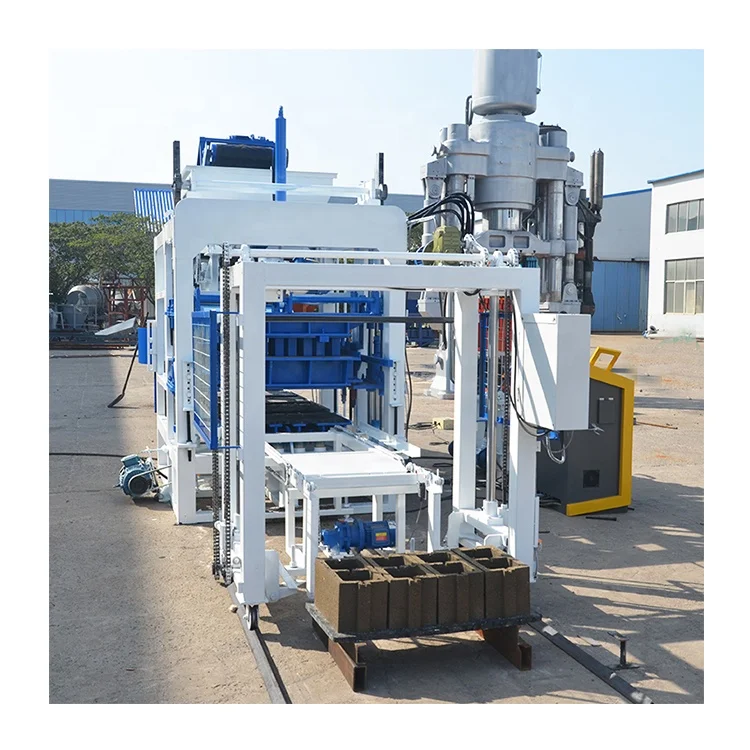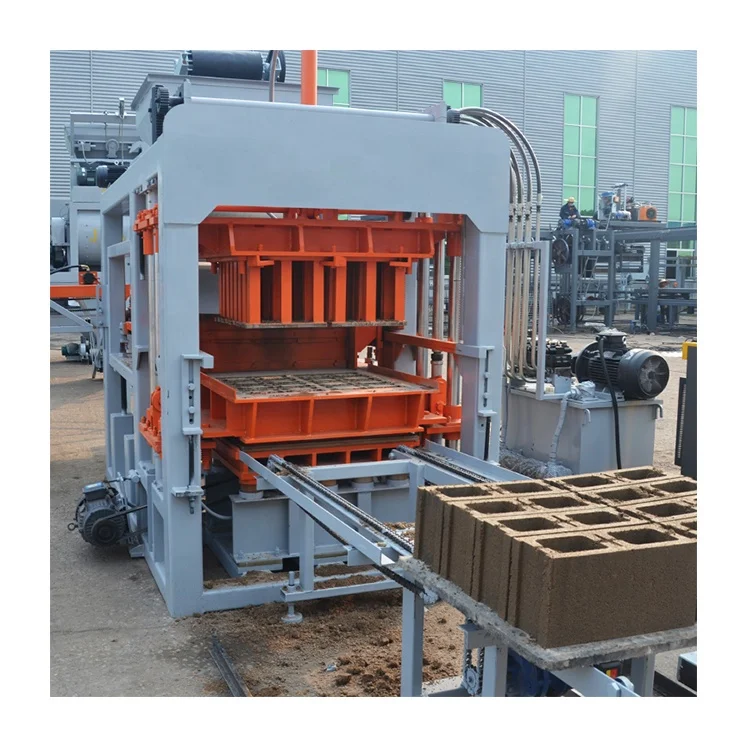
Description
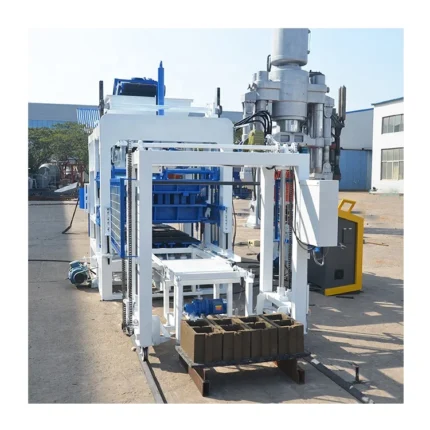
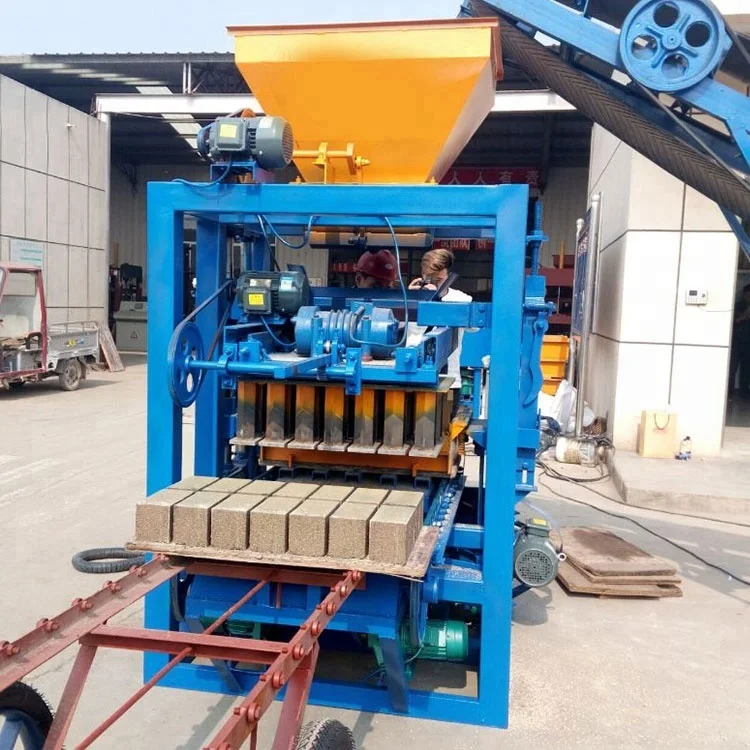
Matched Automation System — the QT6-15 is specified as a complete PLC-controlled line where press timing, pallet feeding, and stacking synchronize to hold cycle consistency across block formats.
Technical Specifications
| Parameter | Value |
|---|---|
| Model | QT6-15 |
| Product Type | Automatic Concrete Block Making Machine |
| Molding Way | Vibration and hydraulic pressing |
| Rated Pressure | 21 MPa |
| Molding Cycle | 15s–20s |
| Pallet Size | 900×700 mm |
| Main Machine Weight | 6000 kg |
| Output — Hollow Block 400×200×200 mm | 1440 pcs/h, 11520 pcs/8h (6 pcs per pallet, theory) |
| Output — Paving Brick 200×100×60 mm | 5040 pcs/h, 40320 pcs/8h (21 pcs per pallet, theory) |
| Output — Solid Brick 240×115×53 mm | 7680 pcs/h, 61440 pcs/8h (32 pcs per pallet, theory) |
| Control System | PLC (language configurable — confirm before production) |
| Voltage & Frequency | Customized to local supply (confirm with buyer) |
| Automation Level | Automatic — simple line or full line options |
| Simple Line Equipment | JS500 mixer, 8 m conveyor belt, automatic stacker |
| Full Line Equipment | Cement silo, screw conveyor, cement scale, batching machine, pallets loader, block and pallets separator |
| Mould Formats | Hollow block, paving brick, solid brick, interlocking brick, curbstone |
| Warranty | 1 year (excluding wearing parts) |
| Assembly State | Main machine shipped with top cylinder removed for container loading |
Application Suitability
| Application | Material or Output |
|---|---|
| Hollow block production for wall construction | Concrete mix of cement, sand, fly ash, stone powder |
| Paving brick manufacturing for roads and yards | Cement, sand, crushed stone with surface layer options |
| Solid brick production for load-bearing structures | Cement, slag, stone powder blends |
| Interlocking brick for erosion control and landscaping | Concrete mix adapted to local aggregate availability |
| Curbstone production for roadside and drainage systems | High-density concrete with coarse aggregate |
What the Automatic QT6-15 Block Machine PLC Controlled Setup Actually Removes from the Operator
Consistent cycle timing across format changes is what separates a PLC-controlled line from a press that still depends on the operator’s thumb.
Most buyers compare block machines on a single capacity figure. I have watched lines stall because the press cycles faster than the pallet feeder can deliver, or because the stacker cannot clear cured blocks before the next batch arrives. The QT6-15 addresses this through PLC-controlled synchronization rather than isolated station speed [NEED_CITE: PLC synchronization standards for concrete block lines]. The real question is whether every station in the line is timed to the same cycle.
How PLC Timing Holds the Line Together
The automatic QT6-15 block machine PLC controlled system manages press cycle, pallet indexing, and stacker movement from a single controller. When the molding cycle shifts between 15s and 20s depending on the block format, the pallet feeder and conveyor adjust accordingly rather than running on fixed timers. This prevents pallets from piling up at the press infeed or gaps forming in the curing rack queue.
Why Synchronization Matters More Than Press Speed Alone
A press rated at a fast cycle means little if the pallet loader takes longer to position the next board, or if the block-pallet separator cannot keep up at the discharge end. The QT6-15 full line configuration includes a pallets loader and block-and-pallets separator specifically chosen to match the press throughput. On sites where I have commissioned these lines, the bottleneck almost always appears at the transfer points between stations, not at the press itself [NEED_CITE: typical bottleneck points in automatic block production lines].
Reading the Specs Against Your Actual Block Format
The rated pressure of 21 MPa combined with vibration determines the density the QT6-15 can achieve, but density only matters if the mix design delivers the right workability at the hopper. The 900×700 mm pallet size dictates how many blocks sit per board — 6 for a 400×200×200 mm hollow block, 21 for a 200×100×60 mm paver, 32 for a 240×115×53 mm solid brick. These counts directly shape the hourly figures quoted above. Choosing a pallet size that does not match the buyer’s existing curing racks or forklift capacity creates a downstream problem no press specification can fix. The molding cycle of 15s–20s shifts with block height and mix stiffness, so the PLC adjusts dwell time per format rather than applying a single fixed value.
The Cost of Skipping the Automation Conversation
Buyers who select the simple line — JS500 mixer, 8 m conveyor, automatic stacker — and later need full-line output face a teardown and reconfiguration that takes the press offline for days. Others specify the full line without confirming the batching machine’s accuracy against their local aggregate moisture variation, leading to batch-to-batch density swings the PLC cannot correct [NEED_CITE: aggregate moisture impact on concrete block density]. Mismatched voltage and frequency discovered after arrival delay commissioning while transformers or motor rewinds are arranged on site.
Why Source This Line Through a Single-Focus Supplier
Block machinery is the sole product focus here, so the QT6-15 press, mould, pallet, and handling equipment are specified as one matched system rather than assembled from separate vendors. Configuration starts from the buyer’s actual mix design and target block format, not a catalogue default. Mould design covers the formats the buyer’s market sells, including custom drawings for non-standard shapes. Automation level is selectable — a buyer can begin with the simple line and add the pallets loader and block-pallet separator later without replacing the press. Installation support includes on-site commissioning with operator training on the PLC interface and mould changeover procedure.
Documentation & Verification
- Line layout showing QT6-15 station spacing and pallet flow path
- Capacity calculation sheet stating block format and pallet count per output figure
- Hydraulic and electrical schematic for local maintenance reference
- Voltage, frequency, and PLC display language confirmation record
- Mould drawing and format compatibility list for target products
- Factory test record on buyer’s specified block format before dispatch
Installation, Commissioning & Support
- Foundation plan sized to the 6000 kg main machine weight and vibration load
- Dedicated electrical circuit matching confirmed voltage and frequency for PLC and hydraulic pump
- Top cylinder reassembly on site after container delivery with dismantled shipment
- PLC parameter setup per block format, including molding cycle dwell adjustment
- Operator training on mould change procedure and pallet loading sequence
- Wear parts list covering hydraulic seals, vibration springs, and mould liners
What to Share Before Requesting a Quote
Provide the specific block formats your market demands, along with the daily volume you need to sustain. Share your local aggregate type and any sample mix proportions you already use. Confirm the voltage, frequency, and preferred PLC display language at your site so the automatic QT6-15 block machine PLC controlled configuration matches your electrical infrastructure before production begins.
Frequently Asked Questions
Q: How is output capacity verified, and what format does each figure assume?
A: Each output figure on this page states the block format, pallet count per board, and theoretical basis. The hollow block figure assumes 6 pieces per 900×700 mm pallet, the paver assumes 21, and the solid brick assumes 32. Actual throughput depends on your mix design, aggregate, and curing cycle. We provide a capacity calculation sheet matched to your specific format during the proposal stage.
Q: What PLC language and voltage setup is confirmed before shipment?
A: Both the PLC display language and the voltage and frequency are confirmed in writing before production begins. The control system supports configurable language options, and motors and transformers are wound or selected for your site’s exact supply. A written confirmation record is included in the documentation package to prevent on-site delays.
Q: How does automation level selection change the labour requirement?
A: The simple line with JS500 mixer and automatic stacker still requires manual pallet handling at the curing rack. The full line adds a pallets loader and block-pallet separator, which removes manual pallet transfer and block separation from the operator’s tasks. The press itself remains identical in both configurations, so upgrading later is possible without replacing the QT6-15.
Q: What is the mould change procedure and how long does format switching take?
A: Mould changeover on the QT6-15 involves releasing the clamping bolts, lifting the current mould with an overhead crane, and lowering the replacement mould onto the locating pins. The PLC stores cycle parameters for each registered format, so timing adjusts automatically after the physical swap. We supply a format list and mould drawing so you can plan changeover sequences around production schedules.
Q: How does press cycle time synchronize with pallet feeding and stacking?
A: The PLC controls the press cycle, pallet feeder indexing, and stacker movement as one coordinated sequence. When the molding cycle varies between 15s and 20s across formats, the upstream and downstream stations adjust their timing to prevent bottlenecks. This synchronization is verified during the factory test before the machine ships.