

Description
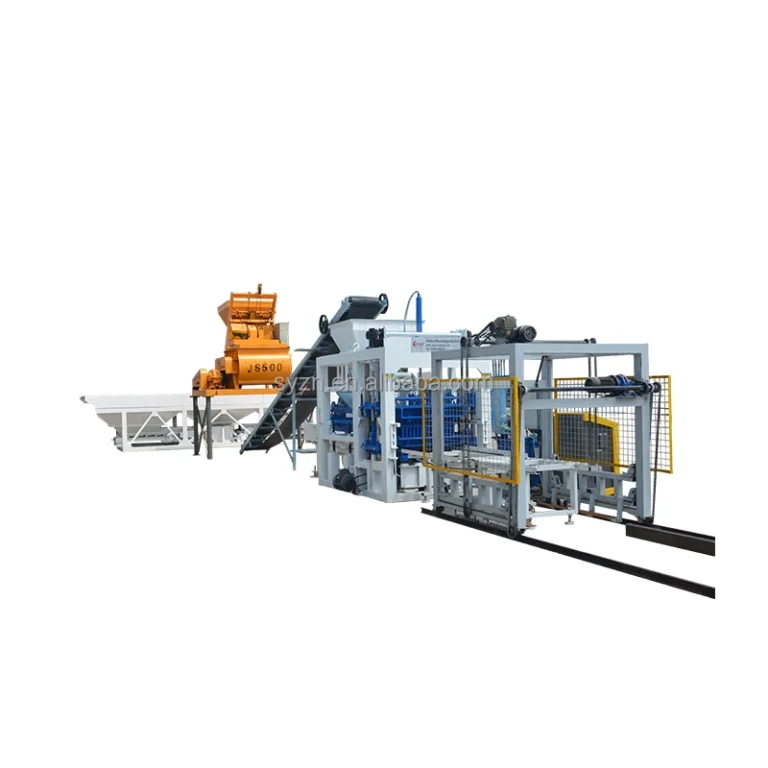
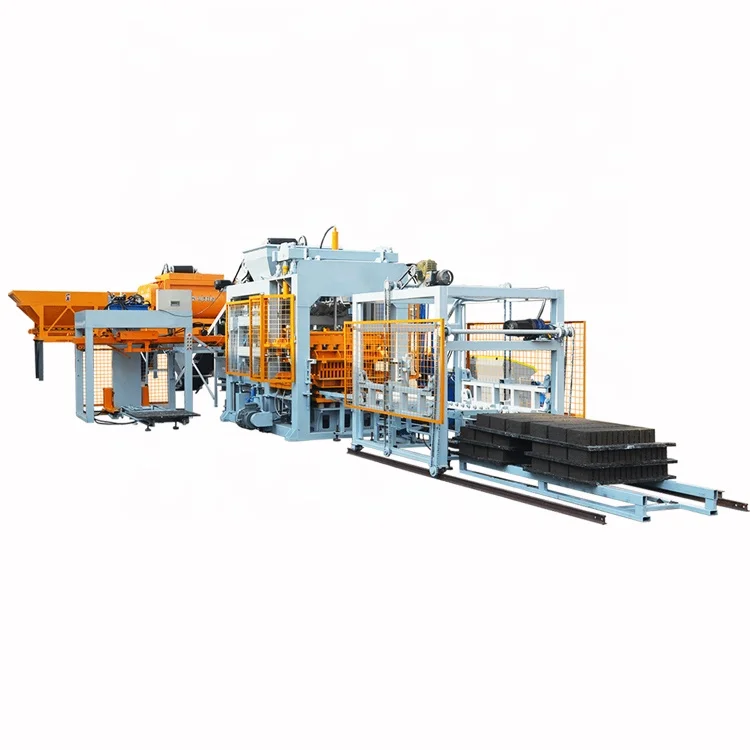
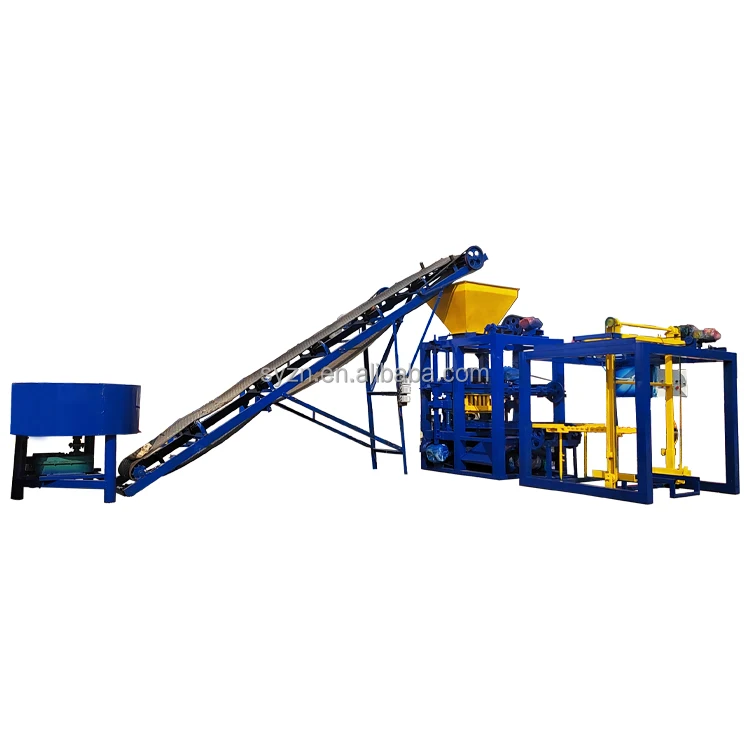
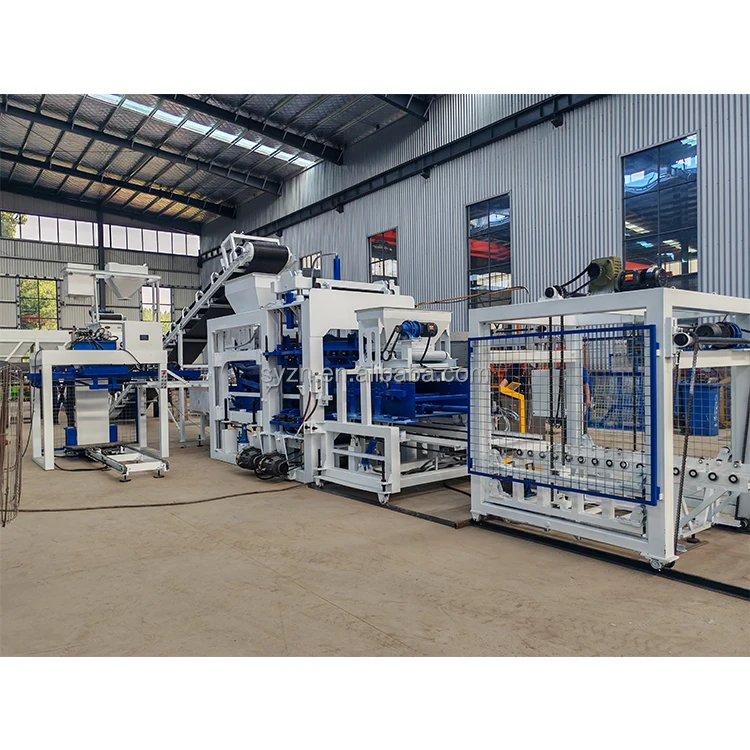
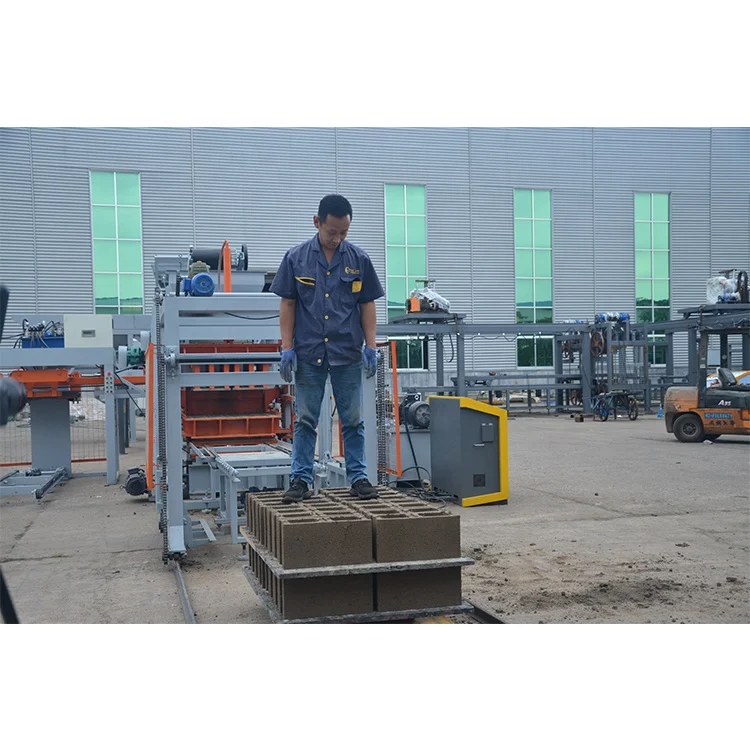
Matched System Integration — The QT6-15 automatic PLC controlled block making machine is specified with pallet, mould, and handling equipment as one coordinated line rather than isolated components.
Technical Specifications
| Parameter | Value |
|---|---|
| Model | QT6-15 |
| Product Type | Automatic Hydraulic Concrete Block Making Machine |
| Overall Dimensions (L×W×H) | 8200 × 1700 × 2950 mm |
| Total Mass | 7 T |
| Overall Power | 37 kW |
| Vibration Frequency | 0-60 Hz |
| Vibration Force | 45 kN |
| Vibration Form | Platform Vibration |
| Moulding Mode | Automatic loading, vibration moulding |
| Demolding Method | Hydraulic |
| Pallet Size | 880 × 850 mm |
| Molding Cycle | 15-20 s |
| Control System | PLC with touch screen interface |
| Hydraulic System | Independent integrated hydraulic station |
| Block Compressive Strength | ≥15 MPa |
| Factory Area Required | 1200 m² |
| Output Capacity | 1080-1440 pcs/h (basis: 400×200×200 mm hollow block, 6 pcs/mould) |
| Output Capacity | 1440-1920 pcs/h (basis: 400×150×200 mm hollow block, 8 pcs/mould) |
| Output Capacity | 5760-7680 pcs/h (basis: 240×115×53 mm solid brick, 32 pcs/mould) |
| Output Capacity | 2160-2880 pcs/h (basis: 200×100×60 mm rectangular paving brick, 21 pcs/mould, cycle 20-25 s) |
| Output Capacity | 2160-2880 pcs/h (basis: 225×112.5×60 mm zigzag paving brick, 15 pcs/mould, cycle 20-25 s) |
| Voltage & Frequency | Basis not stated in source — confirm with buyer’s local grid |
| PLC Display Language | Basis not stated in source — confirm before production |
| Warranty | 1 year (excluding spare parts) |
| Standards | CE (verify per shipment) |
Application Suitability
| Application | Material or Output |
|---|---|
| Hollow block production | Cement-based mixes with waste ash and slag, 400×200×200 mm and 400×150×200 mm formats |
| Solid brick production | Crushed stone and cement blends, 240×115×53 mm standard format |
| Rectangular paving block | Aggregate and cement mixes, 200×100×60 mm for walkways and yards |
| Interlocking zigzag paving brick | Cement-based paving mixes, 225×112.5×60 mm for driveways and heavy-load areas |
| Concrete product plant expansion | Multiple format changeovers on a single PLC-managed line |
Why the PLC Screen Language Must Be Locked Before Crating
An intelligent block line stops being intelligent the moment the operator cannot read the display.
I once shipped an automatic PLC controlled block making machine to West Africa with the HMI still set to Chinese characters. The local crew stared at the touch screen on day one of commissioning, unable to acknowledge a single fault code. Remote language-pack updates dragged the first production run back by two full days. Since that trip, I treat PLC language and local voltage as non-negotiable pre-production checkpoints, because no amount of automation logic compensates for an unreadable interface [NEED_CITE: PLC display language and operator error correlation in exported machinery].
What the Touch Screen Actually Removes from the Operator
The PLC touch screen on this automatic PLC controlled block making machine takes over sequencing that a manual line leaves entirely to human timing. Automatic loading, vibration moulding, and hydraulic demoulding run in a fixed cycle so the operator supervises rather than triggers each step. The interlock control circuit prevents the press from cycling when a pallet is missing or a safety gate is open, eliminating the most common cause of mould damage during shift changes.
Fault Diagnosis Before the Line Stops Completely
The built-in fault diagnosis system monitors hydraulic pressure, vibration motor current, and sensor states continuously. When a parameter drifts outside its set band, the HMI displays the specific fault location instead of a generic alarm. On a manual line, a failing proximity sensor might go unnoticed until blocks start piling up crooked on the pallet. Here, the system flags the sensor before output quality degrades, giving the maintenance team a window to intervene during a planned pallet change [NEED_CITE: predictive fault detection in hydraulic block presses].
Reading the Specifications That Actually Shape Daily Output
The 45 kN vibration force working through platform vibration at 0-60 Hz determines how densely the concrete mix is compacted into the mould cavity. Higher frequency alone does not guarantee stronger blocks; the force must match the stiffness of the local aggregate and the water-cement ratio. The independent integrated hydraulic station sits isolated from the main frame vibration, which keeps demoulding pressure consistent whether the machine is producing hollow blocks at a 15-second cycle or paving bricks at 25 seconds. Pallet size at 880 × 850 mm must align with the curing racks and forklifts already on site — ordering a non-standard pallet dimension forces buyers to replace their entire handling inventory. The 37 kW overall power draw dictates the transformer capacity and dedicated circuit requirements before the machine arrives.
The Hidden Cost of Automating Only Half the Line
Buyers sometimes invest in a fully automatic press and then discover that pallet feeding, stacking, and curing rack handling were not part of the quotation. Operators end up pulling hot blocks off the line by hand, cancelling out the labour savings the PLC was supposed to deliver. Another frequent gap is the mould change procedure: if the mould clamping system requires manual bolt work, a format switch can consume most of a shift. On an automatic PLC controlled block making machine, every manual station left downstream becomes a bottleneck that the touch screen cannot solve [NEED_CITE: automation gap analysis in concrete block production lines].
Why Buyers Source This Machine Through Shiyue
Block machinery is the single production focus, so the press, mould, pallet, and handling equipment are specified as one matched system instead of assembled from unrelated suppliers. Configuration starts from the buyer’s actual mix design and target block format, not a catalogue default — the vibration frequency and hydraulic pressure are set to match local aggregate stiffness. Mould design covers every format listed in the capacity table and extends to custom drawings when the local market demands a non-standard profile. The automation level is selectable, allowing a plant to begin with semi-automatic pallet handling and add automatic stacking later. Installation support includes on-site commissioning and operator training so the crew can read the HMI and run the fault diagnosis system independently from day one.
Documentation & Verification
- Line layout and capacity calculation stating the exact block format and cycle time per quoted figure
- Hydraulic and electrical schematic matching the shipped configuration for local maintenance reference
- Voltage, frequency, and PLC display language confirmation sheet signed before production begins
- Factory test record run on the buyer’s specified mould format before crating
- Mould drawing and format list covering every block profile included in the order
Installation, Commissioning & Support
- 1200 m² factory area required with level concrete foundation to absorb 7 T operating mass
- 37 kW dedicated circuit with voltage and frequency verified against local grid before wiring
- Machine dismantled for container loading and reassembled on-site with alignment checks
- PLC touch screen language pack loaded and verified against operator preference during commissioning
- Hydraulic station oil grade and filter replacement schedule documented in maintenance manual
- Mould change procedure trained on-site so format switch fits within a single shift break
What We Need to Move Your Inquiry Forward
Send us the block formats your market actually sells, the daily volume you need per format, and the raw materials available within hauling distance of your plant. Confirm your site voltage, frequency, and preferred PLC display language so the control panel is readable the day it powers on. If you already have curing racks and forklifts, share the pallet dimensions they accept so the 880 × 850 mm standard can be verified or adjusted before the mould is built.
Frequently Asked Questions
Q: How is the output capacity calculated, and which block format does each figure assume?
A: Every capacity figure on this page states the exact block dimensions, pieces per mould, and cycle time it assumes. For example, 1080-1440 pieces per hour is based on a 400×200×200 mm hollow block at six pieces per mould with a 15-20 second cycle. We provide a written capacity calculation document with your quotation so you can verify daily output against your own shift length.
Q: What does the PLC actually control, and what still requires manual operator intervention?
A: The PLC manages automatic loading, vibration sequencing, hydraulic demoulding, and the interlock safety circuit. The operator sets parameters on the touch screen and monitors production, but pallet feeding method, stacking, and curing rack handling depend on the automation level selected in your configuration. We define exactly which stations are automatic and which remain manual before the order is confirmed.
Q: Can the automation level be upgraded later if I start with a simpler configuration?
A: Yes. The QT6-15 platform supports adding automatic pallet feeding, stacking, and cubing systems after initial installation. The PLC architecture allows new modules to be integrated without replacing the main controller. We recommend discussing the upgrade path during the initial quotation so the electrical cabinet and PLC memory are sized to accommodate future expansion.
Q: How do I confirm voltage, frequency, and PLC display language match my site before shipment?
A: We require a signed confirmation sheet specifying your local grid voltage, frequency, and preferred HMI language before production starts. The factory test is then run at your confirmed voltage, and the PLC screen is photographed in your language before crating. This eliminates the two-day commissioning delay I once experienced when a language pack had to be updated remotely.