Description
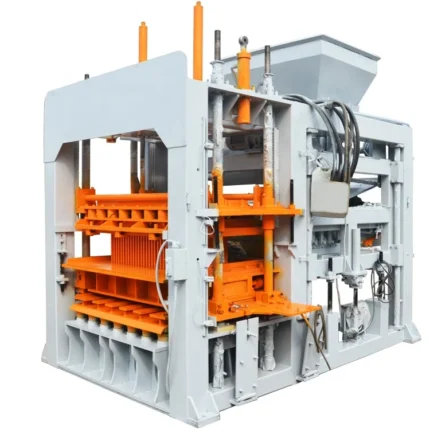
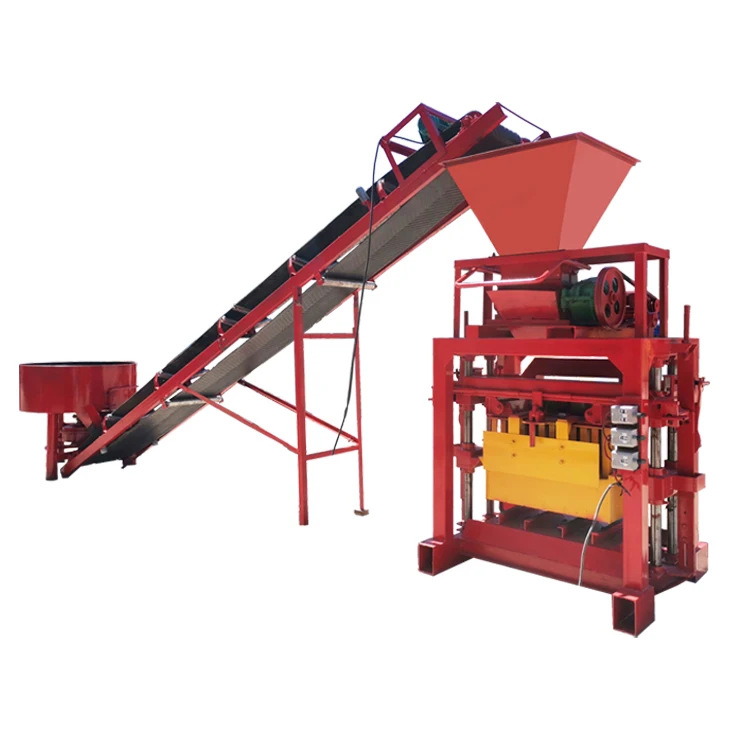
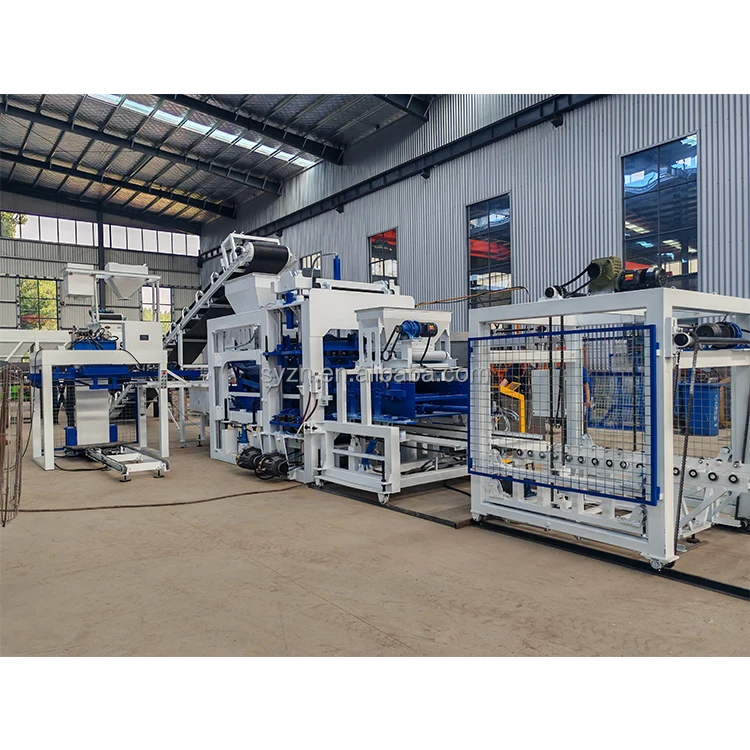
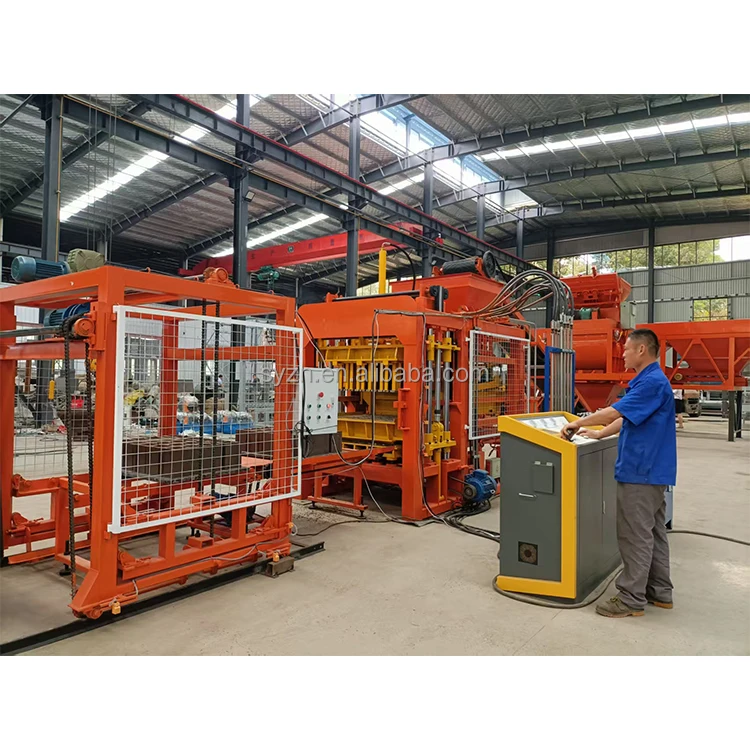
Intelligent Control Architecture — The automatic QT6-15 block making machine PLC controlled system isolates every signal loop so the press cycle, pallet feeder, and stacking logic stay in phase from the first hour of a shift to the last.
Technical Specifications
| Parameter | Value |
|---|---|
| Product Type | Hydraulic PLC Controlled Block Making Machine |
| Model | QT6-15 |
| Overall Dimensions (L×W×H) | 8200 × 1700 × 2950 mm |
| Total Mass | 7 T |
| Overall Power | 37 kW |
| Vibration Force | 45 kN |
| Vibration Frequency Range | 0–60 Hz |
| Vibration Form | Platform Vibration |
| Moulding Mode | Automatic loading, vibration moulding |
| Demolding Method | Hydraulic |
| Pallet Size | 880 × 850 mm |
| Molding Cycle | 15–20 s (basis to be confirmed per format) |
| Control System | PLC with touch screen HMI, fault diagnosis, safe logic interlock |
| Hydraulic Station | Independent integrated, isolated from dust and vibration |
| Factory Area Required | 1200 m² |
| Block Compressive Strength | >15 MPa |
| Output — Hollow Block 400×200×200 mm | 8,640–11,520 pcs/8h (6 pcs/mould, 15–20 s cycle) |
| Output — Hollow Block 400×150×200 mm | 11,520–15,360 pcs/8h (8 pcs/mould, 15–20 s cycle) |
| Output — Solid Brick 240×115×53 mm | 46,080–61,440 pcs/8h (32 pcs/mould, 15–20 s cycle) |
| Output — Rectangular Paver 200×100×60 mm | 17,280–23,040 pcs/8h (21 pcs/mould, 20–25 s cycle) |
| Output — Zigzag Paver 225×112.5×60 mm | 17,280–23,040 pcs/8h (15 pcs/mould, 20–25 s cycle) |
| Raw Material Adaptability | Waste ash, slag, various aggregates, adjustable cement dosage |
| Warranty | 1 year for whole machine (excluding spare parts) |
Application Suitability
| Application | Material or Output |
|---|---|
| Load-bearing and non-bearing wall blocks | Hollow blocks from crushed stone, sand, and cement |
| Solid brick runs for masonry | Dense bricks from fly ash, slag, and binder |
| Rectangular and interlocking paving | Pavers from fine aggregate with pigmented face mix |
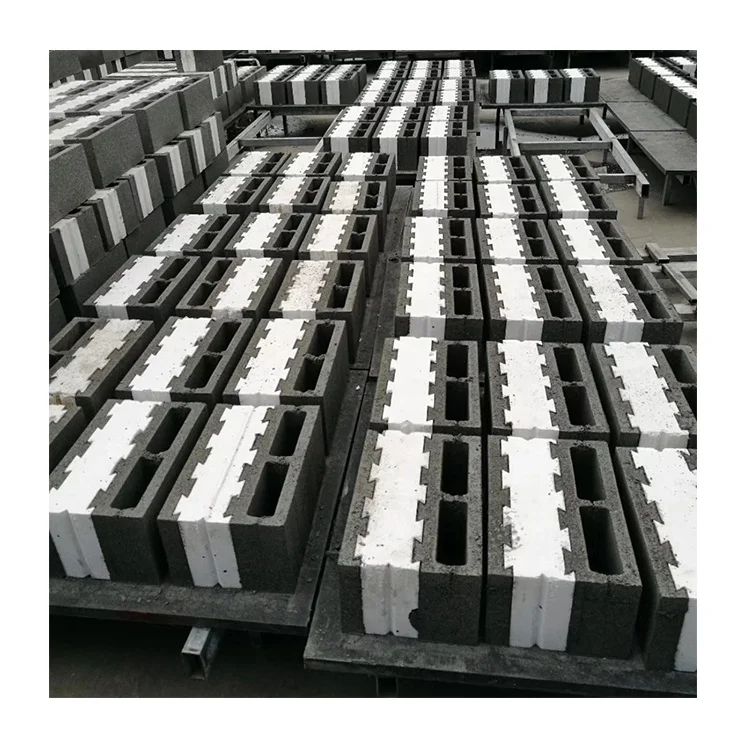
| Multi-cellular brick formats | Lightweight blocks using waste ash and expanded aggregate |
What a "15-Second Cycle" Actually Means on the automatic QT6-15 block making machine PLC controlled
A cycle time is only honest when it names the format, the mould cavity count, and the raw mix it was measured on.
Too many quotations list a single cycle figure that assumes the lightest brick in the catalogue. When the buyer switches to a 400×200×200 hollow block with a stiff, low-slump mix, the real cycle stretches past what the press was sold on. The automatic QT6-15 block making machine PLC controlled logic lets the operator store a separate timing profile for every mould, so the HMI displays the true seconds-per-cycle for the format actually running — not a brochure number [NEED_CITE: honest cycle time disclosure standards for block making equipment].
Signal Timing That Keeps the Press and Pallet Feeder in Phase
I once watched a pallet feeder arrive two seconds late on a comparable line. The press had already started its downstroke, and twenty pallets cracked before anyone reached the emergency stop. The automatic QT6-15 block making machine PLC controlled architecture runs the feeder, vibration table, and hydraulic demold on a single master clock, so a missed sensor pulse halts the sequence before steel meets wood.
Fault Diagnosis Without Guessing Which Proximity Switch Failed
When a limit switch drifts out of range at 2 a.m., the HMI flags the exact input address and suggests the check sequence. Instead of walking the entire wiring harness, the operator knows whether the fault sits on the mould clamp, the pallet magazine, or the stacking lift. That level of diagnostics keeps night shifts running instead of waiting for a morning call-out [NEED_CITE: PLC diagnostic standards in block machinery].
How 45 kN Vibration and Hydraulic Pressure Build Density Together
Platform vibration at 0–60 Hz compacts the aggregate skeleton, but the final density depends on the hydraulic head pressing from above during the same window. If the pressure ramps too early, vibration energy reflects off a half-compacted bed; too late, and the top face tears on demold. The integrated hydraulic station sits away from the vibration table so oil temperature stays stable across an eight-hour shift, keeping that pressure-vibration overlap consistent for every pallet.
Why Pallet Size and Curing Area Must Agree Before the Machine Ships
An 880 × 850 mm pallet only works if the curing racks and forklift tines at the destination plant match that footprint. Buyers who skip this check end up restacking blocks by hand — the very labour the line was supposed to remove. Confirming pallet dimensions against existing curing infrastructure is a non-negotiable step before the QT6-15 leaves the factory.
The Hidden Cost of a Control Language Mismatch
A touch screen that boots in a language the operator cannot read turns a thirty-second parameter tweak into a ten-minute translation puzzle. Every misread prompt risks an incorrect vibration frequency or an overridden interlock. Language confirmation belongs on the purchase checklist, not on the commissioning day [NEED_CITE: multilingual HMI requirements for export machinery].
Why Procurement Teams Spec the QT6-15 Here
Block machinery is the only product category on our floor, so the press, mould, pallet, and handling stations are engineered as one signal chain rather than bolted together from separate vendors. Each QT6-15 leaves with a capacity calculation that names the exact block format, mould cavity count, and cycle time behind the daily output figure. The PLC program ships with parameter sets already tuned to the buyer’s stated mix design, and the automation level can start at semi-automatic and add stacking or curing-rack handling later without rewiring the main cabinet. Installation includes operator training on the HMI fault screens, and wear-part drawings are handed over on day one so local sourcing can begin immediately.
Documentation & Verification
- Line layout drawing with capacity stated per block format
- PLC address list matching the shipped sensor configuration
- Hydraulic schematic showing the isolated station circuit
- Factory test record on the buyer’s specified mould and mix
- Voltage and HMI language confirmation sheet signed before packing
- CE declaration package where the destination market requires it
Installation, Commissioning & Support
- 1200 m² floor area with a level concrete slab rated for 7 T point loads
- 37 kW supply on a dedicated breaker, voltage and frequency confirmed pre-shipment
- Main frame and hydraulic station shipped separately, bolted and aligned on site
- PLC parameter sets loaded for each mould format before first production run
- Operator training covers HMI navigation, fault diagnosis, and safe interlock logic
- Wear-part list and hydraulic seal kit included for the first replacement interval
What to Include in Your First Inquiry
Send the block formats your market actually sells, the daily volume you need for each, and a sieve analysis of the aggregate you can source locally. Confirm your site voltage, frequency, and the language you want on the HMI. If you already run pallets and curing racks, share their dimensions so the feeding and stacking stations can be matched before the machine is built.
Frequently Asked Questions
Q: How are the QT6-15 capacity figures calculated for each block format?
A: Every output number in the table above states the exact mould cavity count, the cycle time range, and the block dimensions it assumes. Hollow blocks, solid bricks, and pavers each have their own row because the press cannot run them all at the same speed. We supply a signed capacity sheet that locks those assumptions to your order.
Q: Can the automation level grow from semi-automatic to a full line later?
A: Yes. The PLC cabinet is wired with spare I/O channels, so an automatic pallet feeder, stacker, or curing-rack handler can be added without replacing the main controller. Each module is commissioned as a separate project, letting you spread the investment across two or three phases.
Q: Which PLC brands and HMI languages are available?
A: The control platform is configurable to the brand your maintenance team already stocks, and the touch screen can boot in the operator’s primary language. We confirm both choices on a signed sheet before the wiring harness is built, so no translation patches are needed on site.
Q: How do you verify voltage and frequency before the machine ships?
A: The buyer supplies the local utility specification, and we record it on the voltage confirmation sheet. The motor nameplate, transformer taps, and PLC power supply are all set to that value during the factory test, and the test record travels with the shipment.
Q: Will the vibration and pressure settings match my local aggregate?
A: We ask for a sieve analysis and a trial mix before the factory test. The vibration frequency and hydraulic pressure curves are then tuned to that specific blend, and the resulting parameter set is saved to the HMI so your operator can recall it with one touch.