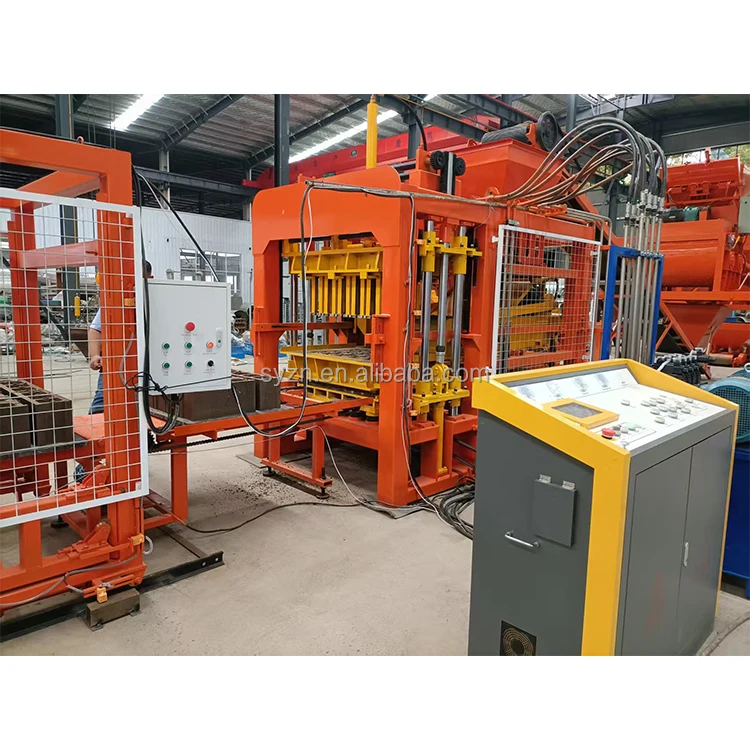
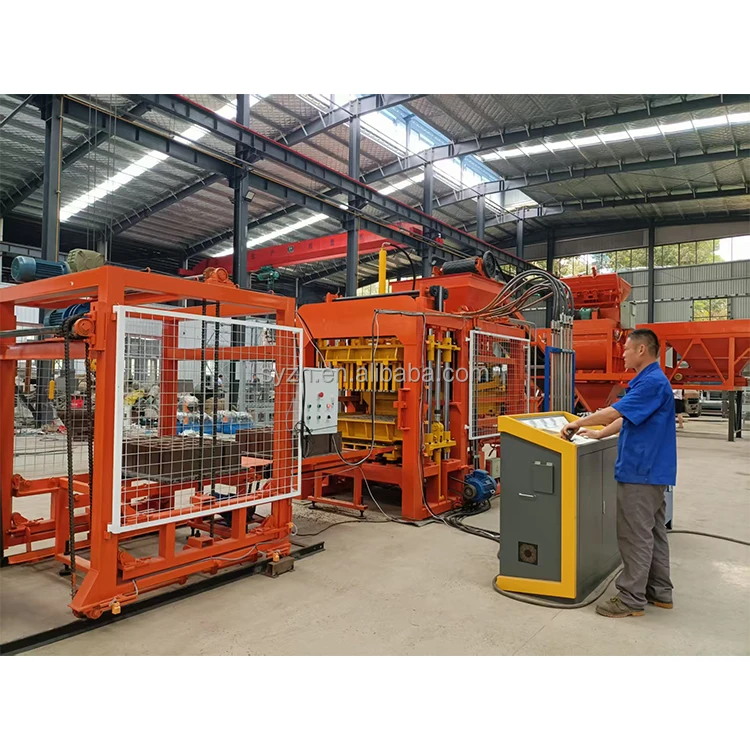
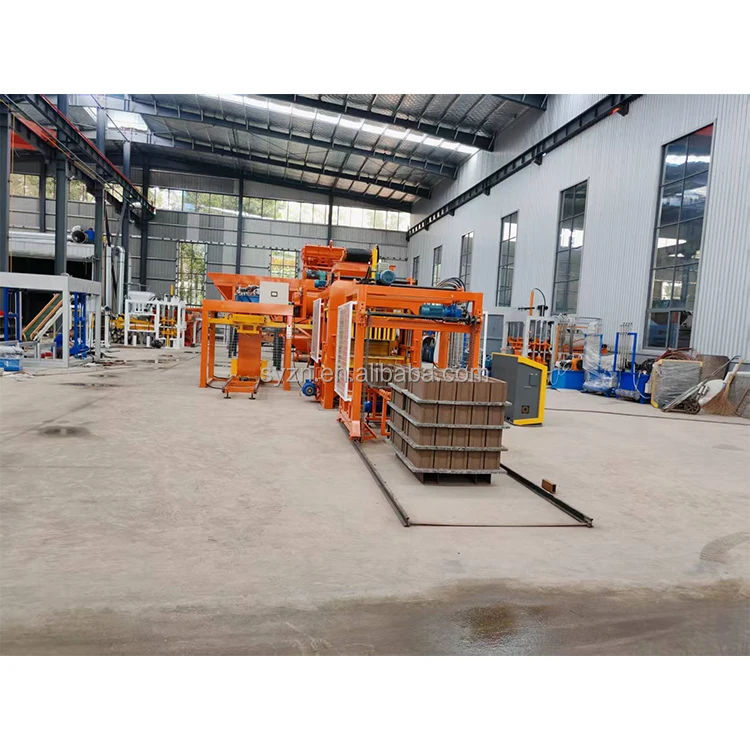
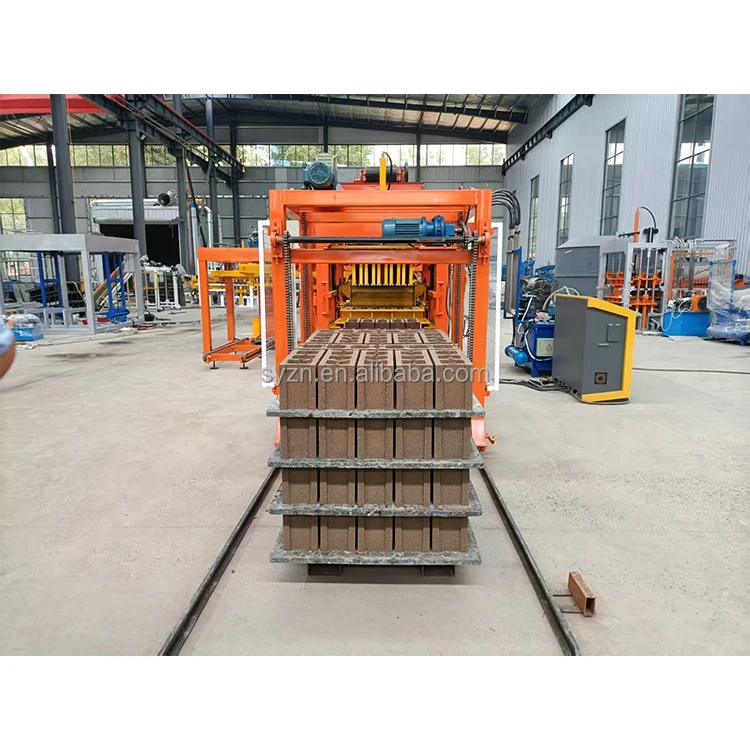
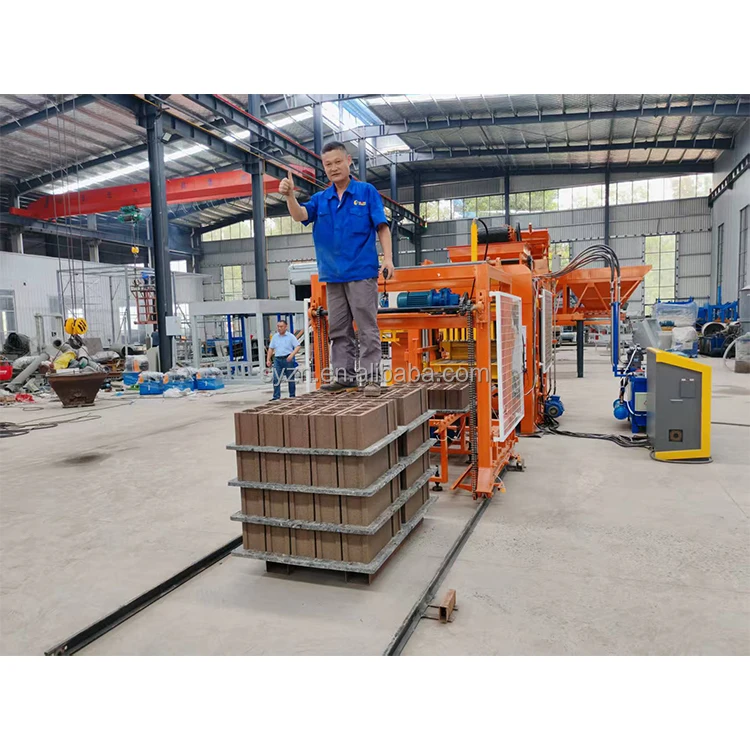
Description
Technical Specifications
| Parameter | Value |
|---|---|
| Model | QT6-15 |
| Product Type | Hydraulic PLC Controlled Concrete Block Making Machine |
| Control System | PLC with touch-screen HMI, fault diagnosis |
| Moulding Mode | Automatic load, platform vibration |
| Hydraulic Demoulding | Independent integrated station |
| Vibration Frequency | 0–60 Hz, adjustable |
| Vibration Force | 45 kN |
| Pallet Size | 880 × 850 mm |
| Molding Cycle | 15–20 s (basis to be confirmed by block format) |
| Overall Power | 37 kW |
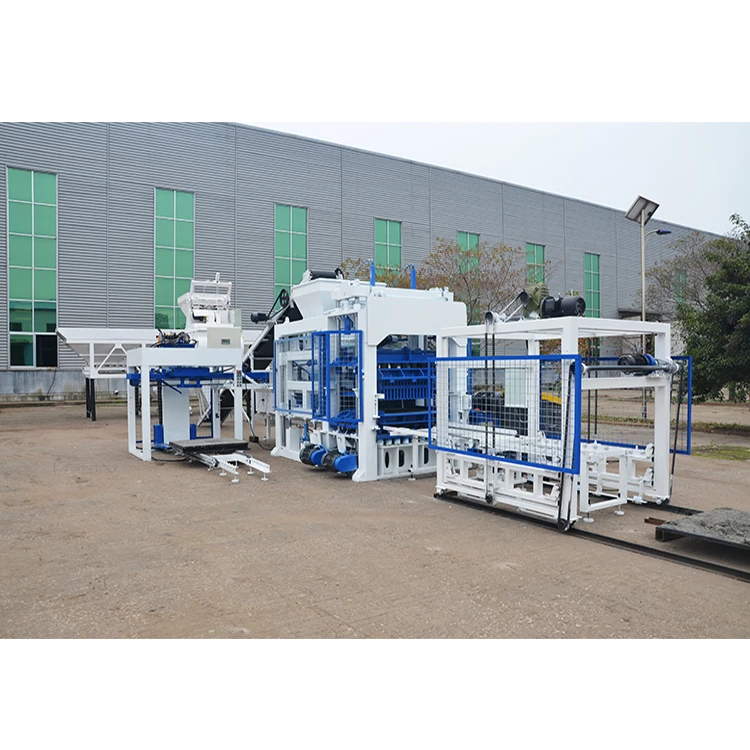
| Overall Dimensions (L×W×H) | 8200 × 1700 × 2950 mm |
| Total Mass | 7 T |
| Recommended Factory Area | 1200 m² |
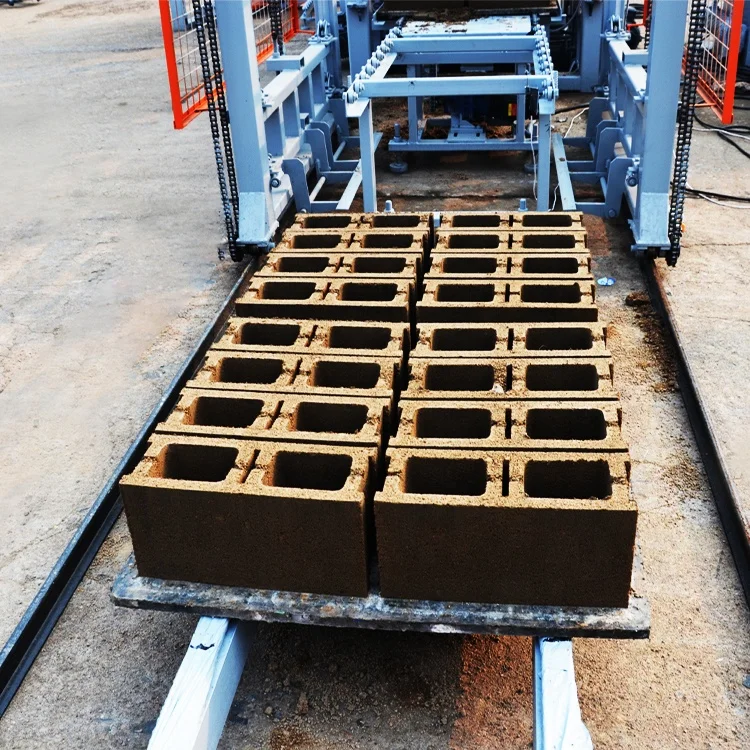
| Output: 400×200×200 mm Hollow Block | 6 pcs/mould, 8640–11520 pcs/8 hr |
| Output: 400×150×200 mm Hollow Block | 8 pcs/mould, 11520–15360 pcs/8 hr |
| Output: 240×115×53 mm Solid Brick | 32 pcs/mould, 46080–61440 pcs/8 hr |
| Output: 200×100×60 mm Rectangular Paver | 21 pcs/mould, cycle 20–25 s, 17280–23040 pcs/8 hr |
Application Suitability
| Application | Material or Output |
|---|---|
| Load-bearing hollow block production | Crushed stone, sand, cement blends |
| Non-bearing partition block manufacturing | Waste ash, slag, lightweight aggregates |
| Solid brick runs for masonry walls | Standard concrete mix with local sand |
| Interlocking and rectangular paver laying | High-density mix for 60 mm thickness |
| Kerbstone and porous brick formats | Custom mould setups on the same press |
Why "10,000 Blocks a Day" Misses the Automation Point
Real throughput depends on how the PLC manages the recipe, not just the cycle time printed on the brochure.
I have stood next to machines of this class where the operator spent half the shift manually tweaking vibration times because the control panel had no memory for different block formats. An automatic QT6-15 block machine is supposed to recall stored recipes and adjust vibration frequency and hydraulic pressure per mould, yet many control systems shipped without that flexibility configured. When a plant switches from hollow blocks to pavers, the PLC should handle the transition in minutes, not hours of trial runs [NEED_CITE: PLC recipe management standards in concrete equipment].
What the PLC Actually Removes from the Operator
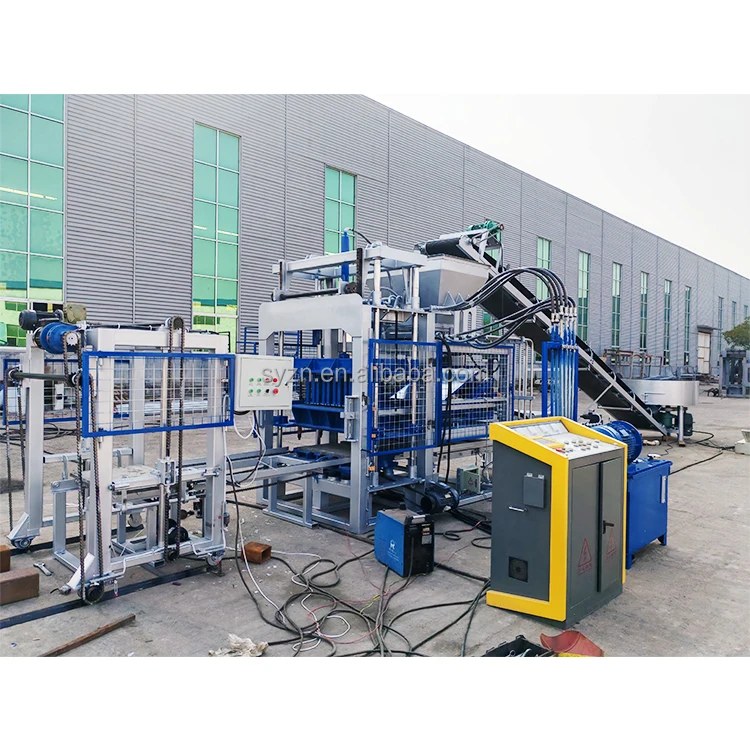
The touch-screen HMI on this automatic QT6-15 block machine stores process data for each block format the plant runs. When a new mould goes in, the operator recalls the recipe rather than guessing at vibration duration and hydraulic pressure. The interlock logic prevents the press from cycling if a pallet is misaligned or the feeder hasn’t retracted, cutting unplanned stops that manual presses suffer constantly. Fault diagnosis flags hydraulic pressure drops or sensor failures on screen before they cause a full line halt.
Consistency Across Shifts and Operators
Batch-to-batch consistency is where intelligent control earns its place. A second-shift operator with six months of experience can run the same block strength as the senior operator on first shift, because the PLC enforces the stored parameters rather than relying on feel. The vibration frequency range from 0 to 60 Hz allows step-vibration profiles that adapt to different aggregate sizes within a single cycle, and the system logs each batch for traceability. This matters when a buyer supplies blocks to a project that requires compressive strength documentation [NEED_CITE: concrete block strength testing and batch traceability requirements].
Reading the Numbers That Matter
The 45 kN vibration force combined with independent hydraulic demoulding determines the density and green strength of blocks as they leave the press. A higher vibration force compacts the mix more aggressively, but without matching hydraulic hold pressure, the block can crack on demoulding — a mismatch I have seen produce piles of rejected hollow blocks on the curing racks. The 880 × 850 mm pallet size must align with the curing area racking and the forklift capacity already on site, because switching pallets after the line is installed means rebuilding the handling system. The 37 kW overall power draw requires a dedicated circuit with clean voltage supply; inconsistent power degrades PLC performance and hydraulic valve response over time.
When the Automation Spec Hides Manual Steps
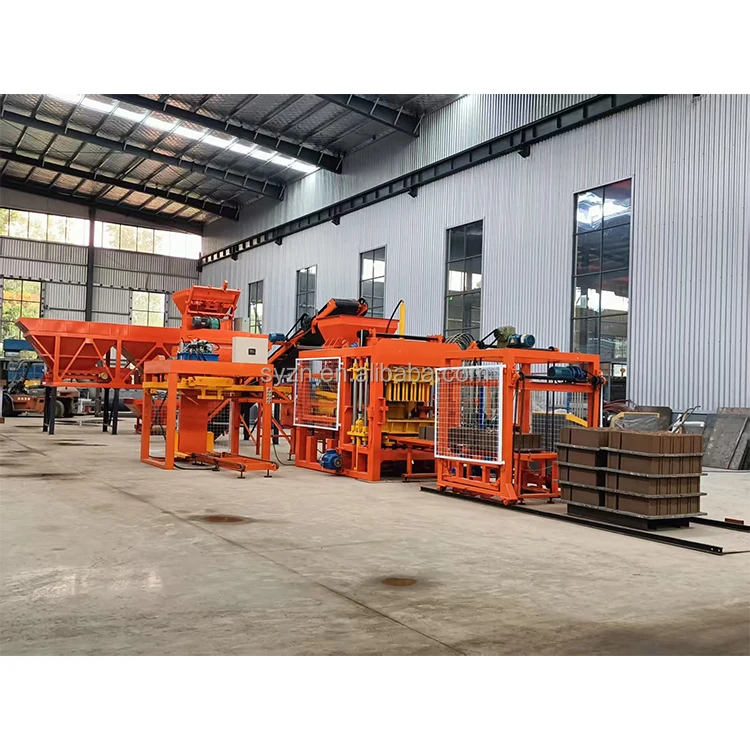
Buyers sometimes discover that "automatic" covers the press cycle but leaves pallet feeding, stacking, and cubing to manual labour. The result is a fast press feeding blocks onto pallets that pile up faster than two workers can carry them away, creating a bottleneck that negates the PLC’s cycle advantage. Another hidden cost arrives when the voltage, frequency, or HMI language were never confirmed before production — the machine powers on but the operator cannot read the fault codes, and commissioning stalls until a technician re-flashes the display [NEED_CITE: voltage and control language confirmation before industrial equipment shipment].
Why This Configuration Works for the Upgrade Path
Block machinery as a single focus means the press, mould, pallet, and handling system are specified together rather than assembled from separate vendors. Configuration is set against the buyer’s actual mix design and local aggregate, not a catalogue default that assumes ideal materials. Mould design covers the formats the buyer’s market actually sells, including custom drawings when a project calls for a non-standard block size. The automation level is selectable, so a plant can start with semi-automatic pallet handling and add stacking and cubing later without replacing the press. Installation includes operator training on the specific PLC interface shipped with the machine.
Documentation & Verification
- Line layout and capacity calculation per block format, not a single aggregate number
- PLC program backup and HMI parameter list matching your mould set
- Hydraulic and electrical schematics with valve and sensor part numbers
- Factory test record run on your specified mix design before dispatch
- Voltage, frequency, and control language written confirmation before production
Installation, Commissioning & Support
- Foundation plan matched to the 8200 × 1700 mm footprint and 7 T operating mass
- Dedicated 37 kW circuit with voltage stabiliser for clean PLC power supply
- Hydraulic station filled and bled on site, pressure set to match your block density target
- PLC recipe entry for each mould format during commissioning week
- Operator training on HMI navigation, fault diagnosis, and recipe recall procedures
- Wear parts list with mould liner and hydraulic seal reorder intervals
What to Send with Your Inquiry
Share the block formats your market buys most, the daily volume you need per format, and your local aggregate type so the vibration profile gets configured before the machine ships. Confirm your site voltage, frequency, and the language your operators read on a screen. If you already have pallets, curing racks, or a forklift in place, send the dimensions so the handling system matches what is already on the ground.
Frequently Asked Questions
Q: How is the QT6-15 capacity verified per block format and what cycle time does each figure assume?
A: Every output figure ties to a specific block size and mould cavity count. The hollow block rates assume a 15–20 second cycle, while paver formats run at 20–25 seconds due to higher density requirements. We provide a capacity calculation sheet per format so quoted throughput matches your actual product mix.
Q: Which PLC brand and HMI language options are available, and can the control be upgraded later?
A: The PLC brand and HMI language are confirmed before production to match your operator team and local service availability. The control architecture supports adding remote diagnostics and additional I/O modules for stacking or cubing automation when the plant is ready to expand.
Q: How is the hydraulic station protected from dust and vibration on the shop floor?
A: The independent integrated hydraulic station sits isolated from the main frame vibration and dust exposure that degrade valve seals on open-loop designs. Recommended maintenance intervals cover filter replacement and fluid analysis based on the operating hours logged by the PLC.
Q: How do we match vibration force, hydraulic pressure, and cycle time to our local aggregate?
A: We request a sample of your aggregate and mix design before finalising the vibration profile. The 0–60 Hz adjustable frequency and 45 kN force range allow step-vibration curves tailored to high-clay or high-slag blends that standard settings cannot compact cleanly.