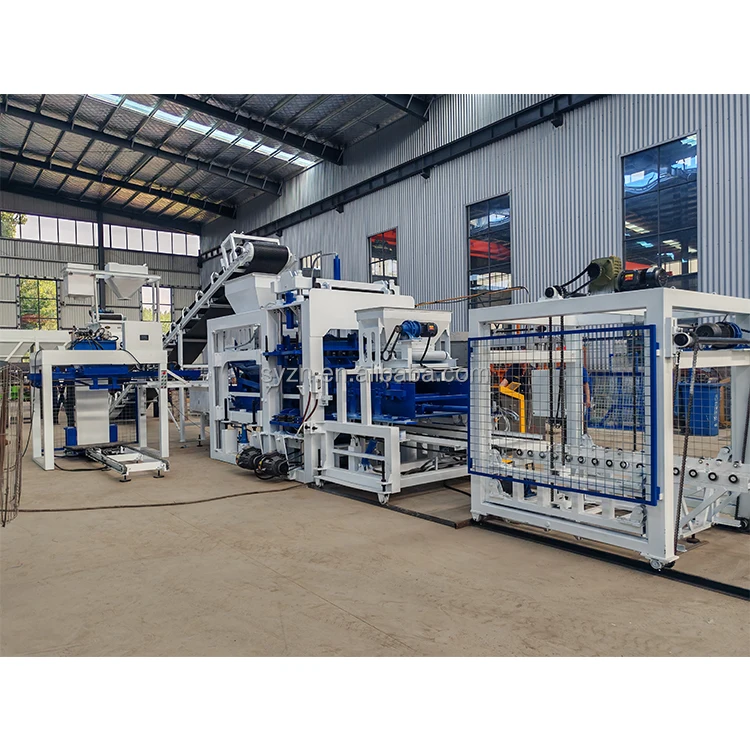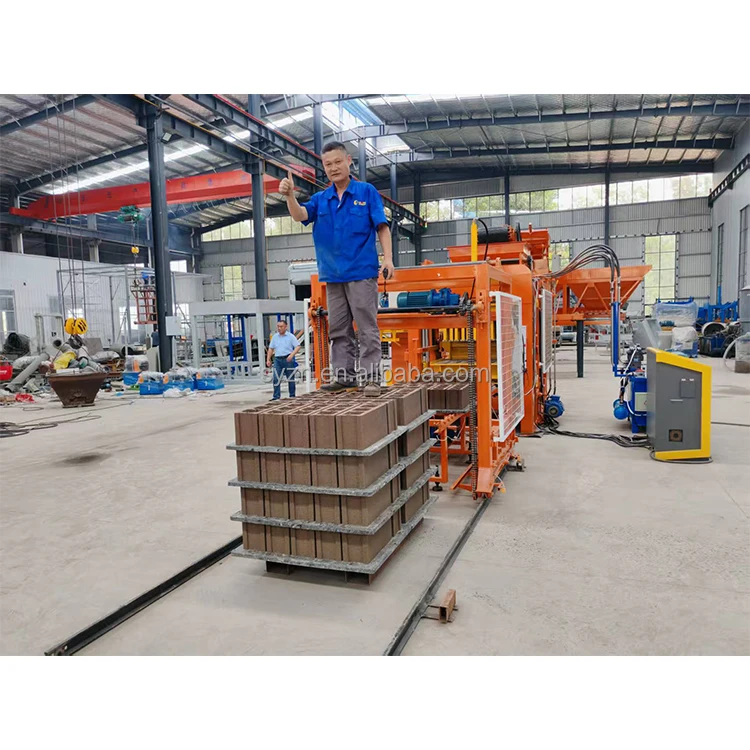
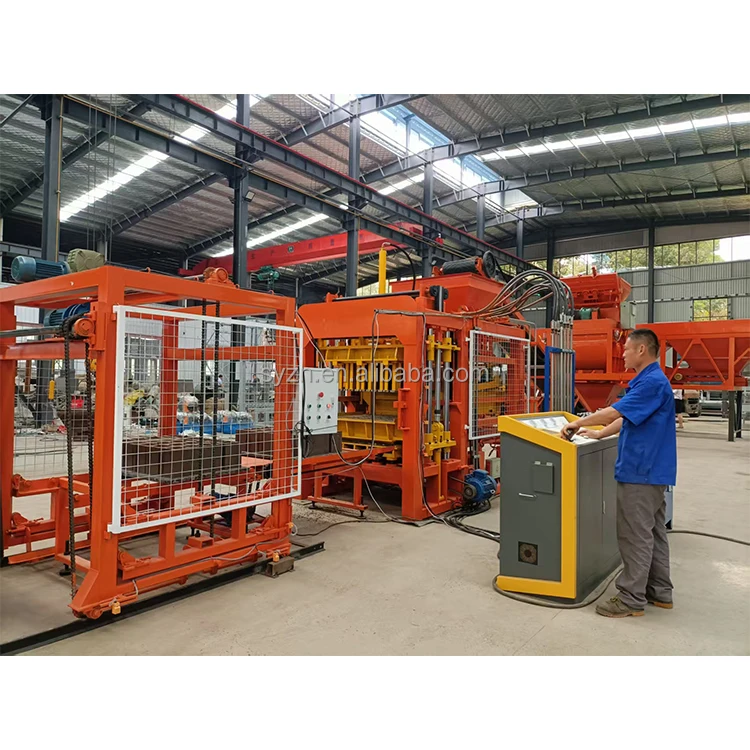
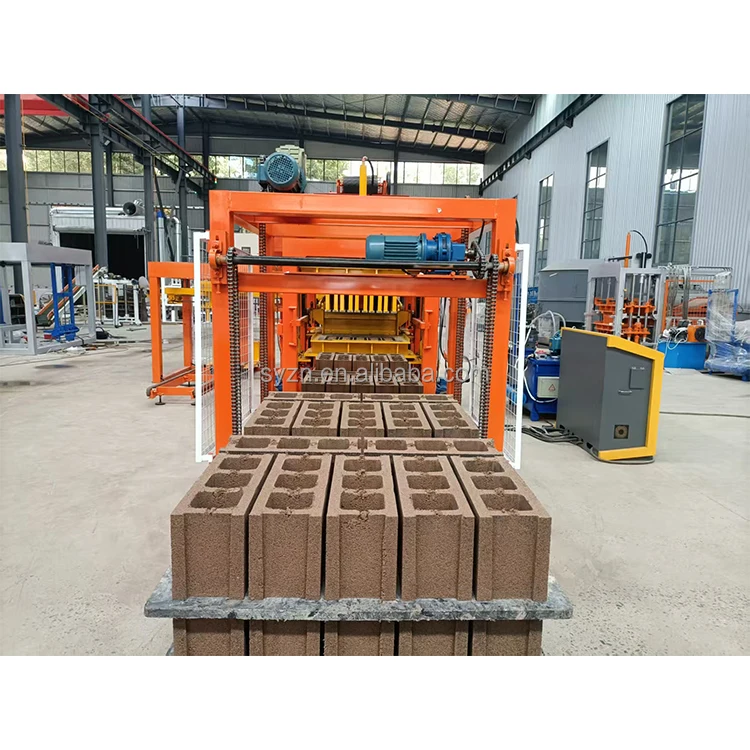
Description
Process Data Storage — PLC recipes store cycle parameters per mould, so a format change on the QT6-15 loads proven settings instead of relying on operator memory.
Technical Specifications
| Parameter | Value |
|---|---|
| Model | QT6-15 |
| Product Type | Concrete Block Making Machine |
| Overall Dimensions (L×W×H) | 8200×1700×2950mm |
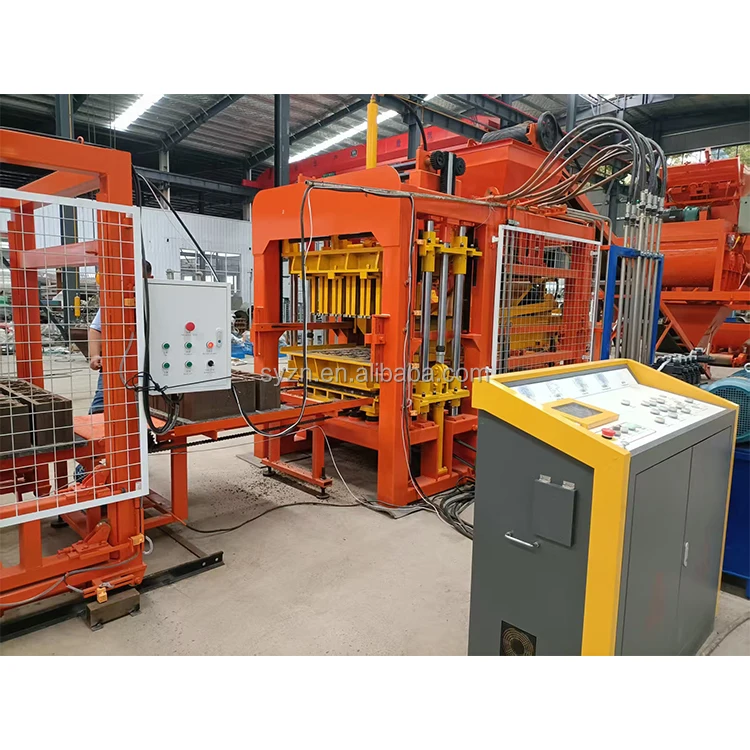
| Control System | PLC (Programmable Controller) with touch screen interface |
| Moulding Mode | Load automatically, vibration moulding |
| Vibration Form | Platform Vibration |
| Vibration Frequency | 0-60Hz (adjustable) |
| Vibration Force | 45kN |
| Demolding Method | Hydraulic |
| Hydraulic System | Independent integrated hydraulic station |
| Pallet Size | 880×850mm |
| Molding Cycle | 15-20s (20-25s for paving formats) |
| Overall Power | 37kW |
| Total Mass | 7T |
| Block Compressive Strength | More than 15 MPa |
| Recommended Factory Area | 1200m² |
| Fault Diagnosis System | Included |
| Output Capacity (Hollow block 400×200×200mm) | 1080-1440 pcs/hour (8640-11520 pcs/8hr) |
| Output Capacity (Hollow block 400×150×200mm) | 1440-1920 pcs/hour (11520-15360 pcs/8hr) |
| Output Capacity (Solid brick 240×115×53mm) | 5760-7680 pcs/hour (46080-61440 pcs/8hr) |
| Output Capacity (Rectangular paving brick 200×100×60mm) | 2160-2880 pcs/hour (17280-23040 pcs/8hr, cycle 20-25s) |
| Output Capacity (Zigzag brick 225×112.5×60mm) | 2160-2880 pcs/hour (17280-23040 pcs/8hr, cycle 20-25s) |
| Voltage & Frequency | Configurable to buyer’s local standard (basis to be confirmed) |
| PLC Display Language | Configurable (basis to be confirmed) |
Application Suitability
| Application | Material or Output |
|---|---|
| Hollow block production | Waste ash, slag, and local aggregates with cement binder |
| Solid brick production | Crushed stone and sand mix designs |
| Rectangular paving brick | High-density aggregate blends for interlocking formats |
| Zigzag interlocking brick | Standard paving mix with adjusted vibration for complex mould cavities |
| Bearing and non-bearing wall blocks | Variable cement dosage based on local strength requirements |
What "Automatic" Actually Removes From the Operator
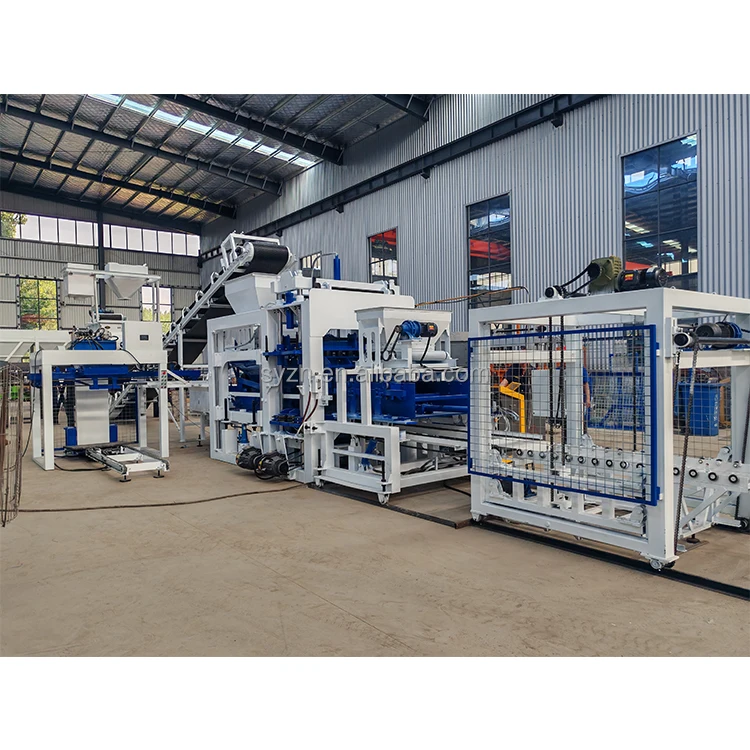
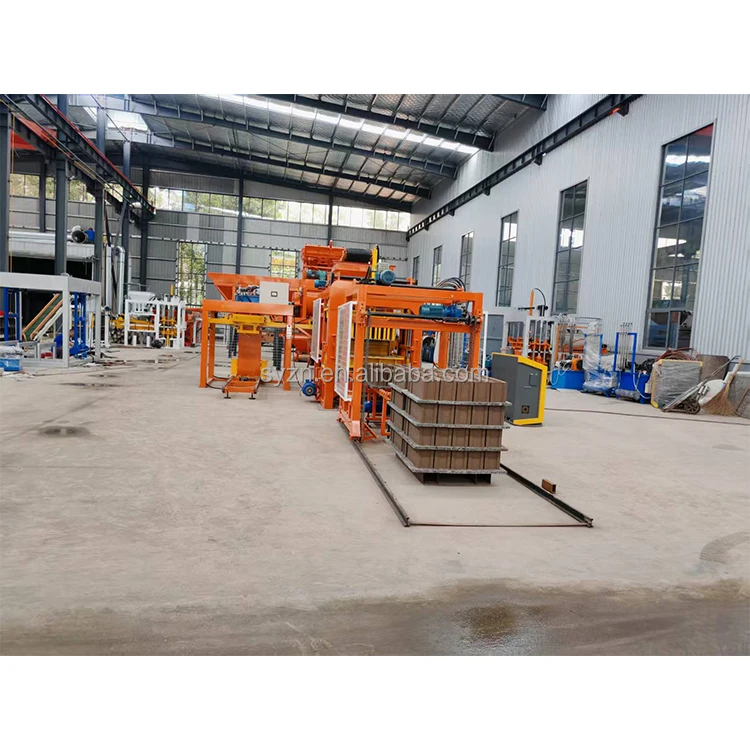
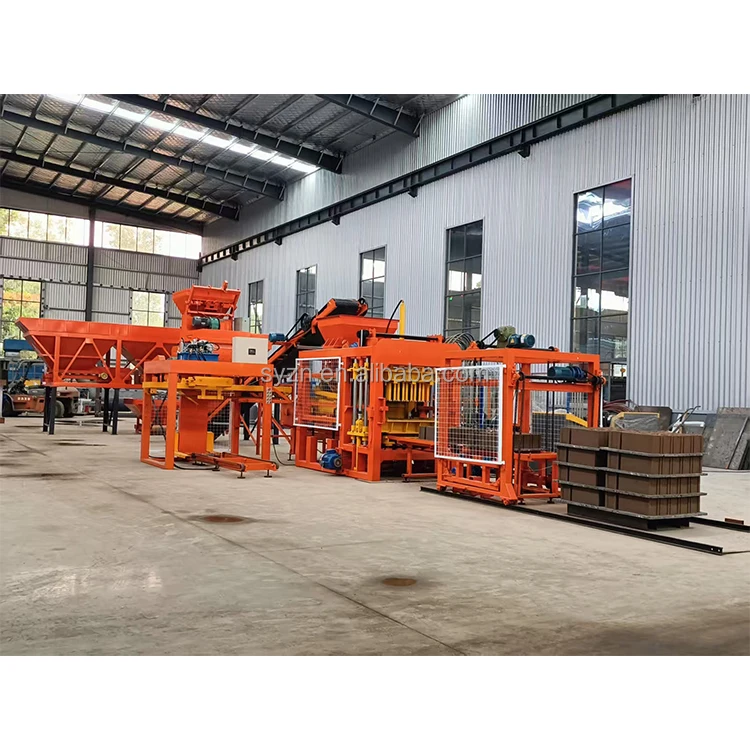
The automatic QT6-15 block machine PLC controlled system handles feeding, vibration timing, and hydraulic demolding, but pallet feeding, stacking, and curing remain manual unless you specify those stations.
When plant owners see "automatic" on a spec sheet, many assume the entire line from mixer to cubing is covered. I have visited facilities where the press cycled perfectly, but green blocks sat on pallets stacked by hand because the quotation never included an automatic stacker. The operator fatigue from manual pallet handling shows up as inconsistent stacking height and damaged blocks before they even reach the curing racks. [NEED_CITE: labour allocation for semi-automatic versus fully automatic block lines]
What the PLC Touch Screen Actually Controls
The automatic QT6-15 block machine PLC controlled interface stores process recipes for each mould format loaded on the machine. When you switch from a 400×200×200mm hollow block to a 200×100×60mm paving brick, the operator selects the stored recipe rather than manually adjusting vibration frequency, cycle time, and hydraulic pressure. The safe logic interlock circuit prevents the press from cycling if a pallet is misaligned or a safety guard is open, which reduces the kind of jams that require manual clearing mid-shift.
Where Automation Stops and Manual Labour Begins
The independent integrated hydraulic station sits isolated from the main press vibration and dust, which keeps valve response consistent across long production runs. But automation at this level covers the press cycle itself — raw material batching accuracy, pallet feeding onto the press, and block stacking after demolding require either separate automated stations or dedicated operators. [NEED_CITE: typical labour count for mid-tier automatic block plants] A buyer upgrading from manual pallet handling should confirm whether the quotation includes automatic pallet feeding and stacking, or whether those remain manual tasks that will still need workers assigned to them.
How Vibration Force and Hydraulic Pressure Interact
The QT6-15 delivers 45kN of vibration force through platform vibration at an adjustable 0-60Hz frequency, while the hydraulic station provides demolding pressure. Block compressive strength above 15 MPa depends on matching both forces to the specific mix design and aggregate gradation available locally. A mix with high fine aggregate content requires different vibration frequency and duration than one with coarse crushed stone. The platform vibration form transmits energy through the pallet, so pallet material and condition directly affect how that vibration reaches the mould cavity — worn or warped pallets absorb energy that should compact the concrete. The 880×850mm pallet size must also match the curing rack spacing and forklift capacity already in place at the facility.
The Cost of Skipping Voltage and Language Confirmation
I once commissioned a press in a region with frequent grid fluctuation, and the hydraulic pump burned out on the first day because no voltage stabiliser was installed. The replacement parts took weeks to arrive, and the entire crew sat idle drawing wages. The QT6-15 draws 37kW overall, and the independent hydraulic station is particularly sensitive to voltage spikes that can damage pump motors and solenoid valves. [NEED_CITE: voltage and frequency standards by export market] If the PLC display language does not match what your operators read, fault diagnosis becomes guesswork — the built-in fault diagnosis system only helps if the error message is readable. Confirming voltage, frequency, and control language before production avoids weeks of commissioning delay after arrival.
Why Source the Press and Line from One Supplier
Block machinery is our single focus, which means the press, mould, pallet, and handling equipment are specified as one matched system. The automatic QT6-15 block machine PLC controlled configuration is set against your actual mix design and target block format, not pulled from a catalogue default. Mould design covers the specific formats your market sells, including custom drawings if your buyers need non-standard dimensions. The automation level is selectable, so a buyer can start with the press and PLC control, then add automatic stacking or cubing stations later without replacing the core machine. Installation support includes operator training on the PLC interface, recipe storage, and the fault diagnosis system.
Documentation & Verification
- Line layout stating block format assumed for each output figure
- Machine specification sheet with PLC and hydraulic schematic
- Mould drawing and format list with cycle time per format
- Voltage, frequency, and PLC display language confirmation record
- Factory test record on your target block format before dispatch
- Wear parts list for hydraulic and vibration components
Installation, Commissioning & Support
- Foundation must support 7T total mass across the 8200×1700mm footprint
- Dedicated 37kW power circuit with voltage stabiliser for hydraulic station protection
- Machine arrives dismantled; reassembly and levelling required on-site
- First-run commissioning includes PLC recipe setup for your block format and mix
- Operator training covers touch screen navigation, fault diagnosis, and mould change procedure
- Hydraulic and vibration wear parts list provided for local stocking
What to Prepare Before Requesting a Quotation
Provide your target block formats with dimensions, daily output requirement per format, and the raw materials available locally including aggregate type and gradation. Share your existing pallet size if you plan to reuse racks, your facility voltage and frequency, and preferred PLC display language. If you already operate a mixer or batching plant upstream, confirm its capacity so the QT6-15 cycle time does not leave the press waiting for material.
Frequently Asked Questions
Q: How is the QT6-15 output capacity calculated, and which block format does each figure assume?
A: Output figures are stated per block format with the specific cycle time that applies to that format. For example, the hollow block capacity assumes a 400×200×200mm size at a 15-20 second cycle, while paving bricks assume a 20-25 second cycle. Capacity tables in the documentation show the block format, cycle time, and hourly output together so buyers can match figures to their actual product mix.
Q: What automation level does the PLC control cover, and what remains manual?
A: The PLC controls automatic material loading, vibration timing, frequency adjustment, and hydraulic demolding. Pallet feeding onto the press, stacking of green blocks after demolding, and curing rack handling are not included in the base PLC automation. Buyers can specify automatic pallet feeding and stacking as separate stations, or operate those tasks manually with assigned workers.
Q: Can the PLC display language and voltage be confirmed before shipment?
A: Both are confirmed during the order process before production begins. The PLC display language is set to match your operator requirements, and the electrical system is built to your local voltage and frequency standard. This confirmation step is documented in writing so there is no delay during on-site commissioning after the machine arrives.
Q: How does the independent hydraulic station reduce downtime compared to integrated designs?
A: The hydraulic station is physically isolated from the main press vibration and dust exposure. This separation prevents concrete dust from contaminating hydraulic fluid and reduces vibration transfer that can loosen valve fittings and hose connections. The result is more consistent valve response over long production runs and fewer unplanned stops for hydraulic maintenance during the shift.
Q: What is the upgrade path if I start with the QT6-15 and later add automation?
A: The machine can start with PLC-controlled press operation and manual pallet handling, then accept automatic pallet feeding, stacking, and cubing stations as separate additions later. The PLC system supports integration with these downstream stations without requiring a press replacement. Buyers planning a future upgrade should confirm the pallet size and factory layout accommodate the additional equipment footprint.