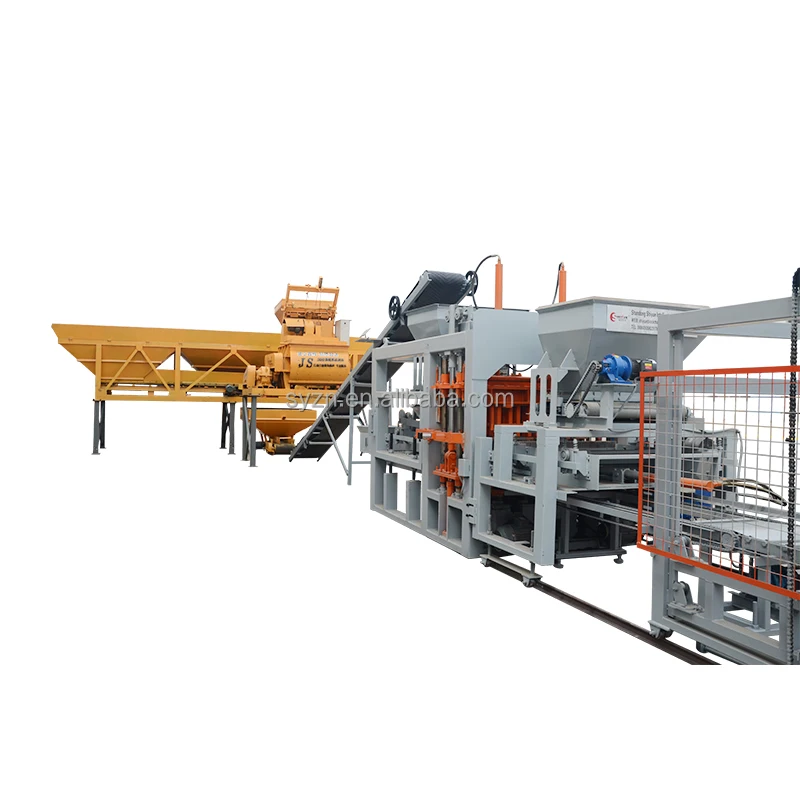
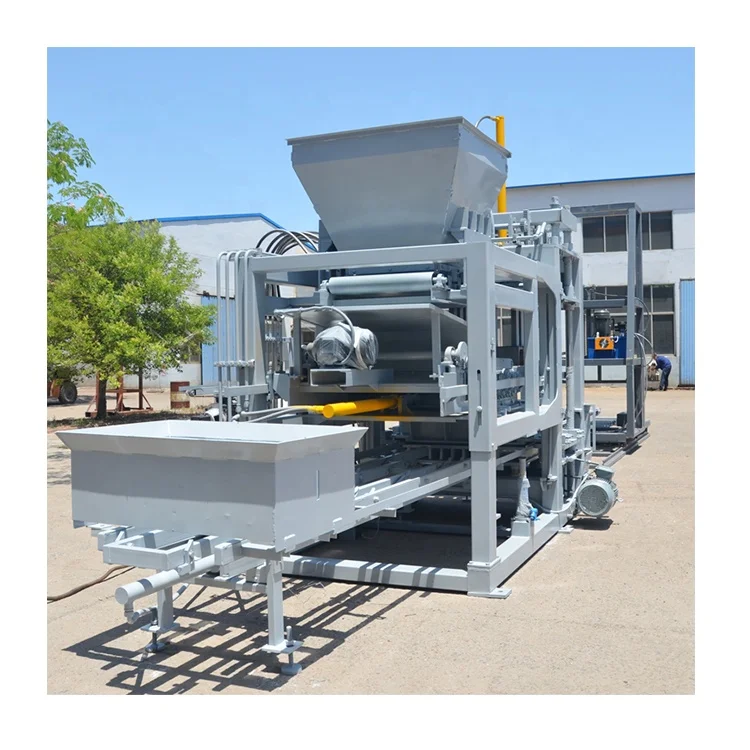
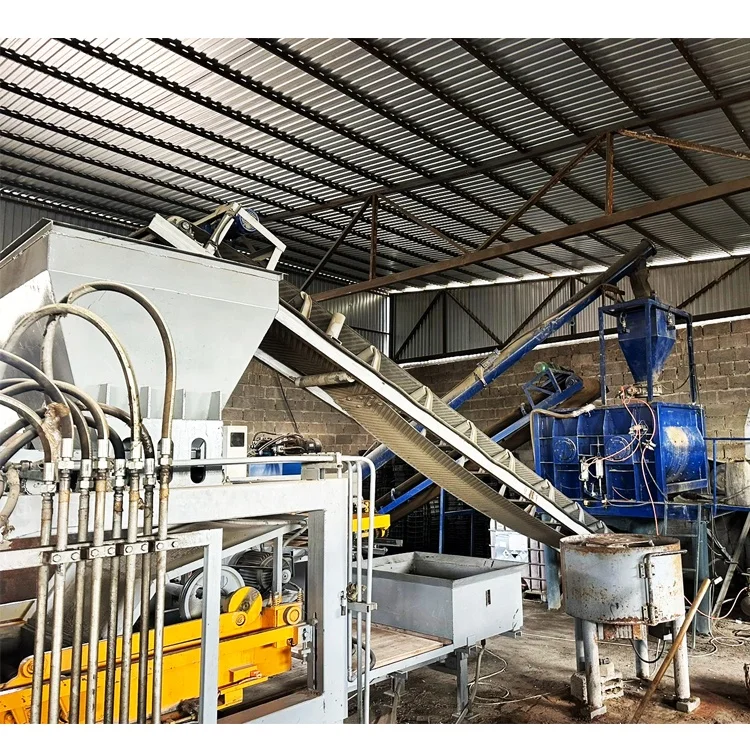
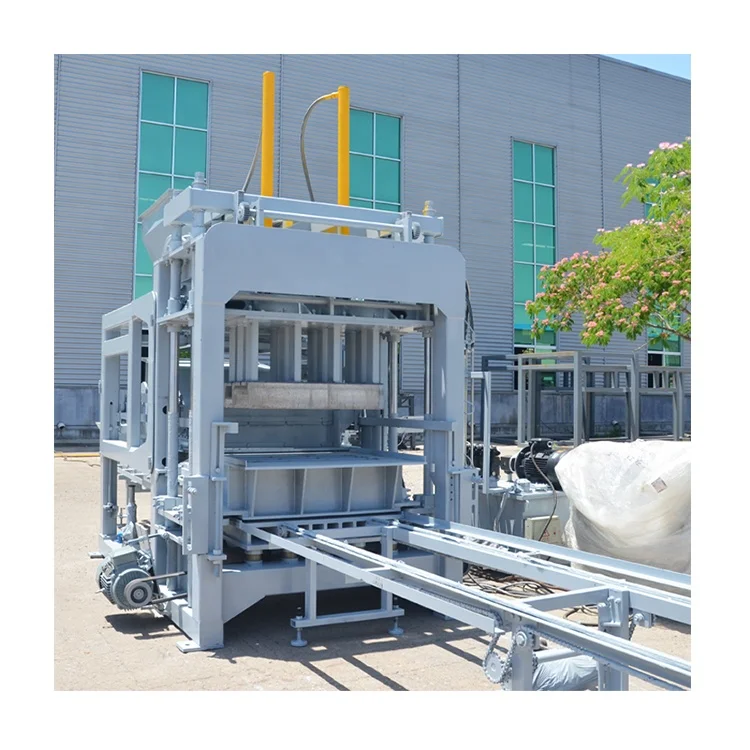
Description
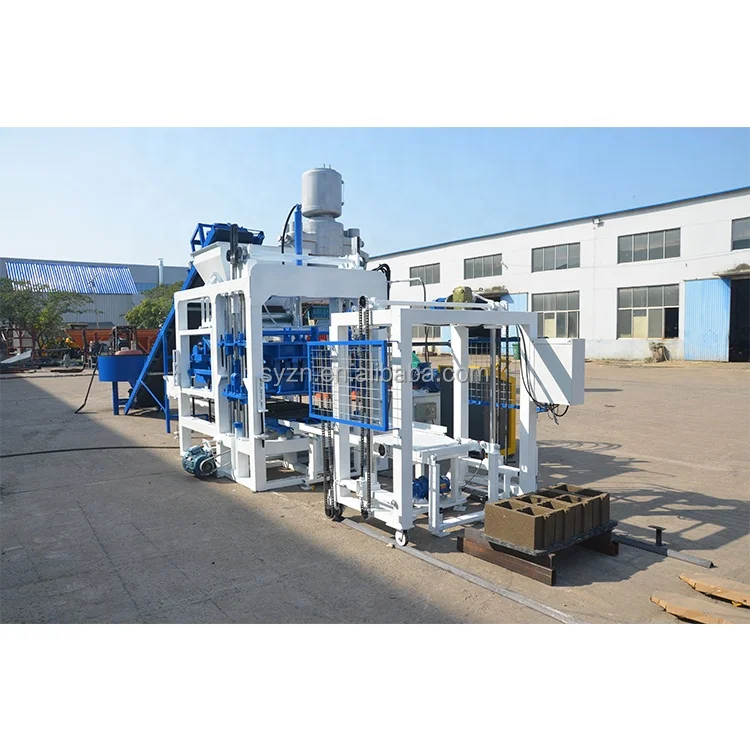
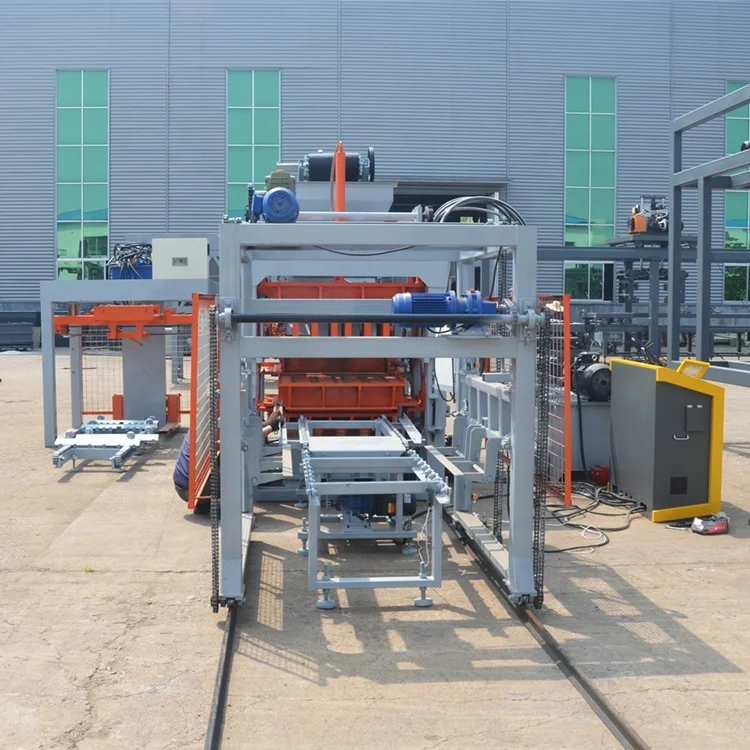
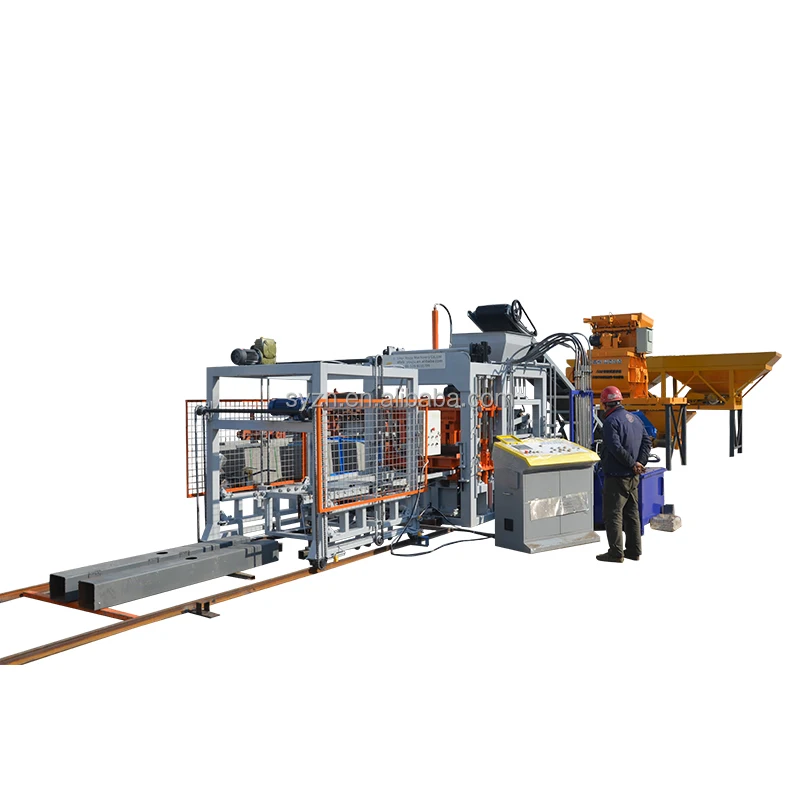
Intelligent Control Matching — the QT7-15 pairs PLC process storage with remote fault diagnosis so that automation investment translates into consistent shifts, not just fewer operators.
Technical Specifications
| Parameter | Value |
|---|---|
| Model | QT7-15 |
| Product Type | Automatic Concrete Block Making Machine |
| Pallet Size | 1150 x 700 mm |
| Molding Cycle | 15–20 s (basis to be confirmed per block format and mix) |
| Overall Power | 45 kW |
| Vibration Force | 100 kN |
| Vibration Frequency | 0–60 Hz, adjustable |
| Vibration Form | Platform Vibration |
| Demolding Method | Hydraulic |
| Control System | PLC with touch screen interface, remote diagnostics capable |
| Total Mass | 8 T |
| Automation Level | Automatic, pallet feed machine included |
| Output Capacity | 1,260–1,680 pcs/h based on 400×200×200 mm hollow block, 7 pcs/mould, 15–20 s cycle |
| Output Capacity | 1,440–1,920 pcs/h based on 400×150×200 mm hollow block, 8 pcs/mould, 15–20 s cycle |
| Output Capacity | 3,888–4,860 pcs/h based on 200×100×60 mm rectangular paving brick, 27 pcs/mould, 20–25 s cycle |
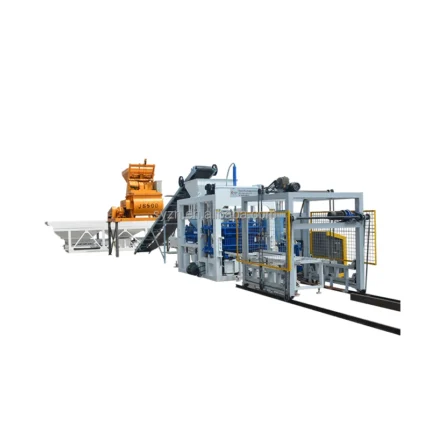
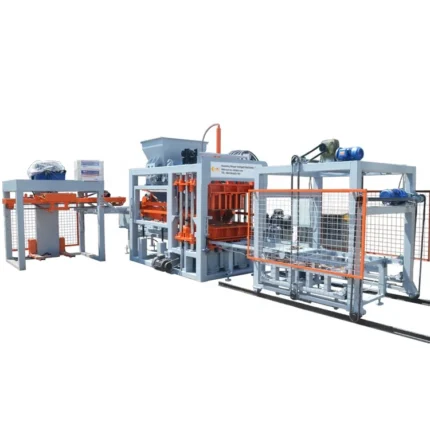
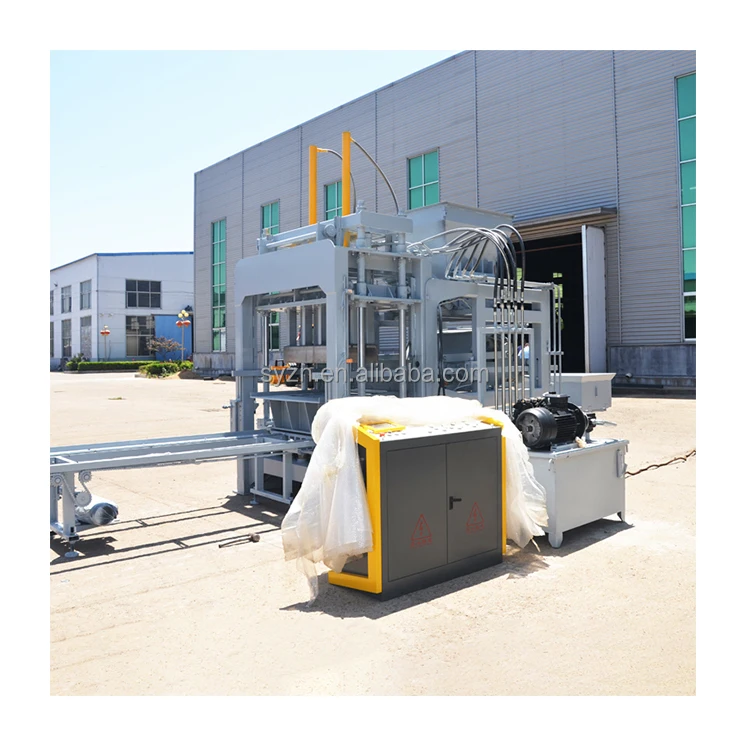
| Key Features | Storage hopper, conveyor, hydraulic unit, PLC cabinet, remote fault diagnosis |
Application Suitability
| Application | Material or Output |
|---|---|
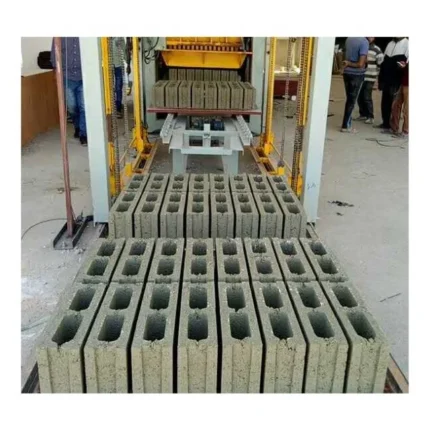
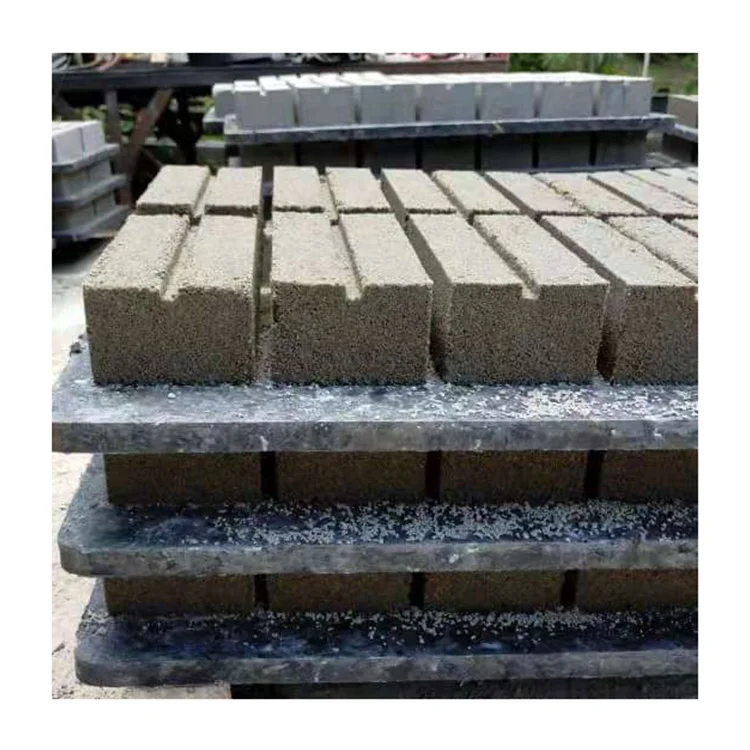
| Hollow block production | 400×200×200 mm and 400×150×200 mm formats from crushed stone, sand, cement, and fly ash |
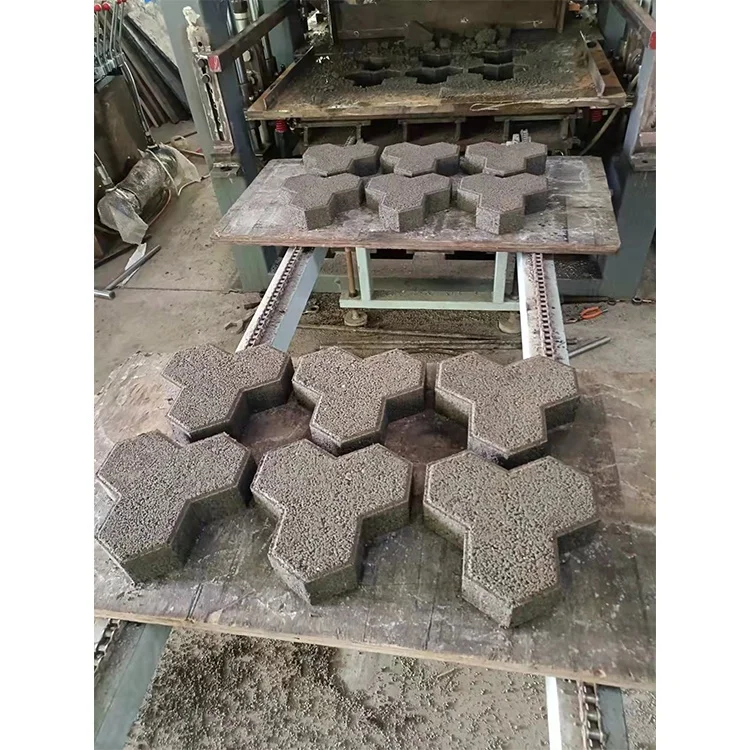
| Paving brick production | 200×100×60 mm rectangular format from fine aggregate and cement blends |
| Multi-format block manufacturing | Mould replacement across hollow, solid, paving, and interlocking formats |
| Automatic block plant operation | PLC-controlled continuous cycle with automatic pallet feed |
| Construction material supply | Volume production for building contractors, housing projects, and block plants |
What "Automatic" Really Means When the Screen Goes Dark
The automatic QT7-15 block machine PLC controlled system is only as automatic as its fault response allows — remote diagnostics must be configured and tested before the first shift, not after the first breakdown.
I have walked into block plants where the PLC touch screen sat dark for days because the local electrician could not interpret the alarm codes, and the supplier had not confirmed language or voltage before shipment. The machine itself was fine. The automation was useless because the control layer was never matched to the site. [NEED_CITE: PLC programming and HMI language requirements for exported industrial machinery]
An automatic plant without remote monitoring capability is just a semi-automatic plant with more sensors waiting to confuse the operator.
PLC Process Data and Batch Consistency
The touch screen interface on the automatic QT7-15 block machine PLC controlled system stores process parameters per block format, including vibration frequency, pressure hold time, and feed cycle. When the operator switches from hollow blocks to paving bricks, the stored recipe loads without manual recalculation. This removes the most common source of batch-to-batch strength variation: human memory.
Remote Diagnostics Against Unplanned Downtime
The remote fault diagnosis capability allows off-site monitoring of hydraulic pressure, vibration motor status, and sensor feedback. When a limit switch fails or a hydraulic valve sticks, the fault condition can be identified before a technician arrives. [NEED_CITE: remote monitoring systems for hydraulic block making equipment] This does not eliminate maintenance — it converts surprise shutdowns into scheduled interventions.
How 100 kN Vibration and Hydraulic Pressure Interact
Platform vibration at 0–60 Hz adjustable frequency compacts the mix from below while hydraulic pressure holds the mould head down. The 100 kN vibration force must be matched to the buyer’s actual aggregate grading and cement ratio — a mix with coarse crushed stone absorbs vibration differently than one with fine sand and fly ash. The 1150×700 mm pallet size determines how many cavities fit per cycle and must align with the curing rack dimensions and forklift capacity already on site. The 45 kW total power draw requires a dedicated circuit with confirmed voltage and frequency before the control cabinet is wired.
The Cost of Specifying Automation Without the Support Layer
A buyer who orders the automatic QT7-15 block machine PLC controlled configuration without confirming the display language, alarm code documentation, and remote connection protocol will find that the automation investment collapses at the first fault. The operator ignores the screen, reverts to manual timing, and the consistency advantage disappears. [NEED_CITE: operator training requirements for PLC-controlled block plants] The machine runs — but not automatically.
Why Procurement Here Removes the Automation Guesswork
Configuration is set against the buyer’s actual mix design, local aggregate, and target block format rather than a catalogue default. The PLC display language, voltage, and frequency are confirmed before production so that commissioning does not stall on arrival. Mould design covers the formats the buyer’s market actually sells, with custom drawings available. Automation level is selectable — a buyer can start with pallet feed and PLC control, then add stacking and cubing later. Installation includes operator training on the touch screen interface and remote diagnostics setup. Factory test records are generated using the buyer’s specified block format before dispatch.
Documentation & Verification
- Capacity calculation document stating block format, mould cavity count, and cycle time for each output figure
- Voltage, frequency, and PLC display language confirmation sheet signed before production
- Machine specification sheet with vibration force and hydraulic pressure matched to buyer’s mix design
- Mould drawing and format list confirming included block sizes and optional mould investments
- Factory test record on buyer’s specified hollow block and paving brick formats before dispatch
- Hydraulic and electrical schematic for local maintenance team reference
Installation, Commissioning & Support
- Dedicated 45 kW circuit with confirmed voltage and frequency before the PLC cabinet is energized
- 1150×700 mm pallet specification confirmed against curing rack spacing and forklift tine width on site
- PLC touch screen language and alarm codes verified with operator team during commissioning week
- Remote diagnostics connection tested with live fault simulation before handover
- Hydraulic seal and vibration motor wear parts list provided with first recommended reorder interval
- Mould change procedure trained on site with actual format switch timed against shift schedule
Before You Send the Inquiry
Provide the block formats you plan to produce, the daily output target per format, and the raw materials available locally including aggregate grading. Confirm your site voltage, frequency, and preferred PLC display language. State your existing curing area dimensions and pallet handling equipment so the automation level can be matched to what is already on the ground.
Frequently Asked Questions
Q: How is daily output verified and what block format does each capacity figure assume?
A: Every output figure on the QT7-15 is tied to a specific block size, mould cavity count, and cycle time. The 1,260–1,680 pieces per hour figure assumes 400×200×200 mm hollow blocks with 7 cavities per mould at a 15–20 second cycle. The paving brick figure assumes 27 cavities at 20–25 seconds. A capacity calculation document is provided with the quotation showing the assumed format for every number.
Q: What PLC language options are available and how is voltage confirmed?
A: The touch screen display language is confirmed before production to match the operator team. Voltage and frequency are verified against the buyer’s site supply so that the PLC cabinet and hydraulic unit are wired correctly. A confirmation sheet covering language, voltage, and frequency is signed by both parties before the machine enters production.
Q: How does mould change time affect actual format flexibility?
A: Mould change on the QT7-15 is designed to fit within a shift without consuming the production time the buyer paid for. The exact changeover duration depends on the mould size and whether quick-release clamps are specified. The quotation includes a stated mould change time so the buyer can calculate real daily output across multiple formats.
Q: What does remote diagnostics actually monitor off-site?
A: The remote fault diagnosis system on the automatic QT7-15 block machine PLC controlled configuration monitors hydraulic pressure, vibration motor status, and sensor feedback. Fault conditions such as a stuck valve or a failed limit switch can be identified remotely, converting unplanned stops into scheduled maintenance visits rather than emergency calls.
Q: Can the automation level be expanded after initial installation?
A: The QT7-15 is configured with automatic pallet feed and PLC control as standard. Additional automation such as automatic stacking and cubing can be added later as the plant scales. The control system supports upgrade paths so that the initial investment in the PLC platform is not replaced when higher automation tiers are added.