
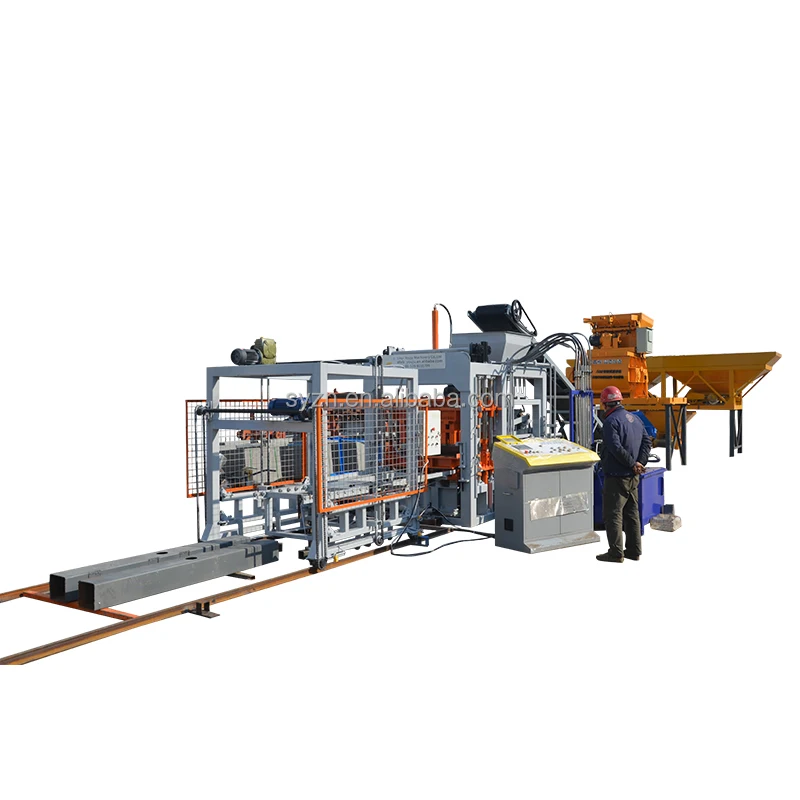
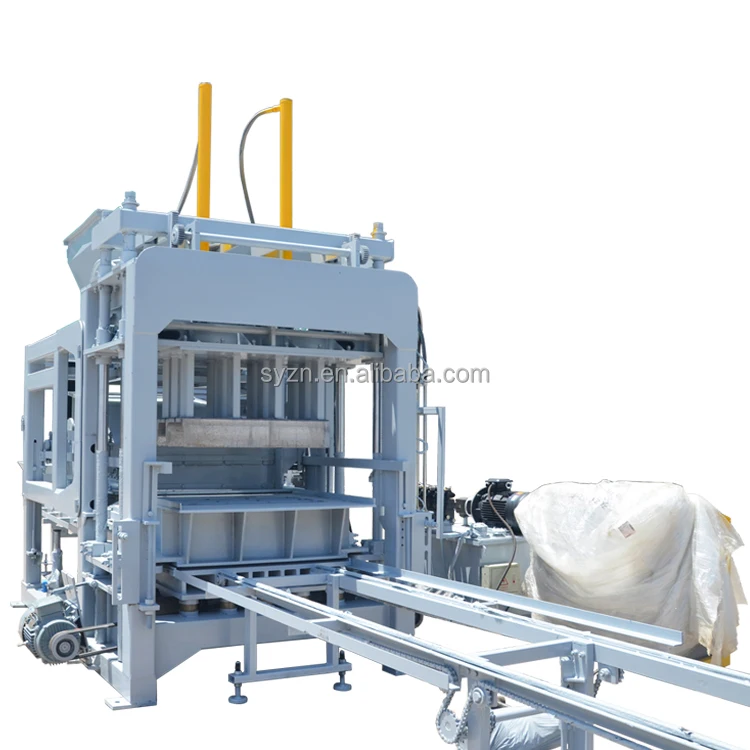
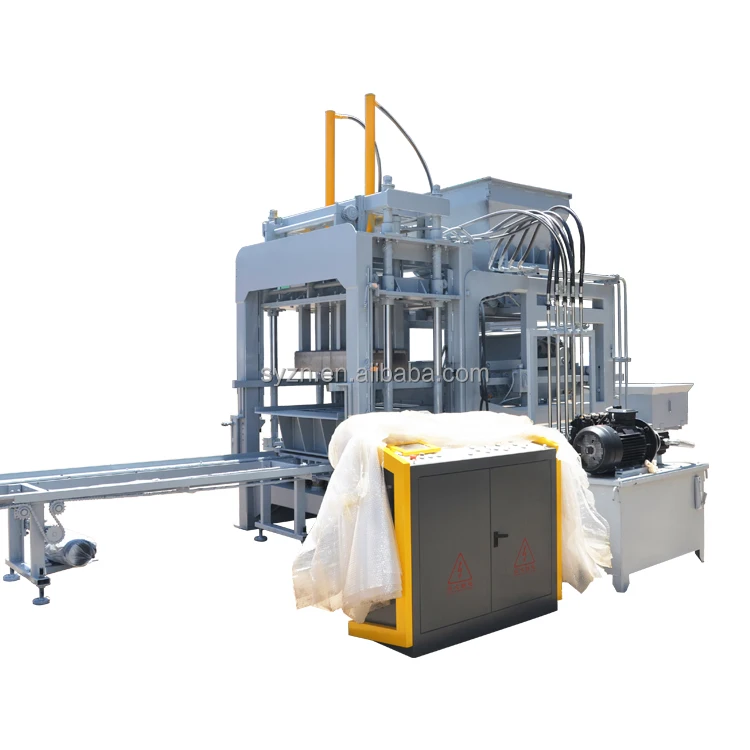

Description
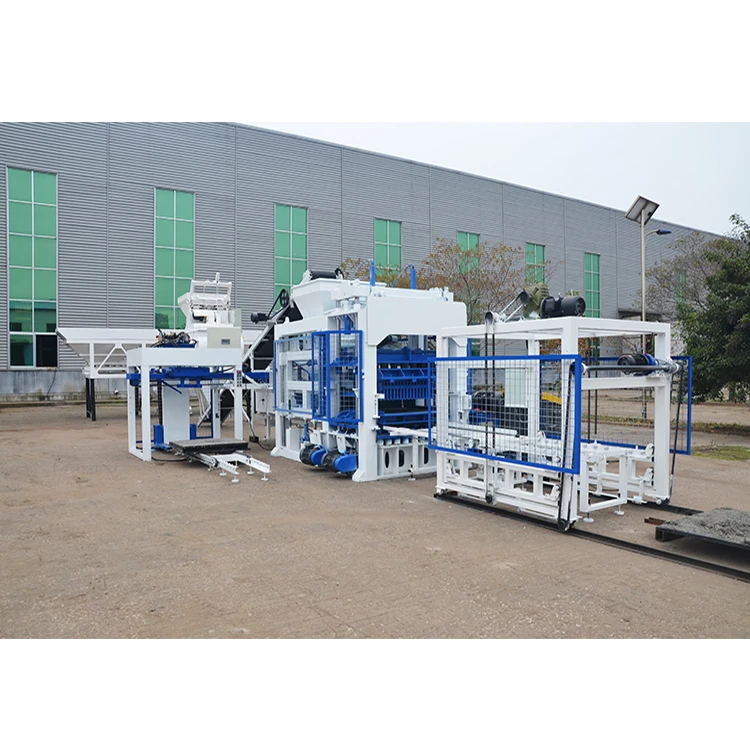
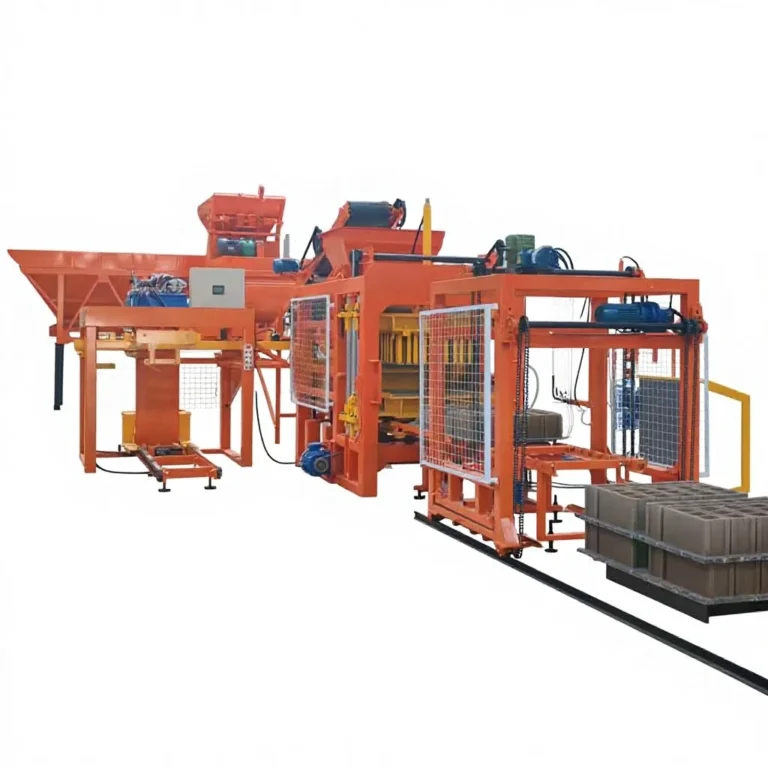
Recipe Repeatability — The QT7-15 stores process parameters per block format in its PLC, so every batch from hollow blocks to paving bricks runs to the exact same vibration frequency and hydraulic timing regardless of which operator is on shift.
Technical Specifications
| Parameter | Value |
|---|---|
| Model | QT7-15 |
| Product Type | Automatic Hydraulic Concrete Block Making Machine |
| Pallet Size | 1150×700 mm |
| Molding Cycle | 15–20 s (basis: 400×200×200 mm hollow block, 7 pcs/mould) [1][4] |
| Overall Power | 45 kW |
| Vibration Force | 100 kN |
| Vibration Form | Platform Vibration |
| Vibration Frequency | 0–60 Hz (adjustable) |
| Demolding Method | Hydraulic |
| Control System | PLC with touch screen interface |
| Total Mass | 8 T |
| Output (400×200×200 mm hollow) | 1,260–1,680 pcs/h (7 pcs/mould, 15–20 s cycle) [1] |
| Output (400×150×200 mm hollow) | 1,440–1,920 pcs/h (8 pcs/mould, 15–20 s cycle) [1] |
| Output (200×100×60 mm paving brick) | 3,888–4,860 pcs/h (27 pcs/mould, 20–25 s cycle) [1] |
| Remote Diagnostics | Supported |
| Warranty | 1 year (excluding spare parts) |
Application Suitability
| Application | Material or Output |
|---|---|
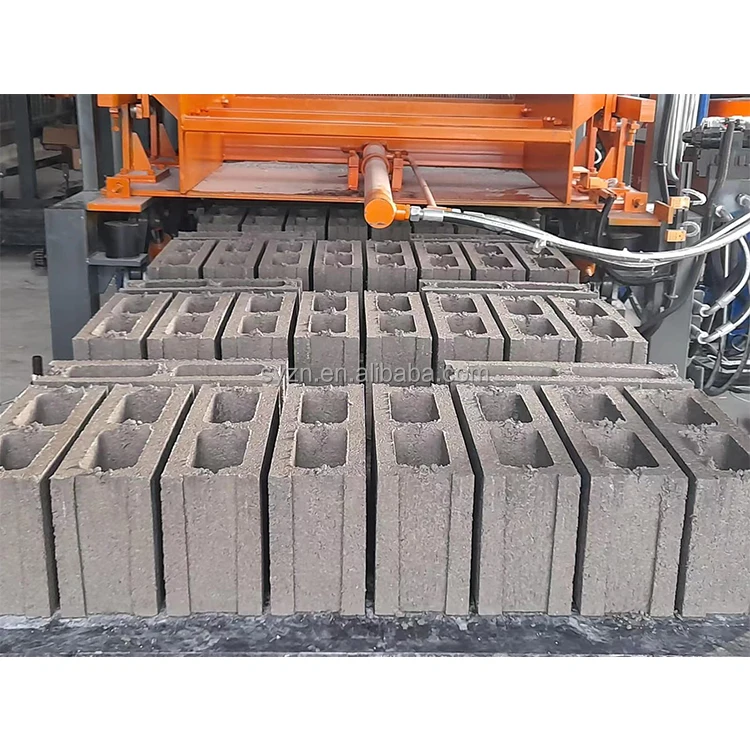
| Hollow block production | Crushed stone, sand, cement, fly ash aggregate |
| Interlocking brick production | Graded aggregate with cement binder |
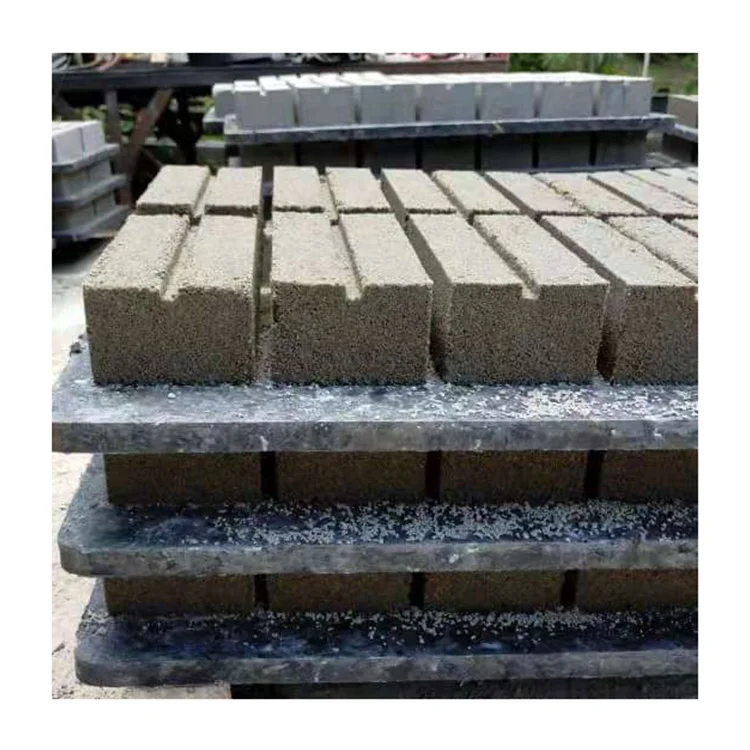
| Paving brick production | High-density mix with fine aggregate and cement |
| Solid block production | Standard concrete mix for load-bearing walls |
| On-site contractor block making | Locally sourced aggregate matched to PLC recipe |
Why "15–20 Seconds" Does Not Tell the Full Story
Cycle time only matters when tied to the exact block format, mould cavity count, and mix design you will actually run.
Many quotations quote a single cycle time and let the buyer assume it applies across every format. In practice, a 200×100×60 mm paving brick requires a different compaction profile than a 400×200×200 mm hollow block, and the automatic QT7-15 block machine PLC controlled system stores these as separate recipes so operators cannot accidentally run the wrong parameters. When vibration force and hydraulic pressure are not matched to the buyer’s aggregate, block strength becomes inconsistent from batch to batch. [NEED_CITE: relationship between vibration frequency, hydraulic pressure, and concrete block compressive strength] The touch screen interface lets you input and lock process data per mould, removing guesswork from shift changes and new operator training.
Intelligent Control Removes the Operator Variable
Semi-automatic plants depend on the operator remembering to adjust vibration time when the mould changes. The QT7-15 replaces that memory task with stored PLC recipes — one for each block format the buyer produces. When the mould is swapped, the operator selects the corresponding recipe on the touch screen, and the system calls up the correct vibration frequency, pressure hold time, and feed cycle. This means the automatic QT7-15 block machine PLC controlled configuration delivers batch-to-batch consistency that manual or semi-automatic setups cannot guarantee across a long production day.
Remote Fault Diagnosis Before a Technician Boards a Plane
Downtime in block production costs more than the repair itself — it stops the trucks, delays the site, and forces manual stacking as a fallback. The QT7-15 supports remote fault diagnosis, allowing the manufacturer’s service team to read PLC fault codes and parameter deviations from off-site before dispatching a technician. For plants in regions where specialist block machine service is not locally available, this capability shortens the gap between a fault alarm and a working resolution. [NEED_CITE: remote diagnostics capability in industrial PLC systems for export machinery]
Reading the Numbers That Matter
The 100 kN vibration force working across a 0–60 Hz adjustable frequency range means the operator can tune compaction to the local aggregate. Coarse crushed stone typically needs higher amplitude at lower frequency, while fine sand-cement mixes respond better to higher frequency. The platform vibration form transmits energy through the pallet into the mould cavity, so pallet flatness and stiffness directly affect how evenly that energy distributes — a warped pallet will produce uneven block density across the same cycle. The 45 kW total power rating covers the hydraulic unit, vibration motors, conveyor, and PLC cabinet together, so the buyer must confirm the supply circuit can handle sustained draw at this level. Hydraulic demolding ensures blocks leave the mould without mechanical shock that could crack green products, which matters especially for thin-wall hollow formats and interlocking profiles.
The Hidden Cost of Skipping Voltage and Language Confirmation
One configuration detail that regularly delays commissioning is the PLC display language arriving in a script the local operators cannot read. When the touch screen defaults to a language the plant’s workforce does not understand, recipe selection, fault reading, and parameter adjustment all require a translator on site — and the automatic QT7-15 block machine PLC controlled system becomes a machine nobody can operate independently. Voltage and frequency mismatches cause similar delays: a motor rated for a supply the local grid does not provide will either fail to start or burn out within weeks. [NEED_CITE: voltage and frequency standards by export market] Confirming these two items in writing before production begins costs nothing, while getting them wrong after arrival can idle the entire block line.
Why Sourcing This Machine Here Makes Practical Sense
Block machinery is the single focus of this operation, meaning the QT7-15 press, its moulds, pallets, and handling equipment are specified as one matched system rather than assembled from separate suppliers who will blame each other when cycle times do not align. Configuration is set against the buyer’s actual mix design and target block format, not a catalogue default — the capacity figures above exist because each was calculated against a specific mould and cycle assumption. Mould design covers the formats the buyer’s market actually sells, including custom drawings when a standard cavity does not match local demand. The automation level is selectable, so a buyer running semi-automatic today can add pallet feed, stacking, or cubing modules to the automatic QT7-15 block machine PLC controlled platform later without replacing the press. Installation support includes on-site commissioning and operator training so the PLC recipes are populated and verified before the first production shift runs unsupervised.
Documentation & Verification
- Capacity calculation sheet stating block format and cycle time assumed per mould
- PLC program backup with recipe parameters locked to your confirmed mix design
- Hydraulic and electrical schematic for local maintenance team integration
- Voltage, frequency, and PLC display language confirmation documented before production
- Factory test record run on your specified pallet size and block format
- Wear parts and mould compatibility list matched to your production plan
Installation, Commissioning & Support
- Foundation must support 8 T total mass plus dynamic vibration load from platform vibration system
- Dedicated 45 kW power circuit with voltage and frequency confirmed to match local grid supply
- PLC cabinet and touch screen commissioned on site with recipes loaded per confirmed block format
- Remote diagnostics connectivity tested before commissioning team leaves the site
- Operator training covers recipe selection, mould change procedure, and fault code reading on touch screen
- Hydraulic unit and vibration motor inspection schedule set around local production volume
What to Prepare Before Requesting a Quotation
Provide the block formats your market demands, the daily volume you need per format, and the local aggregate you will source. Confirm your site voltage and frequency, the language your operators require on the PLC display, and whether your existing curing area and forklift are compatible with the 1150×700 mm pallet. If you are replacing a semi-automatic line, note which handling stations you want to retain and which you plan to automate.
Frequently Asked Questions
Q: How is output capacity verified per block format on the QT7-15?
A: Each capacity figure is calculated from the specific mould cavity count and cycle time for that format. For example, 1,260–1,680 pieces per hour applies to a 400×200×200 mm hollow block at 7 cavities and a 15–20 second cycle. A different mould will produce a different output, and the quotation includes a format-by-format breakdown. [1]
Q: Can the PLC display language be set before the machine ships?
A: Yes — the display language must be confirmed in writing before production begins. The touch screen interface supports multiple language options, and the PLC program is loaded with the buyer’s specified language so operators can read recipes and fault codes from the first shift.
Q: How does the remote fault diagnosis system work?
A: The PLC supports remote connectivity so the manufacturer’s service team can read fault codes, check parameter deviations, and guide on-site troubleshooting before a technician visit is arranged. The plant needs a stable internet connection at the control cabinet location for this feature to function.
Q: What is the upgrade path from this automatic configuration?
A: The QT7-15 platform allows adding automatic pallet feeding, stacking, and cubing modules progressively without replacing the press. The PLC architecture accommodates these additions, and the hydraulic unit capacity should be reviewed when planning the upgrade to confirm it can support additional automation stations.