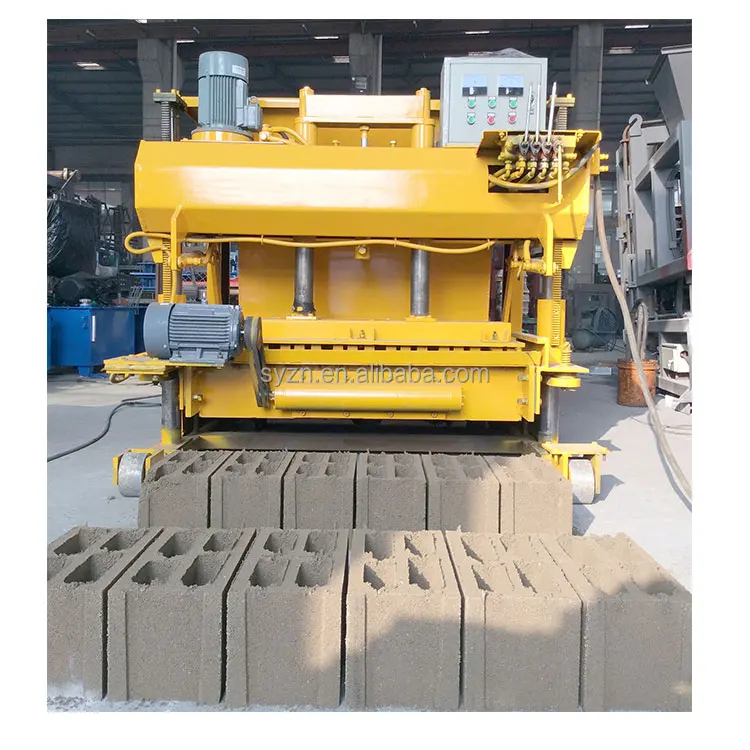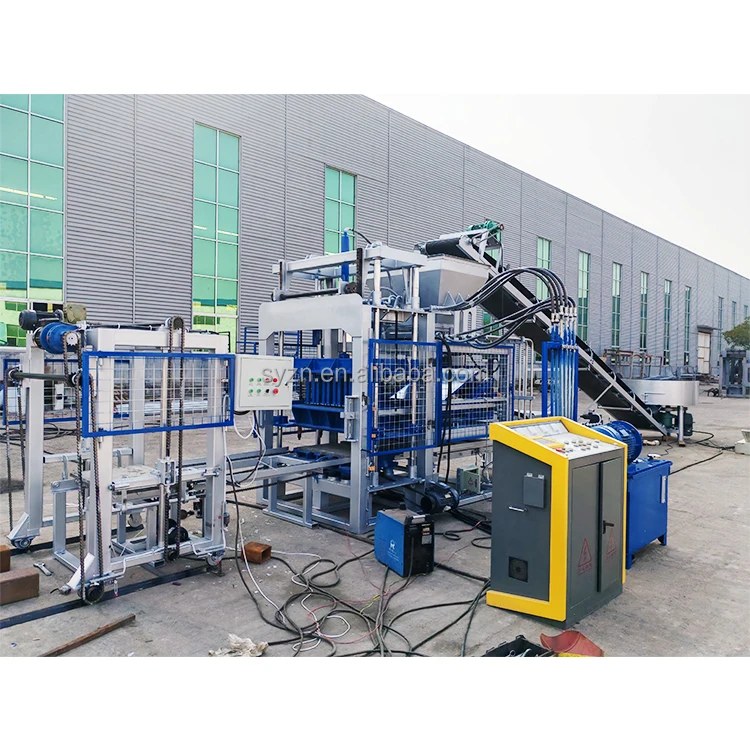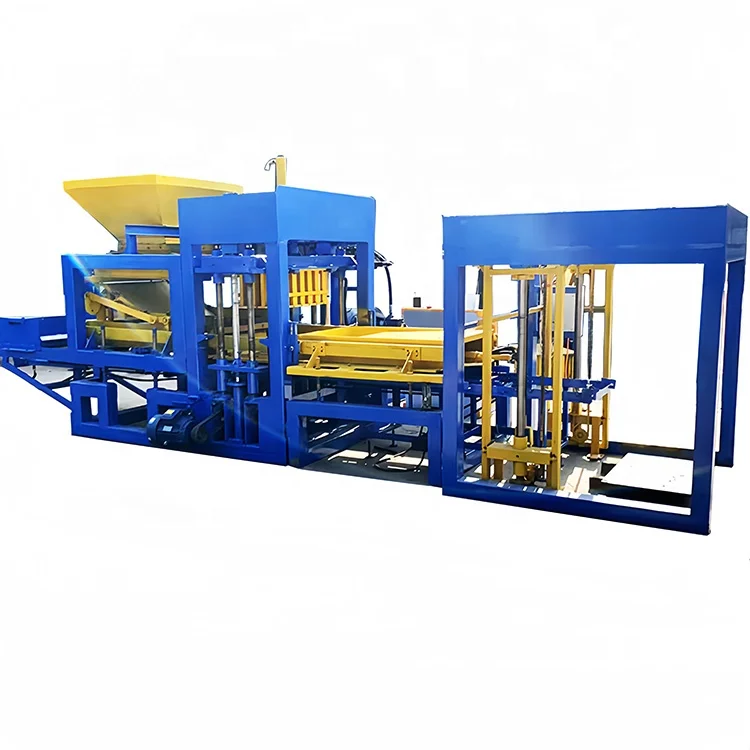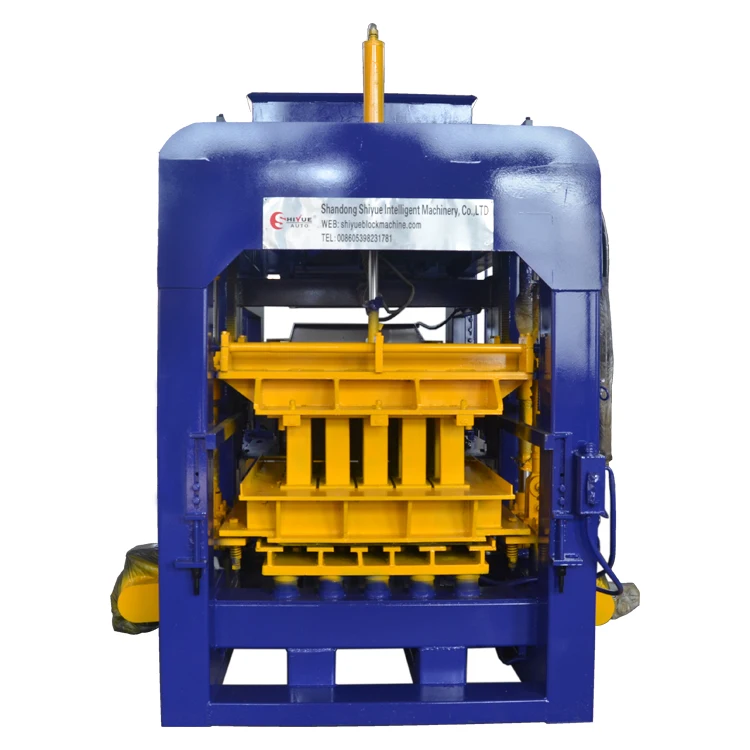


Description
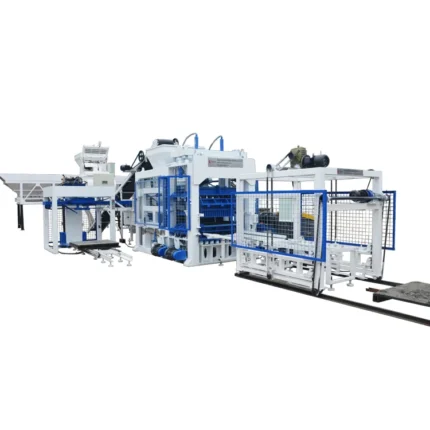
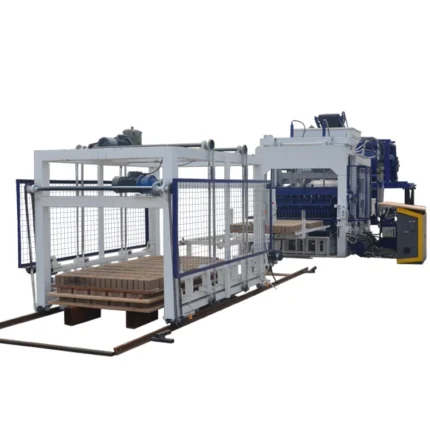
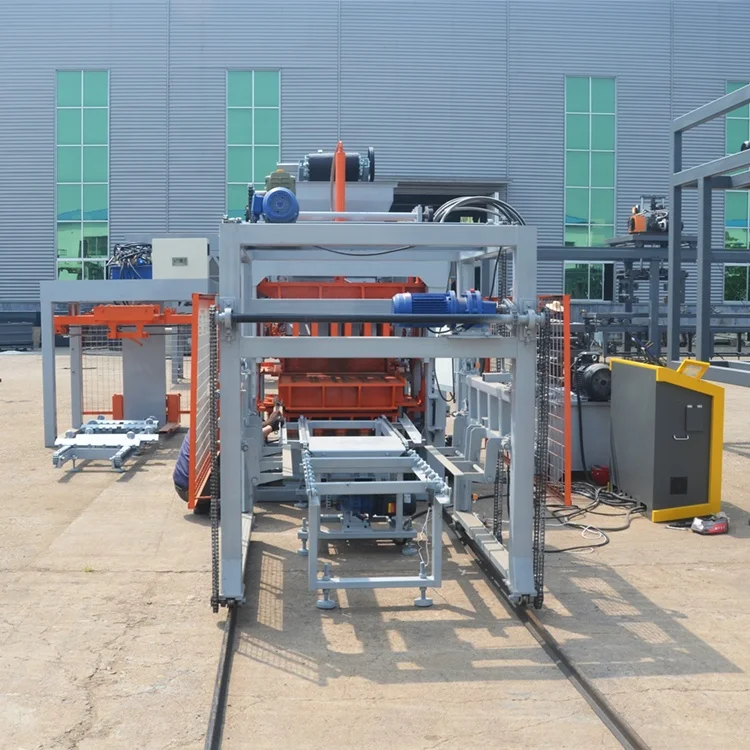
Configurable Automation Scope — The QT8-15 automatic concrete block making machine PLC controlled configuration locks vibration frequency, hydraulic pressure, and control language before dispatch, so the operator interface matches the crew on the ground rather than forcing a retrofit after arrival.
Technical Specifications
| Parameter | Value |
|---|---|
| Model | QT8-15 |
| Product Type | Automatic Concrete Block Making Machine |
| Overall Dimensions (L×W×H) | 8300×1860×3000 mm |
| Rated Pressure | 21 MPa |
| Main Vibration Form | Platform Vibration |
| Vibration Frequency | 2800–4500 r/min |
| Vibration Force | 45 kN |
| Pallet Size | 950×900 mm |
| Molding Cycle | 15–20 s |
| Overall Power | 55.5 kW |
| Demolding Method | Hydraulic |
| Total Mass | 8 T |
| Control System | PLC (brand and display language to be confirmed) |
| Voltage & Frequency | Configurable to site requirement (basis to be confirmed) |
| Automation Level | Automatic (scope of pallet feeding, stacking, cubing to be confirmed) |
Application Suitability
| Application | Material or Output |
|---|---|
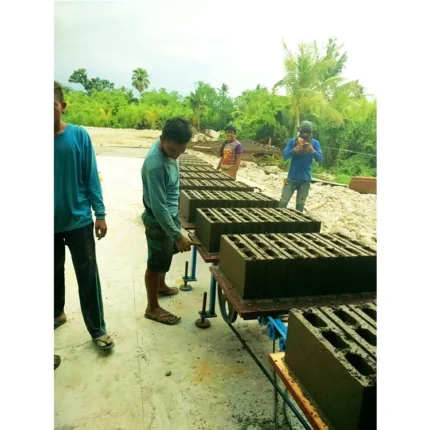
| Hollow block production | Crushed stone, sand, cement, fly ash |
| Solid block production | Gravel, sand, cement, slag |
| Paving block and colored paver production | Fine aggregate, cement, pigment |
| Interlocking brick production | Crushed stone, sand, cement |
| Curbstone production | Coarse aggregate, cement, sand |
What the Molding Cycle Actually Depends On
A 15–20 second molding cycle only translates into predictable daily output when the automatic concrete block making machine PLC controlled system holds parameters steady across every press stroke and pallet feed.
Buyers often see a single cycles-per-hour figure in a quotation and assume it applies universally across every block format. In practice, a hollow block and a curbstone demand different vibration durations, hydraulic hold times, and demolding speeds. When those variables drift from cycle to cycle, the output number on paper never materialises on the curing yard. I have watched a site in Ecuador lose an entire shift because the PLC display was locked in a language the local crew could not read, and nobody could adjust the vibration frequency to match the aggregate they were actually running [NEED_CITE: common commissioning delays from unspecified PLC language]. Locking the control language, voltage, and frequency before the machine leaves the factory removes that category of delay entirely.
How PLC Control Removes Operator Variance
On a semi-automatic line, the operator decides when to trigger the vibration, when to release hydraulic pressure, and how fast to feed the next pallet. Every decision introduces a margin that shifts with fatigue and experience. The QT8-15 automatic concrete block making machine PLC controlled architecture stores the molding recipe — vibration frequency within the 2800–4500 r/min range, hydraulic hold at up to 21 MPa, and demolding speed — so each cycle executes identically regardless of who is at the panel.
Batch Consistency Across Format Changes
A plant that runs hollow blocks in the morning and pavers in the afternoon needs the control system to recall a different parameter set without manual recalibration. The PLC stores each recipe against the mould identifier, meaning a format change becomes a menu selection rather than a trial-and-error exercise. This repeatability matters most when block strength is tied to a project specification and a weak batch triggers a rejection on delivery. The consistency of the QT8-15 across formats rests on how precisely the PLC synchronises the pallet feed, vibration start, and hydraulic press — and that synchronisation must be verified at the factory before shipment [NEED_CITE: PLC synchronisation tolerance for block press cycles].
Reading the Specifications That Matter
The 21 MPa rated pressure and 45 kN vibration force are not independent figures; together they determine the compacted density of the block in the mould. A high vibration frequency with insufficient hydraulic pressure produces a block that looks formed but crumbles under load. Conversely, excessive pressure without enough vibration leaves voids in the core. The adjustable 2800–4500 r/min range allows the frequency to be matched to the local aggregate — finer sand demands higher frequency, while crushed gravel responds better at the lower end. The 950×900 mm pallet size dictates how many blocks sit on a single pallet per cycle, which in turn governs the curing area footprint and the forklift capacity required to move them. A pallet specification chosen without checking the buyer’s existing curing racks and handling equipment creates a bottleneck that has nothing to do with the press itself.
The Cost of Skipping the Voltage Conversation
A machine wired for a voltage and frequency that does not match the local grid cannot be commissioned without a transformer or a complete motor swap. I have seen a block plant sit idle for two weeks because the motor was wound for 380V/50Hz while the site ran on 440V/60Hz, and the PLC transformer burned out on the first start. The cost of a replacement control cabinet dwarfs the time it takes to confirm the supply specification before production begins [NEED_CITE: electrical specification mismatches in exported machinery]. The automation scope — whether automatic pallet feeding, stacking, and cubing are included or left for later — must also be stated explicitly so the buyer knows exactly which stations are powered and which still require manual labour.
Why This Configuration Approach Works
Block machinery is the single focus here, so the QT8-15 is specified as a matched system of press, mould, pallet, and handling rather than assembled from separate quotations. The configuration is set against the buyer’s confirmed mix design and local aggregate, not a catalogue default. Mould design covers the formats the buyer’s market actually sells, including custom drawings where standard formats do not apply. The automation level is selectable, meaning a buyer can commission the press with automatic pallet feeding now and add stacking and cubing later without replacing the core machine. Installation and commissioning support includes operator training on the PLC interface in the confirmed display language.
Documentation & Verification
- Line layout showing the QT8-15 station sequence and pallet flow path
- Capacity calculation stated per block format with molding cycle assumption
- PLC brand, display language, and voltage confirmation sheet signed before production
- Hydraulic and electrical schematic matching the as-built configuration
- Factory test record on the buyer’s specified block format and mix design
Installation, Commissioning & Support
- Foundation plan matched to the 8 T total mass and 8300 mm machine length
- Dedicated power circuit sized for the 55.5 kW overall power draw at confirmed voltage
- PLC language and parameter set loaded and verified during factory test before crating
- Pallet feed and stacking station alignment checked against the 950×900 mm pallet specification
- Operator training on recipe recall, mould change procedure, and daily lubrication points
- Wear parts list with hydraulic seal and vibration motor part numbers for local sourcing
What to Prepare Before an Inquiry
A useful enquiry for the QT8-15 automatic concrete block making machine PLC controlled configuration should include the target block formats, the local aggregate and cement type available, and the confirmed site voltage and frequency. Specify the display language the operating crew will need and whether automatic stacking and cubing are required from day one or planned as a later addition.
Frequently Asked Questions
Q: How is the PLC display language confirmed, and what if it needs to change later?
A: The display language is agreed and documented before production begins, then loaded and verified during the factory test. If the target market changes or a second operator requires a different language, the PLC firmware can typically be updated on site, though the available language pack depends on the PLC brand selected for the build.
Q: Which automation stations are included versus optional on the QT8-15?
A: The base automatic configuration covers the press cycle, hydraulic demolding, and PLC parameter control. Automatic pallet feeding, stacking, and cubing are configurable additions. The quotation states exactly which stations are included so there is no assumption that manual tasks have been automated.
Q: How are vibration frequency and hydraulic pressure matched to local aggregate?
A: The buyer supplies the aggregate type and mix design, and the 2800–4500 r/min vibration range along with the 21 MPa hydraulic pressure are tuned during the factory test using that material. The resulting parameter set is stored in the PLC as the baseline recipe for that block format.
Q: Can stacking and cubing be added later without replacing the press?
A: Yes. The QT8-15 is designed so that automatic stacking and cubing stations can be integrated into the line after the initial installation. The upgrade path documentation specifies the interface points and any PLC program additions required.