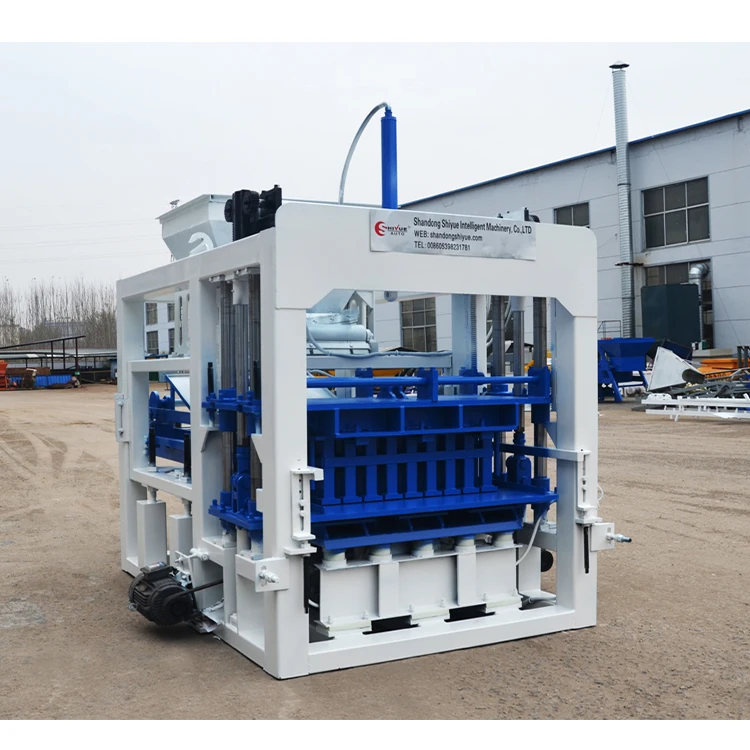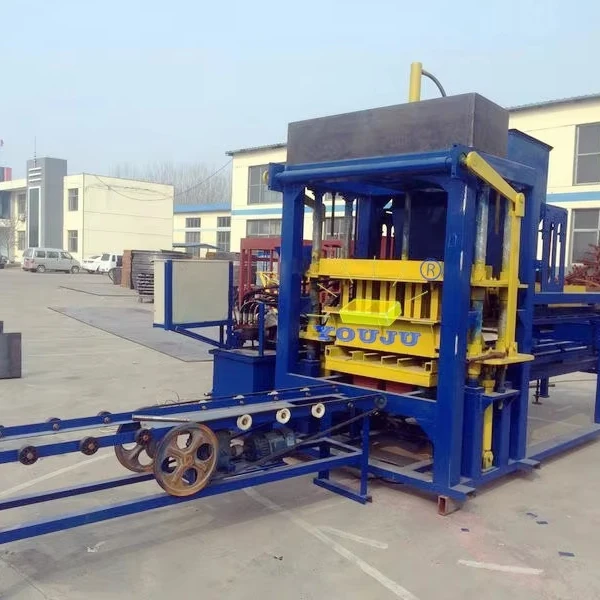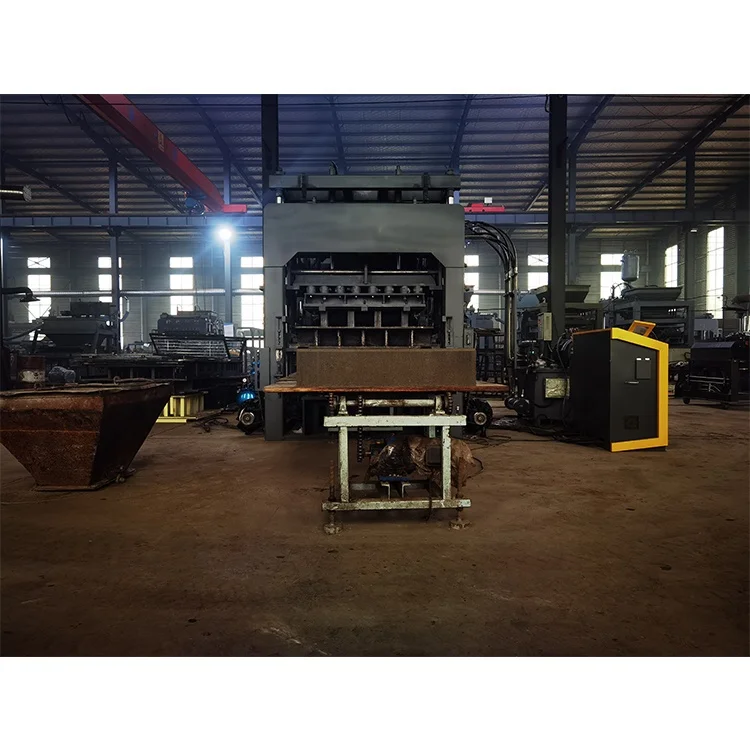


Description
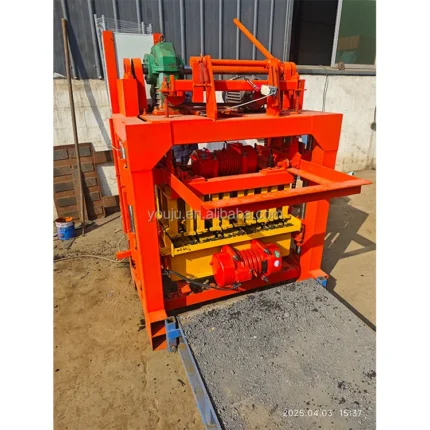
Intelligent control — the QT8-15’s PLC dialogue interface removes operator guesswork by digitizing cycle timing, pressure regulation and feeding logic into a single automated sequence.
Technical Specifications
| Parameter | Value |
|---|---|
| Model | QT8-15 |
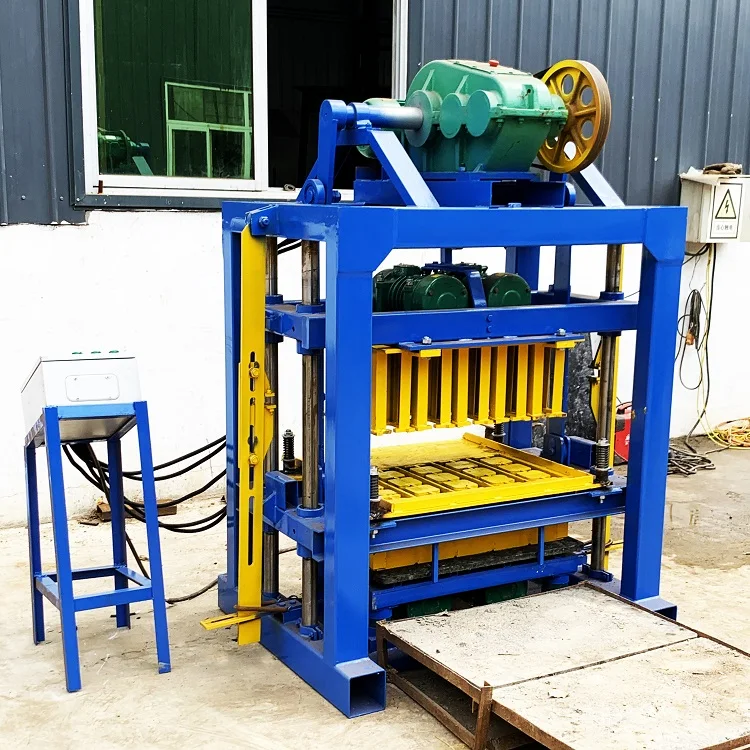
| Product Type | Hydraulic Concrete Block Making Machine |
| Overall Dimensions (L×W×H) | 8300 × 1860 × 3000 mm |
| Total Mass | 9 T |
| Rated Hydraulic Pressure | 21 MPa |
| Main Vibration Form | Platform Vibration |
| Vibration Frequency Range | 2800–4500 r/min |
| Vibration Force | 60 kN |
| Pallet Size | 950 × 900 mm |
| Molding Cycle | 15–25 s |
| Overall Power | 55.5 kW |
| General Water Consumption | 12 T/Day |
| Factory Area Required | 600 m² |
| Demolding Method | Hydraulic |
| Feeding System | Semi-closed screen reticular rotational forced feeding unit |
| Control System | PLC with human-machine interface dialogue system |
| Automation Level | Fully automatic |
| Output Capacity | (basis not stated in source — capacity to be confirmed per block format) |
| Voltage & Frequency | (configurable — confirm with supplier before shipment) |
| PLC Display Language | (configurable — confirm with supplier before shipment) |
Application Suitability
| Application | Material or Output |
|---|---|
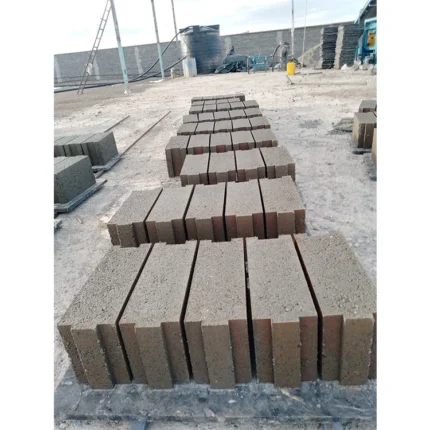
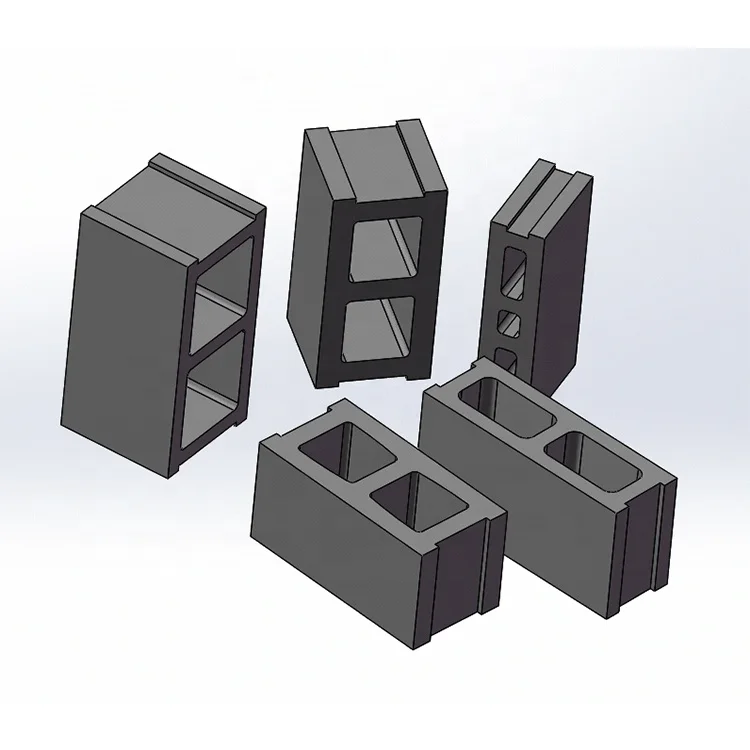
| Hollow block production for wall construction | Crushed stone, sand, cement, fly ash, gravel, slag |
| Solid block manufacturing | Local aggregates with cement binder |
| Paving slab and colored paver production | Sand, crushed stone, cement with pigment additives |
| Interlocking paver forming | Gravel, sand, cement blends |
| Kerbstone and curb production | Coarse aggregate and cement mixes |
What "15–25 Seconds Cycle Time" Leaves Out When Sizing an automatic QT8-15 block making machine PLC controlled
The molding cycle only measures the press stroke — raw material feed time, pallet indexing and demolding all add seconds that vary by block format and mix workability.
I have watched plant managers in South Asia size their entire daily plan around a press cycle number, only to find that the actual output falls short when producing dense interlocking pavers instead of hollow blocks. The QT8-15 platform vibration and hydraulic demolding handle that range, but the cycle duration for a 400×200×200 mm hollow block is not the same as for a 200×100×60 mm paver [NEED_CITE: block format impact on actual cycle duration]. Asking for a capacity table per format — not a single cycles-per-hour figure — is the only honest way to plan production.
How the PLC Removes Guesswork From Every Press Cycle
The automatic QT8-15 block making machine PLC controlled interface replaces manual timing and pressure estimation with programmed logic. The operator selects a block format recipe, and the system governs vibration duration, hydraulic pressure ramp-up and feed rotation without manual intervention. This matters most when you run different formats on the same shift — hollow blocks in the morning, pavers after lunch — because the PLC recalls each recipe’s exact parameters.
Why Variable-Frequency Vibration Matters for Mix Flexibility
Different local aggregates compact at different frequencies. The QT8-15 platform vibration adjusts between 2800 and 4500 r/min, which means a mix heavy in fly ash can be vibrated at a lower frequency to avoid segregation, while a sharp-sand blend responds to a higher setting. When vibration force and hydraulic pressure are both adjustable under the same PLC logic, the operator tunes the entire forming process to the actual material — not a catalogue default [NEED_CITE: vibration frequency selection for different concrete aggregates].
Reading the Specs That Actually Shape Daily Output
The 60 kN vibration force and 21 MPa rated hydraulic pressure work together to determine block density and surface finish. Higher pressure with insufficient vibration leaves voids inside the block; high vibration with weak hydraulic hold causes edge chipping during demolding. The 950×900 mm pallet size governs how many blocks form per cycle and must match your existing curing rack spacing and forklift tine width. The 55.5 kW overall power draw requires a dedicated circuit and stable voltage supply — confirm your local frequency before shipment, because a motor wound for 50 Hz running on 60 Hz will overheat within days. The semi-closed rotational forced feeding system ensures material reaches the outer edges of the mould cavity evenly, which is critical for pavers where thickness consistency determines interlock quality.
The Cost of Skipping the Configuration Conversation
When voltage and PLC display language are left unconfirmed, the machine arrives and sits idle while the buyer sources a transformer or waits for a technician who can read the interface. I have seen this delay commissioning by weeks in regions where 380V three-phase is not standard [NEED_CITE: voltage and frequency standards by export market]. Skipping the pallet size check against your existing curing racks and forklift means either re-buying racks or running a pallet that does not fit the forklift — both of which cost more than a five-minute conversation before the order is finalized.
Why Buyers Choose This Configuration
Block machinery is the single focus here, so the QT8-15 press, its moulds, pallets and handling equipment are specified as one matched system rather than assembled from unrelated suppliers. The PLC configuration is set against your actual mix design and target block format, not a generic default that assumes a material you cannot source locally. Mould design covers the formats your market actually sells, and custom mould drawings are available when standard options do not match. The automation level is selectable, meaning a plant currently running semi-automatic can plan a phased move to fully automatic without replacing the press itself.
Documentation & Verification
- Factory test record run on your specific block format before dispatch
- Hydraulic and electrical schematic matching your confirmed voltage and frequency
- Mould drawing and format list covering every block type in your order
- PLC language confirmation document signed off before shipment
- Operation and maintenance manual with illustrated wear parts list
Installation, Commissioning & Support
- Foundation pad leveled to support 9 T total mass across the 8300 mm frame length
- Dedicated 55.5 kW power circuit with confirmed voltage and frequency before motor energization
- PLC display language verified on-site during first boot to match operator proficiency
- Vibration frequency calibrated to your local aggregate during commissioning trial runs
- Pallet rack layout designed around the 950×900 mm pallet size and your forklift capacity
- Wear parts list including hydraulic seals and vibration components supplied at delivery
Before You Request a Quote
Share the exact block formats you intend to produce, the daily volume you need for each format, and your local aggregate type so the vibration and hydraulic settings can be matched to your mix. Confirm your site voltage, frequency and preferred PLC display language to avoid commissioning delays. Let us know what pallet handling and curing equipment you already have so the line layout fits your existing floor space and workflow.
Frequently Asked Questions
Q: How do I verify the output capacity the QT8-15 can deliver?
A: Request a capacity table that states output per specific block format — for example, 400×200×200 mm hollow blocks versus 200×100×60 mm pavers. A single cycles-per-hour figure without a format reference is misleading because cycle time changes with block geometry, mix workability and compaction requirements. Always confirm the assumed format before comparing machines.
Q: What PLC language and voltage options are available before dispatch?
A: Both PLC display language and motor voltage with frequency must be confirmed against your destination country’s standards before the machine ships. Specify your requirements during the quotation stage so the control panel is wired and programmed correctly, avoiding delays that push back commissioning by weeks.
Q: What does the QT8-15 automate compared to a semi-automatic press?
A: The QT8-15 handles material feeding, vibration sequencing, hydraulic pressing and demolding through the PLC without manual intervention. On a semi-automatic machine, operators manually index pallets and trigger each stage. The fully automatic sequence reduces labour dependency and delivers batch-to-batch consistency across different block formats.
Q: Can I change block formats quickly on this machine?
A: The QT8-15 supports mould changes to produce hollow blocks, pavers, interlocking bricks and kerbstones on the same press. The PLC stores recipe parameters for each format, so once a new mould is mounted the operator selects the matching program rather than re-entering timing and pressure values manually.