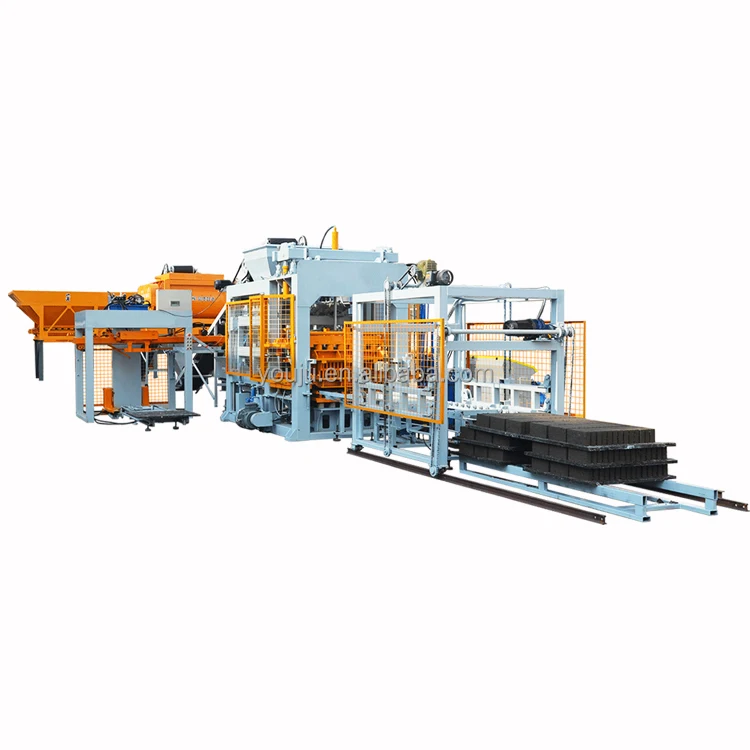
Description
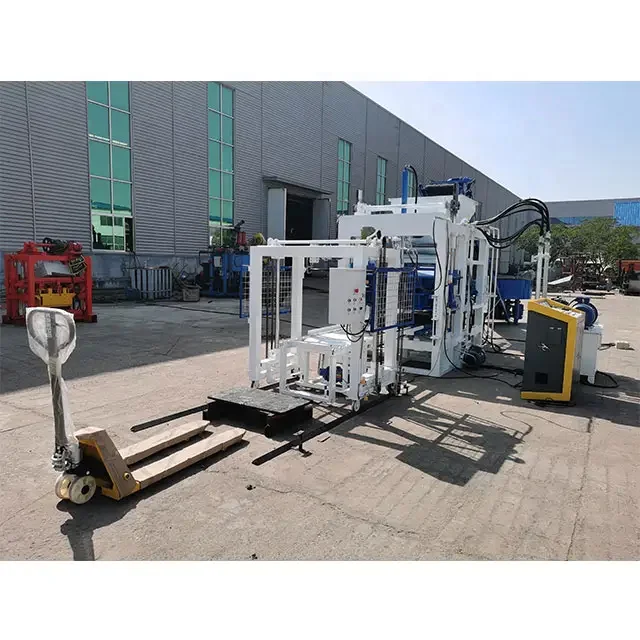
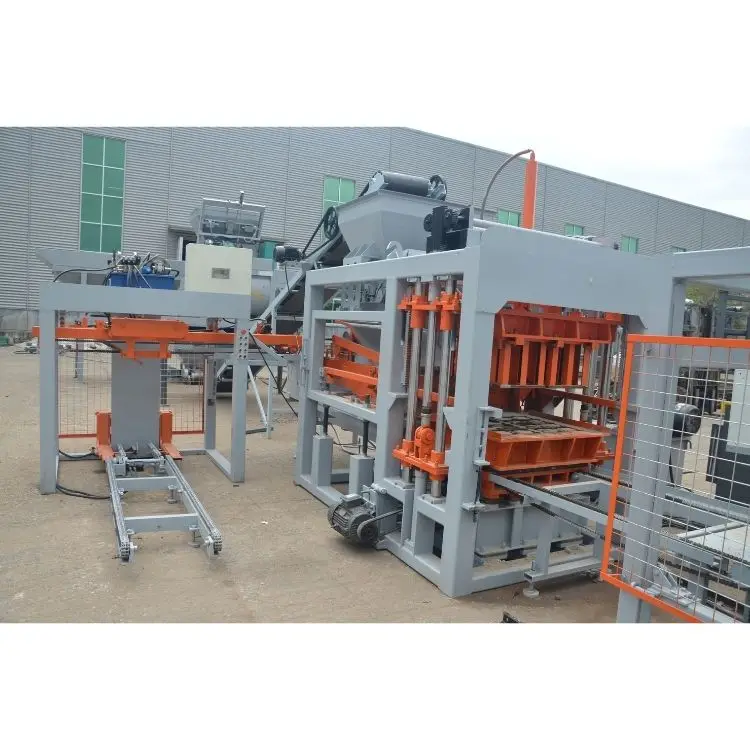
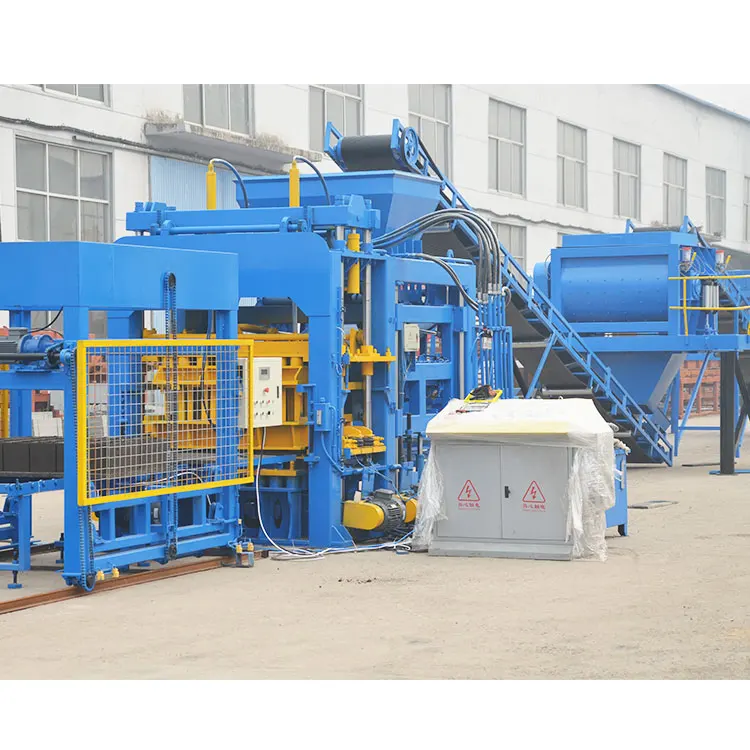
Intelligent control integration — The PLC controlled QT8-15 automatic block making machine coordinates hydraulic pressure and vibration timing per recipe, so operators switch formats without relearning the press cycle.
Technical Specifications
| Parameter | Value |
|---|---|
| Model | QT8-15 |
| Product Type | Automatic Concrete Block Making Machine |
| Control System | PLC (brand and display language options to be confirmed) |
| Vibration System | Hydraulic pressure technology with coordinated vibration (force rating to be confirmed) |
| Hydraulic Pressure | Value to be confirmed |
| Mould Compatibility | Hollow block, solid brick, paver brick, kerbstone — interchangeable with heat treatment |
| Cycle Time | 15–20 s (basis not stated in source — confirm block format and mix design) |
| Output — 400×200×200 mm hollow block | 8 pcs/mould, 1,600–1,900 pcs/h, 12,800–15,000 pcs/8 h |
| Output — 240×115×53 mm solid brick | 45 pcs/mould, 8,000–10,000 pcs/h, 64,000–80,000 pcs/8 h |
| Output — 200×160×60 mm paver | 15 pcs/mould, 3,000–3,600 pcs/h, 24,000–28,800 pcs/8 h |
| Output — 225×112.5×60 mm paver | 24 pcs/mould, 4,000–5,000 pcs/h, 32,000–40,000 pcs/8 h |
| Pallet Size | Dimensions and material to be confirmed |
| Automation Level | Automatic (category listed as semi-automatic — verify before ordering) |
| Stacking Method | Manual or automatic (to be confirmed) |
| Voltage & Frequency | Configurable to site requirements (to be confirmed) |
| Warranty | 1 year |
Application Suitability
| Application | Material or Output |
|---|---|
| Hollow block production for masonry walls | Crushed stone, sand, cement with standard aggregate gradation |
| Solid brick manufacturing for load-bearing construction | Local aggregate blends with cement binder |
| Paving block production for roads and walkways | High-density mix with fine aggregate and cement |
| Kerbstone forming for curbs and edging | Coarse aggregate mix requiring high compaction force |
Why the Language on Your PLC Screen Matters More Than the Price Tag
If the operator cannot read the fault code on day one, commissioning stops before the first cycle runs.
I have watched entire installation schedules collapse because the control panel shipped with English-only prompts while the local crew spoke only Spanish or Swahili. The PLC controlled QT8-15 automatic block making machine is capable of consistent cycling across formats, but that capability sits idle when the person at the screen cannot navigate a recipe change. [NEED_CITE: control panel language requirements for exported industrial machinery]. Voltage mismatches get caught at the transformer; language mismatches surface only when the technician leaves.
Recipe Memory and Format Changeover
The PLC stores cycle parameters — vibration duration, pressure hold time, feed depth — as individual recipes tied to each mould. When a plant shifts from hollow block to paver production, the operator selects the stored recipe rather than re-entering values manually. This removes the most common source of batch-to-batch density variation on multi-format lines. The PLC controlled QT8-15 automatic block making machine holds these recipes so that the same paver mould produces the same block density on Thursday as it did on Monday.
Selectable Automation Stations
Not every plant needs full automatic stacking from day one. The control architecture allows stations — pallet feeding, block stacking, curing rack handling — to be added in stages. The PLC accommodates future I/O expansion without a complete panel replacement, so a buyer starting with manual pallet handling can integrate an automatic stacker later without rewiring the main controller. [NEED_CITE: PLC I/O expansion standards for modular block lines].
How Pressure and Vibration Coordination Affects Block Density
The vibration system and hydraulic pressure do not operate independently. Pressure compresses the mix while vibration fluidises the aggregate, allowing particles to settle into a denser arrangement. If vibration time is too short relative to pressure application, the block core remains less compacted than the face. The cycle time range of 15–20 seconds reflects the window needed for different formats — a thin paver requires less dwell than a tall hollow block. Heat-treated moulds withstand the continuous vibration loading across these cycles without premature wear at the cavity walls, maintaining dimensional tolerance over extended production runs.
What Happens When the Control Panel Language Is an Afterthought
I spent three days on a site in East Africa rewriting fault-code responses on sticky notes taped beside the screen because the PLC display shipped in English and the operators read only Swahili. Every alarm required a phone call, every parameter change needed a translator on video link. The machine was mechanically sound, but the plant lost nearly a full week of production before we sourced a language patch. Control language must be locked before the panel is assembled, not after the container arrives. [NEED_CITE: commissioning delays caused by incorrect PLC language on exported machinery].
Why Sourcing the Control System Here Reduces Field Risk
Block machinery is the sole focus of this production operation, which means the PLC program, hydraulic sequence and vibration timing are developed together rather than layered on by separate integrators. The mould design and press configuration are specified as a matched set against the buyer’s local aggregate and target block format, not pulled from a catalogue default. Automation level is selectable, so the control system you receive matches the stations you actually ordered. Factory testing runs through the full recipe set before dispatch, so cycle times and alarm responses are verified on your formats before the machine leaves the floor.
Documentation & Verification
- PLC program printout with recipe list matched to your confirmed mould formats
- Voltage and control language confirmation sheet signed before panel assembly
- Hydraulic and electrical schematics with component part numbers for local sourcing
- Factory test record covering cycle timing across each quoted block format
- Wear parts list with mould cavity dimensions and heat treatment specification
- Operation manual with fault code index in your confirmed display language
Installation, Commissioning & Support
- Foundation plan referencing the QT8-15 overall dimensions and dynamic load from vibration
- Dedicated power circuit sized to the confirmed rated power and local voltage
- PLC display language verified on-site against the operator team before first cycle
- Recipe parameters tuned to your local aggregate mix during commissioning week
- Operator training covering recipe selection, alarm response and mould change procedure
- Spare mould liner and hydraulic seal kit supplied for the first replacement interval
What to Prepare Before Requesting a Quote
Share the specific block formats your market sells along with daily volume targets so the PLC recipe list covers your actual range from shipment. Provide your site voltage, frequency and the display language your operators read so the control panel is configured before assembly begins. If you plan to add stacking or cubing automation later, mention this so the PLC I/O capacity is sized for the upgrade path.
Frequently Asked Questions
Q: How is realistic daily output verified against my block format and mix?
A: Output figures depend on the block dimensions, mould cavity count and cycle time for that specific format. We run factory tests on your confirmed mould and mix sample, then document the achieved cycle time and pieces per hour. This record ships with the machine so the quoted capacity matches your actual product, not a generic catalogue figure.
Q: Which automation stations can I add later without replacing the PLC?
A: The controller ships with reserved I/O channels for pallet feeding, stacking and cubing stations. When you decide to automate a station, the existing program is extended rather than rewritten. Confirm your future automation plan during the quotation stage so the panel is built with the necessary capacity from the start.
Q: What PLC display languages are available before shipment?
A: The display language is configurable and must be confirmed before the panel is assembled. Common options include English, Spanish, French, Arabic and Russian, but availability depends on the PLC brand selected for your order. We lock the language in writing during the specification phase to avoid on-site delays.
Q: How does mould changeover work across different block formats?
A: Each mould is matched to a stored PLC recipe containing vibration time, pressure and feed parameters. The operator selects the recipe after the physical mould swap, so the press cycle adjusts automatically. Changeover time depends on the mould clamping system specified for your order, and this is confirmed during the configuration stage.
Q: What electrical details must be confirmed before production starts?
A: Voltage, frequency, phase configuration and control panel labelling language all need written confirmation before the electrical panel is built. Mismatched voltage discovered at the destination site can delay commissioning by weeks. We request these details during the quotation phase and reconfirm them before assembly begins.