

Description
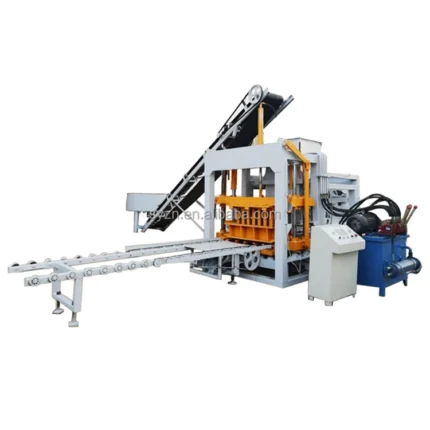
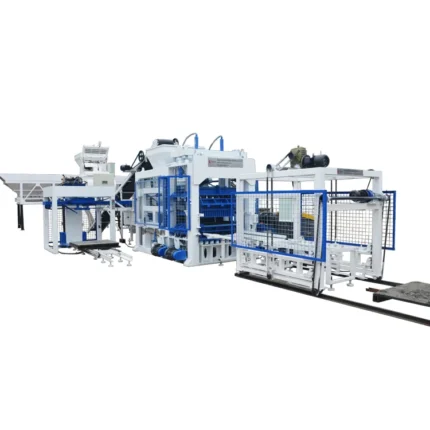
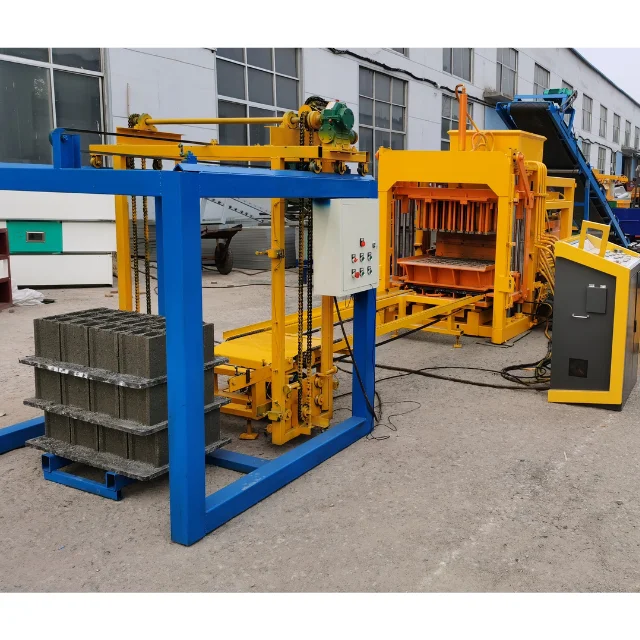
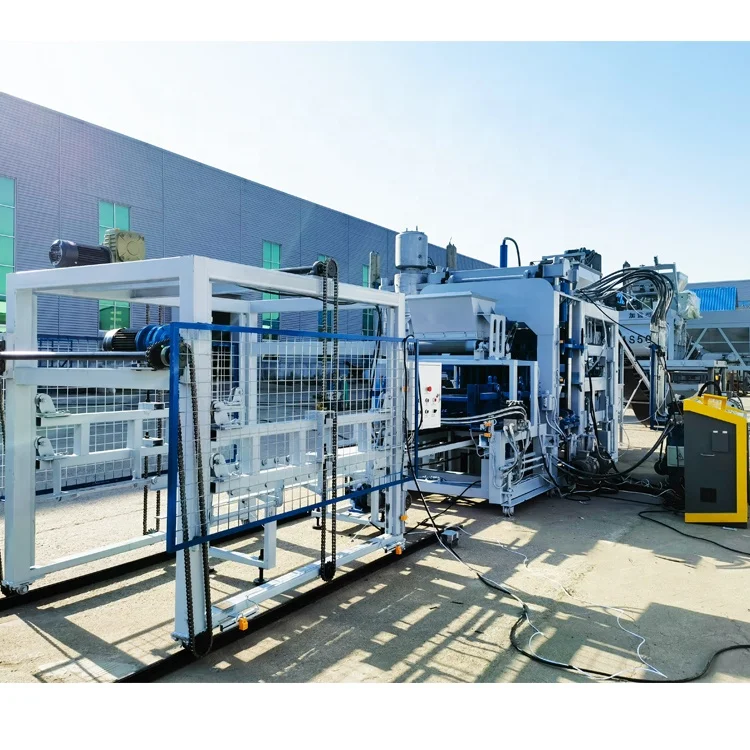
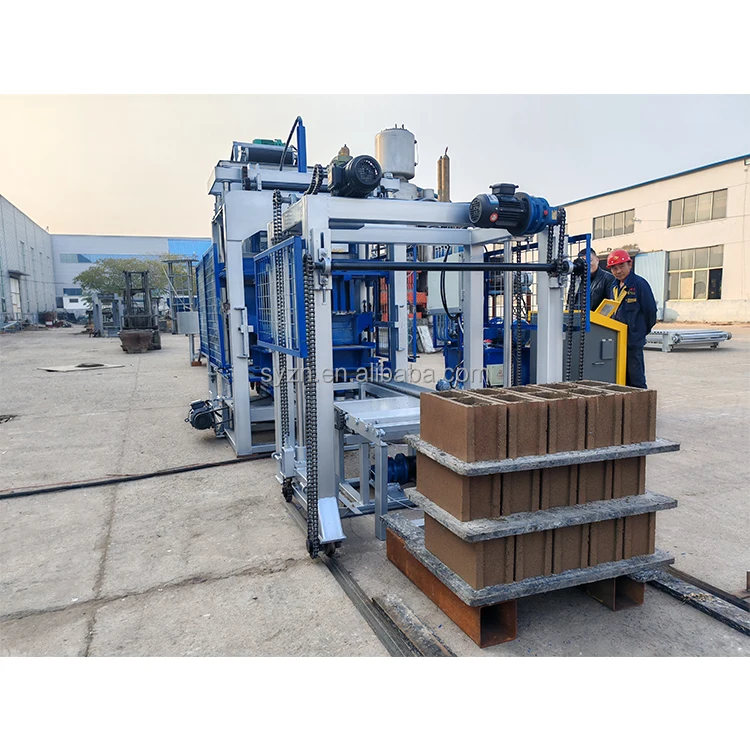
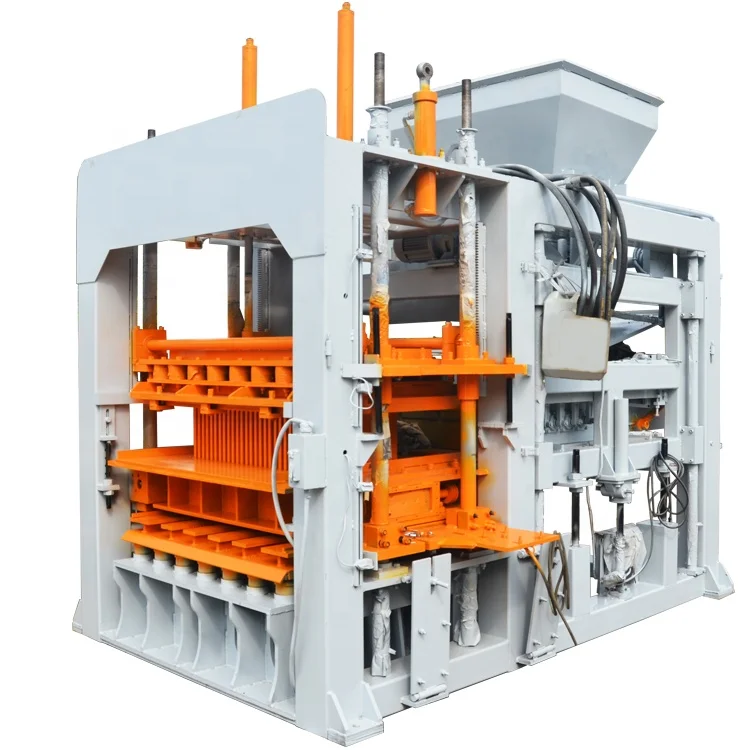
Intelligent Block Making Machine with PLC Control — The QT8-15 automatic concrete block making machine integrates pallet feeding, stacking, and cubing into one synchronized system, where every motion is governed by a centralized programmable controller to eliminate manual handling inconsistencies.
Technical Specifications
| Parameter | Value |
|---|---|
| Model | QT8-15 |
| Product Type | Automatic Concrete Block Making Machine |
| Overall Dimensions (L×W×H) | 8300×1860×3000 mm |
| Total Mass | 8 T |
| Overall Power | 55.5 kW |
| Rated Pressure | 21 MPa |
| Main Vibration Form | Platform Vibration |
| Vibration Frequency | 2800–4500 r/min |
| Vibration Force | 45 kN |
| Pallet Size | 950×900 mm |
| Molding Cycle | 15–20 s (basis not stated in source — confirm block format / material / thickness) |
| Demolding Method | Hydraulic |
| Factory Area Requirement | 300 m² |
| Control System | PLC |
| Automation Level | Automatic |
| Voltage & Frequency | Configurable based on destination market |
| Loading Capacity | 1×40HQ container (basic equipment) |
| Warranty | 1 year (whole machine, excluding spare parts) |
Application Suitability
| Application | Material or Output |
|---|---|
| Hollow Block Production | Crushed stone, sand, cement, fly ash |
| Solid Block Manufacturing | Gravel, slag, dust, cement |
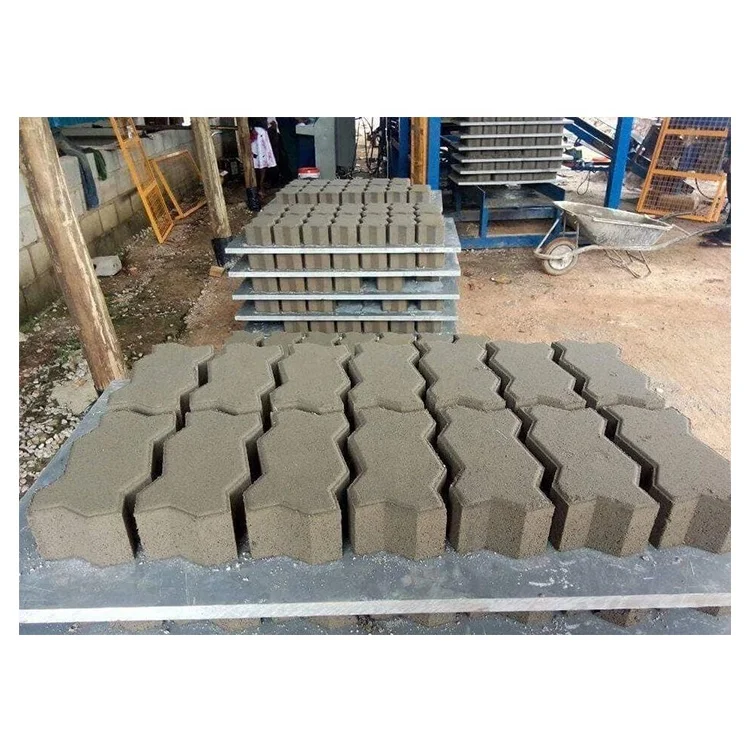
| Paving Block & Colored Paver | Fine aggregate, cement, pigment |
| Interlocking Block & Curbstone | Coarse aggregate, cement, sand |
Why "15–20 Seconds" Means Nothing Without the Block Format
The cycle time of an automatic concrete block making machine PLC controlled is only valid when tied to a specific block format, material mix, and thickness.
I have seen buyers sign contracts based on a "15-second cycle" only to find that their primary product—a 200mm thick hollow block—actually requires a longer press and vibration sequence, pushing the real cycle closer to 25 seconds. The QT8-15 achieves its rated cycle on specific formats under controlled conditions. Without confirming the exact block you intend to produce, any daily output projection is speculative. This is why our technical protocol locks the target format, mix design, and local aggregate into the capacity calculation before production begins [NEED_CITE: capacity verification standards for concrete block machinery].
Programmable Logic Control and Operator Independence
The PLC on the QT8-15 manages the entire sequence from raw material feed through to pallet stacking. For plant owners moving away from semi-automatic or manual lines, this removes the operator from decisions about vibration duration, hydraulic pressure application, and demolding timing. The system stores multiple recipes, so switching from hollow blocks to pavers involves recalling a saved program rather than manually adjusting valves and timers. The automatic concrete block making machine PLC controlled system ensures that shift changes do not alter block density or dimensional tolerance.
Batch Consistency Through Parameter Locking
Once the vibration frequency, hydraulic pressure, and cycle timing are confirmed against your mix design, the PLC locks those values. Operators cannot inadvertently alter the compaction force or shorten the vibration window. This addresses one of the most frequent complaints from block plant owners: that morning batches differ in strength from afternoon batches because an operator adjusted settings mid-shift. With the QT8-15, the 2800–4500 r/min vibration range and 45 kN force are applied identically across every cycle. Remote diagnostics allow our engineers to review fault logs and cycle histories without a site visit, which is critical for plants operating far from our service base [NEED_CITE: PLC remote diagnostic capabilities in block making equipment].
Reading the Specs That Actually Matter
The 21 MPa rated pressure and 45 kN vibration force must be evaluated together. Hydraulic pressure compacts the mix vertically while platform vibration settles fines into voids—insufficient vibration with high pressure produces dense but brittle blocks; excessive vibration with low pressure yields blocks that crumble at the edges. The QT8-15 balances both through PLC-regulated sequencing. The 950×900 mm pallet size must align with your curing area dimensions and existing forklift capacity; ordering a pallet size incompatible with your racking system creates a bottleneck downstream. The 55.5 kW overall power demand requires dedicated circuit planning at your facility before the machine arrives.
The Hidden Cost of Unconfirmed Automation Scope
Quotations for block lines often list "automatic" without specifying whether pallet feeding, stacking, and cubing are included. Buyers arrive at their site to find that the press is automatic but pallets are still being moved by hand, and cured blocks are stacked manually on the yard. The QT8-15 specification covers the integrated pallet handling system, but only if the automation level is confirmed in the contract. Voltage and PLC display language are equally critical—I once spent two days remotely flashing English firmware onto a control panel that left the factory in Chinese because the language was never specified. Every contract now lists voltage, frequency, and HMI language as non-negotiable protocol items [NEED_CITE: electrical standard compliance for industrial machinery exports].
Why Source the QT8-15 Through This Channel
The QT8-15 is specified as a matched system—press, mould, pallet, and handling equipment are engineered together rather than assembled from separate suppliers. Configuration is set against your confirmed mix design and local aggregate, not a catalogue default. Mould design covers the formats your market actually sells, with custom drawings available for non-standard dimensions. The automation level is selectable, meaning you can commission the line semi-automatic and add stacking or cubing modules later. Factory test records include cycle repeatability data and block strength measurements run against your specific recipe before the machine leaves the workshop.
Documentation & Verification
- Line layout and capacity calculation stating the exact block format assumed for cycle time projections
- Machine specification sheet with voltage, frequency, and PLC display language confirmed per contract
- Hydraulic and electrical schematic including PLC I/O list for on-site maintenance and future upgrades
- Factory test record showing cycle repeatability and block compressive strength against buyer’s mix design
- Mould drawing and format list for every block type included in the purchase scope
Installation, Commissioning & Support
- Foundation plan provided for the 8300×1860 mm footprint with load-bearing requirements for the 8 T total mass
- Dedicated power circuit specified for the 55.5 kW overall power draw, matching confirmed voltage and frequency
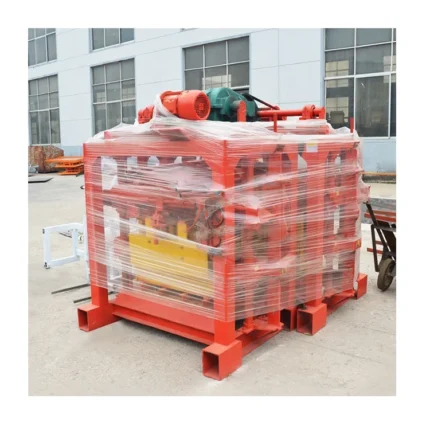
- Basic equipment loads into one 40HQ container with dismantling points marked for efficient unloading
- On-site PLC parameter verification against your raw material and target block format during commissioning
- Operator training covers recipe storage, mould change sequence, and fault code interpretation on the HMI
What to Include in Your Technical Inquiry
When requesting a quotation for the QT8-15, provide your target block formats with dimensions, the daily volume you need for each format, and the raw materials available locally including aggregate grading. Specify your site voltage, frequency, and the language your operators require on the PLC display. Confirm whether your existing curing yard and forklift are compatible with 950×900 mm pallets, or whether pallet handling must be included in the line scope.
Frequently Asked Questions
Q: How is the 15–20 s molding cycle verified and which block format does it assume?
A: The cycle time is measured during the factory test using the buyer’s confirmed block format and mix design. The 15–20 s figure in the specification sheet is a general range; the actual cycle for your specific hollow block, paver, or solid block is documented in the capacity calculation before production. This ensures the daily output projection reflects your actual product, not a catalogue standard.
Q: What PLC language options are available and can the HMI be configured to the operator’s language?
A: The PLC display supports multiple language configurations including English, French, Spanish, Arabic, and Russian. The required language is written into the technical protocol before production. I now treat this as a non-negotiable contract item after experiencing commissioning delays caused by an unconfirmed display language on a previous installation.
Q: How does the automation level handle pallet feeding, stacking and cubing?
A: The QT8-15 automatic configuration integrates pallet feeding from the magazine through to stacking of cured blocks. Buyers starting with a semi-automatic setup can add the stacking and cubing modules later without replacing the press. The PLC manages the sequence, so adding automation modules later involves software integration rather than mechanical redesign of the line.
Q: How are vibration force and hydraulic pressure matched to local aggregate?
A: During the configuration phase, we review your aggregate grading, cement ratio, and target block strength. The PLC stores the vibration frequency and hydraulic pressure values that produce consistent density with your specific mix. This prevents the common issue where a machine configured for one region’s material produces weak or crumbling blocks when installed in a different market.
Q: What remote diagnostics does the PLC system provide after commissioning?
A: The PLC logs fault codes, cycle counts, and parameter deviations that can be reviewed remotely. When an alarm occurs, the HMI displays the fault location and suggested resolution. Our engineers can connect to the PLC to review cycle history and assist with troubleshooting, which reduces downtime for plants operating without local technical support.