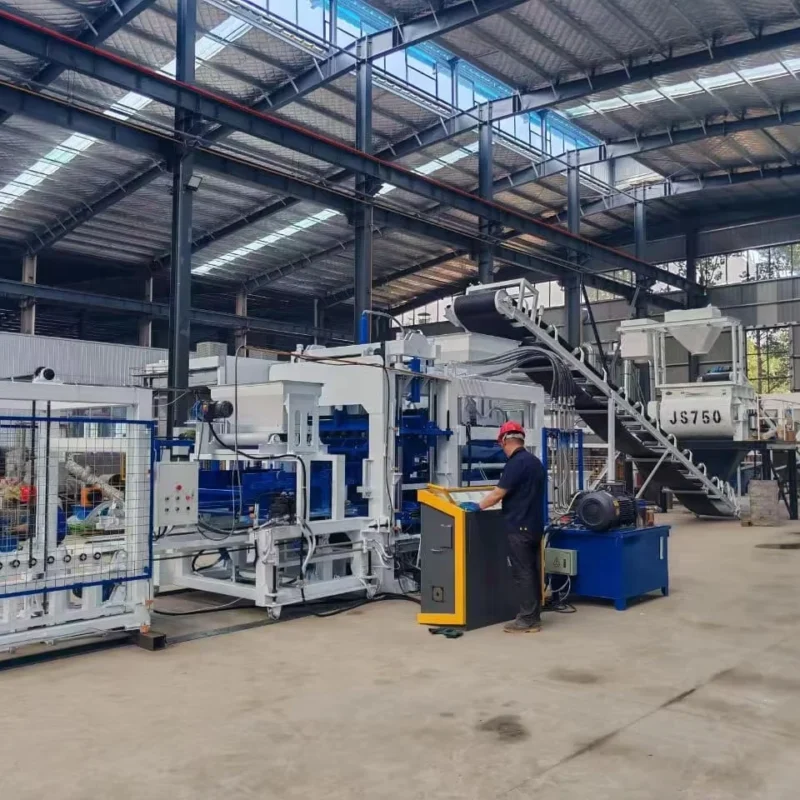

Description
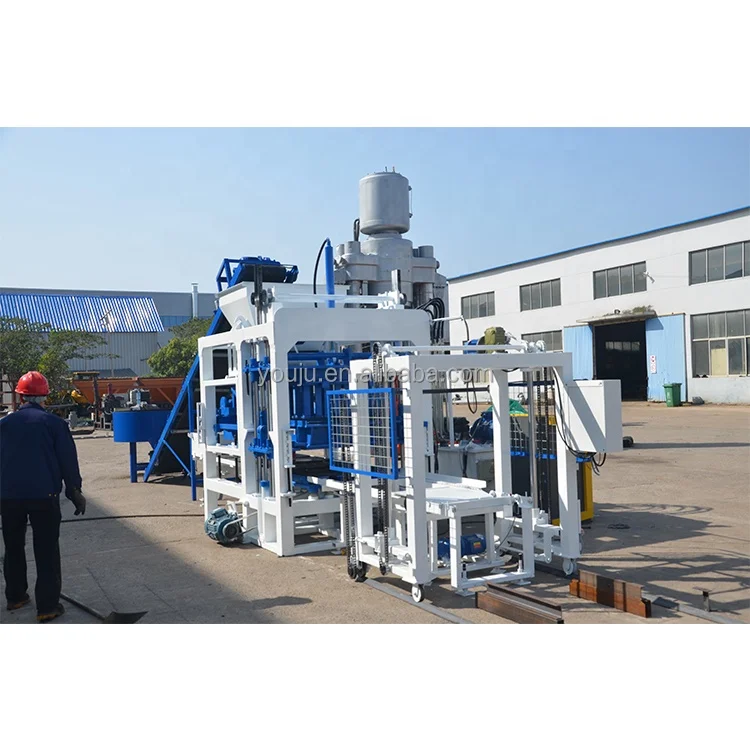
Single-Focus Block Machinery Engineering — the QT8-15 is specified as a matched system where PLC parameters, hydraulic pressure, and vibration force are tuned to your actual mix design rather than shipped with catalogue defaults.
Technical Specifications
| Parameter | Value |
|---|---|
| Model | QT8-15 |
| Product Type | Automatic Concrete Block Making Machine |
| Overall Dimensions (L×W×H) | 8300 × 1860 × 3000 mm |
| Rated Pressure | 21 MPa |
| Vibration Form | Platform Vibration |
| Vibration Frequency | 2800–4500 RPM |
| Pallet Size | 950 × 900 mm |
| Molding Cycle | 15–25 s (basis not stated in source — confirm block format) |
| Overall Power | 46 kW |
| Control System | PLC with Touch Screen HMI |
| Automation Level | High — automatic process controlled by PLC, manual/automatic mode transition |
| Block Comprehensive Strength | Up to 15 MPa |
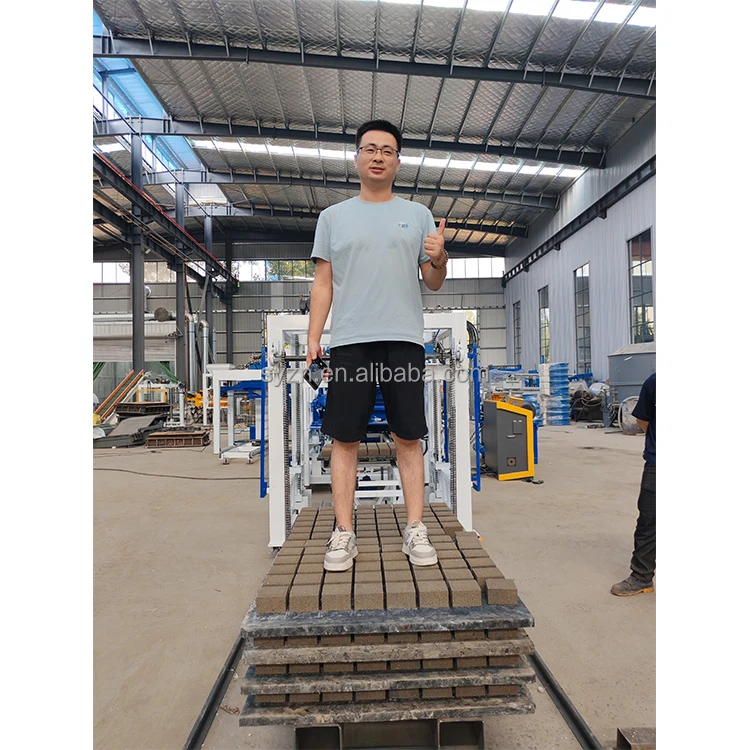
| Stacking Method | Automatic stacker — two pallets per cycle, 3–6 layers depending on block height |
| Hydraulic System | Independent integrated station, isolated from dust and main machine vibration |
| Support Equipment (Basic Line) | JS750 mixer, 8 m belt conveyor, pallet feeder, block conveyor, hydraulic station |
Application Suitability
| Application | Material or Output |
|---|---|
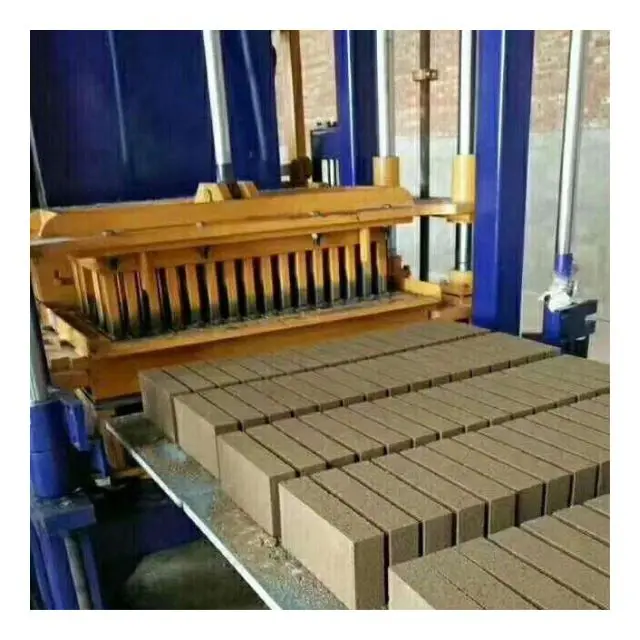
| Hollow block production | Crushed stone, cement, sand, and fly ash blends for structural masonry |
| Solid block manufacturing | Dense aggregate mixes for load-bearing walls and foundation courses |
| Paving block production | Fine aggregate and pigment mixes for interlocking and rectangular pavers |
| Kerbstone and interlocking brick | Coarse-to-fine graded mixes for roadside and landscape units |
What a "15-Second Cycle Time" Actually Means for Your Output
Cycle time is only meaningful when the block format, mix design, and target strength are stated alongside it.
I have watched plant owners quote a cycle figure from a brochure and then wonder why their daily pallet count falls short by a third. A 15–25 second molding cycle on a PLC controlled automatic block making machine like the QT8-15 assumes a specific block geometry and material charge. Switch from a standard 400×200×200 mm hollow block to a thinner paving format and the feed time, vibration duration, and demould stroke all shift. Without a capacity calculation that names the format, the number on the spec sheet is a starting point, not a promise [NEED_CITE: block format assumptions in cycle time quotations].
Programmable Parameters That Replace Operator Guesswork
The PLC touch screen on this PLC controlled automatic block making machine stores process recipes per block format. Feed duration, vibration time, and pressure hold can each be adjusted independently and saved so that when a mould change happens, the operator recalls the proven recipe instead of dialling settings from memory. This removes the most common source of batch-to-batch strength variation: human inconsistency across shifts.
Isolation That Keeps the Hydraulic Station Honest
Vibration is necessary for compaction but destructive to hydraulic seals and valve spools. The QT8-15 routes its hydraulic station away from the main press frame, mounting it as an independent unit so dust and high-frequency oscillation do not reach the valve block. In Middle East plants where ambient dust is already a daily battle, that separation extends service intervals and keeps pressure response consistent across a long production run [NEED_CITE: hydraulic system isolation in vibrating block presses].
Reading the Numbers That Matter Most
The 21 MPa rated pressure and 2800–4500 RPM vibration frequency work together to determine how densely the mix is compacted before curing. Higher vibration frequency fluidises the material so it fills mould corners, while hydraulic pressure locks that density in place once the press head descends. If your local aggregate is angular and poorly graded, you will likely need the upper end of both ranges to achieve the 15 MPa comprehensive block strength the machine is rated for. The 950 × 900 mm pallet size dictates how much curing floor space you need — measure your racks and forklift tine width before confirming the order, because a pallet that does not match your existing handling equipment creates a bottleneck the press itself never caused. The 46 kW overall power draw means you should verify that your site transformer and distribution board can sustain continuous load at the voltage and frequency your grid supplies.
The Cost of Skipping Voltage and Language Confirmation
A PLC screen displaying the wrong language on day one of commissioning is not a minor inconvenience — it is a stalled installation with an idle crew and a project deadline slipping. I once saw a block line sit for four days because the HMI defaulted to a script the local operator could not read, and the distributor had to fly in a technician just to navigate the setup menus. Voltage mismatches are worse: a 380 V motor fed 440 V will overheat within weeks, and rewinding is rarely covered under warranty when the buyer did not confirm supply specs before production [NEED_CITE: voltage and frequency standards by export market].
Why Buyers Source This Line Here
Block machinery is the single manufacturing focus, so the QT8-15 arrives with mould, pallet, and handling specified as one matched system rather than assembled from separate suppliers. Configuration is set against your actual mix design and local aggregate, not a catalogue default — the PLC recipes are built around the materials you can source, not the materials a lab prefers. Mould design covers the formats your market actually sells, and custom drawings are accepted when standard options do not match. The automation level is selectable, meaning a plant can begin with the semi-automatic mode for operator training and transition to full PLC-controlled production once the crew is confident. Installation support includes on-site commissioning with operator training so the PLC interface is understood before the first production shift begins.
Documentation & Verification
- Line layout and capacity calculation stating the exact block format assumed for the QT8-15 cycle time
- Machine specification sheet confirming pallet size, rated pressure, and overall power before shipment
- Mould drawing and format list matching your target block dimensions and local market demand
- Hydraulic and electrical schematic showing the isolated station layout and PLC wiring diagram
- Factory test record run on your specified mix design and block format before dispatch
- Voltage, frequency, and PLC display language written confirmation at order stage
Installation, Commissioning & Support
- Foundation pad sized for the 8300 × 1860 mm footprint with level tolerance confirmed before the QT8-15 arrives
- Dedicated 46 kW circuit with confirmed voltage and frequency matching the PLC and motor nameplate ratings
- Hydraulic station positioned per the isolation layout drawing to maintain vibration separation from the press frame
- PLC parameter walkthrough during commissioning covering recipe storage, manual-to-automatic transition, and alarm response
- Operator training on mould change procedure, pallet feeder loading, and automatic stacker layer adjustment
- Wear parts and hydraulic seal list supplied at delivery with reorder intervals based on your production schedule
Before You Request a Quote
To size the QT8-15 accurately, share the specific block formats you intend to produce, your target daily output per format, and the local raw materials available including aggregate type and grading. Confirm your site voltage, frequency, and the language you need on the PLC display so the control panel is configured before wiring begins.
Frequently Asked Questions
Q: How is the QT8-15 daily output calculated, and which block format does the 15–25 s cycle assume?
A: Daily output depends on the block format, pallet count per cycle, and actual shift length. The 15–25 second molding cycle is a range that varies with block height, mix characteristics, and vibration setting. Request a capacity calculation that names your specific block format so the quoted output reflects what you will actually produce rather than a generic brochure figure.
Q: Can the PLC display language and electrical voltage be configured before shipment?
A: Yes. Both the PLC touch screen language and the motor and control voltage must be confirmed at order stage. The HMI is set to your operator’s language and the electrical components are sourced to match your site supply before the panel is wired, eliminating commissioning delays caused by mismatched defaults.
Q: How does the automatic stacker work with my existing curing racks and forklift?
A: The stacker handles two pallets per cycle and builds layers from three to six high depending on block height. Your curing rack spacing and forklift tine width must accommodate the 950 × 900 mm pallet footprint. Share your existing rack dimensions so the line layout aligns the stacker output with your curing workflow without requiring new handling equipment.
Q: What does the PLC take over from the operator compared to semi-automatic operation?
A: The PLC manages feed timing, vibration duration, pressure hold, and pallet cycling automatically once a recipe is loaded. The operator selects the stored format, monitors alarms, and handles mould changes. In semi-automatic mode, each step is triggered manually, which is useful during training and initial format testing before switching to full automatic production.
Q: How do I keep block strength consistent when switching between formats?
A: Each block format’s process parameters — feed time, vibration frequency, pressure, and cycle duration — are saved as a named recipe in the PLC. When the mould is changed, the operator recalls the matching recipe so every cycle runs to the same proven settings, maintaining batch-to-batch strength consistency across format changes.