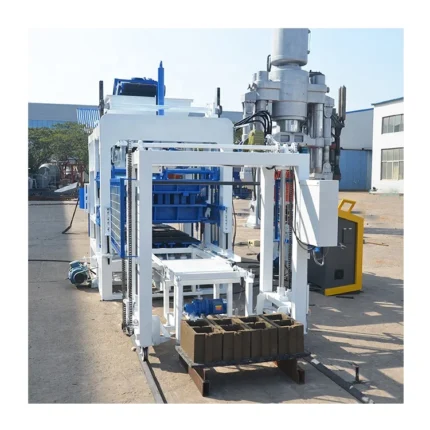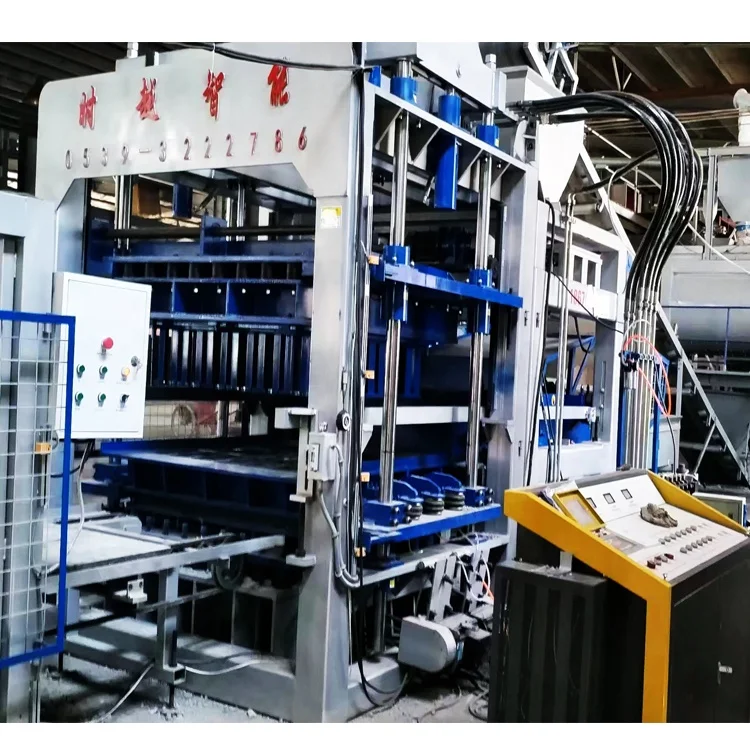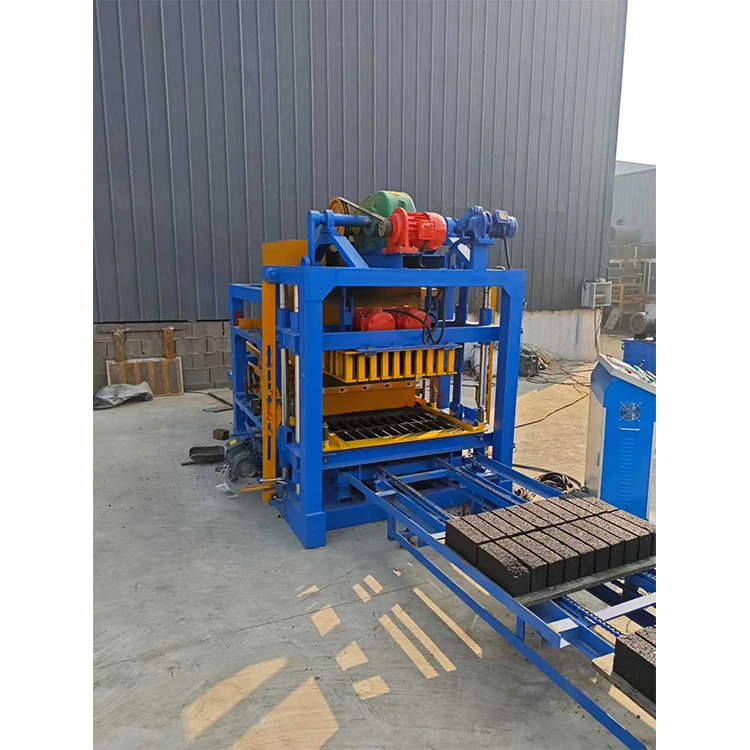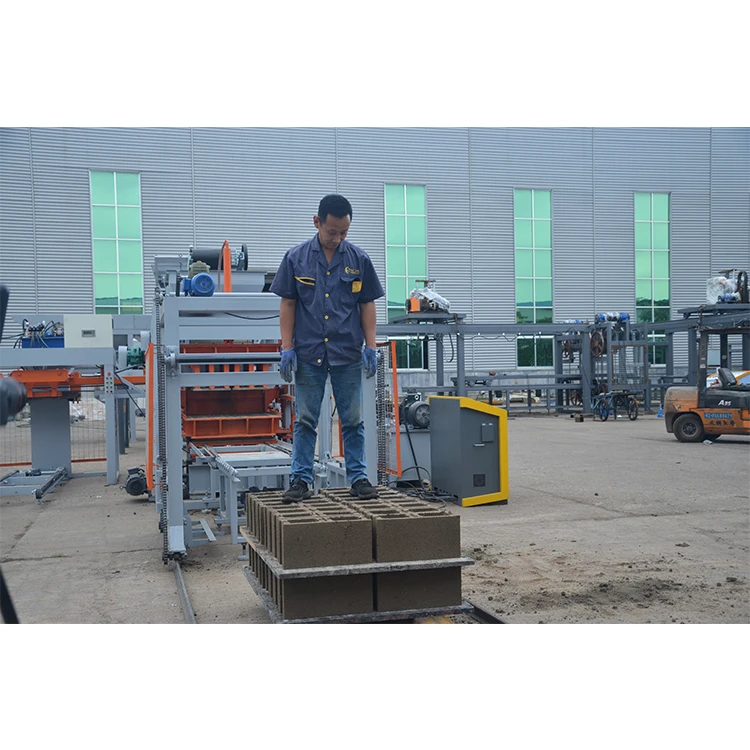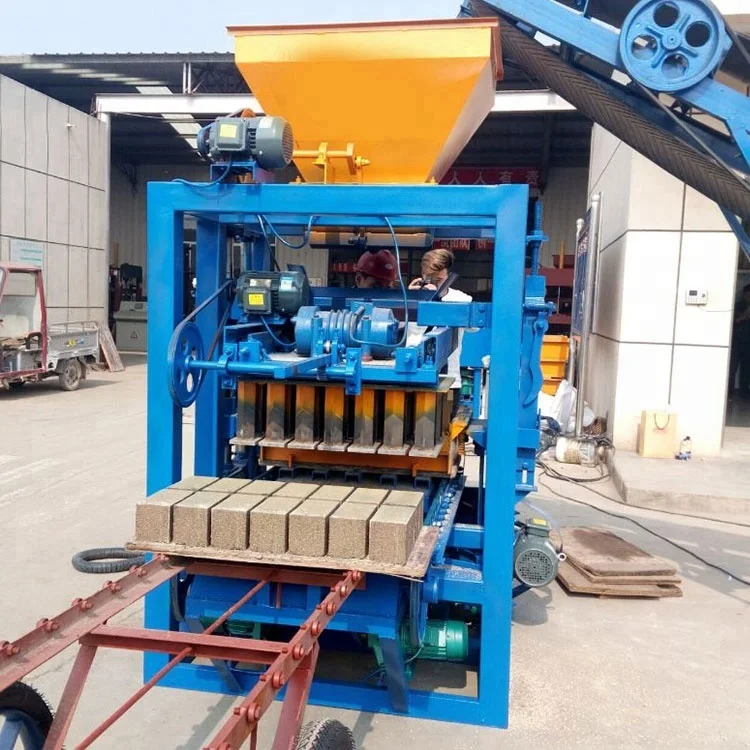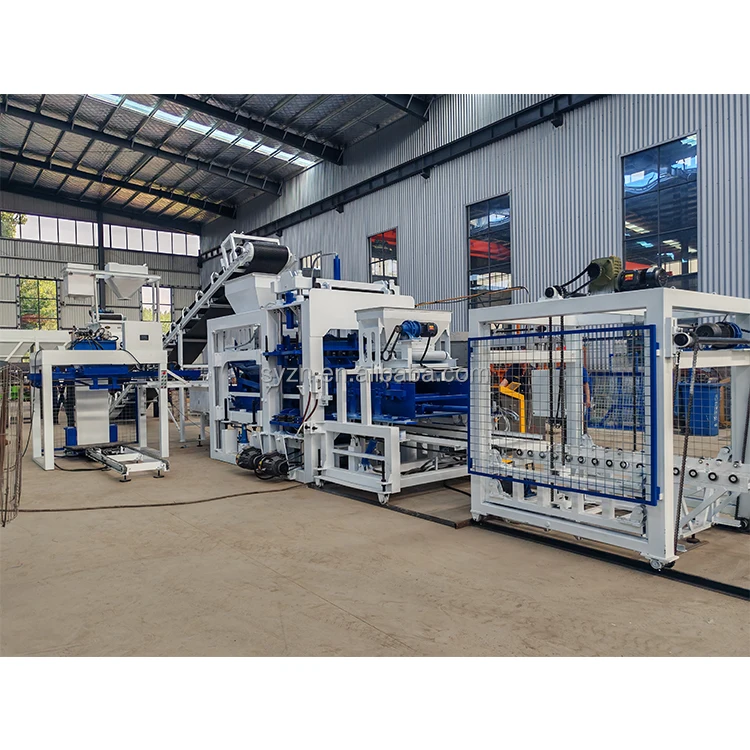


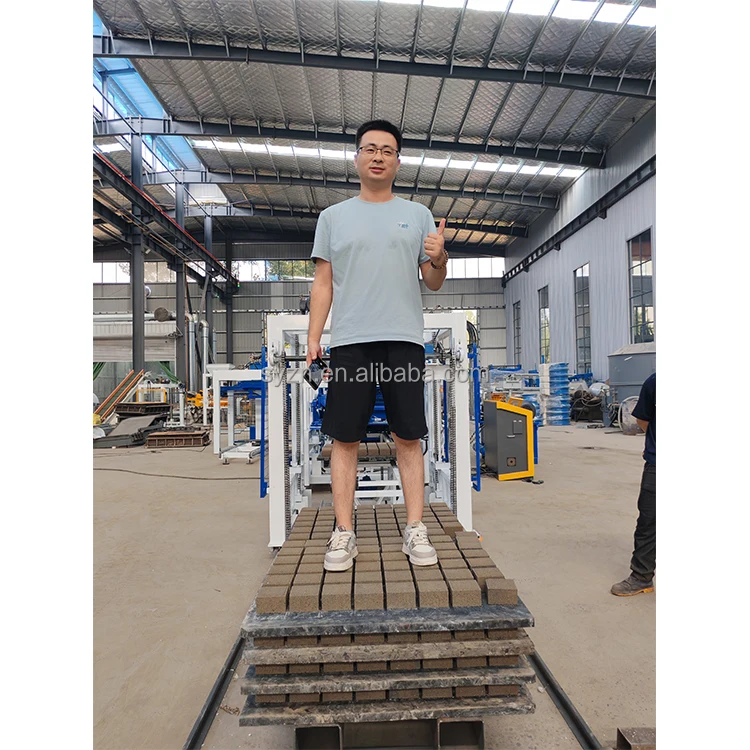
Description
Integrated PLC Control — The QT8-15 block making line stores process parameters per mould format so every cycle replicates the same pressure, vibration sequence, and feed timing without manual adjustment.
Technical Specifications
| Parameter | Value |
|---|---|
| Model | QT8-15 |
| Product Type | Automatic Hydraulic Block Making Machine |
| Overall Dimensions (L×W×H) | 8300 × 1860 × 3000 mm |
| Rated Pressure | Up to 32 MPa (configuration dependent) |
| Vibration Form | Platform Vibration |
| Vibration Frequency | 2800–4500 RPM |
| Pallet Size | 950 × 900 mm |
| Molding Cycle | 15–25 s (basis to be confirmed by block format and mix) |
| Overall Power | 47 kW (alternate 46 kW configuration available) |
| Control System | PLC with touch-screen HMI |
| Automation Level | Automatic (pallet feeder, host press, block conveyor, hydraulic station, stacker) |
| Stacking Method | Automatic stacker, two pallets per lift, 3–6 layers |
| Mixer | JS750 |
| Belt Conveyor | 8 m |
| Included Mould | One hollow block mould (additional formats available) |
| Certification | CE declaration |
Application Suitability
| Application | Material or Output |
|---|---|
| Hollow block production | Crushed stone, sand, cement, and water |
| Solid block manufacturing | Dense aggregate and cement blends |
| Paving block forming | Fine aggregate mixes with high compressive requirement |
| On-site contractor production | Local aggregate with portable batching setups |
Why the Electrical Confirmation Must Happen Before Production Starts
The automatic QT8-15 block making machine PLC controlled system depends entirely on correct voltage and frequency input to deliver the programmed cycle. Specifying the electrical conditions at the inquiry stage prevents the most common commissioning failure we see in export shipments.
A 60 Hz grid running a motor wound for 50 Hz drops the vibration frequency below the programmed RPM range. The press still cycles, but the compaction density falls outside tolerance. Operators compensate by extending vibration time manually, which then desynchronizes the pallet feeder and stacker from the host press. The entire line slows, and the PLC alarms trigger repeatedly because the actual cycle no longer matches the stored parameters [NEED_CITE: voltage and frequency standards by export market]. Confirming the local supply and the PLC display language before the control cabinet is wired eliminates this failure mode entirely.
How Programmable Parameters Remove Operator Guesswork
Each mould format loaded on the QT8-15 has its own stored parameter set inside the PLC. Feeding duration, vibration time, hydraulic dwell, and the sequence of pallet advance are all recalled with one touch-screen selection. When a plant switches from hollow blocks to pavers, the operator selects the new format and the automatic QT8-15 block making machine PLC controlled logic adjusts every station to match — no manual timing adjustments on the shop floor.
Line Synchronization Between the Press and the Stacker
The stacker handles two pallets simultaneously and stacks three to six layers depending on block height. Its cycle must finish before the next pair of pallets exits the press, otherwise pallets queue on the conveyor and the host press pauses. The PLC coordinates the stacker lift timing against the molding cycle so the press never waits for downstream handling. This synchronization is where semi-automatic lines lose throughput — the press is ready, but someone is still moving pallets by hand [NEED_CITE: automation impact on block line throughput consistency].
Reading the Specs That Actually Matter on Site
The platform vibration range of 2800–4500 RPM is adjustable, but the correct setting depends on the buyer’s aggregate gradation and cement content. A coarse crushed-stone mix needs higher amplitude at lower frequency, while fine sand mixes compact better at the upper RPM range. The rated pressure up to 32 MPa provides the static compaction force that works together with vibration — reducing hydraulic pressure while increasing vibration does not produce the same density outcome. The 950 × 900 mm pallet size determines how many blocks fit per cycle and must match the curing rack spacing and the forklift tine width already in the plant. Molding cycle of 15–25 seconds varies with block height and mix stiffness; a tall hollow block at the upper end of that range produces fewer units per shift than a thin paver at the lower end.
What Happens When Pallet Size Is Chosen Without Checking the Curing Yard
A pallet that is too large for the existing curing racks forces the plant to rebuild the rack system or stack blocks on the floor, losing curing uniformity. A pallet material that warps under sun exposure in tropical climates introduces dimensional variation across the block batch [NEED_CITE: pallet material deformation in high-humidity curing environments]. The 950 × 900 mm dimension must be verified against the buyer’s rack slots and forklift capacity before the pallet feeder is built.
Why This Line Is Configured as One System
The press, pallet feeder, JS750 mixer, 8 m belt conveyor, hydraulic station, and automatic stacker are specified together so that each station’s cycle time matches the others — the press is not left waiting for material, and the stacker is not overwhelmed by pallets arriving faster than it can lift. The PLC stores separate parameter sets per mould format, so a buyer adding solid blocks to an existing hollow block range loads a new recipe rather than re-tuning the machine from scratch. Configuration is set against the buyer’s actual mix design and local aggregate, not a default catalogue setting. Moulds are designed and supplied for the formats the buyer’s market actually sells, including custom drawings. The automation level is selectable, so a plant can start with the automatic stacker and add upstream batching automation later.
Documentation & Verification
- Line layout showing station spacing and pallet flow path for the QT8-15 footprint
- Capacity calculation stating the block format and mix assumed for the 15–25 s cycle
- PLC parameter sheet listing stored recipes per mould format before dispatch
- Hydraulic and electrical schematic matching the confirmed voltage and frequency
- Factory test record on the buyer’s specified block format and pallet size
- Mould drawing and format list confirming cavity count and block dimensions
Installation, Commissioning & Support
- Foundation must support the 8300 mm press length with vibration isolation pads under the platform
- Dedicated circuit required for the 47 kW total load with voltage confirmed before cabinet wiring
- Hydraulic station arrives pre-filled but must be bled after transport to restore 32 MPa response
- PLC language and HMI labels verified against operator preference during commissioning
- Automatic stacker lift height calibrated to curing rack dimensions on site
- Wear parts list provided covering hydraulic seals, vibration springs, and mould liners
What We Need to Size Your Line Correctly
Send us the block formats you intend to produce with target dimensions, your local aggregate type and source, the daily output you need per format, and the voltage and frequency at your site. If you already have curing racks and a forklift, share the rack slot dimensions and the forklift capacity so we can confirm pallet compatibility.
Frequently Asked Questions
Q: How is the 15–25 second molding cycle tied to a specific block format?
A: The cycle range depends on block height, mix stiffness, and vibration frequency selected for that format. A tall hollow block requires longer vibration and hydraulic dwell than a thin paver. We provide a capacity calculation that names the exact block format and mix assumed, so the daily output figure you receive is not a generic number.
Q: Can the PLC recall different settings for each mould I install?
A: Yes. The touch-screen HMI stores a separate recipe for every mould format on the line — feeding time, vibration duration, hydraulic pressure, and pallet advance sequence are all saved. Switching formats requires selecting the stored recipe and physically changing the mould, which the PLC then synchronizes across all stations.
Q: What electrical details must be confirmed before the machine is built?
A: We need the site voltage, phase configuration, frequency (50 Hz or 60 Hz), and the preferred PLC display language. These are locked in before the control cabinet is wired so that motor RPM, vibration frequency, and HMI labels all match your site conditions on arrival.
Q: How does the automatic stacker keep pace with the press without manual intervention?
A: The PLC coordinates the stacker lift cycle with the press output so that two pallets are collected and stacked before the next pair arrives. Stack height adjusts between three and six layers based on block height. Plants moving from semi-automatic operation gain continuous press cycling without pallet handling bottlenecks.
Q: What spare parts should I plan for in the first year of operation?
A: The documentation package includes a wear parts list covering hydraulic seals, vibration platform springs, and mould liner plates. Replacement moulds are built to the same drawings as the originals. We confirm part numbers and lead times before shipment so your first reorder does not require a new engineering cycle.