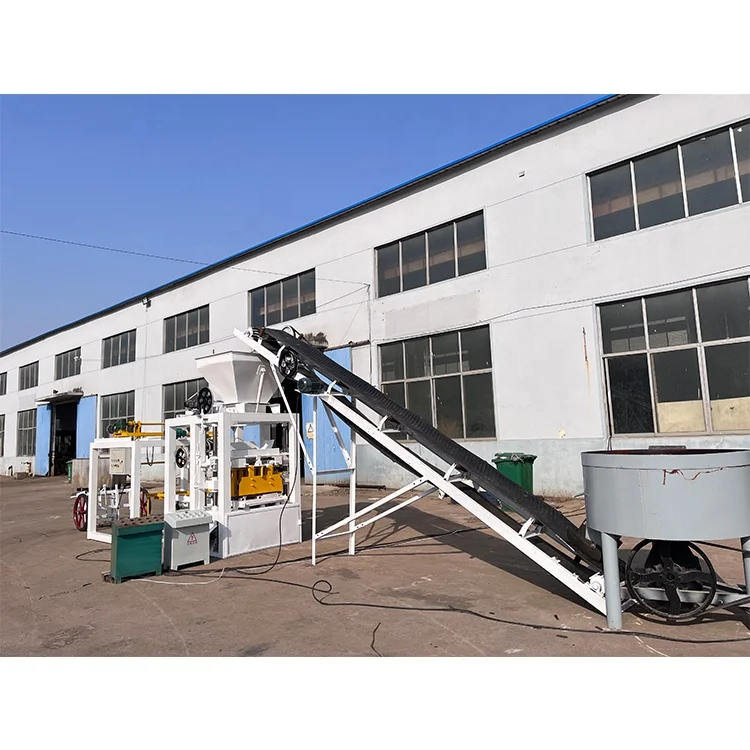


Description
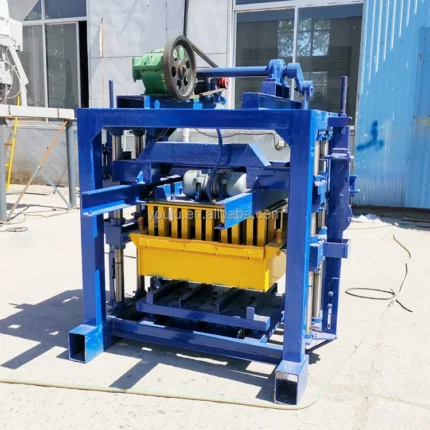
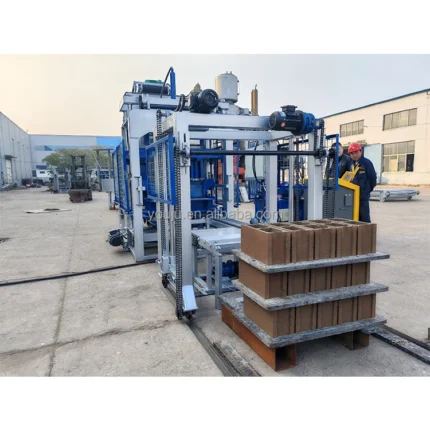
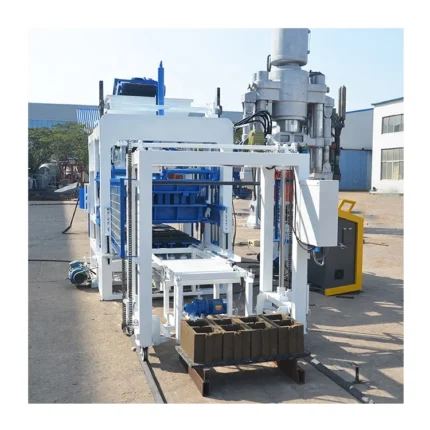
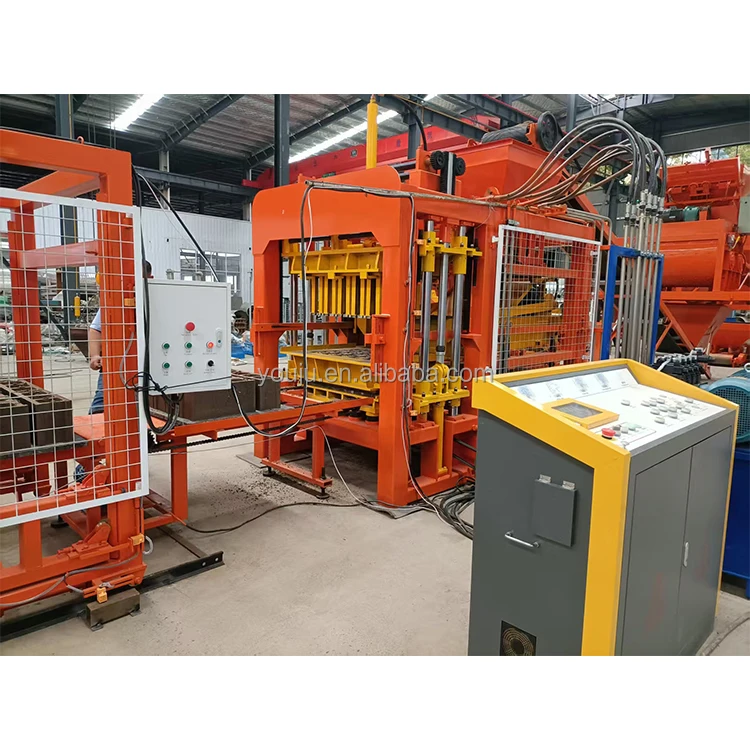
Controlled cycle consistency — the QTJ4-24 pairs a PLC with automatic spiral distribution so the press never starves or overfeeds, removing the feeding variable that breaks block density across a shift.
Technical Specifications
| Parameter | Value |
|---|---|
| Model | QTJ4-24 |
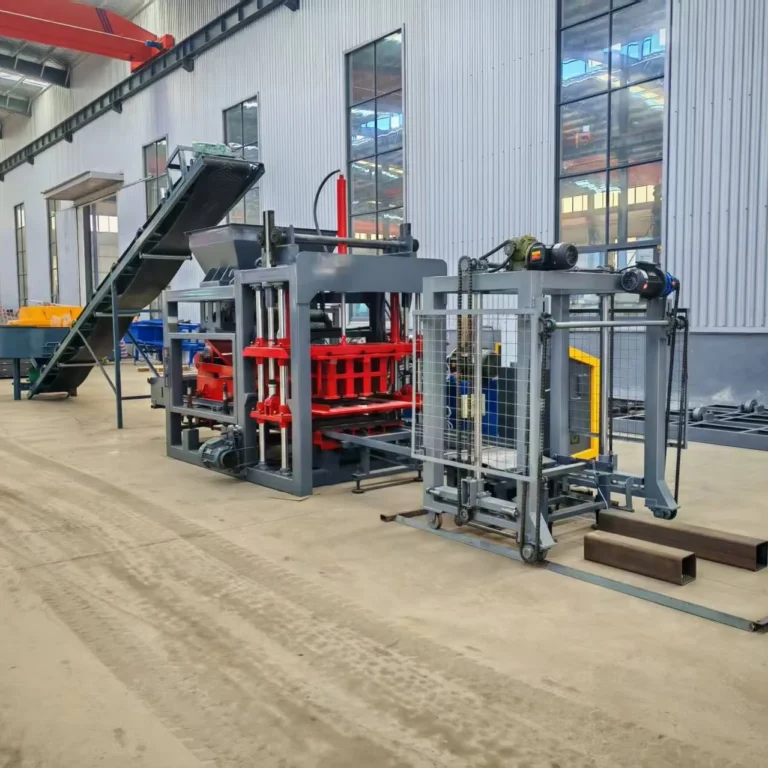
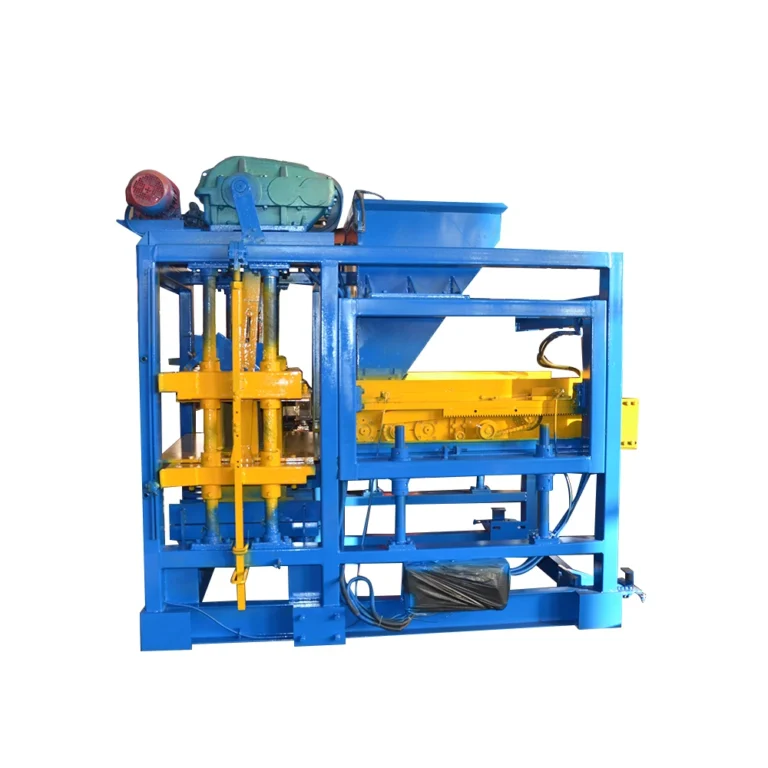
| Product Type | Stationary Concrete Block Making Machine |
| Overall Dimensions (L×W×H) | 3600×1700×2560 mm |
| Pallet Size | 850×450 mm |
| Molding Cycle | 24-26 s (basis not stated in source — confirm block format and material) |
| Overall Power | 11.95 kW |
| Vibration Force | 45 kN |
| Vibration Configuration | 2×3 kW lower vibrators + 2×1.5 kW upper vibrators |
| Molding Method | Mechanical (gear drive) |
| Material Distribution | Full-automatic spiral |
| Reducer for Mold Lifting | 350-type |
| Control System | PLC controlled (brand and language options to be confirmed) |
| Automation Level | Semi-automatic (mechanical molding with automatic material distribution) |
| Total Mass | 2 T |
| Raw Materials | Cement, sand, stone |
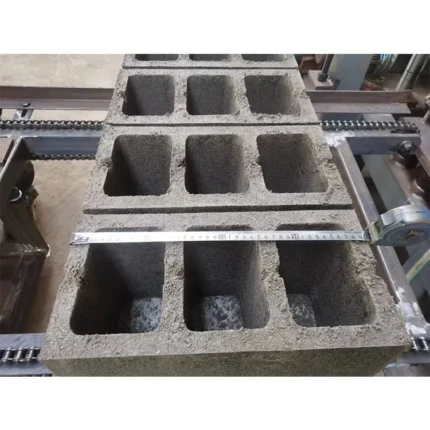
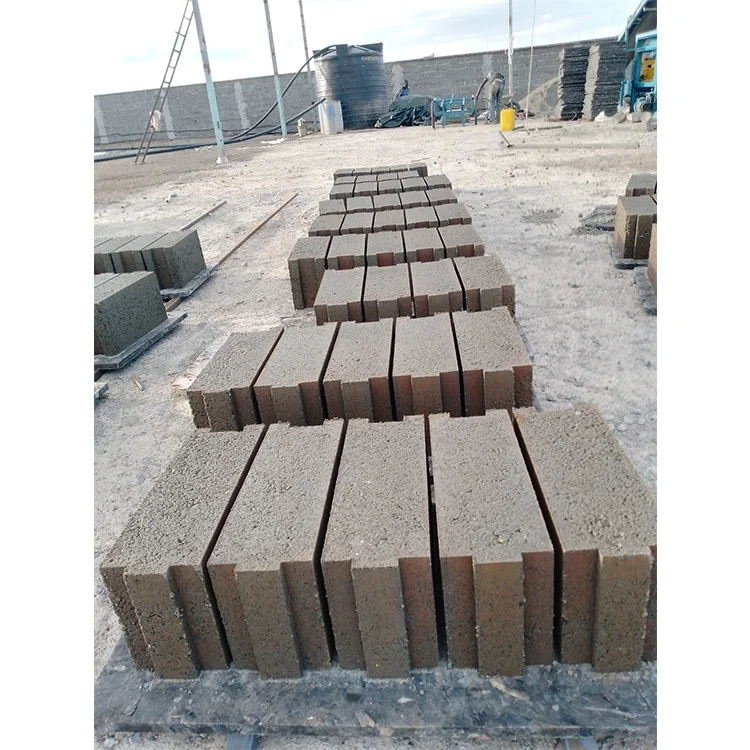
| Mould Format Options | Hollow block, solid block, interlocking brick, paving brick |
| Voltage & Frequency | To be confirmed against destination country |
| Key Features | Dual-level vibration, spiral feeder, gear-driven press, PLC-regulated cycle |
Application Suitability
| Application | Material or Output |
|---|---|
| Hollow block production for building walls | Cement, sand, crushed stone aggregate |
| Solid block production for load-bearing and partition walls | Cement, sand, stone with standard mix ratios |
| Interlocking brick production for paving and landscaping | Cement, fine sand, stone dust |
| Paving brick production for walkways and driveways | Cement, sand, stone with surface finish requirements |
| Small to medium block production plants | Daily output scaled to local market demand per format |
| On-site block production for construction contractors | Local aggregate sourced near the building site |
What the PLC Actually Controls — and What It Doesn’t
The PLC governs cycle timing and material feeding; the operator still handles pallets and stacking.
Many block machine catalogues advertise "PLC control" without specifying which stations fall under it. On the QTJ4-24, the PLC regulated concrete block making machine manages the molding cycle sequence and spiral material distribution, ensuring each cavity receives a consistent charge before the press closes. However, pallet feeding and block stacking remain manual operations at this automation tier. A buyer expecting full-line automation from a PLC label alone will find operators still stationed at the infeed and off-take ends [NEED_CITE: automation tier definitions in block production]. This distinction matters when calculating labour requirements for the shift.
PLC Logic and Cycle Repeatability
The PLC on this stationary block machine sequences the vibration, mold lift, and spiral feed into a fixed cycle. Once the operator initiates a press stroke, the controller runs the same timed sequence regardless of fatigue or shift changes. This repeatability is the core value of a PLC controlled concrete block making machine at this tier — it does not replace the operator, but it removes timing drift from the molding step.
Dual-Level Vibration and Density Uniformity
The vibration system splits force between two 3 kW lower vibrators and two 1.5 kW upper vibrators. Lower vibration compacts the mix into the mold cavity while upper vibration settles the surface. This dual configuration addresses the common fault of blocks that are dense at the base but friable at the top face, a problem that appears when only single-level vibration is applied to a 45 kN total force rating. The mechanical gear drive delivers this vibration through a rigid linkage rather than hydraulic damping [NEED_CITE: mechanical versus hydraulic vibration transmission in block presses].
Reading the Specs Against Your Production Plan
The 24-26 second molding cycle is the press stroke time, not a complete production cycle including pallet exchange and stacking. Buyers should add manual pallet handling and transfer time to calculate realistic output per format. The 850×450 mm pallet size determines how many blocks fit per cycle — a hollow block occupies more pallet area than an interlocking brick, so daily output shifts with format rotation. The 11.95 kW total power draw is moderate, meaning most small-plant generators can supply it, but the voltage and frequency must match the local grid before the control cabinet is energized. The 350-type reducer on the mold lifting mechanism is sized for continuous cycling; undersized reducers in this class fail prematurely under the shock load of daily mold changes.
The Cost of Skipping the Language and Voltage Check
When a PLC cabinet arrives with display text in a language the local operator cannot read, the machine sits idle while the program is rewritten and the HMI reconfigured. This is not a rare fault — it happens regularly when the destination country’s language and voltage standard are not confirmed before the machine leaves the factory [NEED_CITE: PLC display language configuration for export machinery]. The QTJ4-24’s control system is configurable, but only if the buyer states the requirement during the order stage. A 45 kN vibration force applied to the wrong mix design because the operator could not read the cycle parameters wastes raw material and produces unsaleable blocks.
Why This Configuration Works for Semi-Automatic Plants
The QTJ4-24 occupies a specific position: mechanical press with PLC-regulated timing and automatic material feed. This means the press itself runs consistently, while pallet handling and stacking remain labour-based — a practical setup for plants that do not yet justify full automatic stacking and cubing investment. The machine, mold, pallet, and handling are specified as one matched system. Configuration is set against the buyer’s actual mix design and local aggregate rather than a catalogue default. Molds are designed for the formats the buyer’s market sells, with custom drawings available. The automation level is selectable, so a buyer can start semi-automatic and plan a future upgrade path. Installation support includes operator training on the PLC interface and mold change procedure.
Documentation & Verification
- Machine specification sheet confirming pallet size, vibration force, and power rating
- PLC brand and display language confirmation signed before production
- Factory test record showing cycle sequence on the buyer’s selected block format
- Voltage and frequency match document for the destination country grid
- Mould drawing and format list with changeover procedure
- Operation and maintenance manual in the confirmed control language
Installation, Commissioning & Support
- Foundation pad sized for the 3600×1700 mm footprint and 2 T operating mass
- Dedicated power circuit rated for the 11.95 kW draw at confirmed voltage and frequency
- Press arrives assembled; mold, pallet, and spiral feeder checked on-site
- PLC cycle parameters set against the buyer’s mix design during commissioning
- Operator trained on mold change procedure and control interface navigation
- Wear parts list provided with first replacement schedule for vibrators and reducer
What We Need From Your Side
To size the QTJ4-24 correctly for your line, share the block formats your market demands and the daily volume per format. Confirm your local voltage and frequency, the preferred PLC display language, and the aggregate available near your site. Let us know your existing pallet dimensions and curing area layout so the 850×450 mm pallet specification can be validated against your handling equipment.
Frequently Asked Questions
Q: What does the PLC actually control on this machine, and what remains manual?
A: The PLC governs the molding cycle sequence, vibration timing, and spiral material distribution. Pallet feeding, block stacking, and pallet return remain manual operations at this semi-automatic tier. The operator initiates each cycle and handles finished blocks off the press.
Q: Can the control language and voltage be confirmed for my country before shipping?
A: Yes. The PLC display language and the electrical cabinet voltage and frequency are confirmed during the order stage. We require your local grid specification and preferred HMI language before the control cabinet is built and wired.
Q: How do I upgrade from this semi-automatic setup to full automatic stacking later?
A: The automation level is selectable. A buyer can start with the QTJ4-24 in its current semi-automatic configuration and add automatic pallet feeding, stacking, and cubing stations later as production volume justifies the investment.
Q: What mould formats are available and how long does a mould change take in practice?
A: Moulds cover hollow block, solid block, interlocking brick, and paving brick. Mould change time depends on the operator’s familiarity and the changeover tools provided. Confirm the actual changeover duration against your planned format rotation schedule.
Q: How is vibration force matched to my local aggregate and mix design?
A: The 45 kN dual-level vibration is configured during commissioning. We match the vibration duration and amplitude settings to your local aggregate gradation and cement ratio to achieve consistent block density across formats.