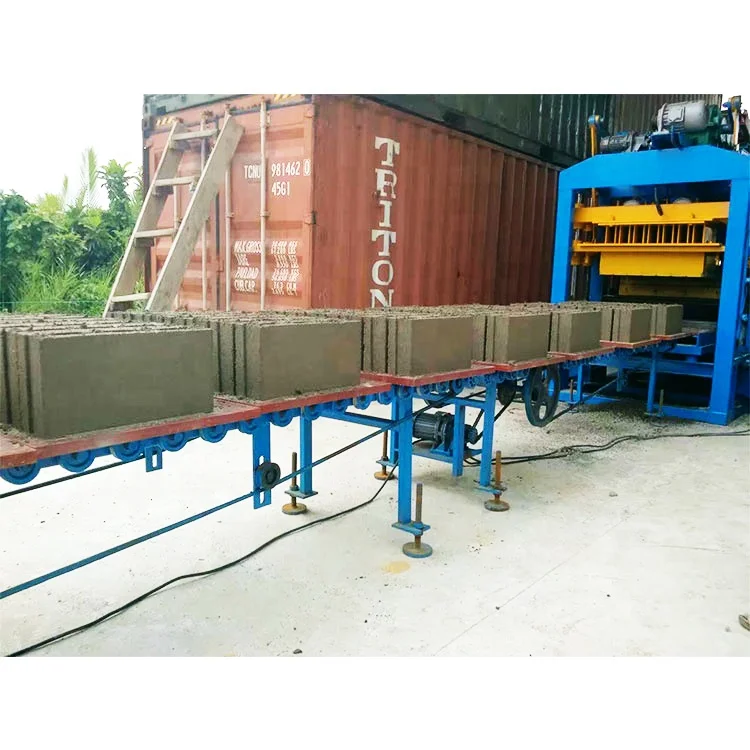


Description
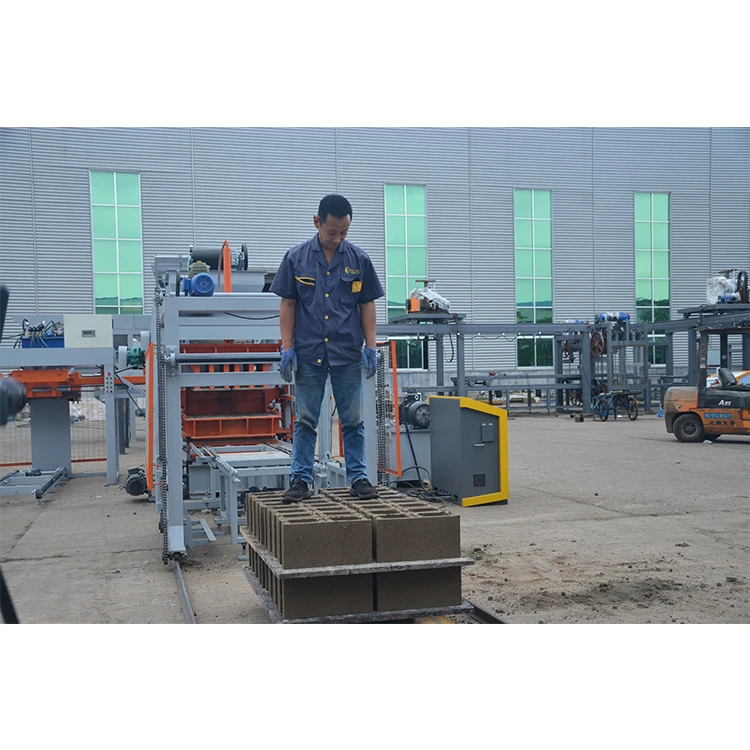
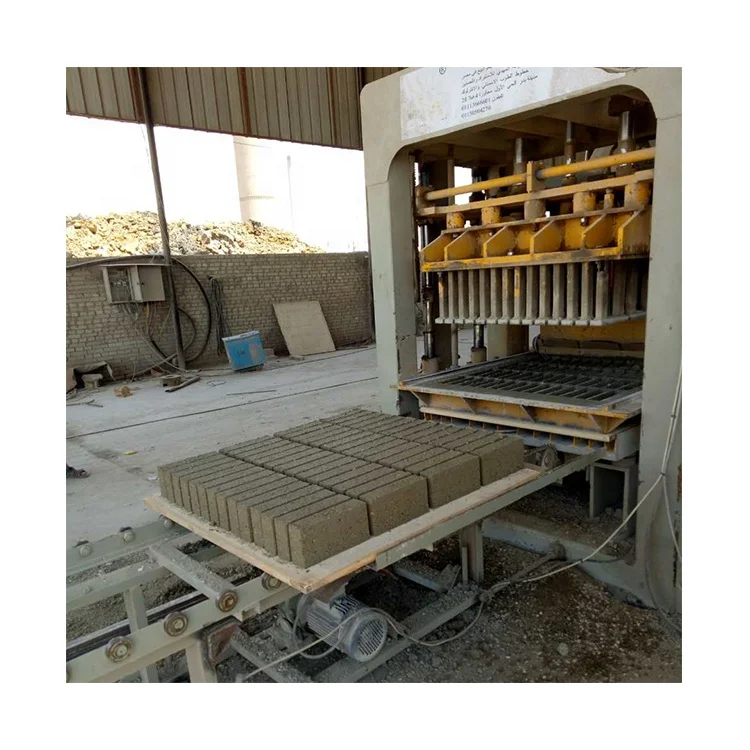
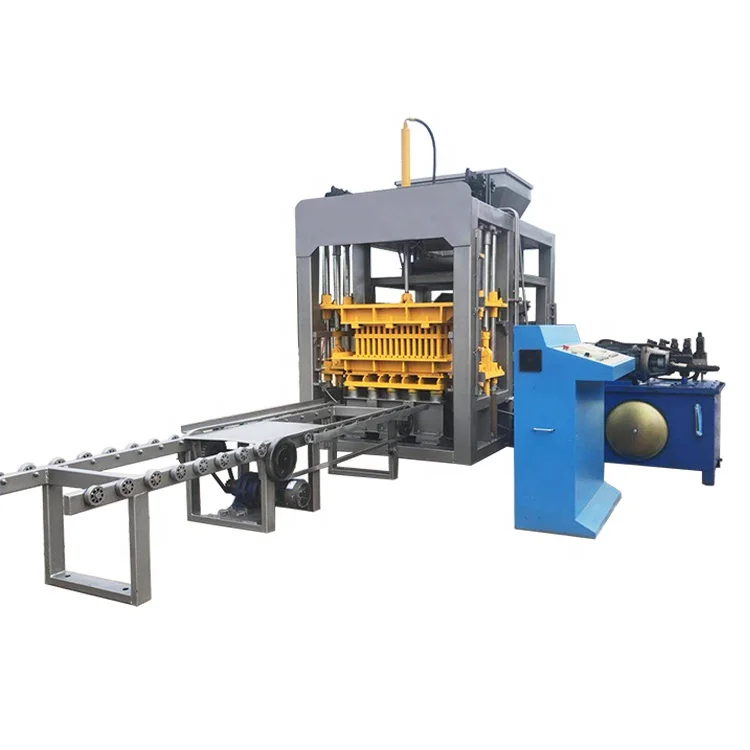
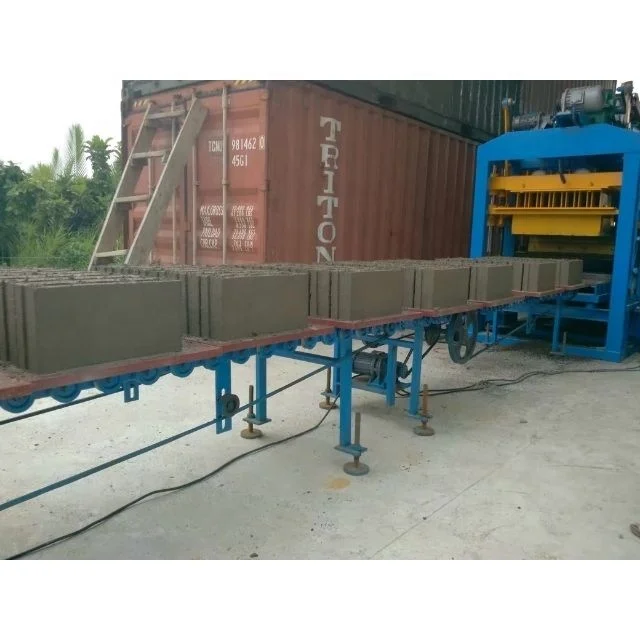
Electrical foundation for phased intelligence — the QTJ4-25 electric control panel with Siemens or ABB motors gives plant owners a verifiable baseline before committing to PLC retrofit and automated pallet handling.
Technical Specifications
| Parameter | Value |
|---|---|
| Model | QTJ4-25 |
| Product Type | Concrete Block Making Machine |
| Automation Level | Semi-automatic (electric control) |
| Control System | Electric control cabinet (PLC retrofit to be confirmed) |
| Motor Brand | Germany SIEMENS or ABB |
| Voltage & Frequency | 380V, 3-phase, 50Hz (customizable to local voltage) |
| Vibration Force | 45KN |
| Cycle Time | 25s |
| Pallet Size | 850×550mm |
| Block Height Range | 40-280mm |
| Overall Dimensions (L×W×H) | 3060×1730×2580mm |
| Total Weight | 4T |
| Workshop Area | 50-150m² |
| Material Storage Area | 300-500m² |
| Belt Conveyor Length | 8m |
| Mixer Model | JQ500 |
| Output Capacity | 480 pcs/h (basis: 400×200×200mm hollow block, 4 pcs/mould) |
| Output Capacity | 600 pcs/h (basis: 400×150×200mm hollow block, 5 pcs/mould) |
| Output Capacity | 840 pcs/h (basis: 400×100×200mm hollow block, 7 pcs/mould) |
| Output Capacity | 2880 pcs/h (basis: 240×115×53mm solid brick, 24 pcs/mould) |
| Mould Change System | Manual |
| Hydraulic Pressure | Not stated in source |
| Stacking Method | Not stated in source |
| Certification | CE (verify against manufacturer documentation) |
| Warranty | 1 year (excluding wearing parts) |
Application Suitability
| Application | Material or Output |
|---|---|
| Hollow block production for small and medium block plants | Crushed stone, cement, fly ash, river sand |
| Solid brick manufacturing | Cement, sand, aggregate blends |
| Paver and interlocking block production via mould change | Colored concrete mixes, fine aggregate |
| On-site or workshop-based concrete product manufacturing | Locally sourced aggregate and cement |
| Riverside and revetment brick with dedicated moulds | Heavy-duty concrete mixes for erosion control |
What "Semi-Automatic" Actually Means for Your Upgrade Path
The automatic QTJ4-25 block machine PLC controlled specifications start with a question: does the existing electric cabinet accept a PLC retrofit, or does automation require a full swap?
I have seen plant owners assume "semi-automatic" leaves a clean upgrade slot waiting in the control panel. The reality is less tidy. When the electric control was specified for manual pallet feeding and hand stacking, the wiring harness may not carry the I/O points a PLC needs to command an automatic pallet feeder or stacker. Before the machine ships, the buyer needs the electrical schematic in hand — not a promise that intelligence can be bolted on later [NEED_CITE: PLC retrofit compatibility standards for semi-automatic press equipment].
Timing the Press Rhythm Against Automation Speed
A 25-second cycle time sets a fixed rhythm that any upstream batching system and downstream pallet handler must match. If the automatic pallet feeder takes 30 seconds to index a fresh board into position, the press sits idle for five seconds every cycle. Over a shift, those gaps accumulate into lost output that no brochure figure accounts for. The automatic QTJ4-25 block machine PLC controlled specifications must therefore state not only the press cycle but the pallet feed and stacking speeds that keep the line synchronized.
Vibration Force and Automated Mix Dosing
The 45KN vibration force is the baseline against which hydraulic pressure and mix design must be tuned. When a plant moves from manual batching to PLC-controlled dosing, the consistency of each batch improves — but only if the control system can adjust vibration duration per mix type. A fly ash blend may need a different vibration profile than a crushed stone mix to reach the same block density. Without that programmability, automated dosing simply produces consistent batches of inconsistent blocks [NEED_CITE: vibration profiling for varying aggregate densities in block production].
Pallet Dimensions and Retrofit Geometry
The 850×550mm pallet size determines whether an automatic pallet feeder and stacker can be retrofitted without replacing the curing racks and forklifts already on the floor. If a buyer has invested in racks sized for a different pallet dimension, adding automation means changing the entire curing area — a cost that rarely appears in the machine quotation. Confirming pallet compatibility before ordering protects the automation budget from hidden infrastructure spend.
When the Control Cabinet Becomes the Bottleneck
Choosing a semi-automatic line without verifying the PLC upgrade path locks a plant into manual pallet handling long after volume justifies automation. Operators continue stacking output by hand while the press cycle waits on human speed. Mould changes that should take minutes stretch across a shift because the control system has no programmable sequence to guide the operator through the steps [NEED_CITE: labour cost impact of manual versus automated pallet handling in block plants]. The gap between what the press can produce and what the line actually delivers widens every day the upgrade is delayed.
Why Source This Machine Through a Line-Integrated Approach
Block machinery as a single focus means the QTJ4-25 is specified alongside its pallet, mould and handling equipment rather than assembled from separate suppliers. Configuration is set against the buyer’s actual mix design and local aggregate, not a catalogue default. Mould design covers the formats the buyer’s market sells, with custom drawings available. The automation level is selectable — a buyer can start semi-automatic and add PLC-controlled pallet feeding and stacking as volume grows. Installation support includes operator training so the transition from electric control to intelligent operation follows a defined path.
Documentation & Verification
- Electrical schematic showing I/O points available for PLC retrofit integration
- Capacity calculation stating block format assumed for each output figure
- Voltage, frequency and control language confirmation sheet before dispatch
- Factory test record on buyer’s specified pallet size and mould format
- Hydraulic and wiring diagrams confirming automatic feeder connection points
- Operation manual covering semi-automatic and upgraded control modes
Installation, Commissioning & Support
- Foundation must support 4T total weight across the 3060×1730mm machine footprint
- Dedicated 380V 3-phase circuit with confirmed frequency for Siemens or ABB motors
- Belt conveyor requires 8m linear clearance from mixer to press feed hopper
- Commissioning includes cycle time verification at 25s with buyer’s mould installed
- Operator training covers electric control sequence and PLC transition procedures
- Wear parts list with mould and hydraulic component replacement intervals
What to Include in Your Inquiry
Specify your target block format and the daily output you need for that specific size — not a generic capacity figure. Confirm your local voltage, frequency, and the language you need on the control display. State your current pallet dimensions and curing rack layout so the automation retrofit can be assessed against your existing infrastructure.
Frequently Asked Questions
Q: What automation level does the QTJ4-25 ship with, and what is the upgrade path to full PLC control?
A: The QTJ4-25 ships as a semi-automatic press with electric control and Siemens or ABB motors. The upgrade path to full PLC control depends on whether the existing cabinet supports additional I/O points for automatic pallet feeding and stacking. Request the electrical schematic before shipment to confirm retrofit feasibility or determine if a full cabinet replacement is required.
Q: How does the 25-second cycle time affect pallet feeding and stacking automation speed?
A: Any automatic pallet feeder and stacker must complete its cycle within 25 seconds to prevent the press from idling. If pallet indexing or stacking takes longer, the line loses output every cycle. Specify pallet handling equipment rated to match or exceed the press rhythm so the automatic QTJ4-25 block machine PLC controlled specifications deliver synchronized throughput.
Q: Can the electric control cabinet be retrofitted with a PLC, or does automation require a complete system replacement?
A: Retrofit feasibility depends on the cabinet’s existing wiring capacity and available I/O channels. Some semi-automatic cabinets accept a PLC module with additional relays, while others require a full swap. Obtain the electrical schematic and confirm with the manufacturer whether the current panel supports the programmable logic needed for automated batching, pallet feeding, and stacking.
Q: What voltage, frequency and control language must be confirmed before the machine leaves the factory?
A: The default configuration is 380V, 3-phase, 50Hz, but customization to local voltage is available. The PLC display language must also be specified — if this is not confirmed before shipment, commissioning delays occur while the control interface is reprogrammed on site. State your requirements during the quotation stage.
Q: How do I calculate realistic daily output per block format when planning an automatic stacking system?
A: Each output figure is tied to a specific block format: 480 pcs/h for 400×200×200mm hollow blocks, 600 pcs/h for 400×150×200mm, 840 pcs/h for 400×100×200mm, and 2880 pcs/h for 240×115×53mm solid bricks. Plan the stacking system around the format that represents your highest daily volume, not the maximum pcs/h figure.