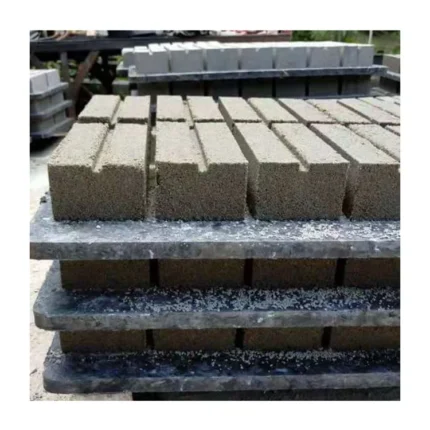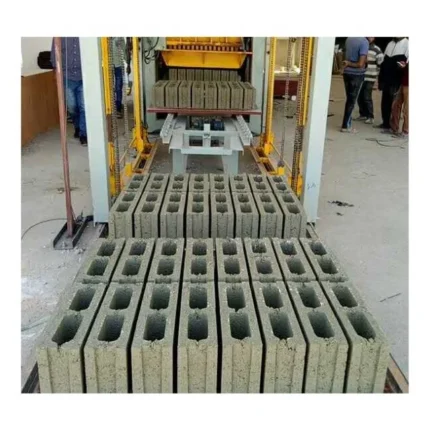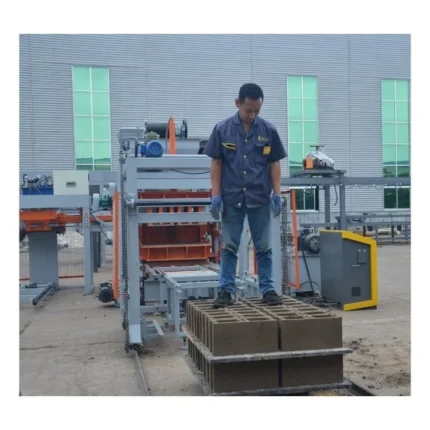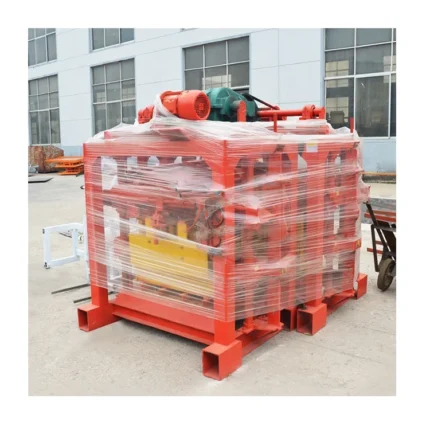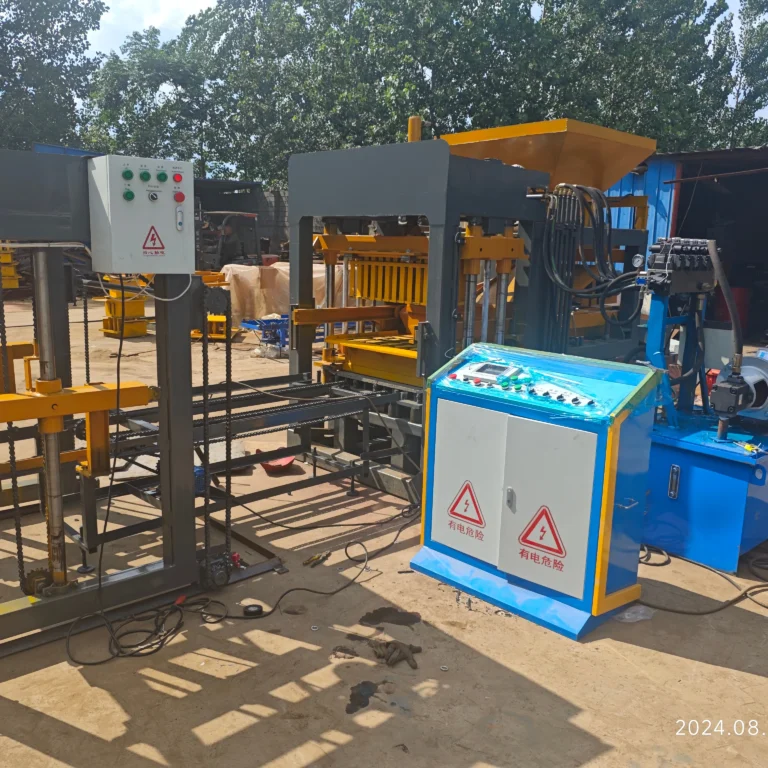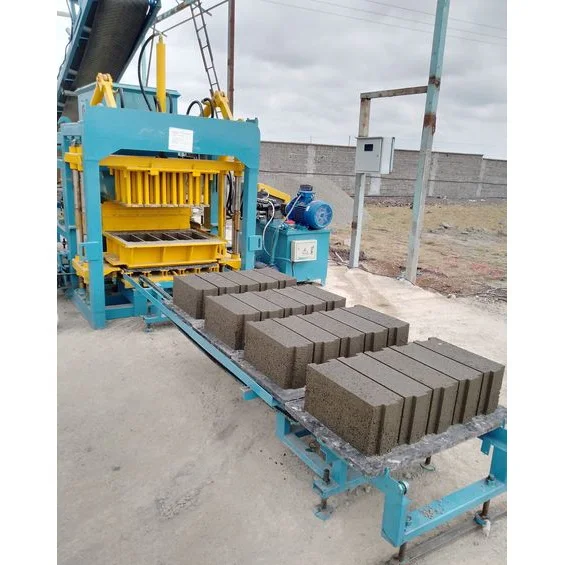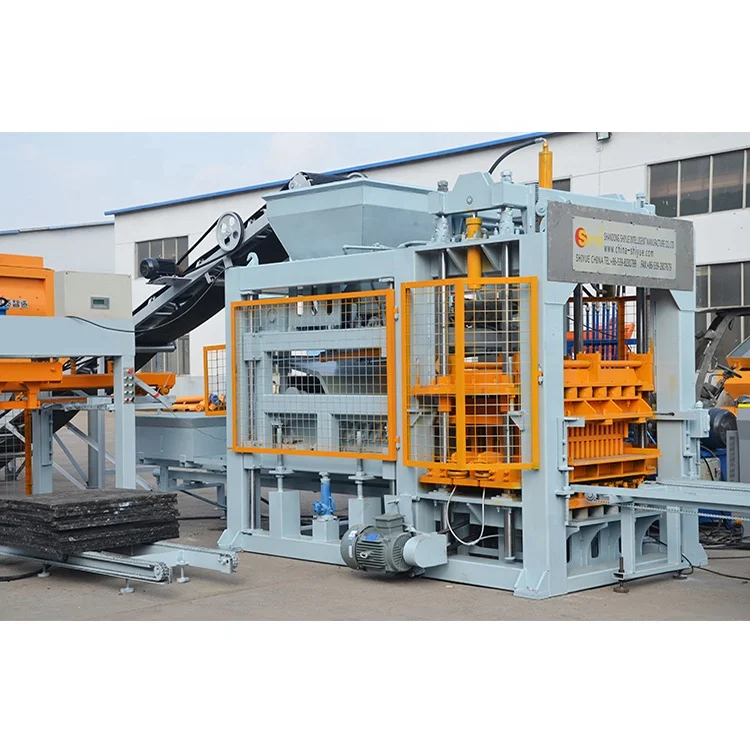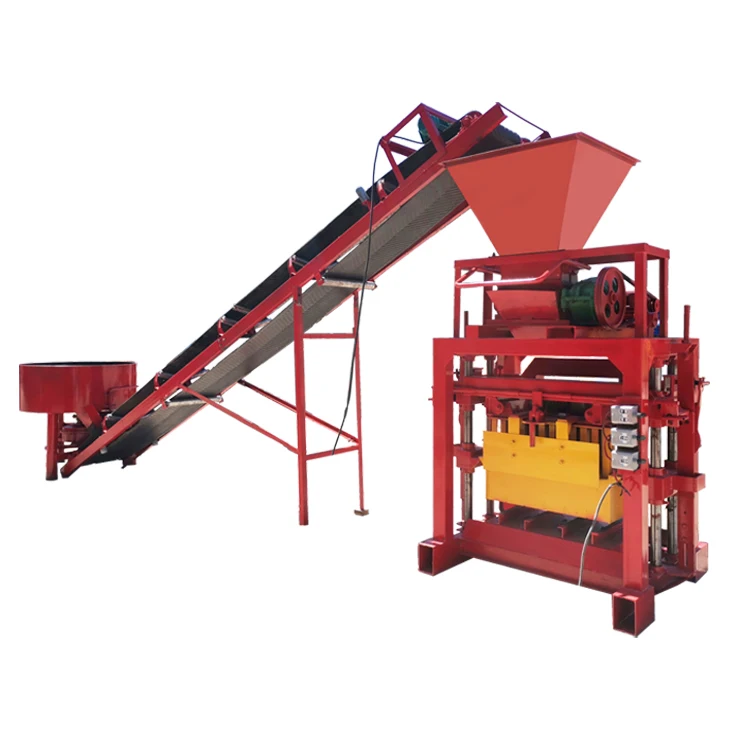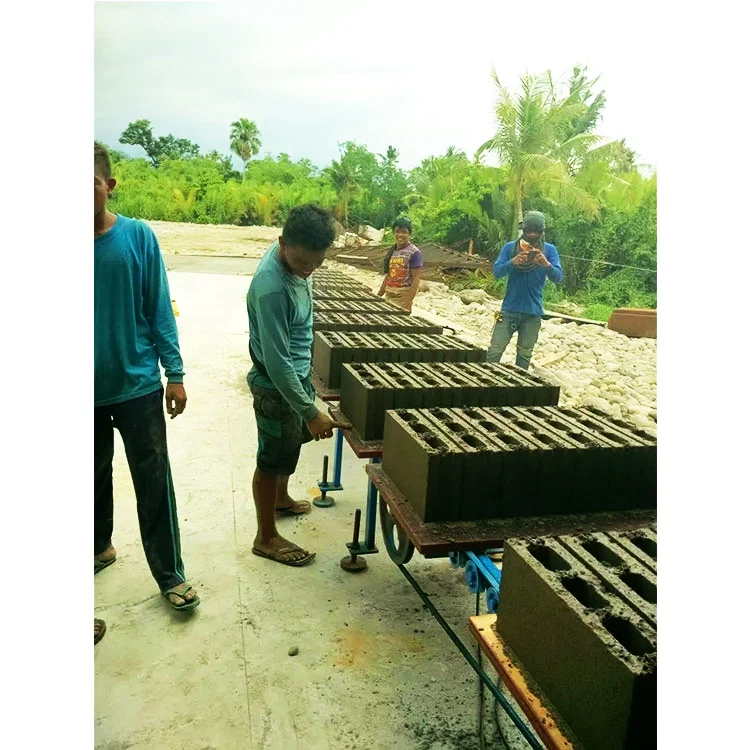
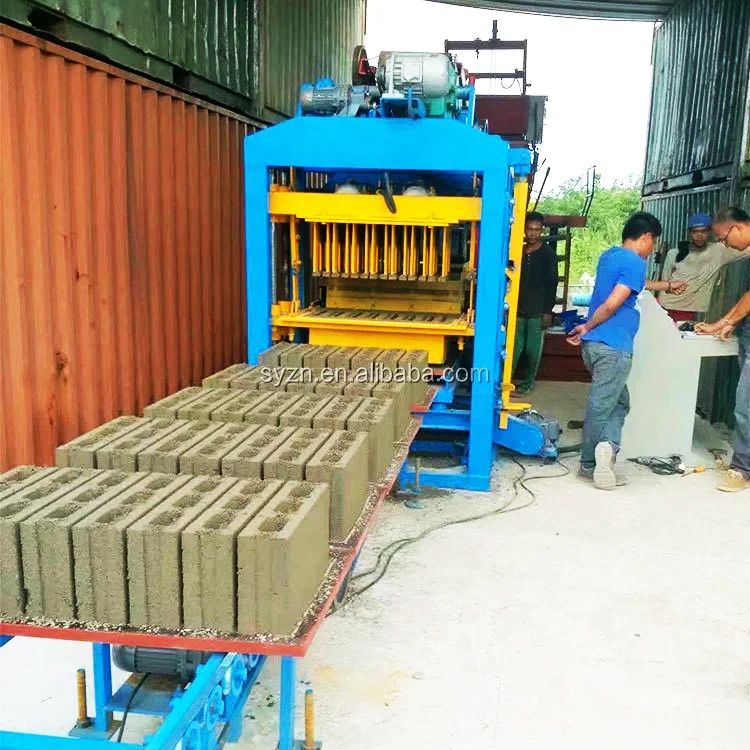
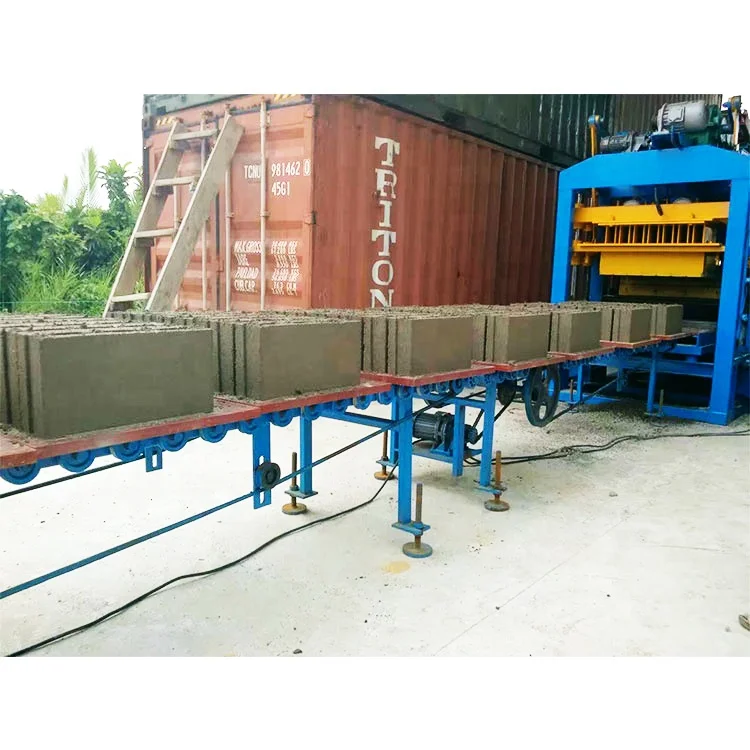
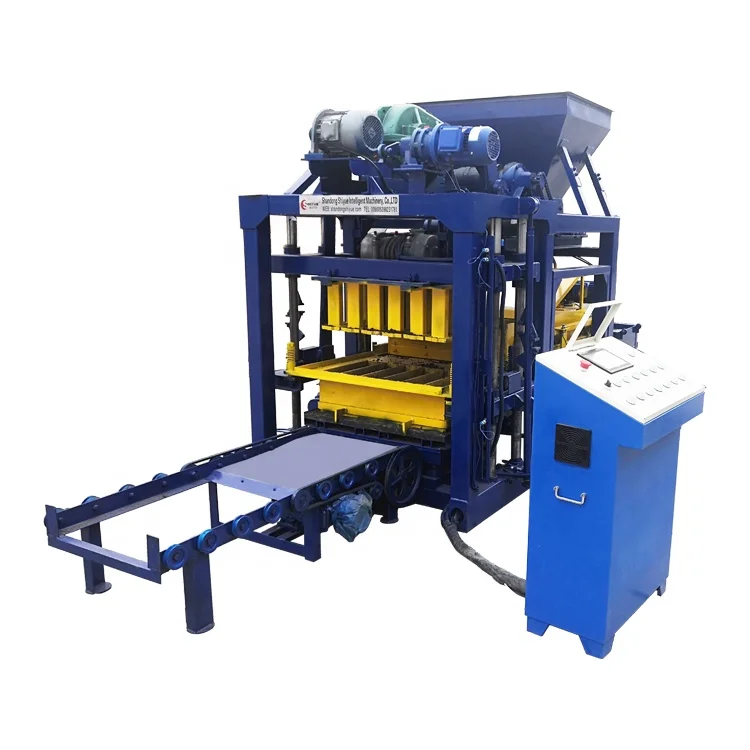
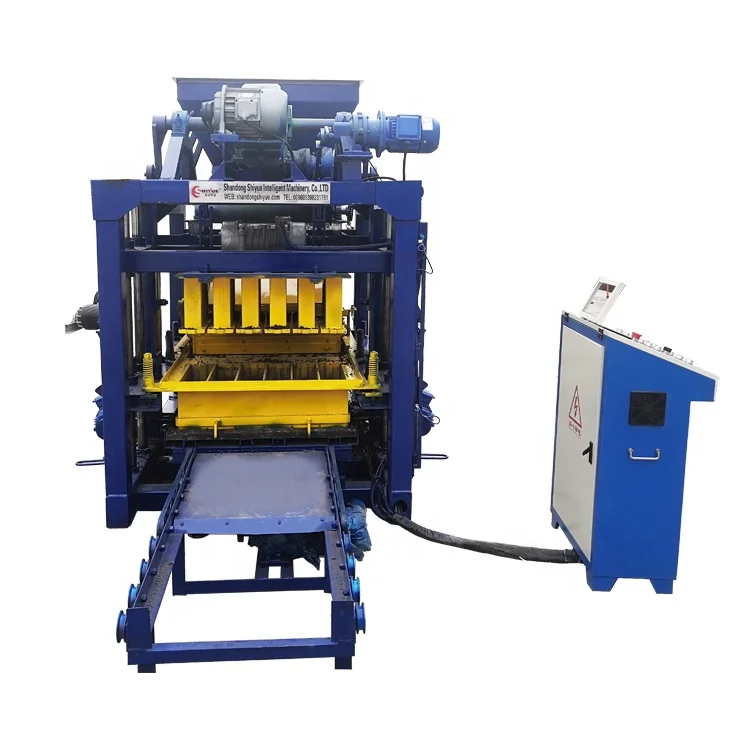
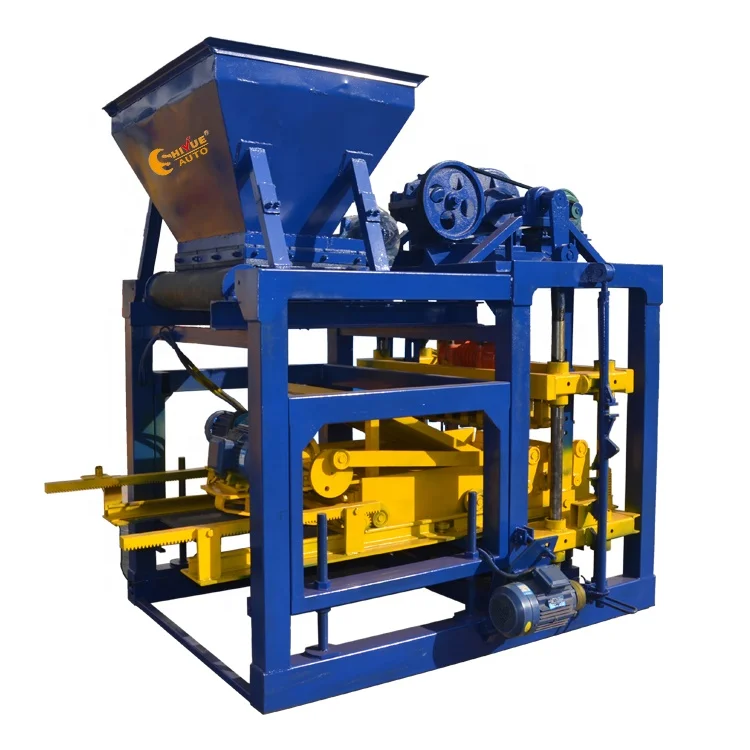
Description
Automation Level Matching — the QTJ4-25 is supplied with selectable control logic and pallet handling stages so the operator interface and physical line match what your crew can run on day one, not what a catalogue assumes.
Technical Specifications
| Parameter | Value |
|---|---|
| Model | QTJ4-25 |
| Product Type | Kerb Stone Brick Making Machine |
| Overall Dimension | 3060 × 1730 × 2580 mm |
| Rated Pressure | 16–21 MPa |
| Main Vibration Form | Platform Vibration |
| Vibration Frequency | 4200 r/min |
| Vibration Force | 45.5 kN |
| Pallet Size | 850 × 550 mm |
| Molding Cycle | 25–30 s |
| Overall Power | 14.9 kW |
| Total Mass | 4 T |
| Demolding Method | Vibration |
| Factory Area | 200 m² |
| Raw Materials | Crushed stone, sand, cement, fly ash, gravel, slag |
| Applied Products | Concrete blocks, hollow/solid blocks, pavers, interlocking blocks, curbstone, colored pavers |
| Key Features | PLC controlled block machine with platform vibration and semi-automatic pallet handling |
Application Suitability
| Application | Material or Output |
|---|---|
| Kerbstone production for municipal roadworks | Crushed stone and cement mixes with fly ash filler |
| Interlocking paver runs for pedestrian zones | Sand, cement, and fine gravel blends |
| Hollow block manufacturing for load-bearing walls | Coarse aggregate with cement binder |
| Solid block output for partition walls | Fly ash and sand combinations |
| Colored paver batches for landscaping | Pigmented cement with fine sand matrix |
What the PLC Language Setting Decides Before Arrival
Confirming the display language before shipment is a hard stop, not a post-arrival adjustment.
I once watched a panel-mounted screen boot into the wrong script on a curbstone line in the Middle East. The operator could not read a single menu item, the commissioning window was forty-eight hours, and the project engineer was already counting liquidated damages. That is the kind of delay no one recovers from on site [NEED_CITE: voltage and control language confirmation before industrial equipment shipment]. The automatic QTJ4-25 kerb stone brick making machine arrives with the PLC display language, voltage, and frequency locked to your site specification so the first power-on is also the first productive cycle.
How the Control Layer Removes Variability
The PLC on this PLC controlled block machine replaces the manual judgement calls that drift across a long shift. Batching intervals, vibration duration, and pallet advance timing all sit inside the programmed cycle, so the twentieth kerbstone of the morning is compacted identically to the first. When a format change is required, the operator selects the stored recipe rather than resetting timers by hand.
Where Semi-Automatic Ends and Full Automation Begins
Semi-automatic operation here means the press cycle runs under program control while pallet loading and product removal still depend on the operator. The upgrade path adds automatic pallet feeding and stacking modules so the same press eventually runs with fewer hands on the floor. Buyers who plan a phased investment start with the semi-automatic configuration and bolt on the handling stations later without replacing the core press.
Reading the Numbers That Actually Matter
The 45.5 kN vibration force and 16–21 MPa hydraulic pressure work as a pair: pressure pre-compacts the mix while platform vibration at 4200 r/min settles fine particles into voids. If either value is mismatched to the local aggregate gradation, the kerbstone exits the mould with weak edges or surface cracks. The 850 × 550 mm pallet size determines how many units cure per rack and whether your existing forklift can handle a loaded pallet without a special attachment [NEED_CITE: pallet size compatibility with curing racks and material handling]. A molding cycle of 25–30 seconds per format is the press time only; add pallet return and mould filling to reach a true line cycle.
The Cost of Skipping the Configuration Conversation
A buyer who confirms price before confirming mix design often discovers the machine was set up for a material they cannot source. The vibration amplitude suited a well-graded river sand, but the local quarry supplies angular crushed dust that needs longer vibration and higher pressure. Moulds cut for a kerbstone profile that the municipal tender does not specify sit idle while a replacement set is manufactured and shipped [NEED_CITE: mould format alignment with buyer market demand]. None of these issues reflect a defective machine; they reflect an incomplete specification sheet.
Why This Configuration Holds Up on Site
Block machinery is the single focus of the production line, so the press, mould, pallet, and handling stages are specified as one matched set rather than sourced separately. The automatic QTJ4-25 kerb stone brick making machine is configured against the buyer’s actual mix design and target block format, not a default catalogue entry. Mould design covers the kerbstone profiles the buyer’s market actually sells, with custom drawings available for non-standard profiles. Automation level is selectable at order and expandable afterward, protecting the initial investment as output targets grow. Installation support includes operator training on the specific PLC interface and recipe management for the formats in production.
Documentation & Verification
- Machine specification sheet listing confirmed voltage, frequency, and PLC language
- Mould drawing and kerbstone format list matched to your market profiles
- Factory test record showing molding cycle on your specified mix design
- Hydraulic and electrical schematic for on-site maintenance reference
- Pallet specification confirming size and load rating against your curing racks
- Operation and maintenance manual in the confirmed control language
Installation, Commissioning & Support
- Foundation pad leveled to within tolerance for the 3060 × 1730 mm footprint
- Dedicated power circuit sized for the 14.9 kW total connected load
- PLC program verified in confirmed language during on-site commissioning
- Mould change procedure demonstrated with your kerbstone and paver formats
- Vibration force calibrated against your local aggregate sample
- Wear parts list cross-referenced with hydraulic and vibration components
What to Include in Your First Inquiry
Send the kerbstone dimensions and daily volume your tender requires, the aggregate type available within hauling distance, and the voltage and frequency at your site panel. Note the language your operators read on a screen and whether existing curing racks or forklifts constrain pallet size. If you plan to add pavers or hollow blocks later, list those formats now so the mould inventory and automation staging cover the full range from the first container.
Frequently Asked Questions
Q: How is daily output calculated for a specific kerbstone format?
A: The molding cycle is 25–30 seconds per press, but daily output depends on the kerbstone dimensions, mix setting time, and pallet return speed. We calculate capacity per format and state the assumed block size, so the number you plan against matches what the line actually produces on your mix.
Q: Can the automation level be upgraded after initial installation?
A: Yes. The semi-automatic configuration leaves mechanical and electrical interfaces for automatic pallet feeding and stacking modules. Adding those stages later does not require replacing the press or the PLC, only bolting on the handling equipment and extending the program.
Q: Is the PLC display available in my local language?
A: The display language is confirmed before production and burned into the controller before dispatch. This step is part of the standard order checklist, not an optional add-on, because re-flashing on site wastes commissioning time.
Q: How do vibration force and pressure match my local aggregate?
A: The 45.5 kN vibration force and 16–21 MPa pressure are set during factory testing using a sample of your actual aggregate and mix proportions. Adjustments to amplitude and dwell time are recorded in the test report shipped with the machine.
Q: What is involved in changing from kerbstone to paver mould?
A: The mould is unclamped, lifted out, and the replacement set is positioned and locked. The PLC recipe for the new format is selected, which adjusts vibration duration and press travel. The entire change is mechanical and programmatic, requiring no rewiring or hydraulic modification.