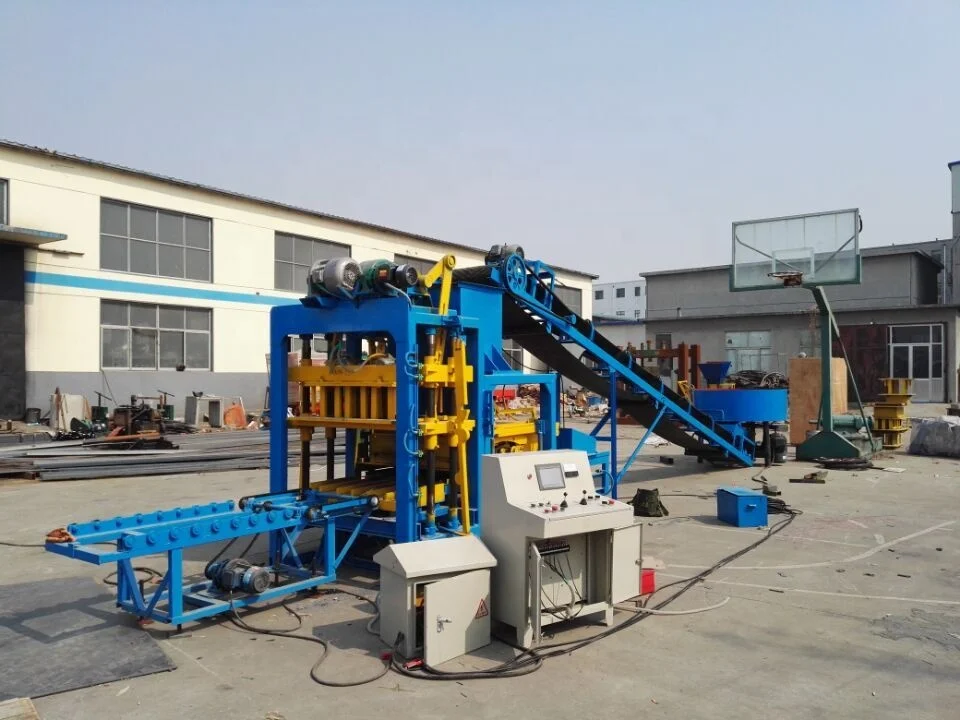
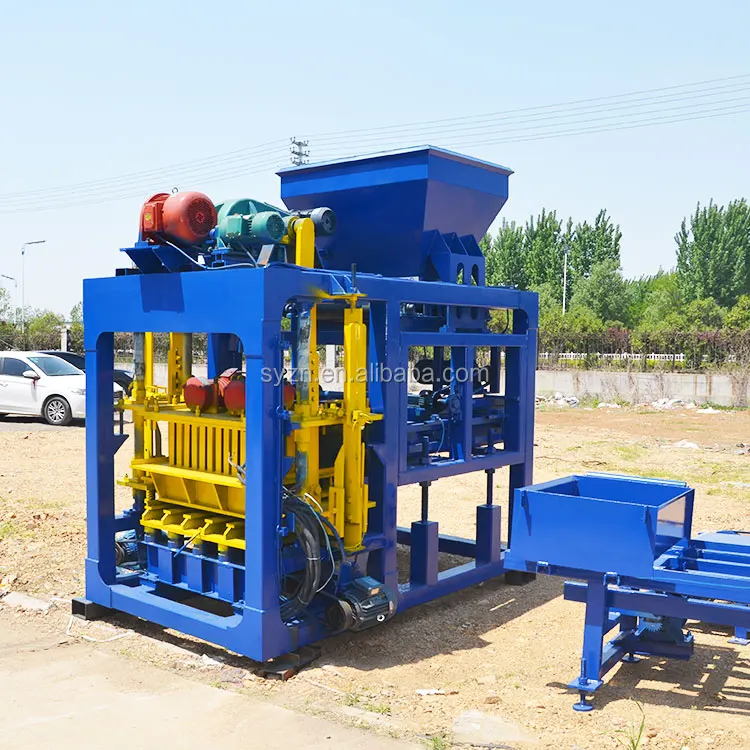
Description
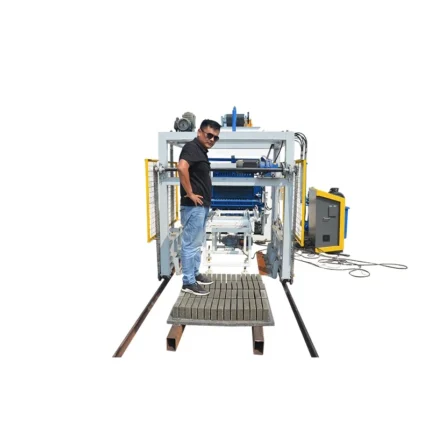
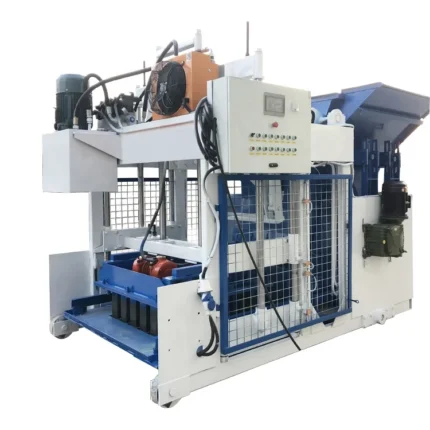
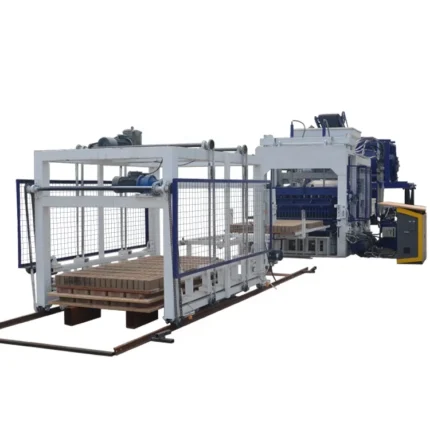
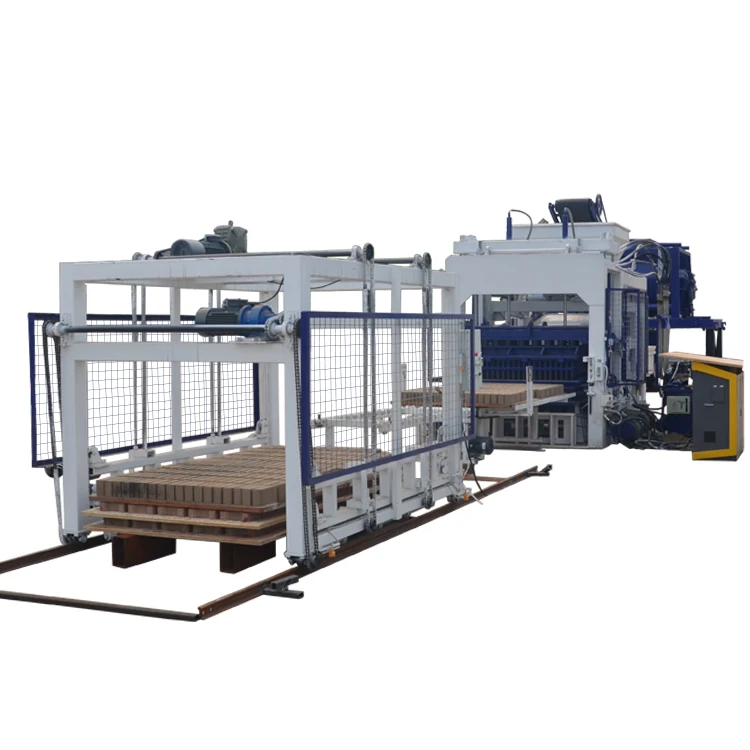
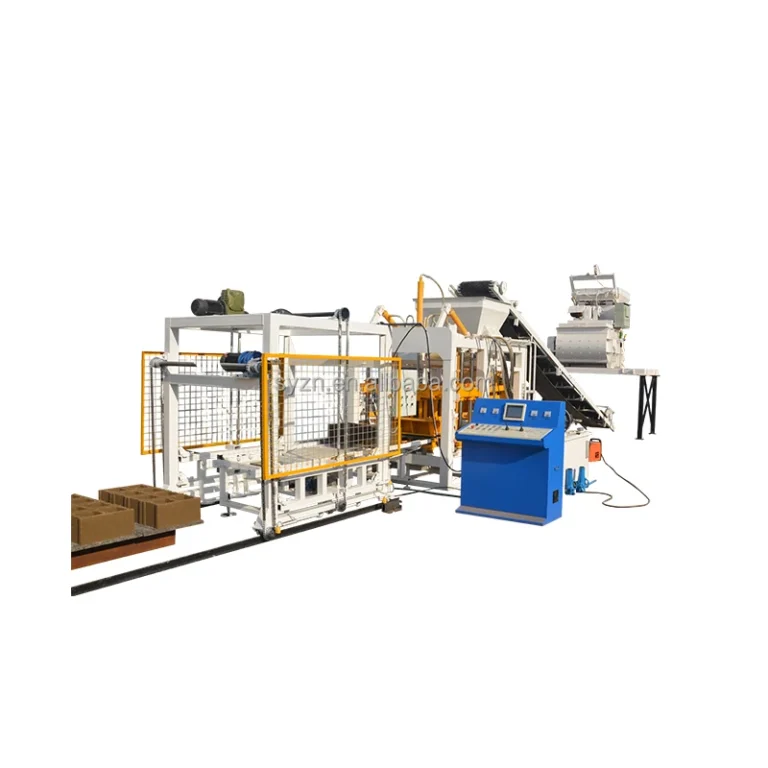
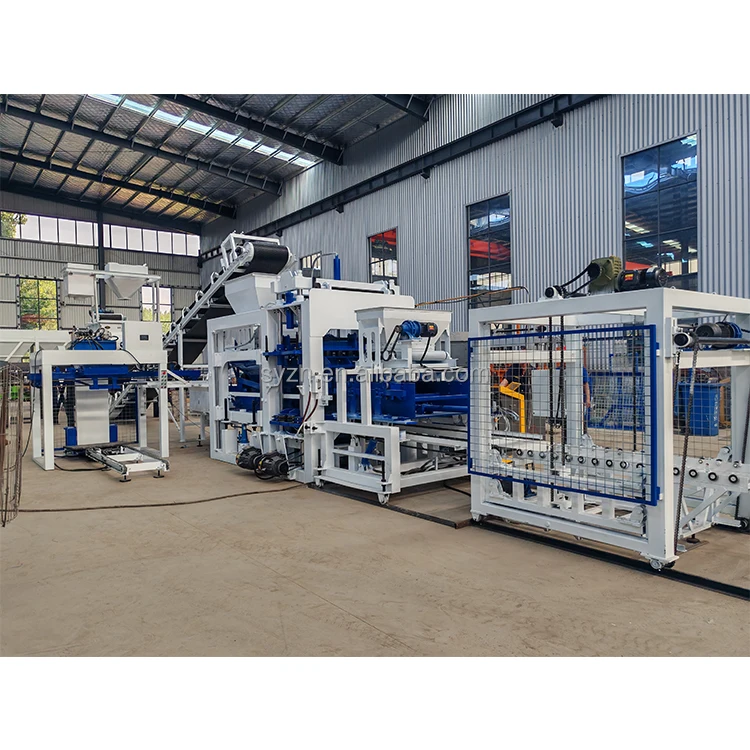
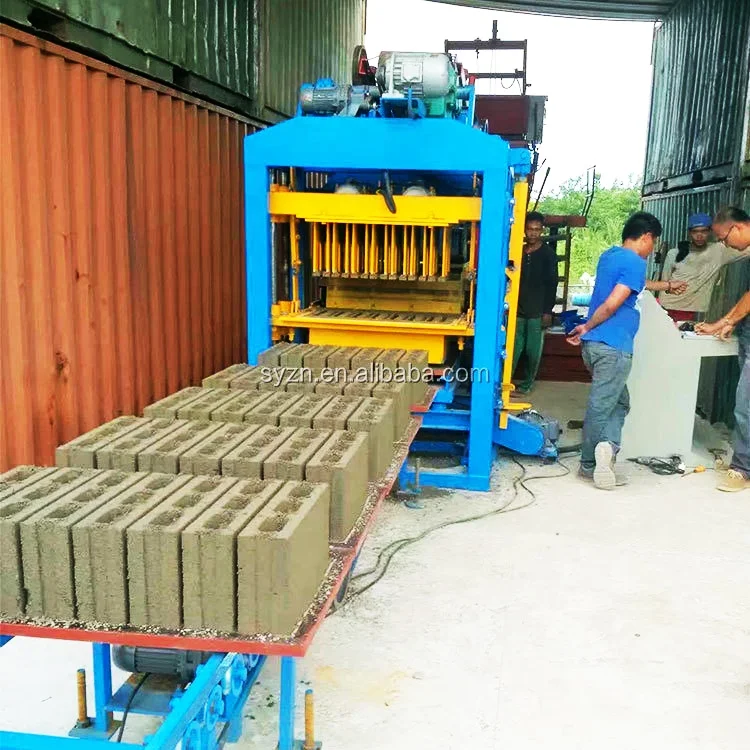
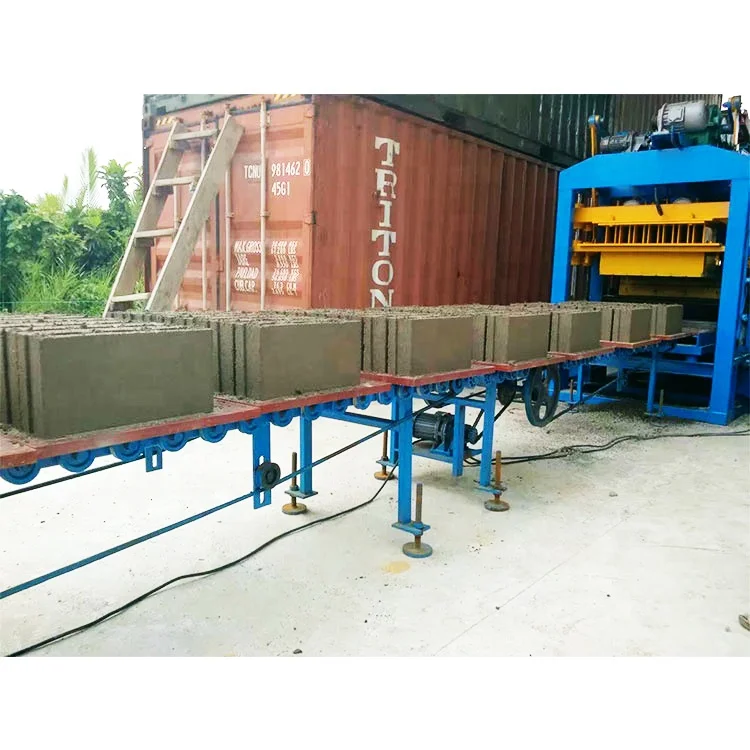
Automation-Ready Architecture — the QTJ4-25 ships as a semi-automatic platform with pre-routed interfaces for pallet feeders and stackers, so the control cabinet accepts expansion modules without rewiring the main loom.
Technical Specifications
| Parameter | Value |
|---|---|
| Model | QTJ4-25 |
| Product Type | Semi-Automatic Concrete Block Making Machine |
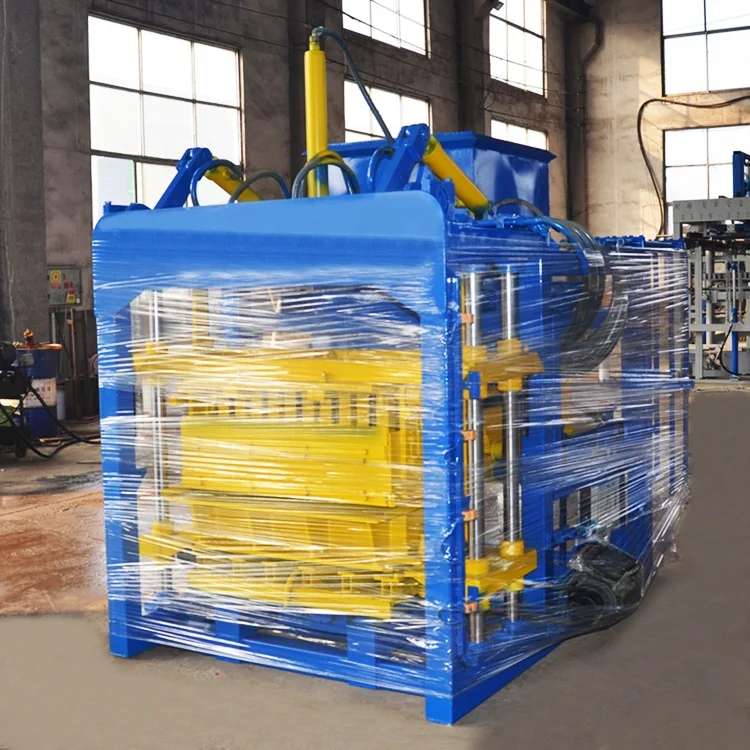
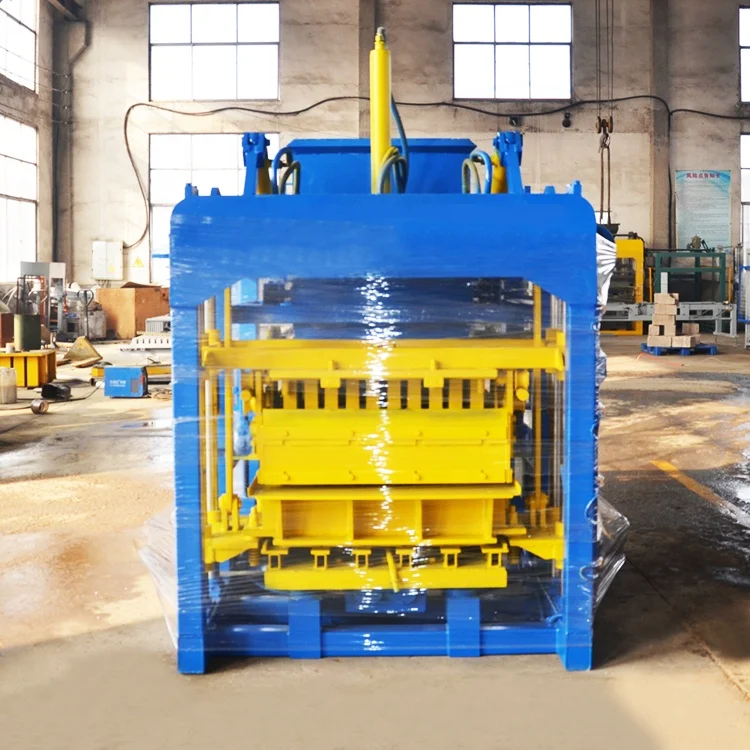
| Overall Dimensions (L×W×H) | 6400 × 1500 × 2700 mm |
| Molding Cycle | 25 s |
| Vibration Frequency | 2800–5100 r/min |
| Exciting Force | 60 kN |
| Vibration Type | Bed mould vertical vibration + upper mould compression vibration |
| Total Power | 17.9 kW |
| Mixer Model | JQ350 |
| Pallet Size | 850 × 550 × 20 mm |
| Total Weight | 2500 kg |
| Hydraulic Station | Equipped |
| Automation Level | Semi-automatic, with selectable automation upgrades |
| Output Capacity | 480 pcs/hr rated on 390×190×190 mm hollow block (4 pcs/mould) |
| Daily Output (8 hr) | 3800 pcs based on 390×190×190 mm hollow block |
| Applied Products | Concrete hollow blocks (8 inch, 6 inch), solid bricks, pavers |
| Raw Materials | Crushed stone, sand, cement, dust, fly ash |
| Control System | PLC-based (language and model to be confirmed before production) |
| Voltage & Frequency | Configurable (to be confirmed against buyer’s site supply) |
| Stacking Method | Manual pallet handling with trolley |
| Certification | CE (where applicable) |
Application Suitability
| Application | Material or Output |
|---|---|
| Hollow block production for residential wall construction | Crushed stone, sand, cement, fly ash — 390×190×190 mm and 400×150×200 mm formats |
| Solid brick manufacturing for infill and paving | Cement and fine aggregate — 240×115×53 mm format |
| On-site block production for housing project contractors | Locally sourced aggregate with portable mixer setup |
| First plant setup for block entrepreneurs | Semi-automatic operation with upgrade path to automated pallet handling |
Why "480 Blocks per Hour" Means Nothing Without the Mould Drawing
Every capacity figure on this page is tied to a specific block format and mould cavity count — no headline numbers without context.
Buyers regularly receive quotations stating a single output number, then discover on commissioning day that the figure assumed a mould their market does not buy. A PLC controlled semi-automatic block machine QTJ4-25 running 390×190×190 mm hollow blocks at 4 pcs per mould cycles at 480 pieces per hour. Swap to a 240×115×53 mm solid brick mould with 18 cavities and the same press delivers a different throughput entirely. Without the format-to-capacity table, daily planning is guesswork. [NEED_CITE: common capacity misrepresentation in block machinery quotations]
Control Language as a Commissioning Prerequisite
I have watched a QTJ-class machine sit idle for two full days because the HMI defaulted to a language the local operator could not read. The PLC controlled semi-automatic block machine QTJ4-25 supports configurable display languages, but only if the buyer’s preferred language is confirmed and loaded before the cabinet leaves the factory. Shipping a panel in the wrong language turns a one-day commissioning into a week of remote troubleshooting through translators.
The Semi-Automatic Entry Point With Expansion Headroom
The machine arrives with manual pallet handling as standard, yet the electrical cabinet and mechanical frame carry pre-allocated mounting points and I/O channels for automatic pallet feeding, stacking, and cubing modules. This means a plant owner can begin production immediately with a two-person crew, then bolt on automation as order volume grows — without replacing the press or ripping out the control wiring. The PLC architecture accepts additional logic blocks for batching accuracy and remote diagnostics when the upgrade happens. [NEED_CITE: PLC I/O expansion standards in concrete block machinery]
Vibration Force, Hydraulic Pressure, and Block Density
The dual vibration system — bed mould vertical vibration paired with upper mould compression vibration — operates across 2800–5100 r/min with 60 kN of exciting force. In practice, vibration frequency determines how thoroughly the mix consolidates into the mould corners, while the hydraulic station maintains consistent upper-mould compression through each cycle. When these two forces are matched to the buyer’s specific aggregate gradation and cement ratio, block strength stays within tolerance across an entire shift. Mismatch them and density drifts from the first pallet to the last. The 25-second molding cycle provides adequate consolidation time for standard hollow block and solid brick formats on this pallet size.
The Cost of Skipping the Voltage Conversation
A 17.9 kW machine wired for the wrong frequency does not simply underperform — it burns through contactors and overheats the vibration motor within the first production run. Buyers who confirm voltage and frequency after the machine is built face rewinding costs and multi-week delays while replacement components ship. [NEED_CITE: voltage and frequency standards by export market] The QTJ4-25 control cabinet is configurable, but the configuration must be locked before the wiring harness is cut, not after.
Why Buyers Specify This Machine Here
Block machinery is the single focus of this production line, so the press, mould, pallet, and handling equipment are specified as one matched system — not assembled from separate suppliers who blame each other when cycle times do not align. The 850 × 550 mm pallet is selected with the buyer’s existing curing racks and forklift in mind, preventing the mismatch where new pallets do not fit the curing area. Mould design covers the formats the buyer’s market actually sells, with custom drawings available for non-standard profiles. Automation level is selectable from day one, so a semi-automatic start does not become a dead-end investment. Every machine ships with a factory test record documenting performance on the buyer’s specified block format before the crate is sealed.
Documentation & Verification
- Line layout drawing showing the QTJ4-25 footprint with pallet flow and curing rack spacing
- Capacity calculation sheet stating block format and mould cavity count for every output figure
- PLC display language and voltage confirmation document signed before production starts
- Hydraulic and electrical schematic with component part numbers for local sourcing
- Mould drawing set including format list and changeover procedure with estimated time
- Factory test record on buyer’s specified block format before dispatch
Installation, Commissioning & Support
- Foundation pad sized to the 6400 × 1500 mm frame with anchor bolt template provided before arrival
- Dedicated power circuit rated for 17.9 kW total draw with voltage and frequency confirmed pre-shipment
- Machine ships in dismantled configuration with reassembly sequence documented in the manual
- PLC control parameters loaded and tested against buyer’s block format during on-site commissioning
- Operator training covers mould change procedure, vibration frequency adjustment, and daily maintenance checkpoints
- Wear parts list with part numbers for hydraulic seals, vibration springs, and mould liners provided at delivery
What to Include in Your Inquiry
To configure the QTJ4-25 correctly for your plant, provide the block formats your market demands along with target daily volume per format. Include your site voltage, frequency, and preferred PLC display language so the control cabinet is built to match. If you already have curing racks and forklifts on site, share the pallet dimensions they accommodate — this determines whether the standard 850 × 550 mm pallet works or a custom size is needed.
Frequently Asked Questions
Q: How is output capacity verified, and what does each figure assume?
A: Every output number is calculated from a specific block format, mould cavity count, and the 25-second molding cycle. The 480 pcs/hr figure assumes a 390×190×190 mm hollow block with 4 cavities per mould. Different formats and cavity counts produce different hourly rates, which are documented in the capacity calculation sheet provided with each quotation.
Q: Can the HMI language be set to my operator’s local language before shipment?
A: Yes. The PLC display language is confirmed in writing during the order stage, and the HMI is loaded and tested in that language during the factory test. Interface screenshots are sent to the buyer for verification before the control cabinet is packed, preventing commissioning delays caused by language barriers on site.
Q: What is the upgrade path from semi-automatic to full automation?
A: The QTJ4-25 frame and electrical cabinet carry pre-allocated interfaces for automatic pallet feeding, stacking, and cubing modules. These can be added as bolt-on upgrades without replacing the press or rewiring the main PLC. The mechanical mounting points and I/O channels are installed during initial build, so expansion requires adding modules rather than rebuilding the line.
Q: How do vibration force and hydraulic pressure match my local aggregate?
A: The 60 kN exciting force and adjustable 2800–5100 r/min vibration range are tuned against the buyer’s specific mix design and aggregate gradation during commissioning. Hydraulic pressure is set to complement the vibration parameters so that block density remains consistent across the full shift. A test run on the buyer’s actual raw materials confirms the settings before full production begins.