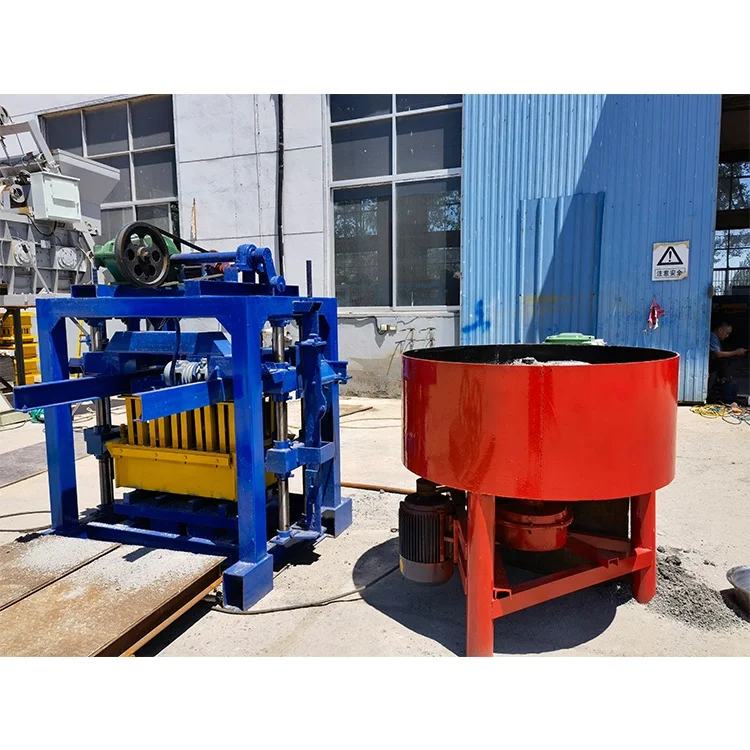
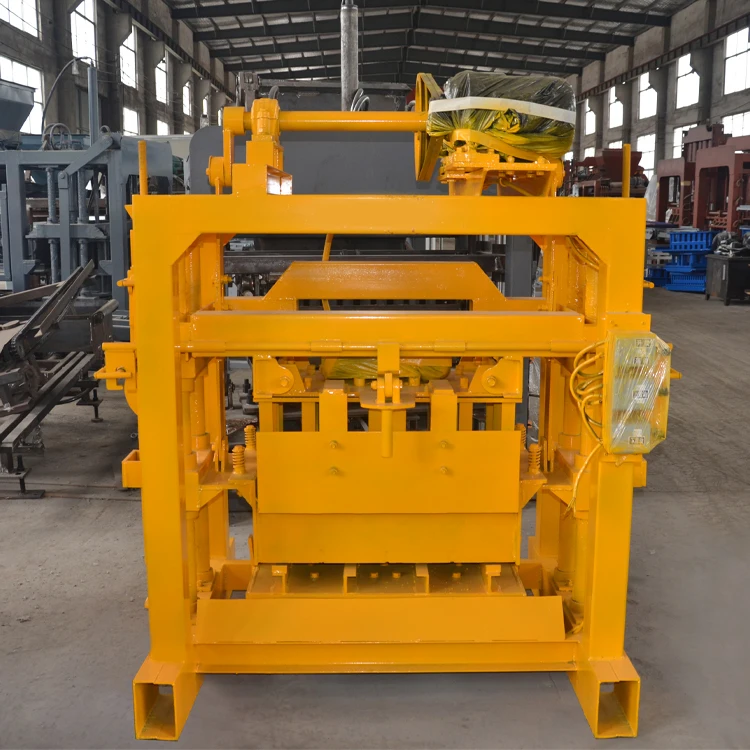
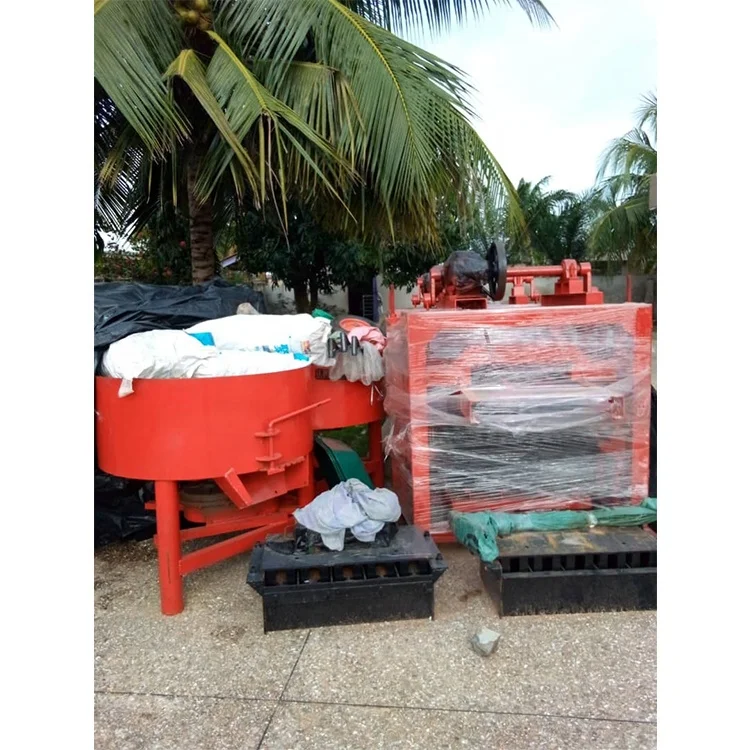
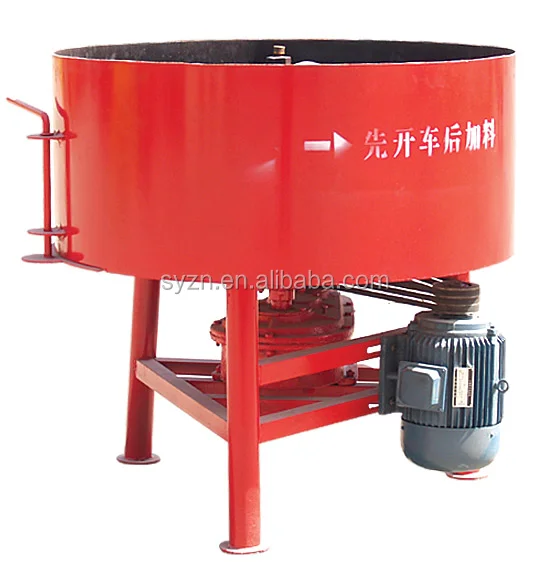
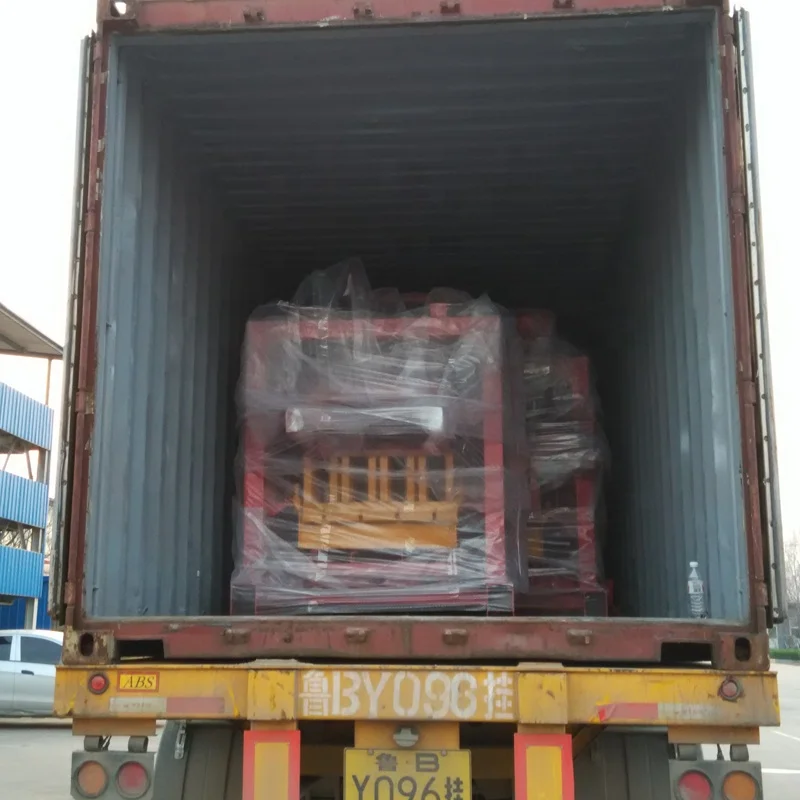
Description
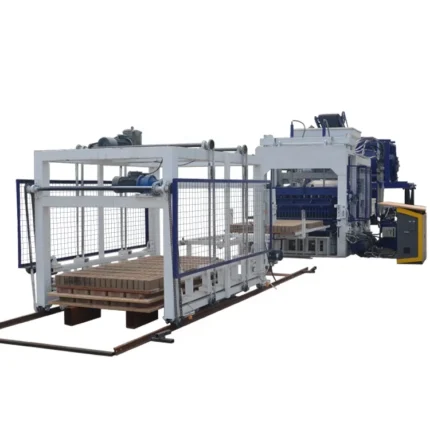
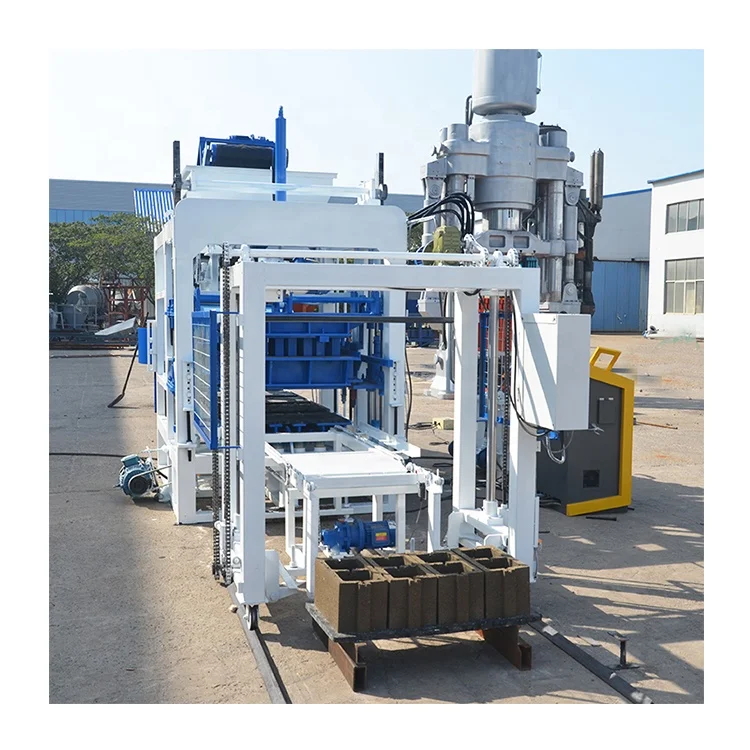
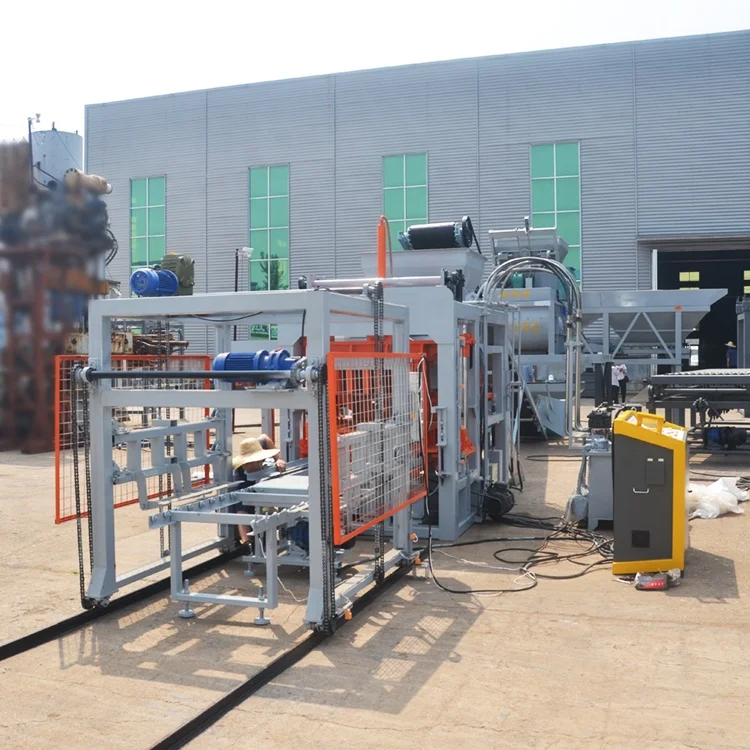
Upgrade-Ready Architecture — The QTJ4-40 lets a small plant start with semi-automatic die control and add PLC-driven pallet feeding or stacking as daily volume justifies the investment.
Technical Specifications
| Parameter | Value |
|---|---|
| Model | QTJ4-40 |
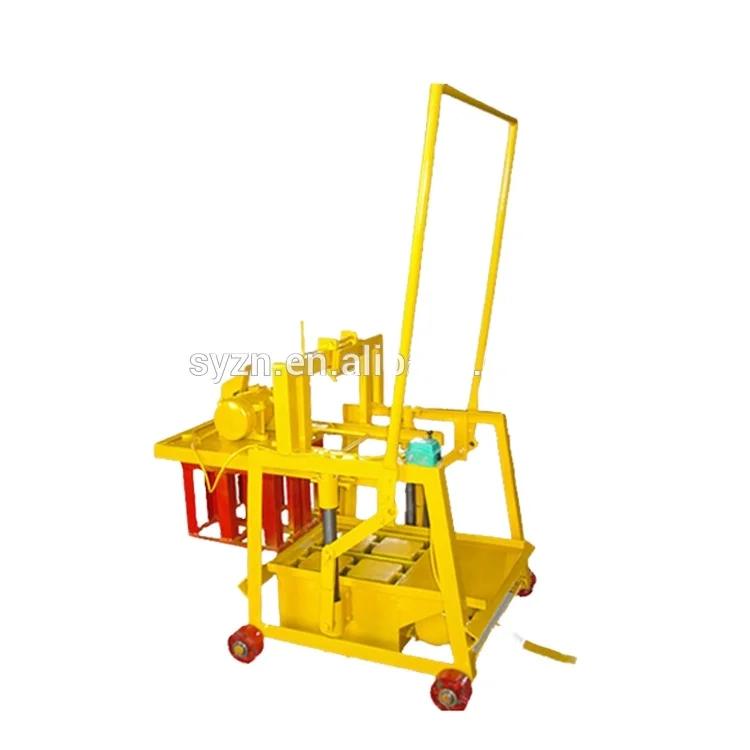
| Product Type | Semi-Automatic Concrete Block Making Machine |
| Machine Power | 9.5 kW |
| Molding Cycle | 40 s |
| Output Capacity | 2000–2500 pcs/8 hours (basis not stated in source — confirm block format / material / thickness) |
| Theoretical Productivity (400×200×200 mm hollow block) | 4 pcs/mould, 360 pcs/hour, 2800 pcs/day |
| Theoretical Productivity (400×150×200 mm hollow block) | 5 pcs/mould, 450 pcs/hour, 3600 pcs/day |
| Theoretical Productivity (225×112.5×60 mm solid brick) | 9 pcs/mould, 800 pcs/hour, 6400 pcs/day |
| Vibration Method | Bed mould vertical vibration + upper mould compression vibration |
| Control System | Semi-automatic (top die push/pull, automatic scraper) |
| Pallet Size | 850×450 mm |
| Machine Weight | 1 T |
| Overall Dimensions (L×W×H) | 1350×1460×1800 mm |
| Voltage | According to local voltage (specific voltage/frequency to be confirmed) |
| Raw Materials | Concrete, sand, cement, fly ash, lime, gypsum |
| Automation Level | Semi-automatic |
Application Suitability
| Application | Material or Output |
|---|---|
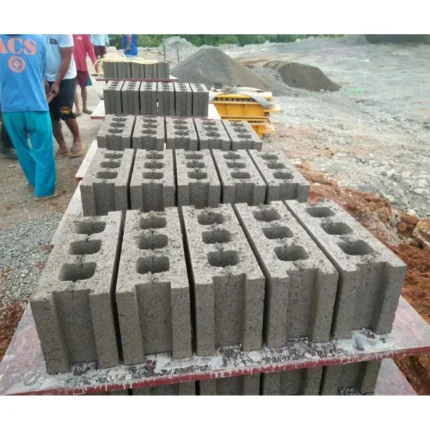
| Hollow block production for load-bearing walls | Concrete with crushed stone aggregate, 400×200×200 mm and 400×150×200 mm formats |
| Solid brick production for infill and partition walls | Sand-cement or fly ash-lime mix, 225×112.5×60 mm format |
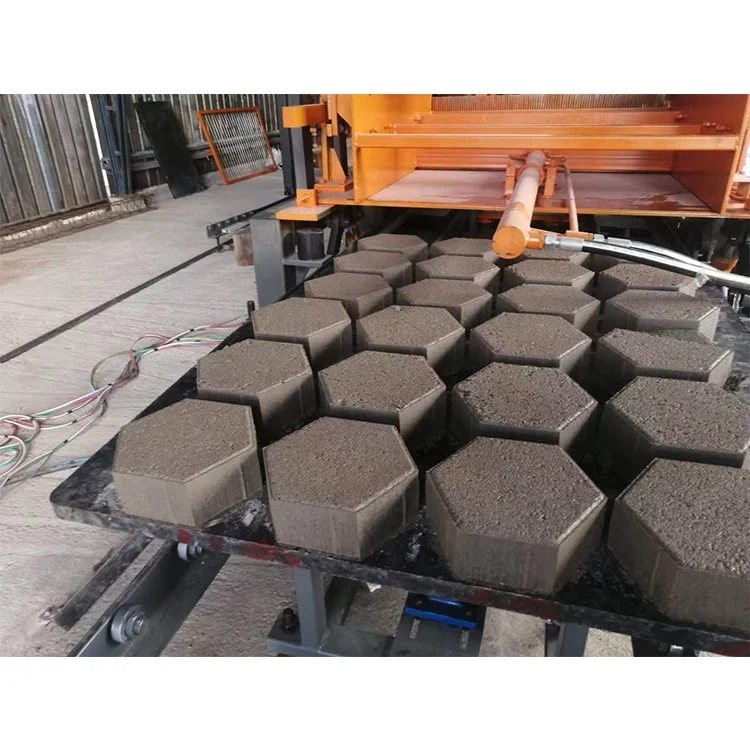
| Paving block production for walkways and yards | Concrete with fine aggregate, interlocking formats via mould change |
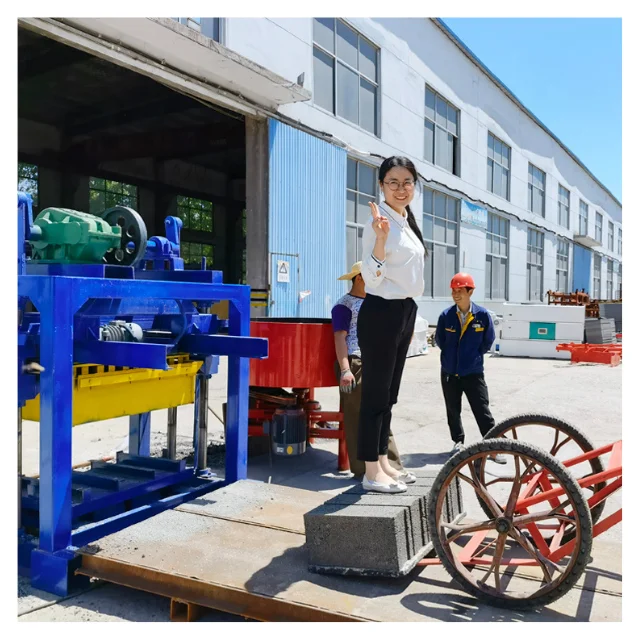
| On-site production for small contractors | Portable footprint, standard three-phase supply, manual pallet handling |
What "Consistent Block Density" Actually Depends On
Block strength varies across a pallet when vibration force and hydraulic pressure are not matched to the buyer’s mix design and local aggregate — a PLC controlled semi-automatic block machine addresses this by locking cycle timing and vibration duration so the operator cannot accidentally shorten them.
Many small plants blame the cement ratio when the real issue is inconsistent compaction from one cycle to the next. The operator pulls the top die a second too early or skips the scraper pass, and density drops on that side of the pallet. [NEED_CITE: relationship between vibration duration and compressive strength in concrete masonry units] Semi-automatic die movement and automatic scraper feed on the QTJ4-40 remove those two variables from human timing, which matters more than raw cycle speed when a buyer is chasing a specific MPa rating for a housing project.
How the Control Layer Removes Operator Variability
The semi-automatic top die push/pull and automatic scraper mean the heaviest manual steps are handled by the machine rather than the operator’s rhythm. On a fully manual press, the worker decides when to pull the die and when to sweep the feed box, and fatigue shifts both decisions by the afternoon. The QTJ4-40 holds the scraper stroke and die withdrawal to the same timing every cycle, which keeps block weight uniform across an eight-hour shift.
Where the Automatic QTJ4-40 Block Machine Upgrade Path Leads
A buyer who starts with semi-automatic operation can add PLC-controlled batching, pallet feeding, and stacking as volume grows. The machine’s control architecture supports this progression without a full press replacement — the same frame and vibration assembly remain while the peripheral stations gain automation. This matters for entrepreneurs who need consistent output today but cannot justify a full automatic line’s capital outlay until daily sales justify the investment. [NEED_CITE: typical automation upgrade stages in small concrete block plants]
Reading the Specification Sheet Against Your Actual Product
The theoretical output of 4 pcs/mould for 400×200×200 mm hollow blocks yields 360 pcs/hour at a 40-second molding cycle, while the same cycle produces 9 pcs/mould for 225×112.5×60 mm solid bricks at 800 pcs/hour. These figures assume uninterrupted pallet feed and no mould change downtime. The dual-vibration system — bed mould vertical vibration combined with upper mould compression vibration — is what allows the same 40-second cycle to compact both a tall hollow block and a thin solid brick adequately. Pallet size at 850×450 mm sets the maximum mould footprint, which in turn determines how many pieces fit per cycle for any given format. Machine weight at 1 T is light enough for site relocation but requires a level concrete pad to prevent vibration energy from bleeding into soft ground.
What Happens When Voltage and Language Are Confirmed Late
Arriving at a site to find the PLC control panel displaying a language the local operator cannot read adds a full week of remote video sessions before production stabilizes. I have seen this happen when the control language was never written into the pre-production checklist — the panel shipped in the factory’s default setting, and the buyer’s team spent days guessing at alarm codes. Voltage mismatch is the parallel problem: a machine wired for 380 V/50 Hz connected to a 440 V/60 Hz supply will run, but the vibration motor draws current outside its rated curve and burns out within months. [NEED_CITE: motor insulation failure rates under sustained overvoltage conditions] Both issues are preventable with a written confirmation before production begins, yet they remain among the most common commissioning delays in small block plant projects.
Why This Source Handles the Details Others Skip
Block machinery is the single focus here, so the machine, mould, pallet, and handling equipment are specified as one matched system rather than assembled from separate suppliers. The QTJ4-40 is configured against the buyer’s actual mix design and local aggregate, not a catalogue default, which means vibration force and cycle timing are set before the machine leaves the factory. Mould design covers the formats the buyer’s market actually sells, including custom drawings when standard formats do not match local building codes. Automation level is selectable — the same buyer can start semi-automatic and upgrade to PLC-controlled stacking later without replacing the press. Installation and commissioning support includes operator training on mould change and daily maintenance, so the first week of production does not become a troubleshooting exercise.
Documentation & Verification
- Line layout and capacity calculation stating the block format assumed for each output figure
- Machine specification sheet with vibration method and pallet size confirmed
- Voltage, frequency, and control display language confirmation before production
- Factory test record on the buyer’s specified block format before dispatch
- Operation and maintenance manual covering mould change and daily lubrication points
Installation, Commissioning & Support
- Level concrete pad required under the 1350×1460 mm footprint to absorb 9.5 kW vibration energy without loss
- Dedicated three-phase circuit matched to confirmed voltage and frequency for the 9.5 kW motor load
- Machine ships as a single 1 T unit, positioned by forklift onto the prepared pad with no major reassembly
- First-run commissioning includes cycle timing verification and scraper stroke adjustment to the buyer’s mix
- Operator training covers top die push/pull sequence, mould change procedure, and vibration bed inspection
- Wear parts list provided with first-replacement availability confirmed before shipment
What We Need From You to Size This Machine Correctly
To configure the QTJ4-40 for your operation, share the block formats your market sells along with the local aggregate type and available cement grade. Confirm your site’s voltage and frequency so the motor and control panel are wired correctly before dispatch. Let us know whether pallet handling will remain manual or if you plan to add automatic feeding later, so the control architecture is prepared for that upgrade.
Frequently Asked Questions
Q: How is the 2000–2500 pcs/day capacity calculated, and which block format does it assume?
A: That figure appears in the source without a stated block format, so it should be treated as a general reference only. The detailed breakdown shows 2800 pcs/day for 400×200×200 mm hollow blocks and 6400 pcs/day for 225×112.5×60 mm solid bricks, each assuming a continuous 40-second molding cycle with no interruptions. Always confirm which format underpins any capacity quote.
Q: What automation level does the QTJ4-40 ship with, and what can be added later?
A: The machine ships with semi-automatic top die push/pull and automatic scraper feed, removing the two heaviest manual steps from the operator. PLC-controlled batching, automatic pallet feeding, and stacking can be added as production volume grows. The control architecture is designed to accept these upgrades without replacing the press frame or vibration assembly.
Q: How are vibration force and compression matched to my local aggregate and mix design?
A: The dual-vibration system combines bed mould vertical vibration with upper mould compression vibration, and the settings are adjusted based on the buyer’s aggregate size, cement ratio, and target block density. Providing a sample of your local material before production allows the factory to tune vibration duration and compression force to your specific mix rather than shipping catalogue defaults.
Q: What voltage, frequency, and control display language are confirmed before shipment?
A: Voltage and frequency are configured to match the buyer’s local supply — this must be confirmed in writing before production begins. The control display language is set at the factory based on the buyer’s preference. Both items are included in a pre-production confirmation checklist to prevent commissioning delays upon arrival.