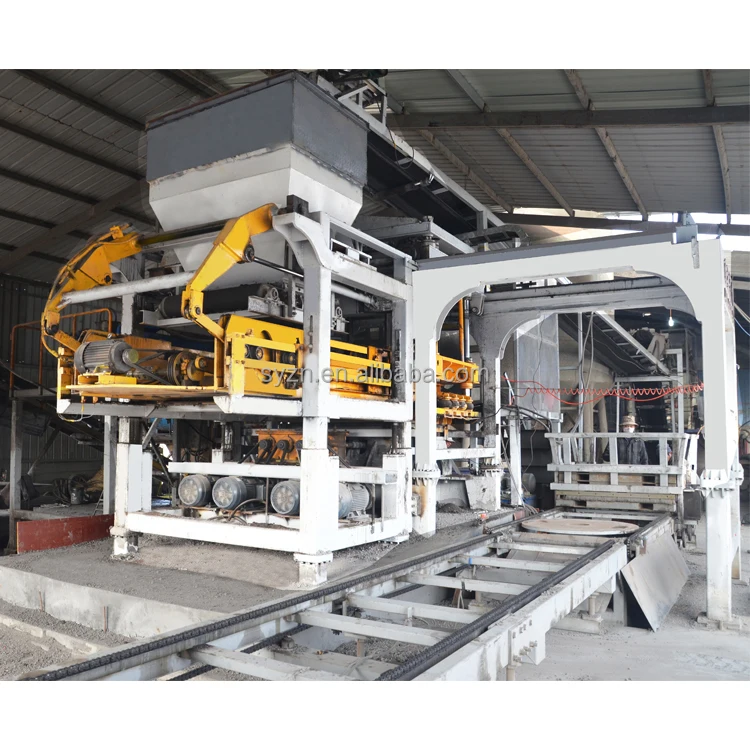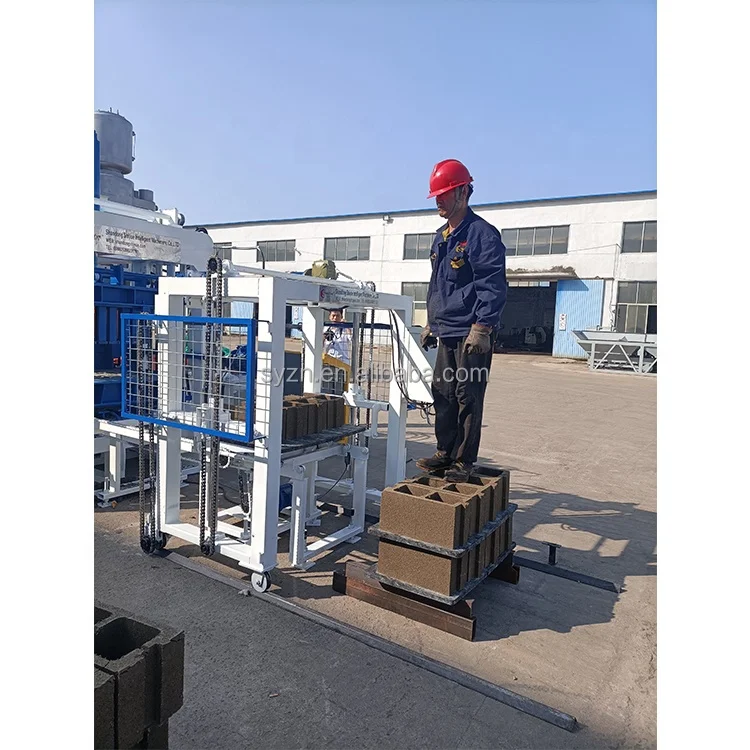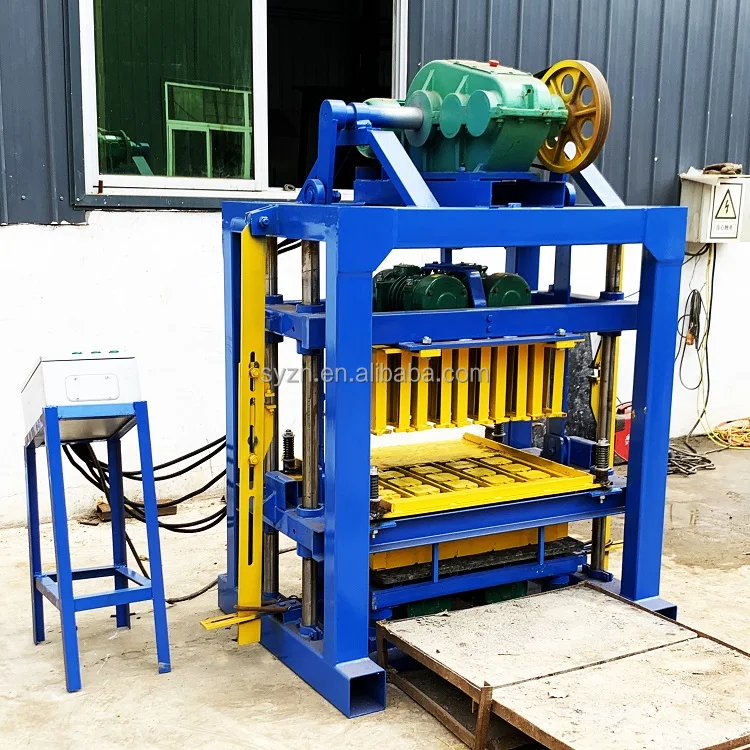


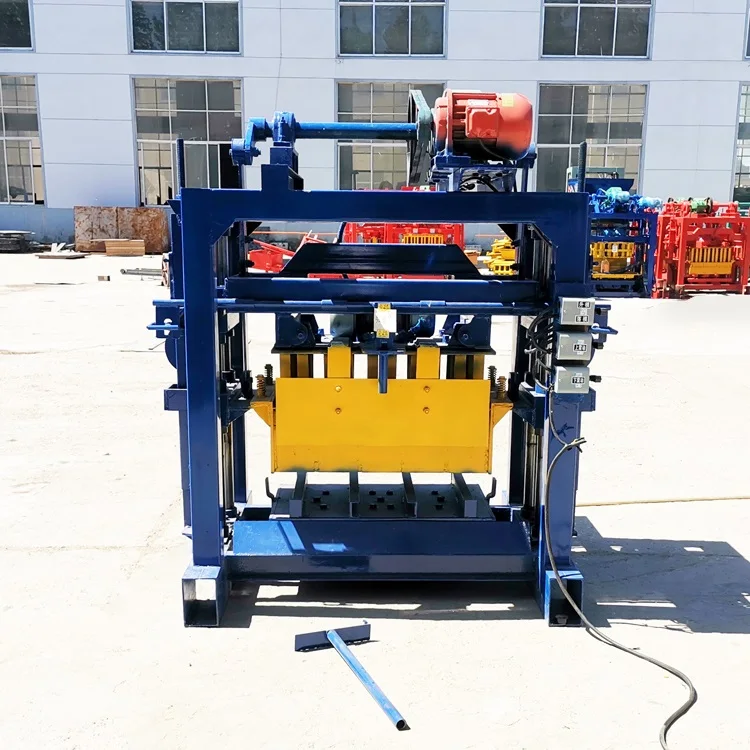


Description
Automation clarity — the QTJ4-40 specifies exactly where the operator steps in and where the machine runs the cycle, so buyers can plan labour and a future upgrade path with certainty.
Technical Specifications
| Parameter | Value |
|---|---|
| Model | QTJ4-40 |
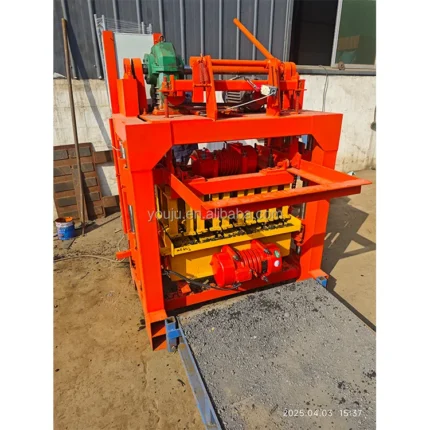
| Product Type | Manual Hydraulic Concrete Block Making Machine |
| Rated Power | 10.4 kW |
| Voltage & Frequency | Configured to buyer’s local V/Hz (basis to be confirmed) |
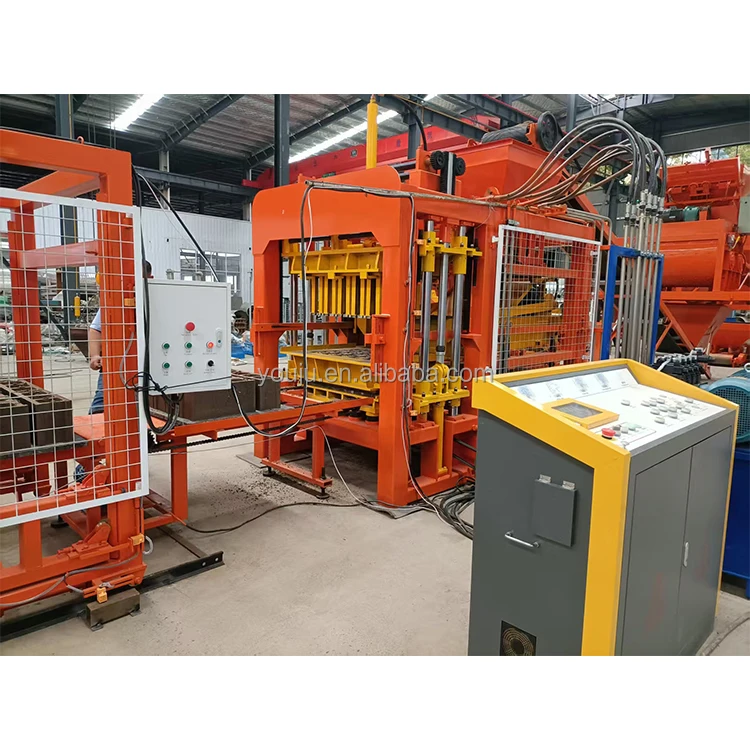
| Control System | Semi-automatic operation |
| Overall Dimensions (L×W×H) | 1350 × 1460 × 1800 mm |
| Net Weight | 1.2 T |
| Moulding Cycle | 40 s (basis to be confirmed) |
| Output Capacity | 2000–2500 pcs / 8 hours (basis to be confirmed); theoretical 360 pcs/h for 400×200×200 mm hollow block, 4 pcs/mould; 450 pcs/h for 400×150×200 mm, 5 pcs/mould; 800 pcs/h for 225×112.5×60 mm paver, 9 pcs/mould |
| Pallet Size | 850 × 450 × 20 mm |
| Raw Materials | Concrete, sand, cement, fly ash, lime, gypsum |
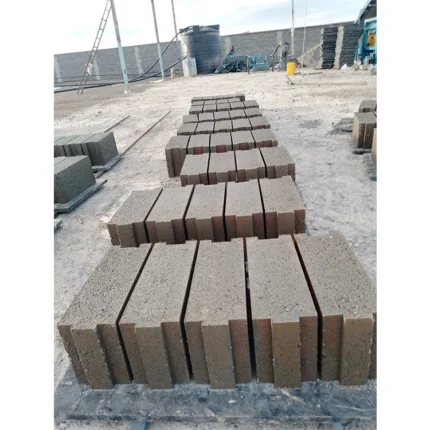
| Block Formats | Hollow, solid, paver (8 in, 6 in, 5 in, 4 in and custom sizes on request) |
| Vibration System | Bed mould vertical vibration + upper mould compression vibration |
| Automation Level | Semi-automatic (mixer, host machine, moulds and pallets required) |
| Stacking Method | Manual pallet handling to curing area |
| Key Features | Dual-vibration moulding, selectable mould formats, fixed pallet dimension |
Application Suitability
| Application | Material or Output |
|---|---|
| Small to medium block plants | Hollow and solid blocks from sand, cement and fly ash blends |
| On-site construction production | 8-inch and 6-inch hollow blocks from locally sourced crushed stone and cement |
| Start-up plants with limited automation budget | Pavers and kerbstones from concrete and gypsum mixes |
| Housing and infrastructure projects | Solid blocks using site-available sand and lime aggregates |
Why the Cycle Time Number Is Not the Whole Story
The automatic QTJ4-40 block machine quotes a 40-second moulding cycle, but that figure changes depending on the block format and the aggregate in your mix.
A buyer in West Africa once sized his entire project around the cycle time printed in a catalogue, only to find his local sand carried a high clay content that forced longer compaction to reach the required block density. Daily output fell far below what the brochure implied. The lesson: cycle time is only meaningful when tied to a specific block dimension and material recipe [NEED_CITE: block density and vibration time relationship for different aggregate types]. Always ask for a capacity table that names the exact format and mix assumed in each row.
Where Automation Stops and the Operator Begins
The QTJ4-40 runs its pressing and vibration sequence without manual input once the pallet is in position. What remains manual is the pallet exchange — the operator slides the finished block off the press and places a fresh pallet before the next cycle. This semi-automatic balance keeps capital outlay low while preserving consistent compaction across every cycle. Buyers planning an automatic QTJ4-40 block machine line should view the manual pallet step as a placeholder for a future automatic pallet feeder.
Planning the Upgrade from Semi-Automatic to Full Line
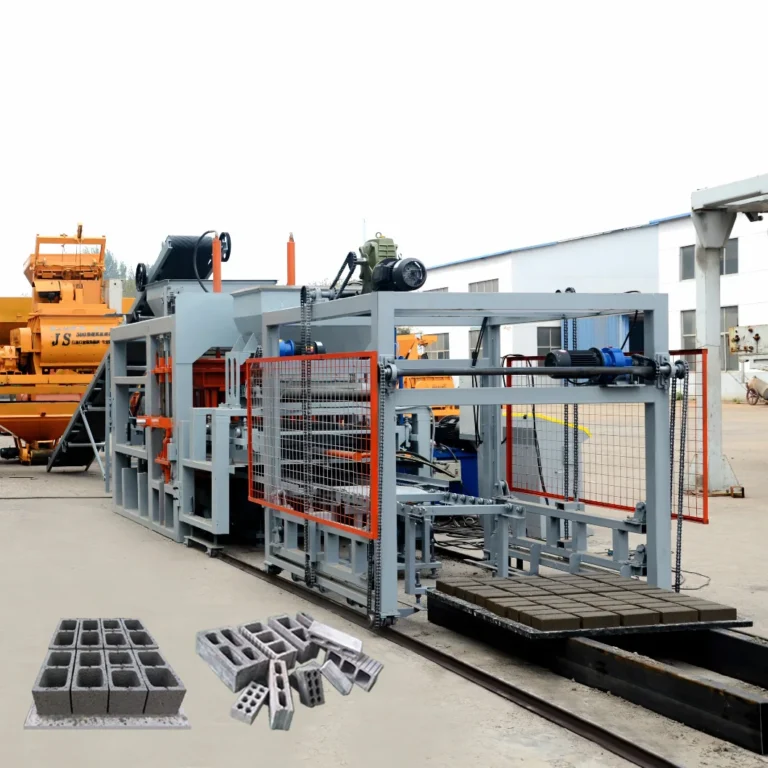
Adding an automatic pallet feeder, a stacker and a cubing unit later turns the QTJ4-40 from a stand-alone press into a continuous line. The fixed pallet dimension of 850 × 450 × 20 mm must match any future stacker you procure, so specifying that size in writing now avoids a costly pallet change later [NEED_CITE: pallet dimension compatibility with automatic stacking systems]. Voltage, PLC language and relay logic should also be confirmed at order stage, because retrofitting a different control language after shipment involves rewiring and a new HMI panel.
Reading the Specs Against Your Shop Floor
The 10.4 kW rated power is modest enough to run from a standard three-phase supply, yet it drives both the hydraulic pump and the dual vibration motors. The bed mould provides vertical vibration while the upper mould adds compression vibration — together they push aggregate particles into tighter alignment, producing a block with higher compressive strength than single-axis vibration alone. The 850 × 450 mm pallet must fit your existing curing racks and forklift tines; ordering pallets that do not match your rack spacing wastes floor space and adds manual sorting time. Semi-automatic control means the press handles the pressing sequence, but the operator still manages raw material feeding and block removal, so labour planning should account for at least one full-time attendant per shift.
The Cost of Skipping the Voltage Conversation
Confirming voltage and frequency after the machine arrives at port is the single most common reason commissioning stalls. A PLC or relay panel wired for 380 V / 50 Hz will not start on a 440 V / 60 Hz site without a transformer or a full motor swap. Beyond the hardware cost, the delay means idle labour, rented forklifts sitting unused, and cement bags hardening in the warehouse [NEED_CITE: export voltage and frequency mismatch consequences on industrial machinery]. Requesting a voltage confirmation sheet before production begins costs nothing; correcting it after shipment costs far more.
Why Source the QTJ4-40 Through This Line
Block machinery is the single focus here, so the press, moulds, pallets and handling equipment are specified as one matched set rather than assembled from separate vendors. Configuration is built around the buyer’s actual aggregate and target format, not a default catalogue setting. Mould design covers the formats that move in the buyer’s local market, and custom drawings are available when standard sizes do not fit. The semi-automatic level of the QTJ4-40 lets a plant start lean and add automation later without replacing the press. Installation guidance and operator training are included so the first shift runs under supervision rather than trial and error.
Documentation & Verification
- Factory test record run on buyer’s block format and pallet size before dispatch
- Hydraulic and electrical schematic matching the confirmed voltage and frequency
- Mould drawing and format list with cycle time noted per block dimension
- Operation and maintenance manual in the operator’s working language
- Wear parts and mould interchange list for reorder planning
Installation, Commissioning & Support
- Foundation pad sized for 1350 × 1460 mm footprint plus pallet staging area
- Dedicated 10.4 kW three-phase circuit at the confirmed local voltage and frequency
- Semi-automatic control panel tested with operator language loaded before shipment
- Dual vibration motors balanced and run-in during factory acceptance test
- Manual pallet handling workflow rehearsed with site crew during commissioning
- Spare hydraulic seals and vibration mounts shipped with the first mould set
Preparing Your Inquiry
Share the block format your market sells most, the daily volume you need to hit, and the source of your sand and aggregate so the mix can be evaluated before a configuration is proposed. Confirm the exact voltage and frequency at your site, and note whether your curing area already uses pallets of a specific size. If you plan to add automatic stacking later, mention it now so the pallet dimension and control wiring are set for that path.
Frequently Asked Questions
Q: How do I verify the real daily output of the QTJ4-40?
A: Ask for a capacity table that names the exact block format, pallet count per mould, and moulding cycle for each row. The same press produces fewer hollow blocks per hour than small pavers, so a single headline figure can mislead. Cross-check the table against your local aggregate and cement ratio.
Q: What voltage and language confirmation is needed before production?
A: Provide the destination country’s three-phase voltage, frequency and whether the PLC display should be in English, French, Spanish or another language. These values are locked into the motor windings and control panel, so changes after shipment require costly rewiring and replacement components.
Q: What does the semi-automatic level still require from the operator?
A: The operator handles pallet exchange after each cycle, moves finished blocks to the curing area, and manages raw material feeding into the mixer. The press itself runs the vibration and compression sequence automatically, but labour planning should account for one full-time attendant per shift.
Q: How should I plan an upgrade to automatic pallet handling?
A: Keep the 850 × 450 × 20 mm pallet size from day one so future stackers and feeders match without a pallet change. Specify a control panel that leaves spare I/O points for a pallet feeder sensor and a stacker communication link, so adding automation later is a wiring task rather than a full panel replacement.
Q: How long does a mould change take on the shop floor?
A: Mould change time depends on bolt count and operator familiarity. Request the manufacturer’s documented procedure and a timed video for the exact mould set you will receive, so you can train your crew before the first format switch and avoid losing most of a shift to an unfamiliar process.