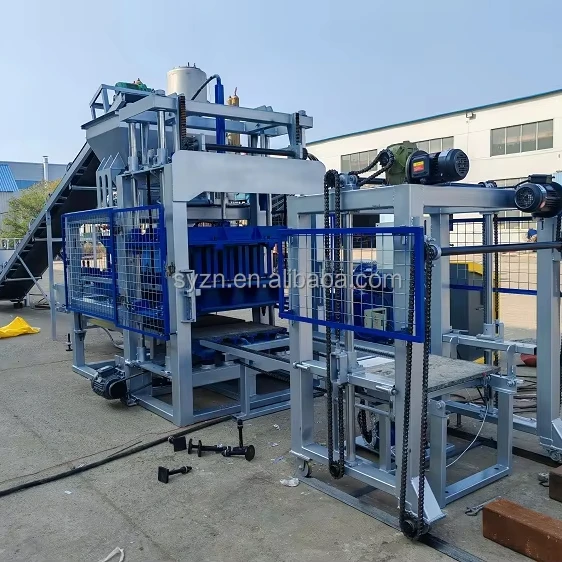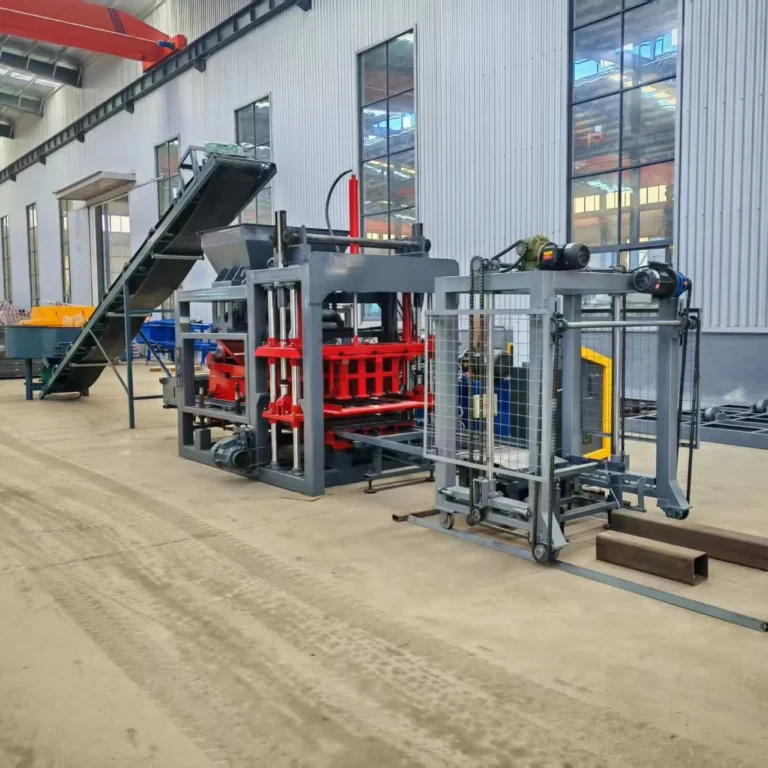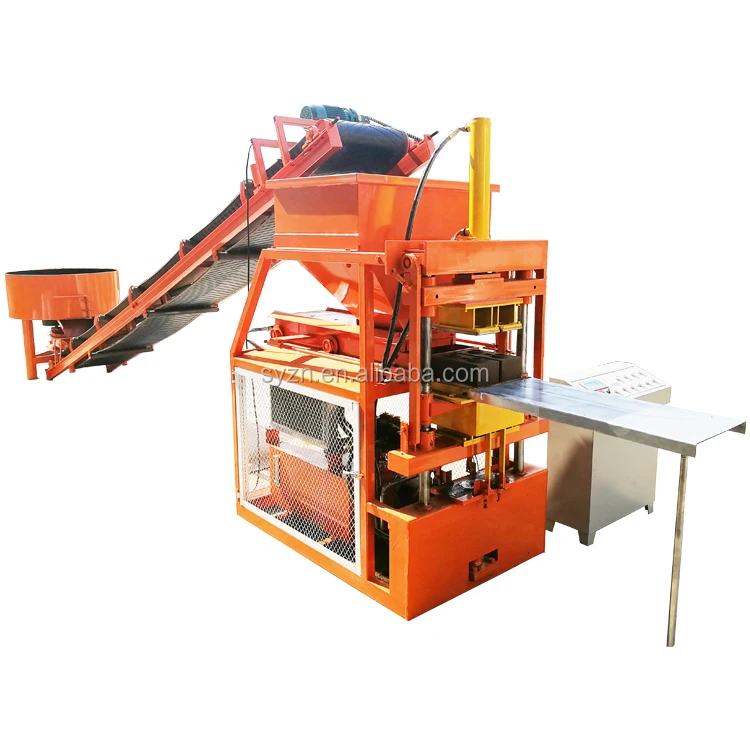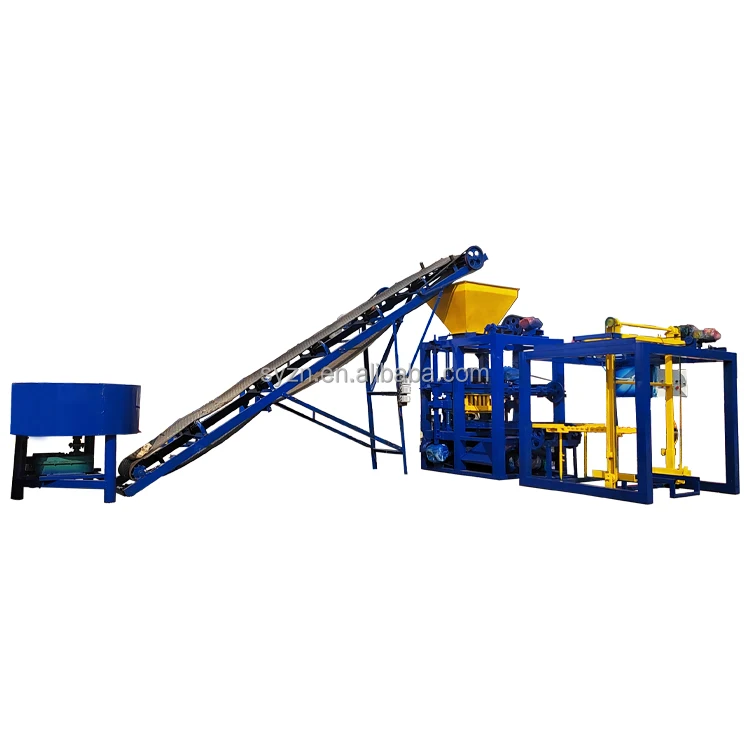
Description
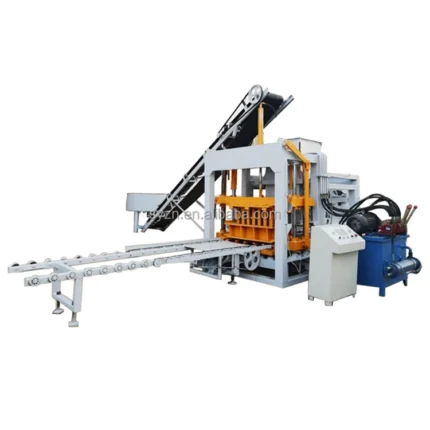
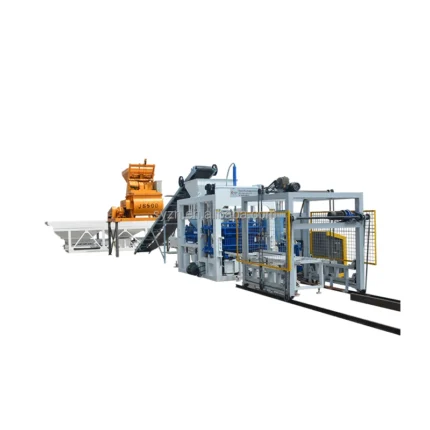
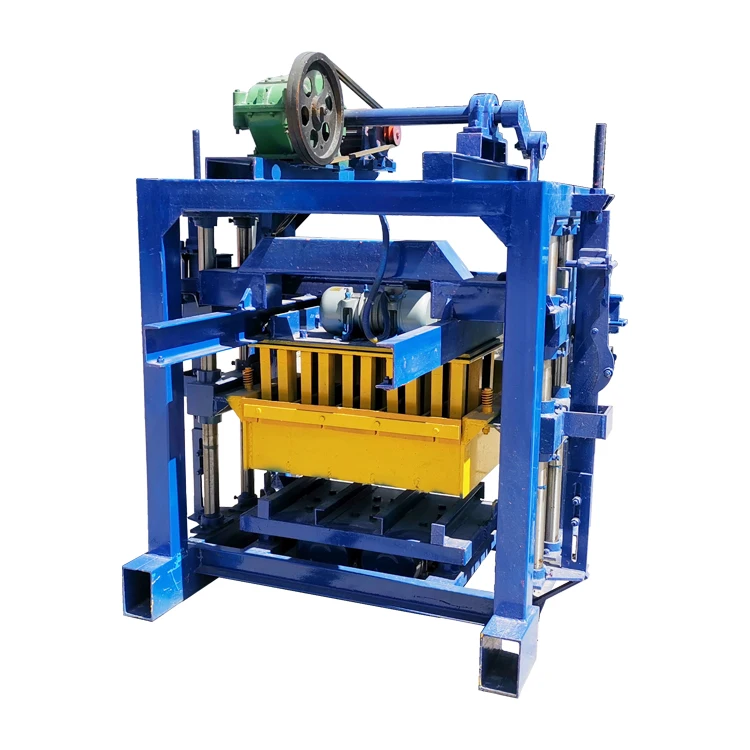
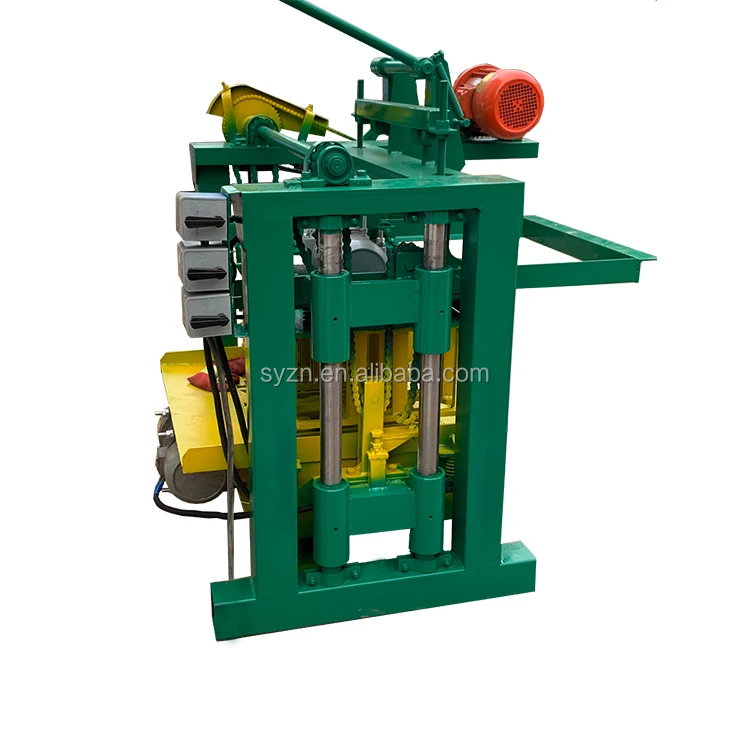
Configurable Automation Path — the QTJ4-40 platform lets you specify PLC control, pallet feeding, and stacking automation levels now, then expand as your block plant scales.
Technical Specifications
| Parameter | Value |
|---|---|
| Model | QTJ4-40 |
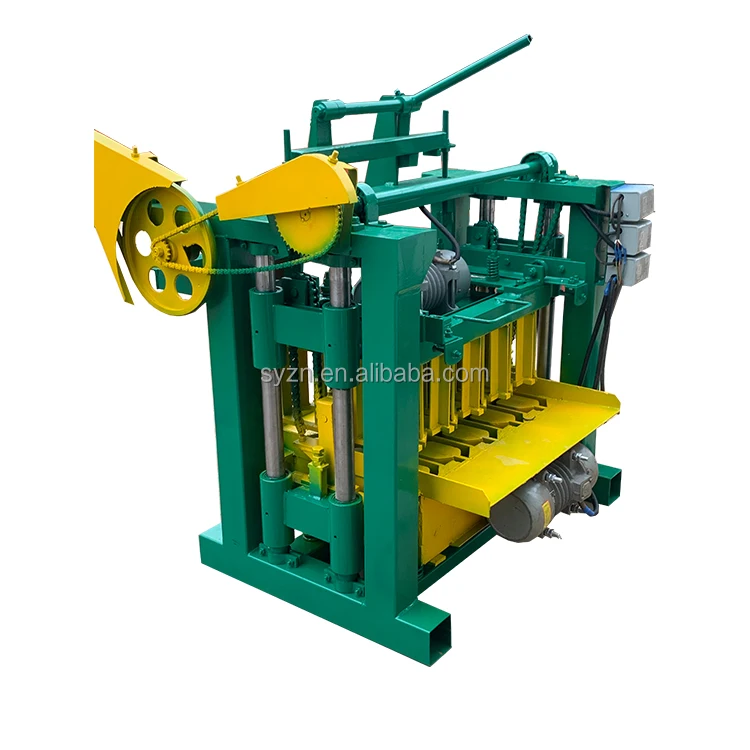
| Product Type | Concrete Hollow Brick Making Machine |
| Machine Type | Semi-automatic |
| Rated Power | 10.4 kW |
| Molding Cycle | 40s |
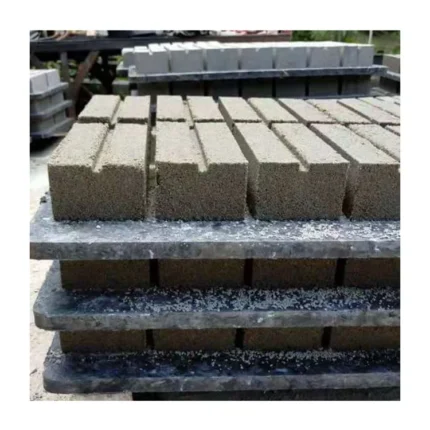
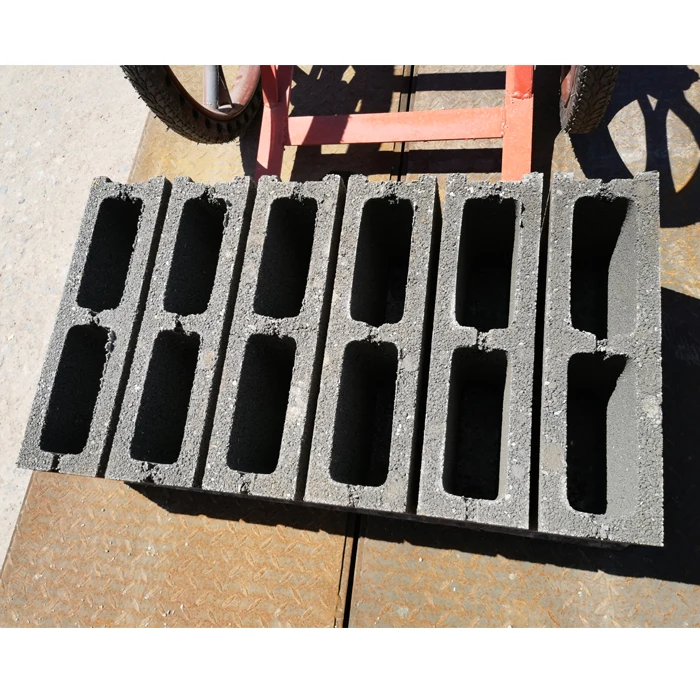
| Theoretical Output (400×200×200mm) | 4 pcs/mould, 360 pcs/hour, 2800 pcs/day |
| Theoretical Output (400×150×200mm) | 5 pcs/mould, 450 pcs/hour, 3600 pcs/day |
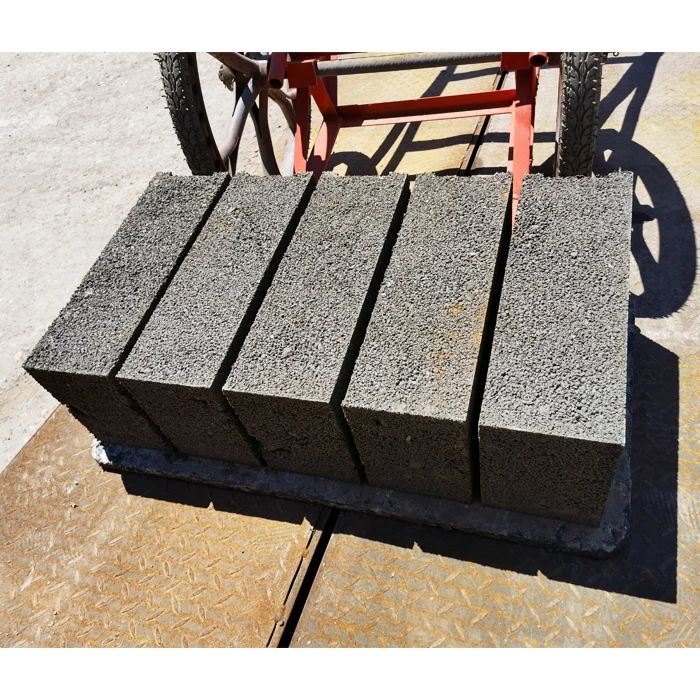
| Theoretical Output (225×112.5×60mm) | 9 pcs/mould, 800 pcs/hour, 6400 pcs/day |
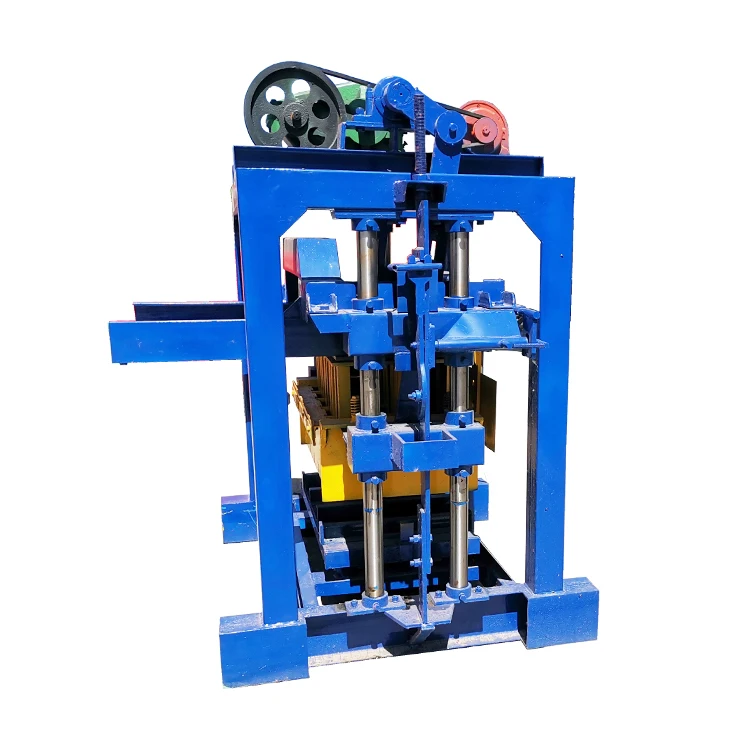
| Vibration Method | Bed mould vertical vibration + upper mould compression vibration |
| Top Die Mechanism | Push and pull with automatic scraper |
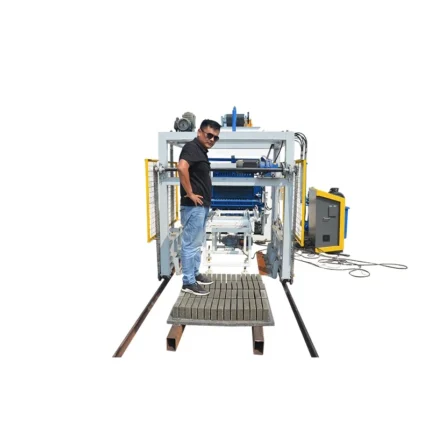
| Pallet Size | 850×450mm |
| Overall Dimensions | 1350×1460×1800mm |
| Machine Weight | 1T |
| Raw Material Compatibility | Concrete, sand, cement, fly ash, lime, gypsum |
| Voltage | Configurable to local voltage and frequency |
| Automation Level | Semi-automatic base, selectable PLC and handling upgrades |
Application Suitability
| Application | Material or Output |
|---|---|
| Hollow block production | Concrete, cement, sand, fly ash, aggregate |
| Solid brick manufacturing | Cement, sand, crushed stone, gypsum |
| Interlocking brick production | Cement, sand, lime, selected aggregate |
| Paving block manufacturing | High-strength concrete mix with coarse aggregate |
| On-site construction block supply | Concrete mixed from locally sourced sand and cement |
Why the Control System Question Must Come Before the Quote
An automatic concrete block making machine only delivers consistency if its PLC speaks your operator’s language and matches your site voltage.
Buyers often lock in a block press based on cycle time and mould count, leaving the control system as an afterthought. The result is a machine that arrives with a 380V/50Hz cabinet when the site runs 440V/60Hz, or a PLC display in a language the shift supervisor cannot read. Commissioning stalls while transformers are sourced or interface rewiring is arranged [NEED_CITE: voltage and frequency standards by export market]. The QTJ4-40 ships with voltage and control language confirmed against your site conditions before the build starts, not after the container is loaded.
PLC Control and the Automation Upgrade Path
The QTJ4-40 begins as a semi-automatic platform where the operator handles pallet transfer and stacking manually. The PLC-controlled block machine upgrade adds automatic pallet feeding, programmable cycle sequencing, and fault diagnostics on a touch panel. This modular approach means a buyer setting up a first plant can invest in the press and moulds now, then layer in automatic pallet handling and stacking as production volume justifies the additional stations.
Batch Repeatability Through Dual Vibration
Uniform block density depends on how vibration force and compression interact with the specific aggregate in your mix. The QTJ4-40 uses bed mould vertical vibration combined with upper mould compression vibration. The PLC tracks cycle parameters so that the vibration duration and hydraulic compression applied in the first hour of a shift match those in the last. This repeatability matters most when producing load-bearing hollow blocks where inconsistent density leads to wall failures on site [NEED_CITE: ASTM C90 load-bearing concrete masonry unit density requirements].
Reading the Specification Sheet Against Your Mix
The rated power of 10.4 kW covers the vibration motors, hydraulic pump, and scraper drive running together through a 40-second cycle. The pallet size of 850×450mm defines the maximum mould footprint, which in turn determines how many blocks form per cycle — four units at 400×200×200mm, five at 400×150×200mm, and nine at 225×112.5×60mm. The dual vibration system must be tuned to your local aggregate hardness and cement ratio; a soft river sand requires different vibration amplitude than crushed basalt to achieve target block density. The overall machine footprint of 1350×1460×1800mm keeps the press compact enough for workshop installation while the vertical clearance accommodates the top die push-pull travel.
The Cost of Skipping the Configuration Conversation
A block machine configured for a catalogue-default mix will underperform when your local sand has a different fineness modulus or your cement brand sets faster than the standard formula assumes. Blocks crack during curing, vibration marks appear on the surface, and the operator compensates by slowing the cycle — negating the capacity you paid for. Equally, specifying a pallet size without checking your existing curing racks and forklift dimensions means pallets stack unevenly or cannot be moved by the equipment already on site [NEED_CITE: pallet handling compatibility in block plant layout]. These mismatches surface only after the machine is bolted to the floor.
Why Configuration Support Matters Here
The QTJ4-40 is specified as one system — press, mould, pallet, and handling — rather than assembled from disconnected suppliers. Capacity calculations state the block format assumed, so daily output expectations are grounded in the product you actually sell. Voltage, frequency, and PLC display language are confirmed in writing before production begins. Mould drawings are reviewed against your market’s format requirements, including custom dimensions if your local demand falls outside standard sizes. Automation level is documented so you know exactly which functions are manual at delivery and which are ready for future integration.
Documentation & Verification
- Capacity calculation sheet stating output per block format and assumed cycle time
- Mould drawing and format list matching your market’s hollow block and brick dimensions
- Hydraulic and electrical schematic with confirmed voltage and frequency
- PLC display language confirmation recorded before cabinet assembly
- Factory test record on your specified raw material mix before dispatch
- Wear parts and mould list with part numbers for reordering
Installation, Commissioning & Support
- Foundation pad leveled to support 1T machine weight across 1350×1460mm footprint
- Dedicated power circuit rated for 10.4 kW at your confirmed voltage and frequency
- Machine ships with top die and vibration assembly dismantled for container loading
- PLC parameters calibrated on-site using your actual aggregate and cement mix
- Operator training covers cycle start, fault codes, and mould change sequence
- Wear parts kit ships with the machine so first replacement does not halt production
What to Include in Your Inquiry
Tell us the block formats your market sells, your target daily output per format, and the raw materials available locally — including aggregate type and cement brand. Confirm your site voltage, frequency, and the preferred PLC display language. If you already have curing racks and forklifts on site, share the pallet dimensions they accept so the 850×450mm pallet specification can be verified or adjusted. Let us know whether you plan to start with semi-automatic operation or want the automatic pallet feeding and stacking stations included from day one.
Frequently Asked Questions
Q: What automation level does the QTJ4-40 ship with, and what can be added later?
A: The base configuration is semi-automatic, with the operator handling pallet transfer and stacking. You can add PLC-controlled automatic pallet feeding, programmable cycle sequencing, and automatic stacking stations as upgrades. The control cabinet and wiring are designed to accept these additions without replacing the main PLC, so the upgrade path stays open as your production volume grows.
Q: How is output capacity stated — per block format or as one generic number?
A: Output is stated per block format with the mould cavity count and cycle time shown for each. For example, the 400×200×200mm hollow block runs at 4 pcs/mould on a 40-second cycle, giving a theoretical 360 pcs/hour. A different format like the 225×112.5×60mm interlocking brick produces 9 pcs/mould on the same cycle, yielding a different hourly figure. No single generic capacity number is used.
Q: Is the PLC display language configurable before shipment?
A: Yes. The PLC display language is confirmed during the quotation stage along with your site voltage and frequency. The control panel is configured and tested at the factory in your chosen language before dispatch, so the operator can read fault codes and cycle parameters from the first day of commissioning without relying on translated manuals.
Q: How does the vibration system adapt to different local aggregates?
A: The dual vibration system — bed mould vertical vibration plus upper mould compression — is tuned during commissioning to match your specific aggregate type, cement ratio, and target block strength. Crushed basalt requires different vibration duration and amplitude than river sand to achieve the same density. The PLC stores these parameters so every cycle runs consistently once the optimal settings are established.
Q: Which supporting equipment is included versus optional?
A: The QTJ4-40 quotation specifies exactly which stations are included and which are optional. Raw material feeding, mixing, pallet feeding, stacking, and curing rack handling can each be configured into the line or left for future addition. The pallet size of 850×450mm is checked against your existing handling equipment to confirm compatibility before the order is finalized.