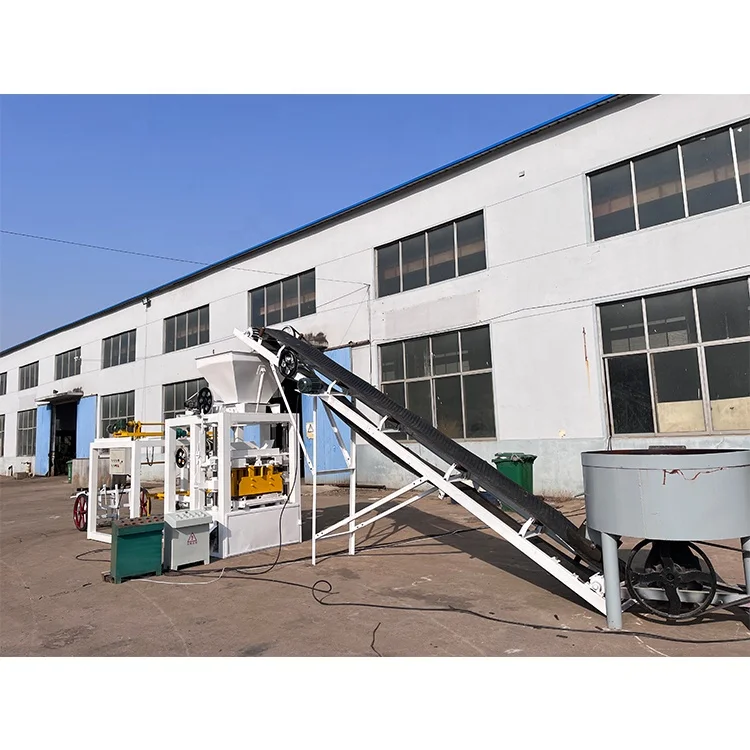
Description
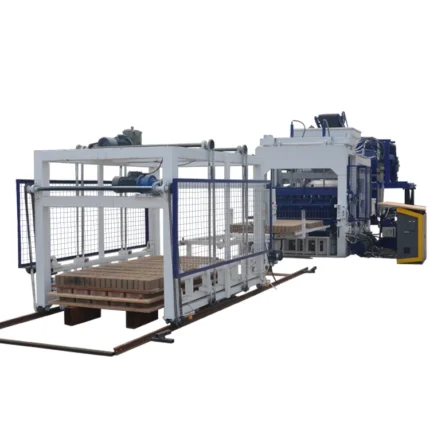
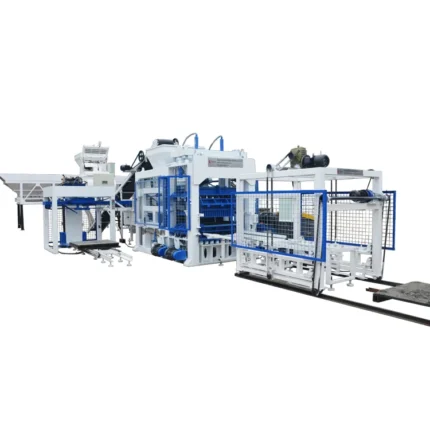
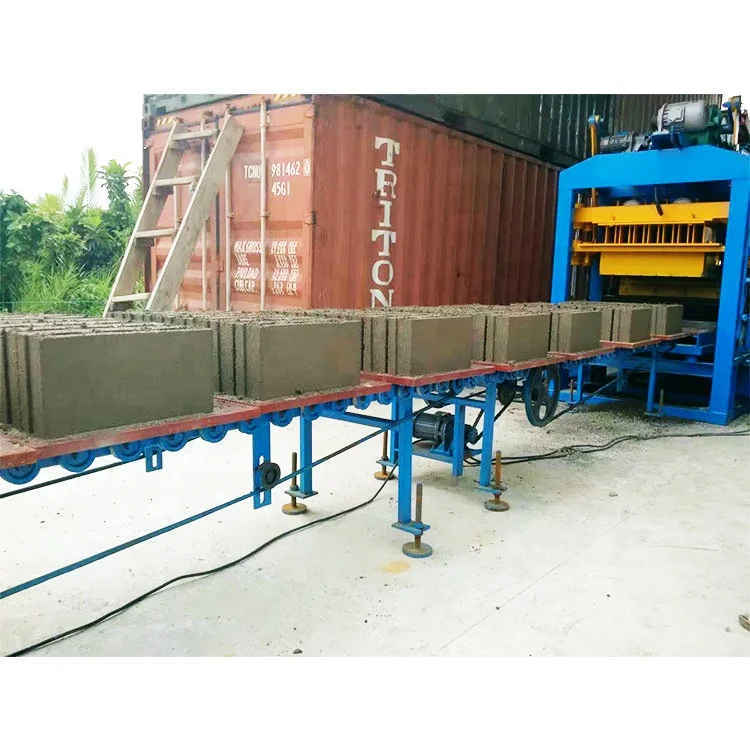
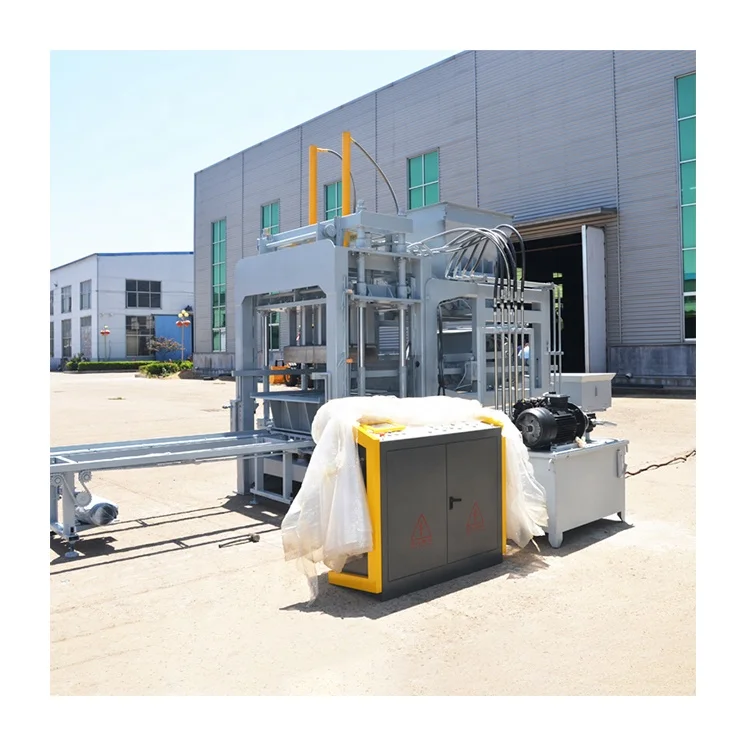
Upgrade-Ready Architecture — the QT4-24 control platform accepts pallet feeding and stacking modules without replacing the press, letting automation scale with your output.
Technical Specifications
| Parameter | Value |
|---|---|
| Model | QT4-24 |
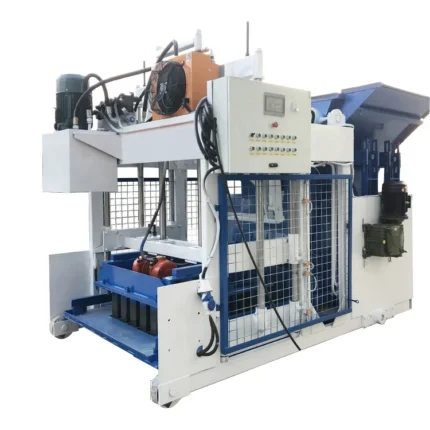
| Product Type | Semi-Automatic Concrete Block Making Machine |
| Molding Cycle | 24 s |
| Output Capacity | 3,840–17,280 pcs / 8 h (basis not stated in source — confirm block format and material) |
| Overall Dimensions | 2,060 × 1,730 × 2,580 mm |
| Vibration Frequency | 4,200 r/min |
| Exciting Force | 35.5 kN |
| Total Power | 14.25 kW |
| Mixer Model | JQ350 |
| Pallet Size | 850 × 450 × 20 mm |
| Net Weight | 1,800 kg |
| Automation Level | Semi-automatic |
| Guide System | Four guide pillars with automatic mould movement |
| Vibration Type | Direct vertical vibration under mould |
| Applicable Raw Materials | Crushed stone, sand, cement, fly ash, dust |
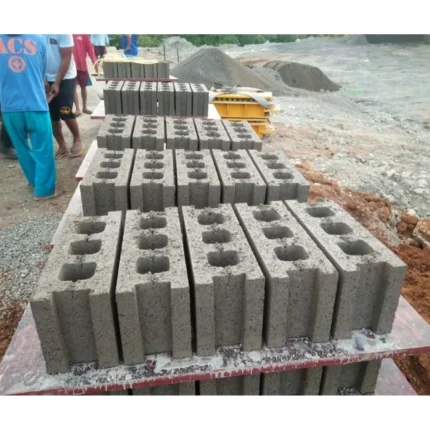
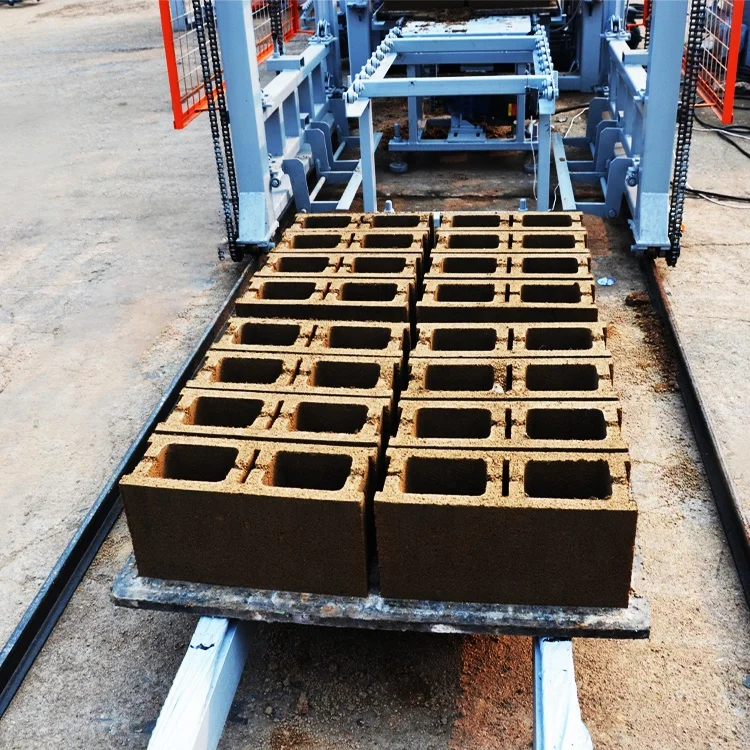
| Block Formats | 390×190×190 mm hollow (4 pcs/mould), 400×150×200 mm hollow (5 pcs/mould), 240×115×53 mm solid brick (18 pcs/mould) |
| Assembly State | Nude packing, fits 20 GP container |
Application Suitability
| Application | Material or Output |
|---|---|
| Small-scale hollow block plant | Crushed stone and cement, 390×190×190 mm format |
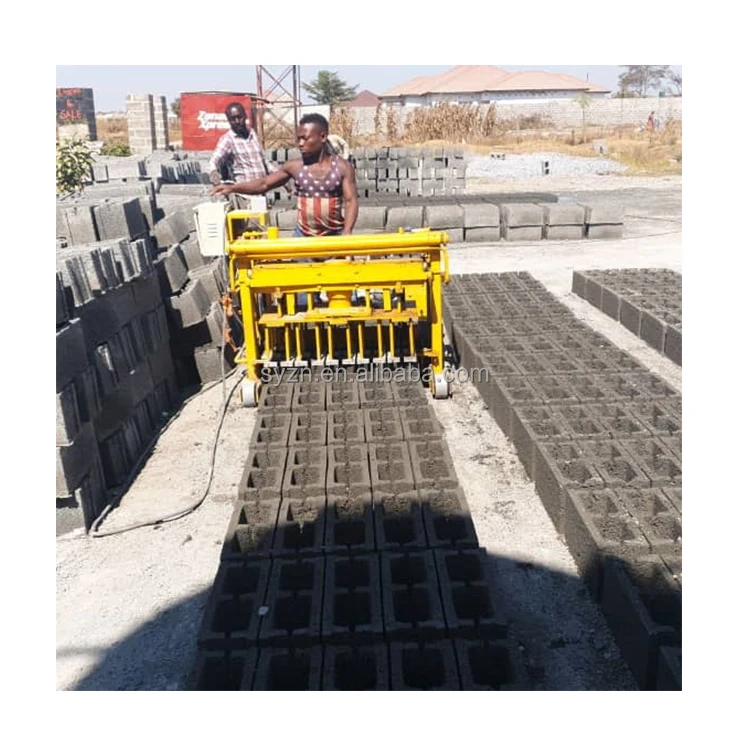
| On-site contractor production | Local sand and aggregate, 400×150×200 mm hollow block |
| Solid brick supply for masonry | Cement, fly ash and dust, 240×115×53 mm format |
| First block plant for entrepreneurs | Multi-format start with semi-automatic control |
| Distributor adding basic formats | Existing yard with manual pallet handling |
Why the Language on the HMI Matters Before the Machine Ships
A PLC controlled semi-automatic block machine is only as reliable as the operator who reads its screen.
When the display language does not match the crew on the floor, the first commissioning day stalls. I learned this the hard way: a unit shipped to West Africa arrived with an English-only HMI, and the local operators could not navigate the fault menu. The line sat idle until a bilingual firmware pack was pushed remotely. Every PLC controlled semi-automatic block machine leaving the workshop now goes through a language and voltage check against the destination country before the crate is sealed [NEED_CITE: voltage and frequency standards by export market]. The cost of catching this at the factory is negligible compared to a week of lost production and an emergency firmware swap across time zones.
Control Logic That Holds the Cycle
The QT4-24 uses a PLC to govern the vibration sequence, pressing stroke, and mould lift within each 24-second cycle. Once the operator loads the programme for a given block format, the controller repeats the exact timing and force profile every stroke. This removes the variance introduced when a worker manually judges when to cut vibration short or extend the press dwell. Batch-to-batch density stays within a narrow band because the PLC controlled semi-automatic block machine does not drift with fatigue or shift changes.
Where Semi-Automatic Ends and the Upgrade Path Begins
Semi-automatic on this press means the mould movement and vibration are controlled, while pallet feeding and block stacking still rely on manual labour. The control cabinet is wired with spare I/O channels and the mechanical frame has mounting points for an automatic pallet feeder and a stacking unit. When daily volume grows beyond what two operators can handle, those modules bolt on without replacing the press or rewriting the base programme. The automatic block machine upgrade path is documented in the electrical schematic so your electrician can plan the expansion before the first module arrives.
Reading the Numbers Behind the Press
The 4,200 r/min vibration frequency and 35.5 kN exciting force are applied vertically and directly under the mould. In concrete block making, vibration consolidates the mix while hydraulic pressure compresses it; if either is too low, the block leaves the mould with voids and low compressive strength. The four-guide-pillar system keeps the mould head level during descent, so the pressure distributes evenly across all cavities. A 390×190×190 mm hollow block and a 240×115×53 mm solid brick demand different vibration durations, and the PLC stores each profile so the operator simply selects the format on the HMI. Pallet size at 850×450×20 mm must match the curing racks and forklift tines already in your yard — ordering pallets that are even slightly wider forces a rack rebuild [NEED_CITE: pallet and curing rack compatibility in block plants].
What Happens When Automation Details Are Skipped
Buyers who focus only on press capacity often discover that the bottleneck was never the mould cycle — it was pallet handling. Blocks stacked by hand at the end of the line slow the entire rhythm, and the press sits idle waiting for an empty pallet to return. Another frequent gap is the batching station: if the mixer output does not match the press cycle, the hopper runs dry mid-stroke and the PLC throws a fault. Both issues are solvable, but retrofitting is costlier than specifying the automatic block machine upgrade modules at the quotation stage [NEED_CITE: common block line bottlenecks in semi-automatic plants].
Why Source the QT4-24 Here
Block machinery is the sole product focus, so the press, mould, pallet, and handling equipment are specified as one matched system. The vibration force and hydraulic pressure are set against the buyer’s confirmed mix design and local aggregate, not a catalogue default. Mould design covers the formats that actually sell in the buyer’s market, including custom drawings when a standard cavity does not fit. The automation level is selectable at order and expandable later, so capital expenditure tracks real demand. Installation includes operator training on the PLC interface, and wear parts lists are handed over before the container sails.
Documentation & Verification
- Line layout showing pallet flow and stacking area sized to the 850×450 mm pallet
- Capacity calculation stating the exact block format behind the quoted output figure
- Electrical schematic with spare I/O marked for future pallet feeder and stacker
- HMI language and voltage confirmation sheet signed before production starts
- Factory test record running your specified mix through a full mould cycle
Installation, Commissioning & Support
- Foundation pad sized to 2,060 × 1,730 mm footprint with anchor bolt template provided
- Dedicated 14.25 kW circuit at confirmed voltage and frequency, isolated from welder loads
- Press ships nude in a 20 GP container; reassembly limited to guide pillars and hopper
- PLC programme loaded with your block format profiles before first power-on
- Operator training covers HMI navigation, fault menu, and mould change sequence
- Wear parts list identifies vibration motor bearings and hydraulic seals by part number
Before You Request a Quotation
Send the exact block formats you intend to produce, the daily volume target per format, and a sample of your local aggregate. Confirm the plant voltage, frequency, and the language your operators read on a screen. If you already run pallets or curing racks on site, share the dimensions so the line layout accounts for them from day one.
Frequently Asked Questions
Q: What does semi-automatic mean for daily operator workload on the QT4-24?
A: The PLC handles mould descent, vibration timing, and press lift. Operators still feed pallets manually, remove filled pallets, and stack blocks at the curing area. Two workers can sustain the 24-second cycle, but pallet handling becomes the bottleneck as volume grows.
Q: How is the upgrade path from semi-automatic to automatic stacking defined?
A: The control cabinet includes spare I/O and the frame has pre-drilled mounting points for a pallet feeder and stacker. Electrical schematics document the wiring, so modules can be added later without replacing the press or rewriting the base PLC programme.
Q: How is the PLC display language set before the machine ships?
A: The HMI language is confirmed during the quotation stage and loaded at the factory. A language verification checklist is signed off alongside the voltage and frequency settings before the unit leaves the workshop, preventing commissioning delays on arrival.
Q: How does the control system keep vibration consistent across block formats?
A: The PLC stores a separate vibration duration and pressure profile for each mould. When the operator selects a format on the HMI, the controller applies the exact timing and force, eliminating the drift that occurs with manual cycle judgment.
Q: Can a batching and mixing station be added later without replacing the press?
A: Yes. The JQ350 mixer ships as standard, and the hopper feed conveyor can be connected to an external batching plant. The PLC accepts a feed-ready signal from the batcher, so integration is a wiring task rather than a press modification.