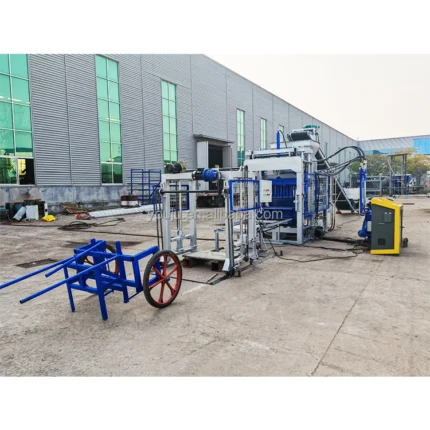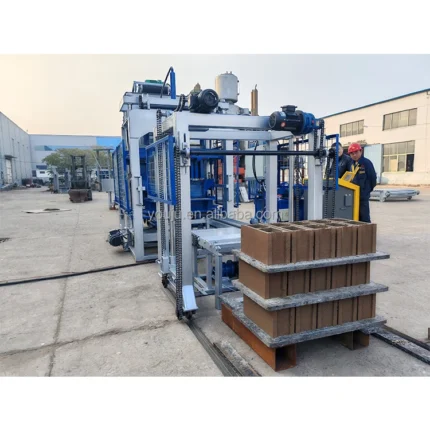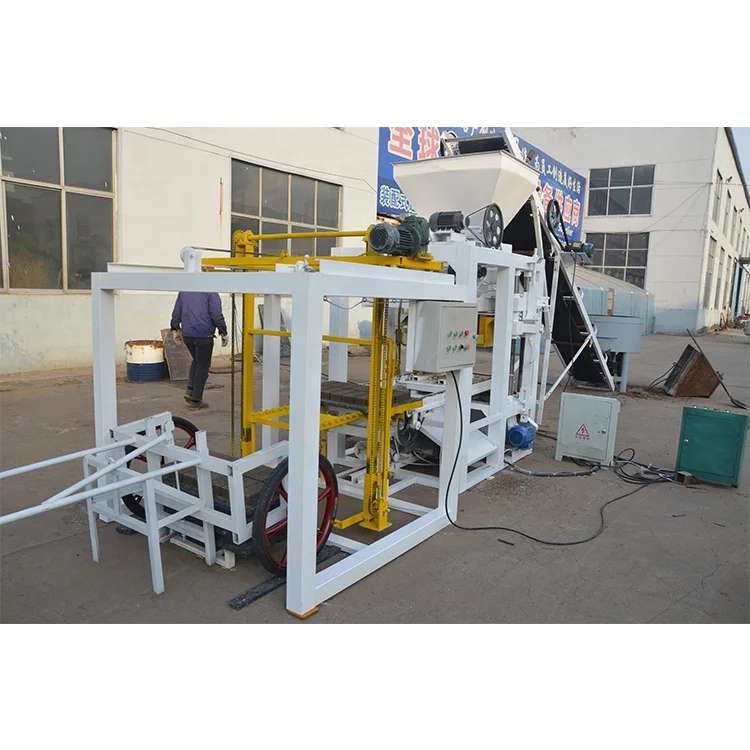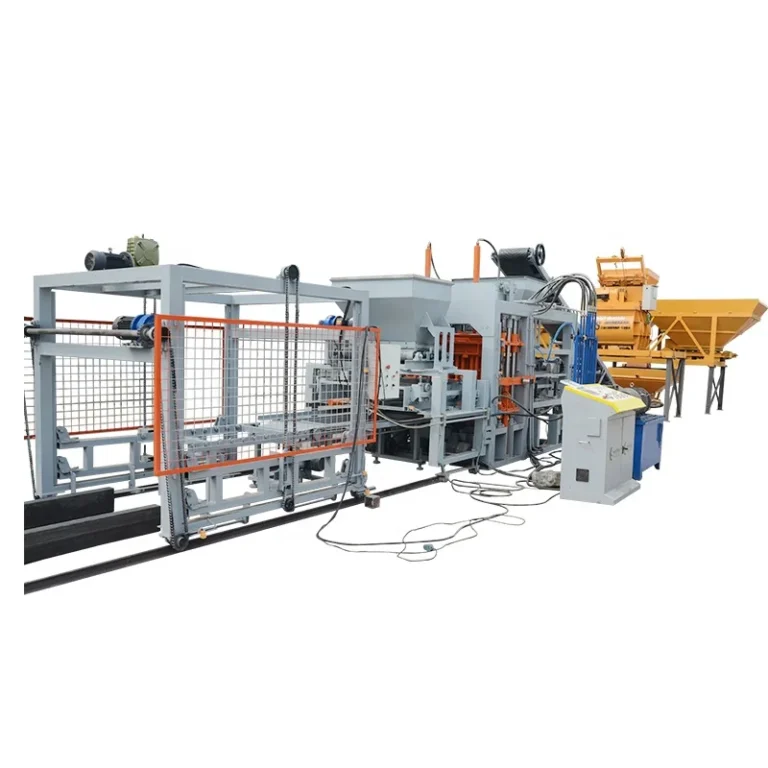
Description
Intelligent Control Architecture — Every automation layer of the QTJ4-40 is mapped against your operator skill level and future pallet-handling additions before the machine ships.
Technical Specifications
| Parameter | Value |
|---|---|
| Model | QTJ4-40 |
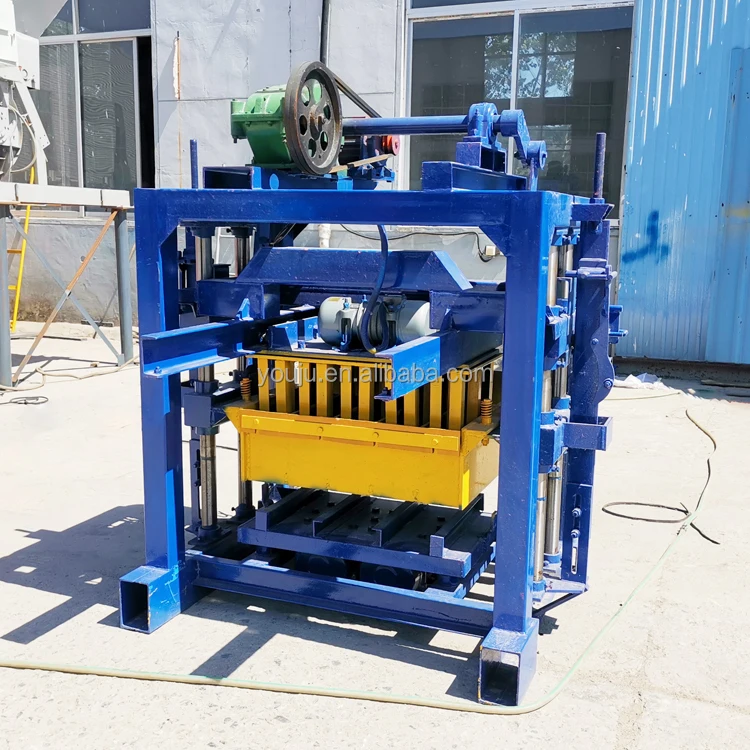
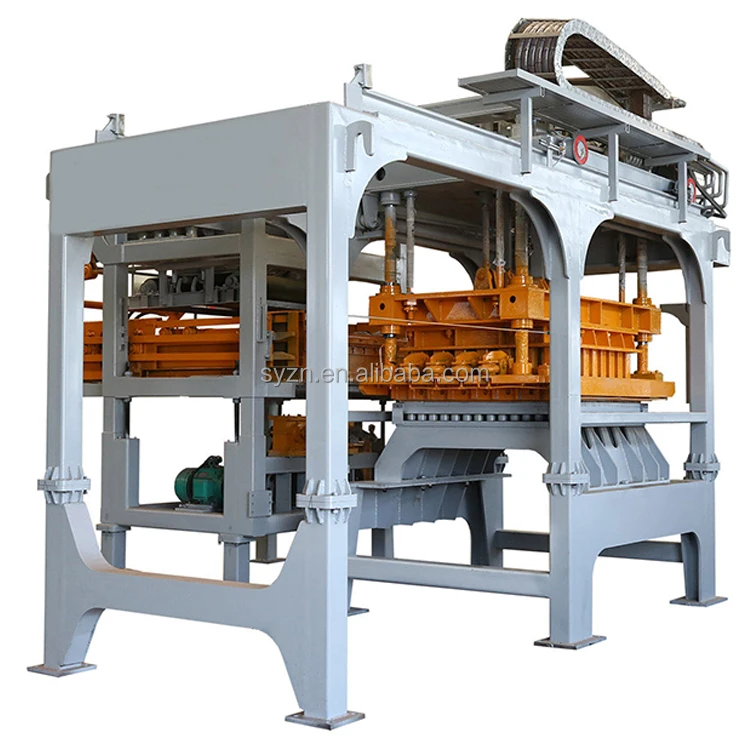
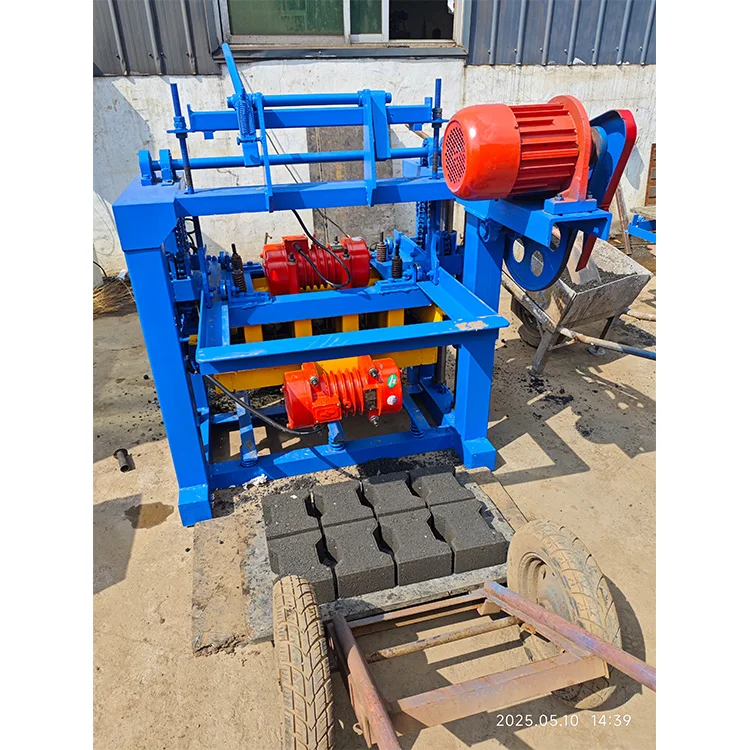
| Product Type | Semi-Automatic Hydraulic Block Making Machine |
| Overall Dimensions (L×W×H) | 1350×1460×1800 mm |
| Net Weight | 1.2 T |
| Rated Power | 10.4 kW |
| Voltage & Frequency | Configurable to buyer’s local supply (confirm before order) |
| Control System | Semi-automatic relay / PLC logic (manual pallet handling) |
| Vibration System | Bed mould vertical vibration + upper mould compression vibration |
| Molding Cycle | 40 s |
| Pallet Size | 850×450×20 mm |
| Mould Format Options | Hollow, solid, paver (8 in, 6 in, 5 in, 4 in; custom on request) |
| Output Capacity | 2880 pcs/day based on 400×200×200 mm hollow block |
| Output Capacity | 3600 pcs/day based on 400×150×200 mm hollow block |
| Output Capacity | 6400 pcs/day based on 225×112.5×60 mm solid brick |
| Raw Materials | Concrete, sand, cement, fly ash, lime, gypsum |
| Certification Scope | CE (confirm per order) |
Application Suitability
| Application | Material or Output |
|---|---|
| Small to medium block plants | Hollow and solid blocks from crushed stone, sand, and cement |
| On-site construction production | Pavers and kerbstones produced directly at the building project |
| First-time entrepreneur plants | Semi-automatic start producing 8-inch and 6-inch hollow blocks |
| Format diversification for existing producers | Solid bricks and interlocking pavers added to a current range |
Why the Control Language Must Be Confirmed Before the Machine Ships
The automatic QTJ4-40 block machine is only as intelligent as the interface the operator can actually read.
I once spent an entire commissioning day on a plant floor rewriting parameter labels because the display arrived in a language the local team could not decipher. Cycle testing waited while we translated menus with a phone camera. That delay is entirely preventable when the PLC controlled semi-automatic block machine display language and voltage are locked in writing during the order stage, not discovered at uncrating. [NEED_CITE: industrial control panel language and labeling standards for export machinery]
Programmable Logic Versus Manual Pallet Handling
The QTJ4-40 sits at the semi-automatic tier, meaning the press cycle, vibration timing, and hydraulic compression are governed by the control system while an operator places and retrieves pallets by hand. This division keeps the initial investment accessible and leaves a clear upgrade path: when volume justifies it, automatic pallet feeding and stacking stations can be integrated without replacing the press itself. The automatic QTJ4-40 block machine configuration is therefore a starting point, not a ceiling.
Dual Vibration Managed from a Single Screen
Both the bed mould vertical vibration and the upper mould compression vibration are timed through the same control sequence. The operator selects the block format, and the cycle parameters — vibration duration, compression pressure, dwell time — execute in a fixed order every press. Batch-to-batch consistency depends on that sequence remaining untouched, which is why the control panel should include parameter lockout for production settings while leaving only the start, stop, and emergency functions accessible during a shift. [NEED_CITE: vibration compaction principles for concrete block forming]
Reading the Specs Behind the Cycle Time
A 40-second molding cycle governs how long the press holds vibration and pressure per mould. The actual throughput, however, depends on pallet exchange speed, raw material feed continuity, and the block format in the mould. When the QTJ4-40 runs 400×200×200 mm hollow blocks, each cycle yields 4 pieces; switching to a 400×150×200 mm hollow format raises that to 5 pieces per cycle because the mould cavities are narrower. The 850×450×20 mm pallet size must also match the curing racks and forklift tines already on site — a mismatch here creates a bottleneck no control system can resolve. Rated at 10.4 kW, the machine draws enough power for both vibration motors and the hydraulic pump simultaneously, so a dedicated circuit at the confirmed local voltage and frequency is mandatory before first start-up.
The Hidden Cost of Skipping the Automation Audit
Buyers who select a control tier without mapping their current pallet-handling workflow often find that the press finishes its cycle faster than operators can swap pallets, leaving the machine idle between presses. The resulting output gap is invisible in the quotation because it lives in the seconds between cycles. Similarly, specifying a PLC without confirming display language and alarm codes turns a minor sensor fault into a full production halt while the team searches for a translator. [NEED_CITE: common commissioning delays in exported concrete machinery]
Why Sourcing This Machine Here Makes Sense
Block machinery is the single focus of this supply chain, so the QTJ4-40 press, mould, pallet, and any future handling stations are specified as one matched system rather than assembled from unrelated vendors. The control configuration is set against your actual local voltage, frequency, and operator language before production begins. Mould drawings for every format you intend to run are provided with the quotation, and the automation level is selectable so you can start semi-automatic and add pallet feeding later. Commissioning support includes on-site parameter tuning and operator training on the exact control interface your team will use daily.
Documentation & Verification
- Control language and voltage confirmation sheet signed before production
- Capacity calculation document stating the block format behind each output figure
- Mould drawing and format list for every cavity included in your order
- Factory test record run on your specified block format before dispatch
- Operation manual covering PLC parameter lockout and alarm response
Installation, Commissioning & Support
- Dedicated circuit sized for the 10.4 kW rated power at your confirmed voltage
- Foundation pad leveled to the 1350×1460 mm footprint with anchor bolt template
- Control display language verified on-screen during the factory test
- Vibration timing and hydraulic pressure tuned to your local aggregate mix on site
- Mould change procedure trained with your operators using the supplied format set
- Wear parts list identifying hydraulic seals and vibration mounts for first reorder
What to Include in Your Inquiry
Send the block formats your market actually sells, the daily volume you need to hit, and your local voltage and frequency so the automatic QTJ4-40 block machine control system is configured correctly from day one. Note the pallet size and forklift capacity already in your curing area so the handling workflow matches the press output. If you plan to add automatic stacking later, mention that now so the control panel is pre-wired for the upgrade.
Frequently Asked Questions
Q: How is the output capacity verified, and which block format does each figure assume?
A: Every capacity figure is calculated from the molding cycle, the number of cavities in a specific mould, and an assumed shift length. For the QTJ4-40, the 2880-piece daily figure is based on 400×200×200 mm hollow blocks, while 6400 pieces assumes 225×112.5×60 mm solid bricks. A written capacity calculation stating the format behind each number accompanies the quotation.
Q: What automation level does the QTJ4-40 offer, and can it be upgraded later?
A: The machine ships semi-automatic, with the press cycle and vibration governed by the control system while operators handle pallets manually. The panel can be pre-wired for automatic pallet feeding and stacking stations, so when your volume justifies the investment, those modules integrate without replacing the press or rewiring the control cabinet.
Q: How are voltage, frequency, and control display language confirmed?
A: Before production starts, a written confirmation sheet locks in your local voltage, frequency, and the language for all PLC menus and alarm messages. This document is signed by both parties and verified again during the factory test so the interface is readable the moment the machine is powered on at your site.
Q: What is the mould change procedure, and how long does a swap take?
A: The QTJ4-40 uses an easy-change mould design where the mould box is unbolted, lifted out, and replaced with the next format. The exact swap time depends on operator familiarity and the crane or hoist available on your floor. The procedure is covered during on-site commissioning so your team can perform format changes independently.
Q: Which wear parts should I stock for the first replacement cycle?
A: The delivery package includes a wear parts and mould list identifying hydraulic seals, vibration mounts, and mould liner plates. Ordering the recommended spares with the initial machine shipment avoids production pauses when the first scheduled replacement falls due, especially in markets where courier lead times for specific seal sizes are lengthy.