

Belgium Govt Infrastructure: QT12-15 Cement Silo Supplier
The lowest bid is often the most expensive line item in a government tender.
For EPC contractors targeting Belgium Govt Infrastructure: QT12-15 Cement Silo Supplier projects, the critical success factor is not the initial purchase price but the strict adherence to EN structural standards and seamless integration with automated block lines. Procurement teams must verify bolted construction methods and CE certification before commercial negotiation to avoid port rejections and assembly delays.
I still remember the silence on the phone when a procurement manager in Dubai realized his "cost-saving" welded silos were stuck at Jebel Ali Port. The customs inspector had flagged a mismatch between the declared welding certificates and the actual on-site assembly requirements for a public housing project. The demurrage costs alone exceeded the profit margin of the entire batching plant. That incident shifted my perspective from a buyer chasing the bottom line to a supplier who reads the technical annexes first. In high-stakes infrastructure tenders, the devil is not in the details; it is in the compliance documents. [NEED_CITE: common causes of customs rejection for industrial equipment in MENA region]
Understanding why technical specifications override price requires looking beyond the commercial invoice. When sourcing for Belgium Govt Infrastructure: QT12-15 Cement Silo Supplier contracts, the focus must shift to how the storage system interacts with the production line and local regulatory bodies.
Why Did the Lowest Bidder Fail at Jebel Ali Port?
Ignoring "Bolted" and "EN Standard" clauses in tender annexes leads to costly rejections.
Government infrastructure projects in Europe and the Middle East often reference European Norms (EN) for structural steel execution. A common pitfall occurs when suppliers quote welded silos because they appear cheaper to manufacture. However, welded units require extensive on-site welding and non-destructive testing (NDT) that local labor forces may not be certified to perform. Bolted silos, by contrast, arrive in modular sections with pre-fabricated flanges, allowing for faster assembly using standard tools. [NEED_CITE: EN 1090 execution classes for steel structures]
Consider a recent case involving a municipal road project in North Africa. The tender specified a bolted cement silo to ensure rapid deployment and ease of inspection. The winning bidder supplied a welded unit, arguing it was "stronger." The site engineer rejected it because the weld seams lacked the required traceability documentation mandated by the project’s quality assurance plan. The result was a three-month delay while the correct equipment was sourced. This scenario highlights why a reliable Belgium Govt Infrastructure: QT12-15 Cement Silo Supplier must prioritize documentation over perceived structural robustness.
The cost of such an error is not just financial. It damages the contractor’s reputation with the government client. In public tenders, timeline adherence is often weighted as heavily as cost. A delayed handover can trigger penalty clauses that erase any savings gained from choosing a cheaper, non-compliant supplier. Therefore, verifying the assembly method is not a technicality; it is a risk management imperative.
What Are the Hidden Technical Traps in Government Tenders?
Verify structural certification and assembly method before commercial negotiation.
Tender documents for Belgium Govt Infrastructure: QT12-15 Cement Silo Supplier projects often hide critical constraints in the appendices. While the main body outlines the quantity and basic capacity, the technical annexes specify wind load calculations, material grades, and execution classes. Missing these details can lead to a situation where the equipment arrives but cannot be installed legally.
One frequent trap is the requirement for CE marking aligned with specific directives. A silo might have a CE mark, but if the accompanying Declaration of Performance does not match the tender’s specified wind zone or seismic rating, it is considered non-compliant. I have seen cases where suppliers provided generic CE certificates that did not cover the specific configuration requested. For a Belgium Govt Infrastructure: QT12-15 Cement Silo Supplier, this level of detail is non-negotiable. [NEED_CITE: EU Construction Products Regulation requirements for static storage units]
Another hidden trap is the compatibility of the discharge mechanism with the downstream mixer. Government projects often use standardized mixers with specific intake rates. If the silo’s discharge gate or vibration system does not match this rate, it creates a bottleneck. This is not always obvious until commissioning. To avoid this, buyers should request a compatibility matrix from the supplier. This document should map the silo’s output capacity against the mixer’s intake capacity, ensuring a smooth flow of material.
| Feature | Compliant Specification | Non-Compliant Risk |
|---|---|---|
| Assembly Method | Bolted with pre-drilled flanges | Welded requiring on-site NDT |
| Certification | CE with specific EN declaration | Generic CE without performance data |
| Material Grade | Certified S235/S355 steel | Unverified mild steel |
| Documentation | Full traceability batch records | Missing mill certificates |
This table illustrates the qualitative differences that determine acceptance. A Belgium Govt Infrastructure: QT12-15 Cement Silo Supplier must provide verifiable documentation for each of these features. Self-reported claims are insufficient for government auditors.
How to Match Cement Storage with QT12-15 Production Lines?
Sizing silos based on peak hourly output prevents bottlenecks in automated plants.
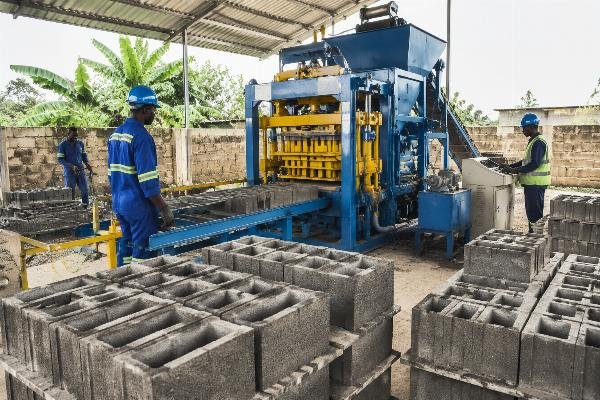
The QT12-15 block machine is a high-output unit designed for large-scale production. Its efficiency depends on a continuous supply of raw materials. If the cement silo is undersized or has a slow discharge rate, the block machine will idle, reducing overall productivity. For a Belgium Govt Infrastructure: QT12-15 Cement Silo Supplier, understanding this dynamic is crucial. The silo is not just a storage tank; it is a buffer that ensures the production line runs at full capacity.
The key metric is the hourly consumption of cement. A QT12-15 machine can produce thousands of blocks per hour, consuming several tons of cement in the process. The silo must have a discharge rate that exceeds this consumption to account for peak demand periods. Additionally, the silo’s capacity should allow for at least one day of production without refilling, providing a safety margin against supply chain disruptions. [NEED_CITE: typical cement consumption rates for fully automatic block machines]
In a recent project in Latin America, a contractor installed a silo that was technically large enough in volume but had a narrow discharge outlet. This caused bridging of the cement powder, leading to intermittent flow stoppages. The production team had to manually intervene frequently, negating the automation benefits of the QT12-15 line. Switching to a silo with a properly sized cone and vibration system resolved the issue. This experience underscores the importance of holistic system design.
When evaluating a Belgium Govt Infrastructure: QT12-15 Cement Silo Supplier, ask for a flow analysis report. This document should demonstrate how the silo’s geometry and discharge mechanism support the specific output requirements of the QT12-15 machine. It should also address issues like dust control and pressure relief, which are critical for operator safety and environmental compliance.
What Documentation Ensures Smooth Customs Clearance?
CE marks and SGS reports must align exactly with tender specifications.
Customs clearance for industrial equipment is a documentation-heavy process. For Belgium Govt Infrastructure: QT12-15 Cement Silo Supplier shipments, the paperwork must be flawless. Any discrepancy between the physical goods and the documents can lead to inspections, delays, and fines. The most critical documents include the Commercial Invoice, Packing List, Bill of Lading, and Certificate of Origin. However, for regulated items like cement silos, the Technical File and CE Declaration are equally important.
The Technical File should contain detailed drawings, material certificates, and calculation sheets for wind and snow loads. It serves as proof that the silo meets the claimed standards. SGS or other third-party inspection reports can add an extra layer of credibility, especially for government tenders that require independent verification. These reports should cover both the manufacturing process and the final product inspection. [NEED_CITE: standard documentation requirements for importing heavy machinery into EU/MENA]
A common mistake is submitting generic certificates that do not reference the specific serial numbers of the shipped units. Customs officers may reject such documents as irrelevant. Each certificate should clearly link to the equipment being imported. Furthermore, the language of the documents should match the requirements of the destination country. For Belgium Govt Infrastructure: QT12-15 Cement Silo Supplier contracts, this often means having documents available in English, French, or Dutch, depending on the specific region.
To streamline this process, work with a supplier who has experience in international shipping. They should be able to provide a pre-shipment documentation package for review. This allows the buyer to identify and correct any errors before the goods leave the factory. It is a small step that can save weeks of delay at the port.
Conclusion
Compliance is the currency of government infrastructure projects.
Success in securing and executing Belgium Govt Infrastructure: QT12-15 Cement Silo Supplier contracts depends on rigorous attention to technical standards and documentation. By prioritizing bolted construction, verifying EN compliance, and ensuring seamless integration with the QT12-15 line, contractors can avoid costly pitfalls. The right supplier acts as a partner in risk management, delivering not just equipment but certainty.
Leave a Reply