

Buy Paver Block Machine Wholesale Price from Manufacturer
The lowest quote on your screen is rarely the real cost of ownership.
Wholesale paver block machine pricing shifts dramatically based on automation tier, mold customization scope, whether the supplier bundles installation and voltage adaptation, and the trade terms you accept. A machine quoted at a bargain rate can double in actual landing cost once hidden variables surface.
I still remember a West African client who sourced a second-hand QT6-15 from a broker, attracted by a price that looked impossibly low. When the machine arrived, the molds couldn’t handle the local river sand particle size, and the output rate hovered below acceptable levels. It took weeks of mold rematching and vibration frequency recalibration before production stabilized. That case is not unusual—buyers chasing the cheapest tag often end up paying for it twice. [NEED_CITE: root cause distribution of block machine underperformance in emerging markets]
If you are evaluating options right now, the real question is not which machine is cheapest, but which configuration delivers the lowest cost per thousand blocks over its service life. Let me walk you through what actually moves the needle on wholesale pricing.
What Factors Actually Determine Wholesale Paver Block Machine Prices?
Automation level, mold quantity, complete line configuration, and trade terms form the four pillars that set the wholesale price range. Comparing two quotes side by side without aligning these variables is meaningless.
The automation tier alone creates a wide pricing band. Mobile egg-laying units sit at the entry point, semi-automatic stationary machines occupy the middle, and fully automatic lines with integrated batching, conveying, stacking, and pallet circulation sit at the top. Each step up adds hydraulic systems, PLC controls, sensor arrays, and structural steel—costs that compound quickly. [NEED_CITE: cost structure breakdown of concrete block production lines by automation level]
Mold customization is another variable most buyers underestimate. A standard mold set covers a handful of block shapes. If you need interlocking pavers, curbstones, hollow blocks, and solid bricks in multiple thicknesses, each additional mold set adds material cost, heat treatment time, and precision machining. Some suppliers quote the base machine and treat molds as an afterthought, which is where surprises happen at the container door.
Then there is the question of what the line actually includes. A bare mainframe is one thing. A complete turnkey package—mixer, batching plant, belt conveyors, pallet loader, stacker, cement silo, color feeder—multiplies the invoice but also determines whether the machine can run profitably from day one.
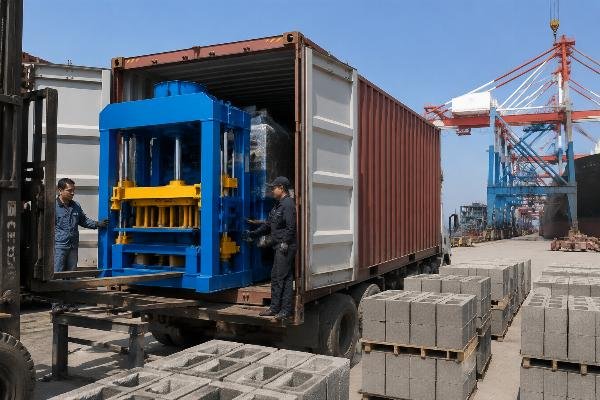
Trade terms matter just as much. FOB pricing looks clean until you calculate ocean freight, marine insurance, import duties, inland transport, and customs clearance at destination. A CIF or DDP quote might appear higher on paper but eliminates budget uncertainty. [NEED_CITE: impact of Incoterms on total landed cost of heavy machinery imports]
| Cost Component | Entry-Level Config | Mid-Range Config | Full Turnkey Config |
|---|---|---|---|
| Mainframe | Included | Included | Included |
| Mold Sets | Basic set | Extended set | Custom matched to local materials |
| Batching & Mixing | Not included | Basic batcher | Full automated plant |
| Stacking System | Manual | Semi-auto | Fully automatic with pallet circulation |
| Voltage Adaptation | Standard only | Configurable | Customized to destination grid |
| Installation Support | Remote guidance | On-site commissioning | Full training plus extended supervision |
| After-Sales Coverage | Limited | Standard spare parts package | Lifetime technical support |
A distributor in Latin America once ordered a batch of semi-automatic units in container volume. The per-unit cost dropped noticeably compared to retail pricing, and the package included OEM labeling plus a spare parts bundle. The delivery cycle stayed within a reasonable window, and the distributor avoided the margin erosion that comes from buying piece by piece. That is the kind of structural advantage wholesale pricing offers when you plan the volume properly.
How Do QT4-25, QT6-15, and QT10-15 Compare in Wholesale Pricing?
The wholesale price gap between entry-level mobile units and fully automatic stationary lines can reach several multiples, so选型 must follow actual daily output requirements rather than aspiration.
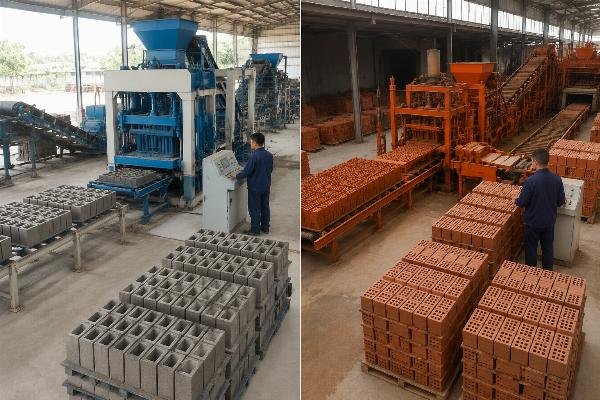
The QT4-25 mobile egg-laying machine is the lightest option. It produces blocks directly on the ground without pallets, which eliminates pallet cost entirely. The trade-off is lower output per cycle and limited product variety. For a startup operation testing market demand, this machine keeps capital exposure low. The wholesale paver block machine wholesale price for this tier is the most accessible, making it popular among first-time investors across Africa and parts of Southeast Asia.
The QT6-15 semi-automatic stationary machine represents the middle ground. It uses pallets, accepts multiple mold sets, and delivers consistent output for a small-to-medium yard. Most private investors in emerging markets land here because the return-on-investment curve is favorable when daily volume stays below a certain threshold. Pushing a fully automatic line into a market that only needs this capacity wastes capital on idle hydraulics and unused PLC channels.
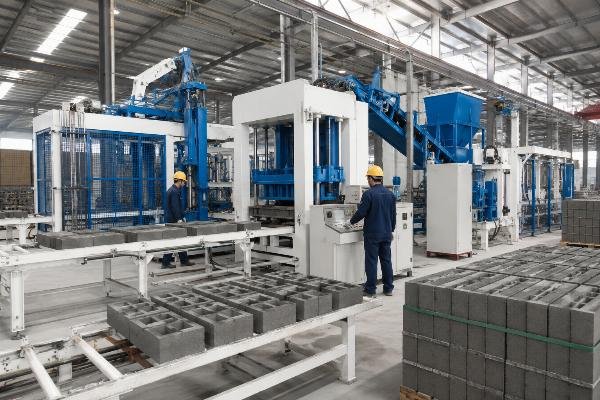
The QT10-15, QT12-15, and QT15-15 fully automatic lines are designed for high-volume contractors and government infrastructure projects. They integrate automated material feeding, precise vibration control, hydraulic pressing, and robotic stacking. The wholesale paver block machine wholesale price for these lines is substantially higher, but the per-block cost drops significantly at scale. A Middle East contractor running a full turnkey package with batching plant and stacker reported that the complete line pricing came in well below comparable European offerings, while including on-site installation and operator training. [NEED_CITE: comparative pricing analysis of Chinese versus European block machine export lines]
| Parameter | QT4-25 Mobile | QT6-15 Semi-Auto | QT10-15 Full Auto |
|---|---|---|---|
| Daily Output Range | Low | Moderate | High |
| Pallet Requirement | None | Required | Required |
| Automation Level | Manual movement | Semi-automatic | Fully automatic PLC |
| Mold Flexibility | Limited | Multiple sets | Extensive with color feeder |
| Suitable Buyer Profile | Startup investor | Private yard operator | Government contractor |
| Wholesale Price Tier | Entry | Mid | Premium |
Shandong Shiyue covers this full spectrum, from the mobile QT4-25 through the semi-auto QT6-15 up to the heavy-duty QT10-15 and beyond. Each tier is engineered to match the buyer’s actual production target, not to upsell capacity they will never use.
What Hidden Costs Should Buyers Watch for Beyond the Machine Quote?
Mold customization, voltage conversion, on-site commissioning, spare parts bundling, and marine insurance are the line items that quietly inflate the real cost of ownership if the initial quote does not address them.
Mold matching is the first trap. Local raw material characteristics—sand grain size, aggregate hardness, moisture content—directly affect mold design and vibration parameters. A mold built for Chinese standard sand will underperform on West African river sand until the cavity dimensions and wear-resistant treatment are adjusted. Some suppliers absorb this customization into the wholesale paver block machine wholesale price. Others quote a clean number and invoice the mold rework separately after the machine arrives.
Voltage adaptation is equally critical. Many emerging markets run on grids with unstable frequency, phase imbalance, or non-standard voltage. A machine wired for one configuration will fail or damage its motors if plugged into another without proper conversion equipment. The cost of a transformer or rewound motor is not trivial, and it should be part of the original discussion.
Installation and training represent another variable. Flying engineers to site, housing them, covering per diems, and scheduling commissioning around local labor availability all carry cost. Some manufacturers include this in the package. Others treat it as a separate service order, which means the buyer faces an unexpected invoice weeks after the machine lands. [NEED_CITE: hidden cost categories in international construction equipment procurement]
Spare parts bundling is often overlooked. Wear parts—mold liners, vibration springs, hydraulic seals—need replacement on a predictable cycle. If the initial shipment does not include a calibrated spare parts package, the buyer faces production downtime while sourcing replacements locally or waiting for air freight.
| Hidden Cost Category | Risk if Omitted | Typical Mitigation |
|---|---|---|
| Mold Customization | Poor output rate, high rejection | Confirm material matching before order |
| Voltage Adaptation | Motor damage, grid incompatibility | Specify destination voltage at quoting stage |
| On-Site Commissioning | Extended downtime, operator errors | Bundle installation in contract |
| Spare Parts Package | Unplanned production stoppage | Include wear parts bundle in shipment |
| Marine Insurance | Full loss exposure during transit | Confirm CIF or DDP coverage scope |
When Shandong Shiyue prepares a quotation, the wholesale paver block machine wholesale price already reflects mold matching to the buyer’s local raw materials, voltage adaptation to the destination grid, and on-site installation with operator training. There is no secondary invoice for items that should have been part of the original scope.
How to Negotiate the Best Wholesale Deal with Chinese Manufacturers?
Volume commitment, payment structure flexibility, after-sales terms, and exclusive territory rights are the four levers that unlock the most favorable wholesale paver block machine wholesale price from established manufacturers.
Manufacturers respond to certainty. A buyer who presents a clear procurement roadmap—container volume per quarter, product mix, target markets over a multi-year horizon—gives the factory the production planning confidence needed to offer genuine wholesale pricing rather than a padded single-unit quote. A Latin American distributor who committed to regular container shipments secured per-unit pricing that was noticeably lower than spot-buy competitors, while also obtaining OEM labeling rights and priority production scheduling.
Payment terms are another negotiation axis. Standard arrangements involve a deposit plus balance before shipment. Established buyers with verified credit can explore extended settlement windows or staged payments tied to delivery milestones. The key is demonstrating financial reliability, not demanding concessions without backing.
After-sales terms should be explicit in the contract. Response time commitments, spare parts supply guarantees, and remote diagnostic support access are all negotiable. A manufacturer willing to commit to lifetime technical support and rapid spare parts dispatch is signaling confidence in their own product—and that confidence should be reflected in the pricing structure. [NEED_CITE: negotiation frameworks for B2B industrial equipment procurement from China]
Exclusive territory rights matter for distributors. If you are building a regional dealer network, securing exclusive representation for a defined geography protects your investment in marketing, training, and after-sales infrastructure. Manufacturers who offer this are looking for long-term partners, not transactional buyers.
Shandong Shiyue supports OEM private labeling, volume-based dealer pricing, and lifetime after-sales engagement. These are not marketing slogans—they are structural features of how the company works with distributors across multiple regions. The wholesale paver block machine wholesale price improves materially when the relationship is framed as a partnership rather than a one-off transaction.
Why Do Some "Cheap" Machines End Up Costing More in the Long Run?
Low output rates, accelerated mold wear, and absent after-sales support transform an attractive purchase price into a punishing operating cost over the machine’s service life.
The economics of block production are driven by cost per thousand blocks, not by the invoice amount on day one. A machine that produces at a low output rate due to poorly matched molds or inadequate vibration force requires more operating hours, more labor, and more energy to hit the same daily target. The utility bills and wage costs accumulate quickly.
Mold wear is another silent cost driver. Inferior steel quality or inadequate heat treatment shortens mold life dramatically. The buyer who saved on the initial purchase ends up ordering replacement molds frequently, each set requiring shipping and downtime to install. Over the service life of the machine, cumulative mold expenditure can exceed the original savings by a wide margin. [NEED_CITE: total cost of ownership analysis for concrete block making equipment]
After-sales absence is perhaps the most expensive hidden factor. When a hydraulic valve fails or a PLC module errors out, the difference between a phone call to a responsive technical team and radio silence is measured in production days lost. For a contractor fulfilling a government paving contract, downtime means penalty clauses and reputation damage that dwarf any initial equipment savings.
A second-hand machine might seem like a shortcut to lower capital expenditure. But vibration systems degrade, hydraulic seals harden, and structural welds develop fatigue. The output rate on a worn machine can drop to levels that make the operation unprofitable before the equipment is fully paid for. The West African client mentioned earlier experienced exactly this trajectory before switching to properly configured new equipment.
| Cost Driver | Cheap Machine Risk | Properly Configured Machine |
|---|---|---|
| Output Rate | Noticeably reduced | Stable at design specification |
| Mold Service Life | Substantially shortened | Extended through proper material matching |
| After-Sales Access | Not provided | Lifetime technical support |
| Cumulative Operating Cost | Escalates over time | Predictable and controlled |
The wholesale paver block machine wholesale price from a reputable manufacturer includes the engineering that prevents these cost escalations. Proper mold matching, voltage adaptation, and commissioning support are not luxuries—they are the difference between a profitable operation and a capital trap.
Conclusion
Wholesale pricing only tells half the story; the real cost lives in configuration, customization, and ongoing support.
Buyers who evaluate the wholesale paver block machine wholesale price through the lens of total cost of ownership—factoring mold matching, voltage adaptation, installation, spare parts, and after-sales commitment—consistently make better procurement decisions than those who chase the lowest initial quote. The gap between a cheap machine and a properly configured one is measured not in invoice dollars but in production days, rejection rates, and operational headaches over the life of the equipment.
Leave a Reply