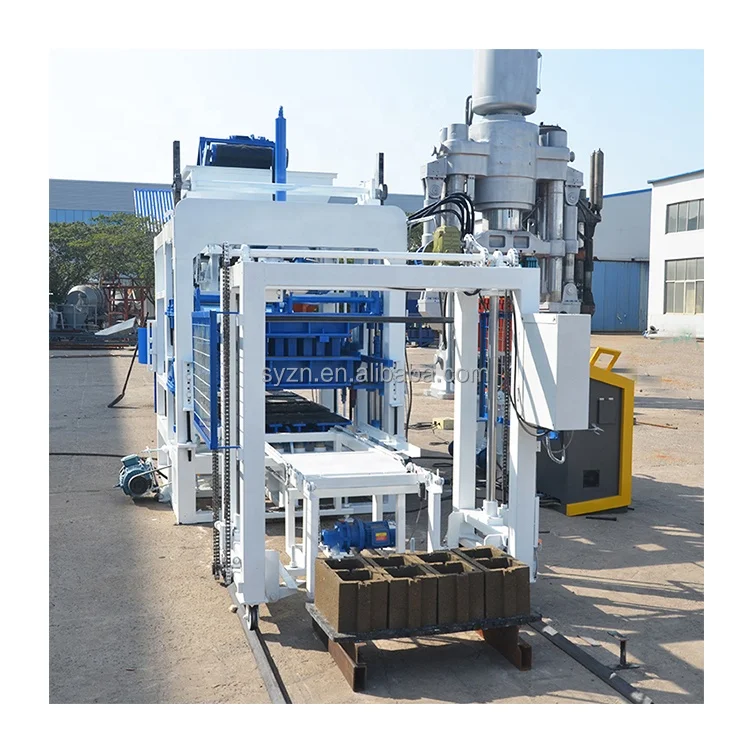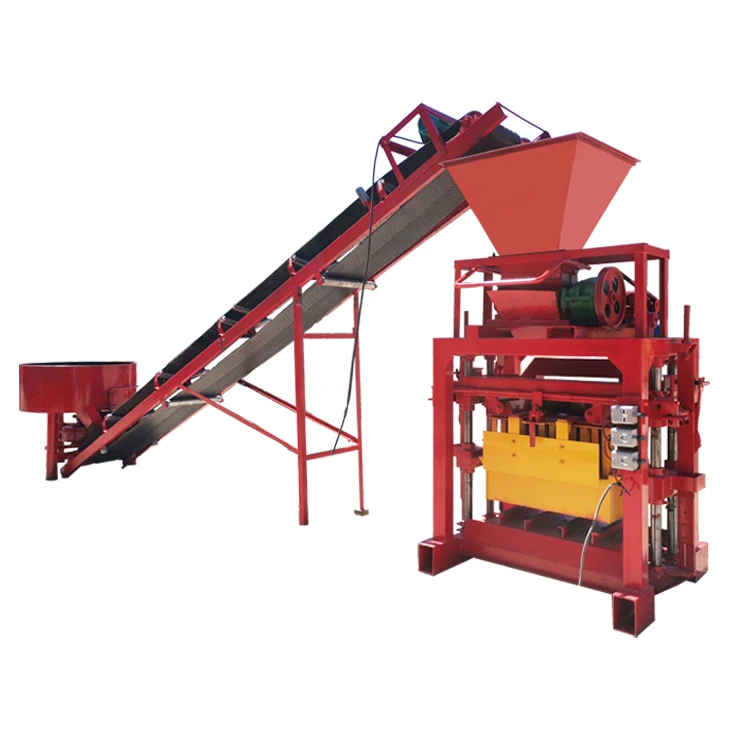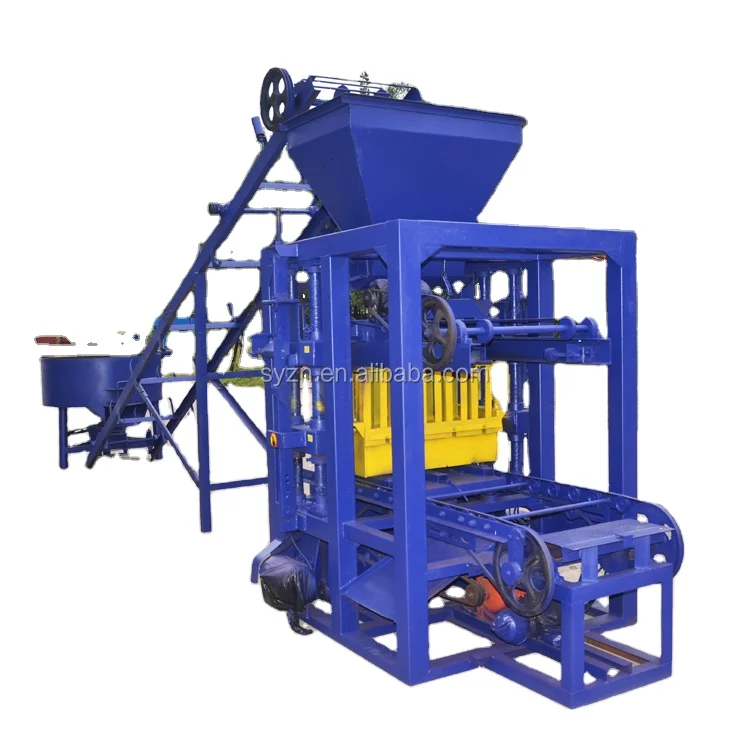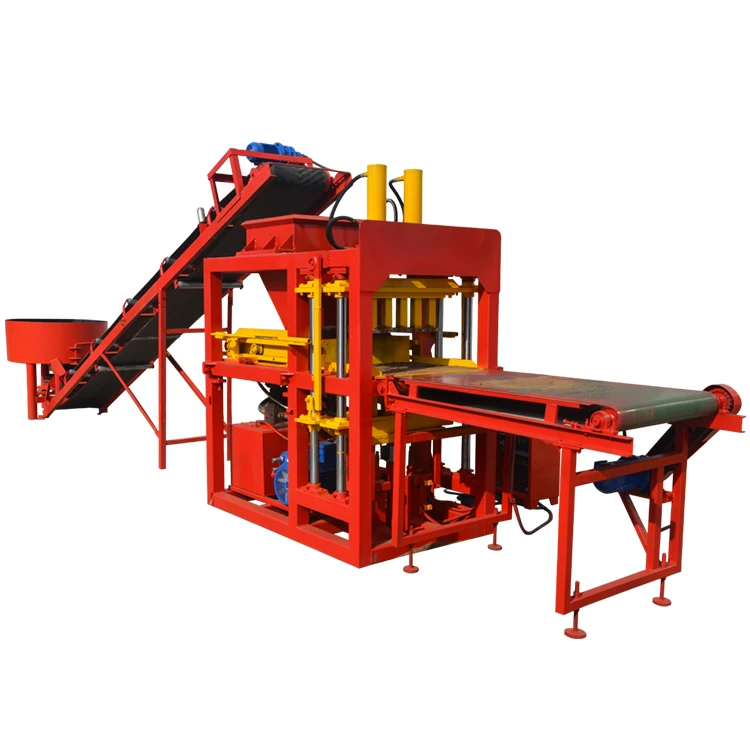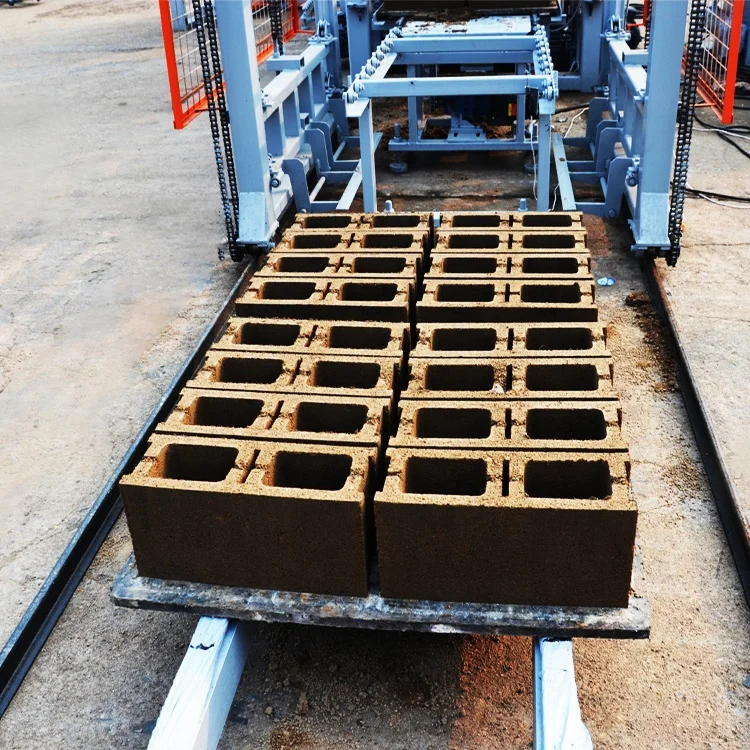
Description
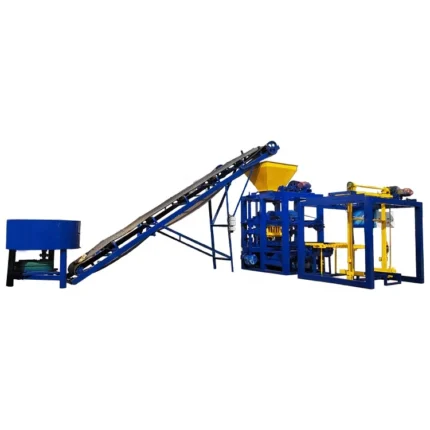
Specified as a matched system — the QT6-15 automatic concrete block making machine PLC controlled configuration aligns vibration force, hydraulic pressure, and PLC parameters to your local aggregate rather than running on a catalogue default.
Technical Specifications
| Parameter | Value |
|---|---|
| Model | QT6-15 |
| Product Type | Automatic Concrete Block Making Machine |
| Overall Dimensions (L×W×H) | 8200×1700×2950 mm |
| Total Mass | 7 T |
| Overall Power | 37 kW |
| Vibration Force | 45 kN |
| Vibration Frequency | 0-60 Hz |
| Vibration Form | Platform Vibration |
| Moulding Mode | Load automatically, vibration moulding |
| Demolding Method | Hydraulic |
| Pallet Size | 880×850 mm |
| Molding Cycle | 15-20 s |
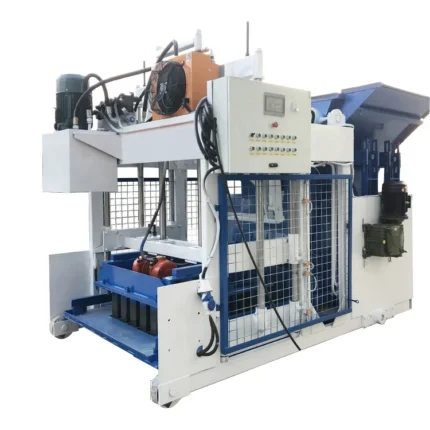
| Control System | PLC with touch screen, fault diagnosis, action interlock logic |
| Hydraulic System | Independent integrated type hydraulic station |
| Factory Area Required | 1200 m² |
| Compressive Strength of Blocks | More than 15 MPa |
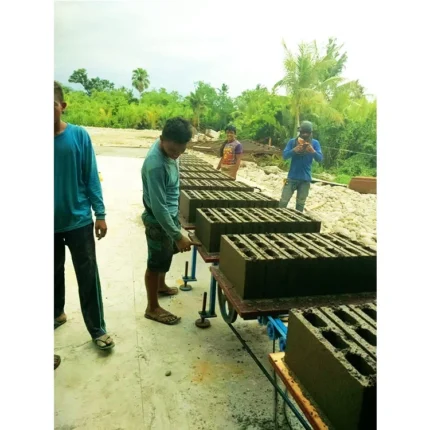
| Output (Hollow block 400×200×200 mm) | 1080-1440 pcs/hour (basis: 6 pcs/mould, 15-20s cycle) |
| Output (Hollow block 400×150×200 mm) | 1440-1920 pcs/hour (basis: 8 pcs/mould, 15-20s cycle) |
| Output (Solid brick 240×115×53 mm) | 5760-7680 pcs/hour (basis: 32 pcs/mould, 15-20s cycle) |
| Output (Rectangular brick 200×100×60 mm) | 2160-2880 pcs/hour (basis: 21 pcs/mould, 20-25s cycle) |
| Output (Zigzag brick 225×112.5×60 mm) | 2160-2880 pcs/hour (basis: 15 pcs/mould, 20-25s cycle) |
| Raw Material Adaptability | Waste ash, slag, and various aggregates; reduced cement dosage |
| Warranty | 1 year for the whole machine (excluding spare parts) |
Application Suitability
| Application | Material or Output |
|---|---|
| Hollow block production | Crushed stone, sand, cement, and waste ash aggregates |
| Solid brick manufacturing | Fly ash, slag, and local sand mixes |
| Rectangular paving brick | High-density concrete with fine aggregate finishes |
| Zigzag interlocking brick | Interlocking mould profiles for driveway and walkway layouts |
| Multicellular brick formats | Lightweight aggregate blends for thermal insulation blocks |
What the PLC Actually Controls on a Block Line
The programmable logic controller stores process data per block format and enforces action interlocks so the automatic concrete block making machine PLC controlled system runs within parameters you set, not whatever the operator decides on the day.
When vibration force and hydraulic pressure are not matched to the buyer’s mix design and local aggregate, block strength becomes inconsistent across a single shift. I have seen machines of this class arrive in South America with factory defaults locked in, and the local crushed stone contained enough clay to change the entire compaction profile. The operator had no way to adjust frequency or pressure without overriding safety limits. [NEED_CITE: impact of aggregate clay content on block compaction and compressive strength]
Process Parameters Stored Per Mould Format
The QT6-15 PLC with touch screen interface stores distinct process data for each block format the machine is set up to produce. When an operator switches from a 400×200×200 mm hollow block mould to a 200×100×60 mm rectangular paving brick mould, the control system recalls the vibration frequency, hydraulic pressure profile, and cycle timing associated with that specific format. This eliminates the trial-and-error adjustment period that typically consumes the first hours after a mould change on manually controlled equipment.
Fault Diagnosis Without Waiting for an Engineer
The built-in fault diagnosis system identifies sensor failures, hydraulic pressure drops, and action interlock violations in real time on the touch screen display. Rather than halting production and waiting for a service visit, the operator can read the specific fault code and take corrective action or contact remote support with the exact error information. Action interlock logic prevents the machine from executing sequences out of order, such as demolding before vibration is complete, which protects both the mould and the freshly formed blocks from damage. [NEED_CITE: PLC fault diagnosis protocols in industrial block making machinery]
How Platform Vibration Frequency Affects Block Density
The platform vibration system operates across a 0-60 Hz adjustable range with 45 kN of vibration force, and these two parameters work together to determine how tightly the aggregate particles pack inside the mould cavity. Higher frequency suits finer materials like fly ash and sand blends, while lower frequency with sustained force moves coarser crushed stone into position. The independent integrated hydraulic station is isolated from the main machine vibration and dust environment, which keeps hydraulic fluid cleaner and maintains consistent pressure delivery across extended production runs. The 880×850 mm pallet size must align with the curing area layout and forklift capacity already in place at the plant.
The Cost of Leaving Automation Decisions Unspecified
When pallet handling, stacking, and curing rack transfer are not included in the quotation, the output leaves the press and must be moved by hand. I have visited plants where the automatic concrete block making machine PLC controlled system was running at full cycle speed, but workers downstream could not clear pallets fast enough, forcing the operator to introduce artificial delays. The automation level on the QT6-15 is selectable, meaning a buyer can specify the press with PLC control now and add automatic stacking and cubing later, but this must be confirmed before production begins. Voltage, frequency, and PLC display language left unspecified until after shipment can delay commissioning by weeks while control panels are reconfigured on site. [NEED_CITE: commissioning delays caused by unspecified voltage and PLC language configuration]
Configuration Set Against Your Actual Conditions
Block machinery is our single focus, so the machine, mould, pallet, and handling equipment are specified as one matched system rather than assembled from separate suppliers. The QT6-15 configuration is set against the buyer’s actual mix design, local aggregate characteristics, and target block format instead of a catalogue default. Mould design and supply covers the formats the buyer’s market actually sells, including custom drawings for non-standard profiles. Automation level is selectable, so a plant owner can start with semi-automatic pallet handling and add full automatic stacking and cubing as production volume grows. Installation support includes on-site commissioning with operator training on the PLC interface and fault diagnosis procedures.
Documentation & Verification
- Machine specification sheet stating output capacity per block format and assumed cycle time
- PLC control language confirmation and voltage/frequency verification before production
- Factory test record on your specified block format and local aggregate sample before dispatch
- Hydraulic and electrical schematic for the independent integrated station
- Mould drawing and format list covering all block profiles in your quotation
- Operation and maintenance manual with fault diagnosis code reference
Installation, Commissioning & Support
- Factory area of 1200 m² required with level concrete foundation for the 8200×1700 mm machine footprint
- Dedicated 37 kW power circuit with voltage and frequency confirmed before electrical panel build
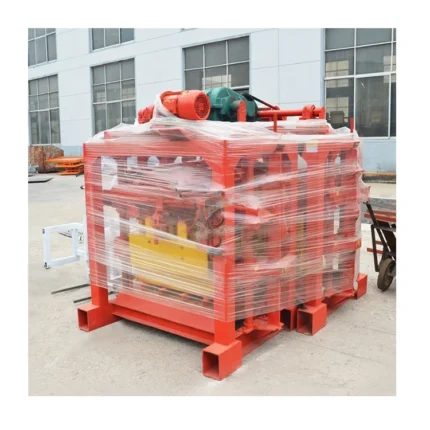
- Machine shipped in dismantled state with hydraulic station separated for container loading
- On-site commissioning includes PLC parameter setup for each block format in your production range
- Operator training covers touch screen navigation, fault diagnosis response, and mould change procedure
- Wear parts list provided with hydraulic seals and vibration motor components identified for first reorder
Information Needed for an Accurate Quotation
Provide the specific block formats your market requires, including dimensions and target daily volume per format. Confirm the local aggregate type and whether raw material samples are available for testing before machine configuration is finalized. Specify the voltage, frequency, and preferred PLC display language for the installation site, along with whether automatic pallet feeding and stacking are included now or planned as a future addition.
Frequently Asked Questions
Q: How is capacity verified per block format, and what cycle time is assumed for each?
A: Each output figure is tied to a specific block dimension, mould cavity count, and molding cycle range. For example, the hollow block 400×200×200 mm rate is based on 6 pieces per mould at a 15-20 second cycle. Capacity calculations in the quotation state which format is assumed so there is no confusion between catalogue figures and realistic daily production.
Q: What PLC display language options are available, and can the interface be changed after delivery?
A: The PLC display language must be confirmed before production so the touch screen is configured correctly at the factory. Changing the interface language after delivery may require a control system update on site, which can delay commissioning. Specify your preferred language during the quotation stage to avoid rework after arrival.
Q: How does the automation level upgrade path work from semi-automatic to full automatic?
A: The QT6-15 automation level is selectable, allowing a buyer to start with PLC-controlled press operation and manual pallet handling, then add automatic stacking and cubing modules later. The control system is designed to accept these additions without replacing the main PLC. Confirm your upgrade timeline during configuration so mounting points and wiring pathways are prepared.
Q: What voltage and frequency configurations are supported, and when must they be confirmed?
A: The electrical system is built to the voltage and frequency specified for the installation site. These parameters must be confirmed before production begins, as the electrical panel and motor specifications are set accordingly. Leaving voltage unconfirmed until after shipment risks commissioning delays while components are replaced or reconfigured on arrival.
Q: How does the fault diagnosis system work, and what level of remote support is available?
A: The PLC monitors sensor inputs and action interlocks continuously, displaying specific fault codes on the touch screen when a parameter falls outside its set range. The operator can read the code and take corrective action immediately. Remote support can be provided once the fault code and machine operating data are communicated to the service team for analysis.