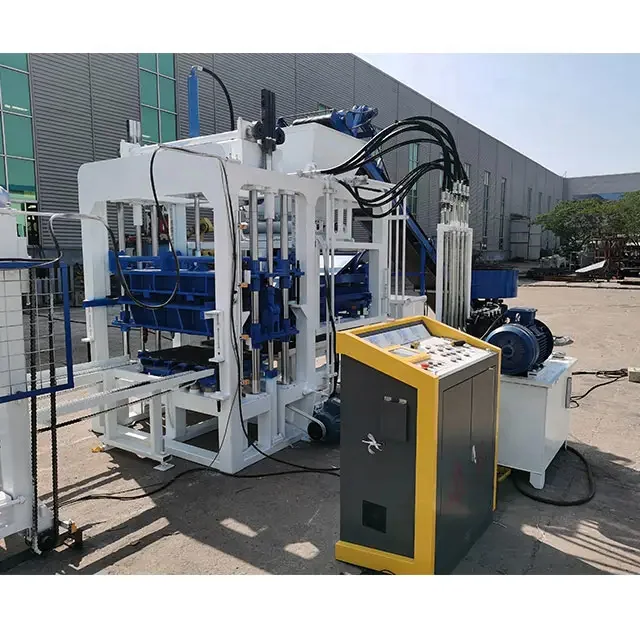
Description
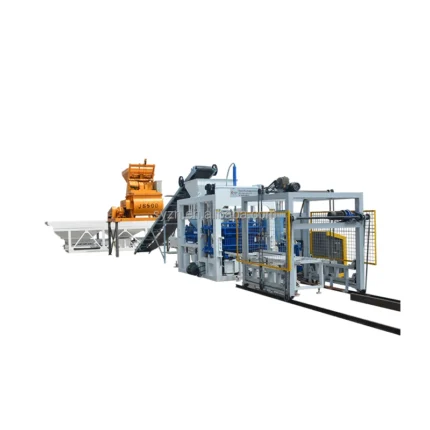
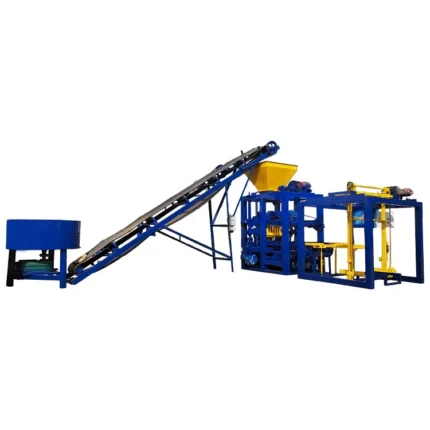
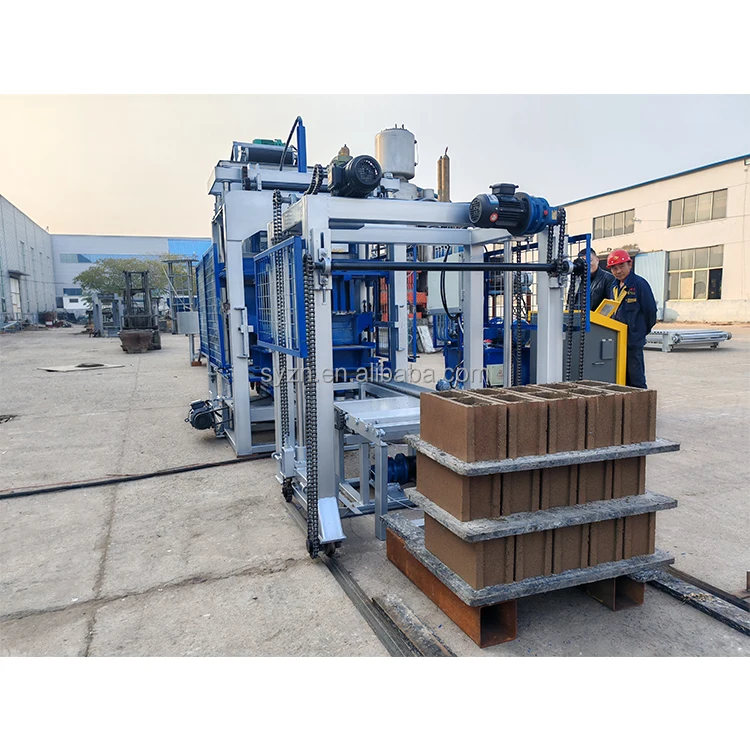
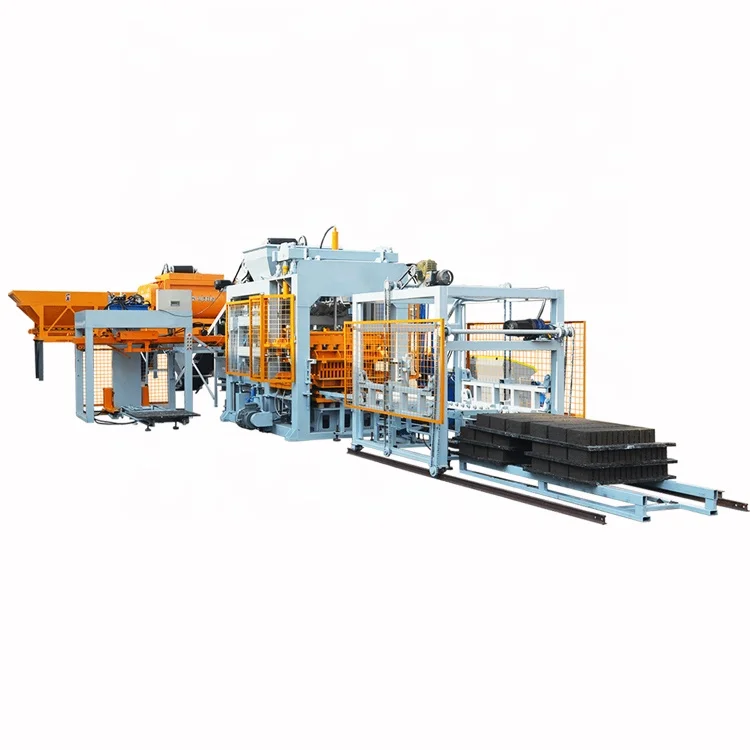
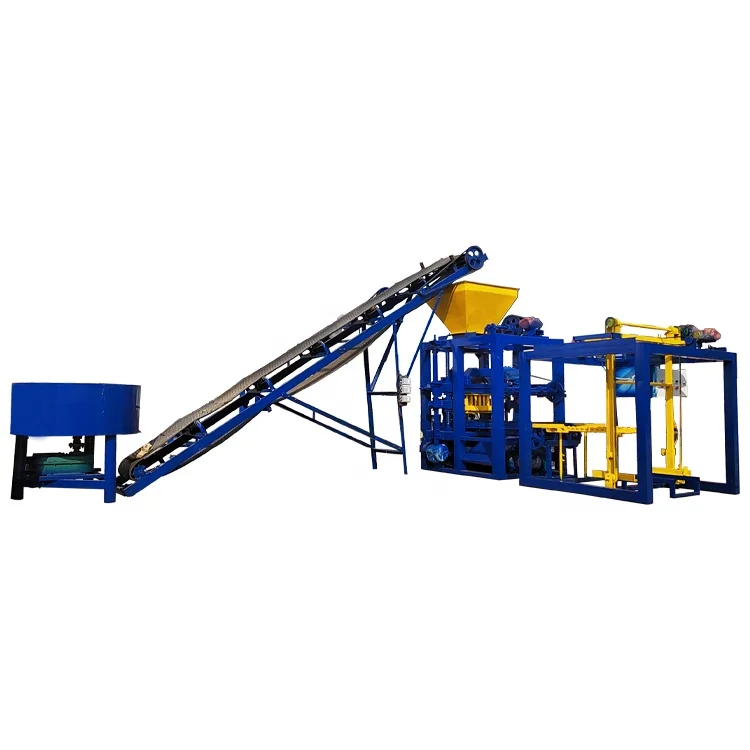
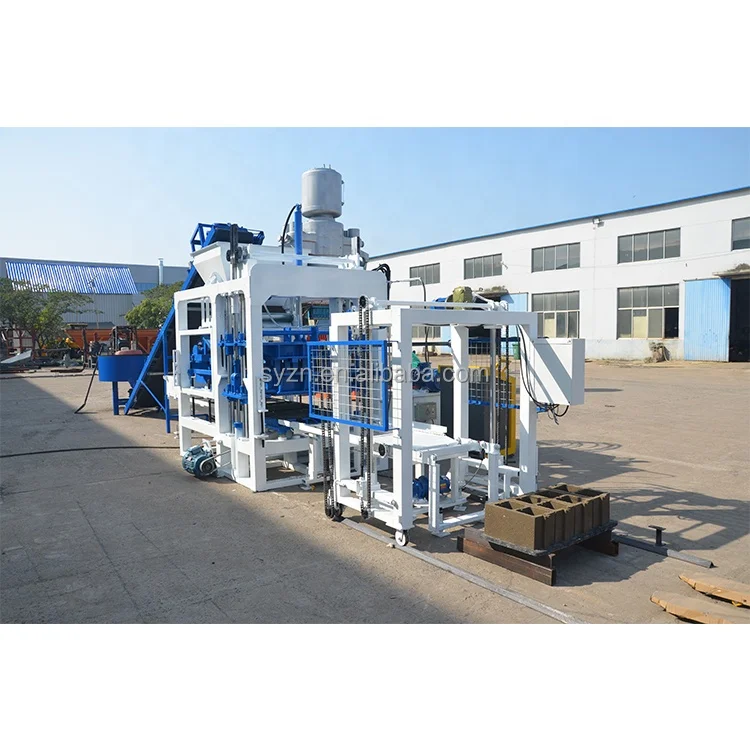
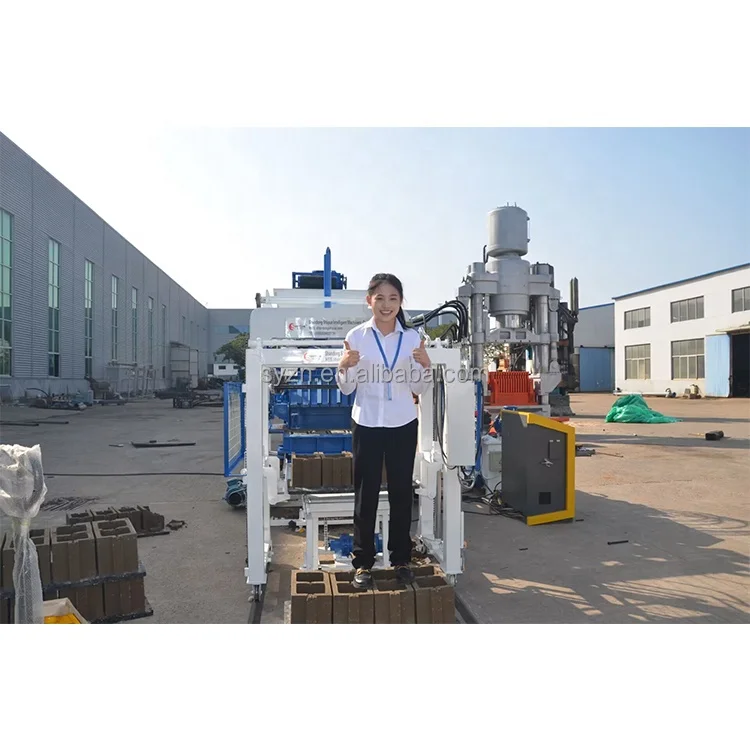
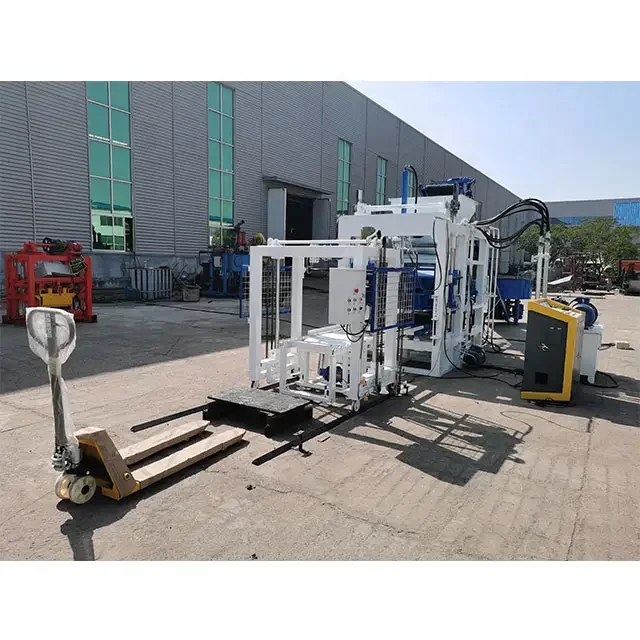
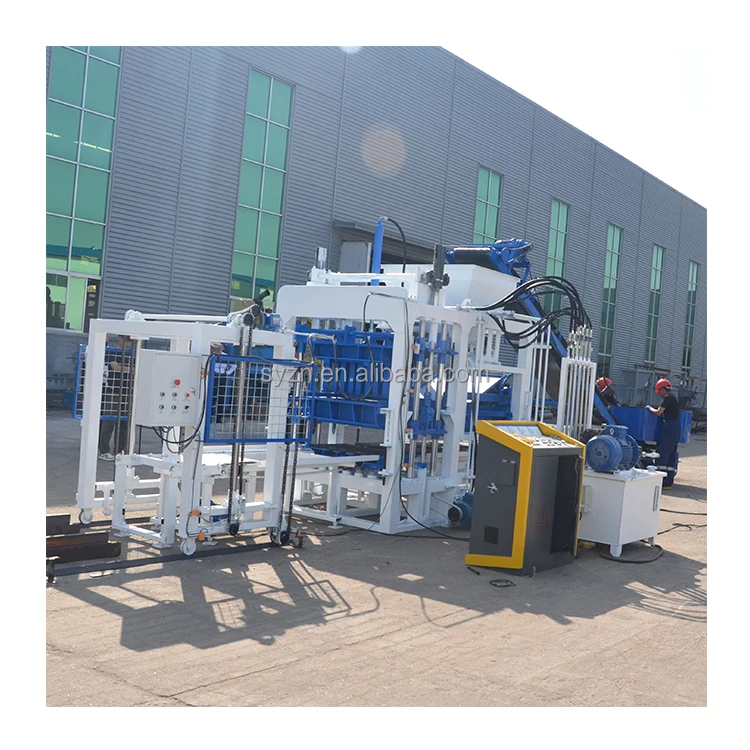
Control Intelligence — the QT4-18 block press is specified as a complete automated cell where the PLC logic, hydraulic sequencing and vibration timing are tuned to one buyer’s mix rather than shipped with factory-default parameters.
Technical Specifications
| Parameter | Value |
|---|---|
| Model | QT4-18 |
| Product Type | Automatic Hollow Block Making Machine |
| Vibration Mode | Multiaxis synchronizer, vertically downward |
| Guide System | Long-period over-length guide bearing for upper mould and mould box alignment |
| Mixer System | Multiaxis forced mixer, adaptable to varying raw material properties |
| Hydraulic System | High thermal efficiency, low heat generation |
| Control System | Computer controlled, PLC based, fully automatic |
| Automation Level | Fully automatic |
| Frame Construction | High strength steel, special welding technique, vibration shock resistant |
| Output Capacity | Basis not stated in source — confirm block format, material and thickness |
| Mould Format | Hollow brick, solid brick, paving block (full list to confirm) |
| Pallet Size | Not stated — confirm with manufacturer |
| Hydraulic Pressure | Not stated — confirm with manufacturer |
| Vibration Force | Not stated — confirm with manufacturer |
| Cycle Time per Format | Not stated — confirm with manufacturer |
| Voltage & Frequency | Not stated — confirm with manufacturer |
| Stacking Method | Not stated — confirm with manufacturer |
Application Suitability
| Application | Material or Output |
|---|---|
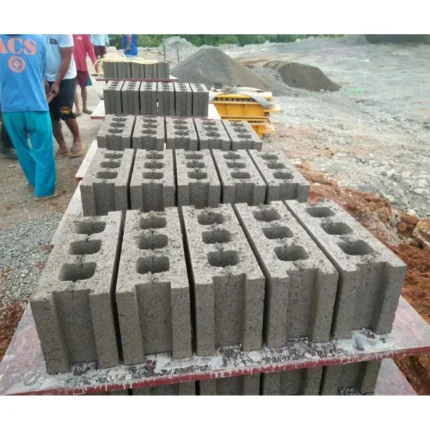
| Hollow block production for masonry walls | Crushed stone, cement, sand and water |
| Solid block production for load-bearing structures | Dense aggregate blends with cement binder |
| Paving block production for walkways and yards | Fine aggregate and cement with colour oxide option |
| On-site block production for housing projects | Locally sourced stone dust and river sand |
What "Fully Automatic" Actually Removes From the Operator
The automatic QT4-18 block machine PLC controlled system takes over pallet indexing, vibration timing and hydraulic pressing so that repeatability no longer depends on one experienced operator.
Many buyers assume "automatic" simply means fewer people around the press. The real value is consistency: when the vibration duration and hydraulic pressure are locked in the PLC cycle, every block in a shift receives the same compaction energy. Without that lock, block strength drifts as operators adjust timing by feel [NEED_CITE: block compressive strength variability in manual versus PLC-controlled production]. I once spent two weeks on a site in West Africa re-tuning vibration parameters because the stone dust had a clay content the factory test never accounted for — the PLC was running a default cycle that produced blocks too weak for the local standard.
How PLC Logic Replaces Operator Judgement
The control system in the automatic QT4-18 block machine PLC controlled architecture stores the complete cycle recipe: feeder travel speed, vibration start and stop points, hydraulic dwell time and stripper head descent rate. Once these values are set against a confirmed mix design, the press repeats them without drift. The operator’s role shifts from timing each action to monitoring fault codes and material flow.
What Full Automation Means for the Line Beyond the Press
Automation is only as reliable as the stations feeding it. The multiaxis forced mixer must deliver a consistent batch to the hopper before the feeder cycle begins, and the pallet feeder must place a new pallet before the press completes its return stroke. When any station falls behind, the PLC holds the press in a wait state rather than cycling on an empty mould — a protection that prevents damaged moulds but also exposes bottlenecks elsewhere in the line [NEED_CITE: PLC interlock logic in concrete block production lines].
Reading the Specs That Determine Real Output
The multiaxis synchronizer vibration directed vertically downward is designed to compact material uniformly across the full mould cavity. Uniform compaction matters most when the pallet is wide enough to hold multiple blocks per cycle; if vibration energy drops at the edges, outer blocks leave the press weaker than inner ones. The long-period over-length guide bearing keeps the upper mould and mould box aligned through thousands of cycles, reducing wear on the mould liner and preventing flash that would otherwise require manual trimming. The hydraulic system’s low heat generation rating means continuous production does not push oil temperature past the point where seal life and valve response both degrade.
The Hidden Cost of Skipping the Control Language Check
Buyers who confirm price and lead time but leave the PLC display language and voltage unconfirmed often face a silent delay at commissioning. The press arrives, the electrician wires it, the operator switches it on — and every screen label is in a language nobody on site reads. Production stalls not because the machine is faulty but because nobody can navigate the fault log. The same applies to voltage: a press wound for 380 V / 50 Hz connected to a 415 V / 60 Hz supply will run, but the motor speed and vibration frequency shift, changing compaction energy and block density [NEED_CITE: industrial motor behaviour under voltage and frequency mismatch].
Why Configuration Starts Before the Order Is Placed
Every parameter on the QT4-18 spec sheet connects to a decision the buyer must make before production begins. The mould format list determines which block sizes the press can produce; cycle time per format determines how many of each size are possible in a shift; pallet size must match the curing racks and forklifts already on site. When these decisions are deferred to "after arrival," the machine sits idle while pallets are sourced or moulds are redesigned. We configure the automatic QT4-18 block machine PLC controlled package against the buyer’s stated mix design, target block format and local power supply — not a catalogue default — so that the first cycle on site matches the factory test.
Documentation & Verification
- Factory test record run on buyer’s own block format and mix ratio before dispatch
- PLC program backup on USB with display language set to buyer’s confirmed choice
- Hydraulic and electrical schematic matching as-built configuration
- Mould drawing and format list showing cycle time for each block type
- Voltage, frequency and phase confirmation sheet signed before production
- Packing photographs documenting machine condition at container loading
Installation, Commissioning & Support
- Foundation plan matched to the QT4-18 frame footprint and dynamic vibration load
- Dedicated circuit sized to the confirmed rated power and voltage specification
- PLC display language and fault code list verified on first power-up
- Operator training on recipe selection, mould change procedure and daily greasing points
- Wear parts list covering mould liners, guide bearings and hydraulic seals
- Remote PLC diagnostic access available for fault code review after handover
What to Prepare Before Requesting a Quotation
To size the automatic QT4-18 block machine PLC controlled system accurately, share your target block formats with dimensions, the daily output you need for each format, and the raw materials available locally including aggregate type and grading. Confirm your site voltage and frequency, the preferred PLC display language, and the pallet size that matches your existing curing area and handling equipment.
Frequently Asked Questions
Q: How is the QT4-18 output capacity verified, and which block format does the figure assume?
A: Output capacity changes with every block format because cycle time and mould cavity count differ. Any quoted figure must state the exact block size, wall thickness and material assumed. We provide a capacity table listing output per format rather than a single headline number.
Q: What PLC control language and voltage options are confirmed before shipment?
A: The PLC display language is set to the buyer’s confirmed choice before the machine leaves the factory, and the electrical system is wound for the buyer’s stated voltage and frequency. A confirmation sheet is signed before production begins.
Q: How does full automation compare to semi-automatic operation on this machine?
A: In full automatic mode the PLC handles pallet indexing, material feeding, vibration and pressing without manual timing. The operator monitors the line and manages material supply rather than triggering each step, reducing block-to-block variability across a full shift.
Q: Can the QT4-18 be expanded with automatic stacking and cubing later?
A: The line layout can reserve space and electrical connections for a stacker and cubing station. Adding them later requires confirming that the PLC has available I/O channels and that the hydraulic power unit has sufficient reserve capacity for the additional actuators.
Q: How is vibration force matched to my local aggregate and mix design?
A: Vibration parameters are tuned during a factory test using the buyer’s stated mix ratio and aggregate type. If the local material differs significantly from the test sample, on-site fine-tuning adjusts amplitude and duration to reach the required block density.