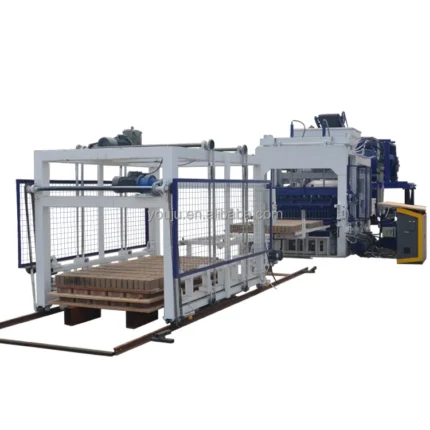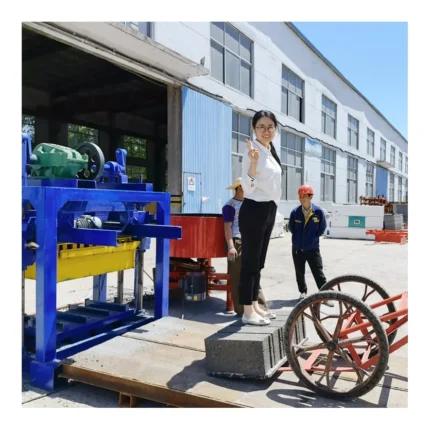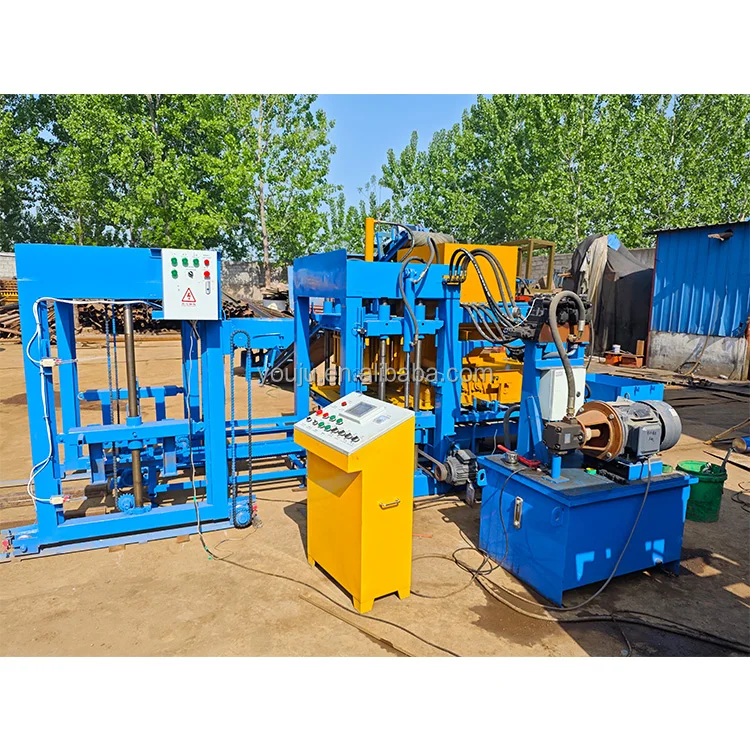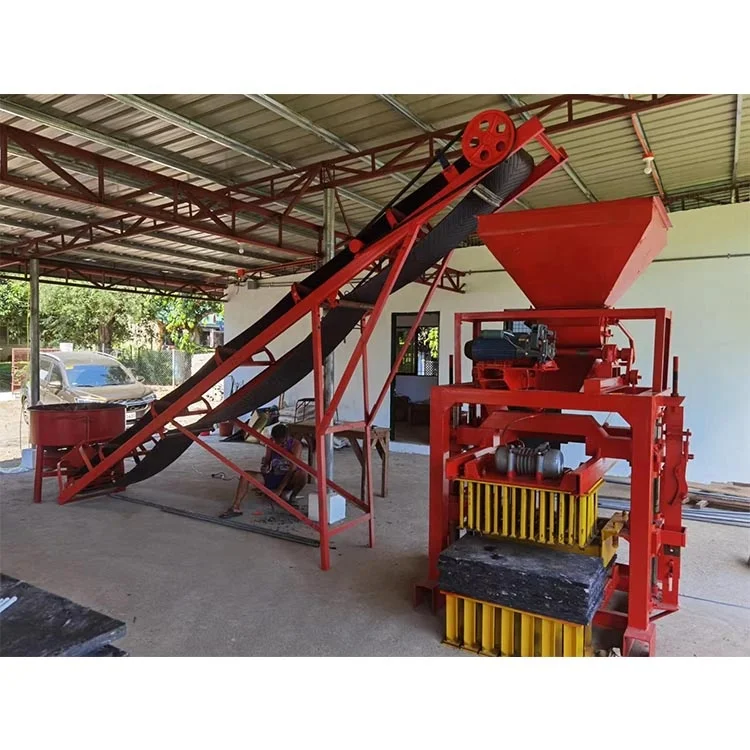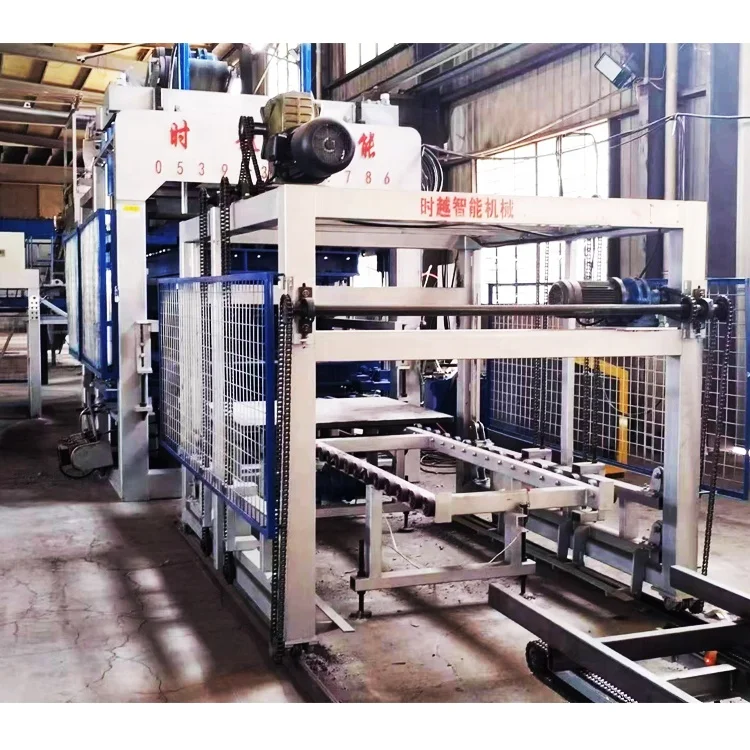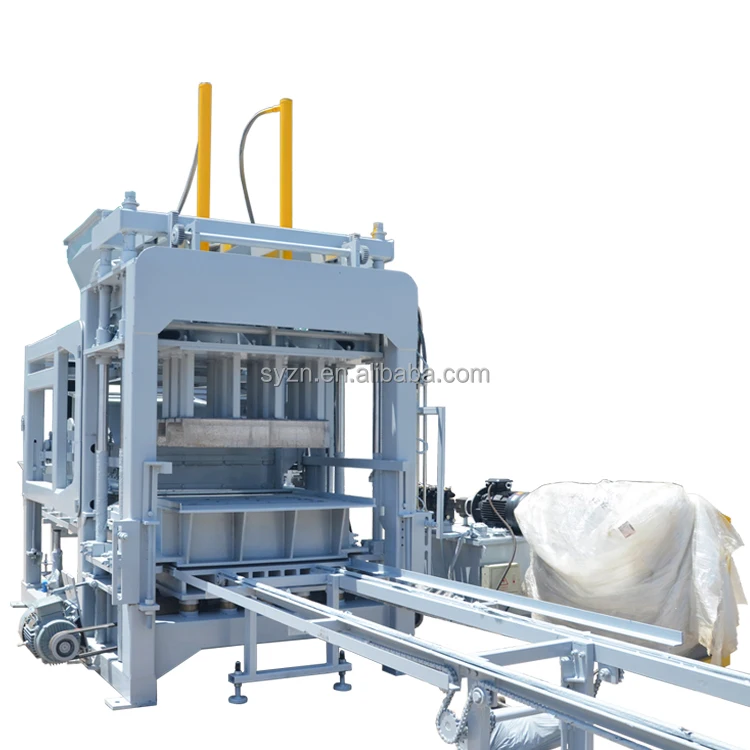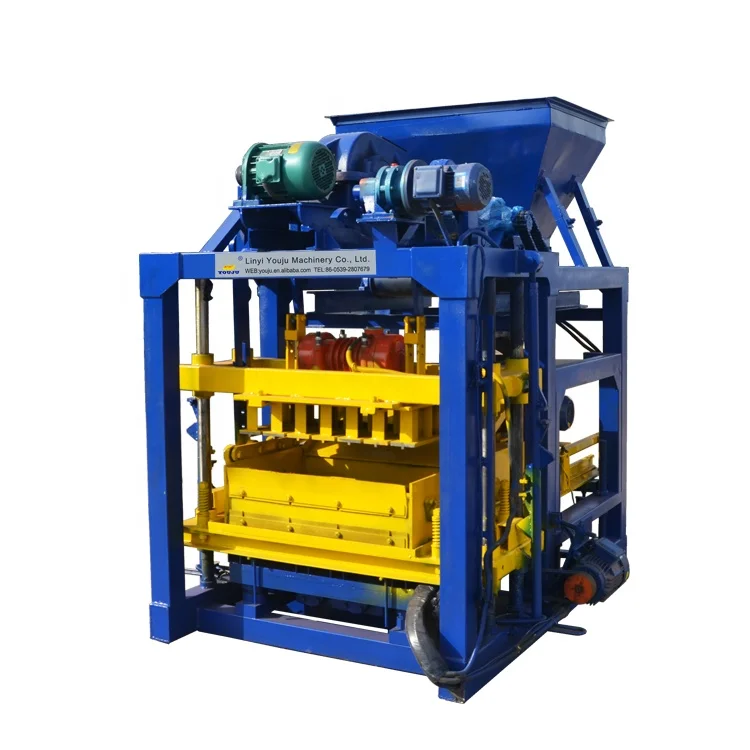
Description
Configuration Set Against Your Mix — The QTJ4-25 is specified against the buyer’s actual local aggregate and target block format rather than shipped as a catalogue default, so vibration force and hydraulic pressure arrive dialed in from day one.
Technical Specifications
| Parameter | Value |
|---|---|
| Model | QTJ4-25 |
| Product Type | Semi-Automatic Concrete Block Making Machine |
| Rated Power | 17.9 kW |
| Overall Dimensions (L×W×H) | 6400 × 1500 × 2700 mm |
| Total Mass | 2500 kg |
| Molding Cycle | 25 s |
| Pallet Size | 850 × 550 × 20 mm |
| Vibration Frequency | 2800 r/min |
| Exciting Force | 60 kN |
| Output Capacity | 960 pcs/h, 7680 pcs/day (based on 400×200×200 mm hollow block, 4 pcs/mould) |
| Mould Format Options | Hollow, solid, paver, curbstone (mould change required) |
| Automation Level | Semi-automatic (upgrade path to PLC-controlled operation available) |
| Configuration | Host machine 1 set, block mould 1 set, JQ350 mixer |
| Hydraulic System | Hydraulic station equipped |
| Control System | PLC or manual control available with automatic PLC controlled block making machine configuration |
| Voltage & Frequency | Configurable to buyer’s local supply (basis to be confirmed before ordering) |
Application Suitability
| Application | Material or Output |
|---|---|
| Hollow block production for residential and commercial walls | Crushed stone, sand, cement, fly ash blends |
| Solid block manufacturing for load-bearing structures | Dense aggregate mixes with standard cement ratios |
| Paving block runs for driveways, walkways, and parking areas | Fine aggregate and pigment combinations |
| Curbstone and kerb production for road and landscape edging | High-strength concrete mixes with coarse aggregate |
| Small to medium-scale block plants and on-site construction projects | Locally sourced raw materials matched to regional standards |
What "Semi-Automatic" Really Means for Your Control Cabinet
The difference between consistent blocks and scrap is whether cycle timing lives in the operator’s head or in the PLC.
Many block producers assume that once a machine arrives, the control system will simply work. I once shipped a fully hydraulic press to a Middle East site and forgot to confirm the PLC display language — the Arabic-speaking operators faced an English-only interface and commissioning stalled for two days on the floor. With an automatic PLC controlled block making machine setup on the QTJ4-25, language selection, cycle parameters, and pallet sequencing all get locked in before the crate leaves the factory. The voltage and frequency question deserves the same treatment. [NEED_CITE: voltage and frequency standards by export market]
Removing Operator Guesswork from Every Cycle
In semi-automatic mode, the QTJ4-25 handles mould vibration, hydraulic compression, and pallet indexing while operators manage material feeding and pallet transfer manually. The upgrade path introduces PLC control over pallet feeding, automatic stacking, and cubing — eliminating the variation that creeps in when shift changes bring different operators to the line. This is the core value of an automatic PLC controlled block making machine configuration: batch-to-batch consistency stops depending on who is running the press that morning.
Scaling Automation as Volume Grows
A buyer setting up a first block plant in Jamaica or elsewhere often does not need full automation on day one. The QTJ4-25 starts at a semi-automatic tier where labour handles pallet movement and stacking, keeping initial investment manageable. As daily output requirements grow, the same host machine accepts upgrades to automated pallet feeding, stacking, and cubing stations. The PLC architecture supports this expansion without replacing the press, so the production line evolves with market demand rather than forcing a second capital purchase. [NEED_CITE: typical block plant automation upgrade sequences in developing markets]
Reading the Specs That Actually Matter
The QTJ4-25 pairs a 60 kN exciting force with a hydraulic station to achieve uniform block density. The vibration system operates at 2800 r/min with bed mould vertical vibration combined with upper mould compression — this dual action compacts the mix from both directions, which is what determines whether a hollow block reaches the required compressive strength for load-bearing use. The 850 × 550 × 20 mm pallet size must align with your curing area layout and the forklift you already have on site; a mismatch here means pallets pile up in aisles or require a new forklift purchase nobody budgeted for. The 25-second moulding cycle delivers the rated output of 960 pieces per hour only when running 400×200×200 mm hollow blocks at four per mould — different formats will shift both cycle time and daily totals. The 17.9 kW rated power demand requires a dedicated circuit sized for starting current, not just running load.
The Hidden Cost of Unconfirmed Specifications
Buyers who skip the configuration conversation before production often discover problems only after the machine arrives. A control panel set to the wrong language delays commissioning while a technician re-flashes the PLC. Incorrect voltage settings damage motors or trip breakers repeatedly during the first week. A pallet size chosen without checking the curing rack dimensions means blocks cure on the floor in uneven stacks, producing strength variation across the batch. Mould changes that should take minutes stretch into hours when the tooling was not matched to the host machine’s clamping system. These are not defects — they are specification failures that a two-page pre-production checklist would have prevented. [NEED_CITE: common commissioning delays in exported concrete block machinery]
Why Sourcing This Machine Here Makes Sense
Block machinery is our single focus, so the QTJ4-25 is specified as a matched system — host machine, mould, pallet, and handling equipment sized together rather than assembled from separate suppliers. Every configuration is set against the buyer’s actual mix design and local aggregate, not pulled from a catalogue default. Mould design covers the formats the buyer’s market actually sells, including custom drawings when standard options do not match. The automation level is selectable, so a buyer can start semi-automatic today and add PLC-controlled pallet feeding and stacking when volume justifies it. Installation support includes on-site commissioning and operator training so the team running the machine on day one understands the parameter settings that were confirmed during the pre-production phase.
Documentation & Verification
- Line layout and capacity calculation stating the QTJ4-25 block format assumed for daily output
- Machine specification sheet confirming voltage, frequency, and PLC display language before production
- Mould drawing and format list covering hollow, solid, paver, and curbstone options
- Hydraulic and electrical schematic for the 17.9 kW system with dedicated circuit requirements
- Factory test record on the buyer’s target block format before dispatch
- Operation and maintenance manual covering mould change procedures and daily service intervals
Installation, Commissioning & Support
- Foundation pad sized for the 6400 × 1500 mm footprint with level tolerance for the QTJ4-25 frame
- Dedicated electrical circuit rated for 17.9 kW running load plus motor starting current
- Machine arrives partially assembled; hydraulic station and vibration motor connected on site
- PLC parameter upload and cycle timing calibration against your target block format during commissioning
- Operator training on mould change procedure across hollow, solid, paver, and curbstone formats
- Wear parts list covering vibration motor bearings, hydraulic seals, and mould liner replacements
What We Need to Configure Your QTJ4-25
To prepare a configuration proposal that matches your actual production conditions, we need your target block format and daily output requirement, the local raw materials available including aggregate type and cement grade, and your site’s voltage, frequency, and preferred PLC display language. If you have an existing curing area or forklift fleet, share the dimensions so the 850 × 550 mm pallet size can be verified against your setup.
Frequently Asked Questions
Q: How do I verify the real daily output of the QTJ4-25?
A: The quoted capacity of 960 pieces per hour and 7680 pieces per day is based specifically on 400×200×200 mm hollow blocks at four per mould with a 25-second cycle. Request a capacity calculation that states your actual target format — pavers and curbstones run different cycle times and mould counts, so the daily total will shift accordingly.
Q: Can the QTJ4-25 be upgraded from semi-automatic to full PLC control later?
A: Yes. The host machine accepts upgrades to automated pallet feeding, stacking, and cubing as your volume grows. The PLC architecture supports this expansion without replacing the press, so the production line scales with demand rather than requiring a second machine purchase.
Q: What voltage, frequency, and control language options are available?
A: The QTJ4-25 is configurable to the buyer’s local electrical supply. Voltage, frequency, and PLC display language must be confirmed before production to avoid commissioning delays after the machine arrives at your site.
Q: How long does a mould change take on the QTJ4-25?
A: The machine supports mould changes across hollow, solid, paver, and curbstone formats on a single host. Change time depends on whether the clamping system and tooling were specified together during the pre-production configuration phase — matched tooling keeps changeover within a single shift break.
Q: How are hydraulic pressure and vibration force matched to my mix?
A: The QTJ4-25 pairs a 60 kN exciting force with a hydraulic station operating at adjustable pressure. Configuration is set against your local aggregate and mix design during the proposal stage, so the machine arrives with parameters calibrated to produce consistent block density from your available materials.