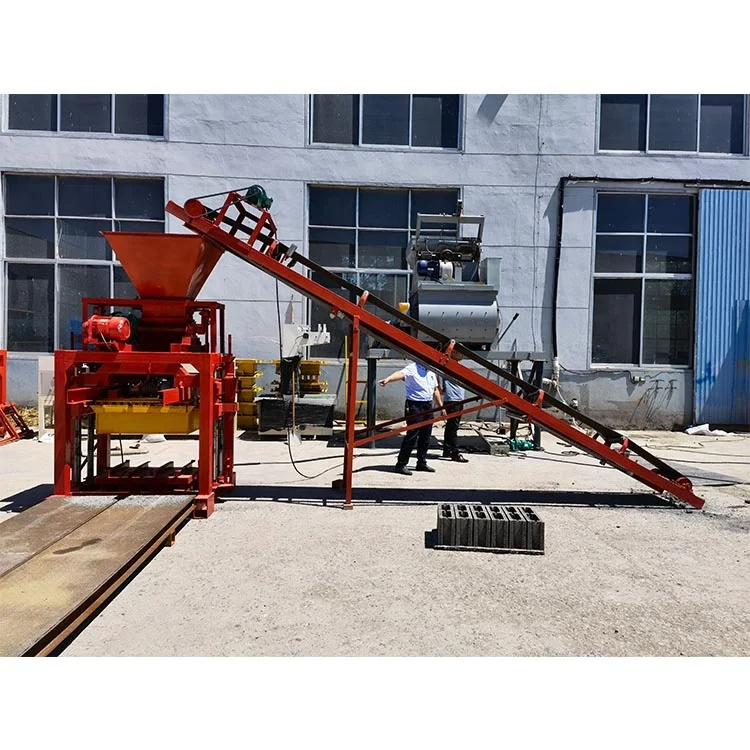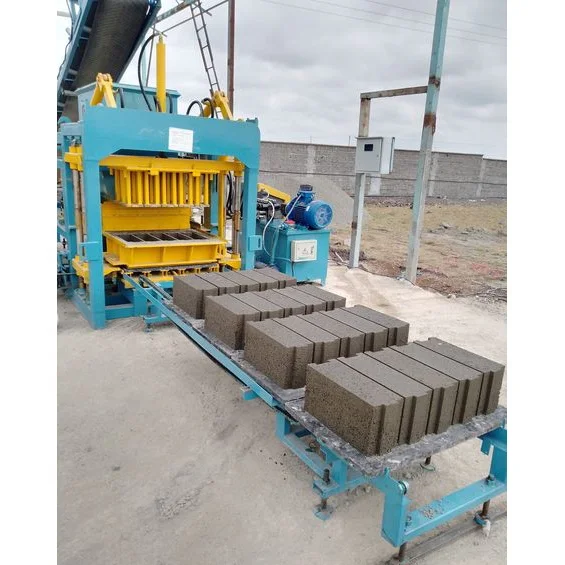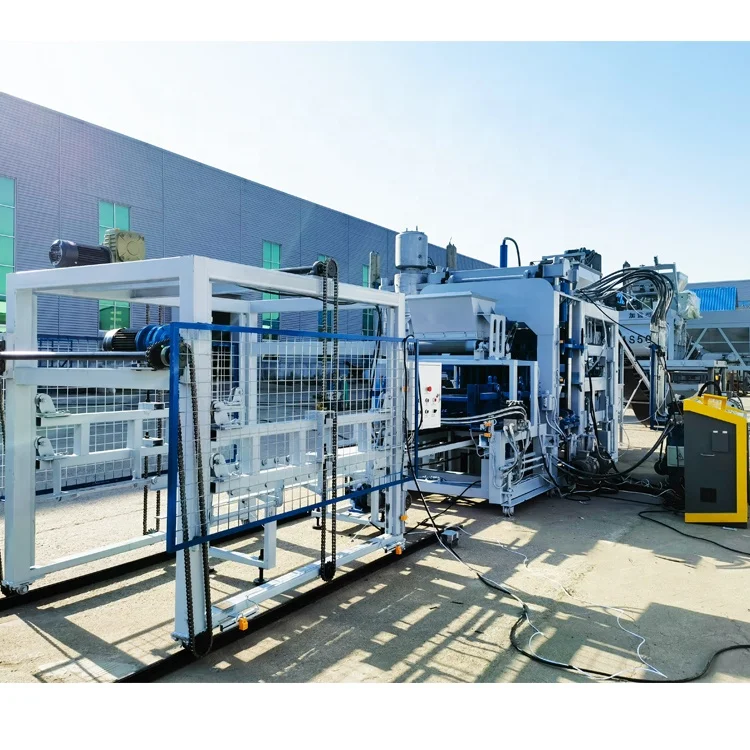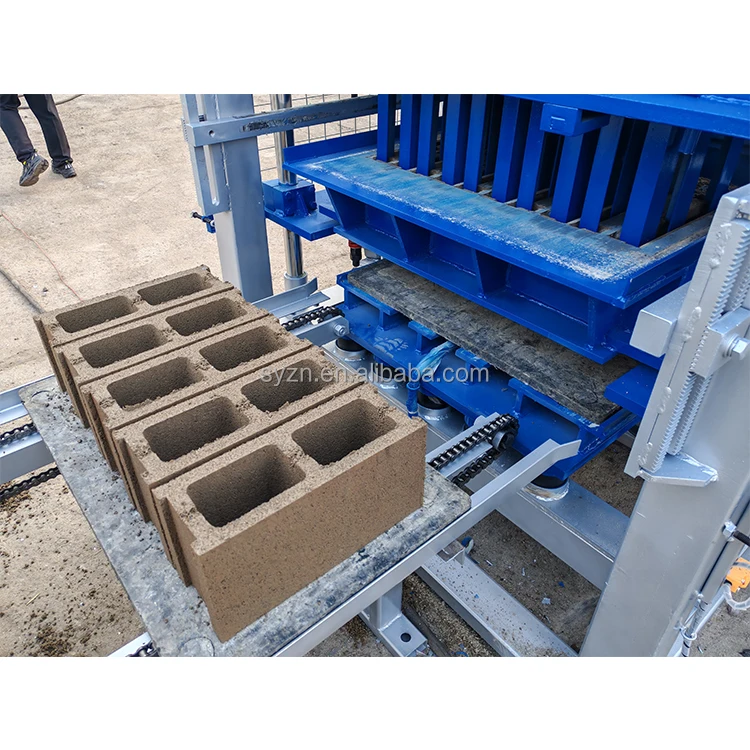
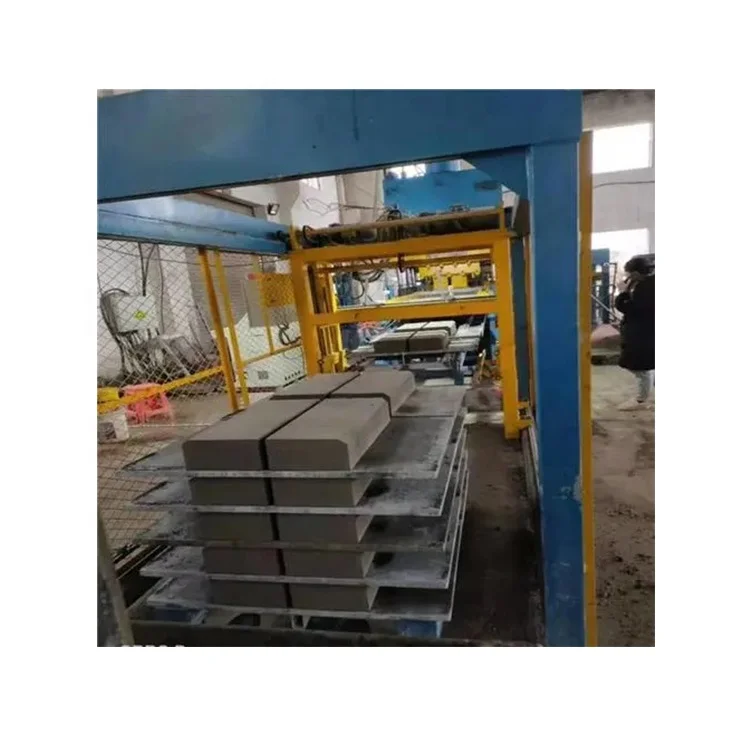
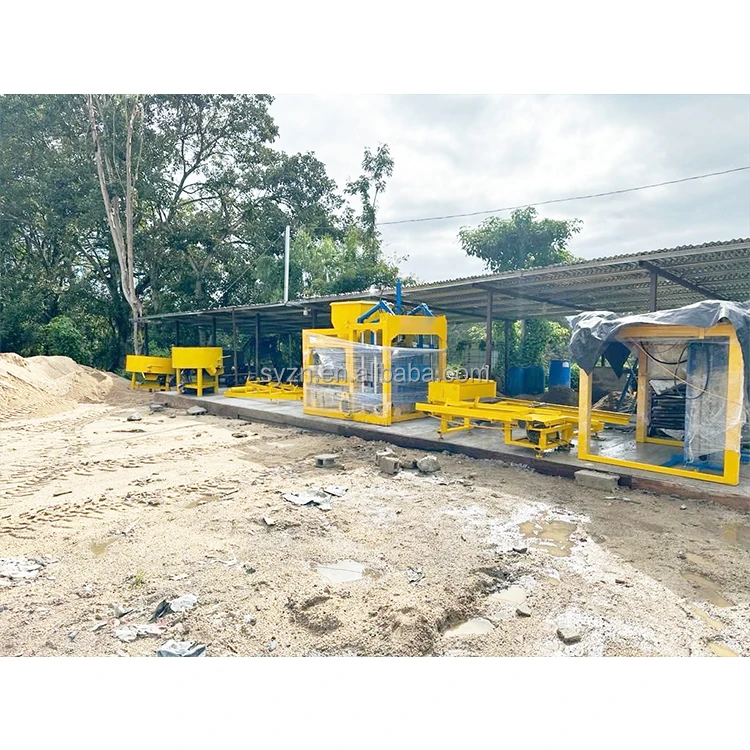
Description
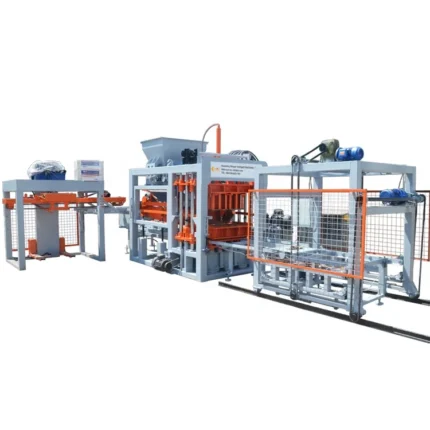
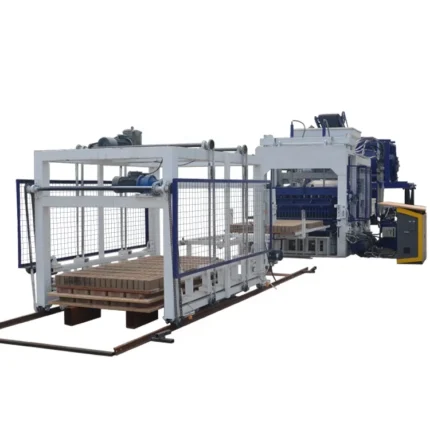
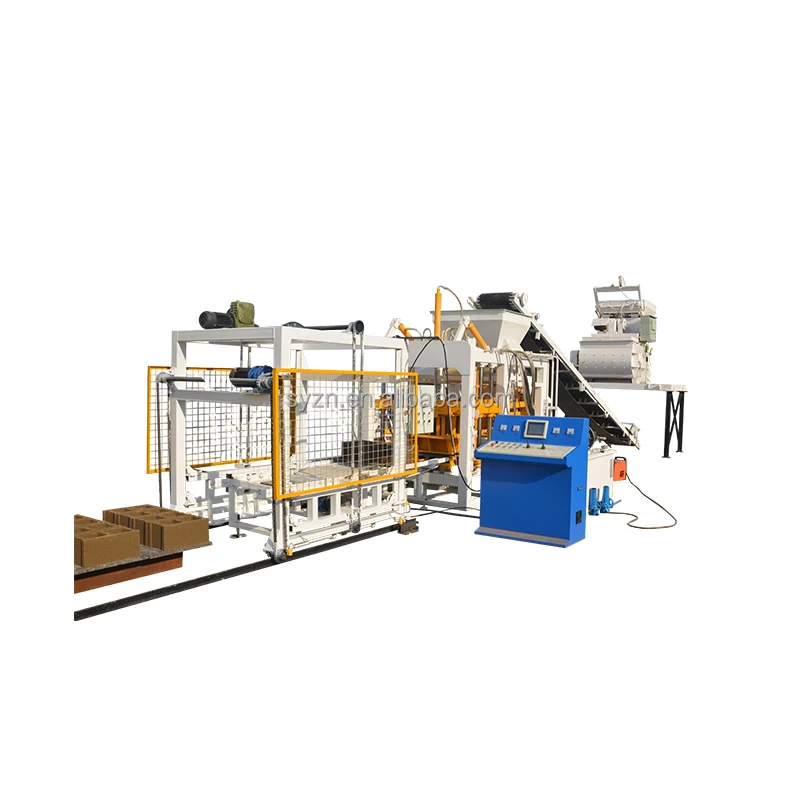
Controlled Cycles — PLC governs press timing, pallet feed, and block sweep so that each cycle repeats identically regardless of operator shift changes.
Technical Specifications
| Parameter | Value |
|---|---|
| Model | QT4-15A |
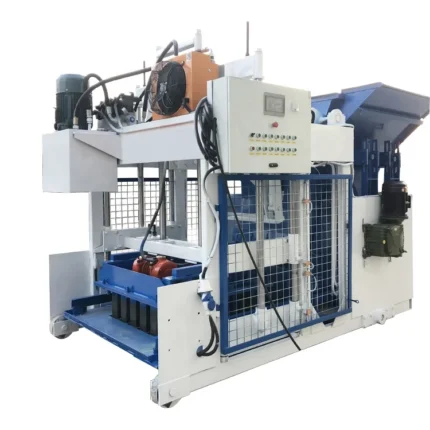
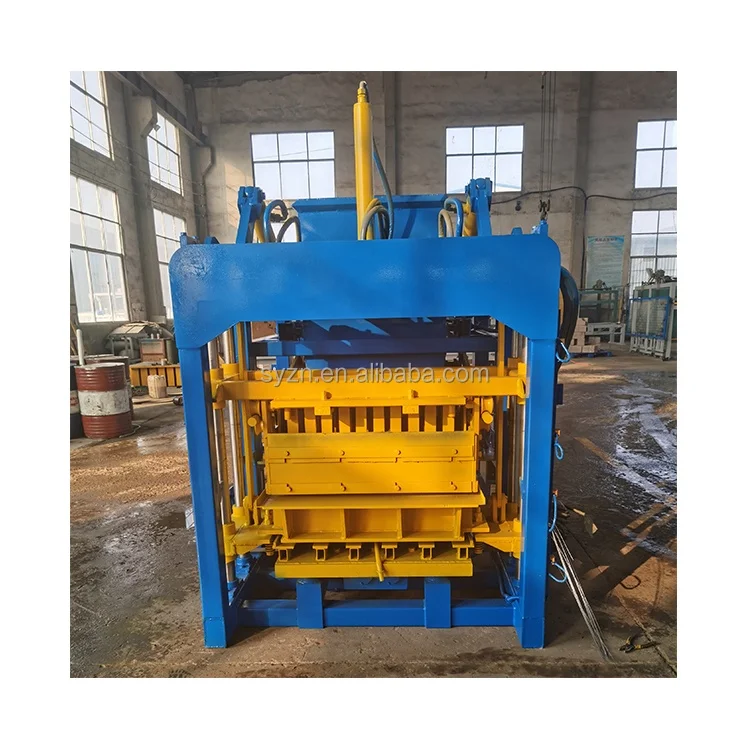
| Product Type | Automatic Hydraulic Block Making Machine |
| Overall Dimensions (L×W×H) | 7100 × 1600 × 2610 mm |
| Total Weight | 3 T |
| Vibration Frequency | 4600 r/min |
| Vibration Force | 40–50 kN |
| Total Installed Power | 18.45 kW |
| Mixer | JQ350 |
| Pallet Size | 850 × 550 × 25 mm |
| Molding Cycle | 15–25 s (basis not stated in source) |
| Control System | PLC control system |
| Hydraulic Station | Included |
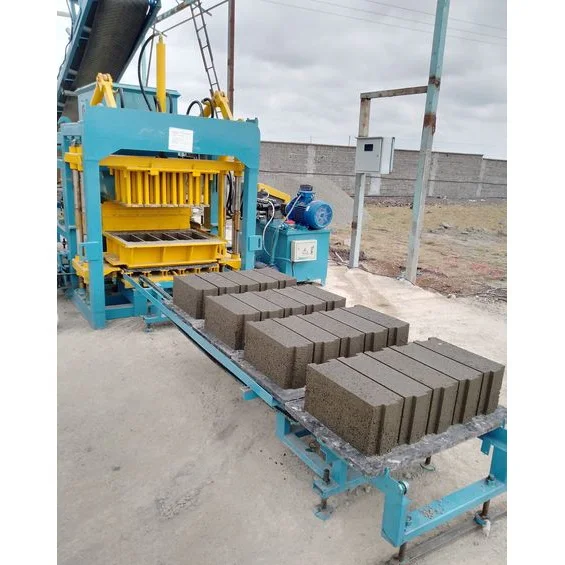
| Output – Hollow Block 400×200×200 mm | 4 pcs/mould, 408 pcs/h, 3264 pcs/8 hr |
| Output – Hollow Block 400×150×200 mm | 5 pcs/mould, 510 pcs/h, 4080 pcs/8 hr |
| Output – Solid Brick 240×115×53 mm | 18 pcs/mould, 2100 pcs/h, 17000 pcs/8 hr |
| Applied Products | Hollow block, solid brick, paver, kerbstone |
| Included Line Equipment | Pallet feeder, brick conveyor, block sweeper, manual hydraulic trolley |
| Automation Level | Automatic (pallet feed & block conveying) |
| Voltage & Frequency | To be confirmed before shipment |
| PLC Display Language | To be confirmed before shipment |
Application Suitability
| Application | Material or Output |
|---|---|
| Hollow block for structural walls | Crushed stone, sand, cement, fly ash |
| Solid brick for load-bearing masonry | Stone dust, sand, cement |
| Paving block for walkways and yards | Crushed stone, cement, pigment |
| Kerbstone for road edging | Coarse aggregate, cement |
| On-site production for housing projects | Local aggregate blended with cement |
Why the Language on the PLC Screen Matters More Than Cycle Speed
An automatic block making machine PLC controlled is only as intelligent as the operator who reads its alarms.
I once shipped a QT4-15A to Quito where the machine sat idle for two days because the HMI displayed fault codes in Chinese. The Ecuadorian crew could not read a single alarm line. We resolved it by sending an updated language file over a slow connection, but those two lost shifts cost the buyer more than any cycle-time gain could recover. Since then I confirm the display language and the voltage before the contract is signed [NEED_CITE: PLC HMI language and export market requirements]. A faster press that no one can troubleshoot is simply an expensive pause in production.
Removing the Operator from the Repetitive Loop
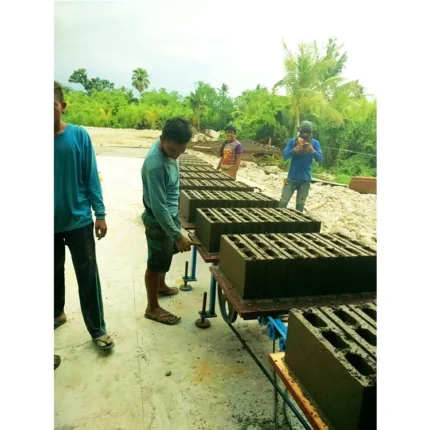
The automatic block making machine PLC controlled sequence takes pallet feeding, press cycling, and block conveying out of the operator’s hands. Each pallet is pushed into position by the feeder, the hydraulic station applies pressure while the vibration motor runs at 4600 r/min, and the brick conveyor carries finished blocks away. The operator monitors rather than repeats, which keeps cycle timing stable across a full shift.
Where Consistency Comes From in Practice
Batch-to-batch density depends on matching vibration force with hydraulic pressure and the buyer’s mix. The 40–50 kN exciting force paired with the high-pressure hydraulic station compresses the aggregate before vibration settles it, reducing voids. When the PLC holds each parameter to a fixed value, block strength variation narrows. [NEED_CITE: vibration and hydraulic pressure interaction in concrete block forming]
Reading the Numbers Behind the Throughput
The vibration frequency of 4600 r/min sits in the range suited to semi-dry concrete mixes rather than wet-cast slurry. Pallet size at 850 × 550 mm defines the mould envelope; any curing rack or forklift already on site must accept that dimension. The 18.45 kW total power draw means the buyer should confirm a dedicated circuit before the machine arrives. Voltage and frequency remain open items until the destination grid is known, and commissioning stalls when this is left to the last week [NEED_CITE: industrial voltage and frequency standards by country].
The Cost of Skipping the Electrical Conversation
A buyer who confirms only price and lead time often discovers, on arrival, that the local grid runs 60 Hz while the motor was wound for 50 Hz. The press runs, but vibration force drops and blocks come out soft. Rewinding motors on site is possible yet adds weeks and an unbudgeted cost. The same applies when the PLC display arrives in a language the maintenance crew cannot read. [NEED_CITE: motor rewinding and frequency mismatch in exported machinery]
Why Buyers Return to the Same Specification Team
Block machinery is our single focus, which means the press, mould, pallet, and handling equipment are specified as one matched system. We set the configuration against the buyer’s actual mix design and target block format rather than a catalogue default. Moulds are available for every format listed, and custom drawings are accepted when the market calls for a non-standard shape. Automation starts at the level shown here and can be extended to include stacking and cubing as the plant grows. Installation support covers operator training so the crew understands the PLC logic from day one.
Documentation & Verification
- Capacity calculation sheet stating the block format behind each output figure
- Machine specification sheet with confirmed pallet dimensions and total power
- Hydraulic and electrical schematic matching the shipped configuration
- Voltage, frequency, and PLC display language written confirmation before build
- Factory test record on buyer’s selected mould format prior to dispatch
- Operation and maintenance manual in the confirmed display language
Installation, Commissioning & Support
- Foundation must support 3 T weight and 7100 mm length with level tolerance for the pallet feeder track
- Dedicated circuit sized for 18.45 kW total draw plus starting surge of the JQ350 mixer
- Voltage and frequency verified at the panel before the PLC is powered on
- Pallet size 850 × 550 mm checked against existing curing racks and forklift forks
- Operator training covers PLC alarm reading, mould change steps, and daily greasing points
- Spare parts and tools supplied in the free accessories kit for first-year wear items
What to Send with Your Inquiry
Tell us the block formats your market actually sells, the daily volume you plan, and the aggregate available within trucking distance of your site. Include your local voltage, frequency, and the language your operators read on a screen. If you already run curing racks or forklifts, share the dimensions so we match the pallet size to them.
Frequently Asked Questions
Q: How is the output of 408 pcs/h or 2100 pcs/h calculated, and which block format does each figure assume?
A: Each figure is tied to a specific mould: 408 pcs/h assumes a 400×200×200 mm hollow block with 4 cavities per mould, while 2100 pcs/h assumes a 240×115×53 mm solid brick with 18 cavities. Molding cycle, pallet feed time, and sweep time are included in the hourly calculation.
Q: What PLC brand is used, and can the display language be set before shipping?
A: PLC brand varies by build batch and is confirmed during the electrical specification step. Display language is set at the factory before dispatch once the buyer signs the written language confirmation, preventing unreadable alarms on arrival.
Q: Is automatic stacking and cubing included, or is it an upgrade?
A: The base configuration includes the pallet feeder, brick conveyor, and block sweeper. Automatic stacking and cubing are available as an upgrade path, allowing the plant to start with automatic pressing and add handling automation later.
Q: How long does a mould change take on the QT4-15A, and what tools are needed?
A: Mould change is manual and requires the tools supplied in the free accessories kit. Exact changeover time depends on the format pair being swapped and should be confirmed during commissioning so production planning accounts for it.
Q: Can I start semi-automatic and upgrade to full automation later?
A: Yes. The control architecture allows stacking and cubing modules to be added to the existing PLC program without replacing the press controller, letting investment grow with order volume.